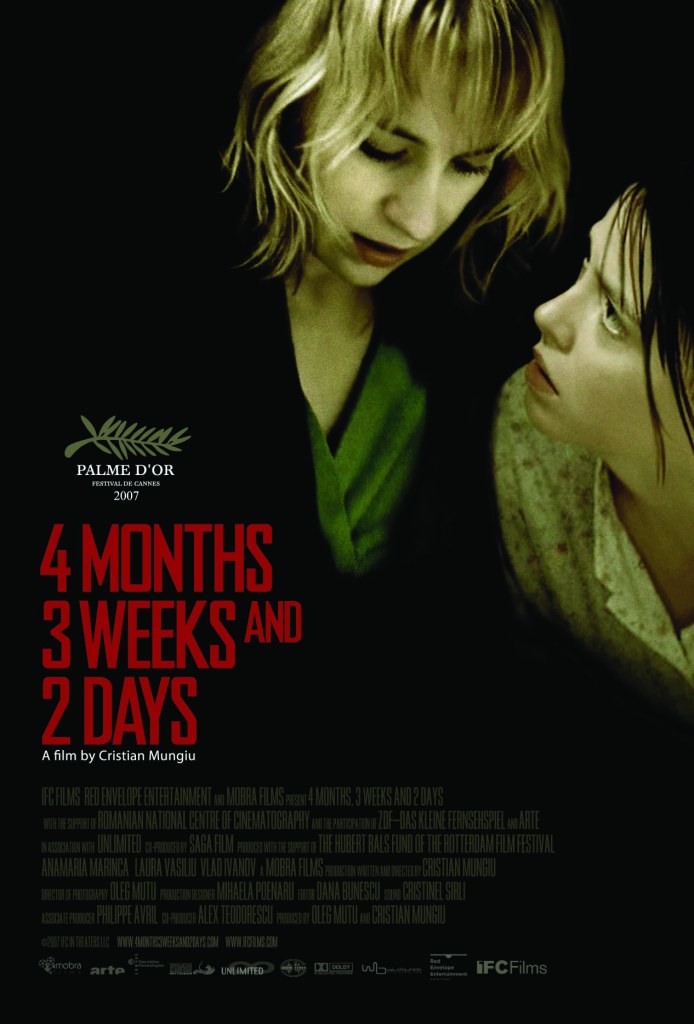
4 Months, 3 Weeks and 2 Days is a starkly told tale of abortion and rape in the waning years of Romania under the oppressive Ceauşescu regime. Winner of the Palme d’Or at the 2007 Cannes Film Festival, it is all the more brutally effective because it is so quotidian, chronicling a day in the life of two young women caught up in miserable circumstances.
We begin in a drab college dorm room, with roommates Otilia (Anamaria Marinca) and Gabriela (Laura Vasiliu) getting ready for an excursion. Eventually it becomes clear that Otilia is the take-charge person of the two, as she makes the rounds to black marketeers and visits her boyfriend, Adi (Alexandru Potocean), to tell him that a mysterious errand will delay her arrival to his parents’ house for dinner.
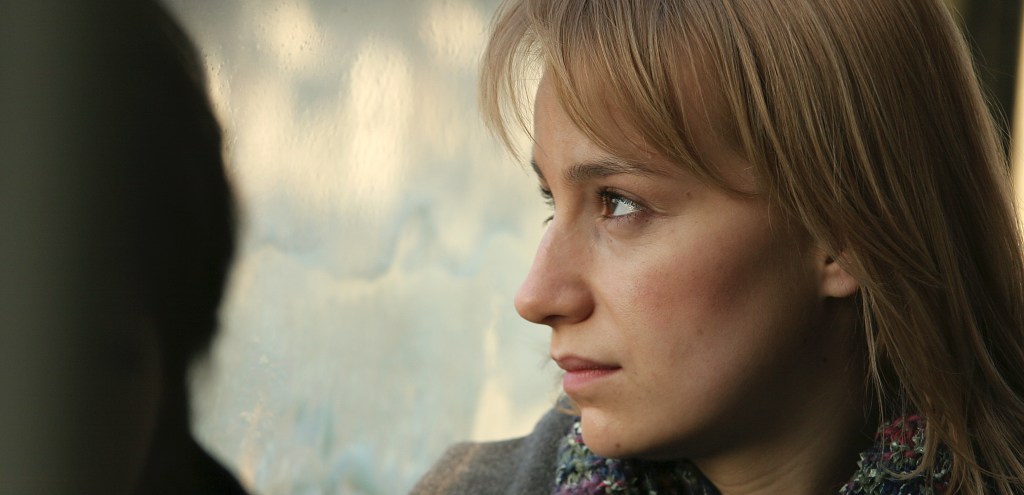
We soon learn the errand involves Gabriela securing a second-trimester abortion. But this is Romania in 1987, a time during which the tyrannical leader Nicolae Ceauşescu had outlawed abortion, and even contraception, to boost the population. Despite the dangers involved in breaking the law, Gabriela has planned poorly. Childlike and a little dense, she has failed to book a room at the hotel specifically requested by the abortionist, a shady man named Bebe (Vlad Ivanov), leaving it to Otilia to scramble for a backup hotel. Gabriela has further complicated matters by sending Otilia in her place to meet with Bebe.
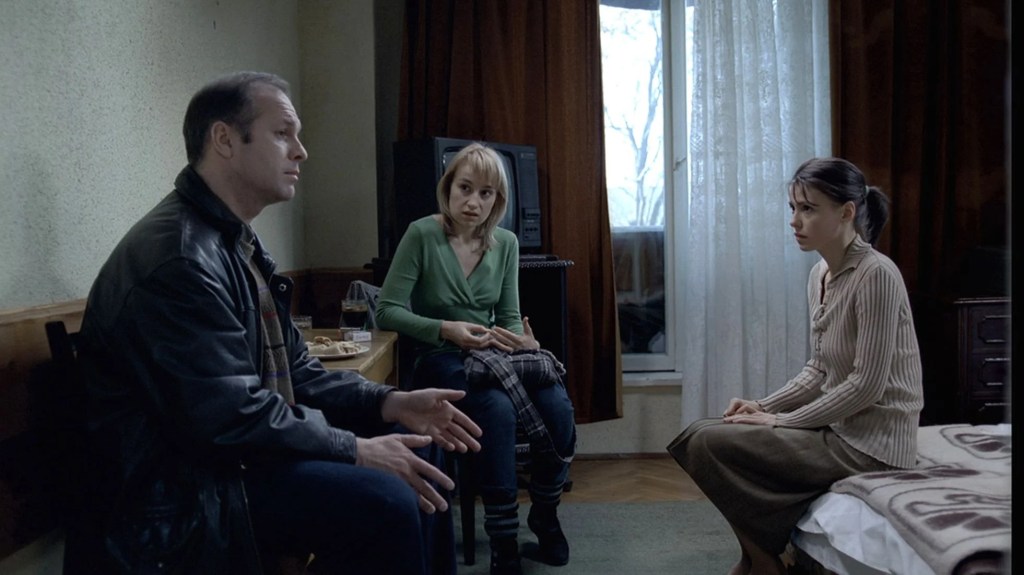
By the time the abortionist finally meets both women in a dingy hotel room, Gabriela has been caught in several lies. Bebe seethes with anger. And in a chilling scene, he exploits the women’s desperation by demanding sex in return for his clandestine services. After some panic-stricken (and ultimately futile) negotiations, the women relent. Bebe proceeds with the abortion, advising the women to dispose of the fetus by wrapping it in a towel and dropping it from a tall building.
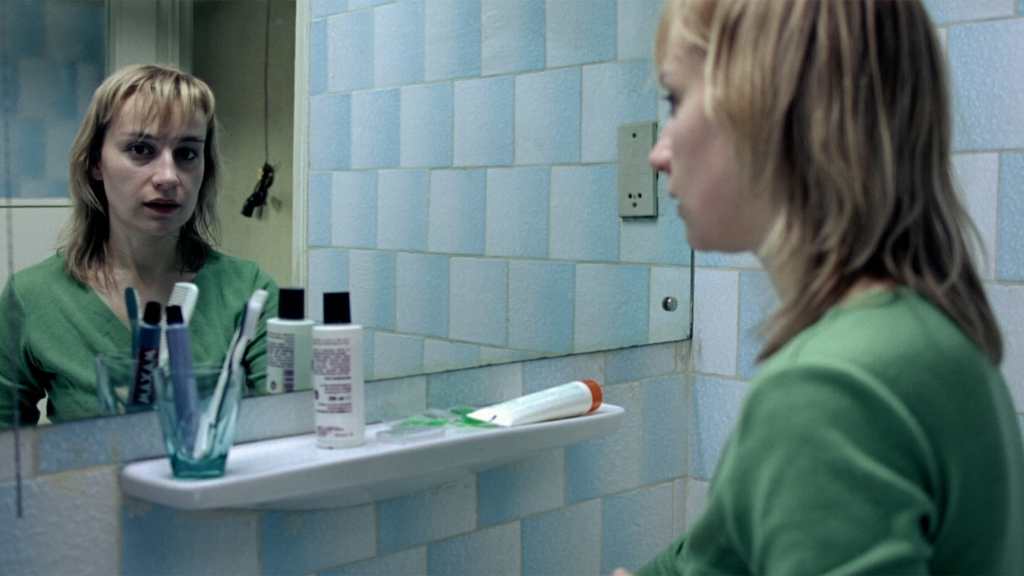
The film is unblinking in its severity. Writer-director Cristian Mungiu lets events unfold in near real-time with long takes and minimal editing to ratchet up the tension and heighten our empathy with the characters. Perhaps most effective, Mungiu anchors 4 Months, 3 Weeks and 2 Days in the tedium of everyday life.
Every small detail and seemingly innocuous exchange between characters push us into Otilia’s vantage point and sharpens the impact of the horrors that occur. In one extraordinary scene, Mungiu employs a long take of dinner at Adi’s parents’ home. Otilia is sandwiched in the middle of the frame, her thoughts with Gabriela and that cramped hotel room, while surrounded by chatter. The scene winds on, the camera static, Mungiu forcing the audience into Otilia’s despair.
The direction is deceptively low-key. Mungiu and cinematographer Oleg Mutu avoid showiness, allowing the actors to fully inhabit their roles. The three principals – Marinca, Vasiliu and Ivanov – turn in remarkable performances. Mungiu creates an indelible portrait of life under a dictatorship because he keeps his eye focused on a specific story.
Ceauşescu’s policies regarding abortion and contraception had far-reaching ramifications in Romania that are still being felt to this day, not the least of which were orphanages teeming with unwanted and malnourished children. 4 Months does not concern itself with the larger tragedies. It gives us a single situation, one which the filmmaker says is based on several real-life stories he had heard over the years. As a result, the film conveys more about Romania under communist rule than would most documentaries.
 Cutting to the Chase with Phil Bacharach