
Cauliflower isn’t the most flavorful of veggies, but slather it in ranch dressing and it’s damned tasty. Why do I tell you this? It’s akin to my theory about why The Wedding Singer remains such a pleasant (if unremarkable) romantic comedy 25 years after its theatrical release. It’s all about The Wedding Singer‘s slathering of kitsch, specifically the kitsch of the 1980s. The movie’s serviceable storyline is the equivalent of cauliflower, y’see, its chief function being a vessel for the delicious dipping-sauce decade of skinny ties, Duran Duran and checkered Vans.
Now that I got that tortured analogy out of the way …
Set in New Jersey circa 1985, The Wedding Singer stars Adam Sandler as Robbie Hart, a good-hearted guy who lives in his sister’s basement and ekes out a living performing at weddings and the occasional bar mitzvah. It’s not the most glamorous gig, but Robbie is happy enough, especially since he’s about to get hitched to his longtime girlfriend, Linda (Angela Featherstone). But a picture-perfect wedding is not meant to be. Linda leaves Robbie literally standing at the altar, which of course sends our wedding singer careening into a deep funk.
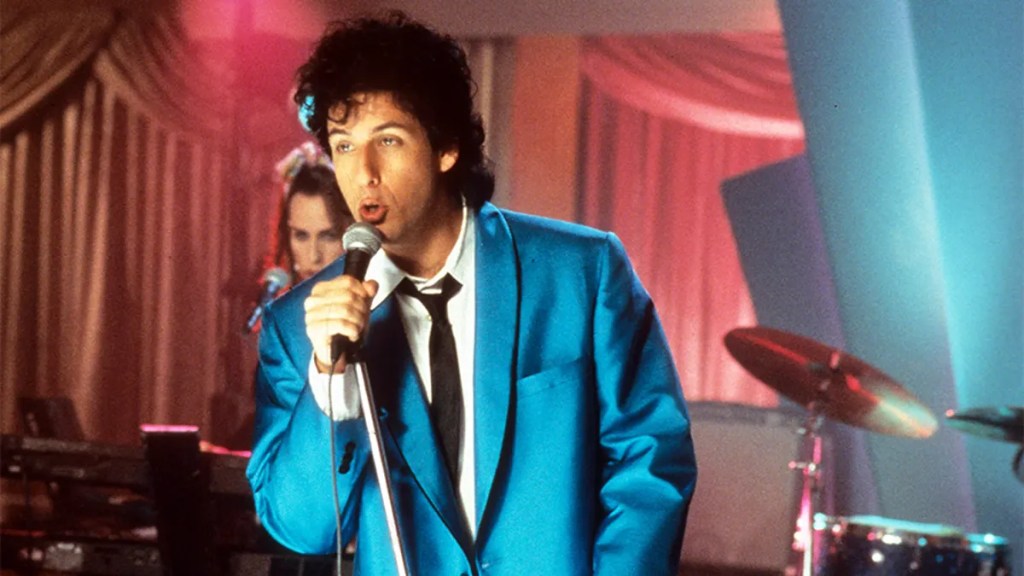
This being an Adam Sandler vehicle, Robbie’s melancholy is interspersed with fits of barely contained rage. Sandler is hilarious and surprisingly affecting, especially in a bitterly funny rendition of Madonna’s “Holiday” that he performs shortly after being jilted. His best friend, a womanizing limo driver (Allen Covert), tries to snap his buddy out of the depression, but to no avail.
But all is not lost. Drew Barrymore, in another variation on her America’s Sweetheart persona, plays catering-company waitress Julia. She and Robbie develop a quick friendship in his post-Linda blues. If only Julia wasn’t engaged to a smug Wall Street broker (Matthew Glave), a Don Johnson wannabe with a proclivity for cheating.
What differentiates The Wedding Singer from so many rom-coms is its steadfast plundering of ‘80s nostalgia. As you might expect, Robbie’s professional repertoire features songs from the Reagan era, and the soundtrack is equally perky, featuring the likes of Elvis Costello, the Smiths, the B-52’s and Hall & Oates.
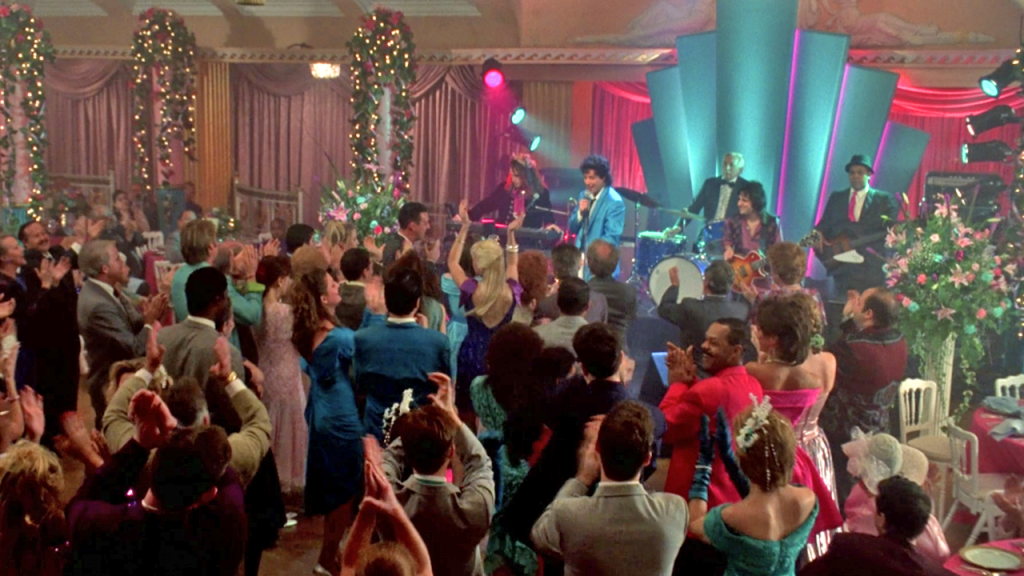
But the trip down memory lane goes beyond music. The film’s visual scheme boasts a palette of robust blues, pinks and yellows reminiscent of John Hughes flicks and early MTV. Director Frank Coraci and screenwriter Tim Herlihy don’t scrimp on other cultural artifacts of the period, mining everything from Rubik’s Cube to the fashion sense of Thriller-era Michael Jackson.
You get the idea: We are in the 1980s, goddammit, and you will experience the pleasures of nostalgia if it’s the last thing this picture does. Heck, even Billy Idol shows up to play himself, a somewhat dubious cameo considering Mr. Rebel Yell’s craggy mug here belongs to a guy well past 30-years-old, which he was in ‘85. As a Gen Xer and sucker for movie nostalgia, I will concede that this stuff is my jam. Still, the pop-culture ephemera feels awfully calculated and foisted upon The Wedding Singer, as none of it is even remotely intrinsic to the plot.
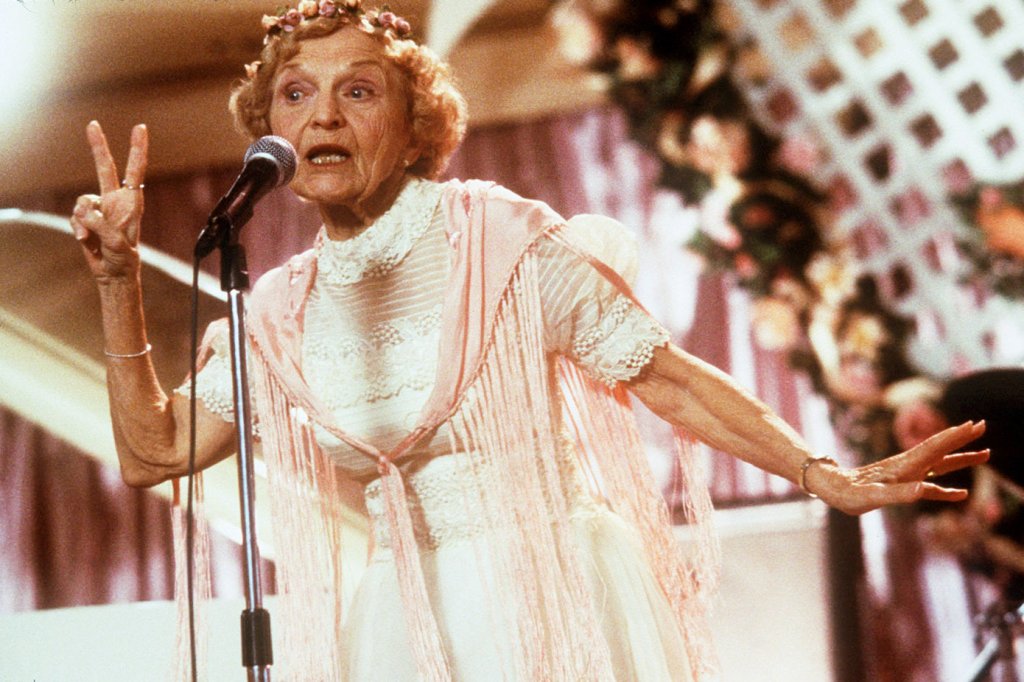
In the Sandler oeuvre, The Wedding Singer marked the first indication that the Saturday Night Live alum was interested in quasi-grownup comedies. That isn’t to say this movie doesn’t have its share of Sandler irritants; There is the running transphobic gag about a crooner (Alexis Arquette) who only performs Culture Club songs, and the filmmakers get maximum mileage from a sweet old lady (Ellen Albertini Dow) who enjoys candid talk about penises.
The movie’s heart and generally sweet nature help make up for its shortcomings. There is palpable chemistry between Sandler and Barrymore, so much so that the two would team up again in 50 First Dates and Blended. And the cast is uniformly solid, with Covert, Glave and Christine Taylor (as Julia’s promiscuous friend) shining in supporting roles.
 Cutting to the Chase with Phil Bacharach