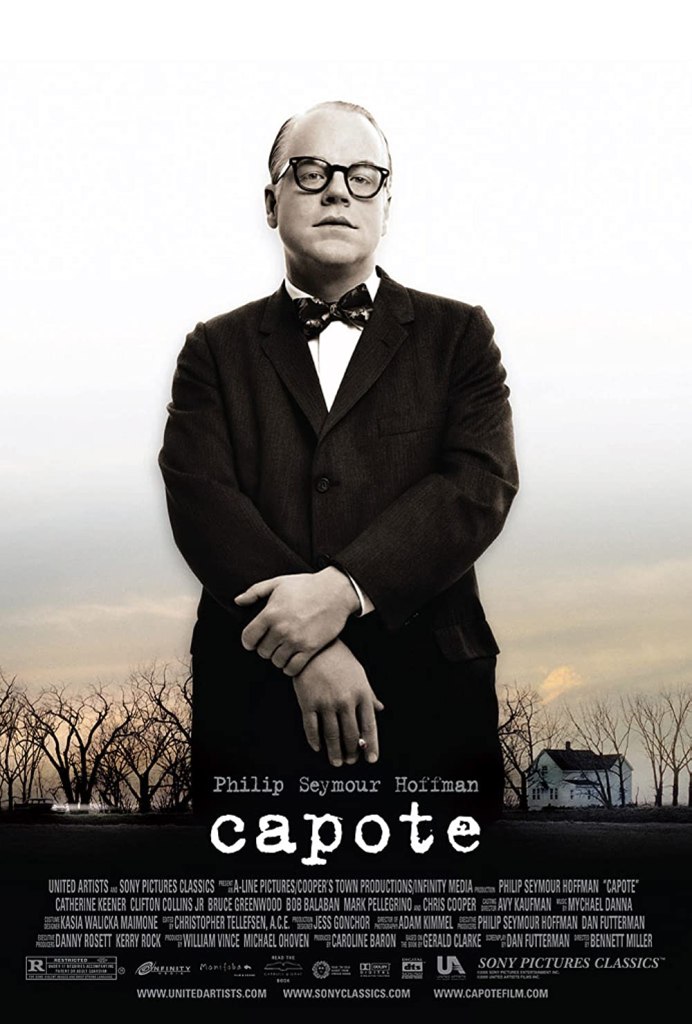
Truly great acting is always thrilling to see, but it reaches a different level of accomplishment when the performance is of a real-life icon. Such is the case with Capote. Philip Seymour Hoffman more than earned his Best Actor Oscar as the late author Truman Capote. The actor, arguably the best of his generation, transcends mere impersonation, although Hoffman gets that part – the effete mannerisms and awkward, baby-like voice of Capote– uncannily right. What easily could have lapsed into parody, however, becomes a complex characterization of the writer whose 1966 true-crime masterpiece, In Cold Blood, helped usher in a dynamic new style of journalism.
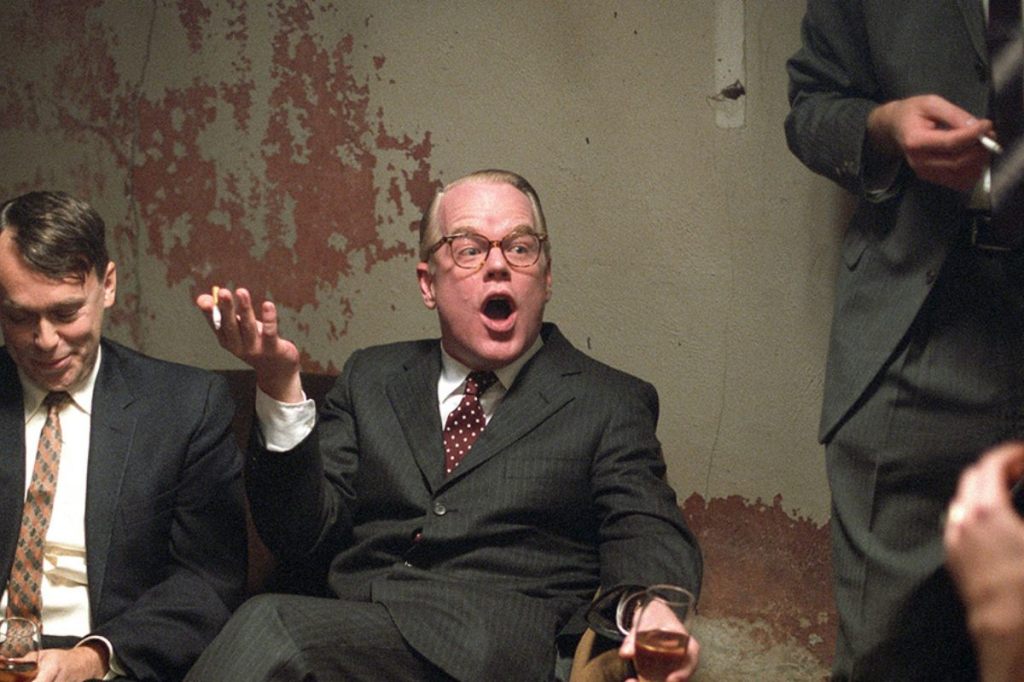
Even better: Hoffman’s performance is only one gem in this riveting story behind the story of In Cold Blood. We begin in 1959, when Capote, already the toast of the literati for his novel, Breakfast at Tiffany’s, comes across a newspaper account of the slaying of four members of a family in rural Kansas. Sensing the dramatic possibilities of this tragedy, he grabs his childhood friend, To Kill a Mockingbird novelist Harper Lee (Catherine Keener), and flies to tiny Holcomb, Kan., to do a piece for The New Yorker.
Initially, he intends to focus solely on how the town copes with the sensless murders, but his ambitions expand when the killers, Richard Hickock (Mark Pelligrino) and Perry Smith (Clifton Collins Jr.), are arrested in Las Vegas and returned to Kansas to stand trial. Capote begins talking with the suspects, particularly Perry, a surprisingly soft-spoken ex-con with whom the author feels a kinship. Capote now envisions writing a “nonfiction novel” that will change the face of literature. “When I think about how good my book can be,” he confides to Harper, “I can barely breathe.”
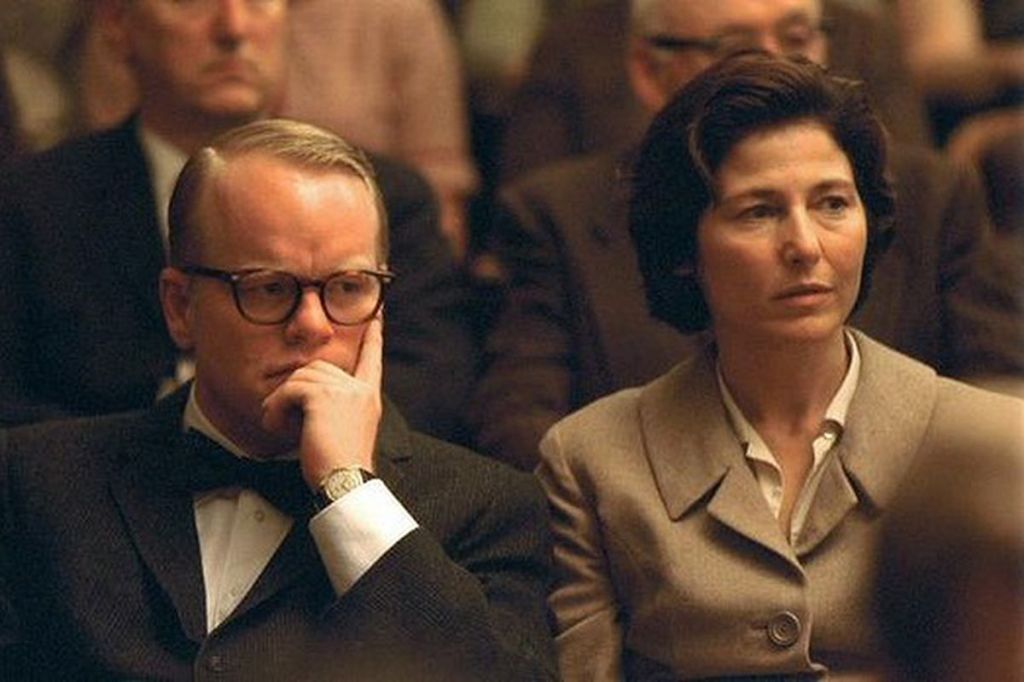
And so begins a Faustian bargain. Capote is a con man so shrewd it is virtually impossible to tell when he is fooling even himself. In an effort to bond with his interview subjects, the writer explores his own sad past. There is a lot for him to unpack, having been raised in Alabama by his aunts after being largely abandoned by his mother. It is a testament to this flamboyantly gay man from New York City that he manages to draw out the tight-lipped residents of Holcomb and develop a friendship with the lead investigator on the case (Chris Cooper).
Capote’s relationship with the suspects is a dance of manipulation and genuine concern. He is smitten by Perry and might even be in love with him; but he also needs the killers to be executed so he can finish the book that slowly gnaws away at his conscience.
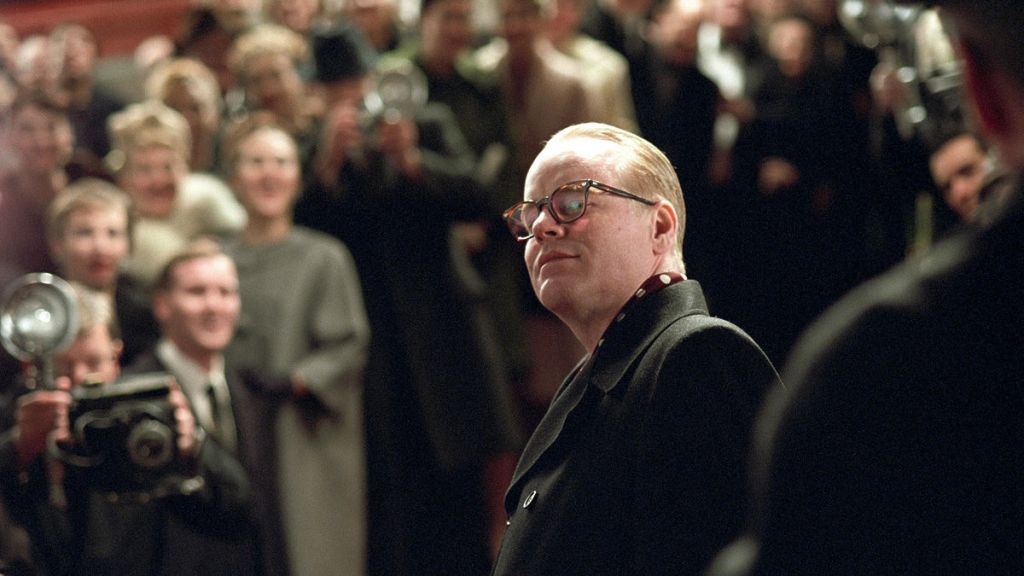
In addition to being a powerful story on its own, Capote also delivers one of the most effective portraits ever committed to celluloid of an author practicing his craft. Unlike most films about the writing life, director Bennett Miller and screenwwriter Dan Futterman capture the writer’s obsessions, self-absorption and, yes, creative genius.
Toward the film’s end, Capote gives a public reading of In Cold Bood, and the prose is as masterful as he presumes it to be. It’s a small thing, perhaps, but the scene illustrates the self-confidence that makes Capote so rich and rewarding.
 Cutting to the Chase with Phil Bacharach