
Judging by the charges of rank self-indulgence that M. Night Shyamalan endured at the time for Lady in the Water, you might half-expect it to be 108 minutes of the director singing in the shower, brushing his teeth, and taking a dump while reading the Philadelphia Inquirer. The movie’s reception by critics in 2006 was nothing short of lacerating.
It’s a pleasant surprise, then, to discover that Shyamalan’s follow-up to his much-maligned 2004 effort, The Village, is not awful. Far from it. A cinematic rendering of a bedtime story Shyamalan told his children, Lady in the Water boasts a talented cast and some moments of genuine magic and intrigue.
“Not awful” does not necessarily mean “good.” In its nakedly conscious stab at myth-making, the movie alternately tastes undercooked and overstuffed — perhaps appropriate for a motion picture that revolves around a MacGuffin of a manuscript dubbed “The Cookbook.”
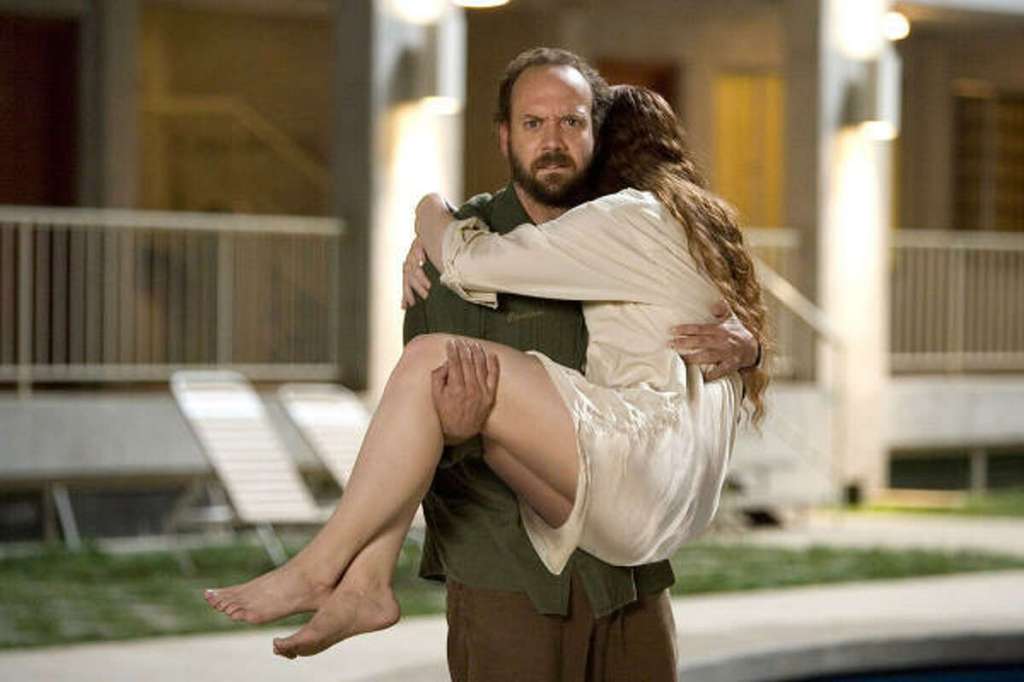
The woman of the title isn’t a lady so much as a sea nymph, otherwise known as a “narf” in the fairytale parlance dreamed up by Shyamalan. And the waterlogged universe she inhabits is a swimming pool at a ramshackle apartment complex in Philadelphia called The Cove. That poor narf, named Story (Bryce Dallas Howard), is in dire straits. She needs the help of humans to return to her magical universe, and so Story gleans hope one night when she is discovered in the pool by The Cove’s sad-sack handyman, the delightfully named Cleveland Heep (Paul Giamatti).
Cleveland, who keeps to himself in a tiny cottage adjacent to the apartments, suffers the scars of a tragic past he keeps under wraps. Story’s plight suddenly gives purpose to this lonesome man; in no time at all, he is helping protect the narf from a vicious creature, known as a “scrunt,” that lurks in the surrounding woods. Moreover, Cleveland sets out to deduce which of the apartments’ tenants have preordained roles in Story’s rescue.
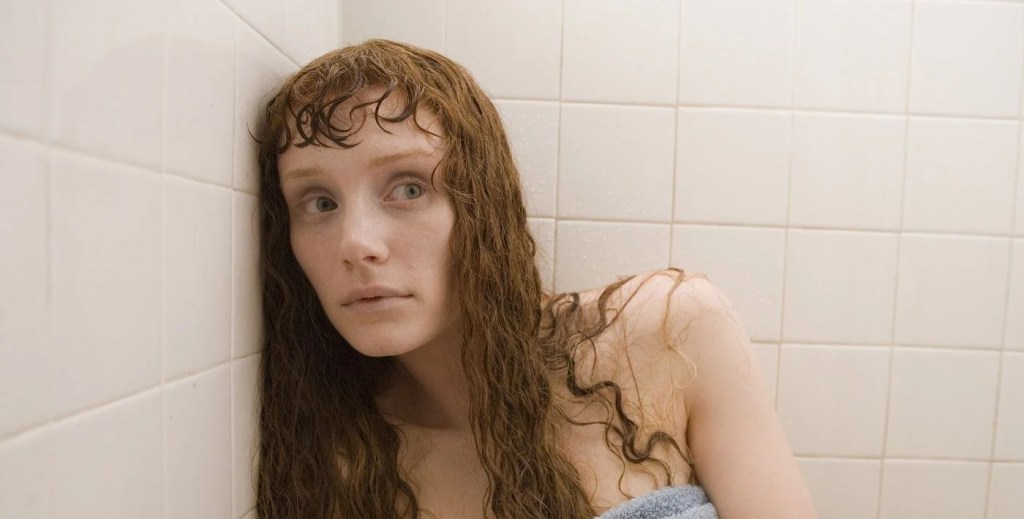
Randomness does not exist is the hermetically sealed world of M. Night Shyamalan. As Cleveland learns that Story is part of a fairytale brought to life, Lady in the Water takes on the risible everything-has-a-purpose theme that made the filmmaker’s Signs so goofy. Even so, the neatly constructed order induces fewer eye rolls this time around, since Shyamalan can simply hide behind the kitchen-sink dynamic of fairytales. All the silliness here about guardians, healers, a guild and the like reminds me of the Rob Lowe character in Thank You for Smoking, who notes that movies can remedy any inconsistency with “one line of dialogue: ‘Thank God we invented the, you know … whatever device.’”
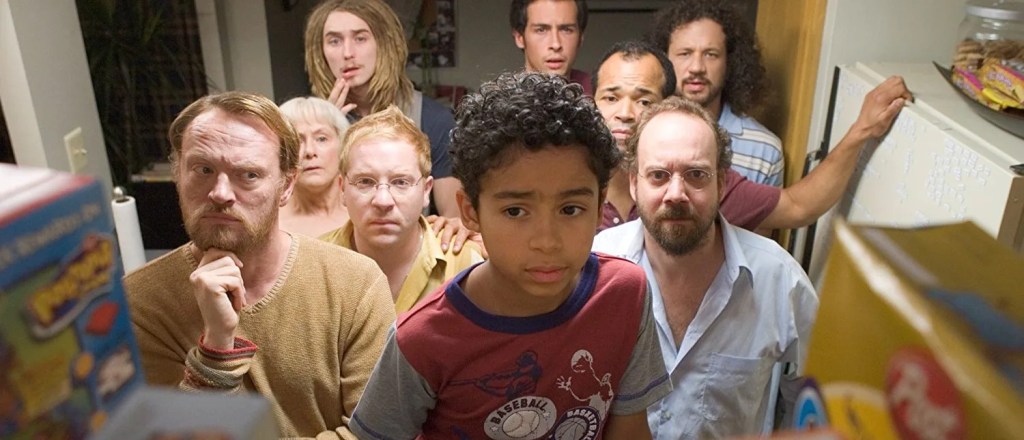
A lot of “whatever devices” turn up in Lady in the Water, a film that bears the seams of its bedtime-story origins. Cleveland learns about the narf’s magical world and what must be done to return her to her kingdom, from an elderly Asian woman (June Kyoto Lu) with an unnerving command of the mighty obscure fable. Neither she nor her Americanized granddaughter (Cindy Cheung) gives it a second thought that Mr. Heep, who quickly accepts Story’s story, keeps popping up with hypothetical questions about narfs and scrunts. Another resident reads magical messages on cereal boxes. Take that, Cap’n Crunch!
The cast is a mixed bag. Howard, who was arguably the best thing about The Village, is well cast as the pale, ethereal sea nymph, but she has precious little to do. Giamatti isn’t asked to do much more than stutter and project melancholy. Some very good character actors — including Jeffrey Wright, Freddy Rodriguez, Mary Beth Hurt and Bill Irwin — are wasted in one-dimensional roles as The Cove’s apartment dwellers.
And then there is the director himself. Shyamalan has appeared in his films before, but Lady in the Water marks his first significant acting part. Here he portrays a struggling writer whose manuscript, “The Cookbook,” might just be pretty darned important. As a filmmaker, Shyamalan is a bona fide original. As an actor, he borders on insipid.
Then again, maybe Shyamalan’s casting of himself as the unappreciated, world-changing artist just fills some deeply rooted narcissistic need of his. There is undoubtedly some catharsis going on here. After all, he goes to lengths to make a villain out of The Cove’s newest tenant, an upright, thoroughly unlikable film critic played by Bob Balaban.
 Cutting to the Chase with Phil Bacharach