
Holiday Inn is about as corny as it gets, but this Paramount musical conjures magic by bringing together three preeminent figures of 20th century song and dance: Irving Berlin, Bing Crosby and Fred Astaire. Even if this 1942 picture wasn’t so much glossy fun, it would have earned a place in pop culture history for introducing the world to Berlin’s classic “White Christmas.” And if that weren’t enough (and by all rights it damn well should be), the movie was the inspiration for the name to the ubiquitous hotel chain.
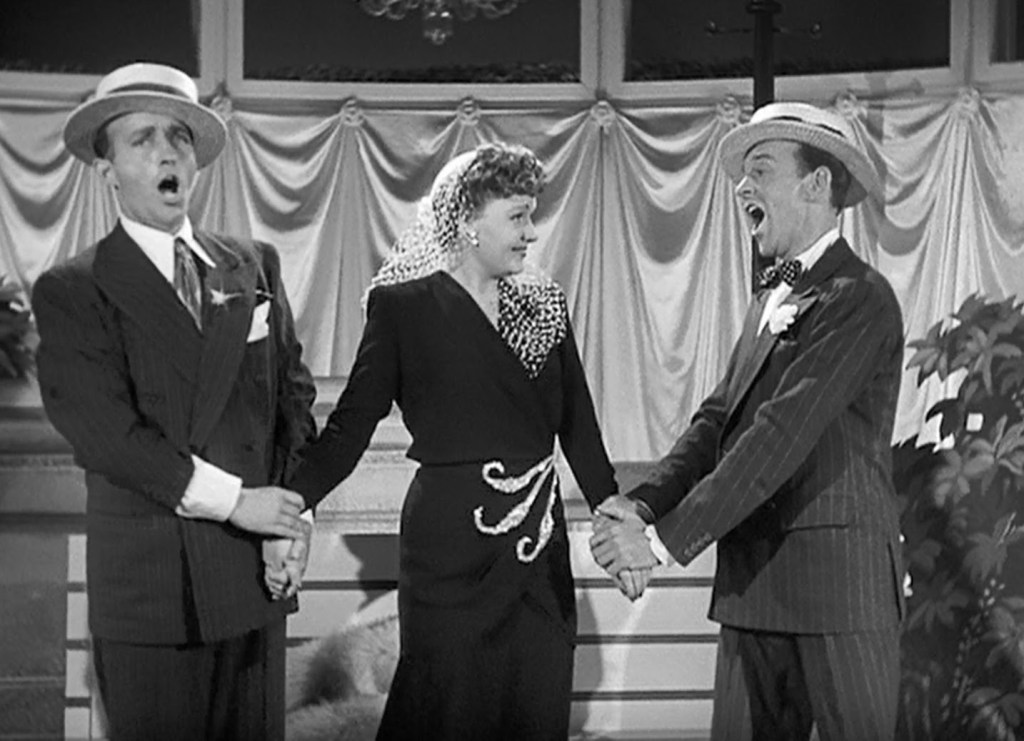
Crosby and Astaire star as showbiz partners Jim Hardy and Ted Hanover, song-and-dance guys who find themselves at odds, sorta, when Ted steals away Jim’s fiancé, Lila (Virginia Dale). Oh, well, Jim is an amazingly unflappable fella, and so he graciously bids the new couple good luck and shuffles off to rural Connecticut.
There he buys a big farmhouse and converts it into an inn and nightclub. But here’s the twist: Jim plans to open the inn only on holidays, thereby giving him about 350 days a year to kick back and relax. Along the way, he woos aspiring singer-dancer Linda Mason (Marjorie Reynolds).
Complications ensue when Lila jilts Ted for a Texas millionaire on New Year’s Eve. Drowning his sorrows, tipsy Ted flees to the now-hopping Holiday Inn to commiserate with his old buddy, Jim. Instead, the drunken Ted winds up dancing with Linda in a lively number that brings down the house. Jim braces himself to lose another dame to Ted, but luck and gin intervene. The next morning, Ted can’t remember the mystery gal he hoofed it with, forcing him and his excitable manager (Walter Abel) to search for who they are certain will be Ted’s next dancer partner.

Goofy? Good God, yes, but Holiday Inn aspires to be nothing other than light and engaging entertainment — and on that level, it’s a smashing success. Director-producer Mark Sandrich, who also helmed the Astaire-Rogers classic Top Hat, transports viewers to a cinema fantasyland where no lovers’ triangle is too worrisome, a place where a hammer and some nails can transform an unassuming New England farmhouse into a rustic palace. Moreover, Claude Binyon‘s screenplay also happens to be genuinely funny. In a winking bit of postmodernism, Holiday Inn even gets self-reflexive toward the end, when Hollywood taps Ted and Linda to star in a movie about – wait for it – Holiday Inn.
Berlin, who had the idea for the movie, contributes some wonderful holiday numbers here. In addition to “White Christmas,” standouts include “Easter Parade,” “Lazy” and “Happy Holiday.” Of course, it helps when the performers are musical icons. Crosby and Astaire get respective moments to shine, with the latter particularly incandescent in a firecracker-fueled Fourth of July dance aptly titled “Say It with Firecrackers.”

All this good will is nearly demolished by one notorious, shockingly racist number, a minstrel-show ode to Abraham Lincoln. As Crosby and Reynolds sing “Abraham” in blackface, Holiday Inn‘s African-American mammy (Louise Beavers) serenades her two small children in the kitchen: “When black folks lived in slavery / Who was it set the darkie free? / Abraham! Abraham!” Even accounting for the context of the time in which Holiday Inn was made, this is hard to take.
 Cutting to the Chase with Phil Bacharach