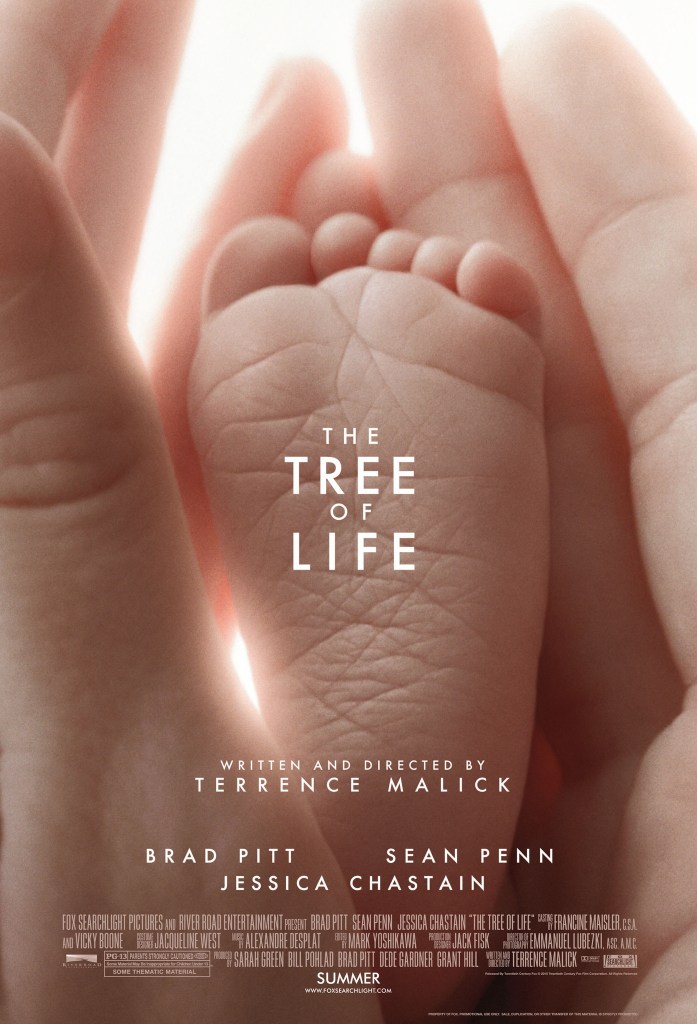
Not many pictures are so flat-out ballsy as to interrupt its principal narrative in order to reveal the origin of the cosmos. But Terrence Malick’s The Tree of Life does just that. This coming-of-age story is ambitious and audacious, bold and bewildering. It is 2001 with a Texas twang. It is amazing.
That doesn’t mean Malick’s fifth feature in four decades is for everyone. This is the sort of movie about which my 93-year-old mother would say felt like it lasted eight hours. The Tree of Life took top honors at the Cannes Film Festival the year of its theatrical release, but it drew as many boos as cheers.
It is almost breathtaking in its pretentiousness. In centering on an ostensibly unremarkable Texas family in the 1950s, Malick probes the mysteries of the universe, questions about God and virtue, and the interconnectedness of all life. That’s heady stuff, all right, preordained to divide audiences.
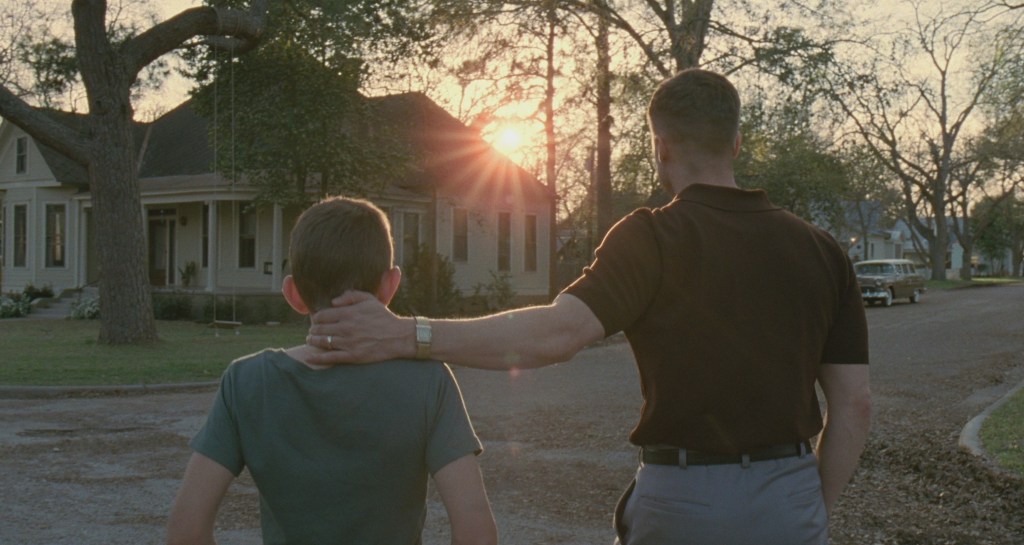
Hunter McCracken is tremendous as 11-year-old Jack. Growing up in Eisenhower-era Waco, he and his two younger brothers do dumb-kid stuff as they orbit around the disparate worlds of their parents. Their father (Brad Pitt), a middle-class salesman bitter from dreams unfulfilled, cautions his sons, “If you want to succeed, you can’t be too good.” Chafing from their dad’s explosive temper, the boys find solace with their quietly suffering mother (Jessica Chastain).
The story is driven by images and impressions, not plot. Jack and his siblings increasingly are caught between their parents, or the dueling polarities of Nature and Grace, as the film spells out in the opening minutes.
Malick, who grew up in Texas and Bartlesville, Okla., fashions a mosaic of nonlinear imagery both real and imagined, shuttling between Sean Penn as grown-up Jack, now a Houston architect, and the fragmented remembrances of a childhood steeped in the requisite joys, sorrows and casual cruelties. In so doing, The Tree of Life captures something fundamental and almost mystical about memory.

Lyrical and overflowing with sumptuous visuals, The Tree of Life unfolds as a sort of cinematic poem. The production is flawless, from Alexandre Desplat’s beautiful score to dazzling work by cinematographer Emmanel Lubezki.
Taken as a whole, it is provocative and sprawling enough to invite a spectrum of interpretations, at least until a final sequence that owes more than a bit to European art-house films of the 1960s.
But let’s not nitpick. The Tree of Life is destined to be sliced and diced in film classes around the country for decades to come. Better yet, experience it yourself — on the largest screen possible.
 Cutting to the Chase with Phil Bacharach
One response to “The Tree of Life (2011)”
[…] Kenneth Lonergan3. Drive, director: Nicolas Winding Refn2. Hugo, director: Martin Scorsese1. The Tree of Life, director: Terrence […]
LikeLike