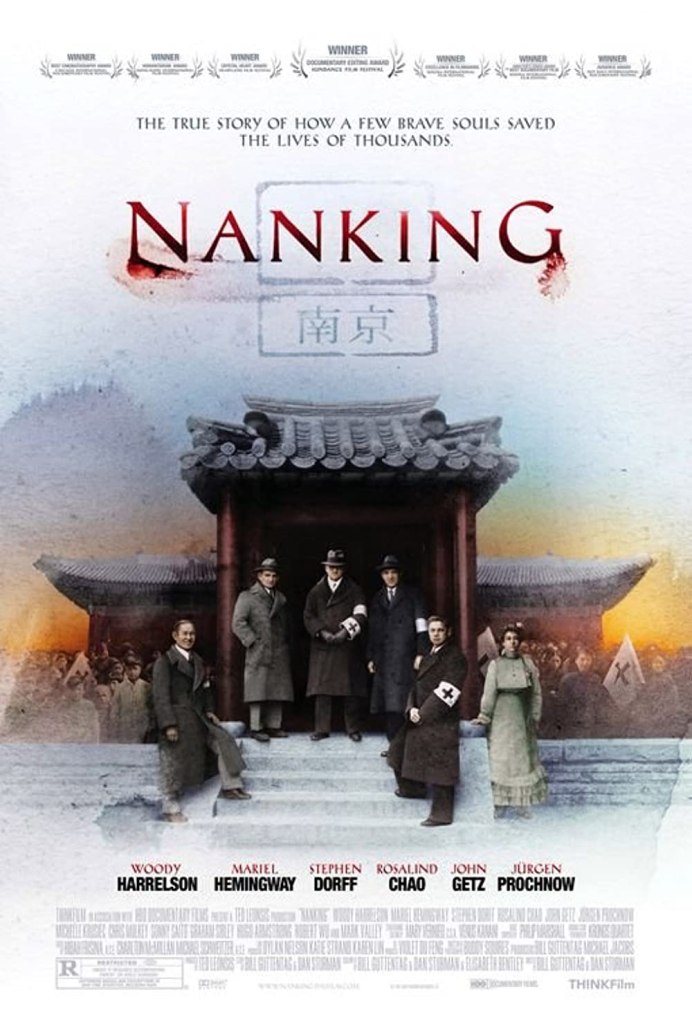
In late 1937, one of the most harrowing atrocities of the 20th century took place in China’s then-capital of Nanking. Japanese imperial forces invaded the walled city after a series of punishing air raids, only to then engage in a systematic reign of rape, torture and murder. Nanking, a documentary chronicling that horror, is a truly gut-wrenching experience — but it is as essential as it is nearly unendurable.
Directors Bill Guttentag and Dan Sturman make effective use of vintage newsreel footage of Nanking’s bombing and subsequent occupation. The spoken word, however, is what really carries the most power here. The remembrances of elderly Chinese survivors are particularly ghastly. Wealthy families and foreigners managed to evacuate Nanking before Japanese soldiers reached the city. For the hundreds of thousands of citizens not so fortunate, however, what followed was hellish.
You will not easily forget a man recounting how Japanese soldiers bayoneted his mother while she was breastfeeding his baby brother. The doc also includes interviews with Japanese military veterans who recall with chilling detachment the rapes of Chinese girls. The closest words of contrition are from a man who magnanimously concludes, “Nothing good came of raping them. Unless the two of you are both into it, these things are no good.” An estimated 20,000 rapes occurred in the first six weeks of Japanese occupation.

Nanking’s filmmakers are particularly innovative in their use of actors to lend voice to the journals and letters of Westerners who had remained in Nanking to help the native population. Twenty-two people from Europe and the U.S. — mainly missionaries, businessmen, teachers and clergy — banded together to create a so-called Safety Zone. Although Japanese soldiers periodically breached the area, the two-square mile sanctuary is credited with saving about 250,000 Chinese.
Some viewers might think the use of actors intrusive, but I found that it infuses the proceedings with a sense of urgency and poignancy. The performers portray specific characters as they deliver their readings directly to the camera. The spoken words are deeply affecting, and these real-life tales of heroism and sacrifice provide a much-needed contrast to the film’s unrelenting agony. It helps that the actors — including Woody Harrelson, Mariel Hemingway, Stephen Dorff, Jürgen Prochnow and John Getz — give beautifully understated performances.
Nanking is difficult to watch. Prepare to shed tears. But far too many people know next to nothing about the unadulterated evil that revealed itself during that dark period. More than 200,000 civilians and prisoners of war were slaughtered in the first month of the siege.
 Cutting to the Chase with Phil Bacharach