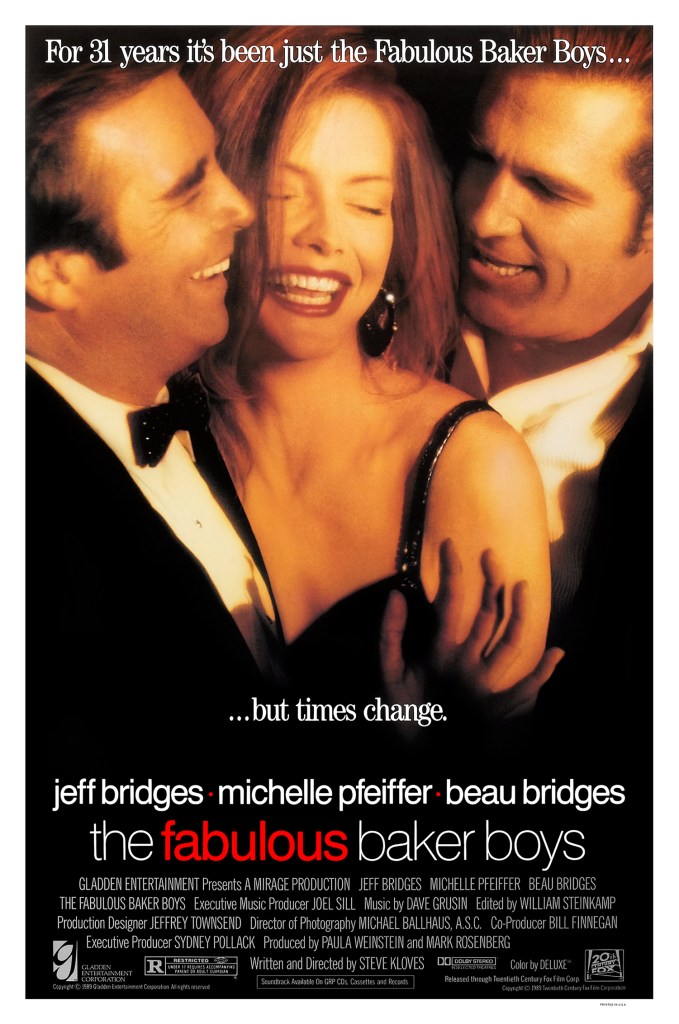
When you have real-life brothers portraying brothers, you’re bound to elicit some interesting dynamics. That’s the case with The Fabulous Baker Boys. A modest box-office success upon its 1989 theatrical release, it chiefly earned raves at the time for a memorable star turn by Michelle Pfeiffer. But the movie holds up, thanks to its richly drawn characters and a remarkably self-assured directorial debut by screenwriter Steven Kloves.
Off-screen brothers Jeff and Beau Bridges play, respectively, Jack and Frank Baker, a struggling duo-piano act mired in the purgatory of Seattle’s dimly lit hotel lounges and kitsch-themed supper clubs. After 15 years tinkling the ivories for such smarmy standards as Morris Albert’s “Feelings,” the wear and tear of showbiz mediocrity is beginning to show. They routinely perform at bars where they must compete with a ballgame on TV, until they are slapped with the ultimate indignity: One oily bar owner actually pays the brothers not to play.
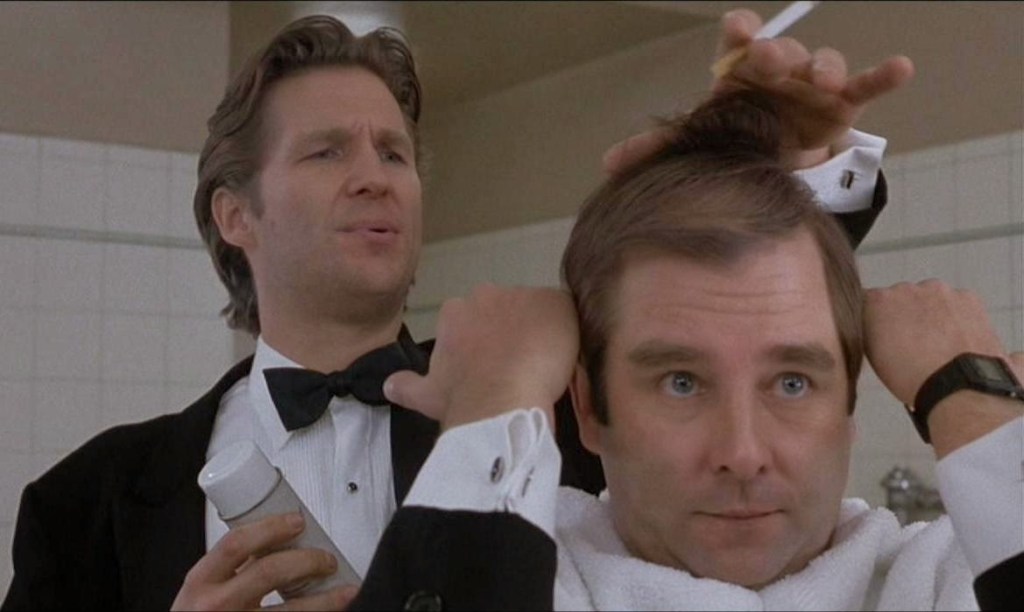
That humiliation finally spurs Frank, who handles the business end of the act, to suggest that they take on a female singer. “Two pianos isn’t enough anymore,” says Frank.
“It never was,” is Jack’s tart reply.
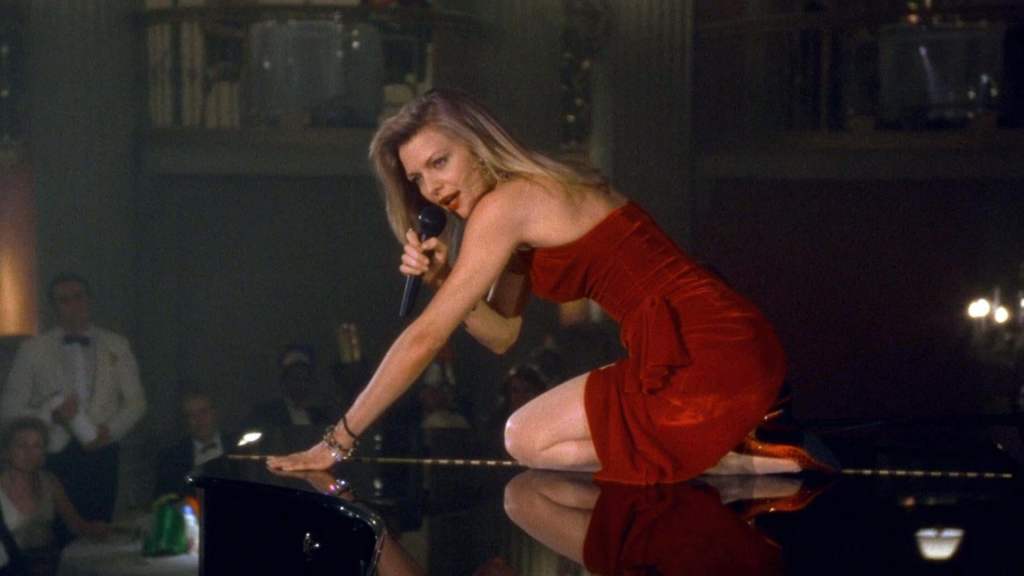
The auditions for a new singer go as badly as comic movie montages dictate they will … until, that is, a gum-smacking call girl, Susie Diamond (Pfeiffer), teeters in on stiletto heels. She is abrasive and belittling, but she is also stunningly beautiful – she’s Michelle Pfeiffer, after all – and her singing isn’t half bad. The Fabulous Baker Boys get their songbird, and business starts to look up. The reason for the turnaround is clear. As one club owner advises, “The shorter the skirt, the bigger the crowd.”
But Susie’s entrance upsets the brothers’ fragile love-hate relationship, especially after she and Jack hook up after a New Year’s Eve show. Resentments long left dormant are brought to the fore. Jack, the cool and smart brother, is a frustrated jazz pianist; for more than 15 years, he has swallowed his pride and stifled his creative impulses in service to his domesticated and less talented, if more practical, older brother.
Writer-director Kloves’ dialogue is occasionally too pat for its own good, but the characters are well-drawn and complex. Kloves also gets considerable help from veteran cinematographer Michael Ballhaus, who gives Baker Boys a velvety, luxuriant feel. Both Bridges are excellent; it might be the pinnacle of Beau Bridges’ filmic career. Pfeiffer initially overplays her brassiness (perhaps still channeling her performance from the previous year’s Married to the Mob), but soon enough she finds her groove as the no-nonsense chanteuse who prods the brooding Jack into rejoining the world of the living.
 Cutting to the Chase with Phil Bacharach