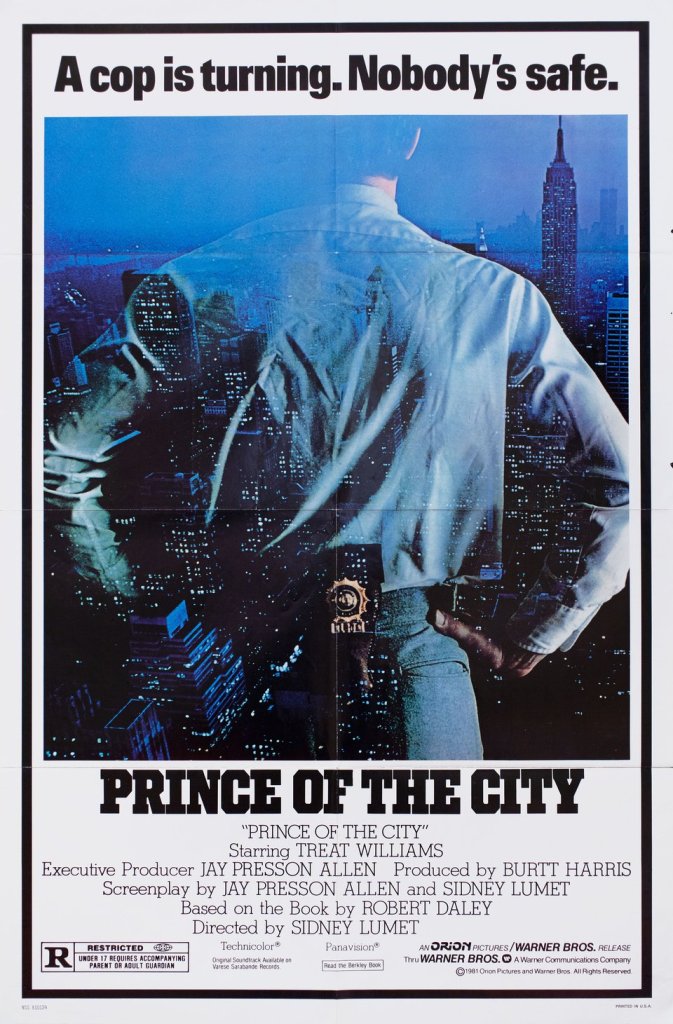
Although Sidney Lumet’s Prince of the City hit movie theaters in 1981, its deliberate pace, brooding vibe and moral ambivalence place it squarely in line with the director’s string of 1970s-era masterworks that included Serpico, Dog Day Afternoon and Network.
Based on a 1978 nonfiction book by Robert Daley, Prince of the City changes names and times, but it essentially tells the real-life story of Robert Leuci, a New York City cop who wore a wire as part of a sweeping federal probe of corrupt NYPD narcotics detectives. The film’s Leuci surrogate, Special Investigative Unit detective Danny Ciello (Treat Williams), is far from a self-righteous Dudley Do-Right. Like his partners in the narcotics division, Danny shelved his idealism long ago to accommodate the grim realities of the job. He routinely dispenses heroin to the junkies he uses as informants, makes deals with mobsters, and occasionally helps himself to the suitcases of cash seized in major drug busts. The officers, self-styled cowboys with little administrative oversight, tell themselves that such shenanigans are the only way to cut into the profits of the drug lords.
Although Danny presents himself to the world as cocky and boisterous, he is clearly troubled by his corruption. Consequently, he is intrigued when he is approached by a prosecutor (Norman Parker) representing the Chase Commission, a federal investigation of crooked New York cops. For reasons never made explicit, Danny eventually agrees to wear a wire for the commission and collect evidence against dishonest cops, but he forces the feds to accept an important caveat: He will never ever rat out his partners.
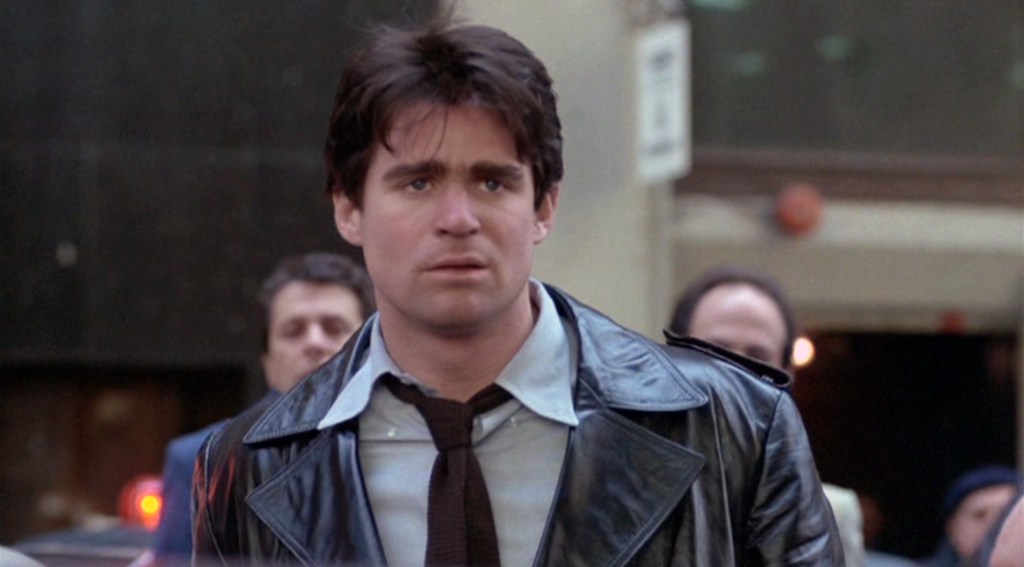
The Oscar-nominated screenplay by Lumet and Jay Presson Allen has ambition to spare. With more than 100 speaking parts, Prince of the City weaves through a nearly three-hour maze of crosses and double-crosses, close calls and courtroom wangling. Through it all, Lumet’s gritty, naturalistic style contributes to a sense of heightened realism.
The film’s rewards are many. In this simmering cauldron, Prince of the City explores the difficulties of adhering to an ethical code in an unethical world. The ostensible good guys of the federal probe are opportunistic and duplicitous. Career bureaucrats all, they drift in and out of the process while Danny is eventually left working with Santimassino (Bob Balaban), a coldly aloof prosecutor who treats the cop like wadded-up gum on the sole of his shoe. When Danny jokes that he doesn’t want to be responsible for getting anyone arrested over Easter, adding that narcotics officers are loathe to jail people during holidays, Santimassino just stares at him blankly. “It’s a little different on the federal side,” he says tartly.
The audience is afforded information in spurts and dribbles, effectively forcing us to experience Danny’s confusion and powerlessness as he spirals deeper into shadowy investigations that seemingly have no end. Moviegoers with a low threshold for police procedurals and convoluted plotlines might not care much for the approach. And, yes, Prince of the City is undoubtedly longer than it needs to be.
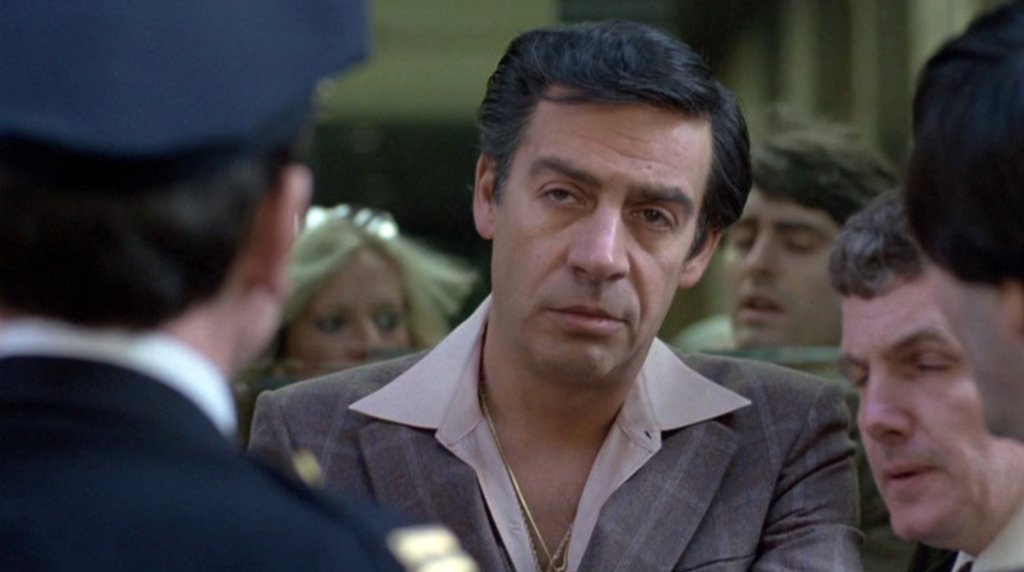
The men Danny inevitably hurts most are those whom he loves and respects — and who love and respect him back. Prince of the City extols male bonding, only to shatter such loyalties into a thousand pieces. “I sleep with my wife, but I live with my partners!” Danny barks to the feds early on, explaining that he won’t betray his friends. Once the journey begins, however, he learns that betrayal begets betrayal — and that absolution is impossible.
Treat Williams has a formidable task in the film. The actor, whom Lumet cast based on his quasi-breakout role in 1979’s Hair, is given the role of a definite antihero; Danny must be charming but blustery, heroic but conniving and deceitful. That does not always make for a sympathetic protagonist, but Williams successfully conveys the character’s humanity and inner turmoil. It is a demanding performance, and a marvelous one. But Lumet is well-known for getting the best from his actors. Prince of the City boasts dozens of memorable acting turns, especially by Balaban, Jerry Orbach, Lindsay Crouse and Carmine Caridi.
 Cutting to the Chase with Phil Bacharach