For good or ill––or, more accurately, for good and ill––school is where we learn our socialization skills (or lack thereof). Oh, it’s also where we just plain learn, of course: reading, writing, arithmetic and whatnot. But there are also crucial lessons to be had out of the classroom, whether that be in the cafeteria, the locker rooms or on the playground. These locales are where we glean instruction about authority, conformity, popularity, competition, cruelty and rebellion. It is no wonder school has long been fodder for the movies.
15. Three O’Clock High (1987, dir: Phil Joanou)
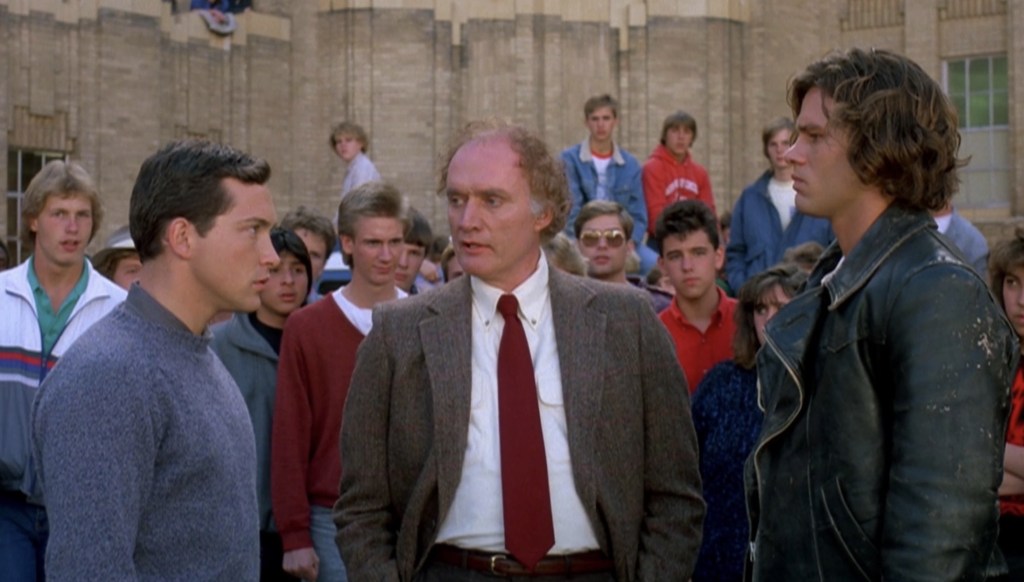
Sometimes the pathos of the 1980s teen flick went no further than how to avoid getting one’s ass kicked. Jerry Mitchell (Casey Siemaszko), our hero in the agreeably silly Three O’Clock High, makes the grave mistake of inadvertently pissing off psychopathic new student Buddy Revell (Richard Tyson), who vows to decimate our protagonist once school lets out at 3 p.m.
14. Pretty Maids All in a Row (1971, dir: Roger Vadim)
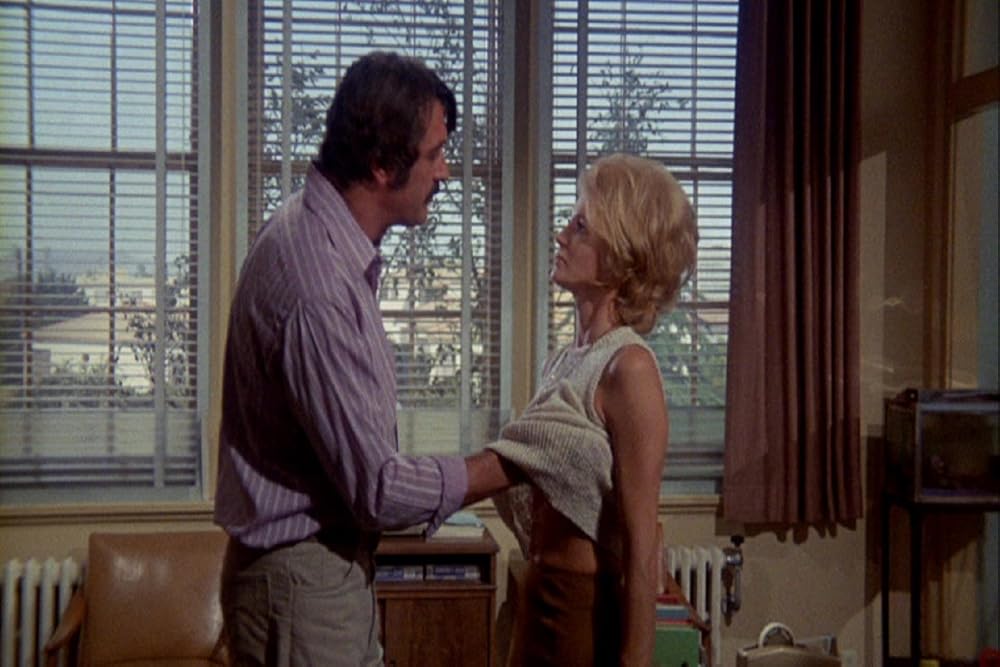
Revisiting this shockingly inappropriate skin flick from the enlightened perch of the 21st century, Pretty Maids All in a Row feels like it could just as well be a cultural artifact from debauched Rome instead of 1970s America. Horndog moviemaker Roger Vadim, more noted for his relationships with beautiful women (Brigitte Bardot, Catherine Deneuve, Jane Fonda) than directorial acumen, made his U.S. debut with this creepy dark comedy of sex and murder in high school. Rock Hudson is a beloved guidance counselor who beds—well, statutorily rapes—a seemingly endless procession of comely female students, a pre-Kojak Telly Savalas is a police lieutenant on the trail of several in-school homicides, and Angie Dickinson is a naive sexpot teacher.
13. Rock ’n’ Roll High School (1979, dir: Allan Arkush)
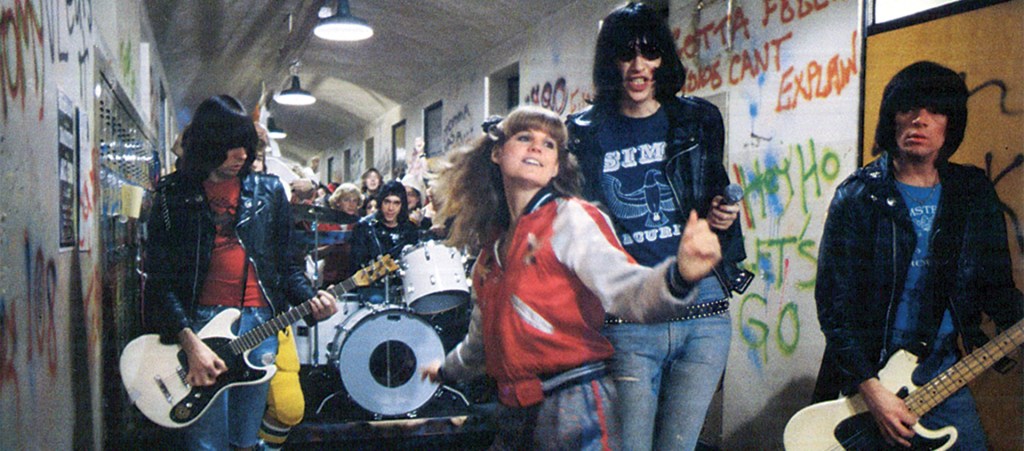
If only my high school had been half as bitchin’ as Rock ‘n’ Roll High School’s Vince Lombardi High (my graduating class’ theme song was Christopher Cross’ regrettable “Ride Like the Wind”). It is notable that B-movie king Roger Corman originally envisioned a cheap teen flick for his newly formed New World Pictures to cash in on the disco craze. Thankfully, cooler heads (and I mean “cool” in the “cool” sense) prevailed and The Ramones became the premier band after Cheap Trick and Todd Rundgren passed. The preternaturally adorable P.J. Soles is rock ‘n’ roller girl/Ramones superfan Riff Randall, with the awesome Mary Woronov as villainous principal Miss Togar. Schlocky bliss.
12. 10 Things I Hate About You (1999, dir: Gil Junger)
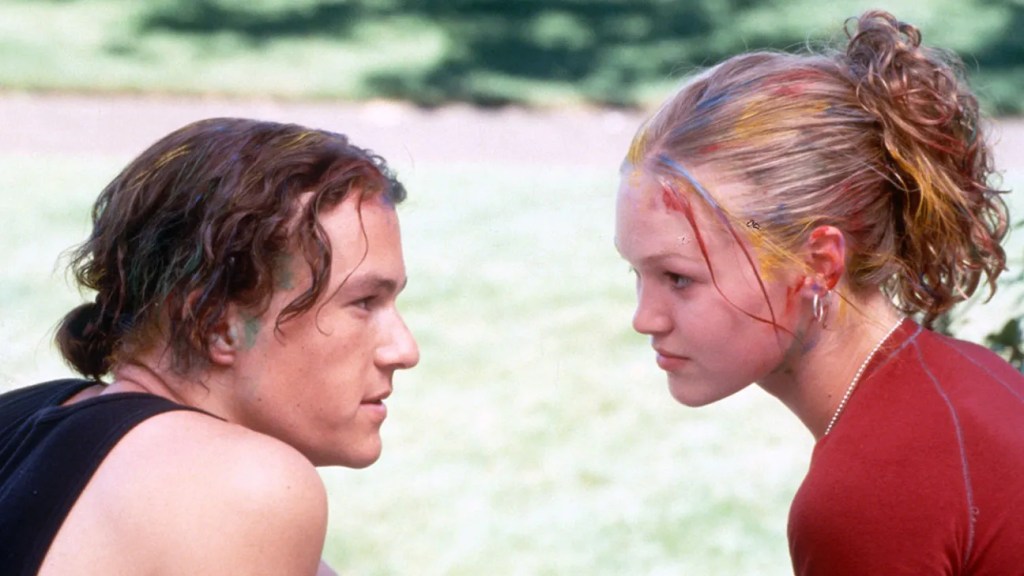
The existence of this charming romcom is partially due to the success of another great school-centric movie on this list. Inspired by how Clueless (see #7) updated Jane Austen’s Emma, screenwriters Karen McCullah Lutz and Kirsten Smith decided a wry reworking of Shakespeare’s The Taming of the Shrew was in order. 10 Things I Hate About You delivers an irresistibly sweet-natured view of high school. It is a place for playful crushes, even when the crushees are as ostensibly star-crossed as perpetually irritable Kat Stratford (Julia Stiles) and Australian stud Patrick Verona (Heath Ledger). Young Joseph Gordon-Levitt and Larisa Oleynik are fine in supporting roles, but the picture squarely belongs to Stiles and Ledger, both of whom were actually of high school age when they were cast––not a particularly common phenomenon for teen flicks.
11. Brick (2005, dir: Rian Johnson)

In his feature debut, Rian Johnson indulged his love for Dashiell Hammett detective novels by transplanting a hardboiled detective into high school. The writer-director returned to his own San Clemente, California, high school to enlist the help of friends while filming over weekends and after classes. Joseph Gordon-Levitt portrays student Brendan Frye, whose investigation into an ex-girlfriend’s death leads him to a drug-dealing kingpin (Lukas Haas) with a mom who likes to serve orange juice. Deliberately paced and impressively weird, Brick is a winning mesh of neo-noir and high school intrigue, and it presaged how Johnson would further hone the whodunit with his Knives Out franchise.
10. Eighth Grade (2018, dir: Bo Burnham)

Warning: For those still suffering post-traumatic stress disorder from middle school, Eighth Grade might trigger cold sweats. The cringe-inducing but darkly humorous flick stars a superb Elsie Fisher as a shy, screen-addicted 13-year-old navigating the treacherous waters of social media, school crushes and pool parties. Writer-director Bo Burnham understands how technology is radically transforming how kids relate to the world and to each other. The result isn’t a cautionary tale––Eighth Grade is too smart and heartfelt for that––but a pitch-perfect reminder that growing up is as painfully funny as it is painful.
9. If … (1968, dir: Lindsay Anderson)
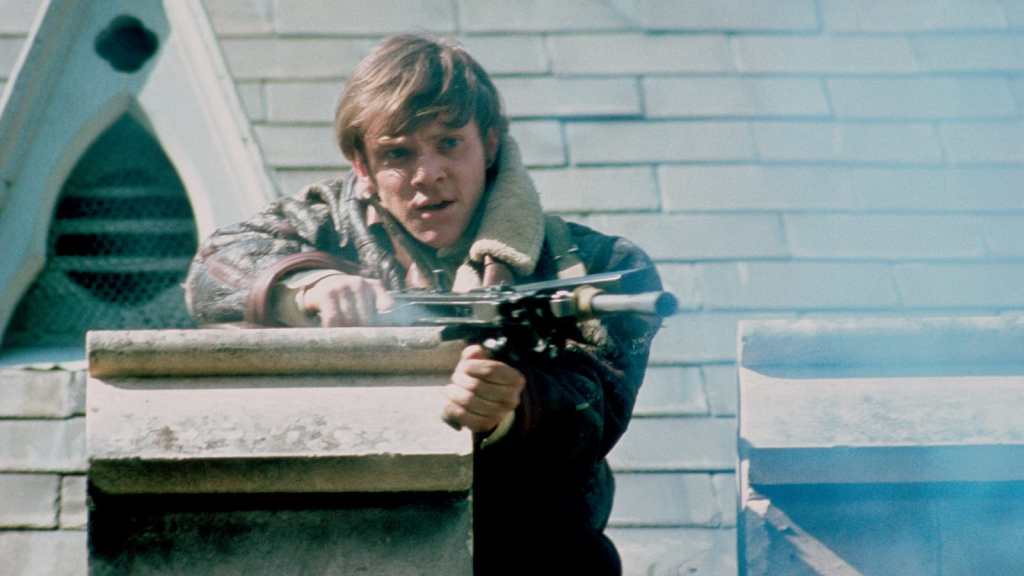
The English public school system receives a damned good thrashing in Lindsay Anderson’s drolly vicious comedy-drama. The upper classmen are sadists who use the “scum” junior boys as quasi-slaves and routinely terrorize anyone who shows a “deplorable lack of spirit.” Into this hell, Mick Travis (Malcolm McDowell in his debut film) and his mates lead a bloody insurrection in keeping with their heroes––Geronimo, Che Guevara, Mao Zedong––whose posters adorn their dormitory walls. “Violence and revolution are the only pure acts,” Travis notes. “War is the last possible creative act.” As film scholar David Thomson writes in Have You Seen…?: A Personal Introduction to 1,000 Films, the picture “is rare among public school films in that it has a true loathing of its subject, and not a glimmer of a tranquilizing nostalgia.” Stanley Kubrick was so taken with McDowell’s performance here that he cast the actor as the head hooligan for his ultra-violent A Clockwork Orange.
8. The Perks of Being a Wallflower (2012, dir: Stephen Chbosky)
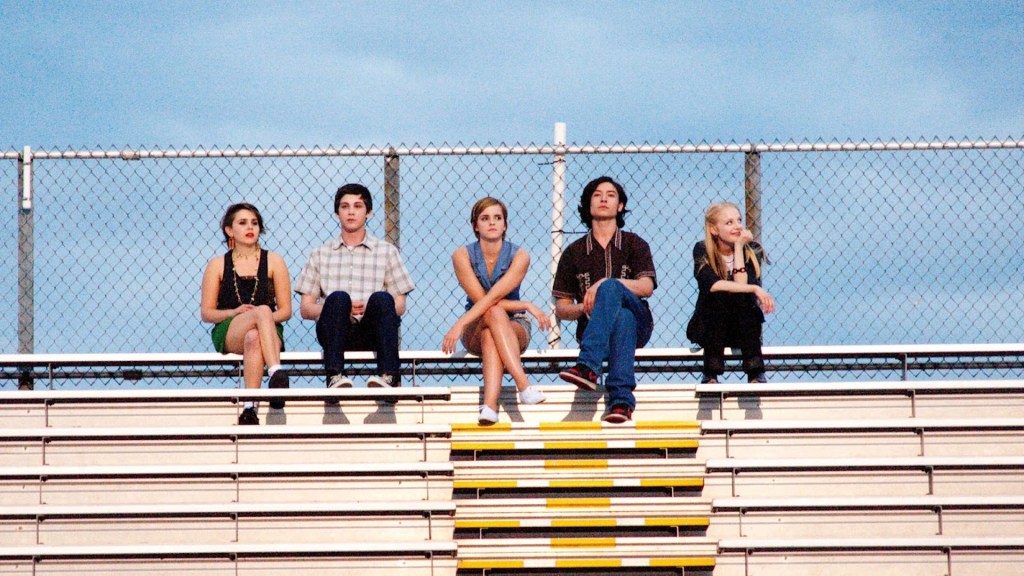
John Hughes, for all the love people heap on his 1980s teen movies, was too easy on high school. For many of us, those years were a marathon of self-pity, angst and anything else you’d find in the grooves of a Smiths album. That’s what makes The Perks of Being a Wallflower so resonant. It follows Charlie (Logan Lerman), a quiet, withdrawn freshman who bears the psychological scars left from a best friend who committed suicide and a beloved aunt (Melanie Lynskey) who died in a car crash. Things brighten when Charlie meets a pair of stepsiblings (Ezra Miller and Emma Watson) at peace with their outsider status. Charlie is introduced to drugs, good music and love. Adapted by writer-director Stephen Chbosky from his own YA novel, The Perks of Being a Wallflower captures the operatic mood swings of youth, a time when the perfect song playing over the car radio can ignite infinite possibilities.
7. Clueless (1995, dir: Amy Heckerling)
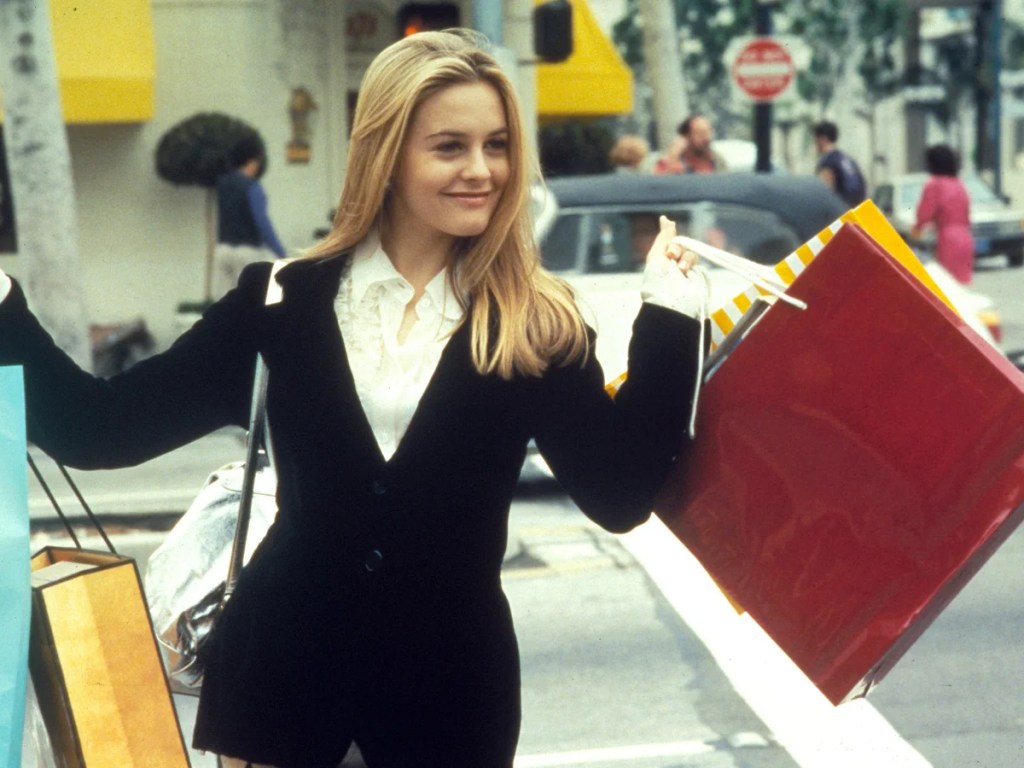
Few comedies of the 1990s are as effortlessly effervescent as Clueless. At least it looks effortless. As if! Of course, we know better. While writer-director Amy Heckerling has terrific source material to work from––Clueless is a tongue-in-cheek updating of Jane Austen’s Emma––it can’t be an easy feat to posit a protagonist as superficial and ditzy as Cher Horowitz (Alicia Silverstone) and make her so endearing. Cher and best friend Dionne (Stacey Dash) are at the top of the social hierarchy at fictional Bronson Alcott High School in the presumably real Beverly Hills. A winning supporting cast is led by Paul Rudd as Cher’s stepbrother/love interest (let’s just move on, shall we?), but this is Silverstone’s movie through and through. Sure, some pop-culture references are past their expiration date (Pauly Shore, the Baldwin brothers), but no matter. Clueless is a delicious time capsule of a very specific time, from the vernacular to the fashions. Just as she did with Fast Times at Ridgemont High, Heckerling evidently knows how to do the impossible and make school look fun.
6. Carrie (1976, dir: Brian De Palma)
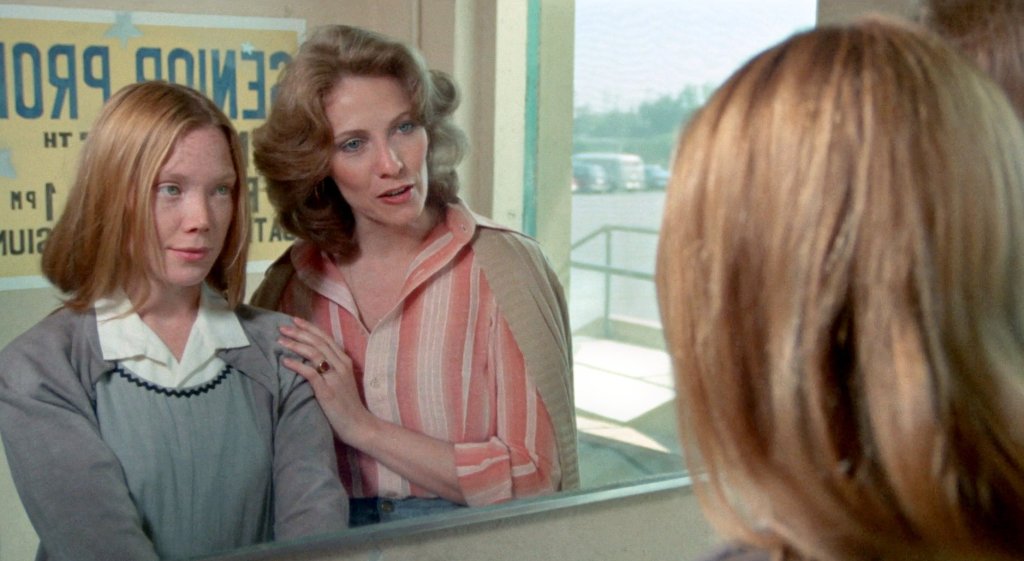
Stephen King understood high school can be a real horror show. Part of what makes Brian De Palma’s adaptation of King’s first novel such an enduring chiller is that it taps into the angst of that institution. Carrie White (Sissy Spacek) is the outcast writ large, a girl so sheltered by her religious zealot of a mother that she thinks she is dying with the arrival of her first period. Her female classmates taunt the panicked girl by pelting her with tampons. Carrie’s high school is ruled by mean girls. “There are girls behind the scenes, pulling invisible wires, rigging elections, using their boyfriends as stalking horses,” King wrote in his treatise on horror, Danse Macabre. “Against such a backdrop, Carrie becomes doubly pitiful, because she is unable to do any of these things––she can only wait to be saved or damned by the actions of others.”
5. High School (1968, dir: Frederick Wiseman)
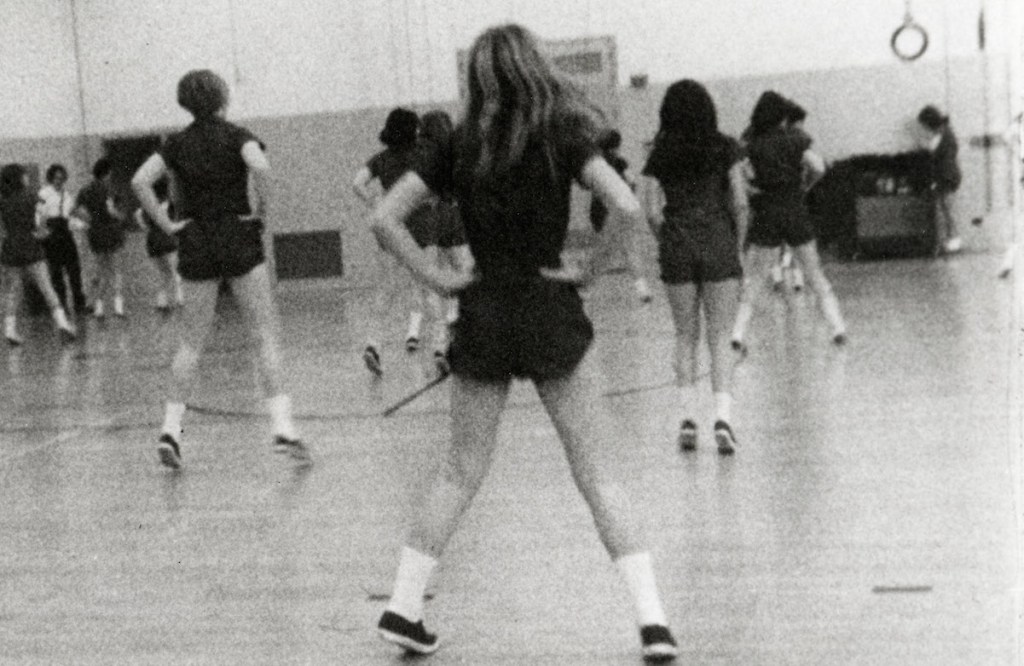
Documentary legend Frederick Wiseman’s 1968 sophomore effort is a dense, fascinating portrait of life in a Pennsylvania high school. High School exemplifies the richness of Wiseman’s supposedly detached approach. Film critics of the time saw the doc as evidence of an oppressive education system that valued conformity and respect for authority above all else––and to be sure, High School features plenty of students being chewed out for mild offenses. “It’s nice to be individualistic,” a school administrator cautions a girl over the length of her prom dress, “but there are certain times to be individualistic.” And yet, considering how today’s culture wars largely play out in public school, it can be jarring to see a female teacher in a 1968 sex education class instructing an assembly of girls on how to use the pill.
4. Heathers (1989, dir: Michael Lehman)
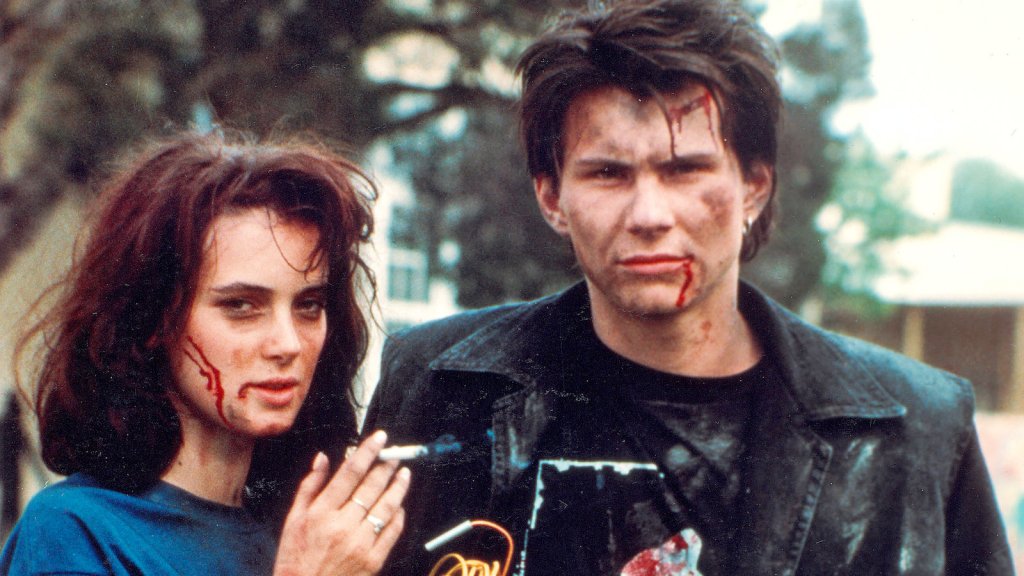
Daniel Waters did not lack ambition with his first screenplay. Determined to pen the ultimate high school movie, the then-video store clerk’s initial draft of Heathers exceeded 250 pages. He hoped Stanley Kubrick would direct, but had to settle for rookie director Michael Lehman. The result was magic, albeit black (comedy) magic. Veronica (Winona Ryder) is an intelligent and pretty junior who has traded in her dweeby childhood friends in favor of three cold-hearted beauties named Heather (Kim Walker, Shannen Doherty and Lisanne Falk). Veronica chafes at her cohorts’ casual cruelty, but, like most of her classmates, she is too scared to challenge their authority. Until, that is, Veronica hooks up with J.D. (Christian Slater), a trenchcoat-clad rebel who has recently moved to town. Murder ensues. “My teen angst bullshit now has a body count,” Veronica confides in her diary. Heathers is a scathingly funny takedown of the high school caste system that spares no one.
3. Fast Times at Ridgemont High (1982, dir: Amy Heckerling)
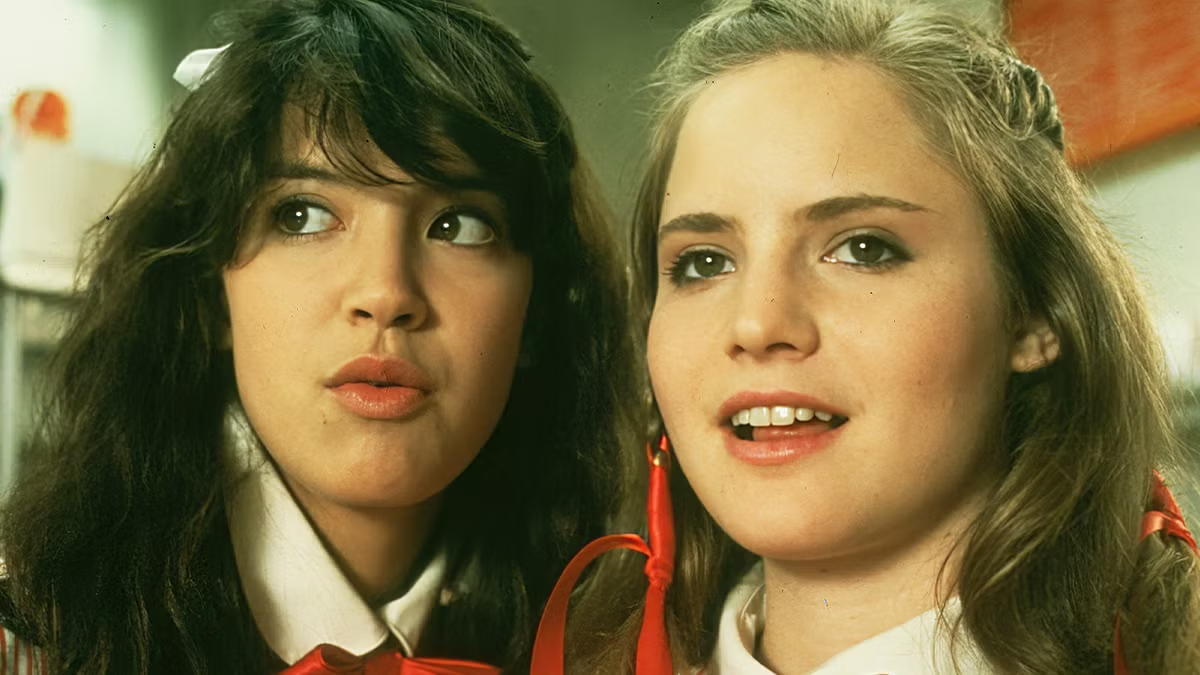
In 1978, 22-year-old music journalist Cameron Crowe returned to high school, undercover style, for a series of stories in Playboy that went on to form the basis of his book Fast Times at Ridgemont High. Crowe’s eventual screenplay jibed with the sensibility of first-time director Amy Heckerling. The resulting alchemy transcended the routine teen exploitation flick that the studio expected. For every bit of stoner hilarity provided by Sean Penn as surfer Jeff Spicoli or misstep involving the courtship of Mark and Stacy (Brian Backer and Jennifer Jason Leigh), there is decidedly more serious fare. A scene in which Stacy loses her virginity to a 26-year-old stereo salesman in a dingy baseball dugout is as heartbreaking as it is awkwardly funny. The appealing cast boasted several standouts––including Phoebe Cates, Judge Reinhold and Forest Whitaker, to name a few––whose careers blossomed soon afterward.
2. The Breakfast Club (1985, dir: John Hughes)
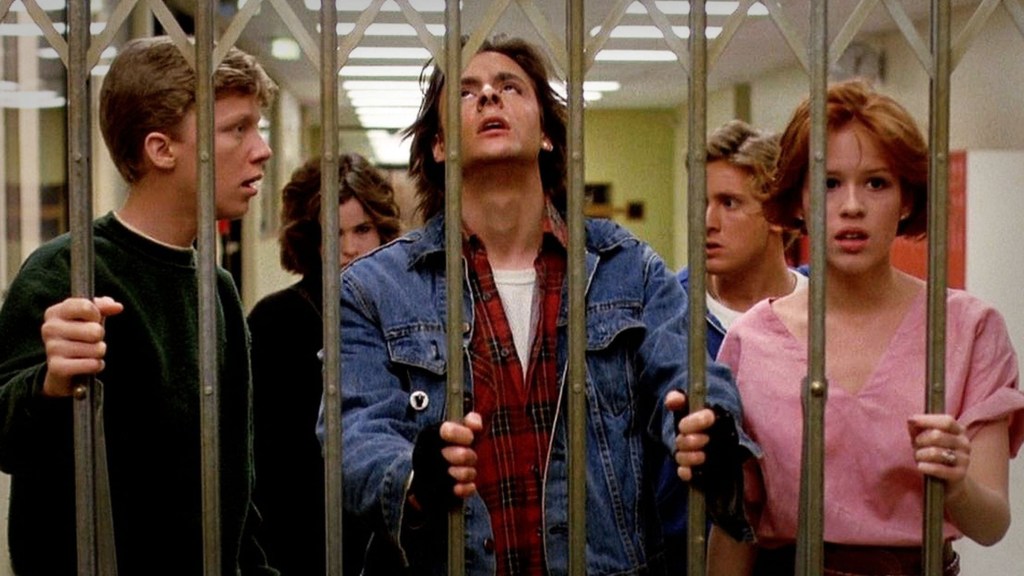
Five high schoolers––”a brain, an athlete, a basket case, a princess and a criminal,” if you wanna boil them down to archetypes––meet for Saturday morning detention, learn about one another, dance, smoke weed, argue and depart for the day all the wiser. That plotline set the stage for what became one of the 1980s’ most iconic pictures. “When you grow up, your heart dies,” says Allison (Ally Sheedy), The Breakfast Club’s proverbial “basket case.” Thankfully, that heart kept pumping for writer-director John Hughes, whose sophomore directorial outing explored the pressures of high school without condescension or irony. Far less endearing is Molly Ringwald’s character being sexually violated, a scene creepily played for laughs. Ringwald, Sheedy, Emilio Estevez, Judd Nelson and Anthony Michael Hall will forever be associated with the landmark film. Notably, only Ringwald and Hall were still of high school age when they shot the movie in Hughes’ native Illinois.
1. Election (1999, dir: Alexander Payne)
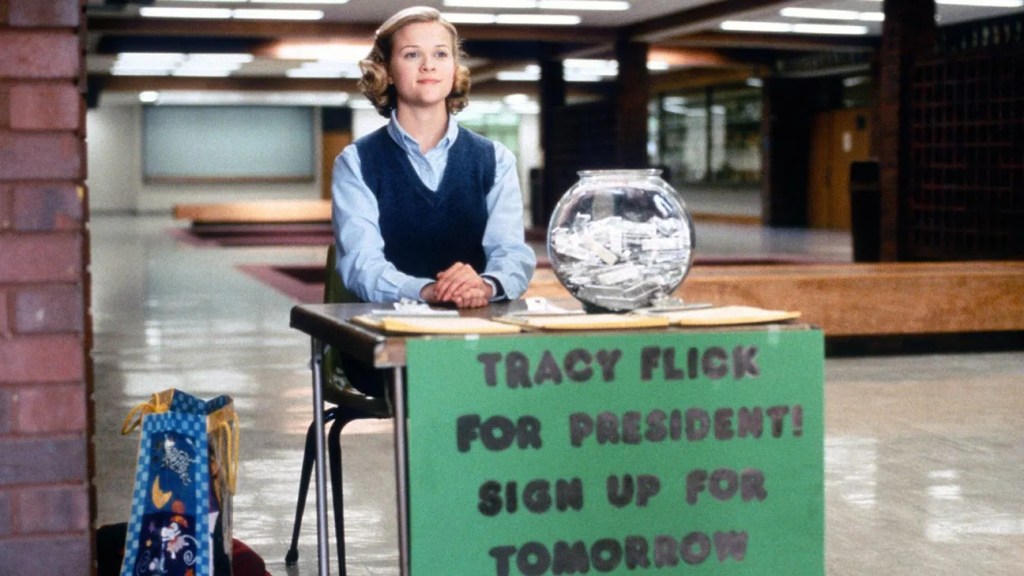
Didn’t we all know a Tracy Flick in high school, that gratingly confident and capable overachiever whose hand was always first to shoot up when the teacher asked a question? I’m laying odds that you did. Similarly, I’m betting we all also knew a version of Jim McAllister, a middle-aged teacher who made no effort to hide their disdain for some students and approval of others. In adapting Tom Perrotta’s novel Election for the big screen, Alexander Payne and co-writer Jim Taylor perform a razor-sharp dissection of relationships and rivalries in an Omaha, Nebraska, high school (Payne transplanted the book’s New Jersey setting to the director’s Midwest stomping grounds). The humor is lacerating. Reese Witherspoon gave a breakthrough performance as Tracy Flick, whose campaign for class president incurs the wrath of Matthew Broderick, equally terrific as the progressively unhinged civics teacher who cannot stomach a Flick victory.
Honorable mention: American Teen (2008, dir: Nanette Burstein), The Blackboard Jungle (1955, dir: Richard Brooks), Elephant (2003, dir: Gus Van Sant), The Holdovers (2023, dir: Alexander Payne), Mean Girls (2004, dir: Mark Waters), Napoleon Dynamite (2004, dir: Jared Hess), The Paper Chase (1973, dir: James Bridges), Rushmore (1998, dir: Wes Anderson), School Daze (1988, dir: Spike Lee), School of Rock (2003, dir: Richard Linklater)
 Cutting to the Chase with Phil Bacharach