As a general rule, any violation of one of the 10 Commandments tends to be great story material. There’s a reason cheating has long been a mainstay of literature, film and television, not to mention about 90% of the lyrics that have come out of Nashville.
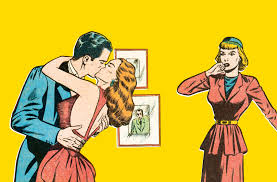
Infidelity is catnip for storytellers. The stakes are baked right in: betrayal, secrecy, guilt. And while big-screen adultery often features some steamy sex––particularly if the director is Adrian Lyne (Fatal Attraction, Indecent Proposal, Unfaithful)––the most compelling films are more interested in probing the tension between responsibility and desire.
And speaking of those 10 Commandments, here are my selections for the 10 best films about adultery. By the way, while Lyne has certainly contributed pop culture milestones in Fatal Attraction and Indecent Proposal, don’t expect them to turn up on the list below. They’re not among my favorites.
10. The Descendants (2011, dir: Alexander Payne)
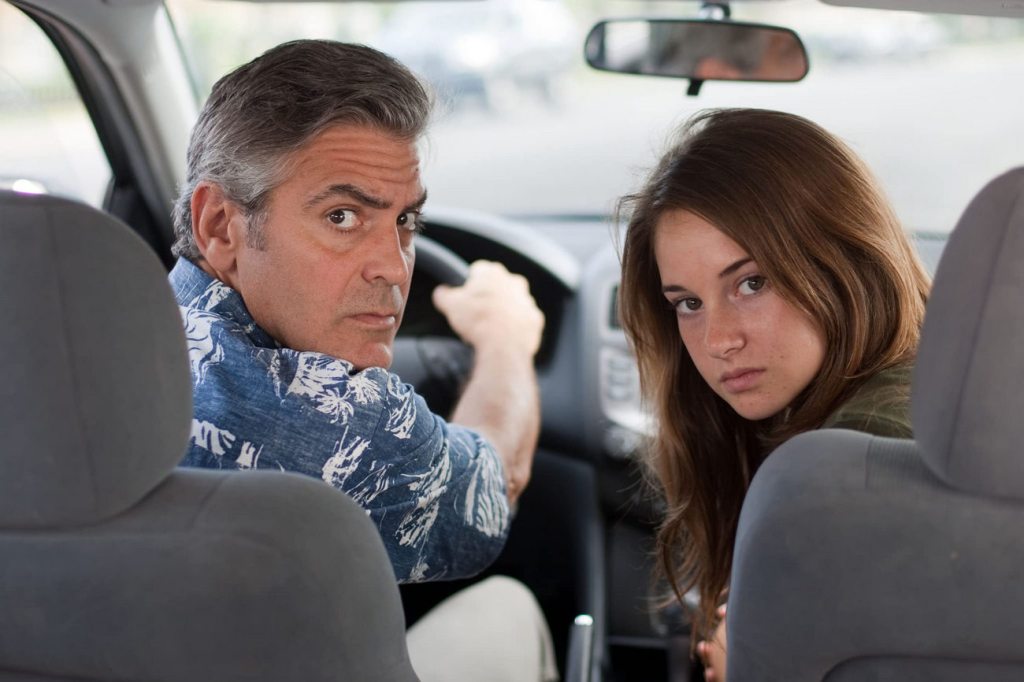
Alexander Payne’s special alchemy is finding the humor of characters in emotional pain. The Descendants, the writer-director’s followup to 2004’s Sideways, offered another bittersweet, unflinching portrait of a man in freefall. George Clooney plays Matt King, a Hawaii attorney who learns his wife has been cheating on him only after she is comatose and on her deathbed in the aftermath of a boating accident. Based on a book by Kaui Hart Hemmings, The Descendants adds a layer of complexity for Matt, who must get his arms around the betrayal while also trying to be a better dad to their two daughters (Shailene Woodley and Amara Scott in excellent performances) who will soon be without their mother.
9. The Soft Skin (1964, dir: François Truffaut)
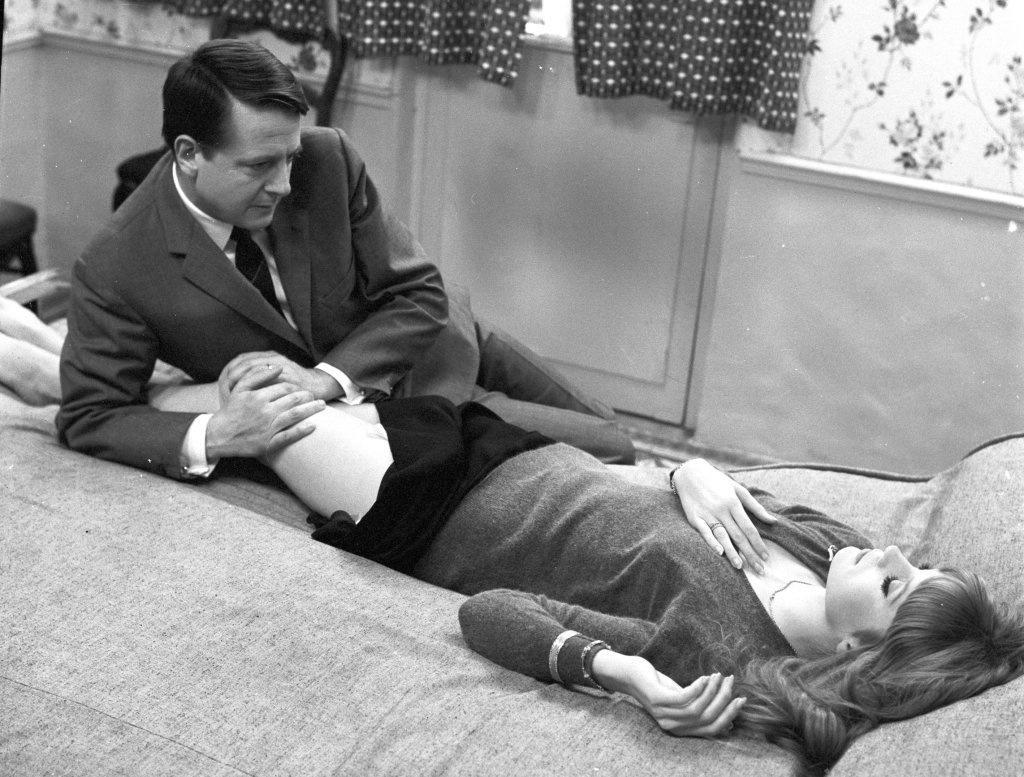
For many, The Soft Skin is one of François Truffaut’s most inaccessible films. To be sure, it is an oddity, a melodrama that the writer-director treats with curious detachment. Its story of infidelity is almost clinical, as Truffaut focuses on the small details of how Pierre Lachenay (Jean Desailly), a famous Parisian lecturer and academic, conducts an extramarital affair with an attractive flight attendant (Françoise Dorléac) he meets on a business trip to Lisbon. The picture is meticulous with the mechanics of adultery as bourgeois Pierre tries to maneuver trysts with his mistress without arousing suspicion from his wife, Franca (Nelly Benedetti), who, by all appearances, is a terrific spouse. As a magnificently tense set piece during a trip to Reims makes clear, Pierre isn’t a very adept cheater.
8.Bob & Carol & Ted & Alice (1969, dir: Paul Mazursky)
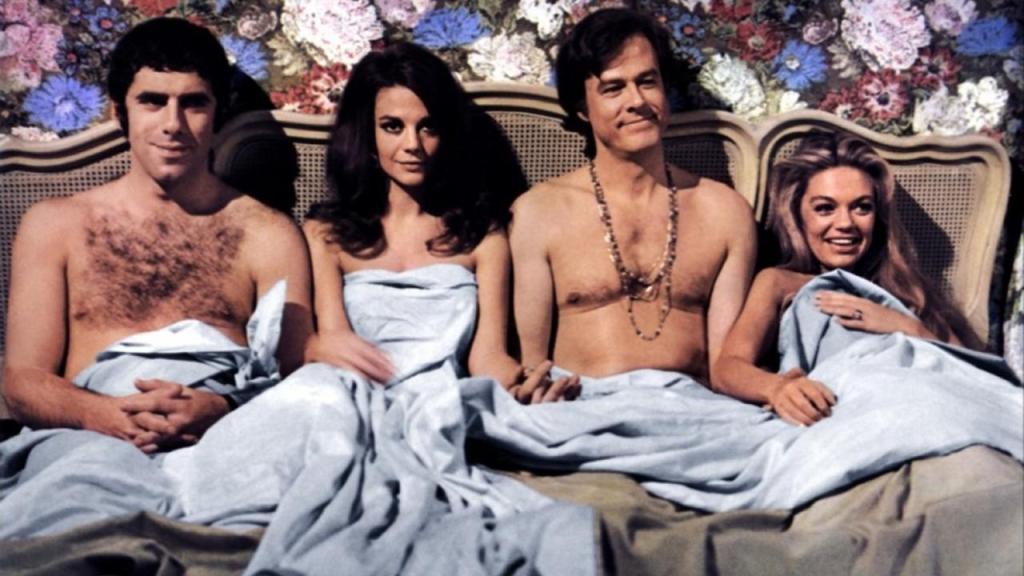
Honesty and freedom. Are they all they’re cracked up to be? The 1960s called for a reappraisal of all the institutions Americans thought they knew, including marriage, and so it is in this comedy-drama by writer-director Paul Mazursky (in his directorial debut) and co-writer Larry Tucker. Bob and Carol Sanders (Robert Culp and Natalie Wood) are a well-off, with-it married couple who commit themselves to complete openness after spending a weekend at a New Age retreat. That includes being frank about their infidelities. Best friends Ted and Alice Henderson (Elliot Gould and Dyan Cannon) get caught up in the Sanderses’ resolve to let it all hang out. Paul Mazursky’s satire is sharp but kind to its characters. The film builds toward a would-be orgy that collapses under the weight of its own awkwardness, suggesting that sexual liberation sounds more appealing in theory than in practice. Like Jackie DeShannon’s “What the World Needs Now,” the Burt Bacharach song that closes Bob & Carol & Ted & Alice, the four are well-intentioned, if awfully dopey.
7. An Affair to Remember (1957, dir: Leo McCarey)
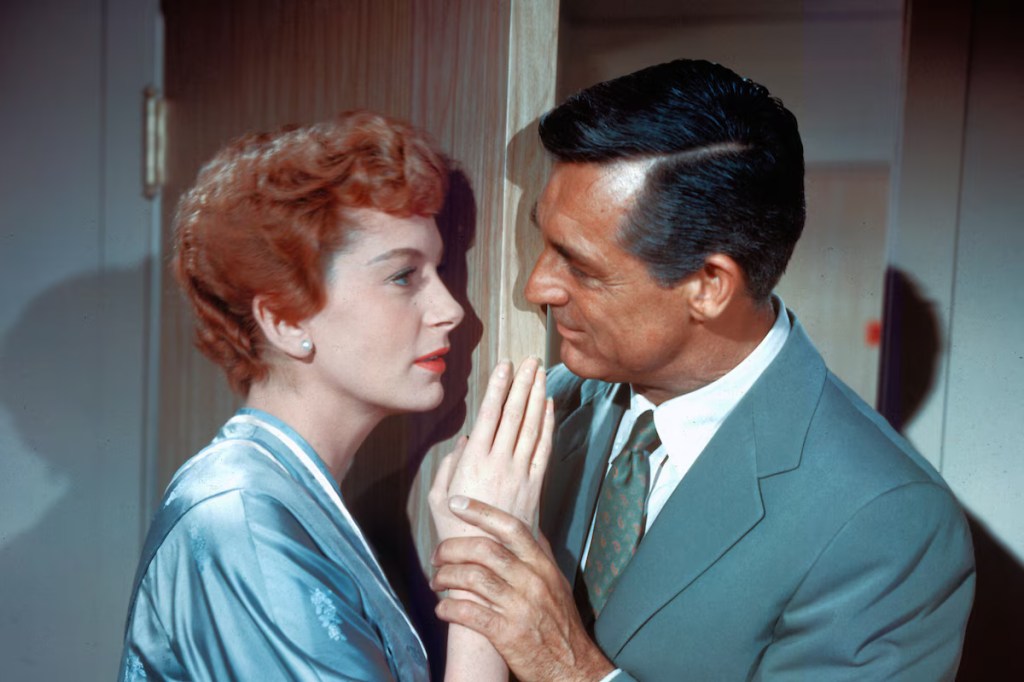
Director Leo McCarey’s unabashedly romantic remake of his own Love Affair (1939) wisely bets on the fizzy charm of Cary Grant and the alluring refinement of Deborah Kerr. High-profile playboy Nickie Ferrante (Grant) and high-society dame Terry McKay (Kerr) meet on a transatlantic cruise ship. Nickie has a fiancé and Terry is in a long-term relationship, but the pair’s chemistry is immediate and strong. At the cruise’s end, the two disembark in New York City, agree to break up with their significant others, and reunite six months later at the top of the Empire State Building. Alas, if only it were that simple. Prepare for a dramatic turn, but have tissues on hand in case of waterworks. McCarey’s script with co-writer Delmer Daves is sophisticated and refreshingly adult. It’s understandable that writer-director Nora Ephron paid homage to it in 1993’s Sleepless in Seattle.
6. Petulia (1968, dir: Richard Lester)
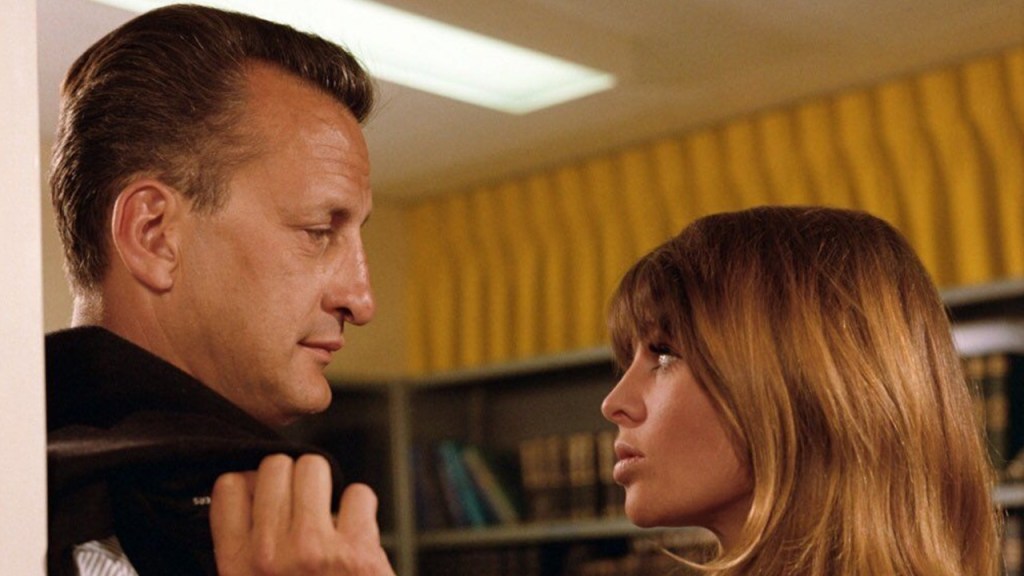
Richard Lester might not have known it at the time, but when he ventured to San Francisco in 1967 to film Petulia, he was creating one of the great cinematic time capsules of a watershed moment in American society. The picture is steeped in the sights and sounds of the times: mod fashions, psychedelic rock and hippie culture. And yet Petulia does not simply delineate Sixties artifacts; it captures the counterculture of the era being swallowed up by wealth, commercialism and consumerism. In the midst of it, George C. Scott’s Archie Bollen is a surgeon whose life is turned upside down when he becomes entangled with the recently married Petulia (the luminous Julie Christie). She is Holly Golightly with a hallucinogenic twist, capricious to the point of combustible. These bored and sad lovers vie for passion in an increasingly dispassionate world teeming with lots of things, but precious little heart. “You’re a lonely, screwed-up mess,” Petulia tells Archie, but she could just as well be sizing up all the inhabitants in the movie.
5. Brief Encounter (1945, dir: David Lean)
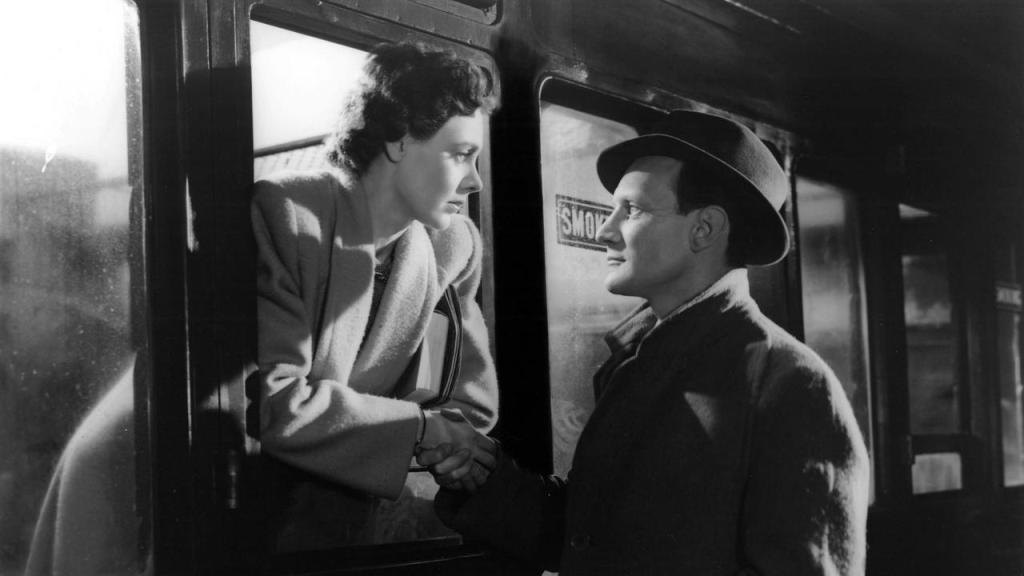
Extramarital affairs can be a tough sell for movie audiences, especially during World War II, when a fair number of young men fighting to save democracy were receiving “Dear John” letters from the gal back home. It’s all the more remarkable, then, that director David Lean’s Brief Encounter remains a cherished British classic. The star-crossed couple are played by Trevor Howard as an idealistic doctor and father of two, and Celia Johnson as a guilt-ridden wife and mother. Both rightly earned Oscar nominations. Based on a one-act play by Noël Coward, it resonates because its lovers are so unassuming: average folks with nice spouses and who aren’t looking to stray. “I’m an ordinary woman,” Johnson’s character says in voiceover. “I didn’t think such violent things could happen to ordinary people.” Aside from a surfeit of Rachmaninoff music gumming up the score, Brief Encounter is a masterclass of understatement.
4. Little Children (2006, dir: Todd Field)
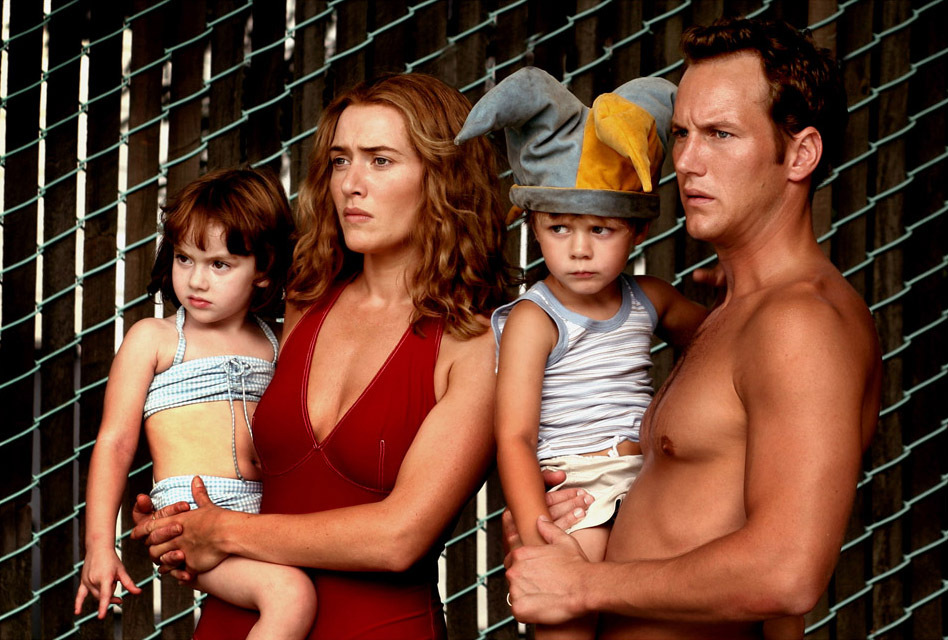
Writer-director Todd Field’s critique of suburban life, namely marriage and parenthood, scorches without sacrificing the humanity of its characters. Set in a well-to-do neighborhood, Little Children stars Kate Winslet as Sarah, a sharp-witted young wife and mother. She and her young daughter spend their afternoons at the local park, where Sarah endures the catty comments of other stay-at-home moms. There she meets Brad (Patrick Wilson), a handsome stay-at-home dad. They strike up a conversation, and its undercurrent of sexual tension surprises and excites them both. Sarah’s home life is hardly ideal; she is an ambivalent wife and mother, and it doesn’t help that her husband (Gregg Edelman) is addicted to Internet porn. Brad, meanwhile, is treated like a child by his career-driven wife (Jennifer Connolly). Brad and Sarah’s platonic relationship eventually morphs into an intimate one, but their connectedness, despite some great afternoon sex in the laundry room, is tenuous. Brad is her escape from a world she resents. Sarah is his reassurance that he is worth adoration.
3. The Bridges of Madison County (1995, dir: Clint Eastwood)
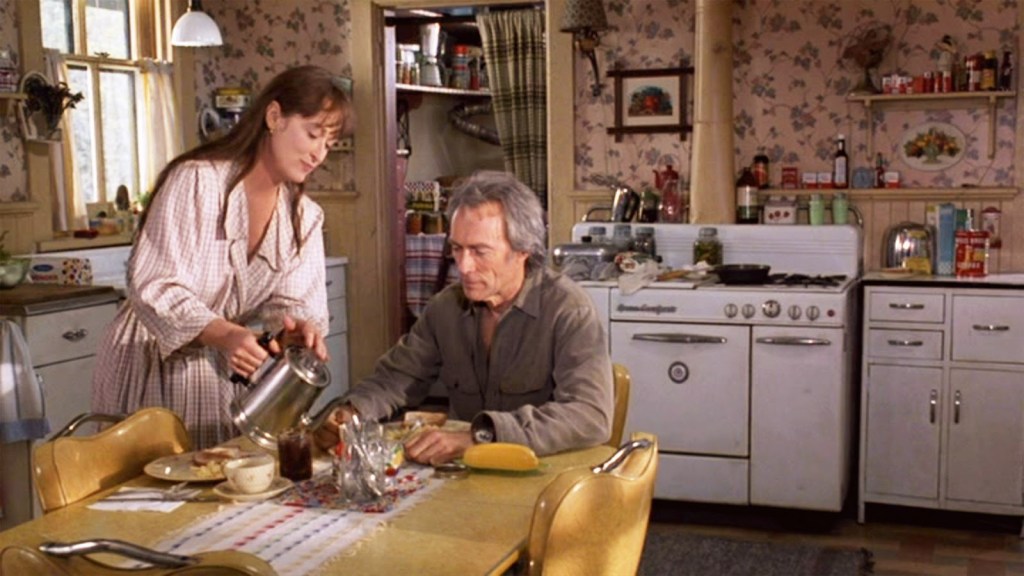
Clint Eastwood’s adaptation of Robert James Waller’s novel extols romance, love and sacrifice, and it does so somewhat miraculously by gaining audience sympathy even though one of the lovers is cheating on a spouse who seems to be a decent fella. Credit goes to Eastwood’s delicate direction, his and Meryl Streep’s performances, and Richard LaGravenese’s screenplay, which stripped away the book’s overly florid passages. Streep, in fact, hated Waller’s book, calling it “a crime against literature,” but Eastwood was determined to cast her. “Why don’t we get the greatest actress in the world?” he told Steven Spielberg, whose production company was first to purchase the movie rights to the bestseller. Streep is heart-wrenching as Francesca, a seemingly content married woman whose life is upended when she falls hard for Robert Kincaid (Eastwood), a photojournalist in Madison County for a photo essay on covered bridges. With the exception of a distracting framing device that places the love story in flashback, The Bridges of Madison County soars on the strength of its powerhouse acting. Its most devastating moment comes not in consummation but in renunciation, as Francesca grips the truck door handle in the rain.
2. The Earrings of Madame de… (1953, dir: Max Ophüls)
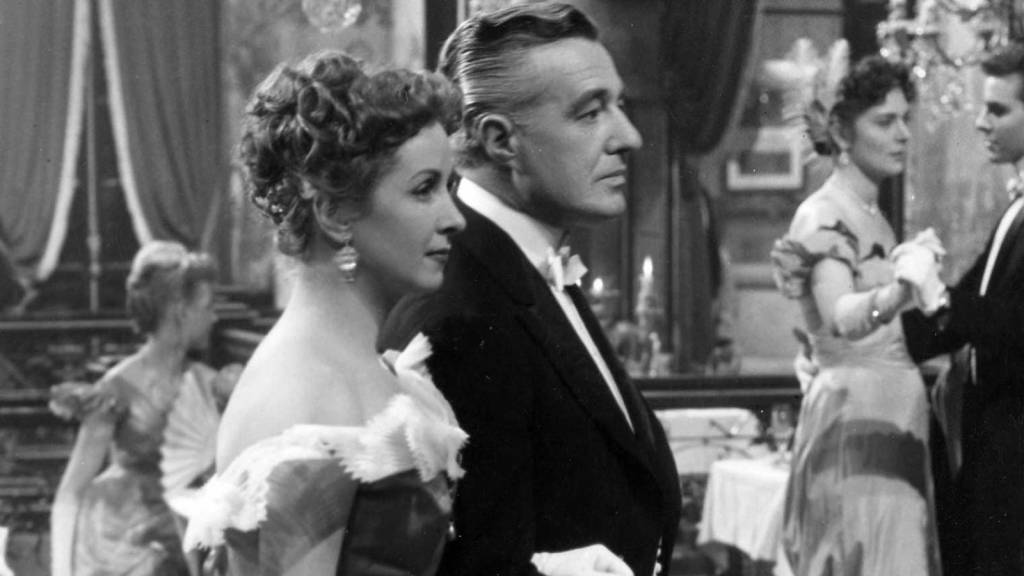
Max Ophüls’ picture is among cinema’s most enduring masterpieces, what film critic Dave Kehr called “one of the most beautiful things ever created by human hands.” Set in late 19th century Paris, the picture begins with the frivolous Louise (Danielle Darrieux) secretly selling a pair of earrings given to her by husband André (Charles Boyer), who is a count and general in the French army. We get the impression that this clandestine sale is common practice for Louise, an extravagant woman who lives beyond her means, despite her and André living in the lap of luxury. She lies to the general that the earrings must have been stolen. Through a series of contrivances, however, the earrings are sold back to the general, who promptly gives them to his mistress. More contrivances follow––we forgive such coincidences when the result is this extraordinary––until the earrings wind up in the possession of Baron Donati (Vittorio De Sica), an Italian diplomat who is smitten with Louise. He and Louise begin a clandestine affair that Ophüls illustrates in a breathtaking montage of the pair dancing night after night. Marked by the director’s exquisite, always-moving camerawork (really, the camera could be the fourth major character), The Earrings of Madame de… presents a woman who finds real love––albeit outside her lackluster marriage––and shatters it. Yet there are no villains, Ophüls choosing tragedy over moralizing.
1. In the Mood for Love (2000, dir: Wong Kar-wai)
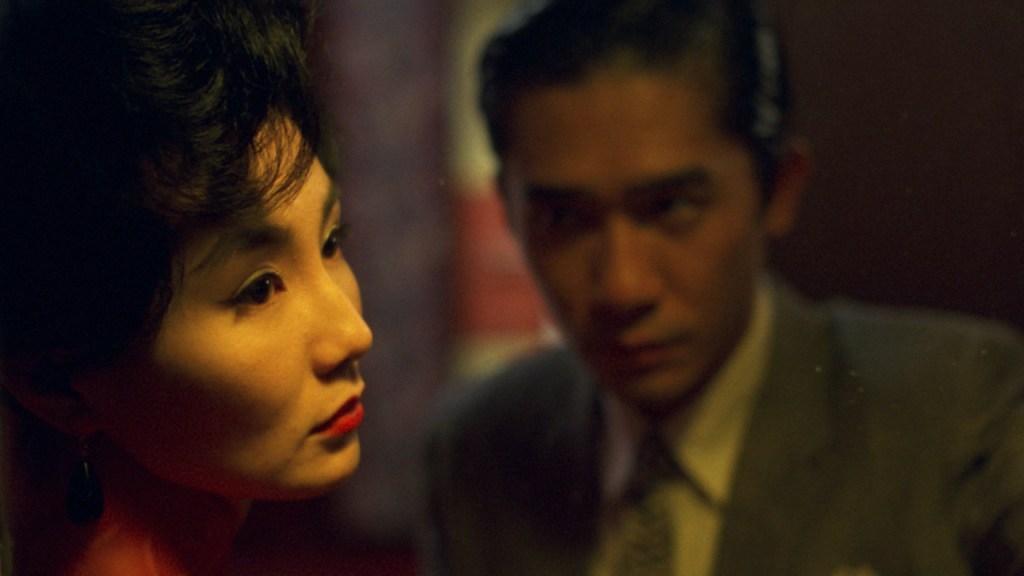
Set in Hong Kong of the early 1960s, this Wong Kar-wai masterpiece stars Tony Leung Chiu-wai and Maggie Cheung as, respectively, Mr. Chow and Mrs. Chan, neighbors in a bustling apartment building who slowly realize their spouses are having an affair with each other. Devastated by the betrayal, Chow and Chan try to come to terms with the infidelity by enacting how they believe it might have started. In the course of connecting through shared hurt, they fall in love without truly acknowledging it. Their restraint becomes the movie’s deepest erotic charge, their desire intensifying because it is never fully acted upon. “Mr. Chow and Mrs. Chan are shown to be addicted to the manoeuvering and rehearsing––actually the foreplay––that obviates the need to commit to an affair,” writes Tony Rayns in BFI Film Classics: In the Mood for Love. “They are, precisely, in the mood for love.” Let’s underline “mood” here. Wong’s mood piece approaches transcendence, lyrical and mysterious in a manner that eludes most filmmakers. It also happens to be gorgeous, from vibrant period fashions to Mark Lee Ping-bing’s lush cinematography and the film’s perfect use of the bittersweet music piece, “Yumeji’s Theme,” by Umebayashi Shigeru. You have to wonder, though: who would cheat on these two supernaturally beautiful humans?
Honorable mention: The Apartment (1960, dir: Billy Wilder), Back Street (1932, dir: John M. Stahl), Double Indemnity (1944, dir: Billy Wilder), Fatal Attraction (1987, dir: Adrian Lyne), La Notte (1961, dir: Michelangelo Antonioni), The Postman Always Rings Twice (1946, dir: Tay Garnett), The Pumpkin Eater (1964, dir: Jack Clayton), sex, lies and videotape (1989, dir: Steven Soderbergh), There’s Always Tomorrow (1956, dir: Douglas Sirk), Unfaithful (2002, dir: Adrian Lyne)
 Cutting to the Chase with Phil Bacharach