
Political junkies love political movies, but the dirty little secret is that so do a lot of those folks who claim to hate politics. The reason is simple. The best political films are rarely about policy. They’re about power. Elections determine power, power shapes lives and cinema thrives on that tension. From the populist rise of Willie Stark to the revolutionary struggle in The Battle of Algiers, the movies have shown that politics is both theater and battleground—and that the line between hero and opportunist can be perilously thin.
10. Mr. Smith Goes to Washington (1939, dir: Frank Capra)
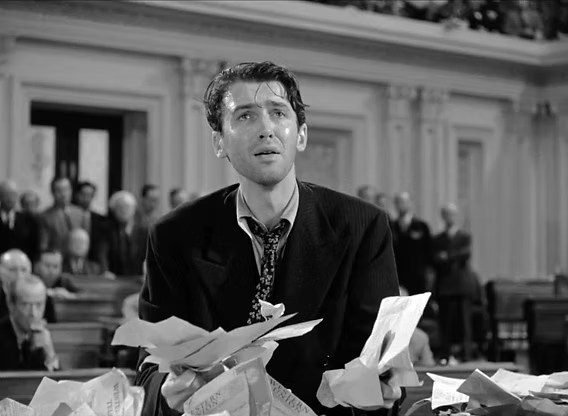
Frank Capra’s populist fables were considered corny even in 1939 (hence the “Capra-corn” tag from some), but he knew what stirred moviegoers. “What audiences respond to in Mr. Smith Goes to Washington is the humanity of a man who cares about something and is fighting for it,” the director said years later. “When they see somebody fight for an ideal, it will always get ‘em right here, in the stomach.” As idealistic Senator Jefferson Smith, Jimmy Stewart makes the most of a career-defining performance, but the entire cast––including Capra regulars Jean Arthur and Edward Arnold, as well as Claude Rains and Thomas Mitchell––are in top form. Moreover, you’ve got to love any picture that elevates a one-man filibuster to Herculean heroics. “You all think I’m licked. Well, I’m not licked … and I’m gonna stay right here and fight for this lost cause!” our hero tells the Senate in the picture’s most iconic scene. U.S. senators assailed the film for its depiction of corrupt Washington powerbrokers. Nowadays, Capra’s treatment of Congress feels like a whitewash.
9. Advise & Consent (1962, dir: Otto Preminger)
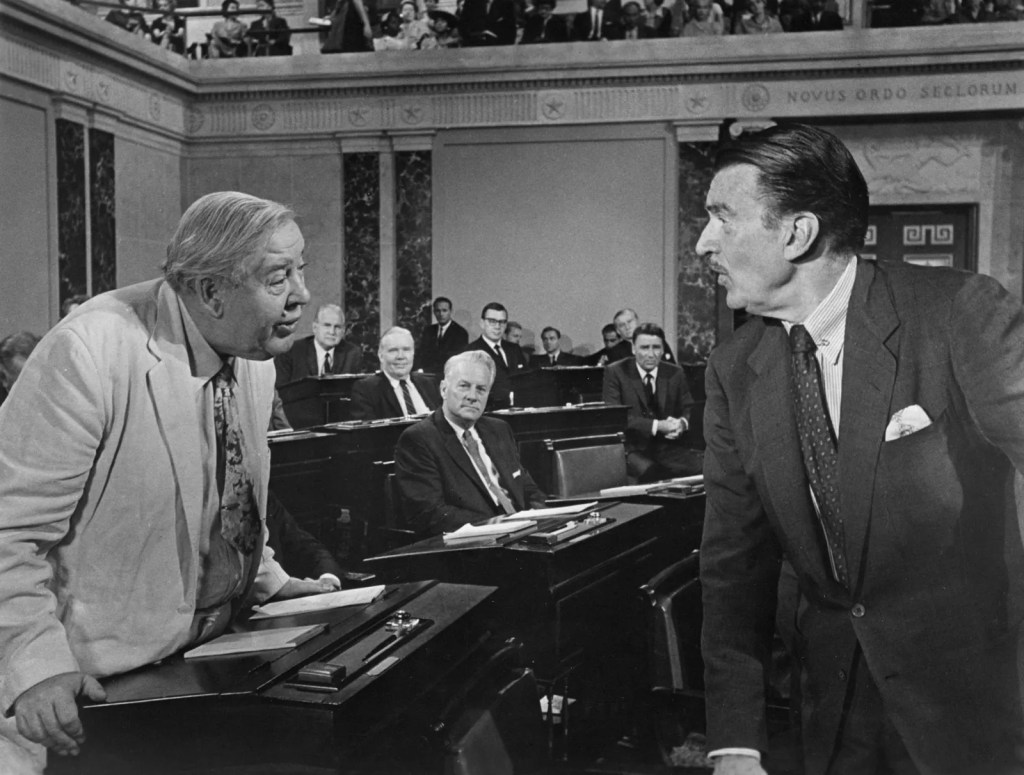
Movie critic and historian David Thomson has called Otto Preminger’s film of Capitol Hill wheeling and dealing “the calm antidote to the rising hysteria in Frank Capra’s Washington films” (see #10 above). Adapted by Wendell Mayes from an Allen Drury political potboiler, the Beltway intrigue of Advise & Consent focuses on a contentious fight over the president’s choice for Secretary of State, Robert Leffingwell (Henry Fonda at his most heroically decent), who is accused of having been a communist. Subtlety was never Preminger’s strong suit, and he doles out some unfortunate caricatures for a now-uncomfortable subplot concerning Don Murray as a senator hiding a gay past. If you can get past that bit, Advise & Consent benefits from a terrific cast highlighted by Charles Laughton as an oily Southern senator, Franchot Tone as the vice-president, Burgess Meredith as Leffingwell’s accuser and Walter Pidgeon as the crafty Senate majority leader.
8. All the King’s Men (1949, dir: Robert Rossen)
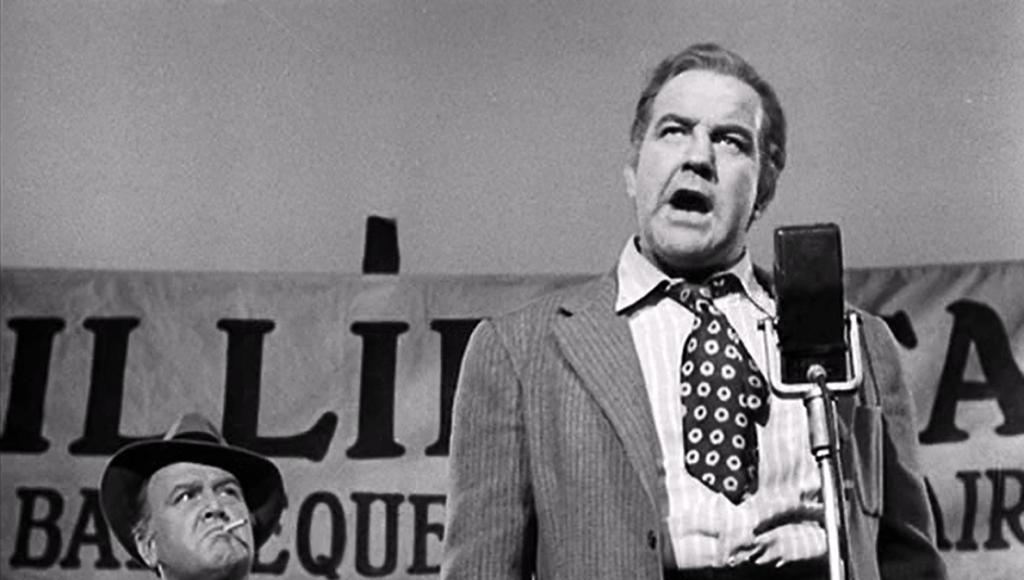
As fire-breathing politician Willie Stark, Broderick Crawford earned the Oscar for Best Actor and went from character actor to movie star. Adapted from Robert Penn Warren’s Pulitzer Prize-winning novel, and loosely based on Louisiana political boss Huey Long, All the King’s Men still reverberates with relevance. We meet Willie Stark as a tenacious, principled candidate for county treasurer. While he loses that race, his ascent begins years later when operatives for a gubernatorial candidate flatter Willie into entering the race, thinking he will split the “hick” vote and throw the election to their man. Willie’s discovery of the scheme awakens the beast inside. He whips up a crowd of voters, vowing to battle the power elite on behalf of his fellow “redneck hicks.” Eventually elected governor, he becomes as vilified as he is glorified, a paradoxical demagogue who tirelessly champions the have-nots. Writer-director Robert Rossen’s butcher-block filmmaking does not exactly spill over with nuance, but Crawford beautifully reflects the voraciousness of a man whose appetite for power is unquenchable.
7. Primary Colors (1998, dir: Mike Nichols)
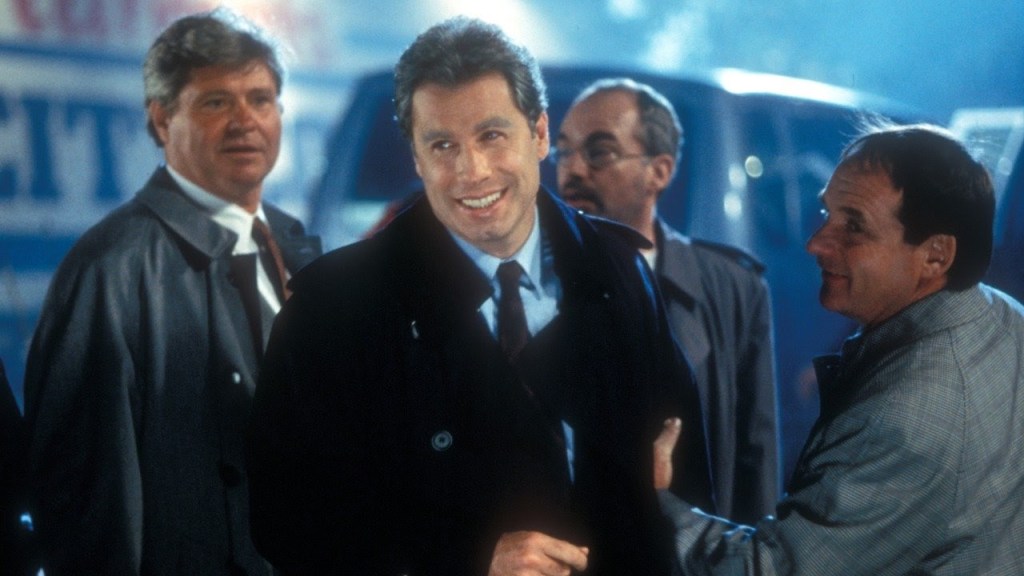
Joe Klein’s 1996 novel, Primary Colors, a thinly veiled take on Bill Clinton’s successful 1992 presidential race, sparked a media sensation when he penned it under the pseudonym “Anonymous.” Transforming the bestseller into a successful film adaptation was a tall order, but director Mike Nichols and screenwriter Elaine May were up to the task. John Travolta is strong as Bill Clinton stand-in Jack Stanton, with Emma Thompson his equal as a fictionalized Hillary. The movie fell victim to bad timing, hitting theaters on the heels of revelations about Clinton’s affair with a 21-year-old White House intern. Light satire suddenly didn’t feel appropriate. “Even the kinder reviews felt almost like condolence notes; the intimate look inside the life of the president that the film had teased was now available for free, and ad nauseum, on TV around the clock,” writes Mark Harris in the excellent biography, Mike Nichols: A Life. Distance, however, has been fairer to this smart comedy that whittles down politics to a sometimes disconcerting truth: deeply flawed scoundrels are capable of great things and well-intentioned idealists can disappoint.
6. The Candidate (1972, dir: Michael Ritchie)
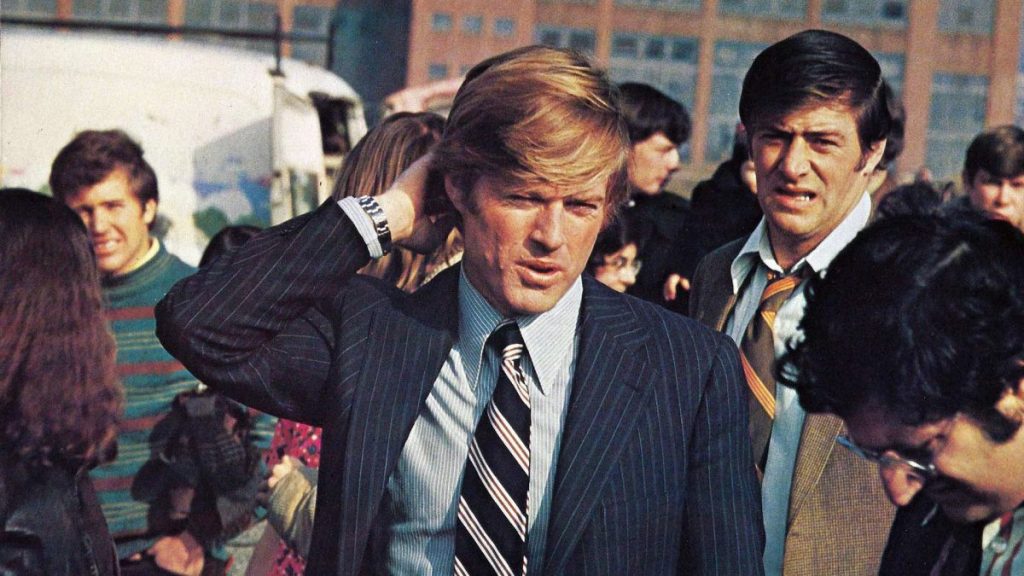
A time capsule from 1972 that maintains relevance in modern politics, The Candidate stars Robert Redford as Bill McKay, a handsome, idealistic legal aid attorney who embarks on the quixotic quest of unseating an incumbent California senator, the wonderfully named Crocker Jarmon (Don Porter). McKay jumps into the race at the coaxing of a campaign operative (Peter Boyle) with the assurance that he will lose––a luxury that McKay presumes will enable him to be fully honest with voters. The Candidate is unsentimental, unsparing and cagey in its focus on the corrupting nature of competition, a theme that director Michael Ritchie also explored in Downhill Racer, Smile and The Bad News Bears. The picture is particularly perceptive in its examination of politics at its most paradoxical. McKay’s progressive remarks on the campaign trail improve his poll numbers, prompting his risk-averse handlers to lean on the candidate not to rock the proverbial boat. But their strategy, of having him spout namby-pamby non-stances, lessens his appeal among voters––and so they re-correct. The movie boasts one of the sharpest endings in recent memory; it surely helped earn an Oscar for screenwriter Jeremy Larner, who had been a speechwriter for 1968 presidential candidate Eugene McCarthy.
5. Being There (1979, dir: Hal Ashby)
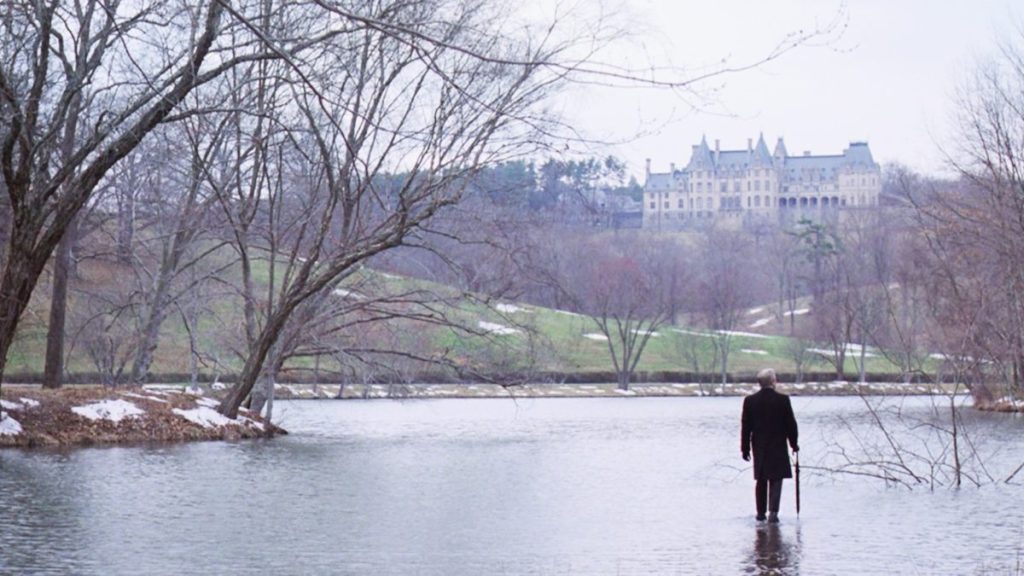
Peter Sellers is a marvel of dry understatement as a mentally childlike gardener whose limitations are mistaken for profundity. Set in Washington, D.C., Being There opens with Sellers’ Chance the gardener––who inadvertently reinvents himself as Chauncey Gardiner––forced to leave his lifelong home following the death of his employer. Through circumstances befitting a screwball comedy, Chauncey is taken in by an uber-wealthy industrialist, played by Melvyn Douglas (who, incidentally, also appears in #6’s The Candidate) in an Oscar-winning performance, and drifts into politics. Sellers inexplicably failed to win the award for Best Actor (Dustin Hoffman took it for Kramer vs. Kramer), but the film also has strong work from Shirley MacLaine, Richard Dysart, Jack Warden and David Clennon. Adapted by Jerzy Kosinski from his novel of the same name and directed with elegant restraint by Hal Ashby, Being There is satire biting enough to sever arteries. Although Chauncey’s understanding of the world is confined to what he sees on TV––”I like to watch,” he helpfully lets people know––the tube proves to be enough of a primer for Chauncey’s every utterance to be interpreted as profundity. Insert your own modern-day comparison here.
4. Z (1969, dir: Costa-Gavras)
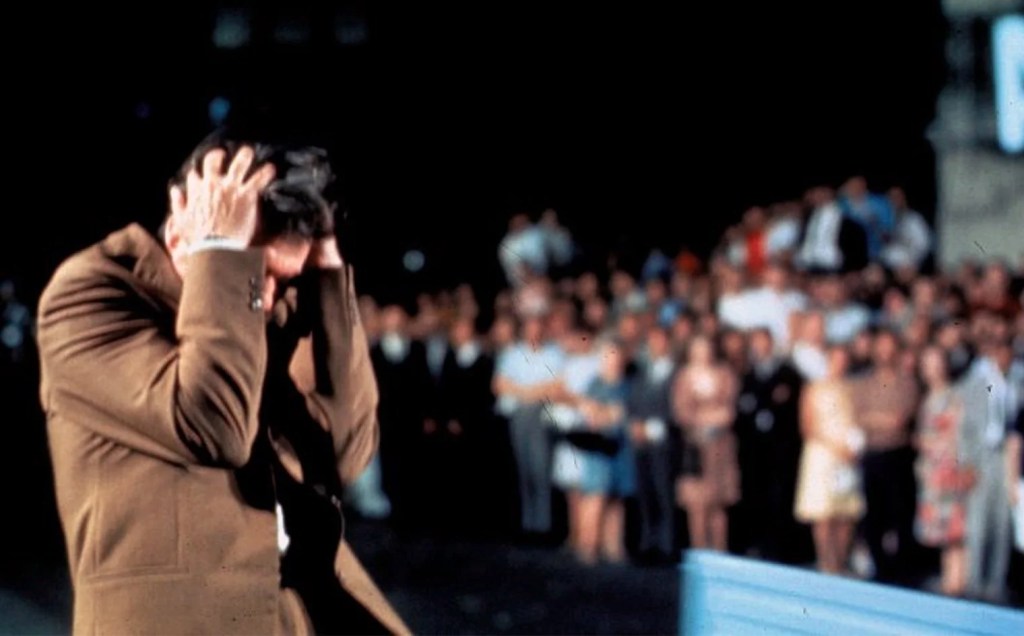
This incendiary masterpiece doesn’t mess around. “Any similarities to real persons and events is not coincidental. It is intentional,” announces a title card as Z opens. The film is a barely disguised account of the assassination of Grigoris Lambrakis, a leftist leader in Greece whom rightwing protesters clubbed to death in 1963. A subsequent criminal investigation uncovered a labyrinthine coverup that ensnared the highest echelons of government, a scandal that rocked the country and led to the ascent of the opposition party. That victory was short-lived; a military junta took over in 1967. Since any acknowledgement of the Lambrakis affair had been long banned by the time Z went into production, it became a French-Algerian production. Z captures the murder and its aftermath, but this political thriller hardly feels like a history lesson. Yves Montand is the Lambrakis character, with Jean-Louis Trintignant the truth-seeking prosecutor whose scruples baffle and frustrate the powers that be. “As if it’s not enough that our country has been invaded by long-haired thugs, atheists and junkies of unclear sex,” the prosecutor is lectured by the attorney general, “now you want to disparage our armed forces and courts, the only elements not corrupted by parliamentarianism.” Sweeping in scope and stuffed with intrigue, Z is a crackling entertainment. Costa-Gavras’ camerawork, like the film itself, is always propulsive, always moving. That energy is mirrored in the eye-popping colors of Raoul Coutard’s cinematography and the propulsive music score by Mikis Theodorakis.
3. In the Loop (2009, dir: Armando Iannucci)
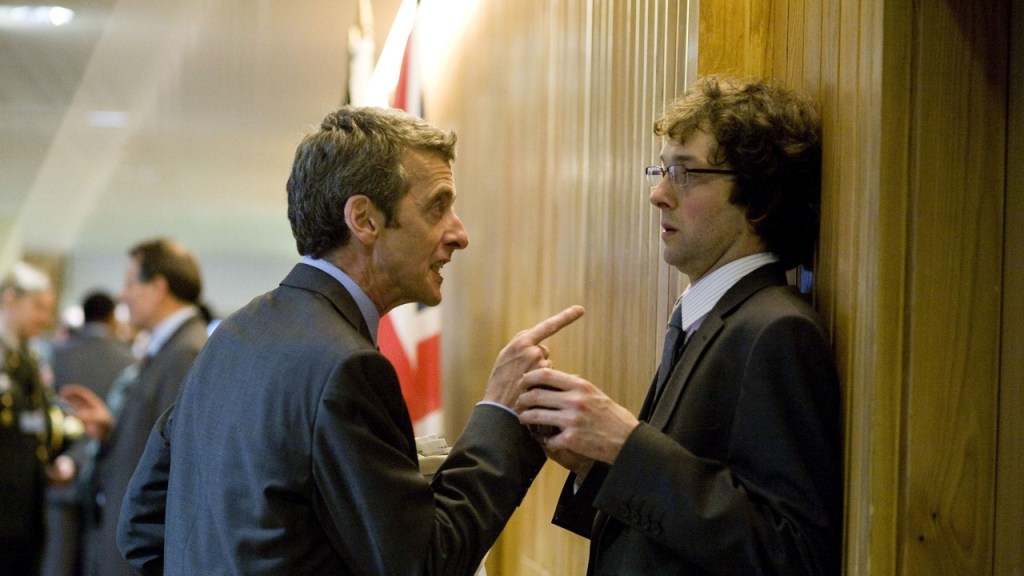
As someone who worked in government and political communications over 30-plus years, I can attest to the disturbing verisimilitude of In the Loop, British writer-director Armando Iannucci’s spin-off of his BBC series, The Thick of It. The lacerating comedy takes aim at politics on both sides of the pond, as the Brits might say. The threadbare story, such as it is, has something to do with an impending United Nations vote on whether the U.K. and the U.S. will support military intervention in the Middle East (a sadly perennial scenario that ensures the movie will never feel dated). But the plot is just a pretense. The script by Iannucci and co-writers Jesse Armstrong, Simon Blackwell and Tony Roche dishes out cutthroat deals, back-stabbing and jockeying for position, a volley of one-liners, insults and ripostes––most stuffed with expletives––coming at breakneck speed. Trying to savor each is like trying to slake your thirst with a firehose. Sample 1: “I will marshal all the forces of darkness to hound you into an assisted suicide.” Sample 2: “You know they’re all kids in Washington? It’s like Bugsy Malone, but with real guns.” Sample 3: “This is the problem with civilians wanting to go to war. Once you’ve been there, once you’ve seen it, you never want to go again unless you absolutely fucking have to. …It’s like France.” Getting to wrap their mouths around that ferocious dialogue is a sprawling ensemble cast that includes Peter Capaldi, Tom Hollander, Mimi Kennedy, James Gandolfini, David Rasche, Anna Chlumsky and Chris Addison.
2. A Face in the Crowd (1957, dir: Elia Kazan)
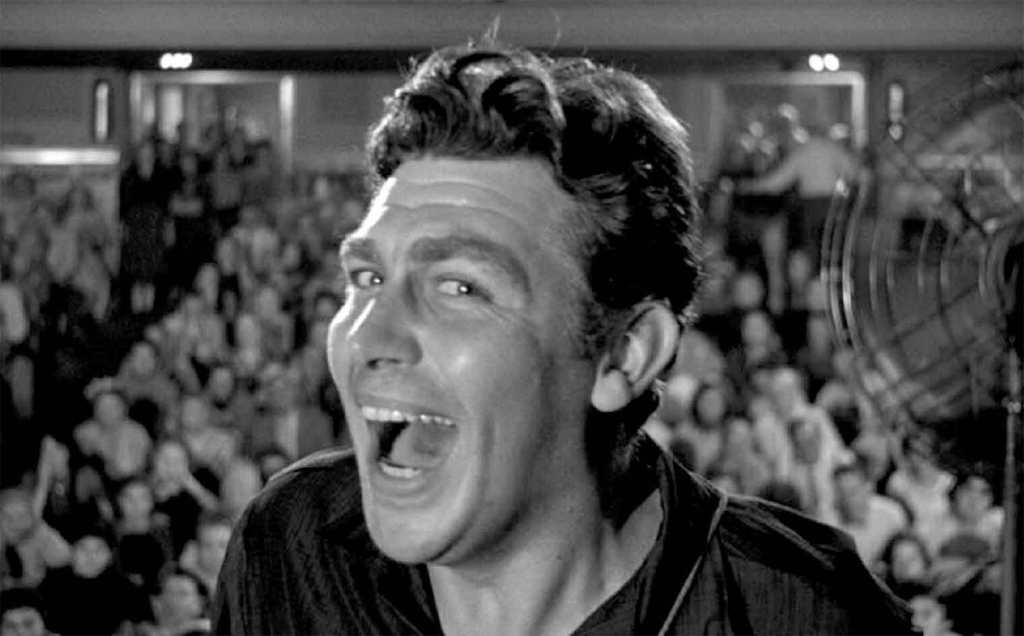
In this age of populist podcasters, on-the-take influencers and prevaricating demagogues, Elia Kazan’s masterpiece is so prescient as to be spooky. In the 1950s, A Face in the Crowd screenwriter Budd Schulberg had plenty of false prophets of the airwaves to draw inspiration––from Father Coughlin to Walter Winchell (who makes a cameo here)––but he and Kazan went further in foretelling the soul-crushing power of mass media for charlatans willing to exploit it. If you know Andy Griffith only from his aw-shucks television persona, buckle up. He is a tornado of volatility and manic charisma as “Lonesome” Rhodes, a drunken drifter who becomes a local celebrity after he is “discovered” in an Arkansas jail by a small-town radio reporter (Patricia Neal). A man whose ambition is matched only by his viciousness, Lonesome weaponizes a down-home huckster charm that catapults him from radio personality to TV star to would-be political kingmaker. “I’m not just an entertainer. I’m an influence, a wielder of opinion… a force!” Lonesome boasts after a stodgy U.S. senator begs his support for a presidential bid. “This whole country’s just like my flock of sheep––rednecks, crackers, hillbillies, hausfraus, shut-ins, pea pickers!” Along with Ace in the Hole (1951) and Sweet Smell of Success (1957), A Face in the Crowd forms an Eisenhower-era triptych that peels the skin of American can-do spirit to expose a pit of unbridled greed.
1. The Battle of Algiers (1966, dir: Gillo Pontecorvo)
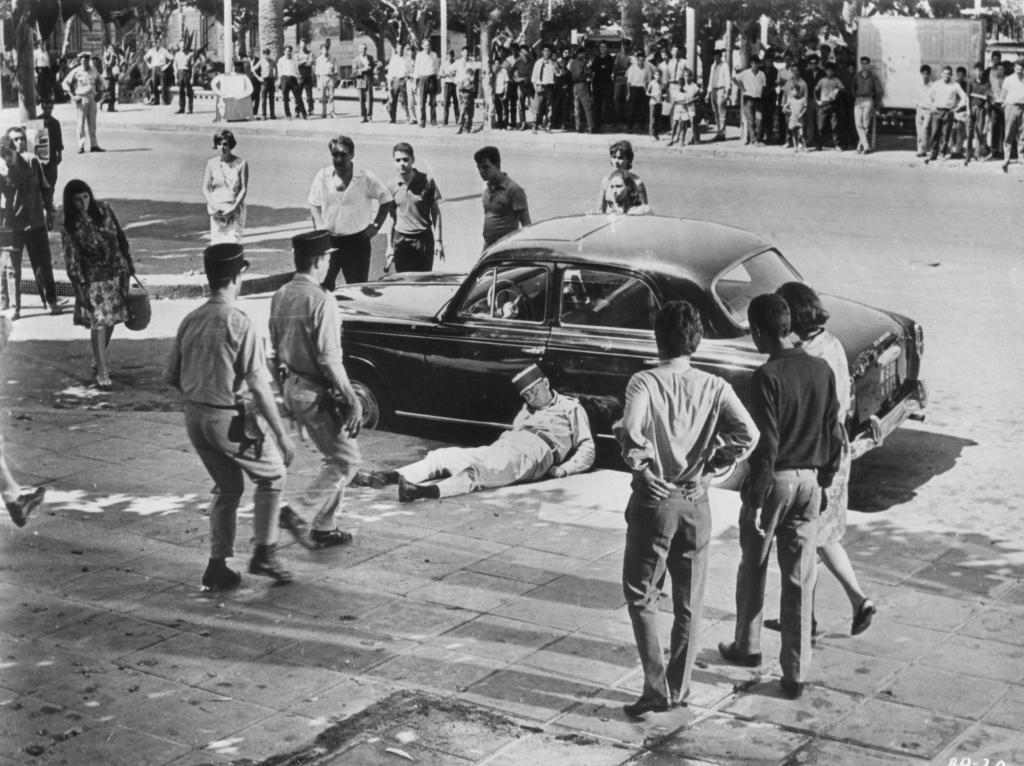
This raw, documentary-like reconstruction of Algeria’s fight for freedom from French colonial rule is imbued with an urgency, as if we are watching events unfold in real time. Perhaps that immediacy is why it was embraced by radical organizations ranging from the Irish Republican Army to the Black Panthers. Italian filmmaker Gillo Pontecorvo set out to capture as accurately as possible the period from 1954 through 1957, when the revolutionary National Liberation Front, or FLN, launched guerrilla warfare against authorities in French Algeria’s capital city. Filmed in grainy black and white, and employing the stylistic lessons of Italian neorealism and cinema vérité, The Battle of Algiers is an unblinking look at guerrilla warfare. Nonprofessional actors were cast for their resemblance to the real-life figures, particularly FLN leader Ali la Pointe (Brahim Hadjadj). The one exception is Jean Martin as Col. Mathieu, who serves as the film’s voice for the French perspective. There is no mistaking that the sympathies of writer-director Pontecorvo and co-writer Franco Solinas lie with the Algerian rebels, but they are scrupulously evenhanded. The picture details the FLN’s terrorist atrocities, as well as the French military’s reliance on torture and propaganda. In the end, The Battle of Algiers rings as a powerful indictment of colonialism. “It has a firebrand’s fervor; it carries you with it, and doesn’t give you time to think,” wrote The New Yorker’s Pauline Kael upon the film’s U.S. release. “Pontecorvo’s inflammatory passion works directly on your feelings. He’s the most dangerous kind of Marxist, a Marxist poet.” The fight for liberation culminated with Algeria’s independence in July 1962.
Honorable mention: All the President’s Men (1976, dir: Alan J. Pakula), The Best Man (1964, dir: Franklin J. Schaffner), Citizen Kane (1941, dir: Orson Welles), City of Hope (1991, dir: John Sayles), The Great McGinty (1940, dir: Preston Sturges), The Last Hurrah (1958, dir: John Ford), Lincoln (2012, dir: Steven Spielberg), The Parallax View (1974, dir: Alan J. Pakula), Seven Days in May (1964, dir: John Frankenheimer), Traffic (2000, dir: Steven Soderbergh)
 Cutting to the Chase with Phil Bacharach