
“I take the open road. Healthy, free, the world before me,” wrote the poet Walt Whitman, long before anyone in Hollywood even thought about shooting a road-trip movie. The road is a potent storytelling metaphor. It conjures journeys both external and internal. It symbolizes freedom, reinvention, and escape––or just a place to get your kicks (if you’re on Route 66, anyway)––but the allure of the road can also expose the limits of such hopes.
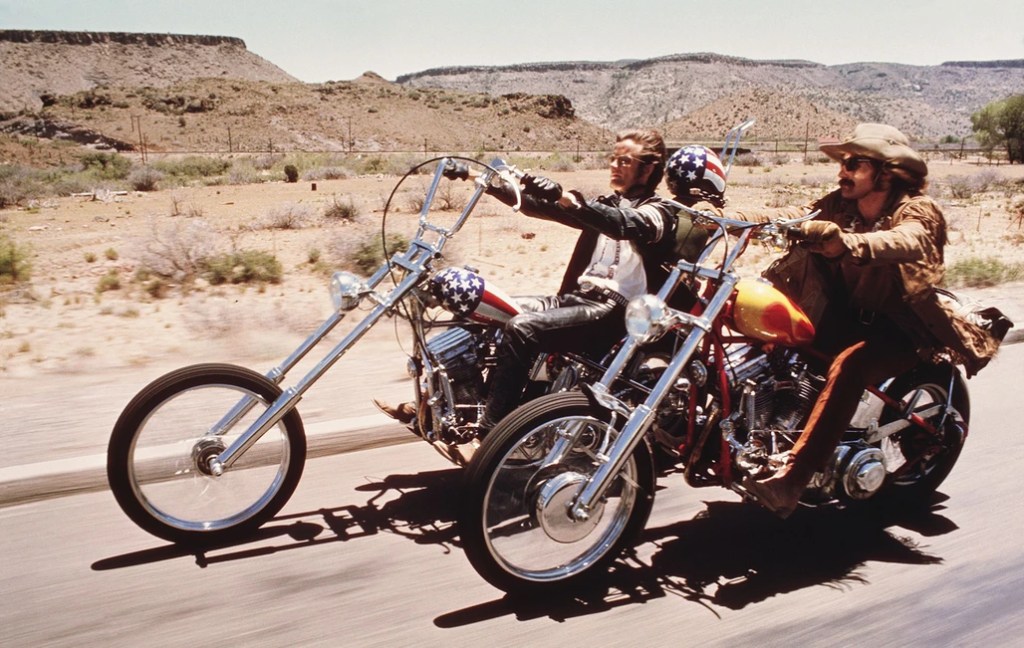
Take 1969’s Easy Rider, for instance (not included below). Dennis Hopper’s quintessential road-trip film, a cultural and commercial milestone, helped usher in New Hollywood and presents the road as both opportunity and death. To be sure, road trip movies are remarkably versatile. Here are my 10 picks for the best road trip movies.
10. Thelma & Louise (1991, dir. Ridley Scott)
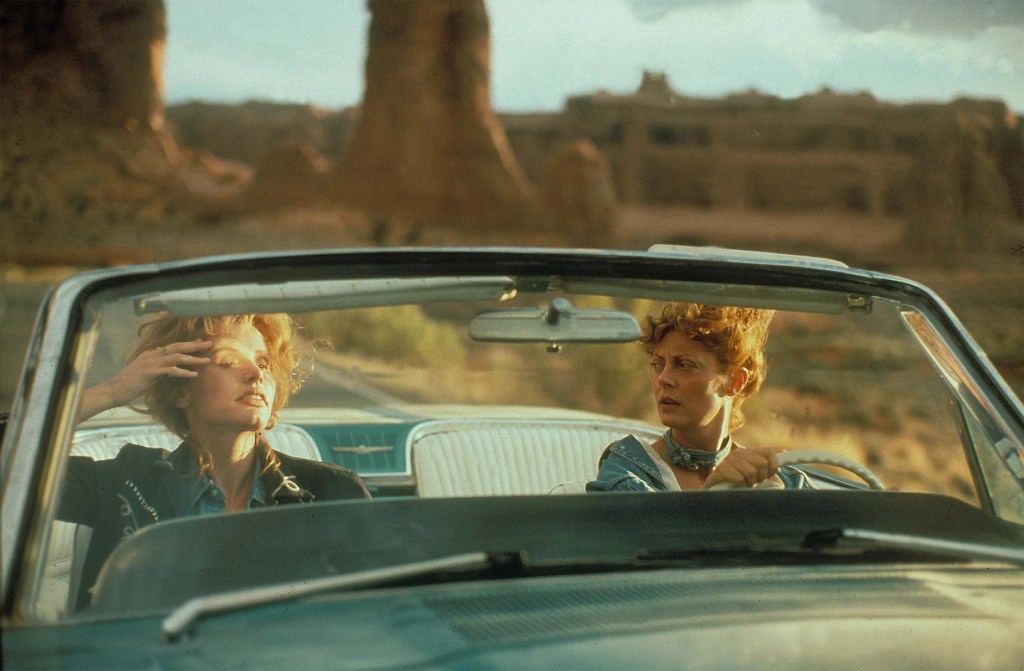
The landmark tale of friendship and feminism from director Ridley Scott and screenwriter Callie Khouri wrings metaphorical power from life on the highway. The titular heroines on the run, played by Geena Davis and Susan Sarandon, find that the transcendence of the road is a myth. Chased by lawmen from Arkansas to Arizona, and knowing there is no escape, they reach the end of the road but resolve to keep driving––even as they recognize that some canyons cannot be crossed.
9. Hit the Road (2021, dir. Panah Panahi)

An Iranian family is on a road trip crammed into an SUV. The crotchety father (Hassan Madjooni), his leg in a cast, sits in the back with his garrulous 6-year-old son (Rayan Sarlak). In the front is the brooding oldest son––as quiet as his brother is exhuberant––while the pensive mother (Pantea Panahiha) does her best to lighten the mood. Where are they going, and why? And why have they expressly left their smartphones at home? Hit the Road is a stunning debut for writer-director Panah Panahi. The son of Jafar Panahi––the celebrated Iranian director whose works include This Is Not a Film (2011) and Taxi (2015)––shows that filmmaking excellence appears to be a family tradition. This funny, engaging comedy-drama taps into the familiar relationship dynamics of a loving but smart-alecky family, but as they near the Turkish border and past the lunar-like desert landscapes of western Iran, it becomes clear that they are heading toward inevitable heartbreak.
8. It Happened One Night (1934, dir. Frank Capra)
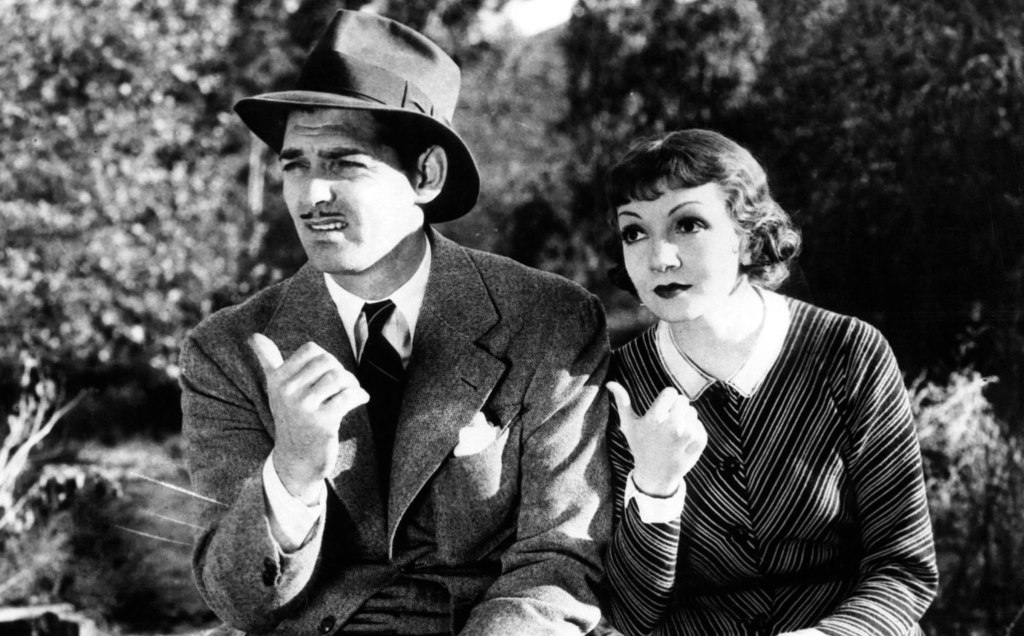
One of the earliest screwball comedies, It Happened One Night became a massive hit for Columbia Pictures by tapping into the romance of life on the road and helping lay the groundwork for the modern road movie. It helped to have two beautiful stars, of course. Clark Gable is a down-on-his-luck newspaperman who realizes the spoiled heiress Ellie Andrews (Claudette Colbert) he meets on a Greyhound bus is on the run from her overbearing father. Naturally, they detest each other—until, just as naturally, they fall in love. Oscar voters swooned for the film’s playfully sexy hijinks; it won Academy Awards for Best Picture, Director, Actor, Actress and Screenplay, a feat not repeated until One Flew Over the Cuckoo’s Nest (1975) and The Silence of the Lambs (1991). Undershirt manufacturers were less enchanted. Sales plummeted after Gable took off his shirt in one scene to reveal his bare chest.
7. The Three Burials of Melquiades Estrada (2005, dir. Tommy Lee Jones)
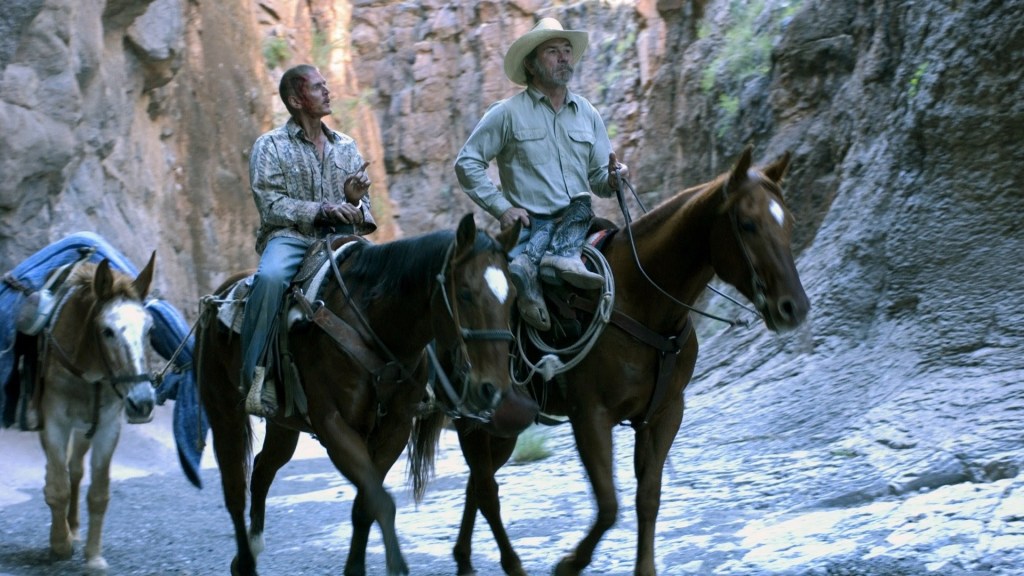
Actor-director Tommy Lee Jones (in his feature-length directorial debut) and screenwriter Guillermo Arriaga spin a quietly devastating yarn about death and loyalty along the U.S.-Mexico border. Jones stars as Pete Perkins, a laconic Texas ranch foreman mourning the mysterious shooting death of a Mexican ranch hand and his close friend, Melquiades Estrada (Julio Cedillo). When the local sheriff (Dwight Yoakam) declines to investigate the killing of a Mexican national, Pete does some digging on his own and is led to sullen border patrolman Mike Norton (Barry Pepper), who is newly arrived in the area. At gunpoint, Pete forces Mike to pay penance by helping return the deceased to his wife and children in Mexico. Languorous and occasionally elliptical, The Three Burials treats its journey as a reckoning for Mike—and for the moral indifference of borderland culture—even as it mines the mordant humor of lugging a decomposing corpse across the countryside.
6. Alice in the Cities (1974, dir. Wim Wenders)
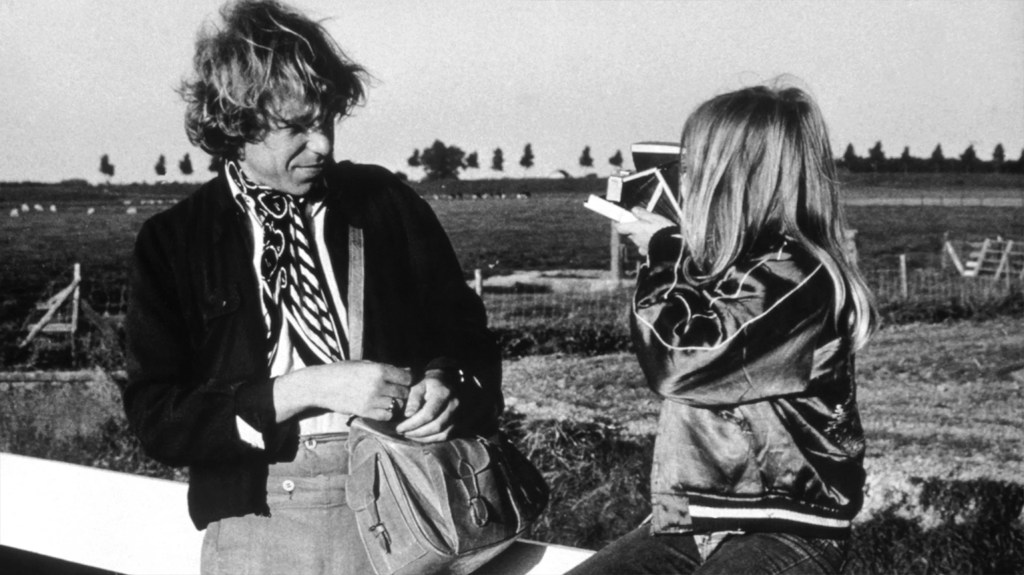
West German writer Phil (Rüdiger Vogler) has been in the United States on assignment to write a magazine article about the American landscape. All he has to show for it, however, are Polaroids of what he sees. An unimpressed editor tells Phil to pack his bags and return home to Munich. At the airport, a single mother and fellow German named Lisa (Lisa Kreuzer) persuades Phil to escort her 9-year-old daughter, Alice (Yella Rottländer), back to Germany, promising she’lll be on the next flight. The woman doesn’t turn up, and Phil must decide what to do. Alice wants to stay with her grandmother, but isn’t sure where she lives. Beginning in Amsterdam and winding through West Germany, Alice in the Cities is among the most existential of road trips: a man searching for belonging and a child in need of a parent. Writer-director Wim Wenders is far too Zen-like a storyteller for predictability. The film is the first of the director’s “road movie trilogy,” followed by The Wrong Move (1975) and Kings of the Road (1976).
5. The Straight Story (1999, dir. David Lynch)
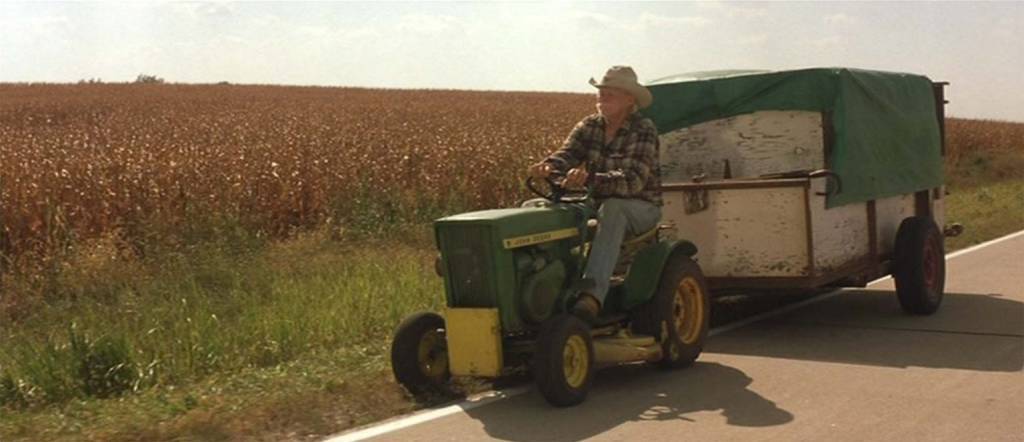
From Blue Velvet to Twin Peaks, David Lynch tempered his dark thematic obsessions with light—the unironic sort that hearkened back to his own Midwestern roots. The Straight Story, based on a true story, finds Lynch leaning fully into his gentler side. Written by John Roach and Mary Sweeney, it features Richard Farnsworth as Alvin Straight, an elderly Iowan who drives his riding lawn mower across more than 250 miles to visit his estranged brother in Wisconsin. A refreshingly humane worldview prevails as this kindly, plain-spoken protagonist makes friends along the way. For Farnsworth, who was in near-constant pain from terminal prostate cancer, the shoot itself was an ordeal that he was determined to finish. His performance earned an Oscar nomination; he took his own life the following year at age 80. The Straight Story has little adornment or sentimentality. It is just what the title implies. A man who is nearing the end of his life seeking reconciliation will do so, even if it takes him going five miles an hour.
4. Two-Lane Blacktop (1971, dir. Monte Hellman)
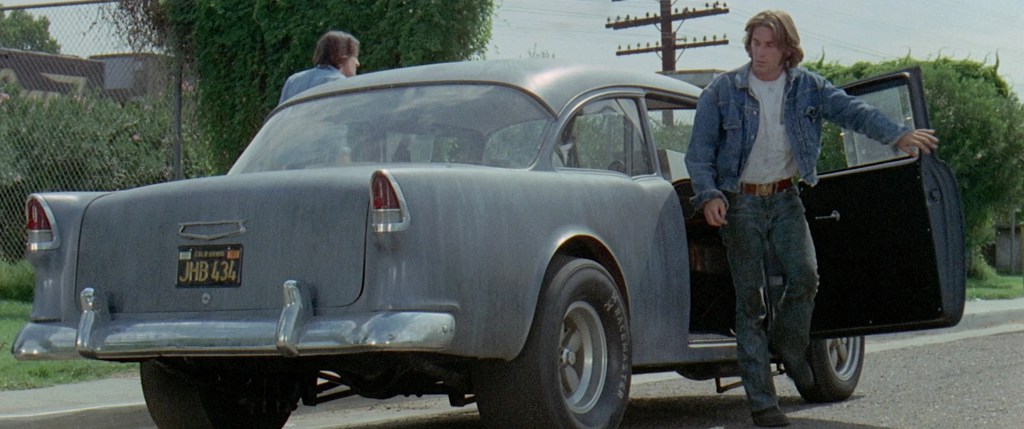
Director Monte Hellman’s cult classic doubles down on the road film as an existential journey. Two young drifters in their 20s, known only as The Driver (James Taylor––yes, the singer) and The Mechanic (Dennis Wilson––drummer for the Beach Boys) tool around the country drag-racing in a souped-up ‘55 Chevy. Esquire magazine was so impressed by Rudy Wurlitzer and Will Corry’s screenplay that it wildly overhyped the yet-to-be-released picture based on just the script. Then the movie hit theaters, and audiences were not excited about a nearly plotless story with two guys who only talk about their car when they converse at all. Two-Lane Blacktop is a mood piece before it becomes a narrative. The Driver and the Mechanic pick up a hippie chick, played by Laurie Bird, and periodically deal with another road nomad, G.T.O. (Warren Oates, customarily excellent) who staves off a profound loneliness by picking up a stream of hitchhikers. Opaque as it is, the film casts an ineffable spell as we are drawn to the open road and its ecosystem of gas stations, greasy spoon diners and cheap motels.
3. Paper Moon (1973, dir. Peter Bogdanovich)
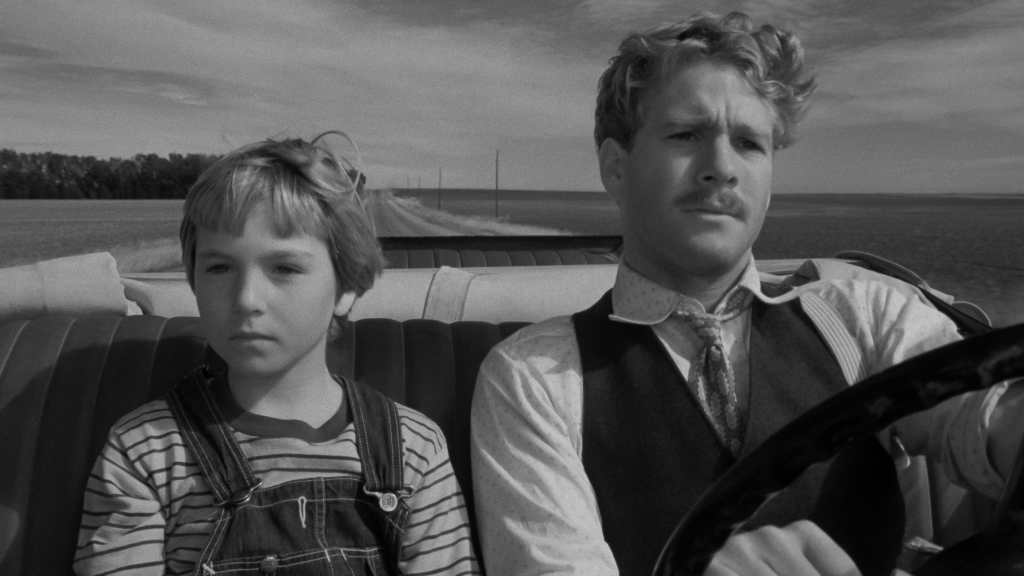
A Depression-era road trip of a (possibly) father and daughter, Paper Moon was director Peter Bogdanovich’s third masterpiece over a remarkable three-year run (The Last Picture Show and What’s Up, Doc? being the others). Tatum O’Neal was all of 10 when she deservedly won the Oscar for Best Supporting Actress. She is newly orphaned Addie Loggins, introduced at her mother’s graveside funeral in rural Kansas. Addie is sent to live with relatives in Missouri. She will get there with the help of Moses “Moze” Pray (Ryan O’Neal), a Bible-hawking con man who is likely Addie’s dad, not that either one finds that a particularly appealing possibility. They clash immediately, which, if you’ve ever seen a movie, means their stormy relationship will thaw over the course of their time on the road. Paper Moon is nearly flawless comedy; it is wistful and nostalgic, and its characters can breathe without overstaying their welcome. Tatum is terrific, not even grading on a child-actor curve, and elevates the performance of real-life father Ryan, whose range tended to be… limited. Alvin Sargent’s script is spare and clever, while László Kovács’ black-and-white cinematography manages to be both grim and beautiful—much like the movie itself.
2. The Last Detail (1973, dir. Hal Ashby)
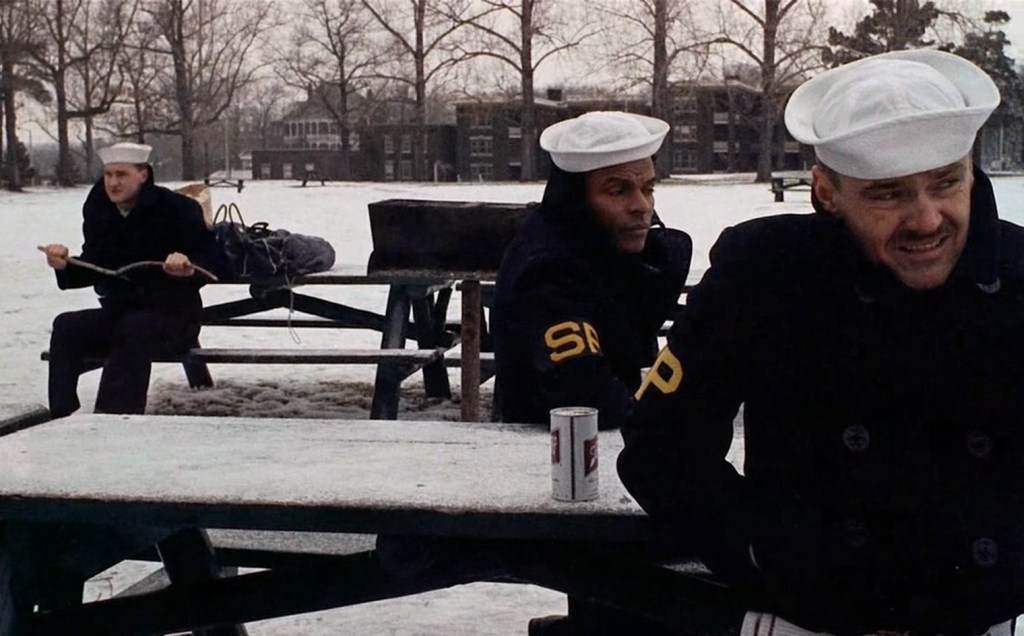
The Last Detail is emblematic of 1970s New Hollywood: leisurely paced, shaggily plotted, and resolutely anti-authority. Beneath its scruffy exterior beats the heart of a sentimentalist. Directed by Hal Ashby, the story is half road trip, half coming of age. Signalman Billy “Badass” Buddusky (Jack Nicholson) and petty officer Richard “Mule” Mulhall (Otis Young) must deliver young Larry Meadows (Randy Quaid) to the naval prison for stealing a paltry $40 from a donation box. Along the way, the escorts develop an affection for the 18-year-old prisoner and resolve to show him a good time before his looming incarceration. They prod the gentle Larry into being more assertive. “Don’t you ever get mad at nobody?” Buddusky asks with genuine bewilderment. Buddusky’s own temperament tends to run from angry to furious. When a bartender refuses to serve the three and threatens to call the shore patrol if they don’t leave, Buddusky loses it. “I am the motherfucking shore patrol, motherfucker!” he erupts, slamming his gun on the bar top. The moment is vintage Nicholson, who gets to say “motherfucker” a lot here, thanks to screenwriter Robert Towne.
1. Pee-wee’s Big Adventure (1985, dir. Tim Burton)
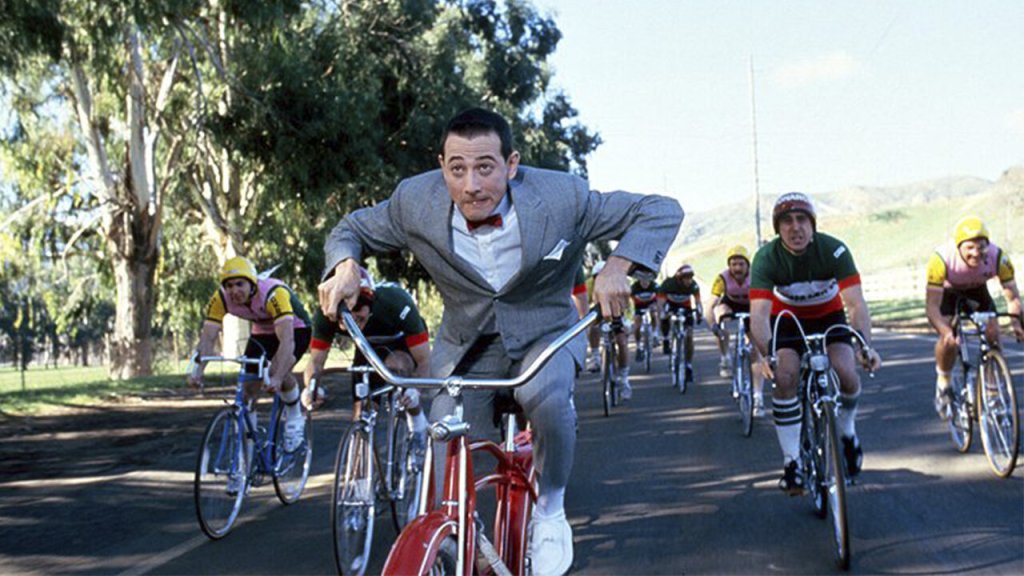
This movie could have so easily been a simple cash grab. Envisioned as a vehicle for the alter ego of performance artist Paul Reubens, Pee-wee’s Big Adventure is so much better than anyone would have expected. Most of the credit must go to Reubens, of course, for creating the bizarro character in the first place. A rail-thin man-child who is neither man nor child, Pee-wee Herman is suspended somewhere between petty and puckish, embodying an innocence so exaggerated that it becomes unsettling. Reubens was shrewd enough to hand duties over to Tim Burton, who makes his directorial debut. For Reubens and Burton, it was a perfect marriage of sensibilities, but most aspects of the production, from Danny Elfman’s happily manic music score to David L. Snyder’s eye-popping production design, are perfectly calibrated. The plot is certainly fit for a child. After Pee-wee’s beloved, souped-up bicycle is stolen, our arrested adolescent sets out on the open road to find it. Simultaneously charming and impish, Pee-wee’s Big Adventure lives up to its title with wonderful vignettes along the hero’s journey. Pee-wee performs the so-called “Tequila Dance” for a band of burly bikers, spends a chaste evening with a truck-stop waitress, and (my favorite) hitches a ride from a phantom truck driver who goes by “Large Marge.” And that’s before we even get to Texas and Pee-wee’s request to see if his missing Schwinn has been hidden in the basement of the Alamo. (SPOILER ALERT: There’s no basement at the Alamo!)
Honorable mention: Badlands (1973, dir. Terrence Malick), Little Miss Sunshine (2006, dir. Jonathan Dayton and Valerie Faris), Nebraska (2013, dir. Alexander Payne), Nomadland (2020, dir. Chloé Zhao), Paris, Texas (1984, dir. Wim Wenders), Planes, Trains & Automobiles (1987, dir. John Hughes), Rain Man (1988, dir. Barry Levinson), Stranger than Paradise (1984, dir. Jim Jarmusch), Sullivan’s Travels (1941, dir. Preston Sturges), Y Tu Mamá También (2001, dir. Alfonso Cuarón)
 Cutting to the Chase with Phil Bacharach