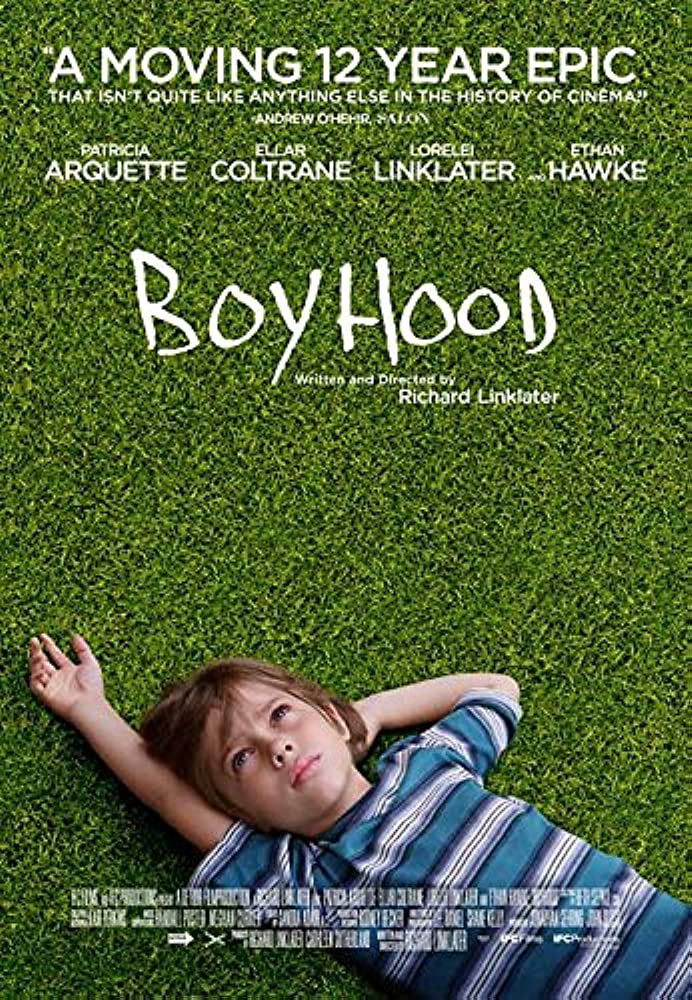
The swooning of critics over Boyhood upon its theatrical release reached near-embarrassing heights. There’s no getting around it; this is a remarkable movie and a testament to the singular vision of writer-director Richard Linklater. And while that doesn’t make Boyhood an unqualified triumph, its minor deficiencies are more than made up for by its overall power.
The project was definitely a compelling one. Linklater and his Boyhood cast shot for about a week every summer over a 12-year period to chronicle a boy’s life. Other movies have captured on film the progression of kids growing up, most notably the Harry Potter franchise and Michael Apted’s Up series. But Boyhood offers the exhilarating experience of watching that journey unfold in one fell swoop.

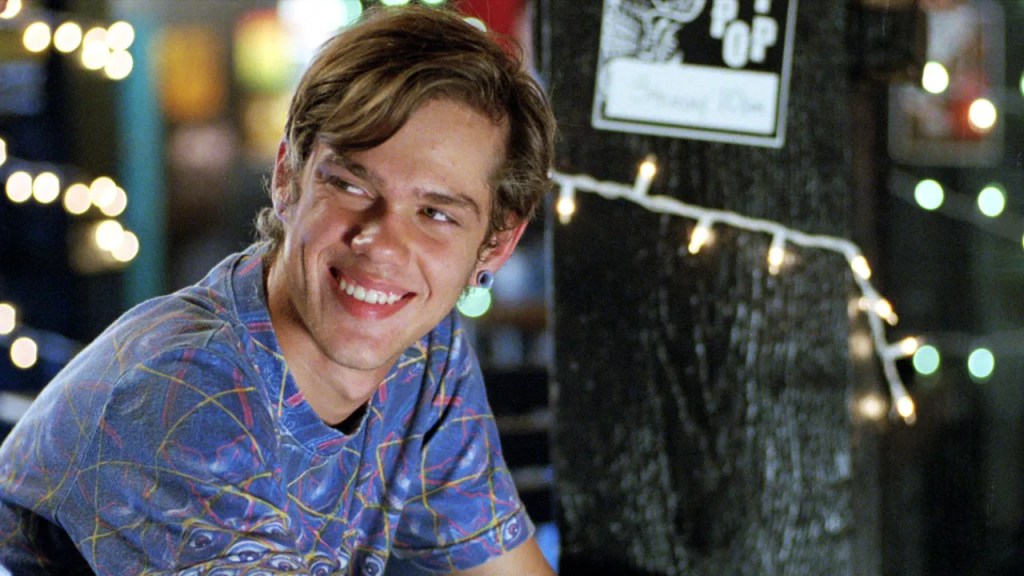
Its central character, Mason Jr. (Ellar Coltrane), is growing up in Texas. We see that growth literally as he transforms from a doughy 6-year-old to a lanky, contemplative college freshman. Linklater marks the passage of time through cultural touchstones – the Iraq War, the election of Barack Obama – and a music soundtrack that ranges from Coldplay and Sheryl Crow to Arcade Fire and The Black Keys.
Through it all, young Mason continues along his unwieldy path toward adulthood. Sometimes those physical changes can be jarring for the viewer. If I hadn’t known better, I might have thought that Ellar Coltrane had been replaced by another actor between seventh and eighth grade. Within minutes, the boy is taller and slender, his voice having deepened. When it comes to special effects, Industrial Light & Magic has nothing on puberty.
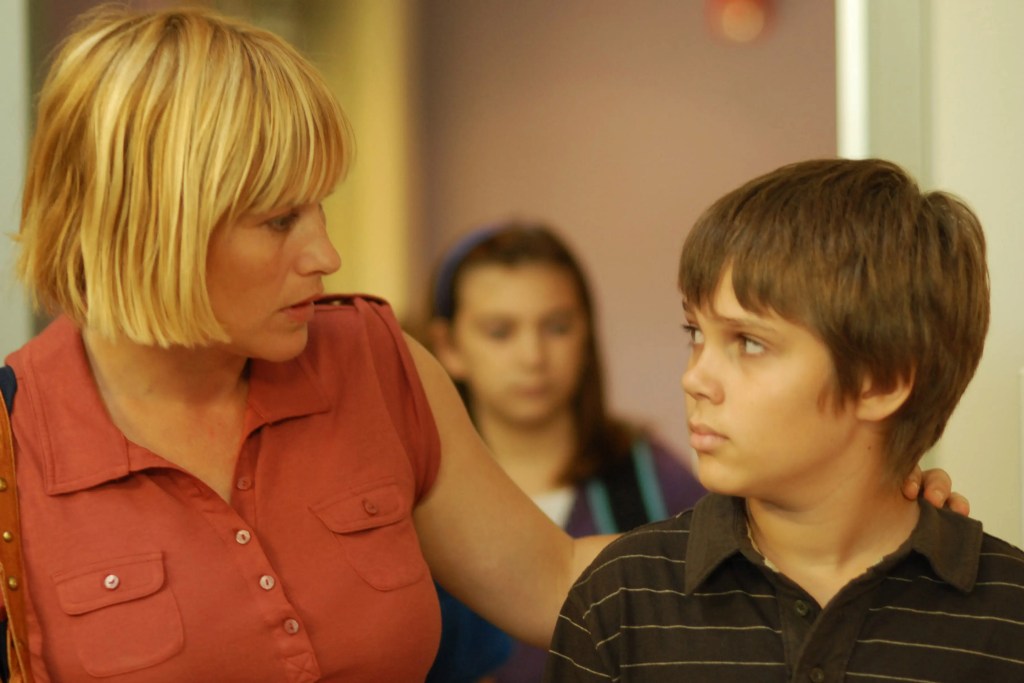
Changing right along with Mason is older sister Samantha (Lorelei Linklater , the director’s daughter) and single mom Olivia (Patricia Arquette). Shortly after the film begins, Olivia moves the family to Houston so she can return to college. The new location doesn’t keep Mason’s biological father, Mason Sr. (Ethan Hawke), from staying involved in his kids’ lives.
Boyhood is as much a story of parenthood as it is Mason’s. Arquette, whose performance won her the Academy Award for Best Supporting Actress, is excellent as a single parent doing the best she can despite some dicey decisions. Hawke has never been better as a guy who initially seems like the reluctant grownup clinging to youthful cool. But Mason Sr. proves to be more interesting than that, a loving and committed father offering his kids a litany of life lessons.
Mason Jr. receives a torrent of advice from the adults who shuffle through his life, all of which is taken in and quietly assessed by this observant boy with searching eyes. Linklater was fortunate when he cast 6-year-old Coltrane. Before filming began each year, the director visited with his young actor about what was going on in his life. Those discussions, in turn, informed Linklater’s screenwriting. What emerged was a performance by Coltrane that rings true, compromised only by the passivity of Mason Jr.
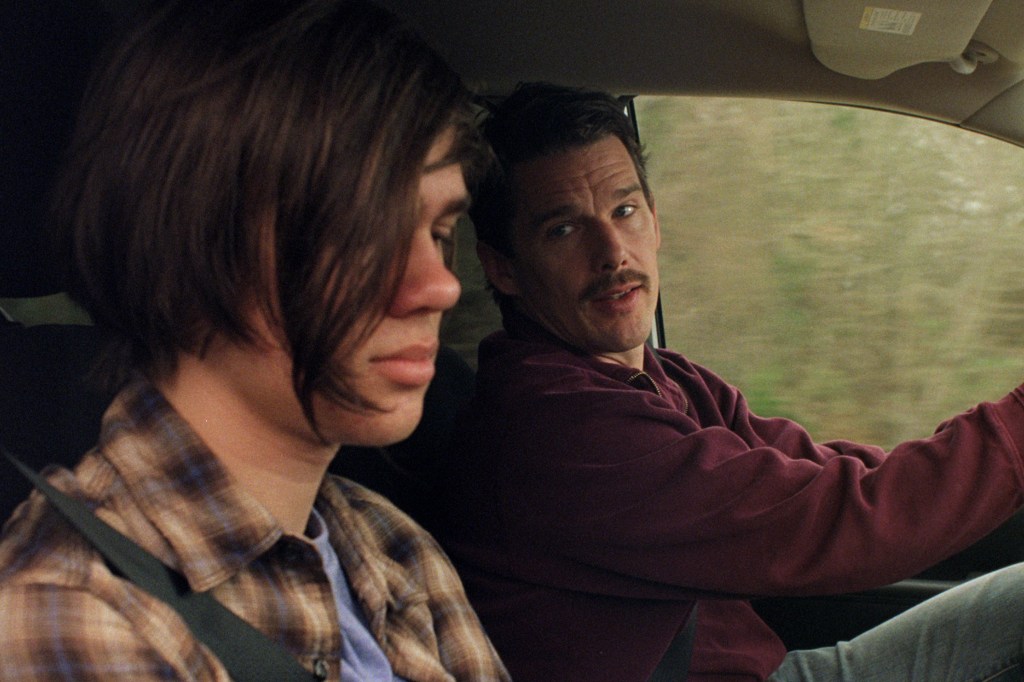
The movie is so ingenious and so risky that it feels ill-mannered to note minor shortcomings. Boyhood is imperfect. Its acting, a blend of professionals and nonprofessionals alike, is uneven. And the film’s determination to capture childhood in all its shambling, mundane glory means that it largely soars and stumbles based on the vagaries of the viewer. We process all art through the filter of our own psychological baggage, but Boyhood seems especially tethered to what it awakens in our own memories.
Mason’s life unfolds through ordinary, sometimes prosaic, moments. He considers a dead bird on the ground. He gets a haircut. He endures the scrutiny of being the new kid at school. He drinks beer with older boys who taunt him and posture about sexual conquests. There are many lovely, resonant scenes along the way but, at a running time of more than two and a half hours, Boyhood makes for an awful lot of desultory moments, too.
Just like life.
And that is where Boyhood, with all its blemishes and gangly awkwardness, finds its greatness. In capturing the halting rhythms of life, Linklater achieves something amazing.
 Cutting to the Chase with Phil Bacharach
One response to “Boyhood (2014)”
[…] Guardians of the Galaxy, director: James Gunn3. Force Majeure, director: Ruben Östlund2. Boyhood, director: Richard Linklater1. The Grand Budapest Hotel, director: Wes […]
LikeLike