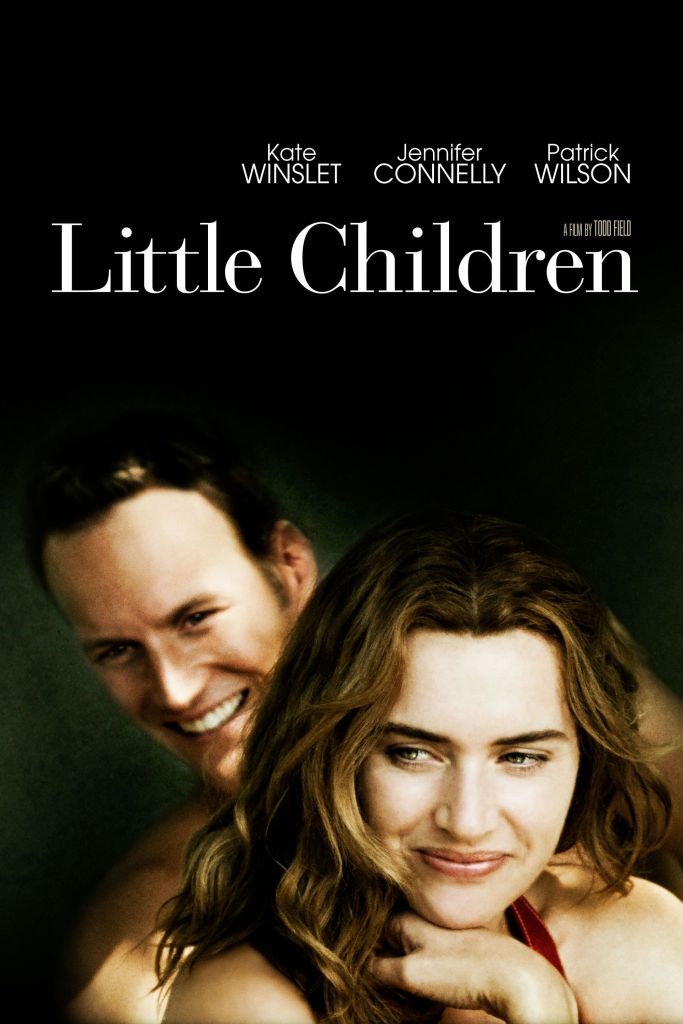
Weaving a tapestry of marital strain, infidelity and the difficulties of parenthood, Little Children is a scathingly honest critique of suburban manners that never sacrifices its humanity for satire. Director Todd Field‘s follow-up to his excellent 2001 melodrama, In the Bedroom, the film is a rarity: caustic without crossing over into cruelty, affecting without resorting to cheap sentimentality.
Set in a well-to-do neighborhood of charming old homes, Little Children stars Kate Winslet in another bravura performance as Sarah Pierce, a smart and sharp-witted young wife and mother. She and her 3-year-old daughter Lucy (Sadie Goldstein) spend their afternoons at the local park, where Sarah endures the catty comments of other stay-at-home moms, particularly the strident Mary Ann (Mary B. McCann). It is a lifestyle to which Sarah has yet to fully surrender. As an ironically dispassionate voiceover narrator (PBS Frontline‘s Will Lyman) tells us, Sarah mollifies herself by pretending she is an anthropologist studying the habits of suburban women.
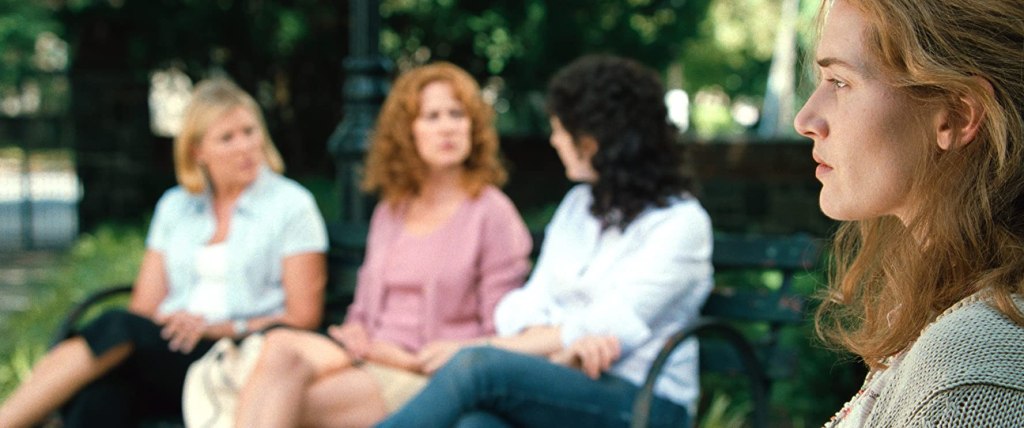
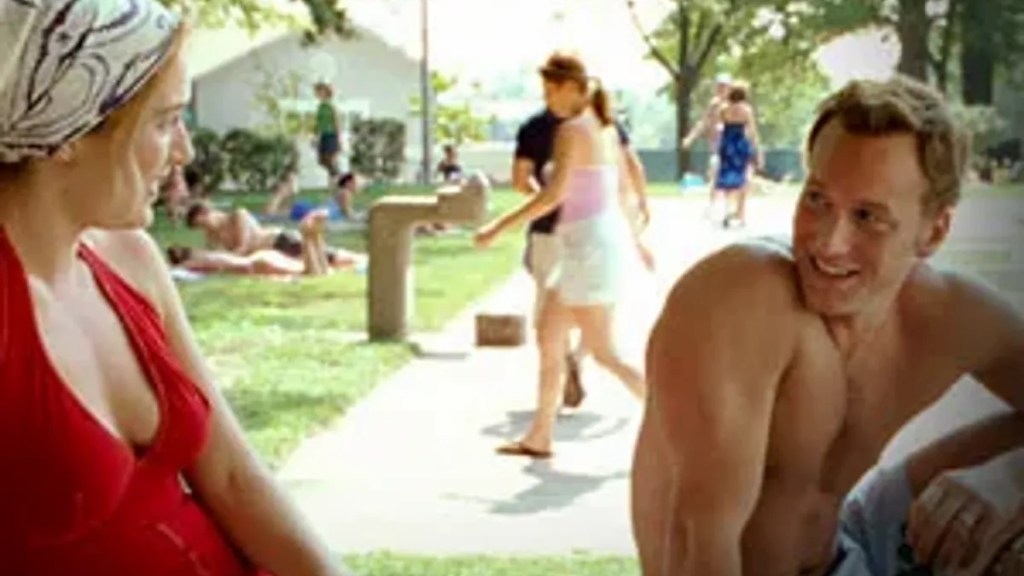
For Mary Ann and her friends, the highlight of the day arrives with the routine appearance of Brad (Patrick Wilson) a handsome, ambling stay-at-home dad whom the women lasciviously call the “Prom King.” On a dare from one of the moms, Sarah strikes up a conversation with Brad while their respective children play. The encounter carries an undercurrent of sexual tension that surprises and excites them both.
And no wonder. Sarah’s home life is hardly ideal. She is an ambivalent wife and a neglectful mother, and it doesn’t help that her husband (Gregg Edelman), an oily marketing executive, is addicted to Internet porn.
Meanwhile, Brad is trapped in adolescence. His wife Kathy (Jennifer Connolly) is a career-minded PBS documentary filmmaker who keeps a tight rein on her husband’s spending. When Brad announces that he finally wants to buy a cell phone, Kathy shoots down the idea with maternal condescension. Her skepticism about Brad’s level of responsibility has some basis in fact. He is supposed to be studying at the library for the bar exam, which he has already failed once, but instead whiles away his evenings watching teen skateboarders. Our omniscient narrator: “‘I must have been like this,’ Brad sometimes thought. ‘I must’ve been one of them.’” On other nights, he relives past glories playing football with a bunch of machismo-obsessed cops.
Brad and Sarah’s platonic friendship eventually turns intimate. But their connectedness, despite some great afternoon sex in the laundry room, is tenuous. Brad is Sarah’s escape from a world she resents. Sarah is Brad’s reassurance that he is worth adoration.
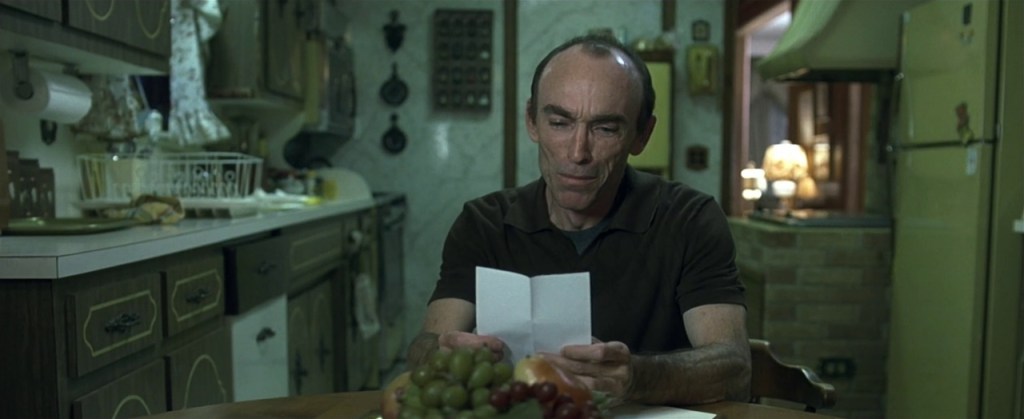
Nowhere is the film more challenging and incisive than with Ronnie J. McGorvey (Jackie Earle Haley, in a stunning performance). Released from prison for indecent exposure to a child, McGorvey stokes understandable fear among parents in the neighborhood, but the threat he poses quickly rises to bogeyman status. When he shows up at a public pool — gaunt, pale and decked out in goggles and flippers — parents fly into a panic and pluck their children out of the water, an unforgettable moment that mimics the chaotic beach scenes of Jaws. Ronnie provides an irresistible target for an entire community’s righteous anger and sanctimony. And yet we also see the touching, difficult relationship between Ronnie and his flinty mother, May (Phyllis Somerville), perhaps the most loving character in the film.
Fittingly, the men and women who populate Little Children are defined by childlike, and childish, impulses. There are parents whose lives revolve around their kids — doting on them, protecting them — as well as parents who resent their kids. There is Ronnie, the child predator and eternal child. And, finally, there are adults who, at heart, are really broken children.
Field co-wrote the script with Tom Perrotta, on whose book the film is adapted, and the pair beautifully capture the fears, insecurities and hopes that fuel suburban life. Such insight is not surprising; Perrotta also penned the novel Election (later turned into a movie by Alexander Payne), another spot-on satire of domesticity.
Little Children is buoyed by exceptional performances. Winslet again proves herself one of the finest and most fearless actresses of her generation. Her ability shines throughout, particularly when, during a book club meeting, Sarah ostensibly praises Madame Bovary but could just as easily be talking about her own lot. “It’s not the cheating,” Sarah says evenly, “it’s the hunger, the hunger for an alternative and the refusal to accept a life of unhappiness.”
The entire cast is extraordinary. Haley is equally memorable as Ronnie, a man who is both predator and victim. And Noah Emmerich gets to demonstrate a surprising depth of range as the neighborhood vigilante and Ronnie’s unhinged one-man tormentor.
 Cutting to the Chase with Phil Bacharach
One response to “Little Children (2006)”
[…] Children of Men, director: Alfonso Cuarón3. Stranger than Fiction, director: Marc Forster2. Little Children, director: Todd Field1. Pan’s Labyrinth, director: Guillermo del […]
LikeLike