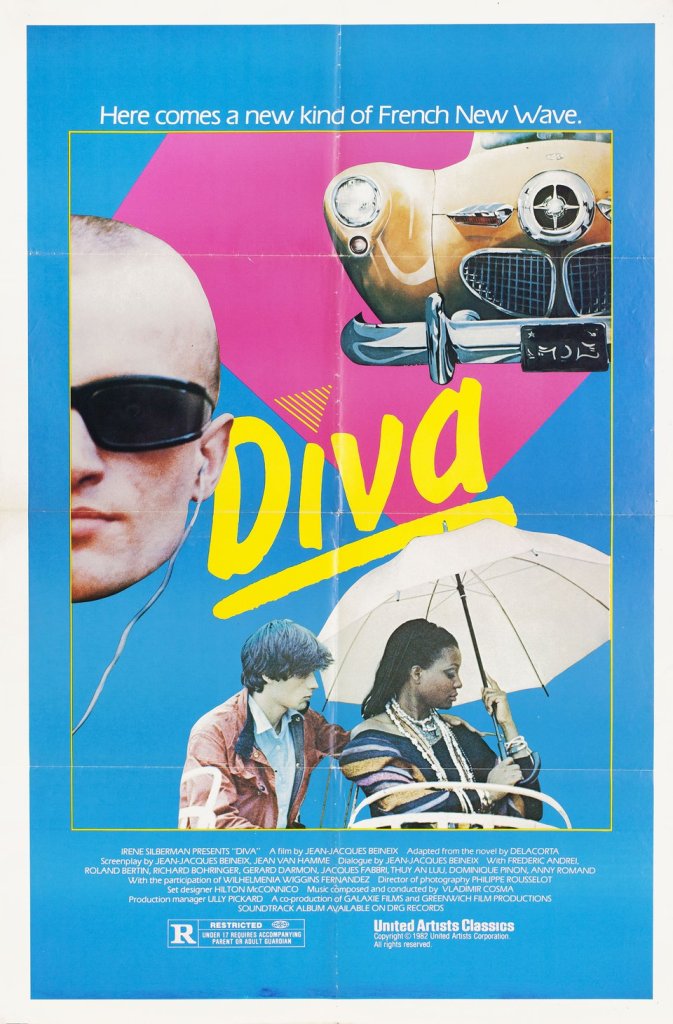
When I first saw Diva back in 1982, I was a snot-nosed 16-year-old movie geek eager to overestimate the worth of any foreign-language film that featured a moped, atmospheric lighting and a synthesizer-heavy music score. Diva had all that, and it got to me. I was mesmerized by the overflow of style and look-at-me cool – and it probably didn’t hurt its mystique that I saw it at (what turned out to be short-lived) an art-house movie theater in Oklahoma City.
I was hardly the only one entranced by the directorial debut of Jean-Jacques Beineix. Despite a tepid initial reception in its native France, Diva was a hit on the international stage and sparked the so-called Cinéma du look movement of the 1980s.
Revisiting Diva decades after that magical viewing, I wistfully conclude that Thomas Wolfe was right: You really can’t go home again.
This French import hasn’t aged nearly as well as most wines from that country. The picture’s Hitchcockian setup and oddball characters still make for breezy fun, but the passage of time has made it clearer that Beineix’s visual sleekness is a so-so substitute for content.
Jules (Frédéric Andréi) is a moped-driving Paris postal carrier whose great obsession, apart from opera, is a specific opera singer named Cynthia Hawkins (Wilhelmenia Wiggins Fernandez). He clandestinely records one of her performances, an act that seems innocuous enough until you learn that this diva has adamantly refused to allow a recording of her singing (something about preserving the purity of the performer-audience connection, don’cha know).
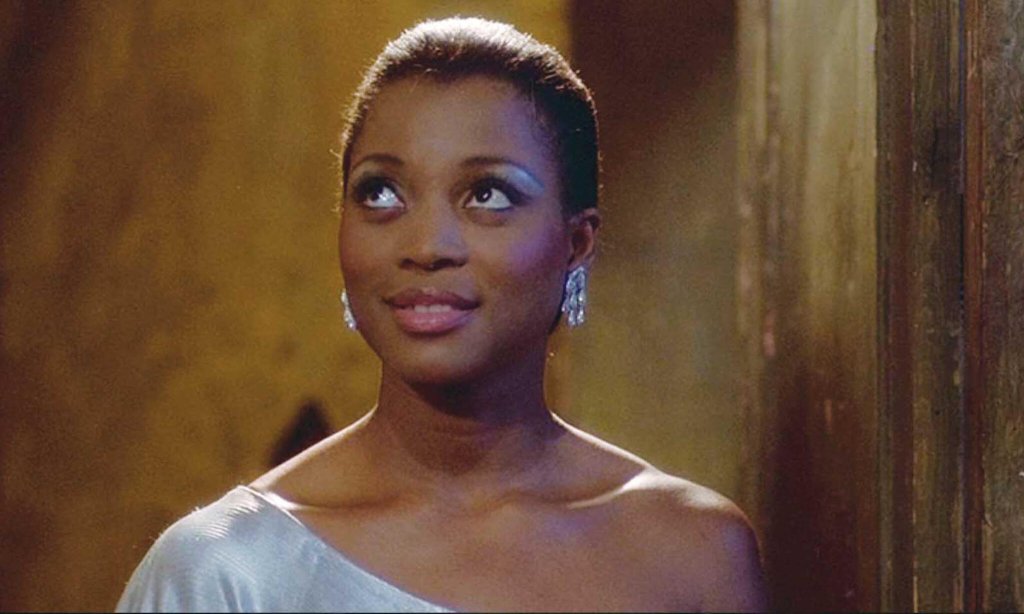
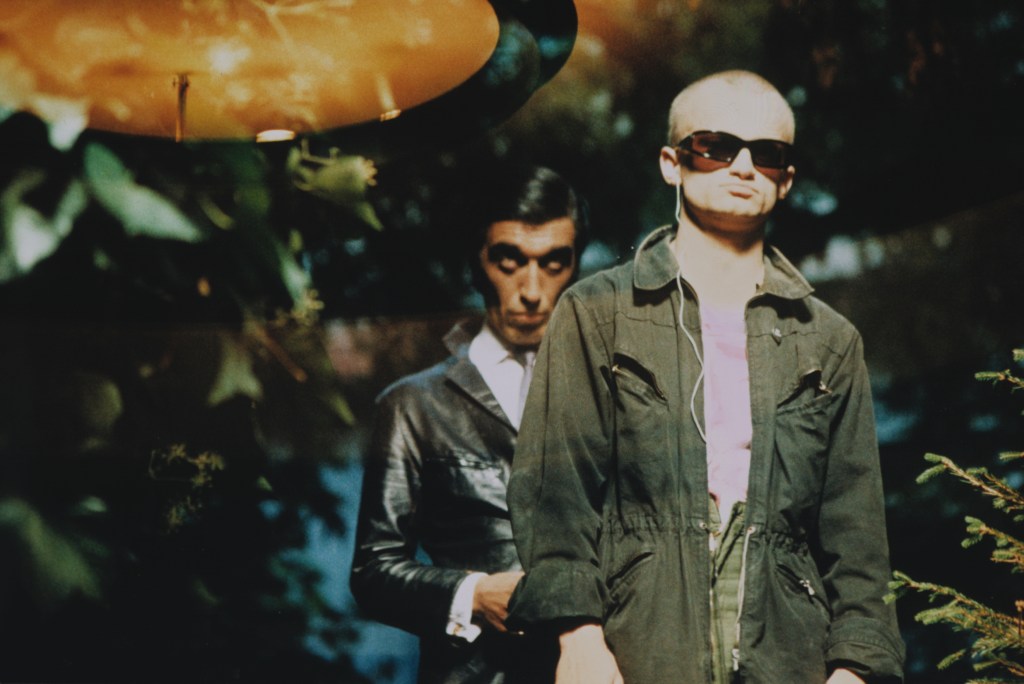
Jules, for his part, is oblivious to the dudes sitting behind him at the concert hall. He is more focused on palming the diva’s gown backstage after the show.
Jules swipes the gown, but otherwise he can’t catch a break. A few days later, a prostitute is being pursued by two other sinister-looking dudes when she hurriedly drops a cassette tape into the bag on Jules’ moped. The tape implicates a top-ranked law enforcement officer as the head of a prostitution-and-drug ring. The would-be whistleblower-hooker is killed by the bad guys, and it isn’t long before both the police and the villains realize that the MacGuffin du jour is in the possession of the unsuspecting Jules.
At any rate, two sinister-looking Taiwanese businessmen at the concert spy Jules making his surreptitious recording. They plot to steal the tape from Jules –presumably the pair doesn’t have access to the same high-quality equipment as this young postman – and use it to force Cynthia to cut an album for their record label.
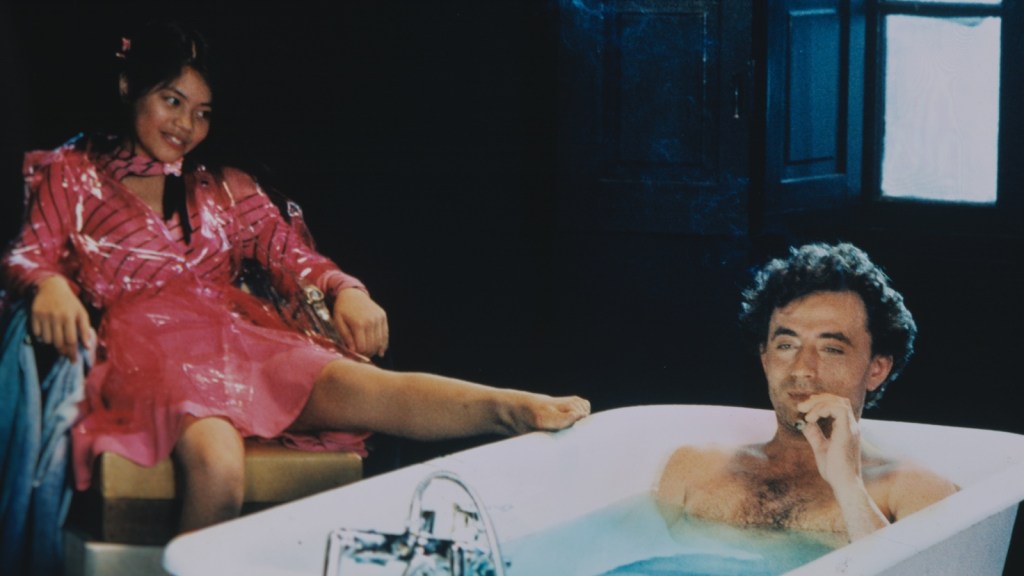
It’s all supremely implausible, of course, but, hey, that’s the point. Beineix is spinning pure fantasy, a mix-and-match of culture, pop art and whimsy. Despite the array of people after Jules and his tapes, Diva’s excess of eccentricity renders it immune to suspense or even much of a feeling of danger. The chief heavy, portrayed by Dominuiqe Pinon, is a cartoon of menace: a pug-faced punker with an earpiece seemingly implanted permanently in his right ear. Jules’ newfound posse is equally absurd. He is aided by a coquettish, 15-year-old Vietnamese shoplifter (Thuy An Luu) and a Zen-like mystery man named Gorodish (Richard Bohringer).
The kookiness of Diva‘s characters is heightened by Beineix’s fetishizing of their environs. Jules lives in a garage filled with wrecked luxury automobiles and a huge wall mural depicting an impending car collision. Gorodish’s sparsely furnished loft includes a wave machine and a bathtub in the middle of the room. Jules hooks up with a streetwalker whose apartment is enveloped in moody blue lighting. It all adds up to a sumptuous dream of a movie, buoyed by the fluid, elegant camerawork of ace cinematographer Philippe Rousselot.
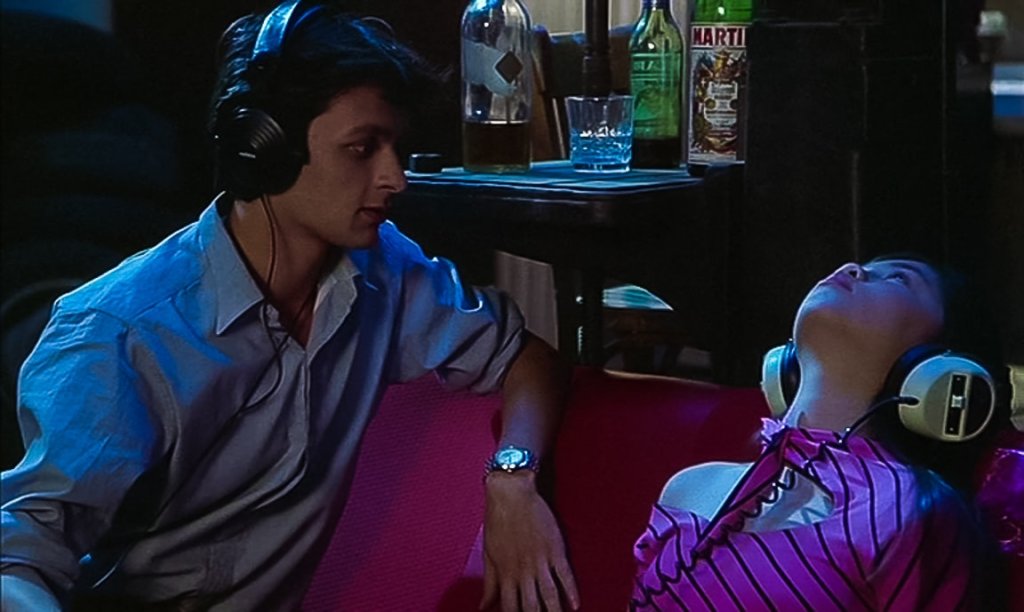
But it doesn’t add up to much more. Diva is playful and certainly stylish — and maybe that’s enough — but saddled by paper-thin characters and narrative. Performances are spotty, too. Bohringer brings charisma to Gorodish, but Thuy An Luu overacts while Andréi’s Jules barely registers much of a presence at all. Quirks supplant emotional resonance. That doesn’t make Diva a bad film by any stretch, but it does keeps Beineix’s debut from the realm of timelessness.
That said, Beineix, who died in 2022, was a gifted filmmaker. Some wonderful scenes in Diva transcend their surface charms. There is the justly celebrated chase scene in the Paris Metro, of course – involving a moped and a sprinting cop, no less! – and it is impossible to shake the images of Jules and Cynthia’s twilight stroll through Paris, a lovely montage accompanied by Vladimir Cosma’s melancholy piano composition.
That scene alone is one for the ages, even if the whole of Diva is not.
 Cutting to the Chase with Phil Bacharach
One response to “Diva (1982)”
“MacGuffin du jour” may be my new favorite film phrase.
LikeLike