For most adults, work consumes more waking hours than almost anything except sleep. Admittedly, not all of that time is spent working; some of it likely includes scrolling through TikTok or watching the second hand crawl toward quitting time (or so I’m told).

Even so, the workplace occupies an enormous share of modern life—and provides fertile ground for melodrama, farce, and everything in between.
10. Up in the Air (2009, dir: Jason Reitman)

Released just as the United States was emerging from the Great Recession, Up in the Air is that rare movie fortunate—or unfortunate—enough to tap into the national zeitgeist. Timing is everything, as the saying goes. George Clooney plays Ryan Bingham, a professional corporate hatchet man whose work and private life revolve around cutting people adrift. He likens it to lightening a backpack: “Do you feel the straps cutting into your shoulders? All those negotiations and arguments, and secrets and compromises. You don’t need to carry all that weight.” His commitment to noncommitment is tested by Alex Goran (Vera Farmiga) as a flirtatious fellow frequent flyer. Many of the people Ryan fires onscreen aren’t actors at all: director Jason Reitman advertised for a documentary about the recession, then recorded actual laid-off workers reenacting their own termination, giving the film’s cruelest scenes an unscripted edginess. Ryan begins to realize that traveling light is less about being untethered than running—or flying—away.
9. Silkwood (1983, dir: Mike Nichols)
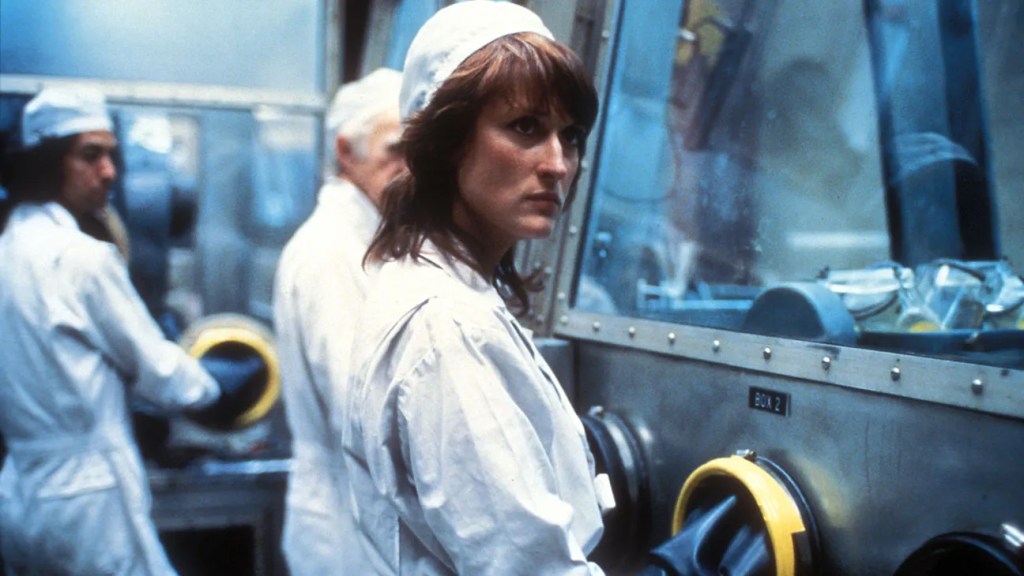
In 1974, Karen Silkwood, a nuclear processing plant worker in Oklahoma, died in a single-car accident while driving to meet a New York Times reporter and her union representative. Documents she was believed to be carrying were never recovered. In Silkwood, director Mike Nichols and screenwriters Nora Ephron and Alice Arlen craft an absorbing, no-frills account of this worker’s evolution into whistleblower as she documented shoddy safety practices and plutonium contamination at Kerr-McGee’s Cimarron Plutonium Recycling Facility. Her courage in taking on her employer only serves to make her an outcast among the coworkers she is fighting to protect. Meryl Streep disappears into the title role. As she told author Mark Harris in Mike Nichols: A Life, the director was determined to capture authenticity: “None of us knew anything about plutonium processing or how fuel rods were made. It was important for him to learn it and get it right.” The film offers no verdict on how Karen died.
8. Two Days One Night (2014, dir: Jean-Pierre Dardenne and Luc Dardenne)

Sometimes the most suspenseful films don’t even require a bomb or a bad guy. In Two Days, One Night, Belgian brothers Jean-Pierre and Luc Dardenne mine nearly unbearable tension from the simple scenario of a decent person trying to keep her job. Marion Cotillard plays Sandra, a Belgian wife and mother preparing to return to her job at a solar-panel factory after medical leave for depression. But the factory is downsizing. In a twist of managerial cruelty, Sandra’s coworkers have been forced to choose between retaining their annual bonuses and preserving her job. Given one weekend before a second vote, Sandra must persuade enough of them to surrender the money. Cotillard earns our empathy without straining. Forced to lobby her fellow employees, each doorstep conversation becomes a referendum on whether solidarity can survive after management has pitted worker against worker. Among Sandra’s coworkers there are no villains—only people who must choose between someone else’s rent and their own.
7. Perfect Days (2023, dir: Wim Wenders)
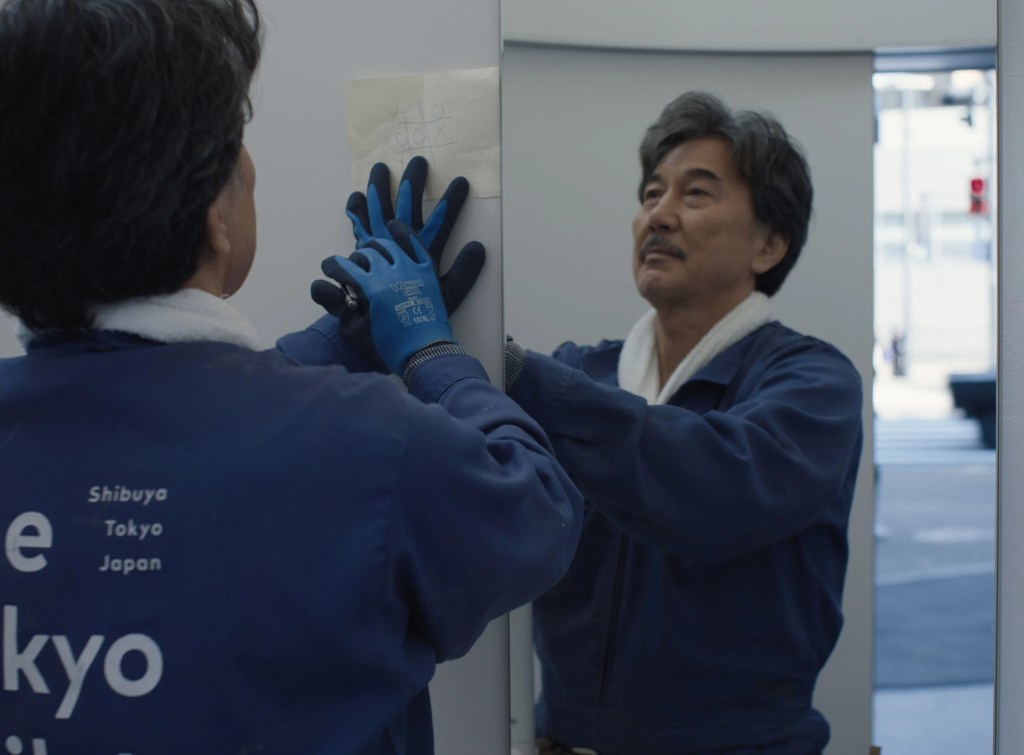
Cleaning bathrooms never seemed so Zen-like. Wim Wenders’ entrancing slice-of-life character study is anchored by Kôji Yakusho’s warm, unaffected performance as Hirayama, a public toilet cleaner in Tokyo. He’s diligent, efficient, and painstakingly thorough as he tends to restrooms around the city, finding both pride and solace in work that most people might prefer not to acknowledge. Wenders didn’t set out to make a feature at all. He had been invited to Tokyo to make a series of short films about the city’s state-of-the-art public restrooms. He was impressed enough to build an entire fictional film around them, shooting it in just 16 days. Perfect Days is so committed to Hirayama’s perspective that we begin to understand the serenity and beauty he finds daily. He cleans toilets. He gazes at trees. He listens to cherished cassettes of music by the Kinks, the Velvet Underground, and the Animals. Somehow, the repetition approaches transcendence. If ever a movie could serve as a mantra, it would be this aptly titled work about work.
(See more in The 10 best bathroom scenes in film.)
6. Norma Rae (1979, dir: Martin Ritt)
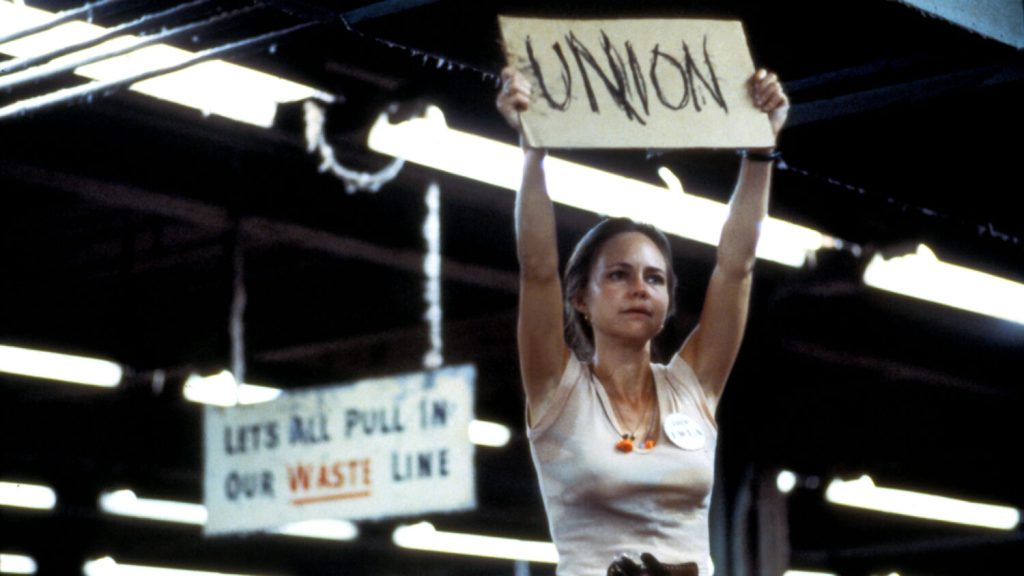
This fervently pro-union melodrama is based on the real-life story of Crystal Lee Sutton, a North Carolina textile worker who challenged the town’s dominant employer and helped organize her fellow mill workers. Director Martin Ritt worked closely with Sally Field on the first major dramatic film role of her career. “Every day was filled with focus and challenge, with calling on skills I didn’t know I owned because I’d never had the opportunity to use them,” Field writes in her memoir, In Pieces. As Norma Rae, she finally showed her range—and won the Best Actress Oscar. The emotional force of the film partly offsets a screenplay that occasionally trades in cultural stereotypes, especially in its treatment of Reuben, a Jewish labor organizer from New York played by Ron Leibman. In Norma Rae’s most iconic scene, our heroine stands atop her worktable on the deafeningly loud factory floor, defiantly holding up a homemade sign with a single word: “UNION.” What makes the sequence so potent isn’t simply her tenacity but the response of her coworkers. One machine after another falls silent as Norma’s individual push becomes collective power. Even after decades of parody, the silence of it still speaks.
5. Blue Collar (1978, dir: Paul Schrader)
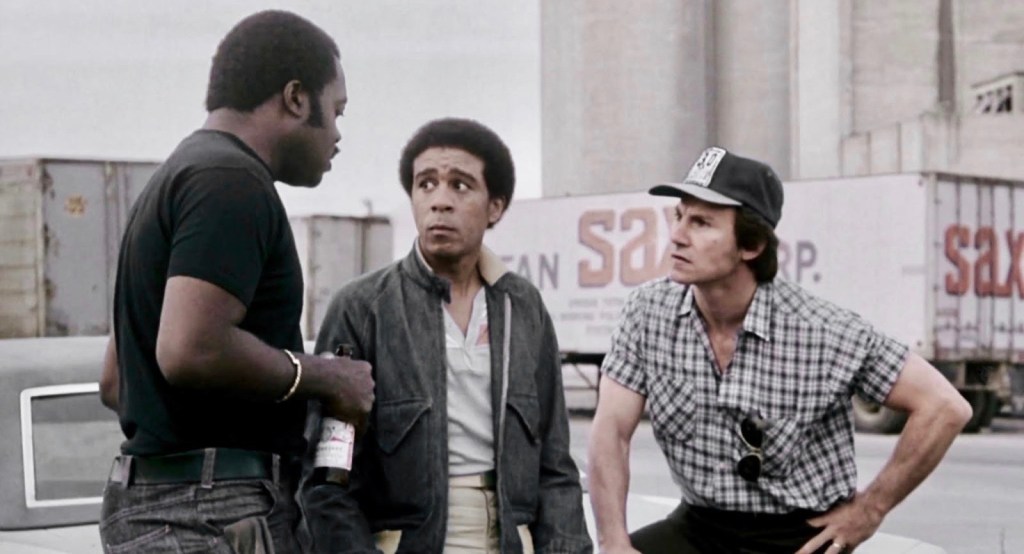
After making a splash as the screenwriter of Taxi Driver and similarly tough-minded films, Paul Schrader made his directorial debut in this searing crime drama about three Detroit assembly-line auto workers, all mired in financial struggles, who scheme to rob the headquarters of their United Auto Workers local. Schrader, who wrote the script with his brother Leonard, shot much of the film inside an actual Checker Motors plant in Detroit, and the grinding, percussive rhythm of the assembly line becomes its own character. Blue Collar was a nightmare of a shoot. Leads Richard Pryor, Harvey Keitel, and Yaphet Kotto did not get along, and Schrader clashed repeatedly with Pryor, who reportedly even pulled a gun on the director. The off-camera hostility may have fed the rage that powers the film. Management exploits the workers, their union betrays them, and both institutions benefit from racial and economic tensions that keep the men fighting one another instead of the system. “They pit the lifers against the new boys, the young against the old, the black against the white,” says Kotto’s Smokey James. “Everything they do is to keep us in our place.”
4. The Apartment (1960, dir: Billy Wilder)
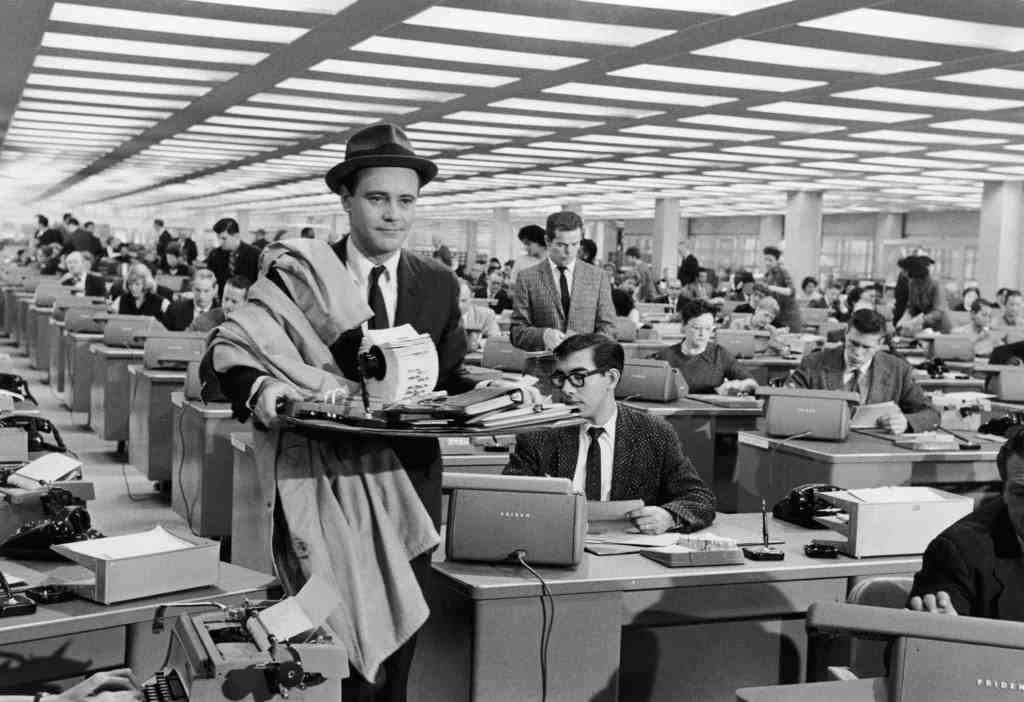
Sleeping your way to the top of the corporate ladder is hardly an ethical business strategy, but C.C. Baxter (Jack Lemmon) finds an ingenious variation. The affable bachelor doesn’t sleep with his superiors, but he supplies the bed. He loans mid-level executives his Manhattan apartment for their illicit rendezvous, even going so far as to provide booze and cheese crackers while he waits outside in the cold like a schnook. If Billy Wilder and co-writer I.A.L. Diamond are to be believed, corporate America in 1960 entailed a lot of extracurricular activity, or at least that’s the case at the fictitious Consolidated Life, where even the married personnel director, Jeff Sheldrake (Fred MacMurray), is not beyond leading on Fran Kubelik (Shirley MacLaine), the company’s elfin elevator operator whom Baxter adores. Like Wilder’s best work, this comedy-drama leaves a bitter aftertaste. Baxter’s promotions have nothing to do with life insurance. “Last month, I was at desk 861 on the 19th floor,” he tells Miss Kubelik. “Now I’m on the 27th floor, paneled office, three windows.” At Consolidated Life, even privacy is company property.
(See more in The 10 best movies about infidelity.)
3. Glengarry Glen Ross (1992, dir: James Foley)
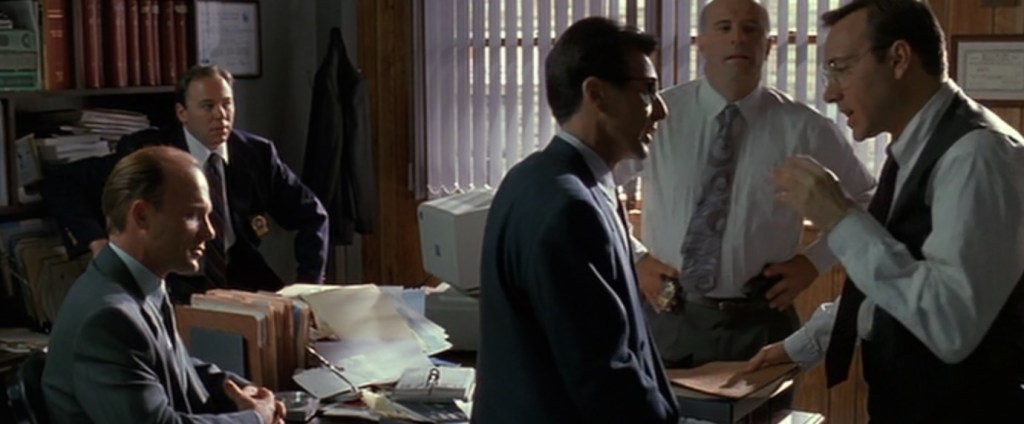
In the world of David Mamet, the workplace is a hotbed of existential dread. In this adaptation of his own Pulitzer Prize-winning play, the salesmen at Premiere Properties are summoned to an evening meeting at the office. They hear from Blake (Alec Baldwin), a bilious emissary sent by unseen owners Mitch and Murray. After gratuitously belittling the salesmen (“You see this watch? This watch costs more than your car!”), he drops the bomb: this night is a sales contest. First place wins a Cadillac, second place a set of steak knives. The bottom two salesmen get axed. Mamet’s acrid, profanity-laced dialogue gets a workout from a murderer’s row of actors: Al Pacino, Jack Lemmon, Ed Harris, Kevin Spacey, Alan Arkin, and Jonathan Pryce. Director James Foley resists unnecessary visual flourishes, but he and cinematographer Juan Ruiz Anchía give New York’s rain-swept streets and shabby office a hellish glow. Mamet’s real subject is how a workplace can foster desperation by design. The competition purports to reward merit, but management hoards the most promising leads, ensuring that success depends partly on access. The salesmen pass that cruelty down the chain to their customers. Nobody in this office is selling real estate; they’re selling what little is left of themselves.
2. The Big City (1963, dir: Satyajit Ray)
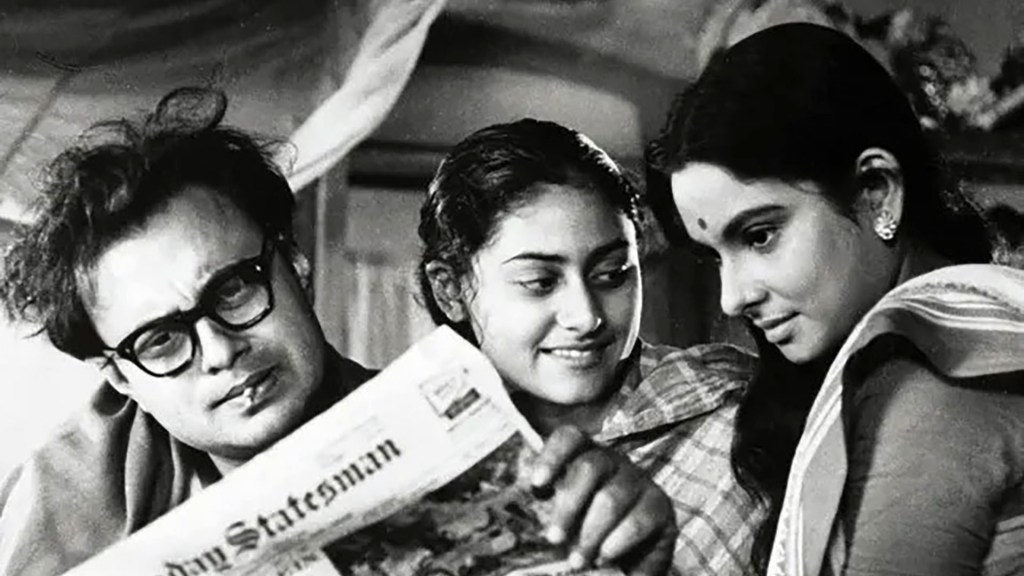
Otherwise known as Mahanagar, this masterpiece from the great Indian filmmaker Satyajit Ray proves to be a surprising tale of female empowerment in the working world. Madhabi Mukherjee is sublime as Arati, a Calcutta housewife whose modest life entails caring for husband Subrata (Anil Chatterjee), their young son, and his extended family. Money is tight, though, and in a burst of inspiration, Arati resolves to get a job. Subrata is supportive when Arati lands work selling sewing machines door to door. She quickly takes to the job, impressing her boss (Haradhan Bannerjee) and developing a friendship with Edith (Vicky Redwood), an Anglo-Indian colleague. But Arati’s increased confidence and paycheck begin to threaten Subrata, even when he loses his clerical position at the bank. “The wife’s a hero, the husband’s a zero,” he tells himself ruefully. With characteristic humanity, Ray treats even Arati’s anxious and traditionalist relatives with understanding. The workplace reveals its own injustices when her employer fires Edith out of anti–Anglo-Indian prejudice. Despite Arati being her family’s sole breadwinner, she resigns when her boss refuses to apologize to Edith. The Big City underscores how paid work can be both liberating and coercive: it enlarges Arati’s world while exposing her to a new hierarchy of compromise.
1. Office Space (1999, dir: Mike Judge)
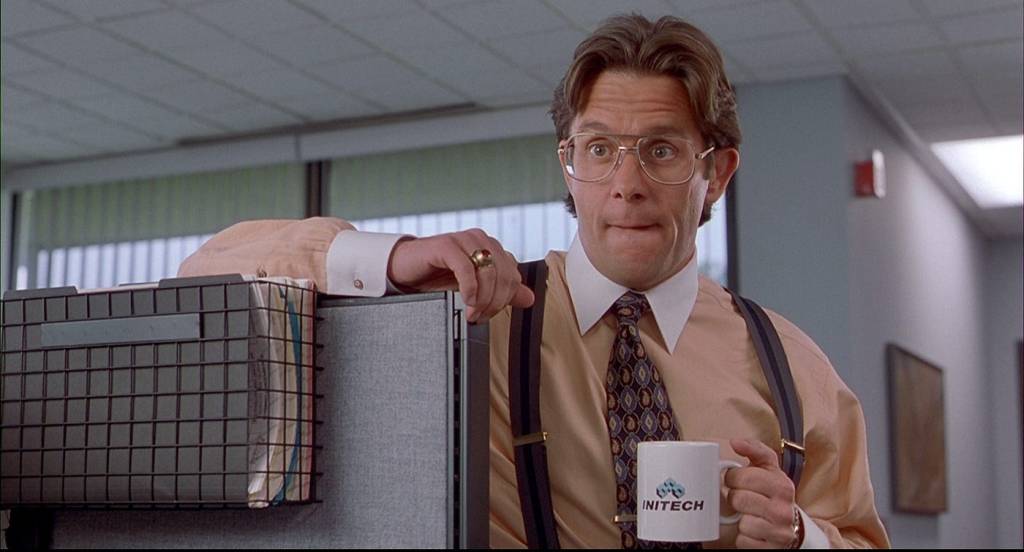
One of the great comedies of the 1990s, Office Space did not find its audience until it received a second life on home video. Its disappointing box office is bewildering, given that Mike Judge’s live-action feature debut is a hilarious lambasting of cubicle culture. “Every single day of my life has been worse than the day before,” bemoans underachieving hero Peter Gibbons (Ron Livingston). His existence at Initech, a nondescript software company, is a daily grind of mind-numbing drudgery marked by never-ending TPS reports and unpleasant interactions with passive-aggressive supervisor Bill Lumbergh (Gary Cole in an unforgettable comic performance). Peter’s work friends, played by David Herman and Ajay Naidu, are equally miserable. They envy coworker Tom Smykowski (Richard Riehle) when a car accident leaves him badly injured but financially set so he’ll never have to work again. Office Space’s appeal lies in how widely its grievances travel. “People hate their fucking jobs,” Naidu told author Brian Raftery in Best. Movie. Year. Ever.: How 1999 Blew Up the Big Screen. “They feel dehumanized, and they commiserate with the guys in Office Space.” Judge makes clear that soul-sucking job malaise is hardly confined to Initech. Peter’s romantic interest, Joanna (Jennifer Aniston, doing what she can with an underwritten part), waits tables at Chotchkie’s, a Chili’s-style restaurant where employees are admonished if they aren’t wearing at least 15 pieces of “flair” on their uniforms. Initech demands obedience; Chotchkie’s goes a step further and mandates enthusiasm.
Honorable mention: The Bad Sleep Well (1960, dir. Akira Kurosawa), The Devil Wears Prada (2006, dir. David Frankel), Executive Suite (1954, dir. Robert Wise), Harlan County, U.S.A. (1976, dir. Barbara Kopple), Matewan (1987, dir. John Sayles), Modern Times (1936, dir. Charlie Chaplin), 9 to 5 (1980, dir. Colin Higgins), Sorry We Missed You (2019, dir. Ken Loach), Wall Street (1987, dir. Oliver Stone), Working Girl (1988, dir. Mike Nichols)

