First, my disclaimer. I’m a white guy and, therefore, have a limited perspective on what it means to be anything other than a white guy in America. The “race issue” in the United States is a tidy phrase for an untidy reality. The original sins of the nation are the enslavement of Black Americans and the genocide of Native Americans, and the story ever since has been one of reckoning and reconciliation. The relationship between Black and white Americans is long and complicated, at times combustible, and always evolving. The films listed below inhabit that uneasy place where lives intersect and the country’s most persistent tensions are laid bare.
10. Intruder in the Dust (1949, dir. Clarence Brown)
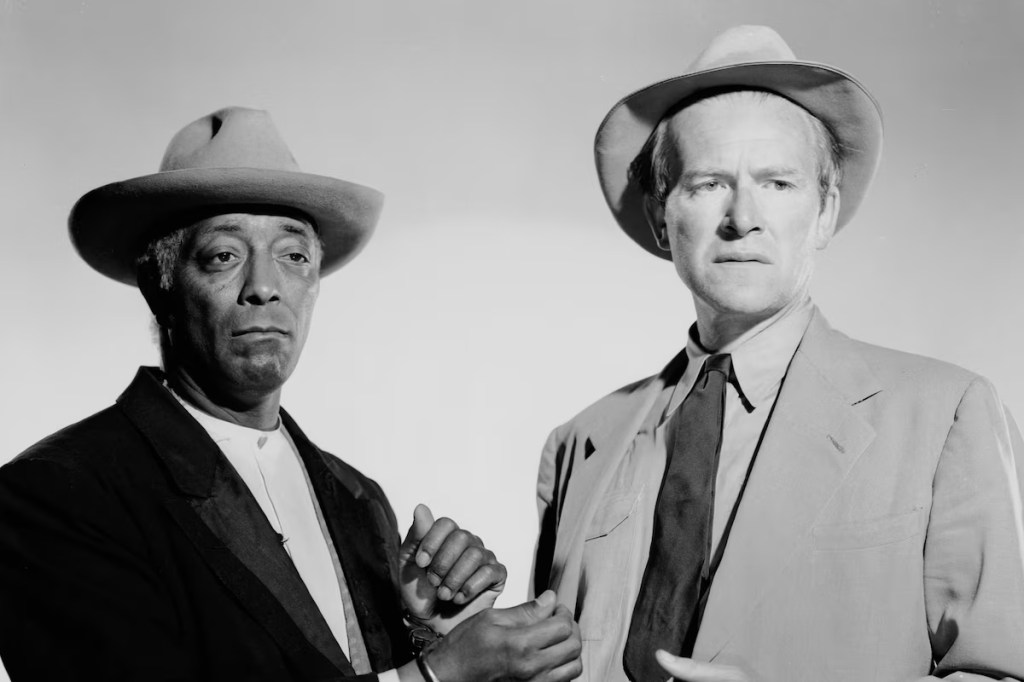
Based on a William Faulkner novel, this somber, low-key drama concerns an older Black farmer, Lucas Beauchamp (Juano Hernandez), charged with murdering a racist white lumberman. The story unfolds through the eyes of Chick Mallison (Claude Jarman Jr.), a white 16-year-old boy who had developed a tenuous friendship with the accused. Chick’s lawyer uncle (David Brian) reluctantly agrees to defend the stoic Lucas. Shot in Faulkner’s native Mississippi and released several years before the Montgomery bus boycotts and the advent of the U.S. civil rights movement, Intruder in the Dust is surprisingly enlightened, even if it is susceptible to the “white savior” trope that has long dogged Hollywood.
9. One Potato, Two Potato (1964, dir. Larry Peerce)
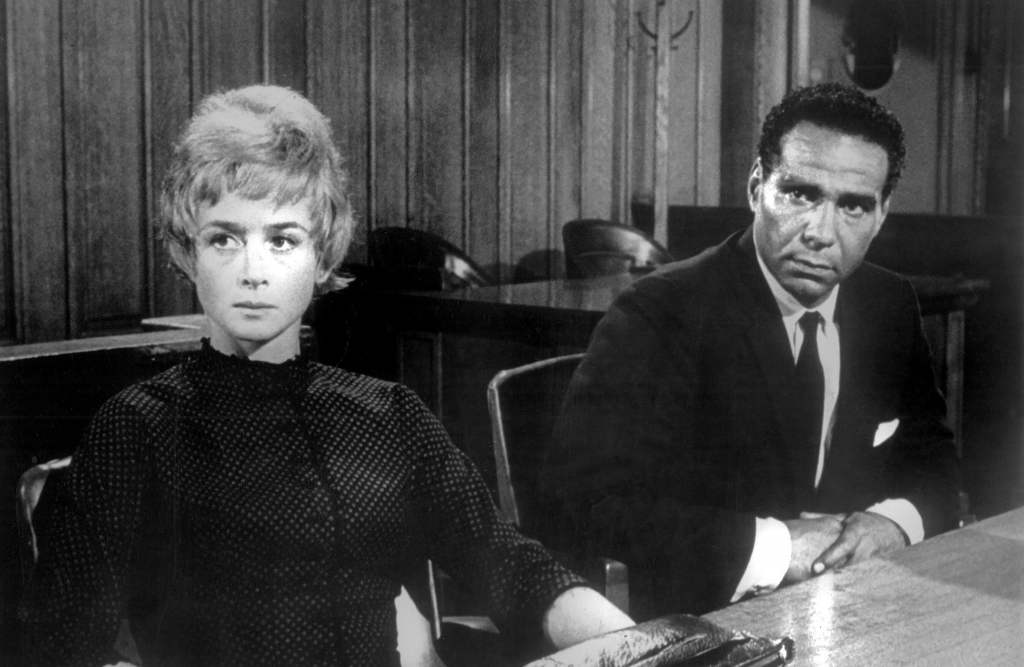
One Potato, Two Potato and its tale of an interracial couple is bracing in its fearlessness. The picture came three years before the Hollywoodized, heavily compromised Guess Who’s Coming to Dinner? softened the subject of interracial marriages for mass audiences and the 1967 U.S. Supreme Court Loving v. Virginia decision that struck down prohibitions on interracial marriage. Julie Cullen (Barbara Barrie) and Frank Richards (Bernie Hamilton) meet, fall in love, and marry while navigating their community’s deep-seated racism. Richard Mulligan, as Julie’s ex-husband, turns things particularly ugly when he pursues sole custody of their young daughter. The script, by Orville H. Hampton and Raphael Hayes, earned an Oscar nomination for Original Screenplay. The movie has the clear-eyed maturity to reject easy solutions.
8. In the Heat of the Night (1967, dir. Norman Jewison)
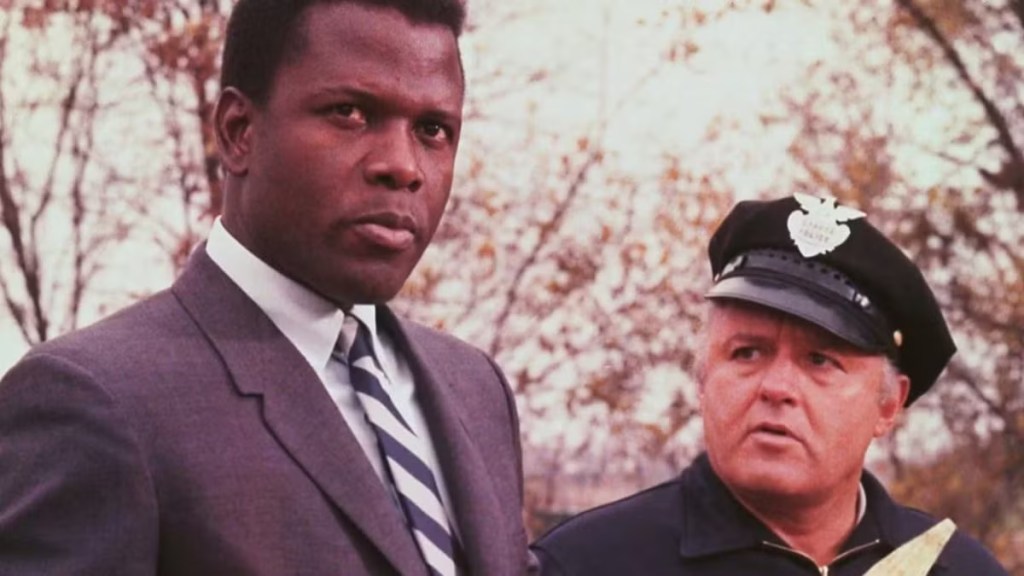
Norman Jewison’s crime thriller set in Mississippi brings together a white police chief and a Black police detective from Philadelphia to solve a homicide. While nominally a murder mystery, In the Heat of the Night resonates for its depiction of racism in the Deep South. Rod Steiger is the good-ol’-boy police chief, with Sidney Poitier as detective Virgil Tibbs. “They call me Mr. Tibbs!” bellows the cop, after a local bigot calls Virgil a “funny name for a nigger boy” and asks what people call him back home. In the Heat of the Night is also notable for being among Hollywood’s first films to properly light Poitier. Haskell Wexler, In the Heat of the Night’s renowned cinematographer, recognized that the industry’s typically bright lighting benefited white performers, but caused an unflattering glare for actors with dark skin. The movie won Academy Awards for Best Picture, Best Actor (Steiger) and Best Screenplay.
7. The Spook Who Sat by the Door (1972, dir. Ivan Dixon)
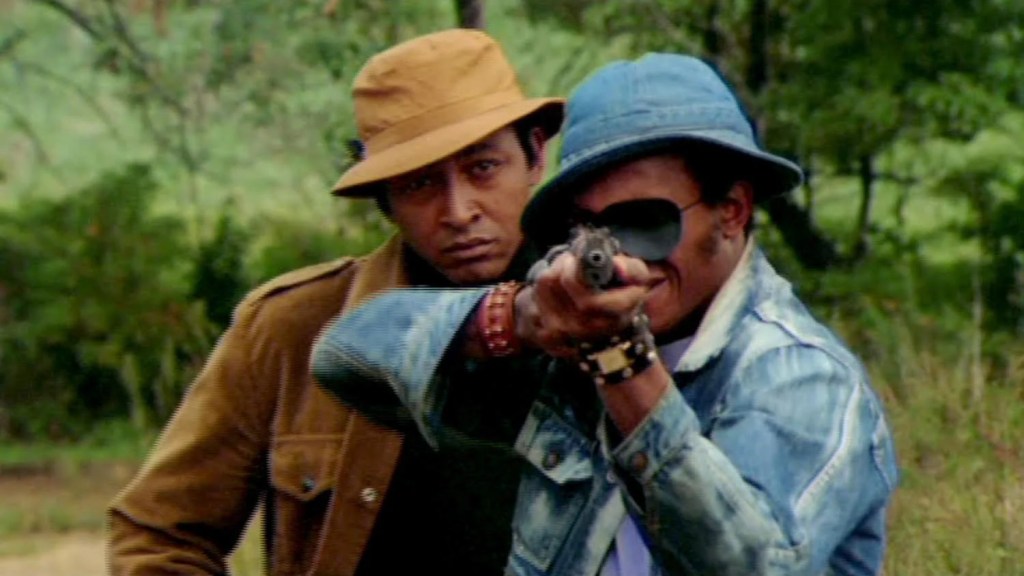
Arriving amid the 1970s’ national dialogue over racial tensions, The Spook Who Sat by the Door burst like a Molotov cocktail. Based on Sam Greenlee’s radical 1969 novel, it is impassioned, uncompromising, and very pissed off. The picture opens with the CIA paying lip service to diversity by asking 10 Black men to try out in hopes of joining the spy agency. The last recruit standing, Dan Freeman (Lawrence Cook in a nicely understated performance), remains an agent just long enough to hone his skills before returning to his native Chicago as a civilian. Organizing groups of young Black men, Dan and company set out to use guerrilla tactics to take over 10 U.S. cities. “You cannot cage people like animals and not expect them to fight back,” says Dan. Directed by Ivan Dixon, best known as Kinch Kinchloe on TV’s Hogan’s Heroes, the movie was withdrawn from circulation shortly after its theatrical release, a disappearing act that some have blamed on FBI handiwork. Fortunately, cinephiles rediscovered it in the 2000s.
6. Selma (2014, dir. Ava DuVernay)
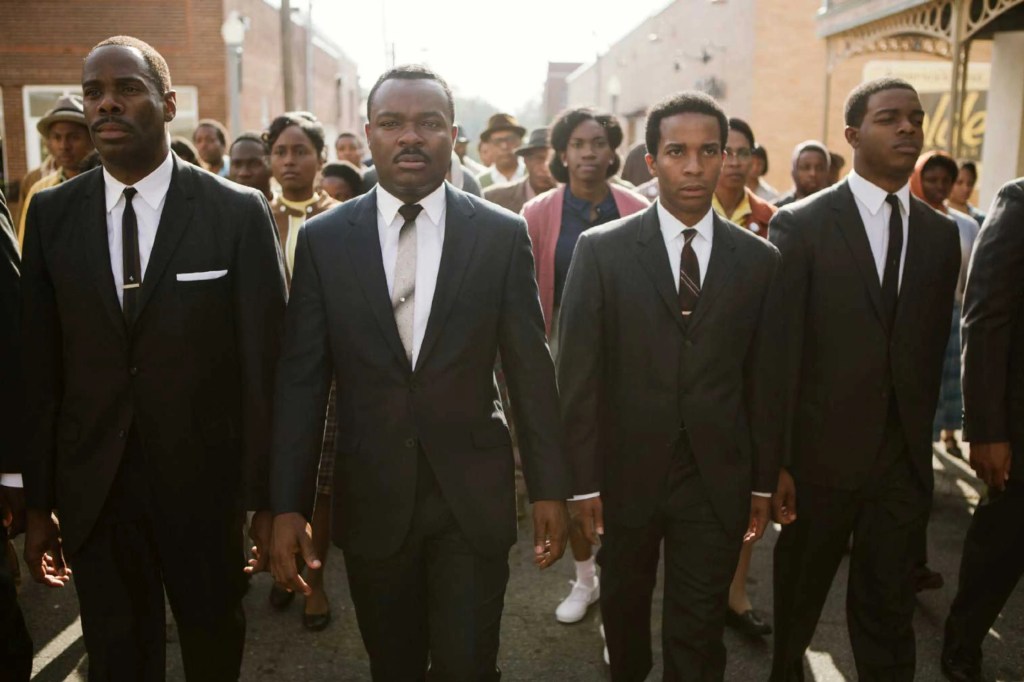
In only her second film as director, Ava DuVernay covers the three-month period in which Dr. Martin Luther King Jr. secured passage of the Voting Rights Act of 1965. David Oyelowo has the daunting task of portraying the civil rights leader who led the landmark protest march from Selma to Montgomery, Alabama, amid the racism of the Deep South. Oyelowo does most of the heavy lifting, but the strong cast includes Tom Wilkinson as President Lyndon Johnson, Tim Roth as Alabama Governor George Wallace, and Stephen James as civil rights activist (and future congressman) John Lewis. Selma is a rarity: an important movie that demonstrates MLK’s heroism while eschewing pretentiousness and ponderousness. Paul Webb’s screenplay does not shy away from the man’s flaws, underscoring the strains of his marriage to Coretta Scott King (Carmen Ejogo, excellent). “Glory,” a stirring song by Common (who also plays an MLK associate), provides a powerful coda to the film.
5. Get Out (2017, dir. Jordan Peele)

Writer-director Jordan Peele’s debut movie is a lot of things––horror, suspense, dark comedy––but also a lacerating satire of race relations post-Barack Obama. Author Will Haygood, in his excellent Colorization: One Hundred Years of Black Films in a White World, calls Get Out “a Rubik’s Cube-like screenplay, with many sides, and all of those sides playing against and into the racial stereotypes threaded into the American psyche.” Peele takes particular aim at white “limousine liberals”. “I would have voted for Obama for a third term, if I could. Best president in my lifetime, hands down,” says Bradley Whitford as progressive dad Dean Armitage, whose daughter (Allison Williams) has just introduced the family to her Black boyfriend, Chris (Daniel Kaluuya). The Armitages’ regard for Black America, however, is all about usurping physical control of their bodies—and not metaphorically.
4. I Am Not Your Negro (2016, dir. Raoul Peck)
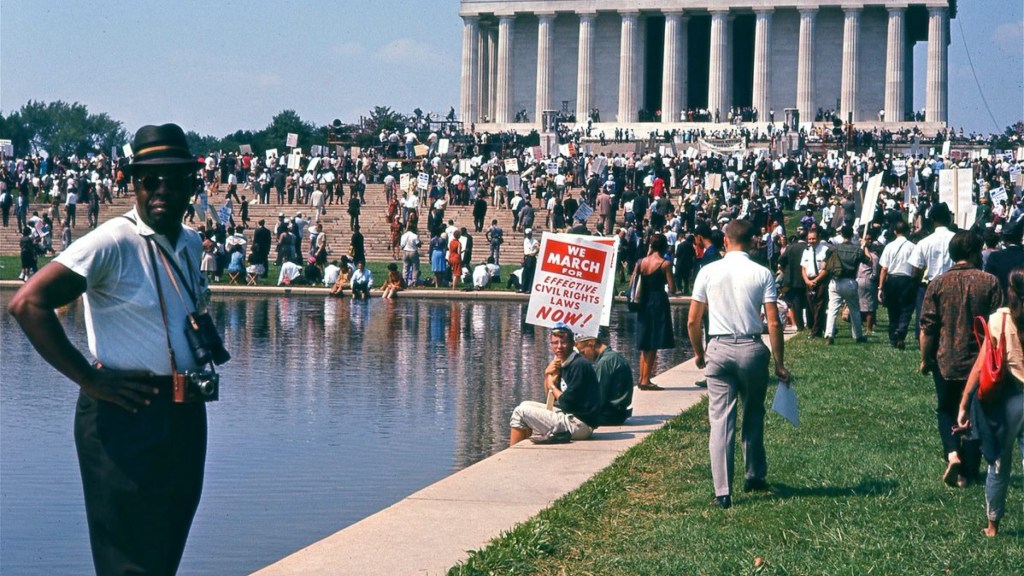
Incorporating archival footage and news clips, this remarkable film from Haitian documentary maker Raoul Peck examines the United States’ civil rights struggle through the eyes of the late writer James Baldwin. This is not your standard documentary. No talking heads. No neatly packaged summations. I Am Not Your Negro originated from an unfinished Baldwin manuscript, Remember This House, which focused on the assassinations of three key leaders of the civil rights movement––Medgar Evers, Malcolm X and Martin Luther King Jr.––all of whom were friends of Baldwin. The author’s eloquent prose is matched by his piercing insights. The voice-over narration of Samuel L. Jackson brings the writer’s words to life for an exceptionally poetic, powerful collage of America’s entrenched racism.
3. Malcolm X (1992, dir. Spike Lee)
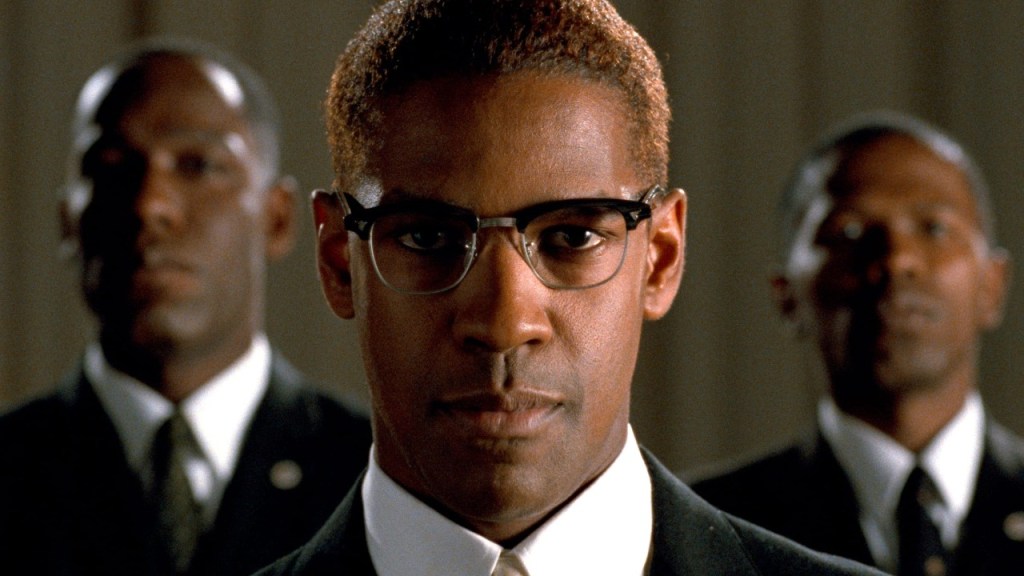
Based on Alex Haley’s The Autobiography of Malcolm X, this biopic of the controversial civil rights icon took a long and tortuous path to the big screen. Sidney Lumet had been set to direct at one point, and later Norman Jewison (see #8 above) before Spike Lee stepped in, arguing publicly that it was imperative for a Black director to tell the story. Jewison conceded. The result is epic in scope, detailing Malcolm X’s transformation from petty criminal to devoted Nation of Islam adherent to incendiary Black nationalist leader––all before his assassination in 1965 at age 39. “We didn’t land on Plymouth Rock. Plymouth Rock landed on us!” proclaims Denzel Washington as Malcolm X. Lee, who co-scripted with Arnold Perl, deftly illustrates Malcolm’s metamorphosis through a visually dazzling collaboration with cinematographer Ernest Dickerson. Though structured as a conventional biopic, spanning more than 20 years in its three-hour-plus running time, Lee’s commitment to and enthusiasm for its subject is contagious. Washington is revelatory, his performance embodying Malcolm X’s magnetism, charisma and intellectual heft. How he lost the Best Actor Oscar to Al Pacino’s caricaturish Scent of a Woman remains one of the Academy Awards’ most dubious decisions.
2. 12 Years a Slave (2013, dir. Steve McQueen)
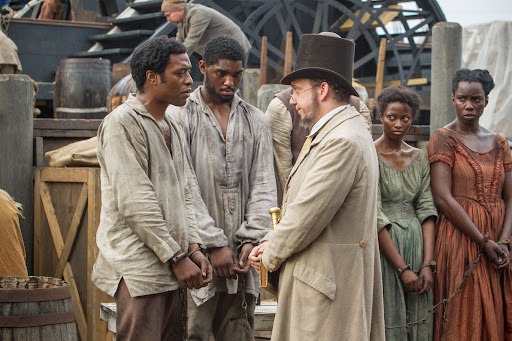
Other movies have depicted American slavery, but it took British director Steve McQueen to deliver a definitive cinematic treatment. 12 Years a Slave is based on the autobiography of Solomon Northup, a free Black man in upstate New York who is kidnapped, taken to the South, and sold into slavery. As Solomon, Chiwetel Ejiofor won an Oscar for his portrayal of the reserved, educated violinist whose nightmare was daily life for millions of Black Americans in the South. The powerhouse cast includes Michael Fassbender, Benedict Cumberbatch, Paul Dano, Paul Giamatti, Alfre Woodward, and, best of all, Lupita Nyong’o in a gut-wrenching performance as a slave who becomes the obsession of Fassbender’s plantation owner, Edwin Epps. The film is unrelentingly brutal. The dehumanization of slaves at auction—stripped naked, inspected by white plantation owners as if buying livestock—is monstrously routine. Mothers and children are casually separated. Beatings and rapes are common occurrences. Work in the cotton fields is punishing and unending. Yet 12 Years a Slave never sensationalizes. Through a formal restraint of tone, McQueen and screenwriter John Ridley underscore how thoroughly slavery was woven into the fabric of American life.
1. Do the Right Thing (1989, dir. Spike Lee)
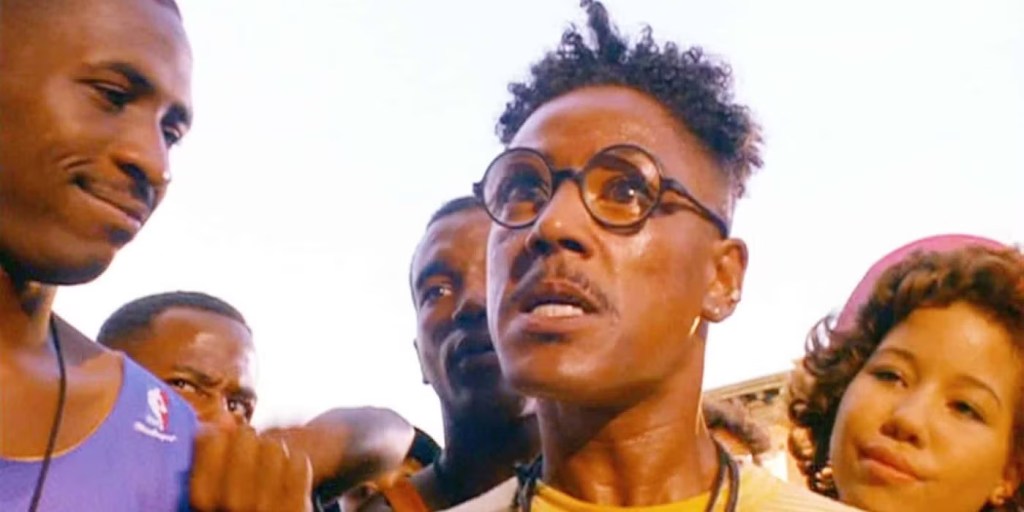
The movie heralded Spike Lee as a major force in American cinema, and rightly so. Set in Brooklyn’s Bedford-Stuyvesant neighborhood, Do the Right Thing chronicles more than a dozen characters over the course of a scorching summer day of racially charged conflicts that build toward a seemingly inevitable explosion of violence. Prior to its theatrical release, some pearl-clutchers in the media opined whether the film itself would lead to real-life riots (they were wrong). A flashpoint occurs when a bespectacled youth, Buggin Out (Giancarlo Esposito), demands that an Italian pizzeria in a predominantly Black neighborhood put “some Black faces” up on the eatery’s Wall of Fame, which only has photos of Italian-Americans. The restaurant owner, Sal (Danny Aiello), refuses. Vowing to launch a boycott of the joint, Buggin Out finds an ally in Radio Raheem (Bill Nunn), whose huge boombox has already incurred Sal’s wrath. Its social commentary alone makes Do the Right Thing required viewing, but Lee, who also co-stars, elevates it through virtuosic filmmaking. The movie’s rage is palpable, but Do the Right Thing is resolute in its ambivalence. No one is let off the hook, but no one warrants full excoriation, either. That ambiguity is encapsulated by Smiley (Roger Gwenveur Smith), a developmentally disabled Bed-Stuy resident, hawking photos on the street of Martin Luther King Jr. and Malcolm X. Smiley’s pictures illustrate opposing approaches to civil rights, just as Do the Right Thing suggests the necessity of both nonviolence and extreme measures.
(See more in The 10 best films about summer.)
Honorable mention: BlacKkKlansman (2018, dir. Spike Lee), Fruitvale Station (2013, dir. Ryan Coogler), The Hate U Give (2018, dir. George Tillman Jr.), Killer of Sheep (1977, dir. Charles Burnett), Menace 2 Society (1993, dir. Albert Hughes and Allen Hughes), Sounder (1972, dir. Martin Ritt), 13th (2013, dir. Ava DuVernay), Till (2022, dir. Chinonye Chukwu), Uptight (1968, dir. Jules Dassin), Within Our Gates (1920, dir. Oscar Micheaux)
 Cutting to the Chase with Phil Bacharach
One response to “The 10 best films about race in America”
[…] Among film’s greatest works about race relations in the United States, Spike Lee’s Do the Right Thing is also one helluva summer picture. Set during the hottest day of the year in Brooklyn’s Bedford-Stuyvesant section, the picture transforms the heat itself into a character. “Today’s temperature’s gonna rise up over 100 degrees,” announced the local radio DJ, Mister Señor Love Daddy (Samuel L. Jackson), “so there’s a Jheri curl alert! If you have a Jheri curl, stay in the house or you’ll end up with a permanent black helmet on your head forever!” Ernest Dickerson’s cinematography, distinguished by bold color and tight close-ups, can make viewers sweat. The rising temperature fans racial tensions in a neighborhood ready to figuratively erupt. No wonder the original title was Heatwave. Along with Dickerson’s marvelous work, a lush score by Bill Lee (the filmmaker’s father) and stunning ensemble cast—including John Turturro, Samuel L. Jackson, Danny Aiello and Bill Nunn—make Do the Right Thing one of cinema’s most evocative depictions of summer.(See more in The 10 best films about Black and white America.) […]
LikeLike