Big-screen portrayals of female friendship are far less common than those of their male counterparts—unless, that is, the female buddy movie revolves around romance. When not focused on menfolk and how to snag one, the movies of classic Hollywood were often flat-out ambivalent about friendships among women. Even some of the best of classic Hollywood, such as The Women and Stage Door, are fraught with friendships that are competitive, fragile and prone to easy rupture.
The women’s rights movement certainly moved things forward, but flicks like Bridesmaids, Booksmart and Girls Trip—where female bonding can be profane and messy—are a relatively new phenomenon. Here are my selections for the 10 best female buddy films.
10. Girls Trip (2017, dir. Malcolm D. Lee)
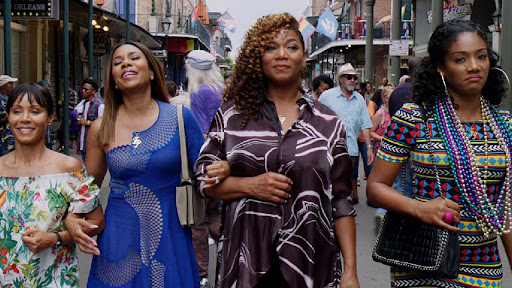
Some unfortunate turbulence impacts this Girls Trip. The raucous comedy from director Malcolm D. Lee and writers Kenya Barris and Tracy Oliver, about the reunion of four longtime friends, veers tonally from gross-out gags to squirm-inducing sentimentality. The four leads, thankfully, have charm to spare. The “Flossy Posse,” besties since college, consists of successful self-help guru Ryan Pierce (Regina Hall), gossip website maven Sasha (Queen Latifah), tightly wound single mom Lisa (Jada Pinkett Smith), and über–uninhibited party animal Dina (Tiffany Haddish). Their weekend at the Essence Music Fest in New Orleans is tempered by the revelation that Ryan’s ex-NFL player husband (Mike Colter) is cheating on her with a hot social media influencer (Deborah Ayorinde). The actresses admirably transform the characters into more than archetypes. Not even a cameo by P. Diddy or Lisa urinating while ziplining over a crowd of revelers can piss away the good will the movie has built.
9. Fried Green Tomatoes (1991, dir. Jon Avnet)
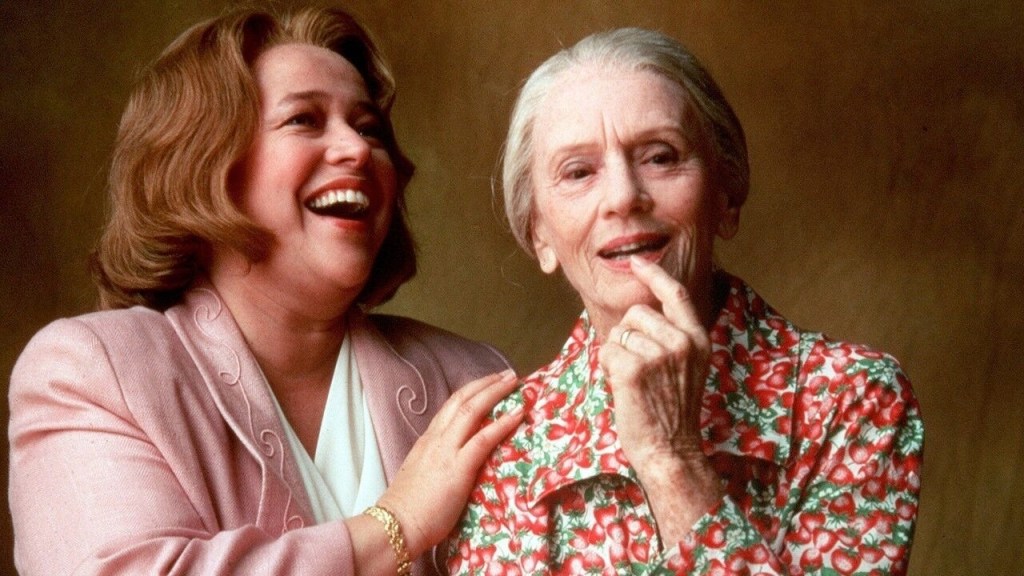
This adaptation of Fannie Flagg’s bestseller offers two parallel tales of female friendship. The first, set in 1930s Alabama, involves Idgie Threadgoode (Mary Stuart Masterson), a free spirit whose rejection of gender stereotypes makes her an unlikely friend for Ruth Jamison (Mary-Louise Parker), the product of a staunchly respectable Southern family. The pair operate a cafe and, although the film only obliquely acknowledges it, apparently have a long-term lesbian relationship. Their story is recounted by Ninny Threadgoode (Jessica Tandy), a nursing home resident who takes a shine to Evelyn Couch (Kathy Bates), a Birmingham housewife enchanted by Ninny’s vivid recollections. The strength of Ruth and Idgie inspires Evelyn, whose confidence begins to blossom with each visit to Ninny. Director Jon Avnet occasionally lapses into the maudlin, and a queasy resolution to a cannibalism subplot strains credibility. Paradoxically, it is the framing story, not the flashback romance, that resonates most deeply—perhaps because Tandy and Bates, two actresses at the peak of their powers, bring an unforced warmth to a friendship that Ruth and Idgie’s story cannot quite match. Tandy and Bates make it the film’s quiet, beating heart.
8. Booksmart (2019, dir. Olivia Wilde)
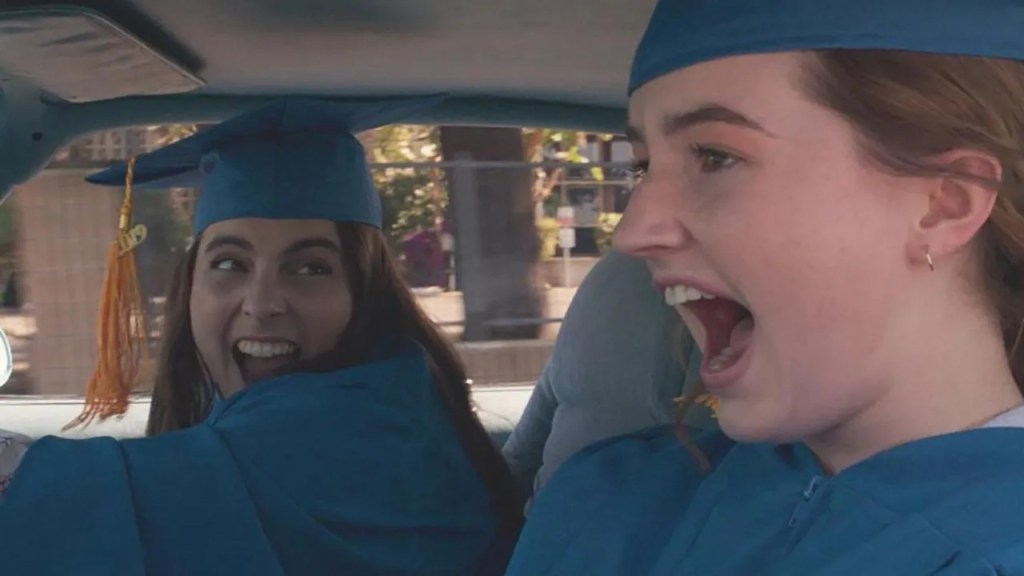
Olivia Wilde’s directorial debut seemed to herald a new strain of teen comedy: madcap hijinks for the young and “woke.” At first blush, the misadventures of Amy (Kaitlyn Dever) and Molly (Beanie Feldstein) on their last day of high school play like a girl-centric version of Superbad, but the similarities to that bromance are largely superficial. The screenplay by Emily Halpern, Sarah Haskins, Susanna Fogel and Katie Silberman includes the obligatory raunchy humor, but Booksmart centers on two brainy, ambitious, and self-actualized young women who rarely show up in teen-friendly pictures. Amy is lesbian, Molly straight, but there is no handwringing over their sexual orientation. Instead, they are more stumped by how they’ve sworn off four years of partying to get into Ivy League universities when their peers didn’t make the same sacrifices and are still headed to the same schools. Amy laments to Molly how she’s been sadly honest with her parents: “It isn’t you who has to deal with their awkward looks when I say that I’m going to the library with you and I’m actually going to the library with you.” Dever and Feldstein have great energy together; their chemistry helps anchor the film during its occasional drifts into zaniness.
7. Steel Magnolias (1989, dir. Herbert Ross)
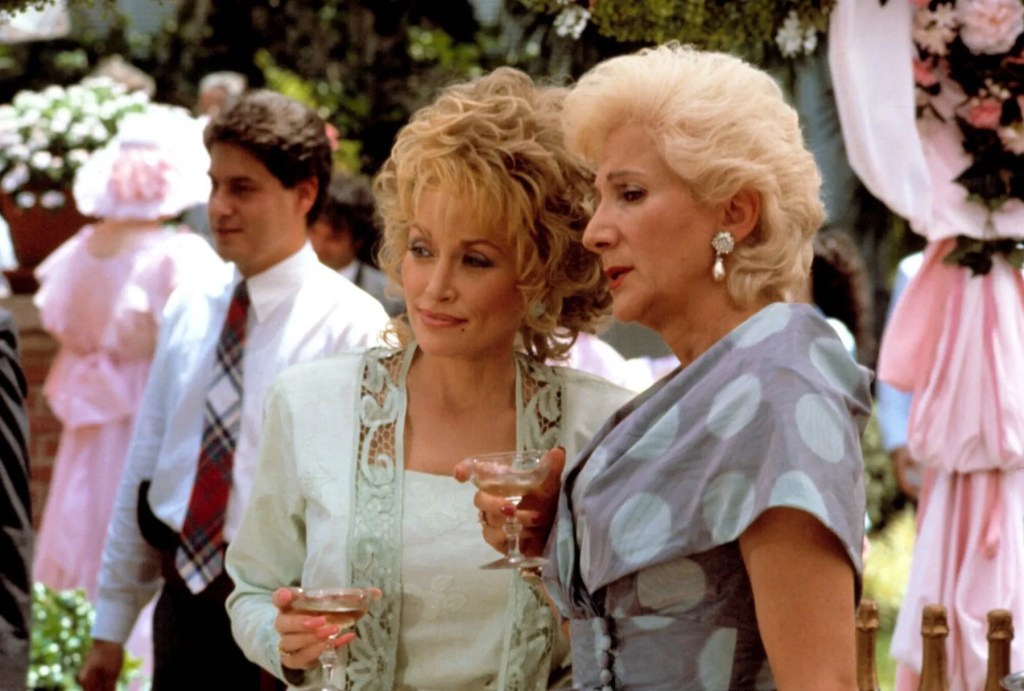
The reputation of Steel Magnolias as an essential “chick flick” can make it tempting to overlook how damned entertaining it truly is. While Robert Harling’s screenplay, based on his play, follows an array of multigenerational women connected to a small-town Louisiana beauty salon, at the center is Sally Field as M’Lynn, a stylist whose diabetic daughter Shelby (Julia Roberts, pre-superstardom) is getting married. The film comes from a knowing place; Harling based his original play on the death of his sister from complications of Type 1 diabetes. Herbert Ross doesn’t let any heartwarming moment go without milking it dry, and some of it is shamelessly manipulative. Interestingly, the director was anything but warm on the set, where he reportedly bullied Roberts so mercilessly that more seasoned cast members stepped in to defend the young actress. Thankfully, there is genuine warmth and affection on screen, as well as terrific performances from Shirley MacLaine, Olympia Dukakis, Dolly Parton and Daryl Hannah. Steel Magnolias earns its tears because it first earns its laughs.
6. Ghost World (2001, dir. Terry Zwigoff)
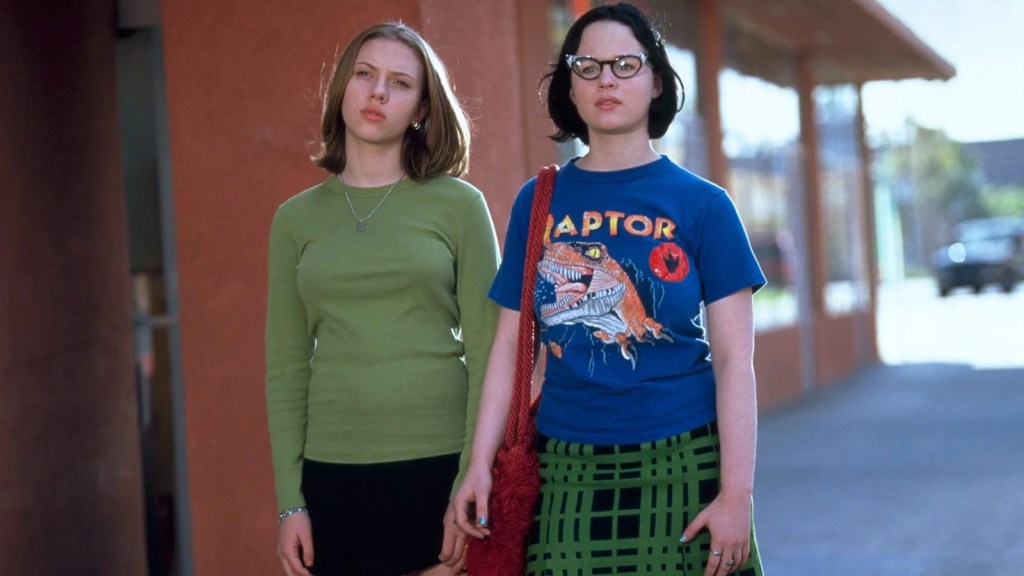
Terry Zwigoff’s deadpan adaptation of Daniel Clowes’ cult underground comic captures the pitfalls of friendship forged by misanthropy. Recent high school graduates Enid (Thora Birch) and Rebecca (Scarlett Johansson) are themselves outliers in their class, but their métier is mocking anyone who falls outside their ever-shrinking parameters of quirky cool. With no plans for college, the sisters in snark anticipate getting an apartment together, but the plans hit a snag when Enid finds herself unable to hold a job for long. She then develops a wobbly friendship with Seymour (Steve Buscemi), a lonely, middle-aged nerd who collects old records. Rebecca, the nominally less eccentric of the friends, is having none of it, telling Enid she is sick of the “creeps, losers and weirdos” who comprise Seymour’s social orbit. “But those are our people,” Enid responds. Birch is enthralling in her follow-up to American Beauty. As Enid, she is alternately malicious and kind, cruel and generous—but always with the vague resentment of someone who knows the world will never be to her liking. The disaffected come of age, too, of course, but the epiphanies they bring can be even more disaffecting.
5. Thelma & Louise (1991, dir. Ridley Scott)
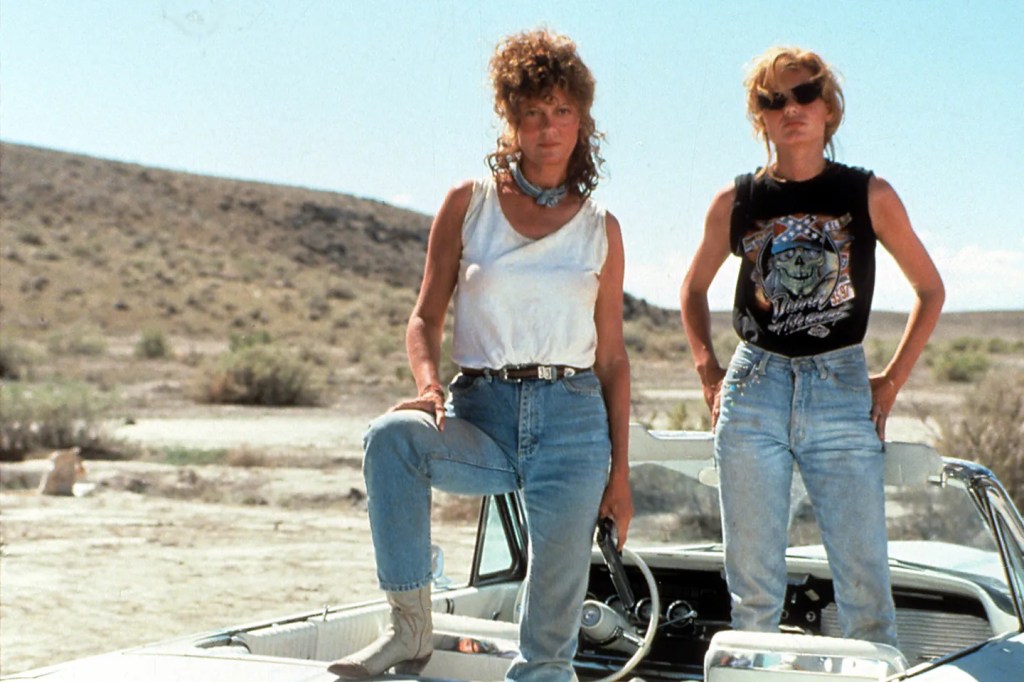
In creating one of cinema’s most provocative works of feminism, director Ridley Scott and screenwriter Callie Khouri also provided one of the more enduring portraits of female friendship. Geena Davis and Susan Sarandon are the titular characters who embark on a road trip that takes a dark turn when Louise shoots and kills a man who tries to rape Thelma. Davis, who formed a close friendship with Sarandon offscreen, notes in her memoir that she was genuinely surprised by female audiences’ overwhelming embrace of the picture. “It brought home for me in a very powerful way how rarely we give women the chance to feel that way coming out of a movie,” she writes in Dying of Politeness: A Memoir. “Men can come out of almost every movie having identified with the lead character … and feeling empowered.” (See more in The 10 best road-trip movies.)
4. Frances Ha (2012, dir. Noah Baumbach)
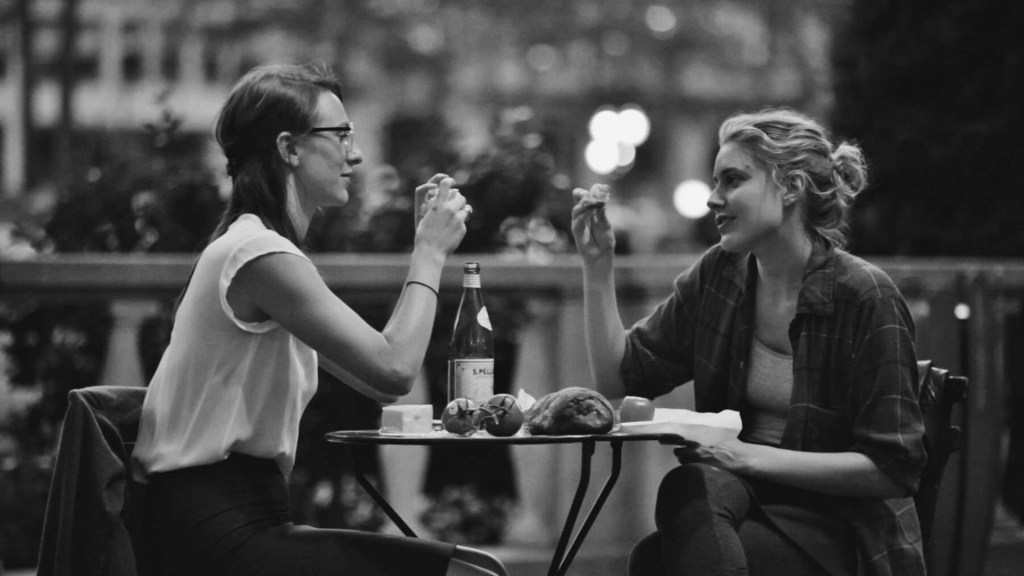
Noah Baumbach, who co-wrote the script with Frances Ha star (and future wife) Greta Gerwig, modeled the titular character on his lead actress. The familiarity shows. Frances Ha, a young dancer and choreographer trying to make her way in New York, is a fully realized force of nature—gawky, insecure, eager to please. A character who meets Frances expresses surprise that she’s 27: “You seem a lot older, but not as grown up.” At the center of this sweetly observed comedy-drama is Frances’ complicated friendship with roommate Sophie (Mickey Sumner). The pair are BFFs, but their relationship has fissures as Sophie’s life moves in a direction that Frances cannot follow—a development recognizable to most sentient creatures who have experienced the power dynamics of friendships. Stylistically, the black-and-white picture occupies the space between Woody Allen’s verbal dexterity and French New Wave naturalism.
3. The Women (1939, dir. George Cukor)
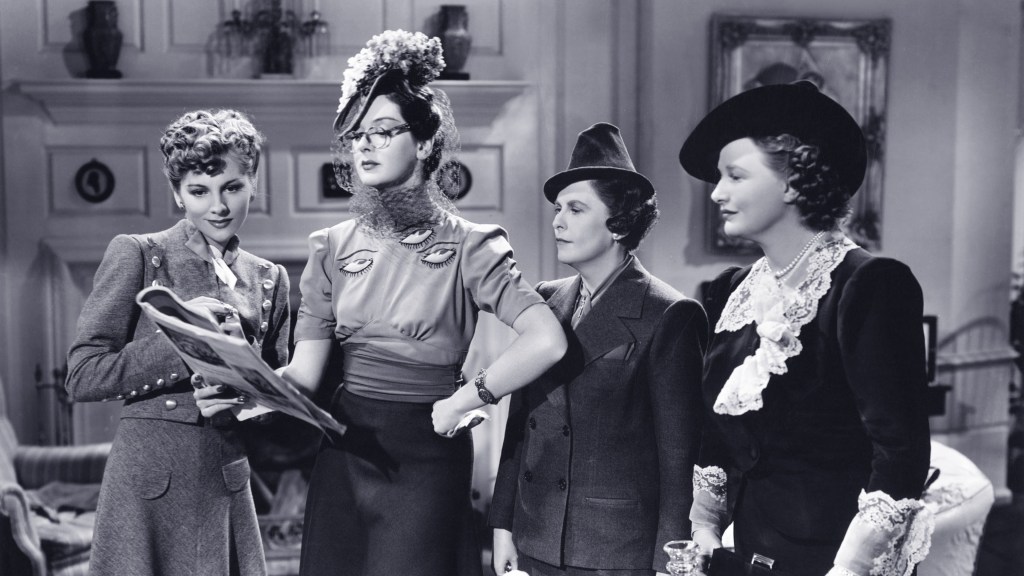
This melodrama doesn’t offer a particularly healthy take on friendship. The scheming Sylvia Fowler (Rosalind Russell) gets a kick out of making sure her kind-hearted friend, Mary Haines (Norma Shearer), knows her husband is cheating on her with a man-eating salesgirl at the perfume counter, Crystal Allen (Joan Crawford). Then again, Mary gets her digs in at Sylvia, too. In fact, “frenemy” appears to be the default relationship setting for Manhattan society women in this adaptation of Clare Boothe Luce’s Broadway play, where the wives routinely trade gossip, barbs and figurative knives in the back. “There’s a word for you ladies,” Crystal observes, “but it’s seldom used in high society outside of a kennel.” Mary’s most supportive friends are divorcees—played by Mary Boland, Paulette Goddard and Joan Fontaine—who rally around her after she and Stephen have split. But The Women ultimately takes a dim view of this group. Director George Cukor and screenwriters Anita Loos and Jane Murfin approach divorce as a fate worse than death. The title is a testament to truth in advertising, featuring some 120 speaking roles with not a whiff of testosterone in sight.
2. Stage Door (1937, dir. Gregory La Cava)
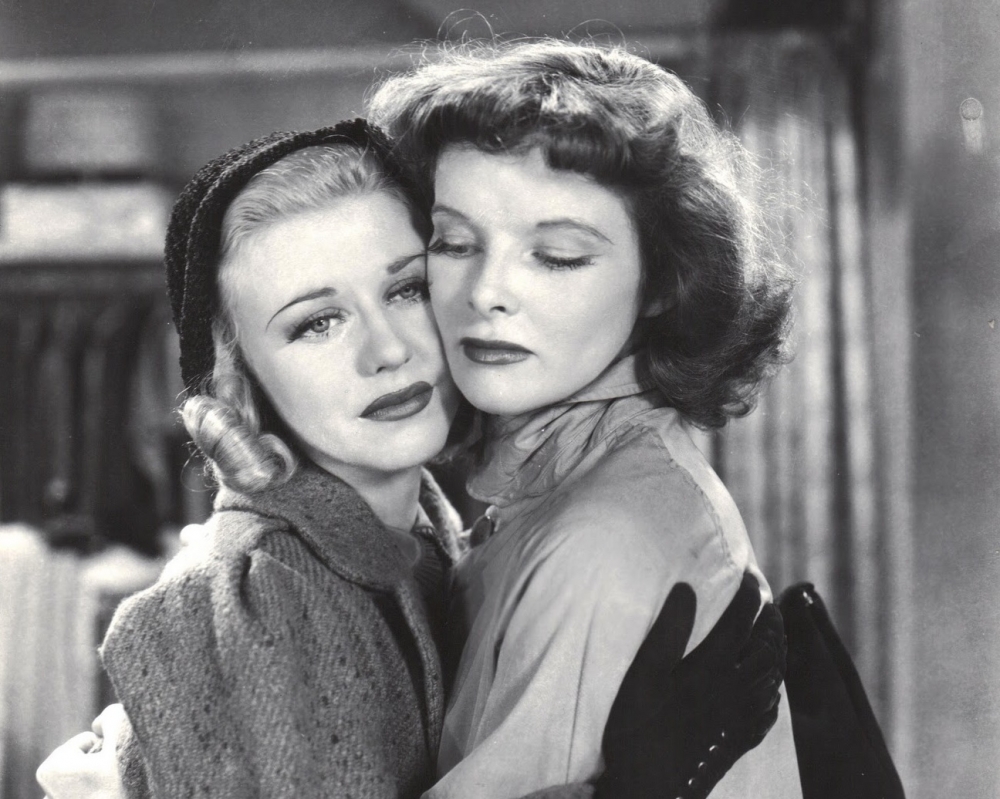
The ensemble cast in Stage Door is impressive, but top billing belongs to its keen understanding of female ambition. That’s really what steals the show in this comedy of the friendships, aspirations and disappointments in a New York City rooming house full of wannabe actresses. Ginger Rogers is the wiseacre, Katharine Hepburn the smart sophisticate. They butt heads immediately—as RKO’s top female stars at the time, the two clashed offscreen, too—but develop a grudging respect for one another. Camaraderie reigns at the house. Gail Patrick is the golddigger, Eve Arden the smartass and a then-26-year-old Lucille Ball is the gal with a rotating parade of lunkhead escorts from the Pacific Northwest. Andrea Leeds earned an Academy Award nomination for Best Supporting Actress as the sweet one headed for tragedy. Gregory La Cava infuses the picture with the snappy pace and overlapping dialogue of a screwball comedy, but the picture makes clear that these women’s professional fortunes are tied to the men they flatter and flirt with. Stage Door wryly observes the power imbalance between the sexes, particularly in show business.
1. Bridesmaids (2011, dir. Paul Feig)
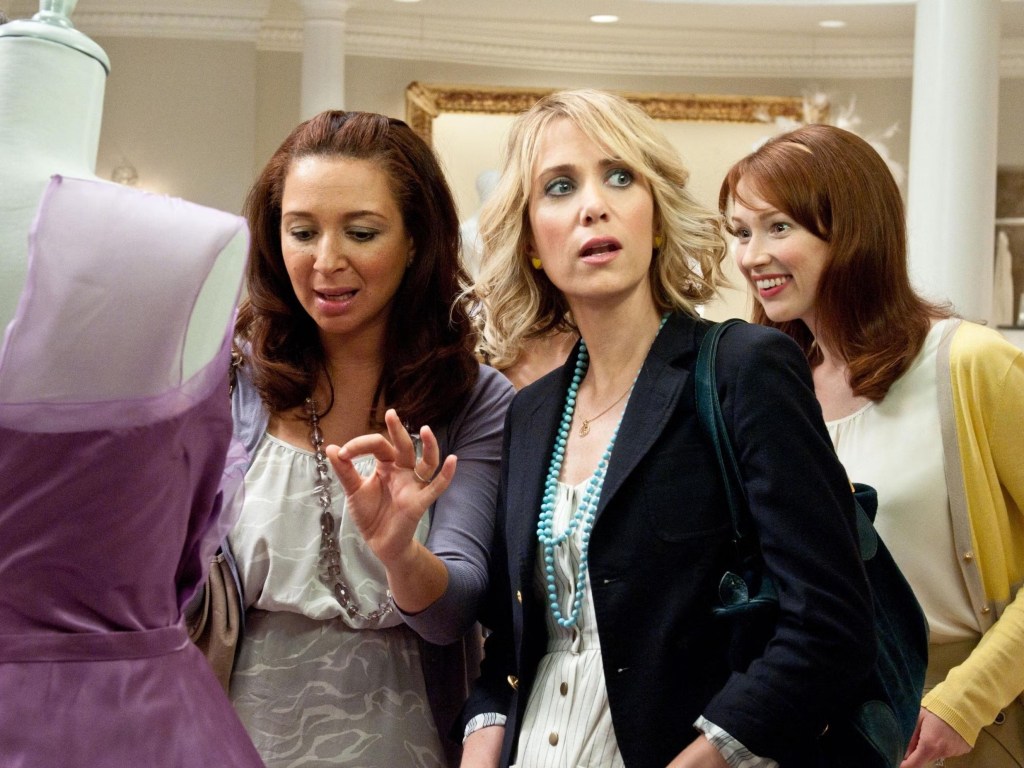
Screenwriters Kristen Wiig and Annie Mumolo proved that female-centric comedies could be just as crass and gross as the bromance comedies that Bridesmaids producer Judd Apatow had turned into a genre of its own with movies like The 40-Year-Old Virgin and Knocked Up. Wiig and Maya Rudolph play besties Annie and Lillian, respectively, whose decades-long friendship is tested after Lillian announces she is engaged to be married. Annie accepts the maid-of-honor role with some ambivalence, fearing that her BFF’s impending marriage will spell the end of their closeness. Annie then gets an additional gut punch when one of Lillian’s pushy new friends, played with prissy perfection by Rose Byrne, starts to horn in on maid-of-honor territory. Competition and jealousy among friends is hardly a gender-specific phenomenon, but Bridesmaids lampoons it from a sharp and sympathetic place, without scrimping on raunchy humor. For that latter trait, the movie’s secret weapon is Melissa McCarthy in a breakthrough performance as Lillian’s outrageous sister-in-law-to-be. The gross-out gags are great fun, but as AV Club’s Gwen Ihnat noted, “what’s more remarkable is how it mapped the beats of a romantic comedy onto a story about female friendship.” (See more in The 10 best R-rated comedies and The 10 best bathroom scenes in film.)
Honorable mention: Bend It Like Beckham (2002, dir. Gurinder Chadha), Desperately Seeking Susan (1985, dir. Susan Seidelman), Gentlemen Prefer Blondes (1953, dir. Howard Hawks), The Joy Luck Club (1993, dir. Wayne Wang), Kamikaze Girls (2004, dir. Tetsuya Nakashima), Mistress America (2015, dir. Noah Baumbach), Muriel’s Wedding (1994, dir. P.J. Hogan), Romy and Michele’s High School Reunion (1997, dir. David Mirkin), Set It Off (1996, dir. F. Gary Gray), Waiting to Exhale (1995, dir. Forrest Whitaker)
 Cutting to the Chase with Phil Bacharach
3 responses to “The 10 best female buddy films”
[…] really doing it, aren’t you?” she says. “You’re shitting in the street.” (See more in The 10 best female buddy films and The 10 best bathroom scenes in […]
LikeLike
[…] Maya Rudolph’s Lillian is more unfortunate, but let’s just leave it at that. (See more in The 10 best female buddy films and The 10 best R-rated […]
LikeLike
[…] The landmark tale of friendship and feminism from director Ridley Scott and screenwriter Callie Khouri wrings metaphorical power from life on the highway. The titular heroines on the run, played by Geena Davis and Susan Sarandon, find that the transcendence of the road is a myth. Chased by lawmen from Arkansas to Arizona, and knowing there is no escape, Thelma and Louise reach the end of the road but resolve to keep driving––even as they recognize that some canyons cannot be crossed. (See more in The 10 best female buddy films.) […]
LikeLike