From The Count of Monte Cristo to John Wick, revenge has been one of moviedom’s most durable engines for storytelling. Maybe part of the appeal is that vengeance—the really nasty, scheming, go-for-broke kind—seldom gets meted out to our satisfaction in real life. In the anonymity of a darkened theater, however, we can vicariously scratch the id that’s been turning the other cheek while secretly craving an eye for an eye.
15. Revenge (2017, dir. Coralie Fargeat)
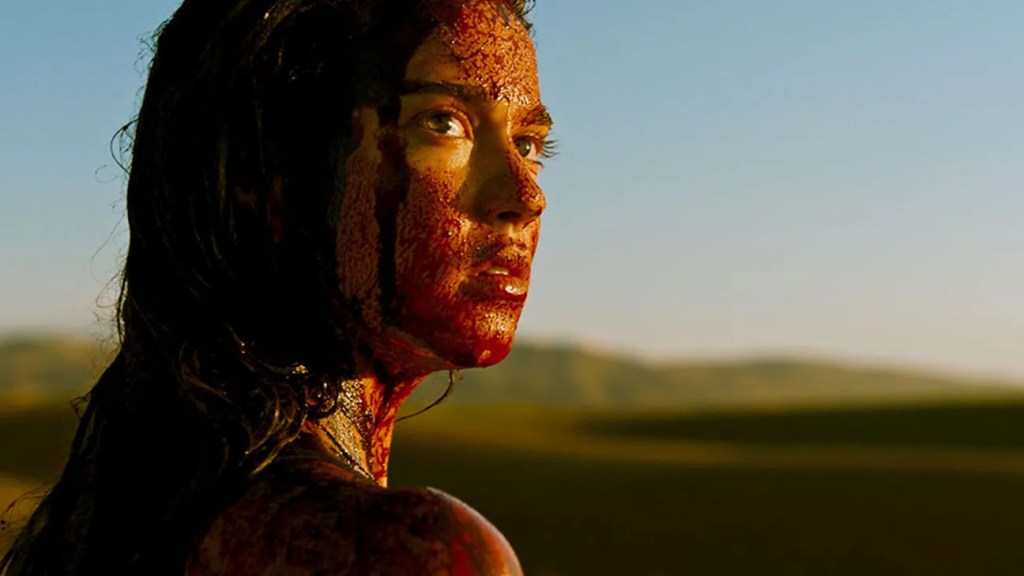
The title says it all. Matilda Lutz stars as Jen, the beautiful mistress to a married French sleazebag named Richard (Kevin Janssens). The two are at his remote mansion in the middle of nowhere for a romantic weekend when two of his buddies (Guillaume Bouchède and Vincent Colombe) turn up early for a hunting trip. The unexpected guests rape Jen while Richard is out of the house, but she incurs her lover’s fury, too, when she threatens to phone Richard’s wife if he doesn’t let her leave immediately. The three men push her off a cliff—watching her become impaled on a tree branch—and leave her for dead. But Jen isn’t dead. Even grievously injured, she wants revenge. Adrenaline-charged and cathartically violent, the directorial debut of Coralie Fargeat makes the audience complicit in Jen’s trauma. Cinematographer Robrecht Heyvaert’s camerawork revels in Jen’s objectification before pulling the rug out with a stomach-churning assault.
14. True Grit (2010, dir. Joel Coen and Ethan Coen )
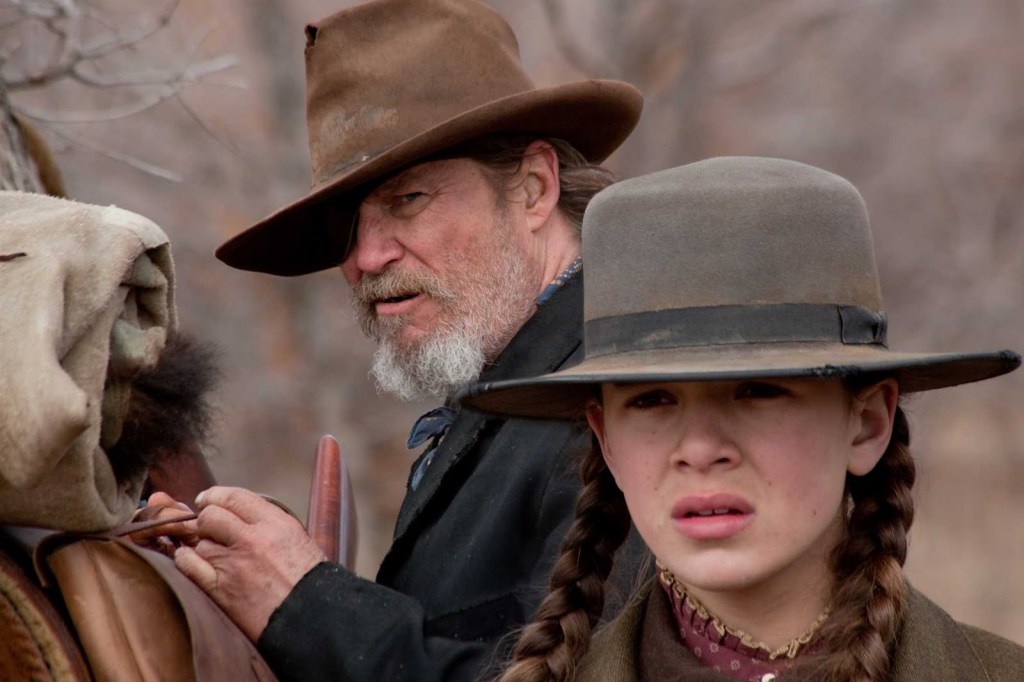
Charles Portis’ western novel was first adapted for film in 1969, garnering John Wayne his only acting Oscar. Still, I prefer this spellbinding 2010 version by the Coen brothers. Jeff Bridges does the honors as Rooster Cogburn, the one-eyed, hard-drinking U.S. marshal hired by 14-year-old Mattie Ross (Hailee Steinfeld) to avenge the shooting death of her father. The murderer, Tom Chaney (Josh Brolin), has fled to Indian Territory, and Cogburn knows those uncharted lands. For Mattie’s sense of frontier justice, it doesn’t hurt that Cogburn has a notoriously itchy trigger finger. Also on Chaney’s trail is Matt Damon as a self-congratulatory Texas Ranger. Steinfeld, in her theatrical debut, is remarkable with Joel and Ethan Coen largely preserving Portis’ archaically formal dialogue. Though Mattie tells Cogburn admiringly that he possesses “true grit,” the description is more apt for her—a girl with an almost otherworldly tenaciousness.
13. Coffy (1973, dir. Jack Hill)
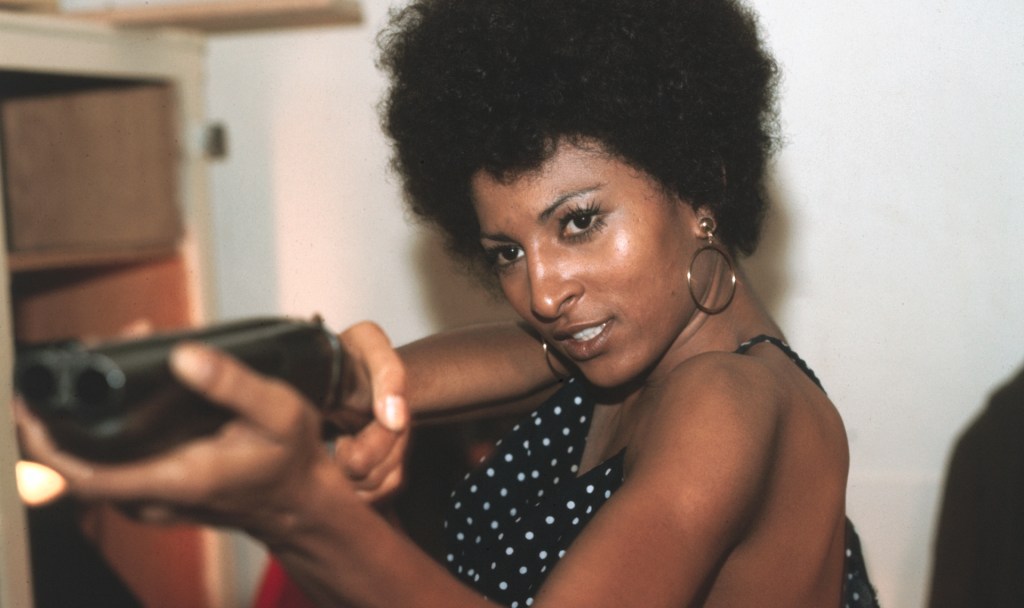
Flower Child Coffin, otherwise known by her nickname Coffy, is a hospital nurse but no angel of mercy. As embodied by the inimitable Pam Grier, Coffy is on a one-woman mission to avenge her 11-year-old sister, who is comatose from a heroin overdose. We know this because Coffy tells the various drug kingpins and pimps about her sister shortly before she takes a shotgun to their heads. Coffy might also be meting out justice against racism; director Jack Hill, in his third collaboration with Grier, populates this nightmare version of Los Angeles with bigoted crime lords and harrowing racial violence, including a lynching in which a pimp (Robert DoQui) is dragged by a car. In 1970, Grier was a receptionist toiling away in L.A. By the time Coffy hit the grindhouse circuit three years later, she was the queen of blaxploitation cinema. Grier seethes with a fiery screen presence—“The baddest one-chick hit squad that ever hit town,” screamed Coffy’s movie poster—as sexy as she is lethal.
12. In the Bedroom (2001, dir. Todd Field)
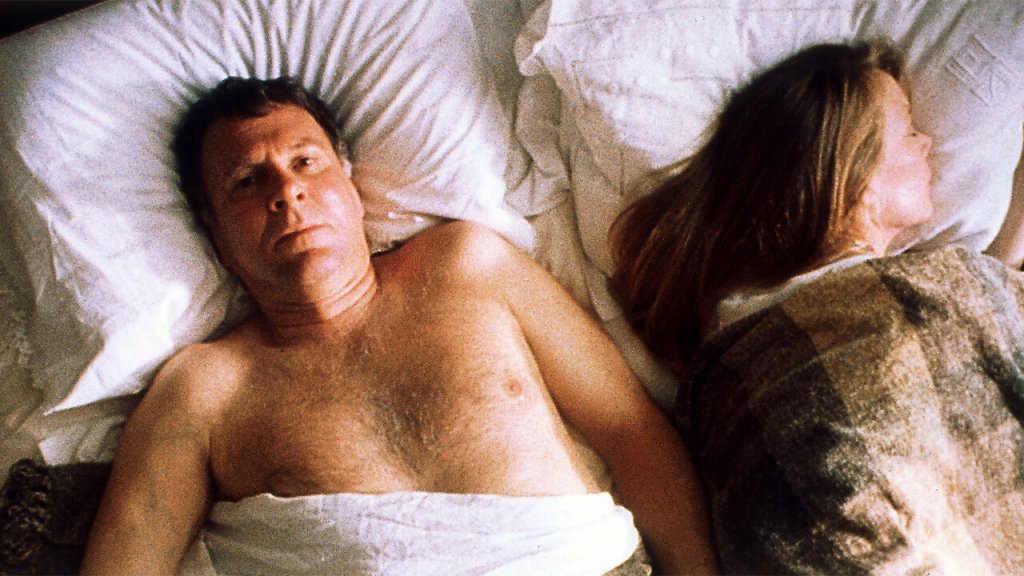
Tom Wilkinson and Sissy Spacek are Matt and Ruth Fowler, a comfortably middle-class couple in Maine who are thrust into tragedy. He’s a small-town physician, she’s a choir teacher, and both dote on their son, Frank (Nick Stahl), who is preparing to study architecture in graduate school. If only he weren’t dating Natalie (Marisa Tomei). Frank’s parents like the attractive, sweet-natured woman, but they sense potential danger from her estranged husband (William Mapother), a local troublemaker with a short fuse. When their fears become reality, Matt and Ruth get a severe crash course on an often-infuriating legal system. In his directorial debut, Todd Field builds the audience’s emotional investment by giving his actors—Wilkinson, Spacek, and Tomei all earned Academy Award nominations—room for their characters to breathe. And yet In the Bedroom is a revenge movie conspicuously devoid of catharsis.
11. Cape Fear (1962, dir. J. Lee Thompson)
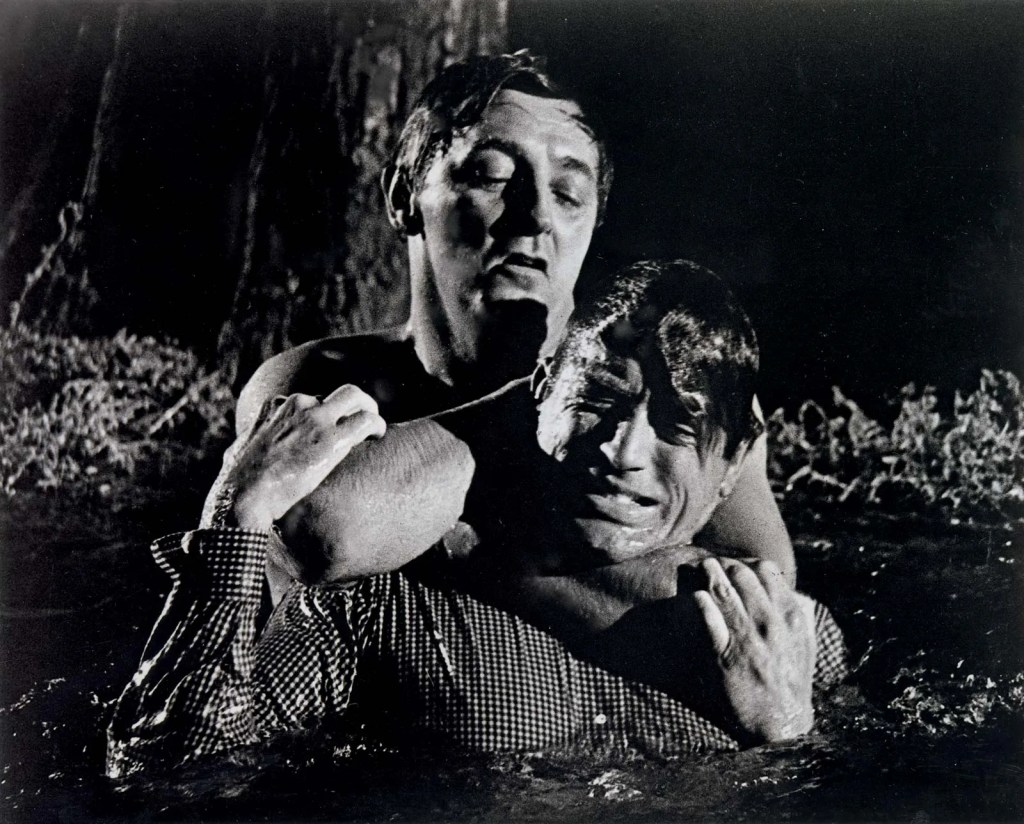
As Max Cady, an ex-con and serial abuser of women, Robert Mitchum has a way of addressing his nemesis, attorney Sam Bowden (Gregory Peck), as “counselor” and making it sound like a threat. And for good reason; it is a threat. Fresh from an eight-year prison stint, Cady blames Sam for his incarceration. Hellbent on revenge, Cady arrives at the small coastal town where Sam lives with his wife (Polly Bergen) and their teenage daughter (Lori Martin). Cady’s viciousness is matched by his cunning, and he manages to terrorize the Bowdens for a long time while stopping short of giving police an excuse to lock him up. What makes him so unnerving isn’t simply his capacity for violence but his patience. Cady understands that fear itself can be a more devastating weapon than brute force—although he’s pretty adept at that method, too. Mitchum is all charismatic menace here. Martin Scorsese’s 1991 remake is lurid fun, but Robert De Niro turns Max Cady into a rabid dog whereas Mitchum appreciated the terror of a low rumble. Bernard Herrmann’s score, reused with modifications for Scorsese’s version, adds a final layer of dread to both pictures.
10. The Limey (1999, dir. Steven Soderbergh)
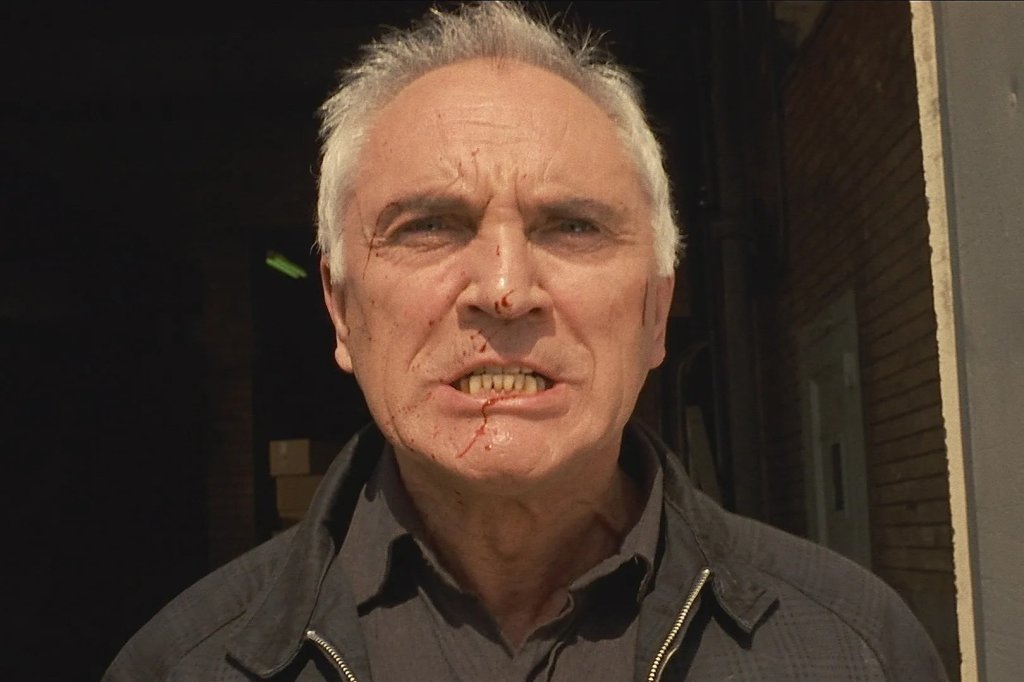
Terence Stamp doesn’t need heavy makeup or one of those Hannibal Lecter bite-restraint masks to instill fear. Just give the man a gun and a line reading of “Tell him I’m coming!” in his best cockney growl, and wait for villains to evacuate their bowels. This tense neo-noir from director Steven Soderbergh and screenwriter Lem Dobbs does everything right, beginning with having Stamp, a performer of tightly controlled rage, as the limey in question. The title is a cheeky reference to Stamp’s Dave Wilson, a British ex-con newly arrived in Los Angeles to track down the bastard responsible for the death of his daughter, Jenny. In this case, that bastard is Peter Fonda, oozing Southern California sleaze as a record producer who had been in a relationship with Jenny until she started snooping into his business. In a stroke of inspired casting, The Limey pits Stamp, a bona fide icon of 1960s cinema (think Billy Budd or The Collector) against Fonda, another icon of that decade (think Easy Rider). It makes for a very groovy revenge thriller—one that’s mean, unexpectedly moving, and understanding of the distinction between settling scores and finding peace.
9. The Virgin Spring (1960, dir. Ingmar Bergman)
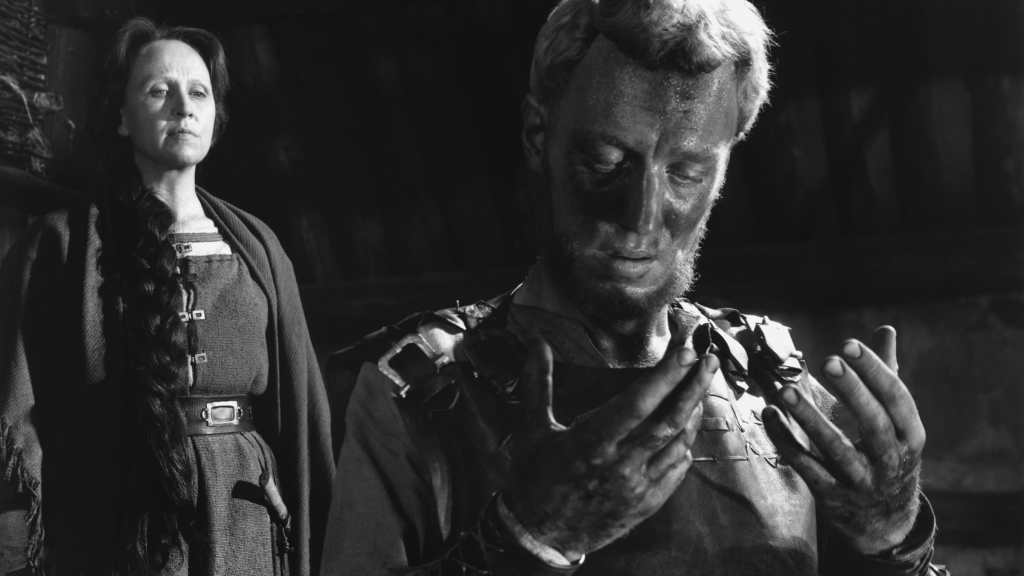
The tension between vengeance and religious faith is the nucleus of this brooding work from Ingmar Bergman. Drawn from a 13th-century folktale, The Virgin Spring features Max Von Sydow and Birgitta Valberg as Töre and Märeta, a devout, hardworking farming couple in Medieval Sweden. Their world revolves around Karin (Birgitta Pettersson), their naive but impulsive 15-year-old daughter. She is traveling to church by horseback when she comes across three brothers whom a less trusting child would recognize as bad news. Inviting them to picnic with her, she is raped and killed in a scene that Bergman and cinematographer Sven Nykvist capture with cold frankness. Later that night, the trio wind up at Töre’s doorstep seeking shelter from the cold, and one offers Märeta some of Karin’s clothing, claiming they belonged to his deceased sister. After Töre enacts his revenge, he rages at God for Karin’s murder. “You allowed it to happen. I don’t understand you,” says the father. “Yet still I ask your forgiveness.” Wes Craven’s exploitation remake, The Last House on the Left (1972), eschews wrestling with issues of moral conscience in favor of sadistic violence, and a lot of it.
8. Point Blank (1967, dir. John Boorman)
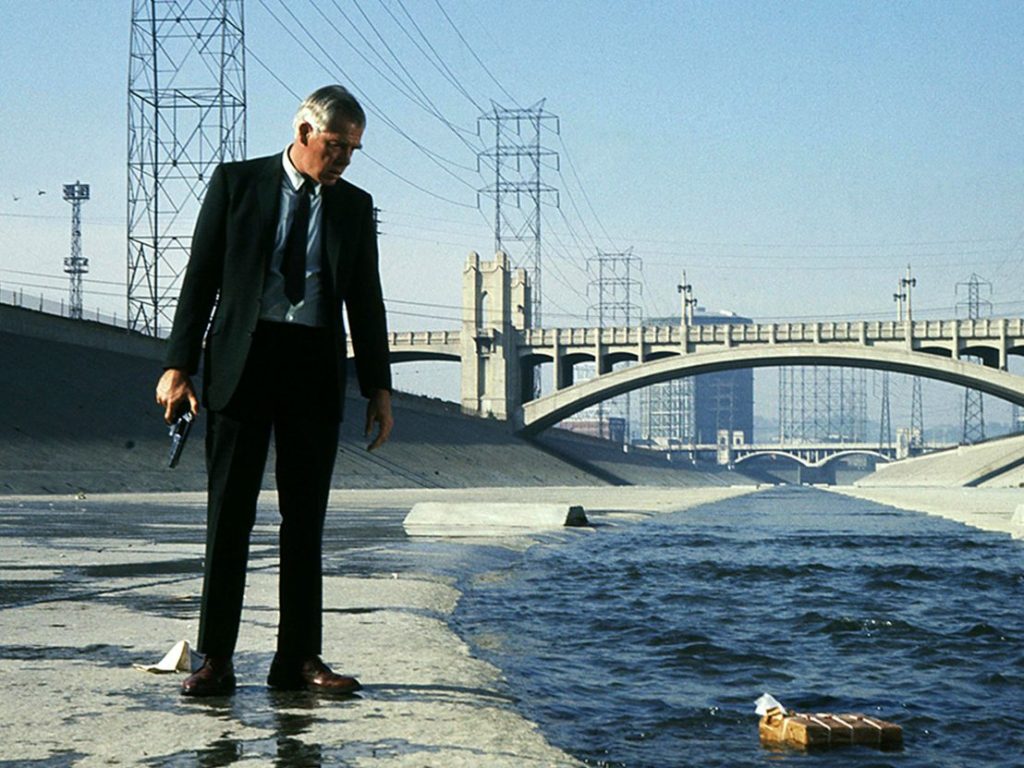
As Walker, Lee Marvin is introduced in the midst of being double-crossed. He and his partner Mal Reese (John Vernon, in his film debut) intercept a money drop at shuttered Alcatraz prison. Mal shoots Walker and leaves him for dead before fleeing with Walker’s wife (Sharon Acker). But Walker manages to pull through—maybe?—and begins a twisted journey through Los Angeles and San Francisco in search of Mal and the $93,000 he is owed. Along the way, Walker encounters a mystery man named Yost (Keenan Wynn)—who might be a cop or a criminal—and enlists the help of his sister-in-law (Angie Dickinson). Marvin used his considerable clout with MGM to ensure British-born filmmaker John Boorman, in only his second feature and first American picture, had full creative control. The director turns what might have been a conventional thriller into something daring: a fractured, hallucinatory, and visceral neo-noir marked by jagged editing, surreal flashbacks, wild color schemes, and eerie modernist architecture. Point Blank is strange enough to invite interpretation. How did Walker, having been shot, escape from Alcatraz? Did he survive? Is it all a dream?
(See more in The 15 best neo-noir films.)
7. Rolling Thunder (1977, dir. John Flynn)
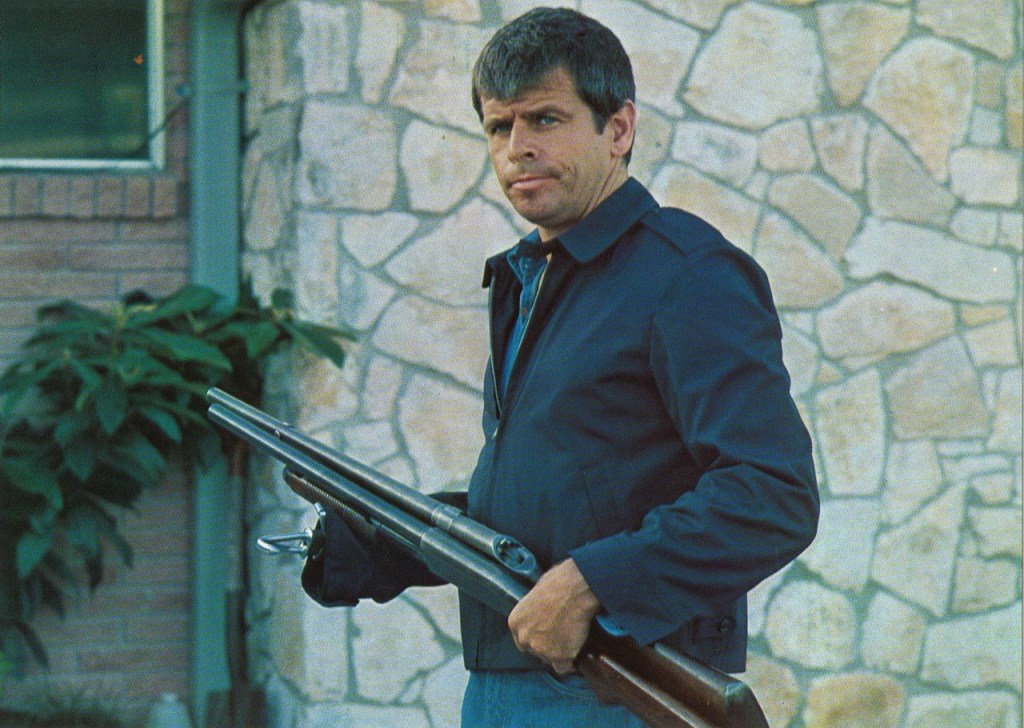
After rotting in a North Vietnamese POW camp for seven years, U.S. Air Force Maj. Charlie Rane (William Devane) returns stateside for a most uncomfortable homecoming. His wife (Lisa Richards) says she’s in love with another man and wants a divorce, and Charlie’s young son doesn’t even remember him. Emotionally damaged and clearly suffering from PTSD, Charlie is too hollowed out to betray much of a reaction. Things turn uglier. He’s robbed in a home invasion by a gang of thugs who kill his family and shove his right hand into a garbage disposal before getting away. Charlie survives the attack, calls on help from a fellow veteran (Tommy Lee Jones), arms himself to the teeth, and sets out to even the score. Director John Flynn and screenwriter Paul Schrader (who had envisioned this to be a spiritual successor to his Taxi Driver) know their way around vengeful violence. Among the flick’s admirers is Quentin Tarantino, no slouch in the revenge genre, who has called it “the best combination of character study and action film ever made.” Rolling Thunder pulls at the frayed fabric of post-Vietnam America: the soldier returns from war, only to find another battlefield awaits him.
6. Lady Snowblood (1973, dir. Toshiya Fujita)
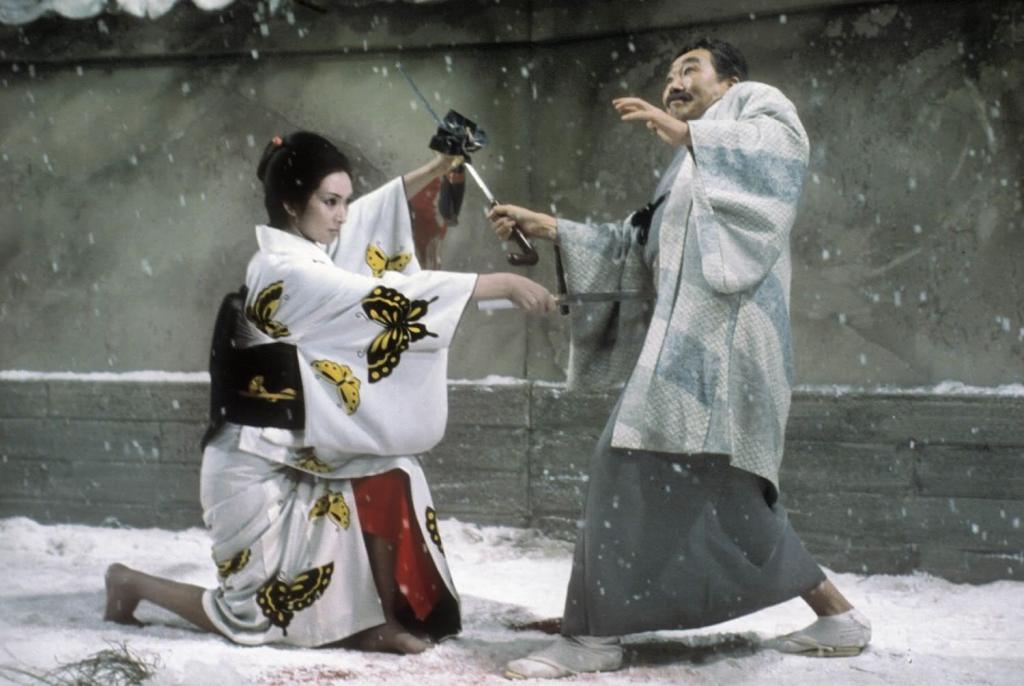
When the literal point of a protagonist’s life is to enact vengeance, that movie deserves special recognition here. Based on a manga series of the same name, Lady Snowblood revolves around the vicious rape of Sayo (Miyoko Akaza) at the hands of three men. Imprisoned after she kills one of her rapists, Sayo seduces prison guards in hopes of birthing a child who will murder her remaining attackers. She successfully gets pregnant, but dies shortly after giving birth to a baby girl. That child, Yuki, grows up to become a cold-blooded, sword-wielding assassin. Meiko Kaji is mesmerizing as Lady Snowblood, her whole existence consumed by bloodlust as she slices and dices through feudal Japan in search of the bad guys. Her influence is most clearly seen in Kill Bill, but the DNA of her icy fury is present throughout cinema’s tradition of female avengers. Toshiya Fujita’s direction is an intoxicating swirl of painterly visuals and lowbrow audacity. This movie doesn’t skimp on gore. Fujita followed up in 1974 with the lesser Lady Snowblood: Love Song of Vengeance.
5. Straw Dogs (1971, dir. Sam Peckinpah)
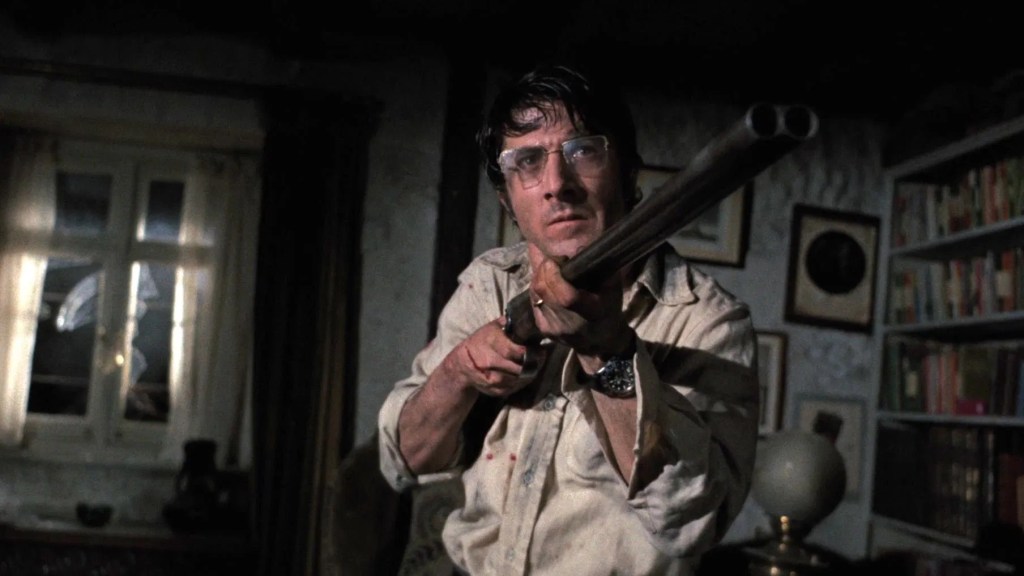
This tale of rape, retribution, and murder in the English countryside remains Sam Peckinpah’s most controversial work, which The New Yorker’s Pauline Kael dubbed “the first American film that is a fascist work of art.” With respect to Kael, the motives of its characters and the movie’s politics defy tidy categorization. Dustin Hoffman and Susan George are David and Amy Sumner, a young couple recently moved from the United States to Amy’s native Cornwall in the United Kingdom. David’s academia and social awkwardness do not endear him to the men at the local pub. It doesn’t help that half of them want to fuck his wife. Among them is Amy’s old flame, Charlie (Del Henney). The Sumners, meanwhile, are navigating a marriage on the rocks. What makes Straw Dogs such a disturbing watch is its graphic depiction of Amy’s rape by Charlie and another man; initially fighting off the attack, Amy eventually caresses his face and responds sexually. Does Straw Dogs foster the toxic myth that women secretly want to be raped? Many critics certainly thought so at the time, and still do. We barely have time to sit with that discomfort before Peckinpah hits us with David erupting in an orgy of violence at his beer-swilling tormentors. The bookworm has reached his limit.
4. Kill Bill, Vol. 1 and Kill Bill, Vol. 2 (2003, 2004, dir. Quentin Tarantino)
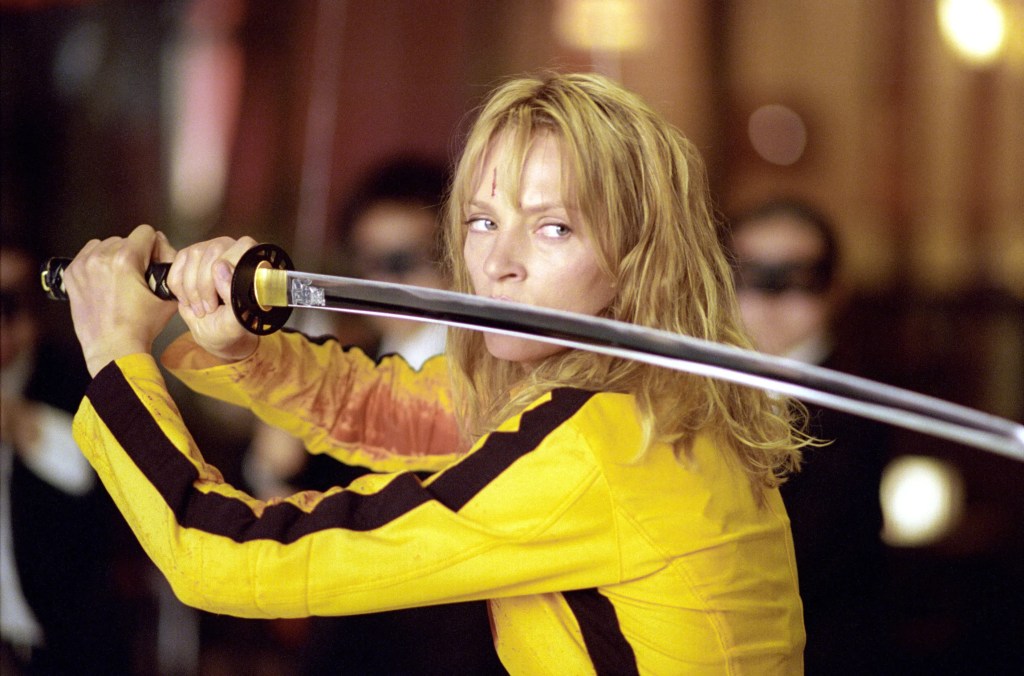
Quentin Tarantino’s epic revenge-o-matic cemented Uma Thurman’s status as one of film’s all-time great badasses. She is Beatrix Kiddo—aka the Bride, or code name Black Mamba—a member of the Deadly Viper Assassination Squad, whose leader is the enigmatic mercenary Bill (David Carradine). Beatrix isn’t only Bill’s underling, but his betrothed, at least until he and his band of killers attack her at the wedding rehearsal and put a bullet in her head. Four years later, the Bride awakens from a coma with only revenge on her mind. Chicago Sun-Times critic Roger Ebert called Kill Bill, Vol. 1 “all storytelling and no story”—but it was no dis. Kill Bill is pulp revenge as imagined by a drive-in movie projector after gorging on Twizzlers and Milk Duds. It is an explosion of movie homages: martial arts pictures (particularly Lady Snowblood), spaghetti westerns, Italian giallo, blaxploitation, and scores of specific flicks that long ago lodged in Tarantino’s encyclopedic movie brain. Kill Bill was a lot of movie, but, with a running time north of four hours, it was more than Miramax was willing to release as a single feature. The studio split it into two volumes released six months apart; Tarantino finally got his wish in late 2025 with Kill Bill: The Whole Bloody Affair. For cinephiles, it’s a 275-minute candy high without a veggie in sight.
3. Oldboy (2003, dir. Park Chan-wook)
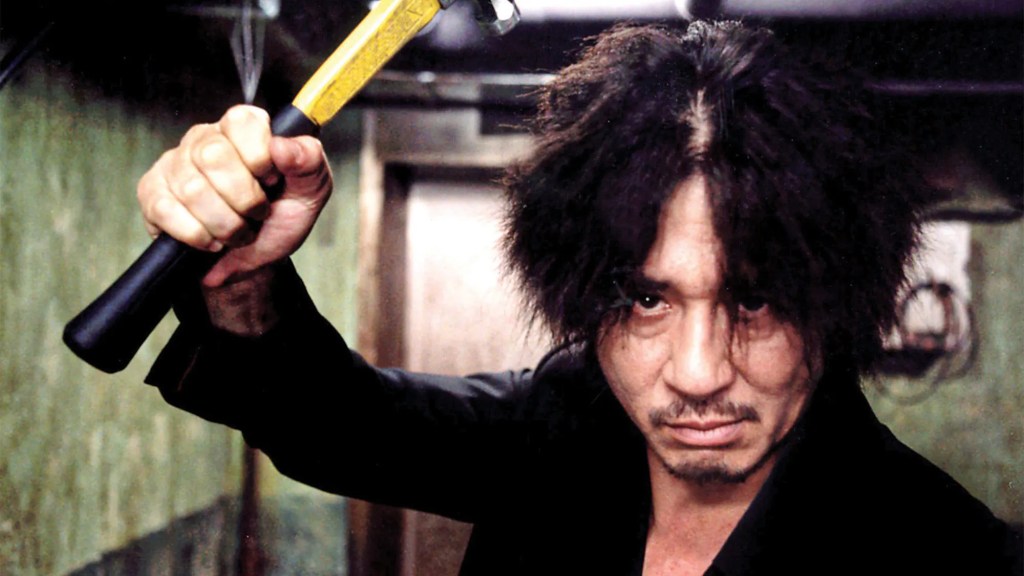
Revenge is the fuel of this stupendously deranged action-thriller from South Korean auteur Park Chan-wook. It is why Oh Dae-su (Choi Min-sik, in a remarkable performance) is abducted from a police station, held captive in a dingy hotel room, and framed for his wife’s murder. And when Dae-su is finally freed after 15 tortuous years, he vows revenge on his unknown tormentor. But is Dae-su’s enemy really through with him? With assistance from a young sushi chef (Gang Hye-jung) whom Dae-su meets shortly after his release, the black-clad protagonist sets out for vengeance. There are images here that, once seen, cannot soon be forgotten. Let’s just say Oldboy will make you appreciate the skills of a compassionate dentist, and you might think twice next time before ordering octopus at a sushi restaurant. A single-corridor hammer fight, shot in one unbroken take, is one of the most astonishing action sequences of the 21st century. Some plot twists go into some darkly upsetting places. Every revelation transforms what first seemed like a straightforward revenge tale into something far crueler. Winner of the Grand Prix award at the Cannes Film Festival, it flirts with perversity—or just flatly has its way with it, you could say—but it does so with undeniable verve and style. Pulp meets high art.
2. Once Upon a Time in the West (1968, dir. Sergio Leone)
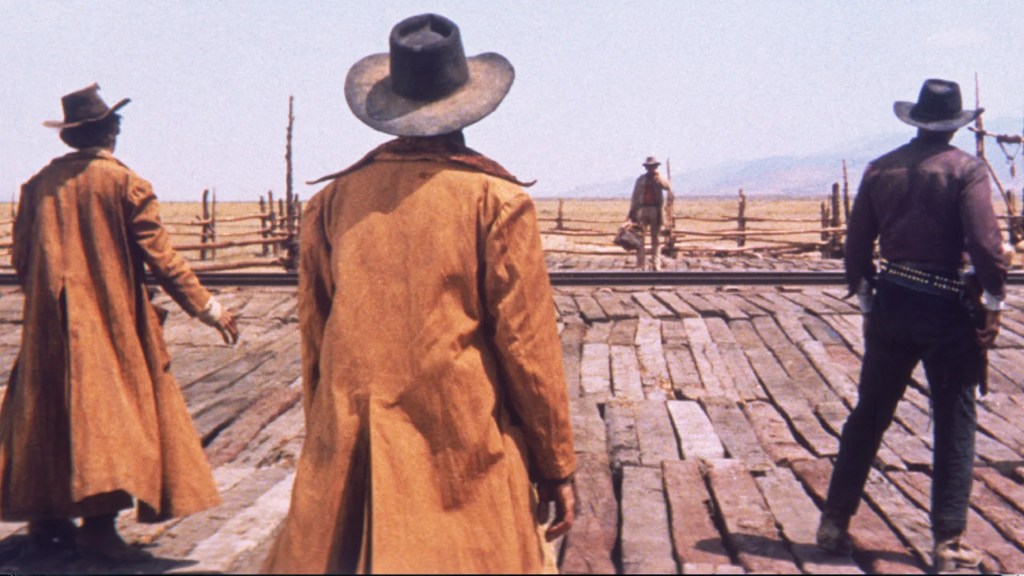
Sergio Leone packs a lot into this epic spaghetti western that finds him at his most mythmaking, with Ennio Morricone’s swelling score the perfect accompaniment to Leone’s extreme close-ups of grizzled, sun-scorched faces. Charles Bronson is “Harmonica.” Well, that is to say the people of Flagstone call him that because he plays the harmonica—rather incessantly, in fact, and for reasons Once Upon a Time in the West withholds until its searing climax. He arrives at the train station—in a rightly celebrated opening scene—where he is confronted by three goons (Jack Elam, Woody Strode, and Al Mulock) who work for a cold-blooded outlaw named Frank (Henry Fonda). If these men were waiting for his arrival, Harmonica says, then why would they have only brought three horses? They laugh sardonically. “Looks like we’re shy one horse,” one snorts. “No,” Harmonica corrects them: “You brought two too many.” Quick gun action shows him to be correct. For most of the movie’s nearly three-hour runtime, we know only that Harmonica has particular disdain for Frank. Early on, Frank and his gang massacre a pioneer family, including a young boy, in a deliriously operatic scene of suspense. Fonda seems to be having a blast playing against type. Claudia Cardinale and Jason Robards also have key roles, but the film’s driving mystery is the secret behind Harmonica’s long-nurtured hatred of Frank.
1. Harakiri (1962, dir. Masaki Kobayashi)
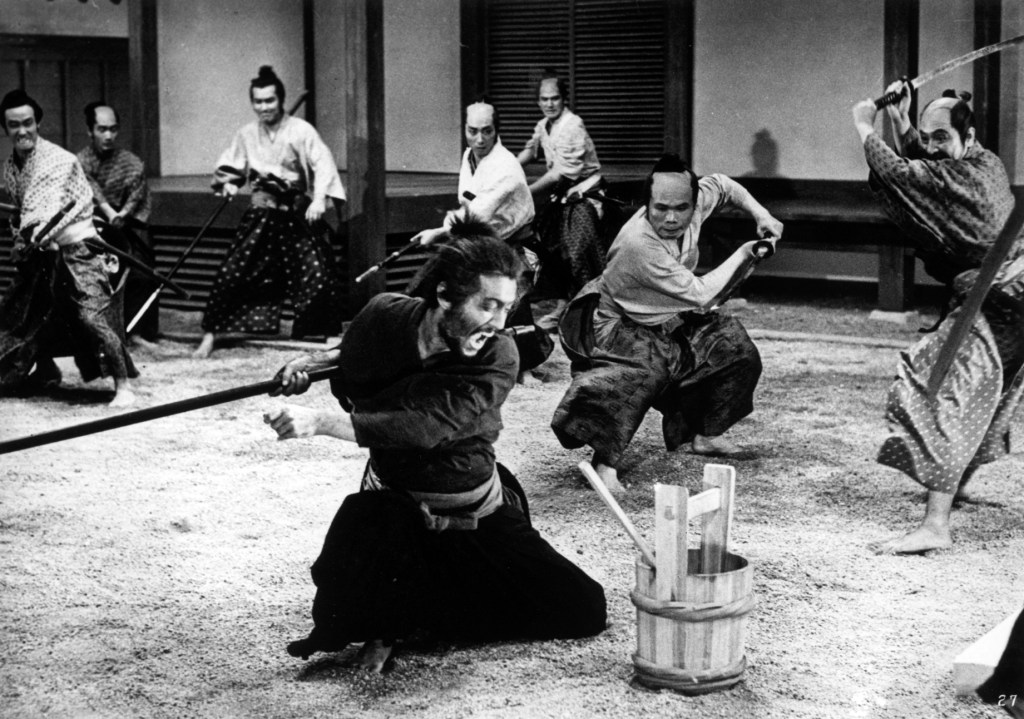
Masaki Kobayashi’s masterpiece unspools a heavyweight revenge saga while systematically dismantling the hollow morality of the samurai code. Set in the 17th century, Harakiri presents Tsugumo Hanshirō (Tatsuya Nakadai), a down-on-his-luck rōnin who visits the house of the samurai Ii clan, asking to use their courtyard to commit seppuku, or harakiri. But clan leader Kageyu Saitō (Rentarō Mikuni) is skeptical, believing that the rōnin who make such requests are just trying to elicit pity and some money before being sent on their way. In fact, Saitō tells Hanshirō of an earlier incident in which a young man (Akira Ishihama) came to the House of Ii asking to kill himself on their estate. But the clan leadership in that circumstance called the man’s bluff and forced the rōnin to follow through by disemboweling himself with a meager sword made of bamboo. Saitō’s horrific story prompts Hanshirō to tell his own tale, and it’s a doozy. Kobayashi constructs tension with a measured pace and control that mirrors Hanshirō’s calculating mind. Harakiri is gorgeous, Yoshio Miyajima’s stunning black-and-white cinematography distinguished by graceful camera movement. The spare elegance of the setting proves ironic. Hanshirō knows that the samurai assembled to hear him, men who claim to treasure honor and tradition, are repugnant hypocrites. This rōnin is determined to reveal their code to be as empty as the ancient suit of armor that the Ii clan displays with reverence.
(See more in the 15 best films that explore the class divide.)
Honorable mention: Blue Ruin (2013, dir. Jeremy Saulnier), The Bride Wore Black (1968, dir. François Truffaut), The Count of Monte Cristo (1934, dir. Rowland V. Lee), Dead Man’s Shoes (2004, dir. Shane Meadows), Death and the Maiden (1994, dir. Roman Polanski), Death Wish (1974, dir. Michael Winner), Get Carter (1971, dir. Mike Hodges), Hard Candy (2005, dir. David Slade), I Saw the Devil (2010, dir. Kim Jee-woon), Is God Is (2026, dir. Aleshea Harris), It Was Just an Accident (2025, dir. Jafar Panahi), John Wick (2014, dir. Chad Stahelski), Lady Vengeance (2005, dir. Park Chan-wook), Memento (2000, dir. Christopher Nolan), Ms. 45 (1981, dir. Abel Ferrara), Munich (2005, dir. Steven Spielberg), The Penalty (1920, dir. Wallace Worsley), Promising Young Woman (2020, dir. Emerald Fennell), Time for Revenge (1981, dir. Adolfo Aristarain), Underworld USA (1961, dir. Samuel Fuller)


2 responses to “The 15 best revenge films”
[…] One person’s comedy is another’s tragedy. Tom Hanks built a recurring Saturday Night Live bit around a character with no short-term memory. Christopher Nolan uses the same concept in his second feature to create an ingenious thriller. Guy Pearce is Leonard Shelby, a former insurance investigator determined to track down and kill the man who murdered his wife. Whoever that is. Leonard’s uniquely faulty memory—he loses it every 10 minutes or so—means he must record significant clues as tattoos or on the bottoms of the Polaroids he takes constantly. Leonard is not terribly bothered by his reliance on such notes. “Memory’s unreliable,” he says. “Memory can change the shape of a room. It can change the color of a car. Memories can be distorted. They’re an interpretation, not a record.” Nolan enhances the mystery of Memento by structuring the film backwards. Although he had scripted it linearly, a new structure came to him one morning over coffee. “If you have it run backward, you withhold the information from the audience the same way it is withheld from the character,” Nolan said later. “It was one of those moments when you had it. It took me a very long time to write the script, but in that moment it was done.”(See more in The 15 best neo-noir films and The 15 best revenge films.) […]
LikeLike
[…] Three gunmen wait for a train to arrive. That’s the extent of the setup in this myth-making spaghetti western from Sergio Leone. It’s nearly 15 minutes before a gunfight finally arrives, and it lasts only a few seconds. But the waiting is the point. Leone trims the western to its essentials—faces, landscape, time itself—before rebuilding the genre in his own operatic image. Mostly wordless and sans music, the scene plays out as the desperadoes (Jack Elam, Woody Strode, and Al Mulock) endure a squeaky windmill, a dripping water tank, and—most memorably—a buzzing fly that Elam traps in the hollow of his gun. Finally, a train pulls into the remote station. As it departs, an eerie harmonica is heard, and the gunmen find themselves face to face with the stranger who produced it, a man we will come to know as Harmonica (Charles Bronson). He asks if they brought him a horse. They laugh coldly. “Looks like we’re shy one horse,” one answers. “No,” Harmonica corrects him. “You brought two too many.”(See more in The 15 best revenge films.) […]
LikeLike