Slasher flicks can be traced back to the intimate killers of Psycho and Peeping Tom, but the modern version snapped into place with John Carpenter’s Halloween, which transformed on-screen murder into a kind of ritualized stalking game. The early 1980s were the genre’s salad days, thanks in part to simple economics—low budgets, high returns.
The slasher quickly codified its own rules: the masked, near-mythic killer; the “final girl” who endures; the prowling point-of-view shot that implicates the viewer; and the isolated setting that turns suburbia or summer camp into a very gory place. These are my picks for the 15 best slashers.
15. Sleepaway Camp (1983, dir. Robert Hiltzik)
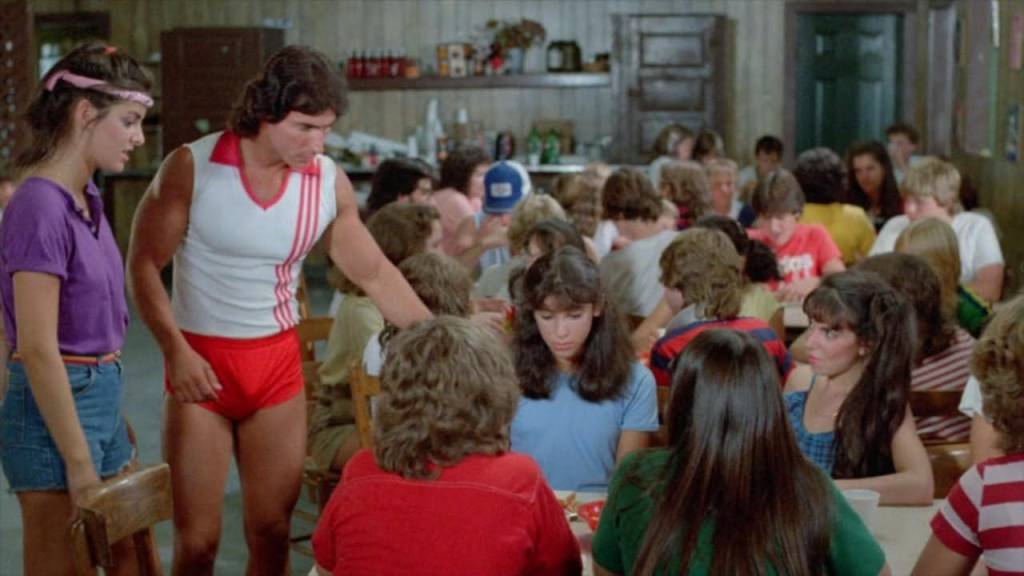
Angela (Felissa Rose), the sole survivor of a horrible boating accident from years earlier, is sent by her weirdo aunt (Desiree Gould) to Camp Arawak with her cousin (Jonathan Tiersten) for a summer of campfires, canoeing, and canoodling. They didn’t count on the painfully shy Angela being attacked by a cook intent on sexually assaulting her—the movie’s skin-crawling treatment of it reflects a less-enlightened time—or being bullied by the requisite mean girls. Then the body count begins and things get decidedly less idyllic. Sleepaway Camp is probably best known for its controversial and transgressive twist ending (I’m keeping mum), but Robert Hiltzik also deserves props for inventive kills. Perhaps the scariest thing about the film is the setting itself. Nothing dredges up feelings of ambivalence like summer camp.
14. Maniac (1980, dir. William Lustig)
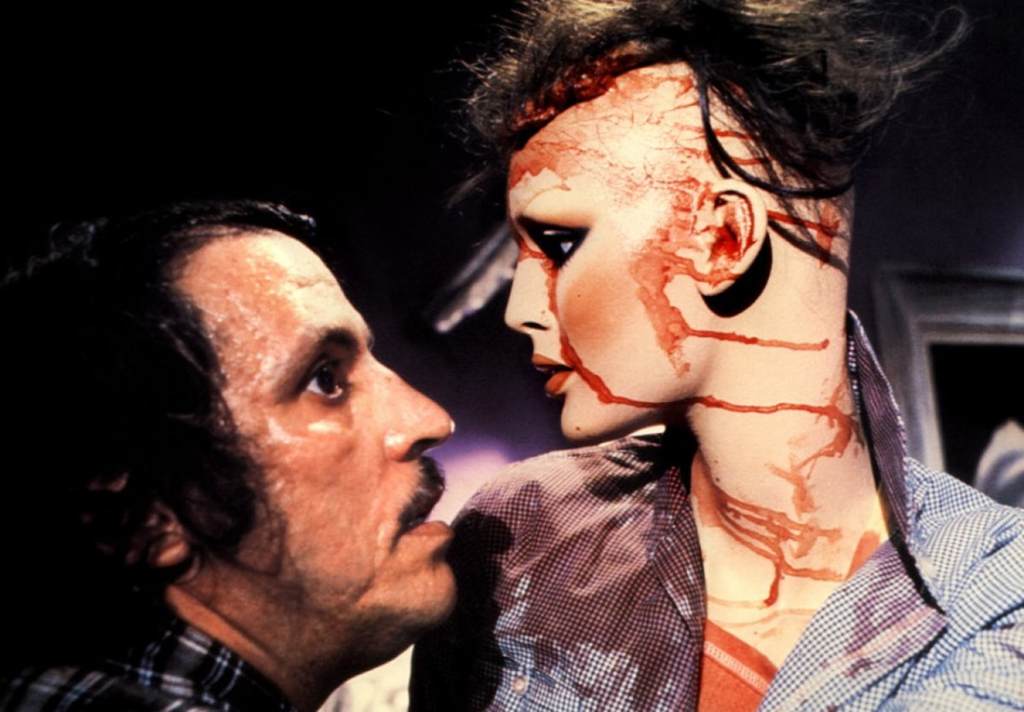
If Jerry Stiller and Ron Jeremy had a love child, it would be Joe Spinell. He rules in this grindhouse classic about—you guessed it—a maniac terrorizing a city. New York City is in the grip of fear thanks to this lug who spirals into misogynistic rages in which he stabs and scalps his victims. The titular maniac, whose rat’s nest of a bedroom is overstuffed with blood-smeared mannequins, rails against “fancy girls in fancy dresses with their lipstick.” Special effects wizard Tom Savini (who briefly appears as a guy who gets his head blown off) has a field day with the gore. In Flick Attack: Movie Arsenal Book One, Rod Lott writes that director William Lustig “seems to capture every grain of dirt, every bead of sweat, every smear of grease, and every puddle of God-knows-what.” Much of Maniac is laughable, but Spinell’s sweaty menace is more disturbing than any amount of blood and guts.
13. Pieces (1982, dir. Juan Piquer Simón)
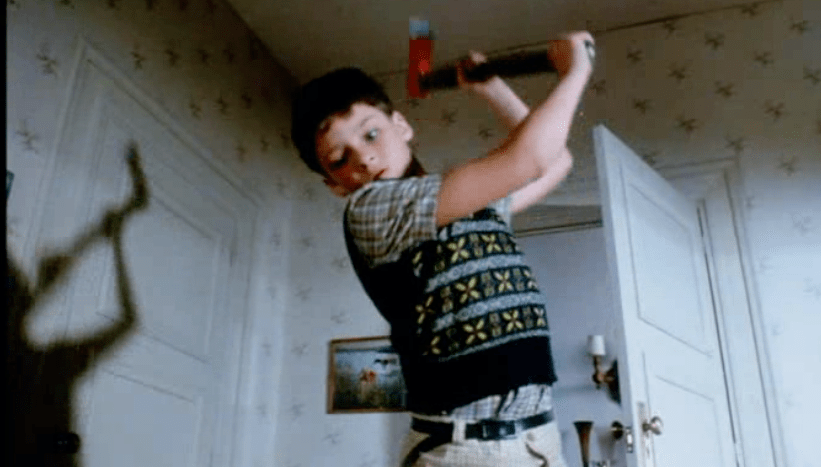
Pieces is so stupefyingly ludicrous as to be irresistible. A prologue set in 1942 has a 10-year-old boy (Alejandro Hernandez) feverishly putting together a jigsaw puzzle of a naked woman—did the Greatest Generation’s pornography come packaged as parlor games?—when his mother puts a stop to it. Hormones being hormones, the boy grabs an axe and cuts mom down to size. Forty years later, someone is slashing the young women of a fictional Boston college. On the case is a not-so-bright homicide detective (Christopher George) and the campus lothario (Ian Serra) whose major appears to be bedding the female student body. Speaking of bodies, the killer is amassing body parts for a human jigsaw puzzle of a naked woman—finishing, four decades on, the project that his mother interrupted. Director Juan Piquer Simón dishes out some genuinely gory kills for the genre faithful, but Pieces’ amateurish production, inept performances, and bonkers script (assuming there was one) make the WTF proceedings more hilarious than horrifying.
12. Alice Sweet Alice (1976, dir. Alfred Sole)
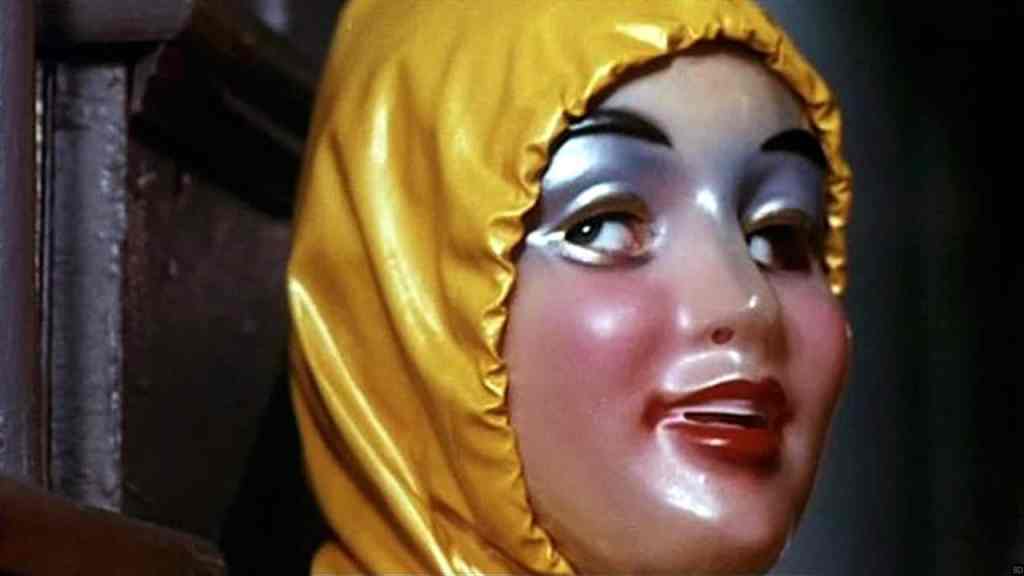
This low-budget indie is often remembered for the blink-and-you’ll-miss-her movie debut of Brooke Shields, but Alice, Sweet Alice deserves mad respect on its own merits. Set in the early 1960s, this American giallo (the Italian-influenced horror subgenre) concerns a series of murders terrorizing a Catholic parish in Paterson, New Jersey. First to go is little Brooke, whose character is dispatched at her First Communion. Indications are that the perpetrator is her 12-year-old sister, Alice, played with combustible energy by Paula Sheppard. Writer-director Alfred Sole is no slouch in creating atmosphere. Long dismissed as just another slasher, the picture has undergone a steady critical reevaluation in recent decades, prized now for its use of Catholic iconography and its atmosphere of dread. Sole stages several wicked set pieces involving the killer, whose wardrobe of choice is a yellow raincoat and a cheap mask. Fortunately for the killer, the movie has characters so obnoxious that you wouldn’t mind seeing them sliced to shreds.
11. X (2022, dir. Ti West)
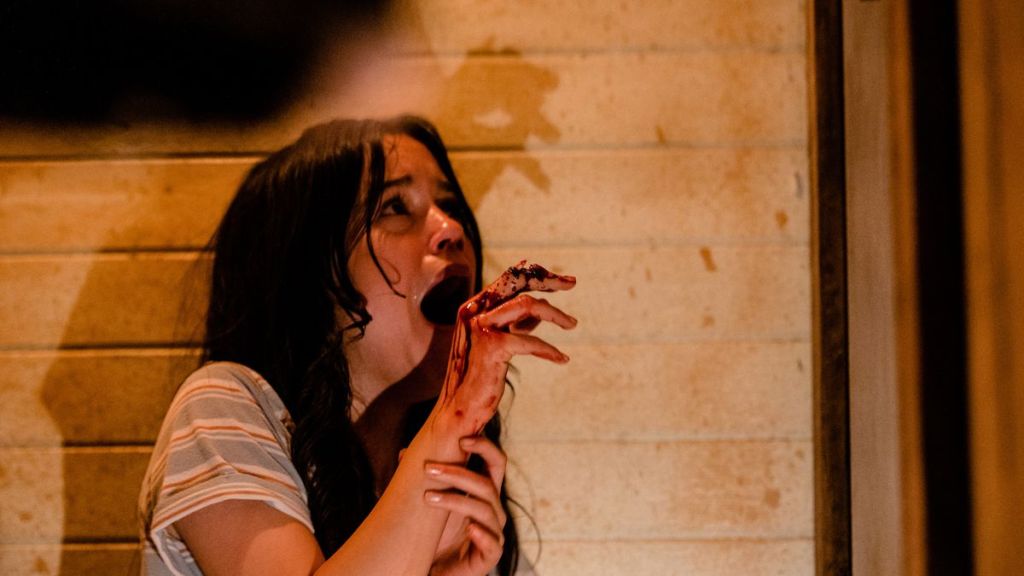
Nothing can dampen the mojo of an X-rated movie shoot like a killer thinning out cast and crew. Ti West’s slow-burn horror—the first of a trilogy that includes Pearl (2022) and MaXXXine (2024)—wisely builds anxiety by giving its ragtag band of characters space to interact. Wayne (Martin Henderson), a Houston strip-club owner hoping to venture into pornographic home video, rents an old guesthouse on a rural Texas farm. To shoot The Farmer’s Daughters, he has assembled his younger girlfriend Maxine (Mia Goth), two skin-flick performers (Brittany Snow and Scott Mescudi), a wannabe indie filmmaker (Owen Campbell) and his deceptively mousy girlfriend (Jenna Ortega). Unfortunately for them, the elderly couple (Stephen Ure and Goth again) who own the place don’t cotton to all the fornicating. Goth is terrific in the dual roles, which paid off later that year in the prequel Pearl. Even more provocative than X’s porn trappings is its chilling take on the aging villains and their peculiar longings and resentments.
10. Silent Night, Deadly Night (1984, dir. Charles E. Sellier Jr.)
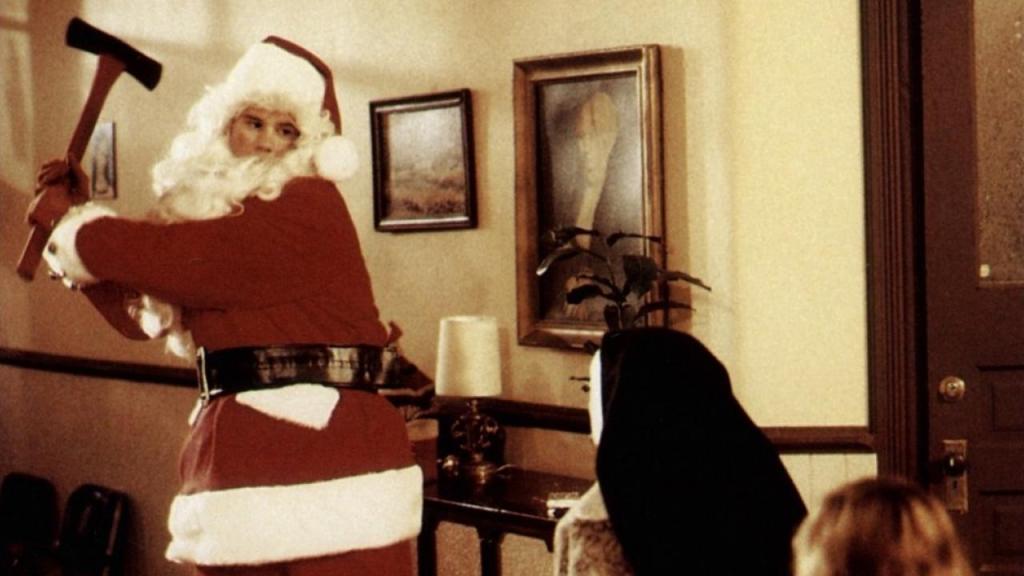
Not only is the killer of this nasty little picture outfitted in Santa Claus garb, but director Charles E. Sellier Jr. barrels into the grindhouse excess with breathtaking glee. Trouble for 5-year-old Billy Chapman (Jonathan Best) begins on Christmas Eve 1971 when he watches in horror as a drunkard in a Santa suit murders his father and rapes his mother before slitting her throat. From there, Billy (Danny Wagner as an older child) is shipped off to an orphanage, where he is savagely beaten by sadistic Mother Superior (Lilyan Chauvin). At age 18, Billy (now Robert Brian Wilson) is a toy store employee on Christmas Eve when he is ordered to dress up like Santa. You see where this is going. The directive ignites ho-ho-homicidal PTSD for Billy that commences in a bloody slayride. Silent Night, Deadly Night drew controversy for its psychotic Santa. Movie critic Gene Siskel even took to the airwaves of At the Movies, the television show he co-hosted with Roger Ebert, to read the filmmakers’ names aloud as a way to publicly shame them. Ironically, a murderous Santa is one of the film’s tamer conceits.
9. Scream (1996, dir. Wes Craven)
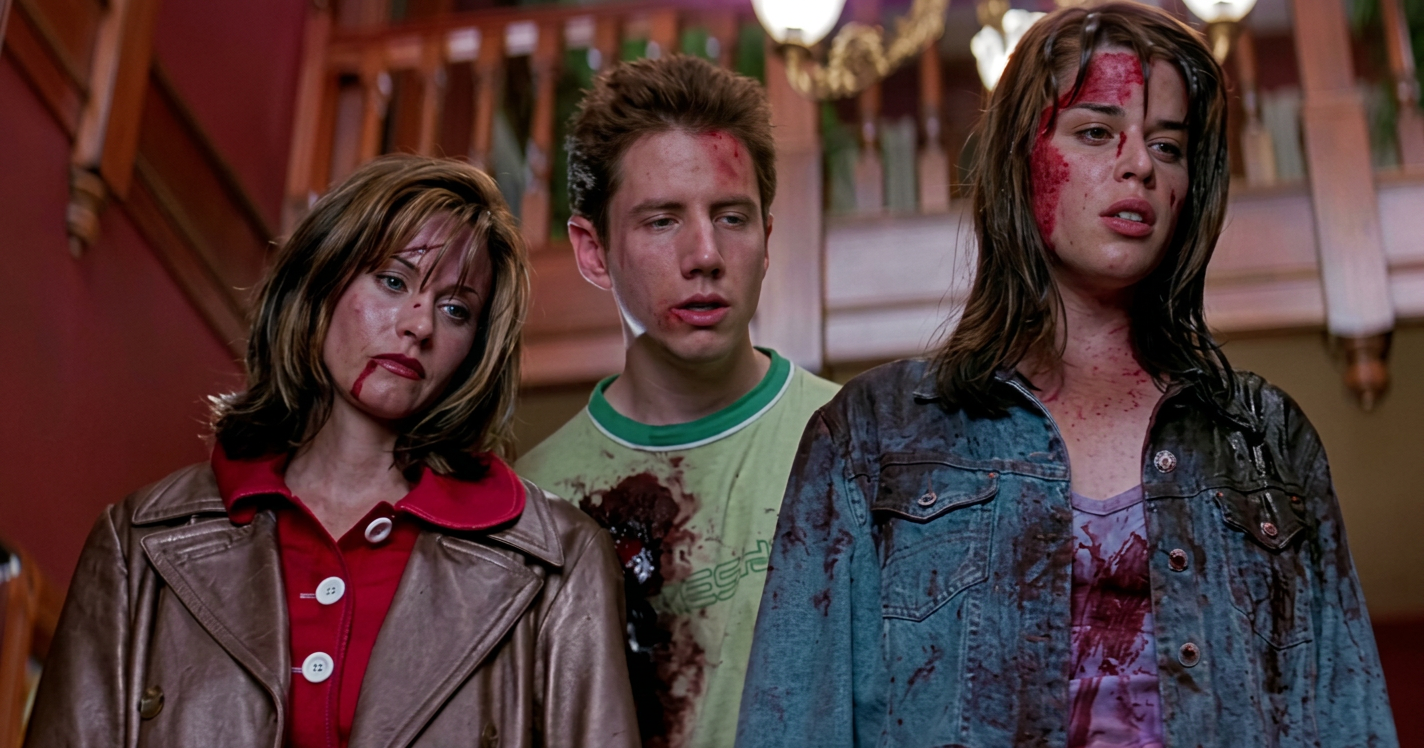
Wes Craven and writer Kevin Williamson have a blast tweaking the genre Craven had a big role in creating. Williamson conceived the screenplay after freaking himself out one night watching a news special on the Gainesville Ripper. The director had initially turned down the project, but reportedly reconsidered after a kid at a horror convention urged him to make something akin to his grindhouse classic Last House on the Left (1972). The resulting film is one of Craven’s best, featuring an exceptional ensemble cast—including Neve Campbell, Courteney Cox, David Arquette, Matthew Lillard, and Skeet Ulrich—and a distinctive mask for the killer that quickly became a pop culture sensation. The opening scene alone ladles on slasher-movie references and their concomitant tropes, making it clear that what follows will be gore with a splash of meta. Scream knows what it is, knows the viewer knows, and knows there are rules it’s expected to follow. At a high school party, the rules for surviving in a horror movie are enumerated by a video store clerk (Jamie Kennedy): don’t have sex, don’t drink or do drugs, and never say “I’ll be right back.” Of course, the partygoers pay no attention.
(See more in “The 20 best opening scenes in film” list.)
8. Stagefright (1987, dir. Michael Soavi)
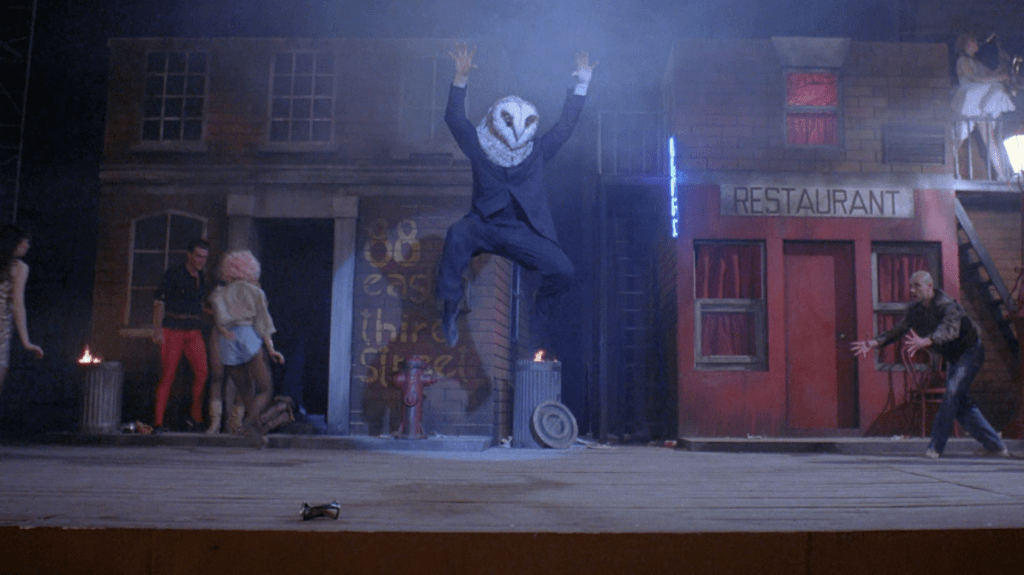
This Italian production has the feel of a giallo, but departs from that genre since there is no question as to who is stalking the theater company rehearsing an avant-garde musical called The Night Owl. The show’s lead actress, Alicia (Barbara Cupisti), briefly skips out on dictatorial director Peter (David Brandon) so a doctor can examine her sprained ankle. Oddly, costumer Betty (Ulrike Schwerk) drives Alicia to be seen at a psychiatric hospital, where actor-turned-murderous maniac Irving Wallace (Clain Parker) surreptitiously hitches a ride with them back to the theater. As a thunderstorm rages outside, the increasingly ridiculous rehearsal becomes a slaughterhouse. Irving kills Betty before donning the giant owl head of the stage play’s titular character. While Peter muses that Betty’s death is sure to boost ticket sales, the disguised Irving gets busy chopping, drilling, hatcheting, and otherwise dispatching cast and crew. Michele Soavi’s feature debut has a visual flair that elevates it over many 1980s slashers. And how can a killer wearing a giant owl head be anything but a hoot?
7. A Nightmare on Elm Street (1984, dir. Wes Craven)
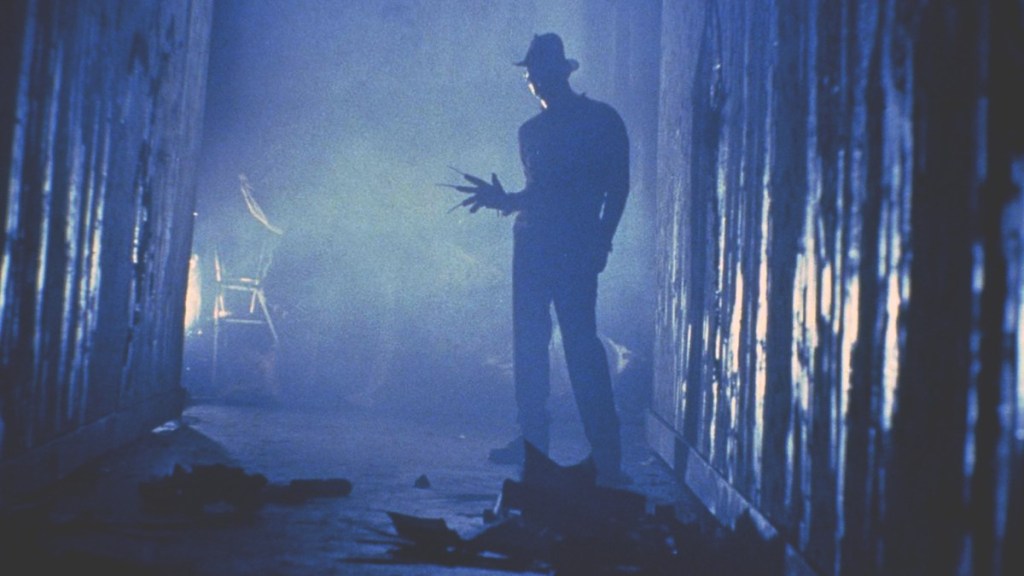
Freddy Krueger is one of the most celebrated of movie slashers. His disfigured face and signature outfit—a striped red and green knit sweater and brown fedora—make a lasting impression. Oh, and then there’s that glove fitted with razor blades. A Nightmare on Elm Street finds a group of teenagers plagued by nightmares featuring Freddy (Robert Englund), a child murderer who was burned alive by a vigilante mob 20 years earlier. Dreams afford Freddy a new lease on life, and murder. The game cast includes Heather Langenkamp, John Saxon, and, in his film debut, 21-year-old Johnny Depp. Wes Craven strikes a nifty balance of horror and humor. Freddy is a terrifically frightening slasher, all right, but he also has a wicked way with a catchphrase: “One, two, Freddy’s coming for you!” Craven based the premise in part on newspaper accounts of Southeast Asian refugees who died in their sleep after describing nightmares, grounding the movie’s fantastical hook in something uncomfortably real.
(See more in “The 10 best movies about dreams” list.)
6. Black Christmas (1974, dir. Bob Clark)
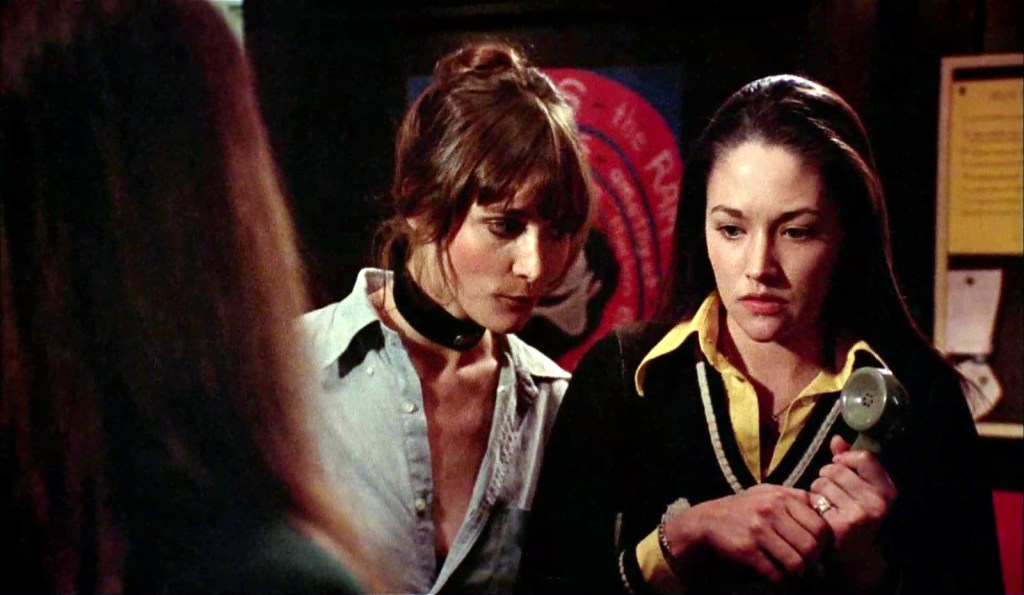
Bob Clark’s directorial versatility is evident in two—count ’em, two—Yuletide classics. While his A Christmas Story (1983) is the safer crowd-pleasing option, I prefer the shiver-inducing Black Christmas, about an unknown assailant terrorizing a sorority house at a small Canadian college. John Carpenter’s Halloween in 1978 launched a generation of slasher flicks that heavily employed the killer’s point of view, but Clark’s milestone in horror was making effective use of POV four years earlier. Margot Kidder, Olivia Hussey, and Andrea Martin are among the sorority sisters preparing for Christmas break when their plans are interrupted by a killer in the Pi Kappa Sigma house. Clark and screenwriter Roy Moore take their time establishing the vividly drawn characters, and Clark, whose Porky’s (1981) later spurred an onslaught of horny boys-on-the-make movies, admirably resists the obvious exploitation possibilities. Black Christmas is moody, atmospheric, and disciplined—traits that too often eluded its imitators.
5. Candyman (1992, dir. Bernard Rose)
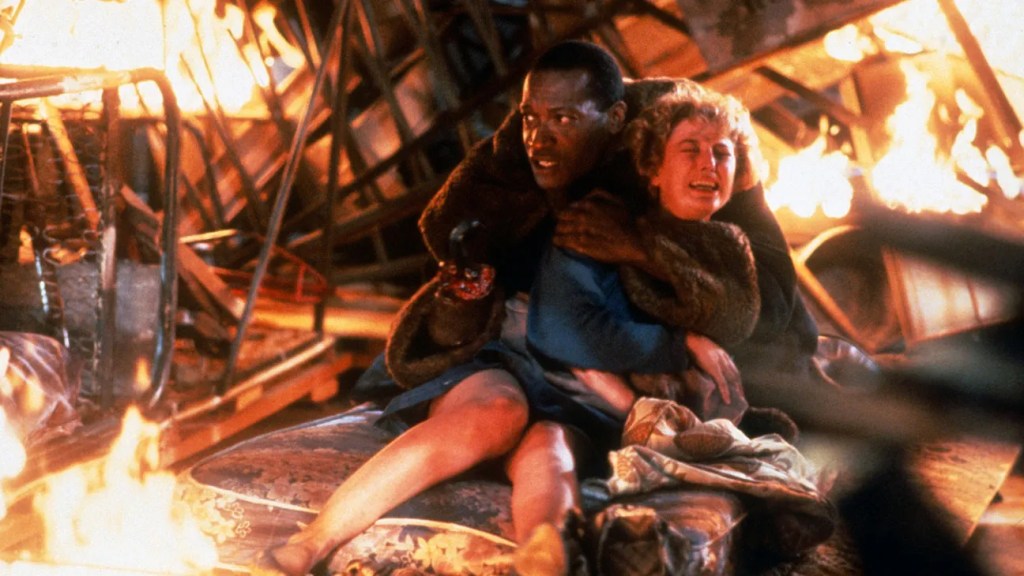
Graduate student Helen Lyle’s (Virginia Madsen) thesis on Chicago’s urban legends naturally leads to her researching the folktale of the “Candyman.” According to lore, whoever repeats that name five times while staring into a mirror summons the murderous “Candyman.” In this adaptation of a Clive Barker story, the slasher is a 19th-century black painter who was tortured and killed by a mob for having an affair with a white woman. His tormentors sawed off his painting hand and replaced it with the hook he now uses to gut his victims. Entwined with the legend is Cabrini-Green, Chicago’s infamous public housing projects where Helen believes the Candyman story is used by tenants to make sense of the violence and misery in their daily lives. Tony Todd is properly scary as the eponymous apparition who messes with Helen’s mind. Todd got as good as he gave, apparently. In a scene that called for bees to emerge from Candyman’s mouth, the actor’s sole protection was a dental dam. The filmmakers agreed to pay him a $1,000 bonus for every bee sting he endured; Todd earned $23,000.
4. Peeping Tom (1960, dir. Michael Powell)
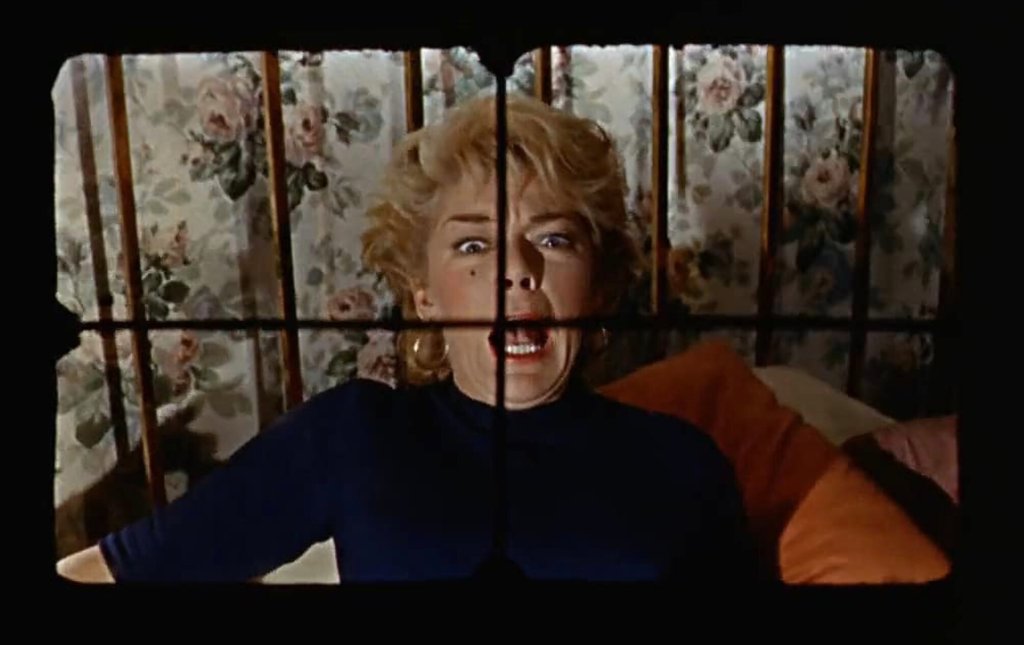
British reviewers and moviegoers assailed Peeping Tom upon its release as grotesque trash. The film essentially ended the career of director Michael Powell. Critics couldn’t understand how such perverse rubbish could have come from Powell, whose collaboration with Emeric Pressburger yielded some of the United Kingdom’s greatest pictures (The Life and Death of Colonel Blimp, Black Narcissus, The Red Shoes). As with so many great movies, however, Peeping Tom was simply ahead of its time. Its portrait of a psychologically damaged serial killer is disturbing stuff, but hardly scandalous. The film’s reputation has been dramatically rehabilitated, thanks in no small part to Martin Scorsese, who financed a restoration and has credited it, along with 8½ (1963), as one of the two most insightful films ever made about the psychology of filmmaking. Karlheinz Böhm is effectively creepy as Mark Lewis, a photographer with a compulsion to film women at the moment of their impalement on the sharpened leg of his tripod. His solicitous demeanor and awkwardness around women echo that of Psycho’s Norman Bates, who was also scaring audiences that same year.
(See more in “The 10 best films about voyeurism” and “The 10 best serial-killer films” lists.)
3. Psycho (1960, dir. Alfred Hitchcock)
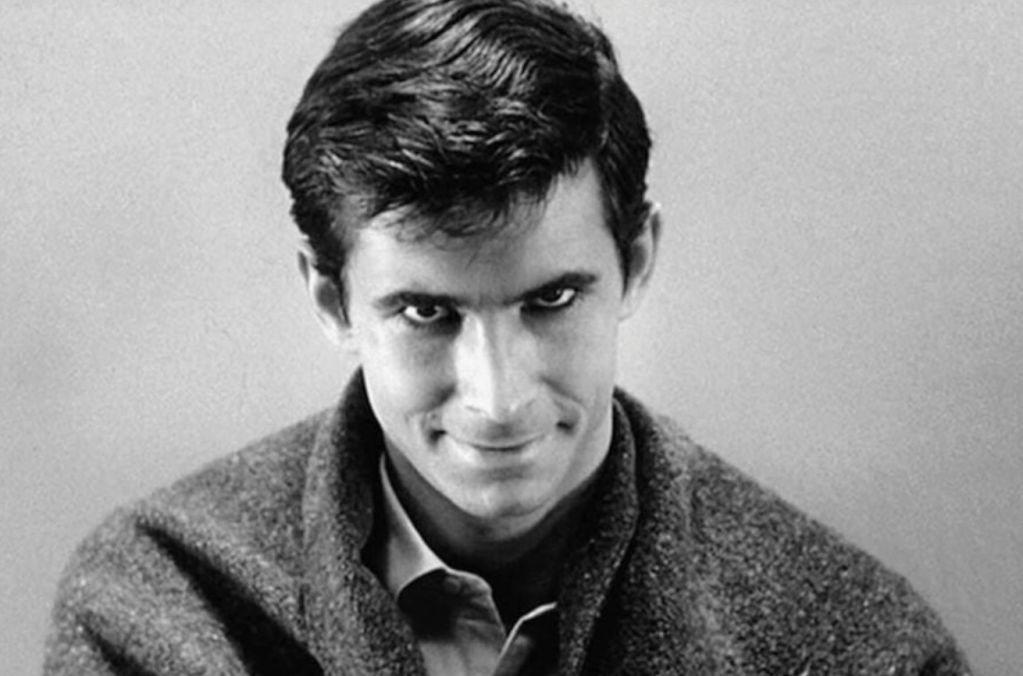
The mother of American slashers, Psycho forever altered the horror genre when Alfred Hitchcock unleashed it in the summer of 1960. Budgeted at less than $1 million and made with his television crew from Alfred Hitchcock Presents, it showcases a level of violence, particularly a certain shower scene, that was new to mainstream Hollywood. Hitch deploys the fiendish trick of killing off star Janet Leigh after spending 45 minutes making moviegoers care about her character, Marion Crane. The misdirection doesn’t end there. In a sharp departure from the Robert Bloch novel on which the film is based, Anthony Perkins’ Norman Bates is the sweetest of psychopaths, a boyish bird enthusiast who loves his mother but just can’t help himself when a pretty blonde checks into his family’s secluded motel. The filmmaking is lean, mimicking the down-and-dirty approach of the period’s TV programming. With the exception of a labored, dated coda that spells out the movie’s pop psychology, Psycho is still a banger after all these years—with only two on-screen murders, no less.
(See more in “The 10 best bathroom scenes in film,” “The 10 best films about identity crises,” “The 10 best serial killer films,” and “10 most memorable movie mothers” lists.)
2. The Texas Chain Saw Massacre (1974, dir. Tobe Hooper)
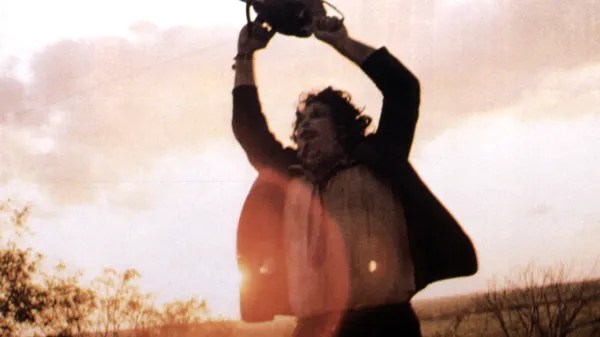
Texans appreciate tradition. Murderous cannibals in Texas are no different, as evidenced by the Lone Star family in this horror classic and pop culture phenomenon. The local slaughterhouse might have moved on to more efficient technology, but not the movie’s multigenerational clan of menfolk who still know the value of killing the old-school way. Shot for $140,000 and very loosely inspired by real-life serial killer Ed Gein, The Texas Chain Saw Massacre succeeds because its aesthetic is so, um, bare-bones. Director Tobe Hooper just wants to scare the bejesus out of people. A van full of friends runs into trouble when they visit an abandoned house in the country. First, they pick up a hitchhiker (Edwin Neal) who proves to be a self-mutilating creep. Later, they encounter the rest of the hitchhiker’s family, including his chainsaw-wielding brother, the succinctly named “Leatherface” (Gunnar Hansen), on account of his mask made of human flesh. The Texas Chain Saw Massacre is not a true story, despite the claim of its prologue—narrated by John Larroquette, later of television’s Night Court, whom Hooper paid in weed. There is little gore here but abundant terror, and Marilyn Burns, as the last standing victim, knows how to scream.
1. Halloween (1978, dir. John Carpenter)
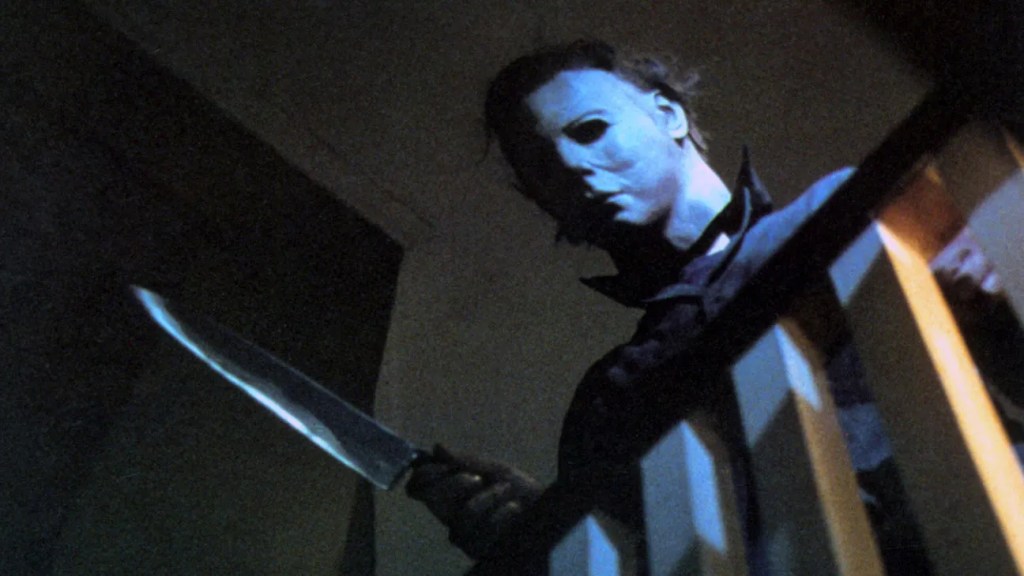
I was 12 when I saw Halloween opening night at the Quail Twin in Oklahoma City for what is still the most enjoyably scar by ring movie experience of my life. The theater was packed with preteens and teens who, if my memory is telling me the truth, let out a near-constant stream of screams, shouts, and howls of cathartic laughter—all forming a unified, stentorian wall of sound that would have made a pre-homicidal Phil Spector green with envy. At least that’s how I remember it. From its opening scene and surprising reveal of a 6-year-old killer, Halloween had us in its devious little palm. Countless rewatches over the years haven’t dimmed my admiration for John Carpenter’s minimalist artistry. It’s Halloween night, and Michael Myers, that murderous child from Scene One, is now grown, on the lam from a psychiatric hospital, and inexorably drawn back to his hometown of Haddonfield, Illinois. The screenplay by Carpenter and his then-girlfriend Debra Hill isn’t complicated. Their genius was in whittling down horror to its essential elements and then shooting that story with elegance and economy. They include a masked, knife-wielding killing machine; three teenage babysitters in peril; and Donald Pleasence as Michael’s somewhat unhinged doctor whose certainty that pure evil walks among us is itself upsetting. The film’s $300,000 budget forced creativity. For springtime in Los Angeles to double as autumn in Illinois, the crew emptied trash bags of fall leaves before shooting an outdoor scene. Afterward, they dutifully raked the leaves and returned them to the bags for the next scene. Michael’s iconic mask came from a store on Hollywood Boulevard. To save money, Carpenter composed the score himself. Its stripped-down, synthesizer-heavy music became a sort of blueprint for dozens of imitators. Sure, the film gave rise to some problematic tropes, particularly its dispatching of sexually active Annie and Lynda (Nancy Loomis and P.J. Soles) while virginal Laurie (Jamie Lee Curtis, kicking off one helluva career) is allowed to survive. Halloween isn’t perfect, but it is pretty damn close. And on one October night back in 1978, it was the pinnacle of what movies could be. (See more in “The 20 best opening scenes in film” list.)
Honorable mention: The Burning (1981, dir. Tony Maylam), Child’s Play (1988, dir. Tom Holland), Friday the 13th (1980, dir. Sean S. Cunningham), The Funhouse (1981, dir. Tobe Hooper), Happy Birthday to Me (1981, dir. J. Lee Thompson), Happy Death Day (2017, dir. Christopher Landon), High Tension (2003, dir. Alexandre Aja), I Know What You Did Last Summer (1997, dir. Jim Gillespie), In a Violent Nature (2024, dir. Chris Nash), My Bloody Valentine (1981, dir. George Mihalka), The Slumber Party Massacre (1982, dir. Amy Holden Jones), Terrifier 2 (2022, dir. Damien Leone), The Texas Chainsaw Massacre 2 (1986, dir. Tobe Hooper), Tourist Trap (1979, dir. David Schmoeller), You’re Next (2011, dir. Adam Wingard)


4 responses to “The 15 best slasher films”
[…] Michael Powell and Emeric Pressburger had turned out a string of beloved British films under the name “The Archers,” but Powell’s first solo outing since the dissolution of that partnership was jarring: the story of a London serial killer who films his female victims at the moment he fatally impales them with the sharpened end of a tripod leg. As murderers go, Mark Lewis (Karlheinz Böhm) cuts a particularly pathetic figure, enslaved by his psychotic compulsions. But we discover that he is also a victim—the son of a renowned psychologist who had bizarre ideas about how best to research the effects of fear on his child. Moviegoing Brits in 1960, however, were not much intrigued by the psychological underpinnings of Peeping Tom. Instead, they were mainly repulsed, a reaction that seems awfully quaint and short-sighted decades later. Powell’s movie is certainly unsavory, but its sinister implications of voyeurism—especially for those of us watching this sordid tale unfold on screen—is chilling.(See more in The 15 best slasher movies.) […]
LikeLike
[…] How could this horror classic not be here? As deceased serial killer Freddy Krueger, Robert Englund surely fueled nightmares for millions of moviegoers. In A Nightmare on Elm Street, he racks up corpses by invading teenagers’ dreams, reflecting Wes Craven’s understanding of how vulnerable the subconscious is and all the nasty little secrets, fears and traumas it has squirreled away. Freddy’s horribly burned face and a glove of razor claws were scary enough, but Englund imbued the character with a hint of perversion. “If someone gets into your subconscious, it’s like they’re in your underwear drawer,” he told The Guardian in 2019. “Teenagers always think about sex, so Freddy was a natural extension of that.” That doesn’t mean Freddy Krueger was anyone’s idea of a wet dream, except possibly for the studio execs who got rich from the franchise it spawned.(See more in The 15 best slasher movies.) […]
LikeLike
[…] dispose of some incriminating papers. The Production Code frowned on showing toilets. (See more in The 15 best slasher movies and 10 memorable movie […]
LikeLike
[…] In Psycho (1960), Alfred Hitchcock flipped audience expectations when he killed off the movie’s biggest name, Janet Leigh, less than an hour in. Wes Craven and screenwriter Kevin Williamson took that trick to heart in what would become a self-aware horror phenomenon. Scream opens with Drew Barrymore—prominently billed in the picture’s marketing, a sleight of hand the movie is fully aware of—as Casey Becker, a high schooler making popcorn and flirting with a stranger who has called her home. The two playfully banter about scary movies and their tropes, a sign of the film’s self-reflexiveness to come, before the conversation curdles. “What’s your favorite scary movie?” the caller asks, but the question doubles as a trivia gauntlet that will determine whether Casey’s tied-up boyfriend lives or dies. Let’s just say Casey doesn’t make it to the end credits, but neither do the conventions of the slasher genre.(See more in The 15 best slasher films.) […]
LikeLike