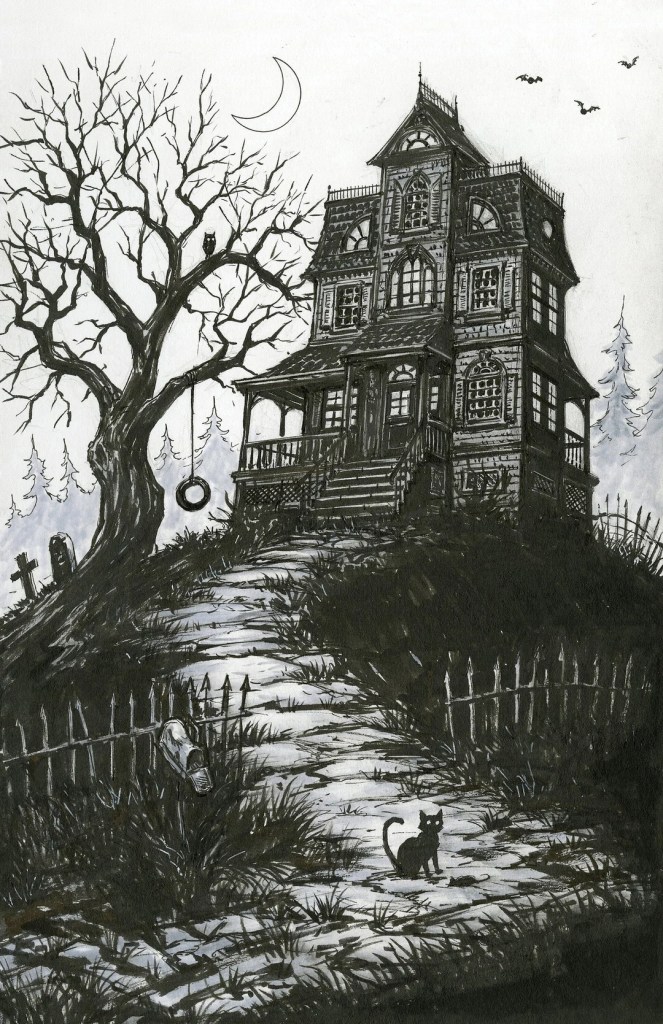
Creaking floors, hidden passageways, curious sounds, maybe a ghost or 13… Who doesn’t love a good haunted house story?
10. The Changeling (1980, dir. Peter Medak)
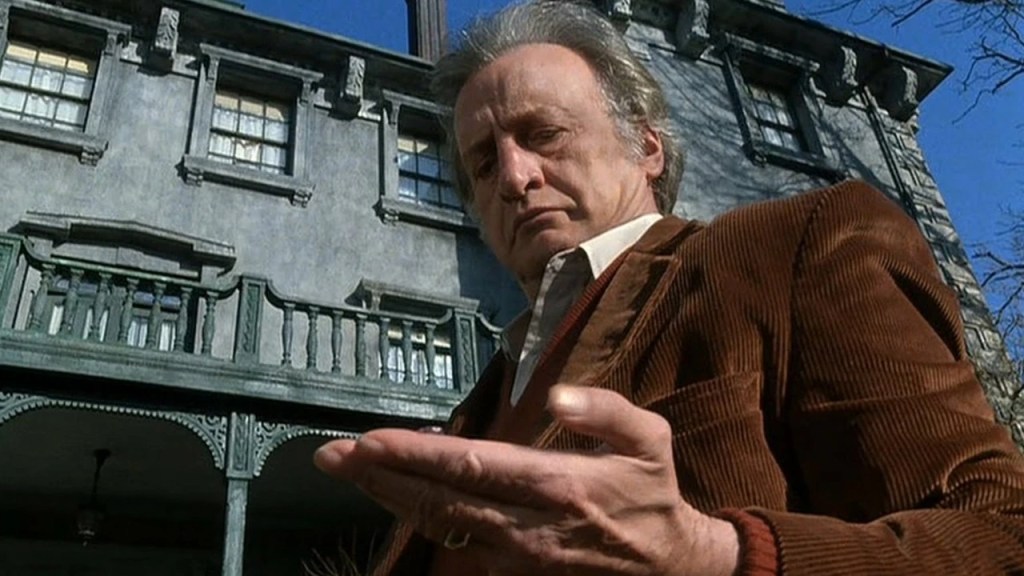
George C. Scott plays John Russell, a composer and university music professor mourning the deaths of his wife and daughter in a car accident. As every widower knows, nothing eases grief like moving into a spooky, long-uninhabited old mansion. He does so, only to be haunted by mysterious clanking noises and visions of a child drowning in a bathtub. “The house is not fit to live in. It doesn’t want people,” cautions an old biddy with the historical society that owns the property. Shouldn’t that have been on a disclosure form? Allegedly based on real events experienced in Denver by playwright Russell Hunter, The Changeling gets the atmospherics right. Director Peter Medak can induce shivers with nothing more than a child’s ball rolling across an empty floor.
9. The Uninvited (1944, dir. Lewis Allen)
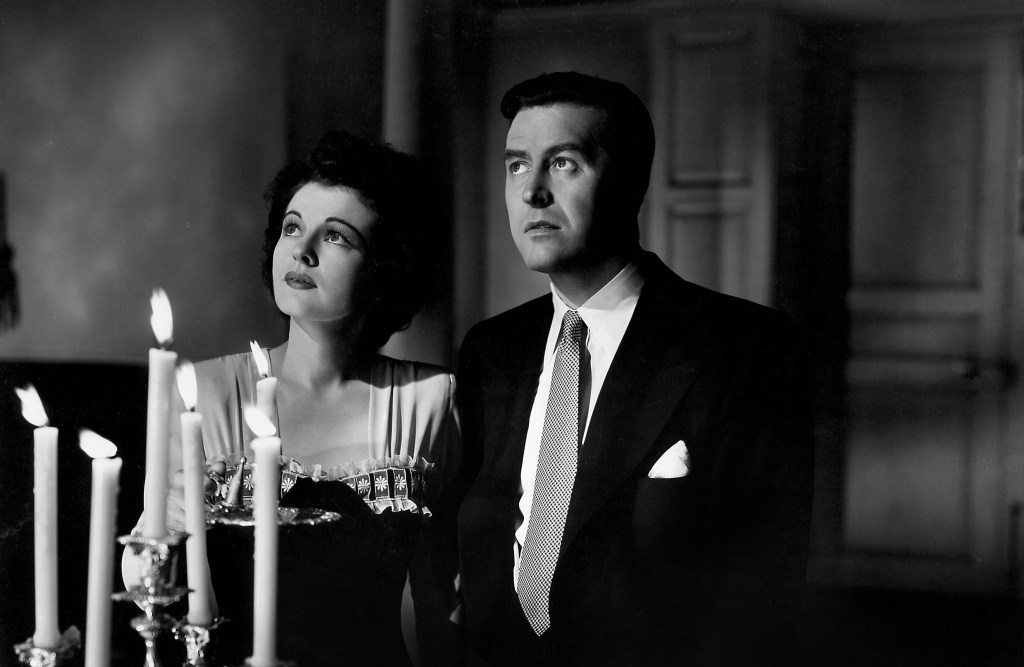
The takeaway from this classic Paramount chiller is simple: don’t buy a house on a whim. Rick (Ray Milland) and Pamela Fitzgerald (Ruth Hussey) are British siblings enjoying the Cornwall countryside when they happen across a big, empty seaside house. Pamela is immediately smitten with the place, dubbed Windward House, and persuades Rick that they should buy it. The Fitzgeralds breeze past some red flags—the last tenants left because of “disturbances”—and move in. Indeed, those “disturbances” range from strange voices to ectoplasmic houseguests. The previous owner’s granddaughter, Stella (Gail Russell), is inexplicably drawn back to the house too, but her attraction to it is complicated by trances in which she attempts to jump off cliffs. Associate producer Charles Brackett had wanted Alfred Hitchcock to direct but turned to Lewis Allen, whose respectable, unfussy approach created a blueprint for other haunted house flicks.
8. The Conjuring (2013, dir. James Wan)
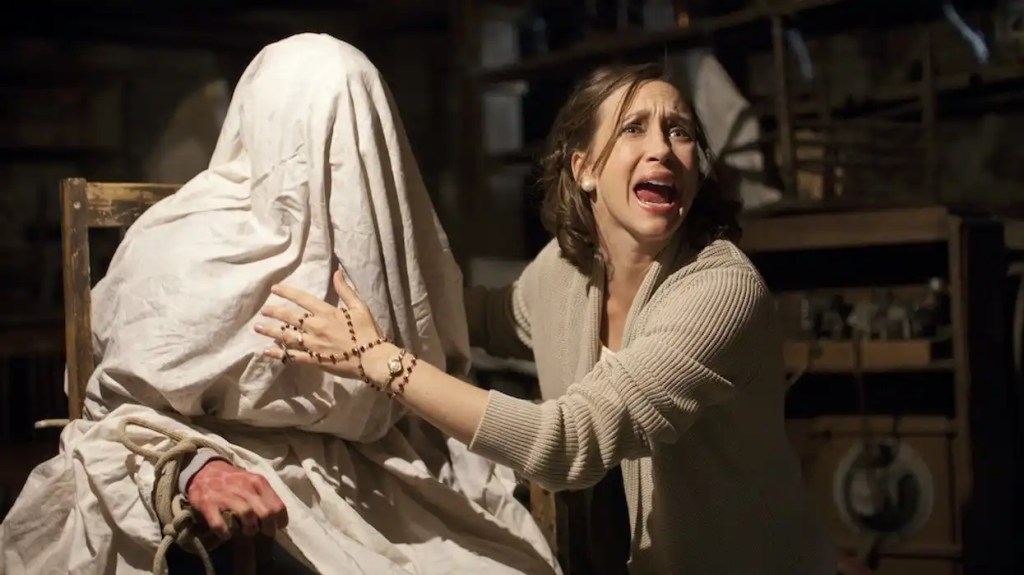
Say what you might about self-proclaimed “demonologists”: they sure do inspire big movie franchises. The Conjuring, based on a 1971 “possessed house” incident from the case files of Ed and Lorraine Warren, prompted its own cottage industry. The Perron family—mom, dad, and five daughters—has moved into a Rhode Island farmhouse in hopes of enjoying quiet country living. But their new home, the site of a horrific event back in 1863, has other plans. Annoyances like odd noises and a noxious smell graduate to stopped clocks and a dead dog. Mrs. Perron (Lili Taylor) reaches out to the Warrens (Patrick Wilson and Vera Farmiga), who are conveniently giving a lecture at a nearby college, to inspect the house. James Wan leans into the Warrens’ Christian faith and keeps the frights family-friendly and gore-free.
7. His House (2020, dir. Remi Weekes)
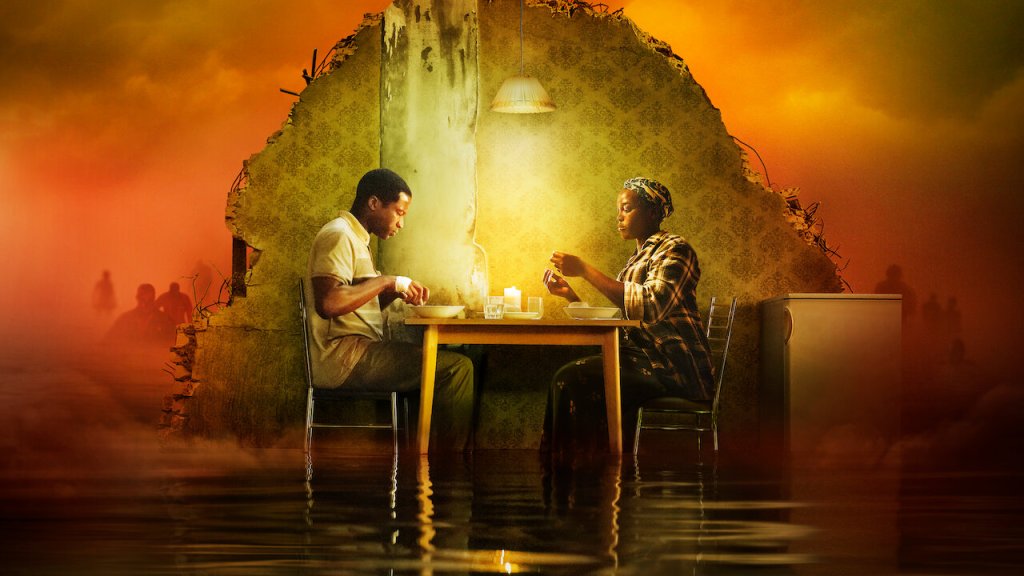
Being a stranger is the foundational terror of His House, the story of a South Sudanese refugee couple newly arrived in England. There is the language barrier. There is racism. There is also a haunted house. Sope Dirisu and Wunmi Mosaku portray Bol and Rial, a married couple from war-torn South Sudan. While they survived the punishing journey to Europe, several of their fellow refugees did not, including their beloved daughter, Nyagak. Bol and Rial grieve the death of their child as they await approval for asylum, all the while confined by British authorities to a crumbling house outside London. Then Nyagak appears along with a mysterious, malevolent figure. His House is a remarkable debut for Remi Weekes, who draws on South Sudanese folklore to give the supernatural a specificity rarely seen in the genre.
6. The Others (2001, dir. Alejandro Amenábar)
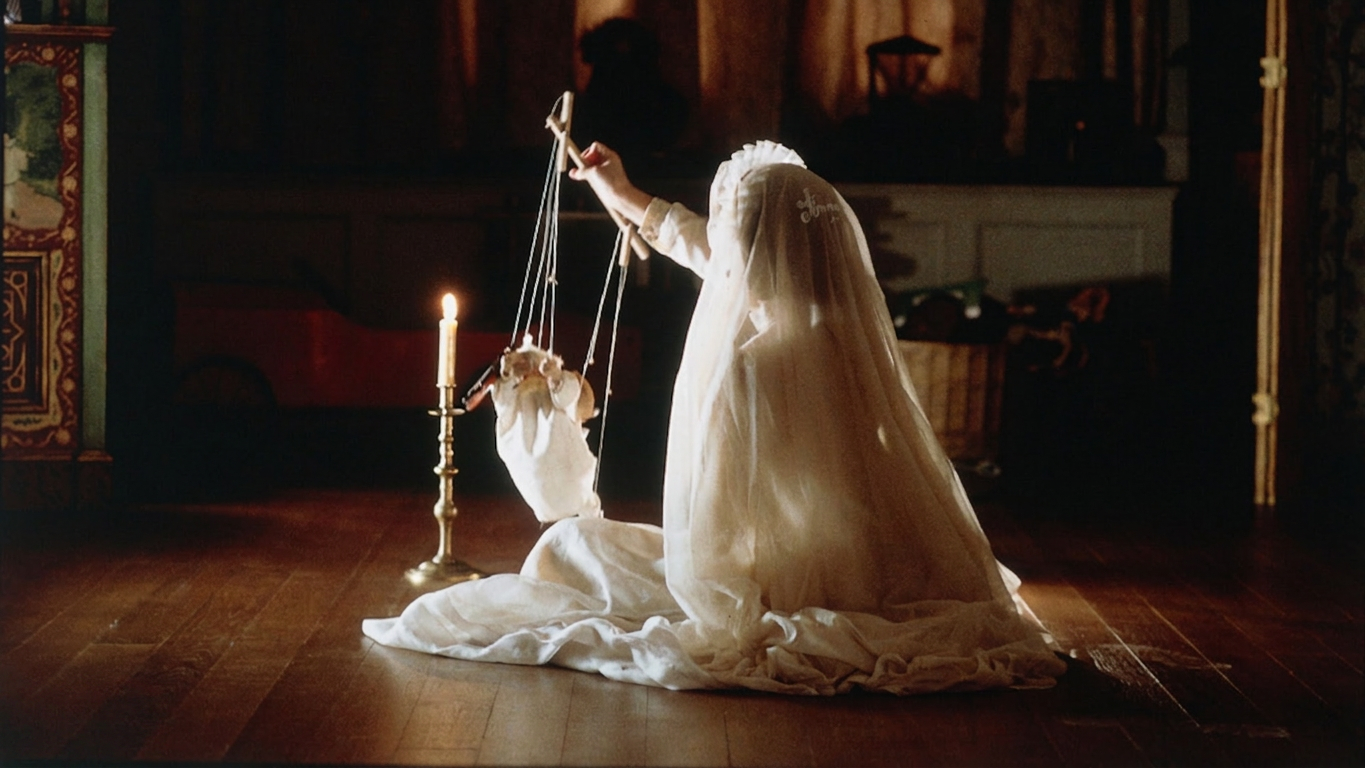
The first English-language work from Chilean writer-director Alejandro Amenábar is eerie, elegant, and resolutely old-fashioned. It is 1945 on the Channel Islands, and Nicole Kidman is Grace Stewart, a tightly wound wife and mother whose husband has yet to return from the war. When three domestic servants show up at her door seeking employment, Grace hires them on the spot. She especially needs help caring for her children, Flora and Nicholas (Alakina Mann and James Bentley). Not only do the kids have a rare allergy to sunlight, but Flora is testing Grace’s patience with tall tales of seeing a strange little boy on the premises. The atmosphere of The Others is boosted by Javier Aguirresarobe’s exquisite cinematography and a moody score composed by Amenábar himself. Oh, and the ending is perfect—the movie saves its most unnerving revelation for last.
5. The Innocents (1961, dir. Jack Clayton)
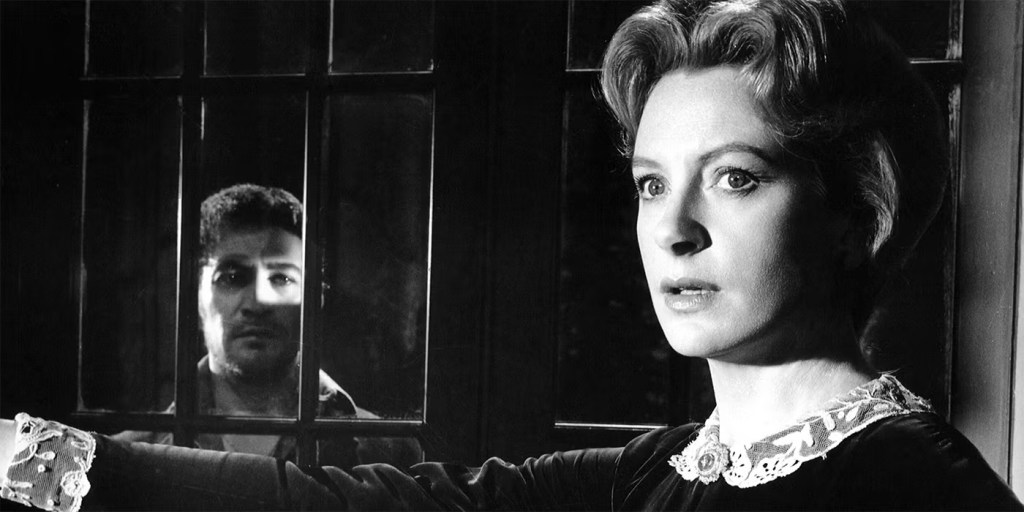
The hauntings that occur in The Innocents are either manifestations of a pair of dead lovers or products of the mind of a deranged, sexually repressed governess. The movie, an adaptation of Henry James’ The Turn of the Screw and William Archibald’s stage version, won’t say. Jack Clayton locks the audience into the viewpoint of Miss Giddens (Deborah Kerr, never better), the governess hired to look after an orphaned brother and sister, Miles and Flora (Martin Stephens and Pamela Franklin), by their monumentally can’t-be-bothered uncle (Michael Redgrave). Soon enough, Miss Giddens catches glimpses of ghosts she believes are her predecessor and the woman’s lover, both of whom died under tragic circumstances. Miss Giddens, raised by a strict vicar, fears the deceased duo mean to possess the bodies of Miles and Flora—a deeply creepy scenario. But then again, the governess clearly has her own issues, as evidenced by her unsettling flirtation with little Miles. Scripted in part by Truman Capote and shot by Freddie Francis in high-contrast black and white, The Innocents uses the haunted house story as a springboard to explore the peculiar anxieties of Victorian England.
4. The Devil’s Backbone (2001, dir. Guillermo del Toro)
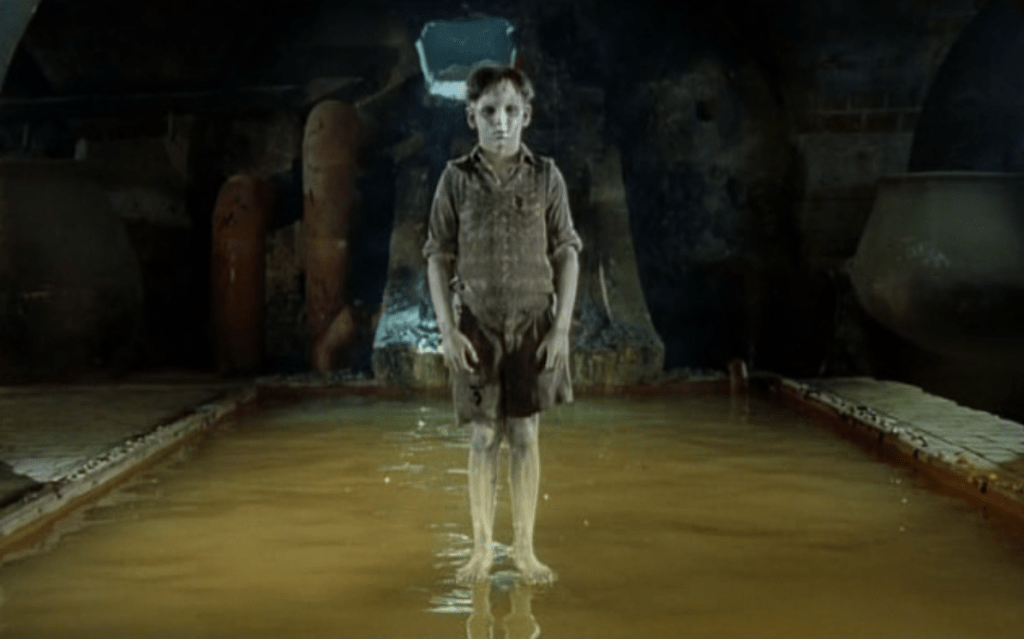
Set in the waning days of the Spanish Civil War, The Devil’s Backbone finds Gothic horror in a secluded refuge for the orphaned children of Spanish loyalists. The newest arrival, Carlos (Fernando Tielve), is assigned a bed whose last occupant, Santi (Junio Valverde), is either dead or simply missing. Carlos quickly surmises that Santi’s disappearance might be connected to “the one who sighs”: an ashen-faced, waterlogged, ghostly boy who keeps popping in and out of view. The orphanage’s supervising adults are too caught up in their own plights to notice anything unusual. Kindly older Dr. Casares (Federico Luppi) is in love with Carmen (Marisa Paredes), a widow who wears an artificial leg. Carmen, meanwhile, sneaks away for sex (Casares is impotent) with young and volatile Jacinto (Eduardo Noriega), a former resident of the orphanage now scheming to steal its hidden cache of gold. Guillermo del Toro masterfully weaves together the seemingly disparate plot threads. The picture is also a visual stunner, thanks in part to Guillermo Navarro’s cinematography, his second collaboration with del Toro after Cronos (1993). The Devil’s Backbone is equal parts fright-fest and melodrama—and like many of the director’s works, the living humans can be scarier than their otherworldly counterparts.
3. The Haunting (1963, dir. Robert Wise)
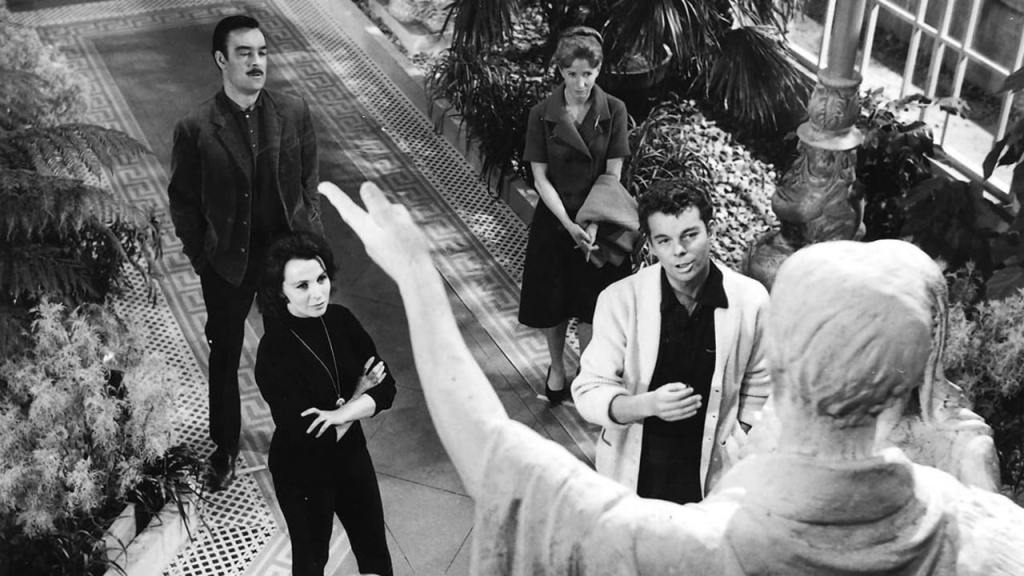
For many aficionados of classic horror, this adaptation of Shirley Jackson’s The Haunting of Hill House is the definitive haunted house picture. To be sure, it’s impossible to resist the voice-over narration of Dr. John Markway (Richard Johnson) as he introduces viewers to Hill House and its lengthy history of mysterious deaths. Because such homes invariably draw curious adults who should know better, Dr. Markway arranges a weekend at the mansion with two female psychics (Julie Harris and Claire Bloom) in hopes of recording paranormal activity. Tagging along, presumably for comic relief, is Russ Tamblyn as a girl-crazy trust fund heir. Director Robert Wise doesn’t show explicit ghosts or monsters, recognizing that what the audience imagines is often freakier than anything the camera could reveal. Instead, he ladles on the Gothic atmospherics—clanging pipes, doorknobs turning ominously—with canted angles and David Boulton’s lush black-and-white cinematography. Wise’s ultimate focus, however, is the architecture of character, not the house. Harris delivers a fascinating, fractured performance as Eleanor Lance, who sees the investigation as a last chance to break free from her controlling family. Her personal turmoil underscores that The Haunting refers to forces both external and internal.
3. Poltergeist (1982, dir. Tobe Hooper)
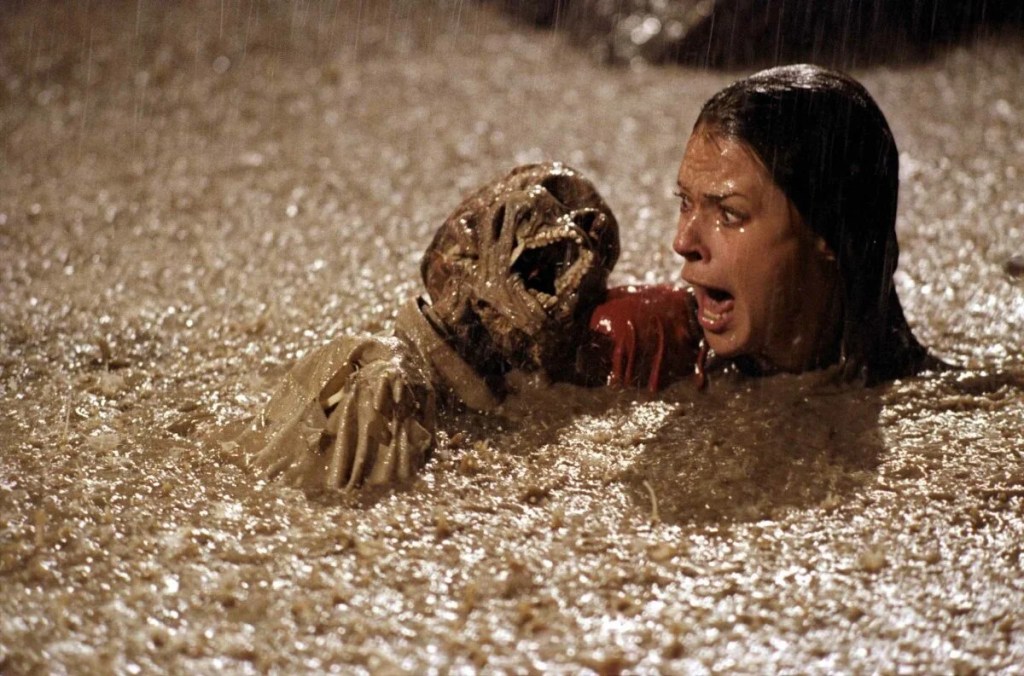
Craig T. Nelson and JoBeth Williams are Steve and Diane Freeling, a middle-class California couple residing in a newly developed subdivision when weird things start to occur. The youngest of their three kids, absurdly adorable 5-year-old Carol Anne (Heather O’Rourke), begins conversing with the white noise on the television set. “They’re here!” she tells her parents in what became one of the most versatile—and, subsequently, irritating—catchphrases of the 1980s. Ironically, shortly after “they” are there, Carol Anne isn’t. The girl is whisked away by supernatural forces to a nebulous plane of existence that necessitates a house call from a spiritual medium. The conventional wisdom is that Tobe Hooper directed Poltergeist in name only and that it bears the imprimatur of producer and cowriter Steven Spielberg far more than the man who directed The Texas Chain Saw Massacre (1974). There are certainly hints of Hooper’s influence, particularly when a paranormal researcher looking into a bathroom mirror claws his face off, but the vivid suburban setting and elaborate special effects are unequivocally Spielbergian. Hooper’s career never shook the controversy. Regardless of who did what, Poltergeist is plenty scary, and a cautionary tale for anyone who wants to build a house on a 19th-century cemetery.
1. The Shining (1980, dir. Stanley Kubrick)
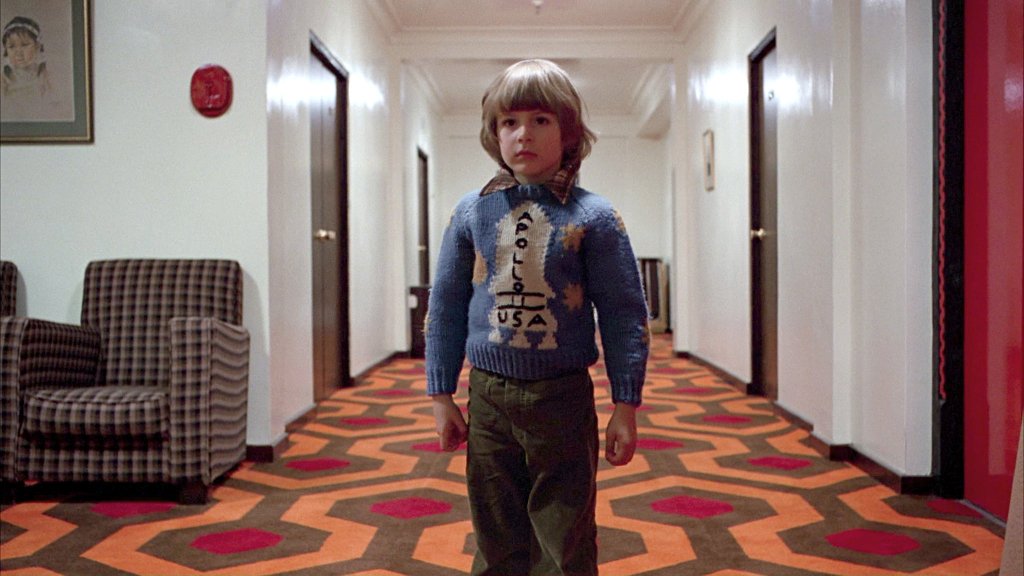
Stephen King made no secret of his disdain for Stanley Kubrick’s loose adaptation of the author’s acclaimed 1977 novel. That’s King’s prerogative, of course, but The Shining reigns as one of our great horror movies. Film scholar David Thomson credits it as the director’s sole (!) masterpiece, “serenely unanchored in any fixed genre, effortlessly invented, inspired alike by the hollow brain of a house and the naughty little germ of a man, Jack.” The character in question, Jack Torrance (Jack Nicholson), is a recovering alcoholic hired to serve as caretaker of the Overlook, a resort hotel, during the winter. Jack, his wife Wendy (Shelley Duvall), and 5-year-old son, Danny (Danny Lloyd), move into the vast, empty, and reportedly haunted space. Nicholson is a symphony of arched brows, maniacal laughter, and scenery-chewing worthy of splintered gums. Duvall, meanwhile, conveys raw, exhausted terror, a performance forged during a notoriously demanding shoot in which Kubrick repeatedly pushed her to emotional extremes. Is Jack going mad from isolation and forced sobriety? Is he being seduced by the ghosts of the Overlook’s checkered past? The Shining’s hair-raising imagery lingers with you: hypnotic Steadicam shots of Danny riding his Big Wheel through endless hotel corridors, a tsunami of blood erupting from elevator doors, a single typed sentence repeated on hundreds of pages in a manuscript. That doesn’t even factor in the creepiest twin girls you would never want to come across. The Overlook doesn’t create Jack’s demons so much as liberate them, which might just be the scariest haunted house idea of all.
(See more in The 10 best bathroom scenes in film.)
Honorable mention: Beetlejuice (1988, dir. Tim Burton), Burnt Offerings (1976, dir. Dan Curtis), Dark Water (2002, dir. Hideo Nakata), House (1977, dir. Nobuhiko Obayashi), House of Usher (1960, dir. Roger Corman), The Legend of Hell House (1973, dir. John Hough), Monster House (2006, dir. Gil Kenan), The Orphanage (2007, dir. J.A. Bayona), Rebecca (1940, dir. Alfred Hitchcock), Under the Shadow (2016, dir. Babak Anvari)


2 responses to “The 10 best haunted-house films”
[…] Jack Torrance (Jack Nicholson) makes several stops on his way to madness. Stanley Kubrick’s adaptation of the Stephen King novel conjures some indelibly haunting scenes that reflect Jack’s inability––and maybe that of the audience, too––to distinguish reality from illusion in the Overlook Hotel. After son Danny (Danny Lloyd) says he was attacked by someone in Room 237, Jack inspects it for himself. Seeing a light on in the bathroom, Jack goes in and is pleasantly surprised to discover a beautiful, nude woman in the tub. Slowly, the woman rises and approaches seductively. As they embrace, the young woman is revealed to be a cackling old crone with rotting flesh and evidently an odd sense of humor. In Kubrick’s symmetrical framing and merciless use of mirrors, Jack is not just embracing a phantom—he is embracing his own decay. It is one of the creepiest scenes in The Shining, though perhaps unfair to the number 237. King’s novel designates the spooky site as Room 217.(See more in The 10 best haunted-house movies.) […]
LikeLike
[…] One shudders to consider what notions were rolling around in the noggin of young Chigumi Obayashi, who suggested to her dad, Japanese filmmaker Nobuhiko Obayashi, that he make a movie about a house that eats unmarried girls. Fortunately, the elder Obayashi and screenwriter Chiho Katsura took her idea, and others, for this batshit-crazy motion picture. Honestly, I can’t think of a more apt description for House without making up words. Fortunately for that ravenous mansion, a group of giggly teenage schoolgirls—sporting nicknames like Fantasy, Kung Fu and Mac, no less—visit the dear old auntie of their pal, Gorgeous (Kimiko Ikegami). That vacation quickly erupts into an orgiastic symphony of decapitated heads flying around, disembodied fingers playing a piano and, naturally, rivers of blood. But House is more deliriously comic than scary. Its deliberately artificial visual effects, cartoonish editing, and painted backdrops deliver Grand Guignol horrors with the lipsmacking sweetness of a cotton candy binge, its dream-logic storytelling feeling as though a child is recounting a nightmare moments after waking up. As Mac, the girl who loves to eat, says when she is a disembodied head biting into the butt of a friend, “Tasty!”(See more in The 10 best haunted-house films.) […]
LikeLike