Who among us hasn’t wondered what, if anything, awaits us after we shuffle off this mortal coil? In cinema’s earliest days, pioneering French filmmaker Georges Méliès got there fast, depicting a literal “tour of hell” with The Damnation of Faust in 1898 and its 1903 remake Faust aux enfers.

By the middle of the 20th century, American films cynically imagined a heaven mired in paperwork and prone to the occasional clerical mixup—a conceit these movies return to again and again. Sometimes theological, more often satirical, pictures that contemplate the afterlife might not answer our questions, but they can sure be entertaining.
10. Wristcutters: A Love Story (2006, dir. Goran Dukic)
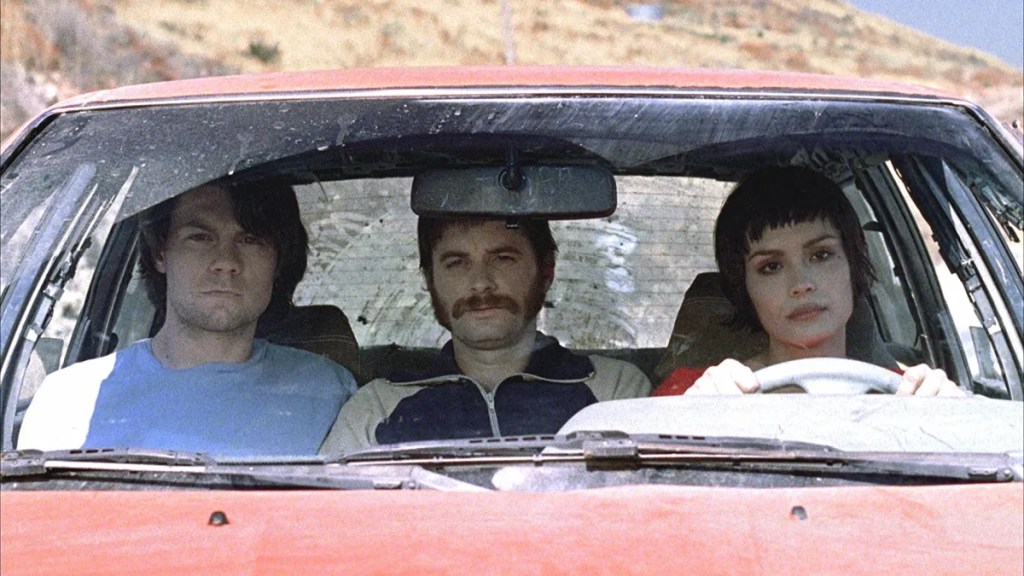
Few moviemakers, particularly those out to make a love story, are so ballsy, or possibly recklessly tone-deaf, as to take on the topic of suicide. But Goran Dukić goes there in Wristcutters: A Love Story. Specifically, he imagines a drab purgatory where people who die by suicide wind up after death; one character observes that it feels a lot like the land of the living, only a little shittier. Patrick Fugit portrays a young man who committed suicide in the wake of a breakup. In the afterlife, he finds a new love interest, played by Shannyn Sossamon, who insists her death was accidental and that she shouldn’t even be there; she wants to speak to someone in charge. The premise may strike some viewers as glib, but Dukić’s gentle, deadpan touch goes a long way toward infusing this low-budget indie with charm.
9. The Reincarnation of Peter Proud (1975, dir. J. Lee Thompson)
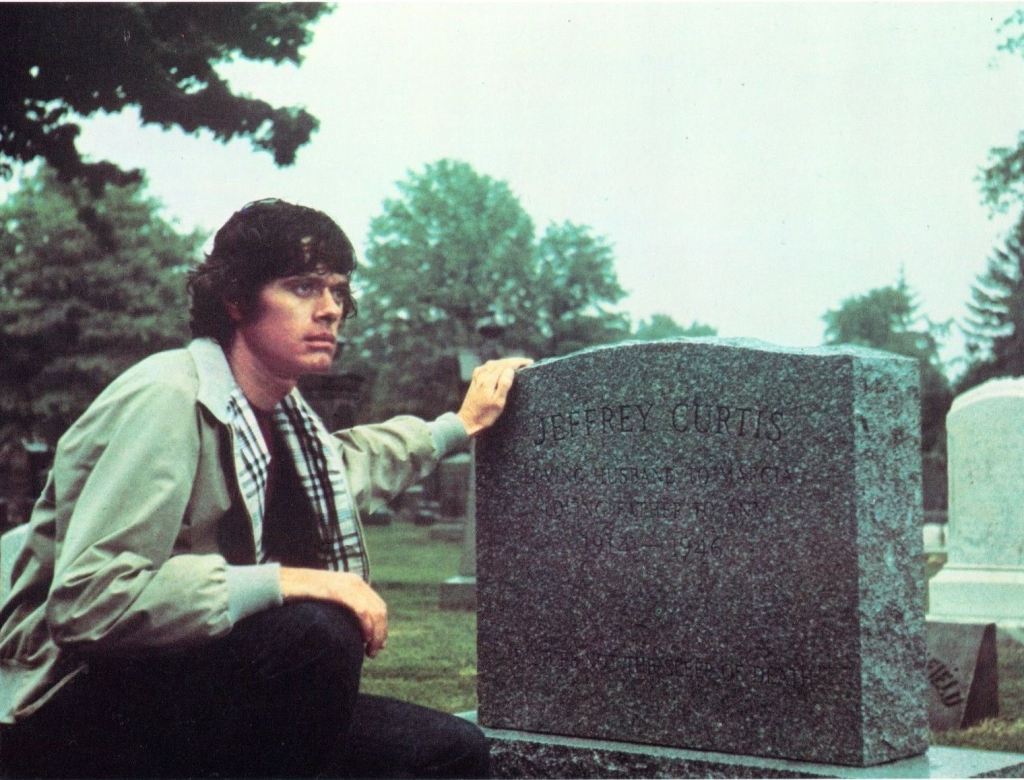
Having grown up in the 1970s, I can confirm that it was a pretty wacky decade. My mother embraced the weirdness of the time, dabbling in everything from astrology to witchcraft. From that New Age craze emerged The Reincarnation of Peter Proud. The strange psychological horror flick stars Michael Sarrazin as the titular college professor tortured by dreams of a past life. Based on a 1973 novel by Max Ehrlich, the film goes into some decidedly transgressive territory. Peter learns that a previous incarnation was murdered by an enraged wife (Margot Kidder, having fun with a nutso role)—and tracks down her beautiful daughter (Jennifer O’Neill), whom he promptly falls for. Does it count as incest if it’s Peter’s daughter from a past life? J. Lee Thompson leans into the lurid material, but the result is an entertaining (re)incarnation of a weird time in American popular culture.
8. Beetlejuice (1988, dir. Tim Burton)
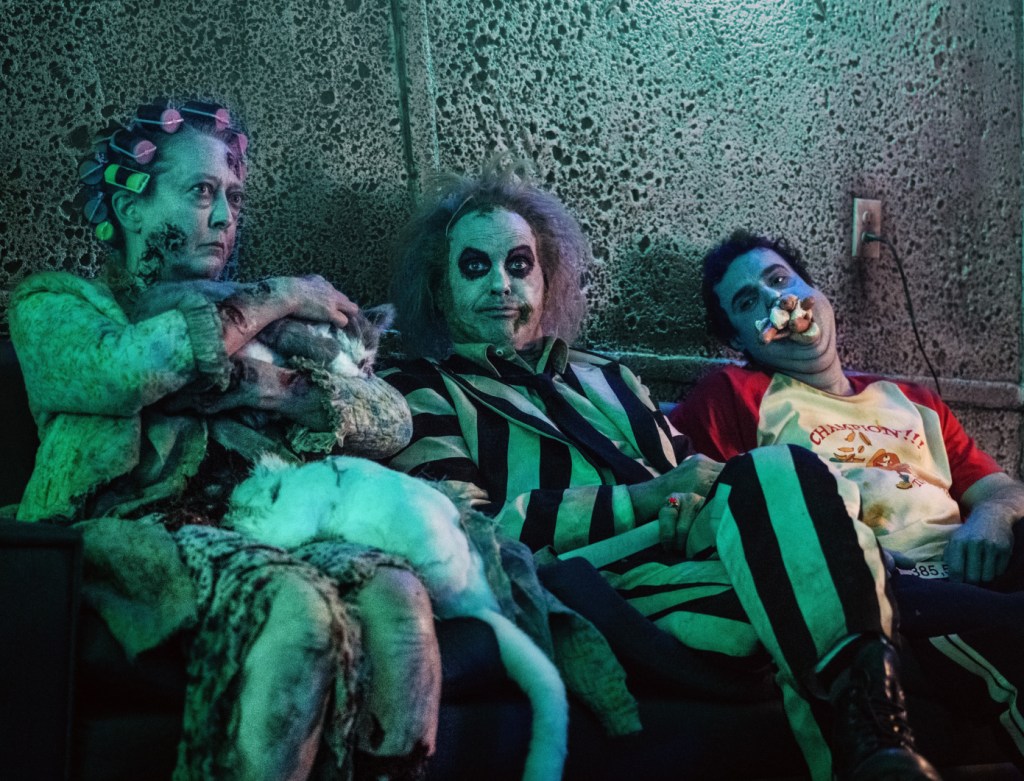
Tim Burton has a special fondness for creatures that reside somewhere between cartoon and the darker places of his imagination, a limbo that suits Beetlejuice perfectly. Recently deceased suburbanites Adam and Barbara Maitland (Alec Baldwin and Geena Davis), novices to the whole haunting business, are having no luck frightening off the ghoulishly chic Deetz family currently inhabiting their former home. The ghost couple seeks help in the afterlife, which Burton runs like the DMV redesigned by comic monsters—case files, waiting rooms, and Sylvia Sidney as their world-weary caseworker, Juno. When her rulebook fails to do the trick, the Maitlands make the mistake of turning to Michael Keaton’s Betelgeuse, a foul-mouthed, lecherous demon who solves one problem by creating worse ones. Burton makes the great beyond look macabre and oddly fun.
7. Soul (2020, dir. Pete Docter and Kemp Powers)
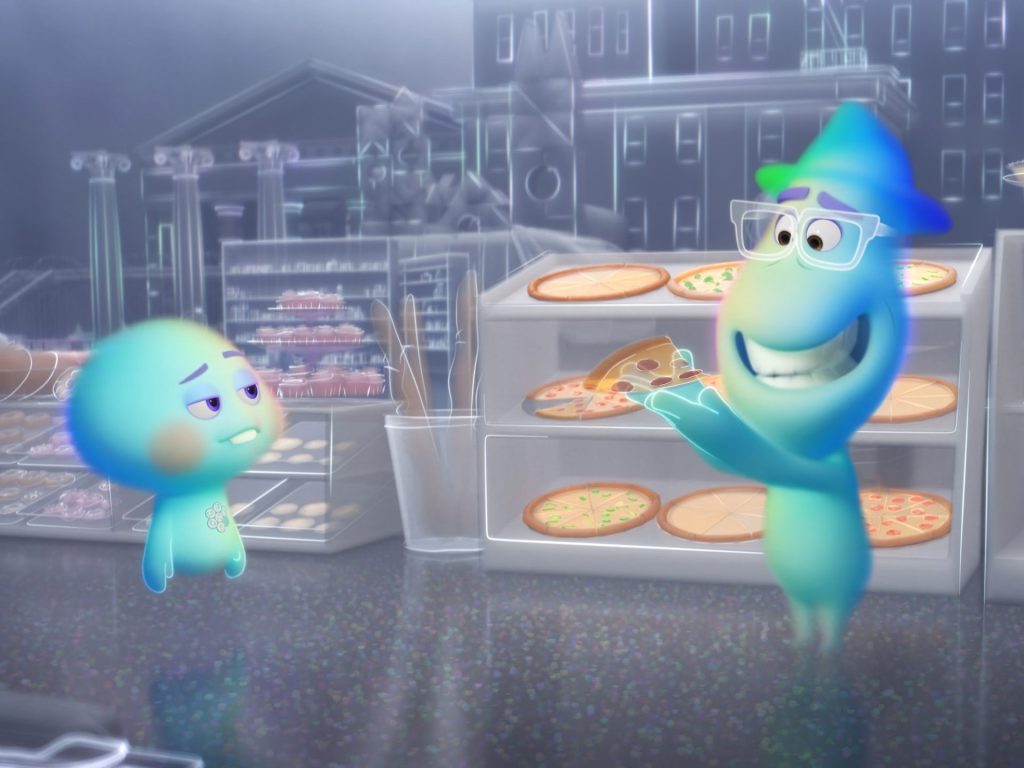
If the animated fantasy Soul can be considered kid-friendly, let’s stipulate that its prospective kid viewers should be old souls (no pun intended, but we’ll take it, anyway). This Disney-Pixar production is meditative and melancholy and quietly radical for a mainstream family picture. Pete Docter and Kemp Powers flirt with the notion that souls exist before earthly life. Joe Gardner (voiced by Jamie Foxx) is a New York high school music teacher whose true passion is playing jazz. Just as he is on the verge of a long-awaited big break, he dies in a freak manhole accident. Soul paints the afterlife as mystical but rigidly structured—and Joe wants none of it. He meets up with “Number 22,” a childlike spirit who is reluctant to follow their assignment to begin life on Earth. With echoes of Heaven Can Wait (see #5) and It’s a Wonderful Life, Soul contends it takes death to appreciate life.
6. The Sixth Sense (1999, dir. M. Night Shyamalan)
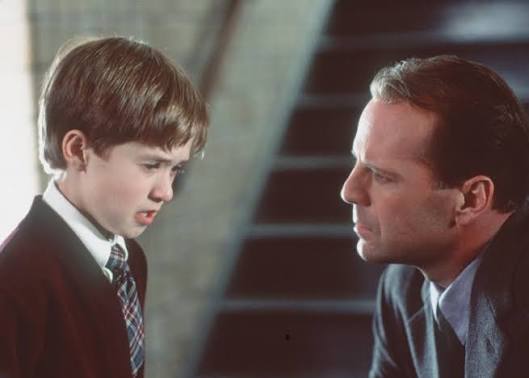
This paranormal thriller from writer-director M. Night Shyamalan makes clear why people facing death should get their affairs in order. Those who die with unfinished business evidently wind up condemned to haunt their old stomping grounds. In The Sixth Sense, Bruce Willis plays child psychologist Dr. Malcolm Crowe, whose young patient Cole Sear (Haley Joel Osment) is unfortunate enough to “see dead people.” Everywhere. And since Cole and his single mom (Toni Collette) live in Philadelphia, there are hundreds of years’ worth of ghosts to make the boy’s daily life an ordeal. Osment, 10 years old at the time of shooting, is extraordinary, as are Willis, Collette, and Olivia Williams as Malcolm’s neglected wife. Just don’t dwell on the plot points and instead enjoy the shivery scares to be had, not to mention one of the most famous twist endings in movie history. Unless you dislike movies (and if you do, you probably shouldn’t be reading this), you likely know what it is.
5. Heaven Can Wait (1978, dir. Warren Beatty and Buck Henry)
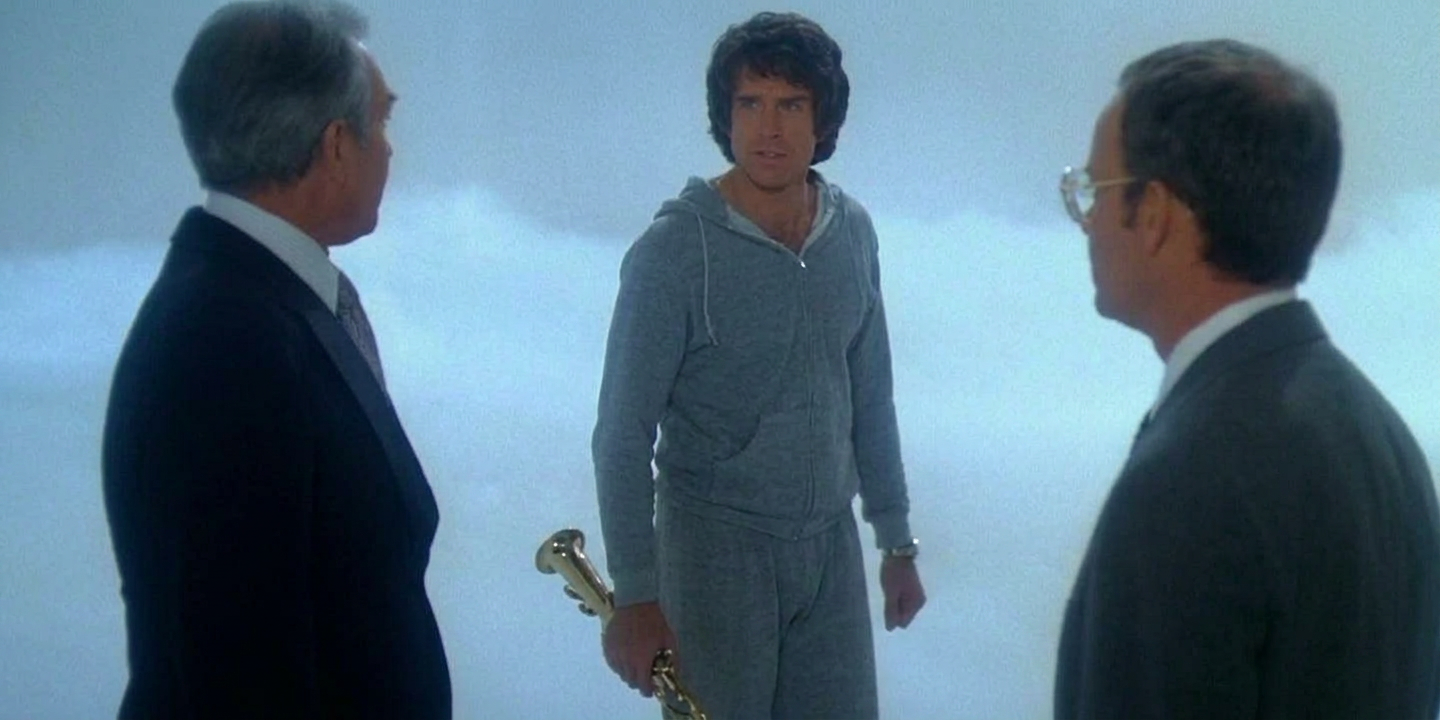
Warren Beatty’s reworking of a Harry Segall play, first adapted for the screen in 1941’s Here Comes Mr. Jordan, is sort of flawless. Beatty produced, co-directed and co-wrote (both with Buck Henry) and stars in this romcom that imagines heaven as a well-meaning, if fallible, bureaucracy. A quick-on-the-draw angel (Henry) prematurely snatches up Joe Pendleton (Beatty), a backup quarterback for the Los Angeles Rams on the verge of being made starter, after a minor bicycle accident. Joe, understandably more than peeved about the mistake, complains to the angel’s supervisor, Mr. Jordan (James Mason). But Joe’s body has already been cremated, so Jordan arranges for Joe to inhabit another earthly body until there’s a better solution. Trouble is, his host body is a billionaire whose murder is being plotted by his wife (Dyan Cannon) and her lover (Charles Grodin). The main players are great, as are Jack Warden as the Rams’ coach and Julie Christie as the love interest.
4. Defending Your Life (1991, dir. Albert Brooks)
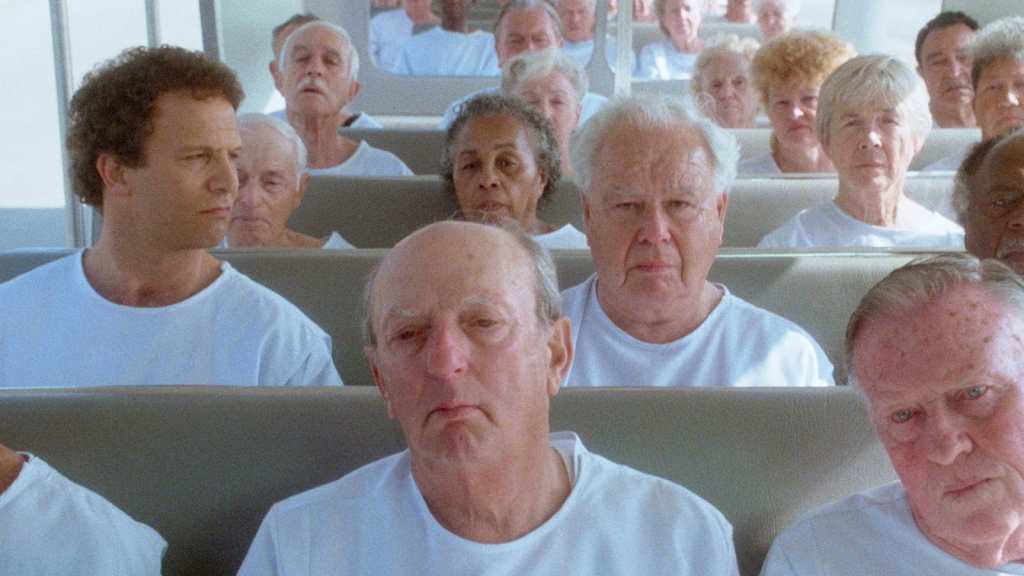
Going on trial to determine one’s eternal afterlife doesn’t sound like much fun. In Defending Your Life, Albert Brooks manages to give the concept a light touch. Brooks plays Daniel Miller, a successful advertising executive who treats himself to a BMW convertible but dies in a head-on collision shortly after leaving the dealership lot. He lands in Judgment City, a sort of heavenly, albeit bureaucratized, weigh station. All newly deceased are put on trial to determine if they sufficiently faced their earthly fears, thereby earning the right to continue on the path of eternal improvement. Fear, Daniel learns, is a big problem for most “Little Brains”—the demeaning term used by celestial types for humans and their limited brain capacity. “Everybody on Earth deals with fear,” Daniel is assured by his Judgment City lawyer (Rip Torn). “It’s what Little Brains do.” Daniel slogs through his trial—the guy was far from fearless—while romancing another arrival, Julia (Meryl Streep), who is breezing through hers. Brooks’ most ambitious movie is smart, incisive, and most importantly, funny. There is something comforting in the notion that fear is humanity’s biggest ill. The afterlife seems like a nice retirement community, so we have that to look forward to.
3. After Life (1998, dir. Hirokazu Kore-eda)
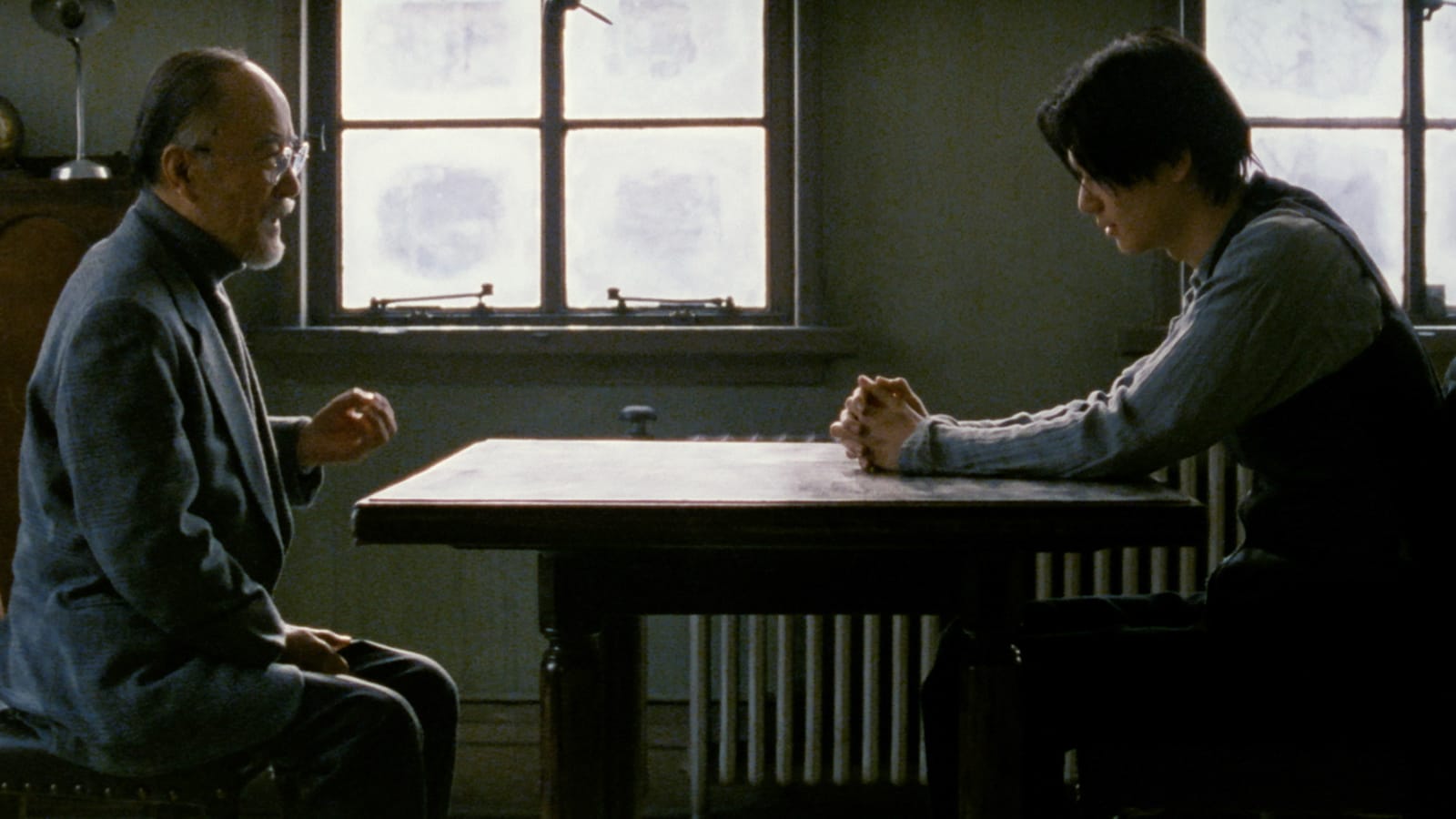
A nondescript, somewhat shabby building serves as a stopover for the newly deceased en route to eternity in Hirokazu Kore-eda’s After Life. Its guests are there for a week, but have three days to select a single memory from their life that they will experience for eternity. Guiding them along in making that decision are caseworkers—Kore-eda focuses on two in particular—who then recreate that memory through short films made with modest resources. A sex worker recalls a client who treated her with special kindness; a girl who died far too young muses on how much she loved Splash Mountain at Disney World (evidently a favorite among teen girls, she is told); in a particularly nettlesome case, an elderly man cannot recall any memory of his life he’d want to keep. Hollywood would have milked the concept for maximum feels, but Kore-eda, one of Japanese cinema’s great humanists, has the sensibility of a documentarian. In fact, After Life originated as a would-be documentary, where interviewees offered what their selected memory would be; many of those interviews are interspersed here with those of professional actors. The film’s elegant humanity creeps up on you.
(See also The 10 best films about memory.)
2. A Matter of Life and Death (1946, dir. Michael Powell and Emeric Pressburger)
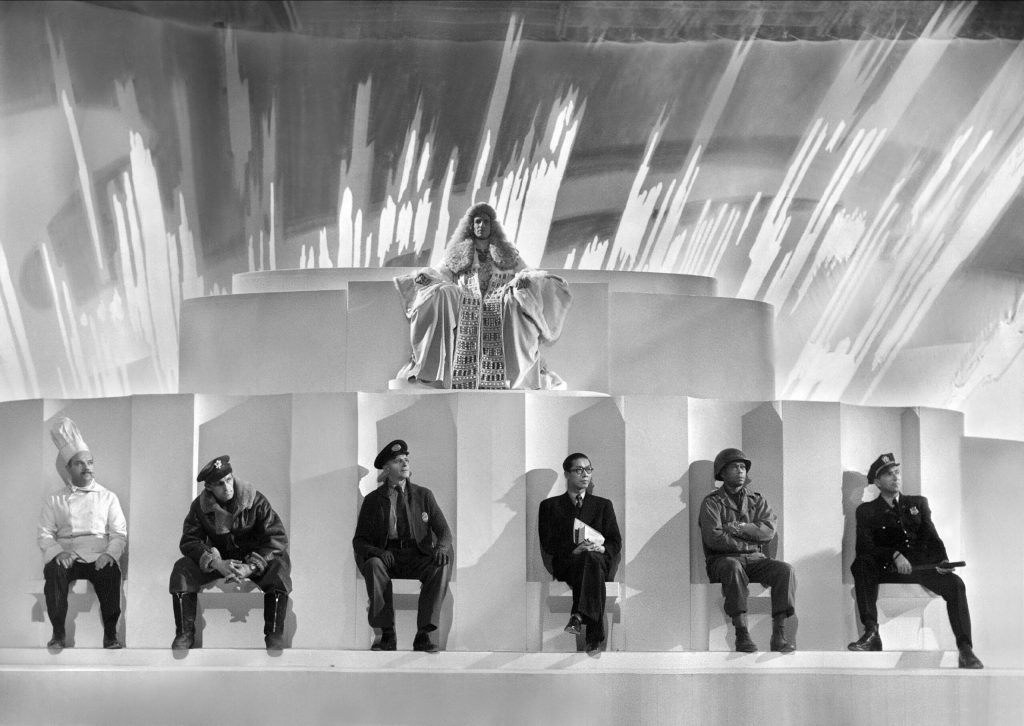
Set in the waning days of World War II, A Matter of Life and Death (alternately titled Stairway to Heaven) stars David Niven as British Royal Air Force pilot Peter David Carter on an impossible bombing mission. He tells as much to an American radio operator, June (Kim Hunter), with whom he makes radio contact just before plummeting to what he believes will be certain death. Instead, Peter lands in a kind of celestial limbo—or is it?—in which a court of law will determine whether he lives or dies. The trial doubles as a bit of postwar diplomacy, with Raymond Massey as an aggrieved American prosecutor still fuming over having been slain in the Revolutionary War, while Roger Livesey rounds out the earthbound cast as the village doctor fighting for Peter’s life. Considering the dubious reputation of attorneys on earth, it’s a little surprising to find so many lawyers up in heaven (see #4), but I digress. “The Archers,” otherwise known as the writing and directing team of Michael Powell and Emeric Pressburger, bring the film their customary sophistication. The picture is lensed by the great Jack Cardiff, who shoots the earthbound scenes in sumptuous color and the heavenly ones in stately black and white.
1. Orpheus (1950, dir. Jean Cocteau)
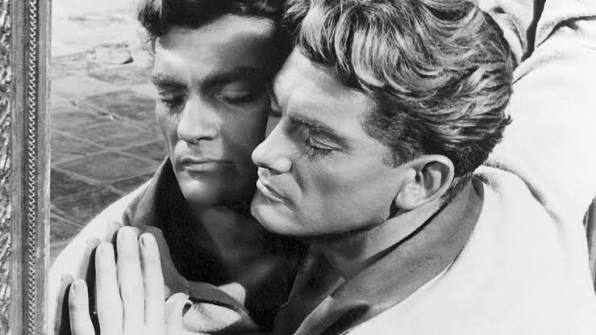
Jean Cocteau reimagines the Greek myth of Orpheus and Eurydice amid the Paris literary scene of the 1950s in this strange but whimsical fantasy. The second in his so-called Orpheus trilogy (between 1930’s Blood of a Poet and 1960’s Testament of Orpheus), Orpheus stars Jean Marais as the titular character, France’s reigning superstar poet who gets entangled with Death, depicted in the lithe form of a princess (Maria Casares). “Perhaps you expected to see me with a scythe and a shroud?” she says teasingly. “If I appeared to the living the way they portray me, they would recognize me and that wouldn’t make our work very easy.” Orpheus finds himself drawn to her, while the princess’ chauffeur (François Périer) falls for Orpheus’ wife Eurydice (Marie Déa). The poet learns that mirrors are portals to “the Zone,” a liminal wasteland between the living and the underworld, affirming the picture’s recurring conceit that you need only look in a mirror long enough to see yourself getting closer to death. Cocteau employs only the broad strokes of the Orpheus myth for what ultimately becomes a wry commentary on a poet’s romanticized attraction to death. While some of the photographic trickery from cinematographer Nicolas Hayer and sundry special effects are primitive by today’s standards, their simplicity fits the charming, low-key magic. Orpheus seamlessly navigates between the fanciful and the naturalistic, mirroring Cocteau’s stated belief that “the closer you get to a mystery, the more important it is to be realistic.”
Honorable mention: Coco (2017, dir. Adrian Molina and Lee Unkrich), Ghost (1990, dir. Jerry Zucker), The Ghost and Mrs. Muir (1947, dir. Joseph L. Mankiewicz), A Ghost Story (2017, dir. David Lowery), Here Comes Mr. Jordan (1941, dir. Alexander Hall), The Lovely Bones (2009, dir. Peter Jackson), ParaNorman (2012, dir. Sam Fell and Chris Butler), Truly Madly Deeply (1990, dir. Anthony Minghella), Uncle Boonmee Who Can Recall His Past Lives (2010, dir. Apichatpong Weerasethakul), What Dreams May Come (1998, dir. Vincent Ward)


One response to “The 10 best films that contemplate an afterlife”
[…] This animated gem from Pixar is nominally about Mexico’s Day of the Dead, but its true subject is immortality—or, to be precise, the role of remembrance in keeping departed loved ones alive, of a sort. Twelve-year-old Miguel Rivera (voiced by Anthony Gonzalez) aspires to be a musician but has the misfortune of being in a family that has long banned music. His great-great-grandfather evidently abandoned his wife and child to pursue a career as a guitar player. Through magical circumstances, Miguel winds up in the Land of the Dead, where he learns some revelations about his family tree. Among the movie’s more interesting notions is how people’s existence in the afterlife is dependent on the memory of the living whom they have left behind. Once someone is no longer remembered by a living soul, the deceased vanishes into nothing. If that sounds a bit heavy for a kid-friendly flick, fear not. Coco is so inventive and engaging, you might just forget that it’s about dead people. (See more in The 10 best films that contemplate an afterlife.) […]
LikeLike