Cole Porter called friendship the perfect blendship, but the movies haven’t painted it as quite so rosy, at least not in the decades since Bob Hope and Bing Crosby charmed 1940s-era audiences with their popular “Road to …” pictures. Films about male friendships often feel elegiac, as if male bonding cannot possibly last. When they’re not seeming tragic, male buddy flicks tend to demonstrate camaraderie through emotional repression or chums hurling insults at each other.
10. 48 Hrs.(1982, dir. Walter Hill)
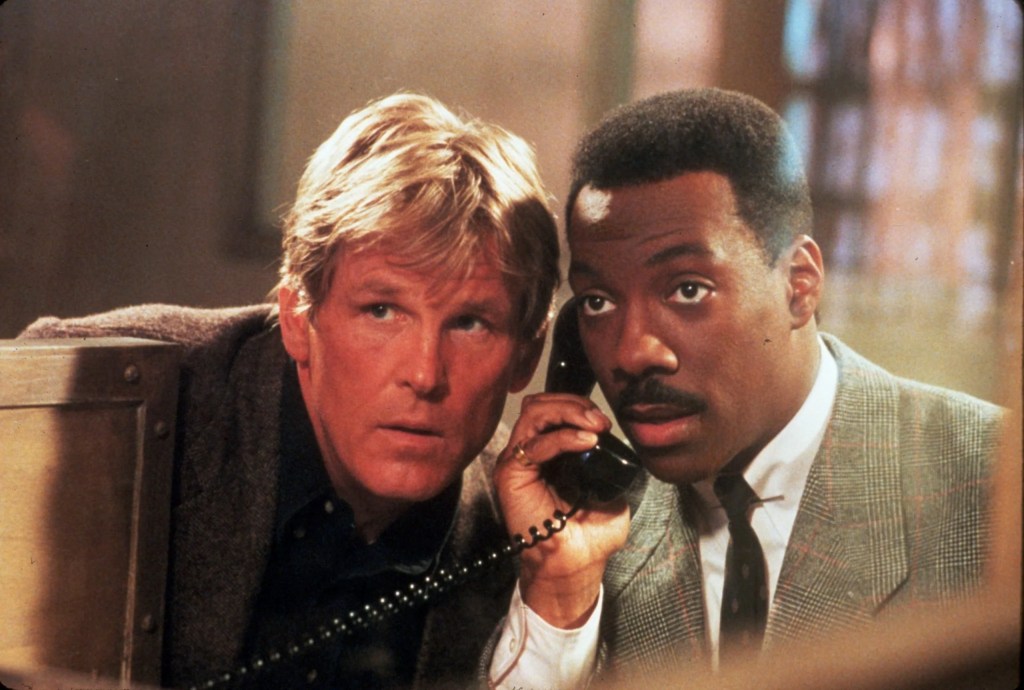
48 Hrs. catapulted Eddie Murphy from Saturday Night Live breakout performer to movie star, but don’t dismiss the reliable work here of ol’ gravel-throated Nick Nolte. Both are in fine form in what became the blueprint for nearly every buddy-cop movie—Lethal Weapon (1987), Rush Hour (1998), you name it—that followed. Nolte is hard-nosed San Francisco police Detective Jack Cates, who secures a 48-hour furlough for prisoner Reggie Hammond (Murphy) to help track down one of Reggie’s old criminal crew. Jack, openly racist toward Reggie, develops the requisite grudging respect for the man’s abilities. Walter Hill stages the gunplay and fistfights with his customary panache. Reggie may technically be in Jack’s custody, but Murphy steadily reverses the balance of power, exposing the cop as the more emotionally undisciplined of the two.
9. The Odd Couple (1968, dir. Gene Saks)
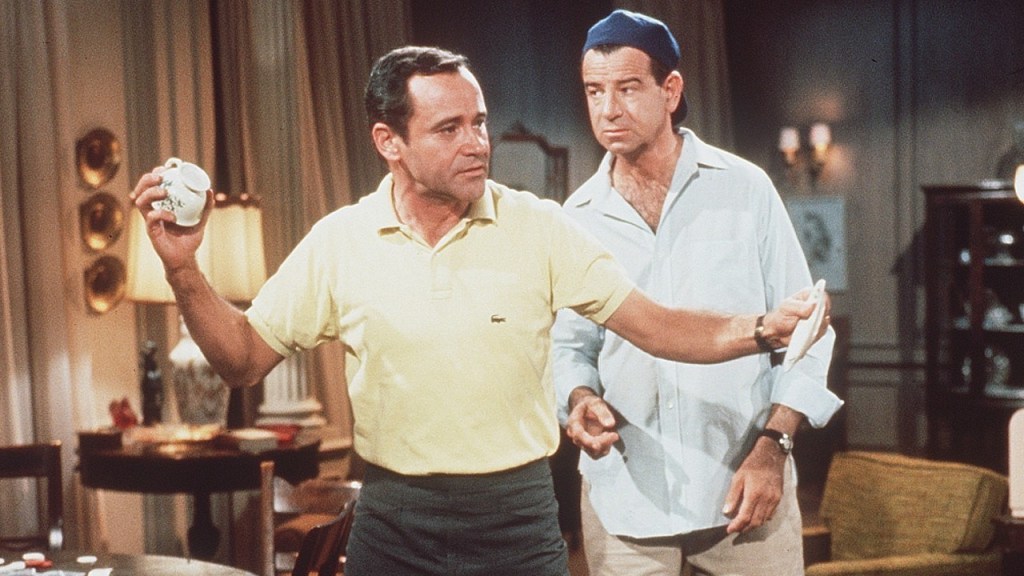
This adaptation of Neil Simon’s Broadway smash comedy was successful enough to spawn one of the better television sitcoms of the 1970s, with Jack Klugman and Tony Randall taking on the titular roles. For the film version, however, Walter Matthau reprises his stage role as slovenly newspaper sportswriter Oscar Madison, with Jack Lemmon his perfect foil as the fastidious Felix Ungar. The names themselves became shorthand for opposing personality types. I have to hand it to any mainstream comedy of the period with the cojones to begin with an attempted suicide. In this case, the would-be suicide is Felix, despondent after his wife files for divorce. Oscar, one of Felix’s weekly poker companions, takes in his friend, not appreciating how supremely mismatched they are as roommates. Herb Edelman and John Fiedler contribute sharp character turns as fellow cardplayers. The premise is hardly novel, but Matthau, Lemmon, and Simon’s sharply observed script elevate incompatibility into comic art.
8. Cooley High (1975, dir. Michael Schultz)
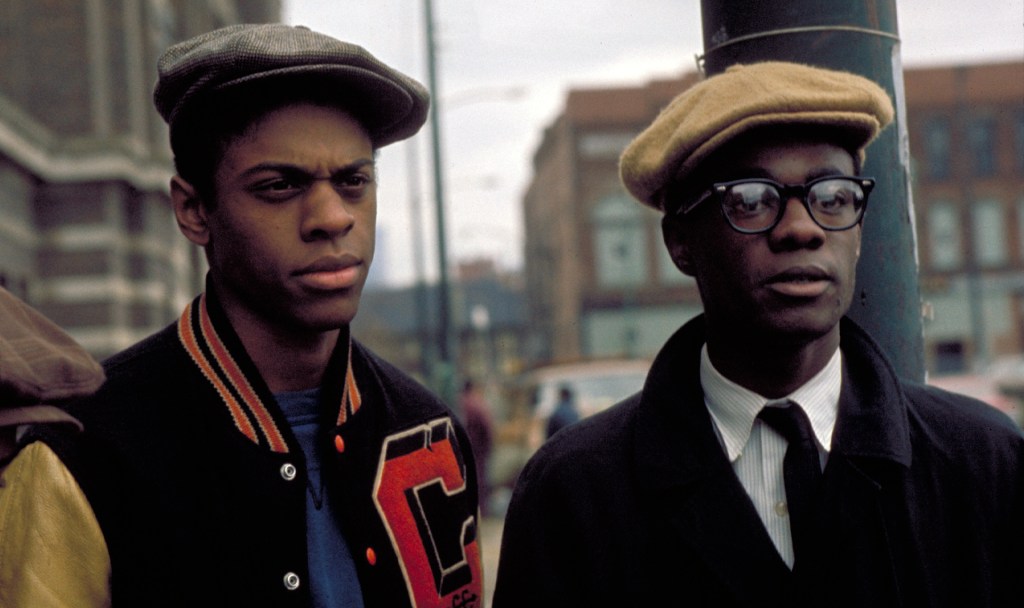
Set in Chicago in 1964, Cooley High follows a group of black teenagers approaching the end of high school. Michael Schultz and screenwriter Eric Monte dabble in the high jinks typical of teen exploitation flicks. A kid gets some gnarly-smelling gorilla poop flung onto his shirt. There are crap games in a diner, the inadvertent commandeering of a stolen car, and the tireless quest to get laid. Beneath the familiar tropes is the friendship between Leroy “Preach” Jackson (Glynn Turman) and Richard “Cochise” Morris (Lawrence Hilton-Jacobs). In granting black teenagers the freedom to be foolish, romantic, and frightened, Cooley High unassumingly rejected the era’s narrower screen images of urban black life. Preach is an aspiring writer who dreams of going to Hollywood, Cochise the high school basketball star destined for a college scholarship. Their relationship rings with authenticity. The friends’ ambitions point in different directions, but each boy’s imagined future depends partly on believing the other will escape the limits imposed on them.
(See more in The 15 best coming-of-age movies and The 20 best hangout movies.)
7. Of Mice and Men (1939, dir. Lewis Milestone)
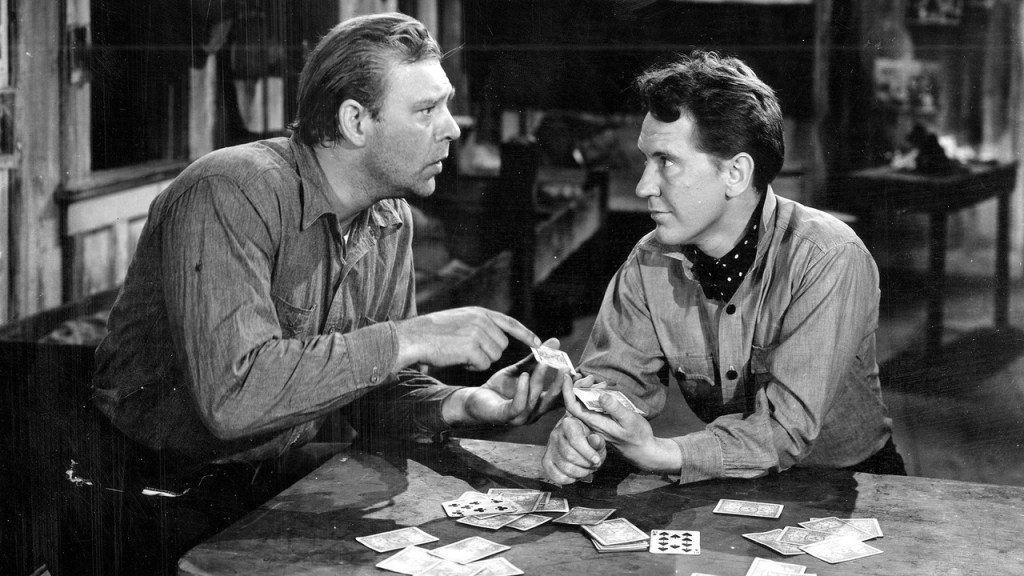
Unlikely partners are a staple of buddy comedies, but John Steinbeck understood that pathos can emerge from the same setup. Lewis Milestone’s handsomely crafted adaptation of Steinbeck’s 1937 novella stars Burgess Meredith and Lon Chaney Jr. as traveling ranch hands George Milton and Lennie Small. George is wiry and quick-thinking; Lennie the good-hearted but simple hulk who doesn’t know his own strength. The two have their share of troubles, but things get particularly dire when they end up on a barley ranch in the San Joaquin Valley, and the ranch owner’s lonely daughter-in-law (Betty Field) takes an interest in Lennie. George’s authority over his friend can appear paternalistic, even cruel, but each needs the other to survive. Lennie needs protection, and George needs their shared dream to make life bearable. Aaron Copland’s mournful score, one of his first for Hollywood, earned an Oscar nomination. Chaney’s performance can be overly broad, and you sort of wish he’d shut up about those damned rabbits, but Of Mice and Men’s tragic entanglement of loyalty, mercy, and sacrifice delivers an emotional gut punch.
6. Diner (1982, dir. Barry Levinson)

Barry Levinson’s directorial debut mined his memories of growing up in 1950s Baltimore. Diner makes for a delightful hangout flick and effectively kicks off what became known as the filmmaker’s “Baltimore” trilogy, continued in Tin Men (1987) and Avalon (1990). Episodic rather than heavily plotted, the picture presents a tightly knit group of young friends––played by Steve Guttenberg, Mickey Rourke, Kevin Bacon, Daniel Stern, Paul Reiser, and Tim Daly—reuniting for a wedding on New Year’s Eve. Guttenberg is the groom, a rabid Baltimore Colts fan whose fiancée must pass a football test before they tie the knot; Bacon the troubled genius; Rourke the smooth operator; Stern the obsessive discophile whose wife (Ellen Barkin) pays the price for it; Reiser the talker; and Daly—well, he brings the number of friends to six. Their nonstop banter is partly camouflage: they can discuss roast-beef sandwiches or records for hours because the other stuff of life—marriage, responsibility, emotional honesty—is scary. The ensemble volleys Levinson’s spry dialogue with the ease of friends who have been interrupting one another for years.
(See more in The 20 best hangout movies.)
5. Butch Cassidy and the Sundance Kid (1969, dir. George Roy Hill)

The real Butch Cassidy and Sundance Kid probably inspired more fear than swooning, but Hollywood transformed them into Paul Newman and Robert Redford—about as flattering a historical upgrade as outlaws could hope for. Butch Cassidy and the Sundance Kid showcases the distinctive magic that comes from being Newman and Redford. The movie is laid-back, funny, and wistfully elegiac—traits not typically associated with westerns. Nevertheless, the camaraderie of the lovable rogues (they even share a lover in the comely form of Katharine Ross) is squarely in keeping with the genre. William Goldman’s Oscar-winning script makes their verbal rhythm as entertaining as their exploits: Butch provides the schemes, Sundance the skepticism—a tension played brilliantly in an immortal scene where the pair must literally jump off a cliff into rapids far below. The encroaching modern world may be closing in, but Newman and Redford make companionship look like the last frontier still worth defending.
(See more in The 20 best needle drops in film.)
4. Midnight Run (1988, dir. Martin Brest)
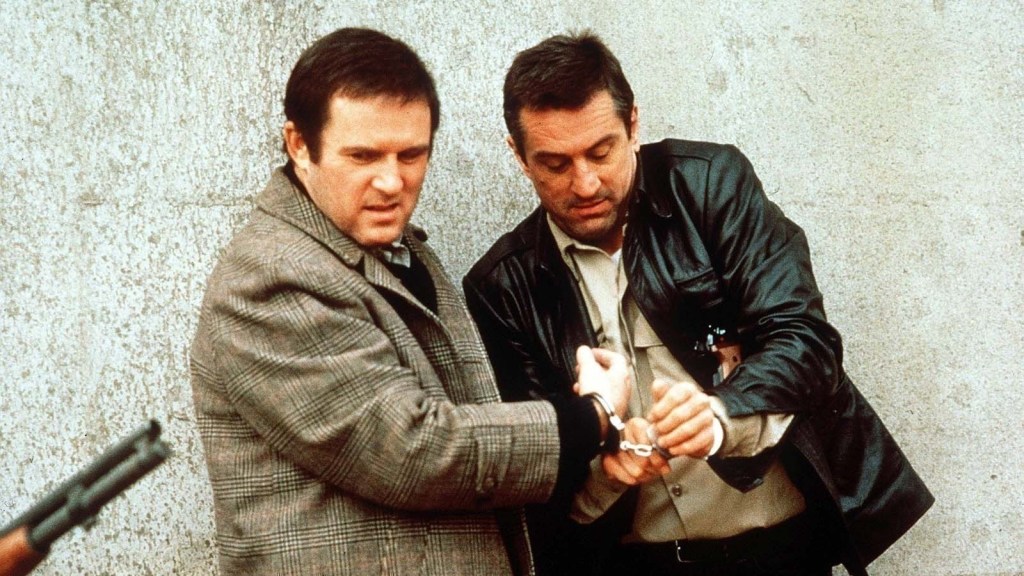
Robert De Niro and Charles Grodin turn their sharply contrasting screen personas into the engine of this classic road comedy. De Niro is bounty hunter Jack Walsh, hired to track down and deliver to authorities a Mafia accountant, Jonathan “the Duke” Mardukas (Grodin), who is on the run after donating to charity $15 million he embezzled from the mob. Jack is a no-bullshit ex-cop, the Duke a surprisingly gentle soul. Jack captures him in New York, but getting the Duke back to Los Angeles means dodging gangsters, the FBI, and a rival bounty hunter (John Ashton). By all accounts, Midnight Run was a difficult production. Under the eye of perfectionist director Martin Brest, the shoot dragged on for months. The extended period gave De Niro and Grodin time to develop real chemistry. “I got two words for you: shut the fuck up,” Jack tells the Duke early on—a line that could be the picture’s thesis, right up until it isn’t. Grodin wisely never tries to match De Niro’s intensity; he defeats it with patience, curiosity, and the calm certainty that Jack is not nearly as hard as he claims to be.
(See more in The 10 best road-trip movies.)
3. Stand by Me (1986, dir. Rob Reiner)
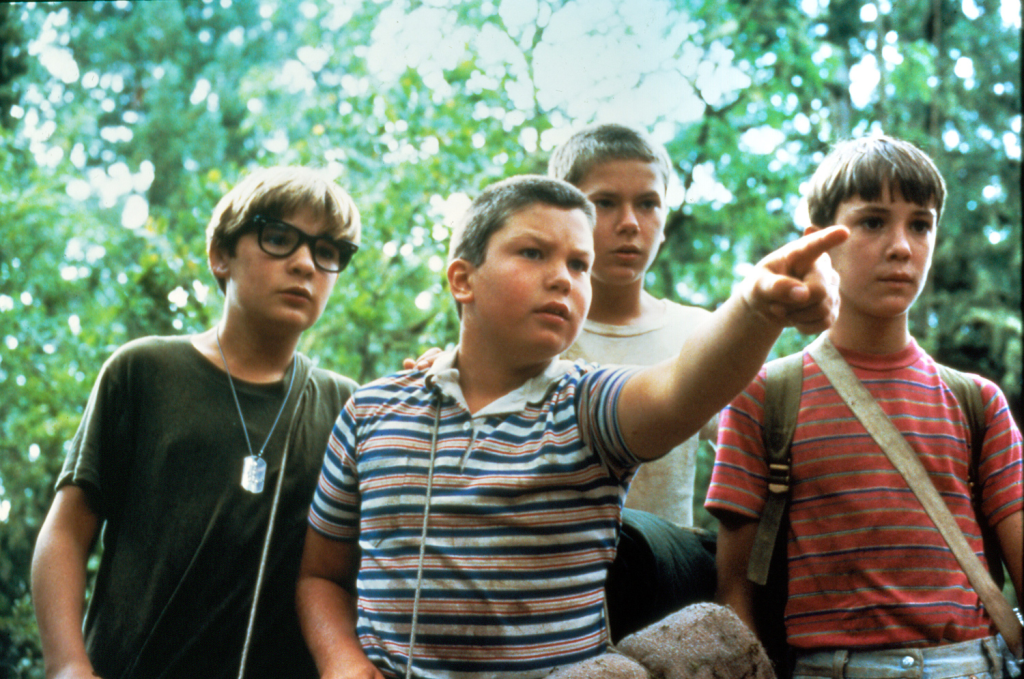
I’m not spoiling anything by referencing the final scene of Stand by Me, but it’s worth quoting from it: “I never had any friends later on like the ones I had when I was 12. Jesus, does anyone?” Rob Reiner’s adaptation of Stephen King’s novella homes in on that declaration. Set in 1959 rural Oregon, it follows friends Gordie (Wil
Wheaton), Chris (River Phoenix), Teddy (Corey Feldman), and Vern (Jerry O’Connell) as they undertake a somber summer journey to find the body of a missing kid. Reiner’s sure-handed direction and four remarkable young performances lift the characters above archetype, giving them real emotional weight. The boys have difficult, even agonizing, home lives; their friendship is a shared salvation, and it helps to be at that glorious age when it’s perfectly reasonable to argue over who would win in a fight between Mighty Mouse and Superman. Stand by Me is framed by the recollections of Gordie as an adult, played by Richard Dreyfuss, meaning the mythologizing of childhood friendship is baked into the conceit. This is unabashedly honey-dipped nostalgia, but the sentimentality is earned.
(See more in The 15 best coming-of-age films.)
2. Sideways (2004, dir. Alexander Payne)
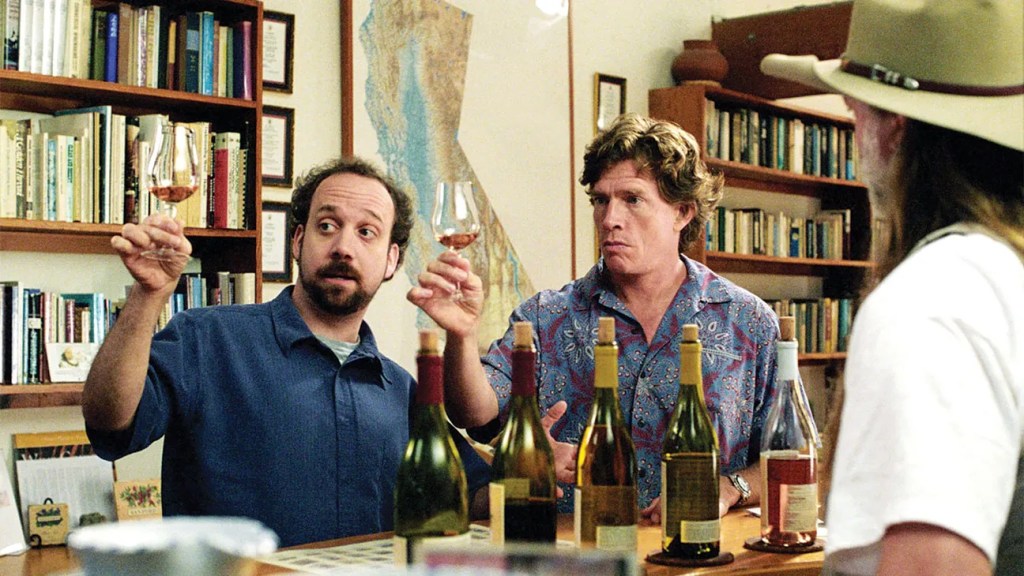
Miles (Paul Giamatti) is a paunchy, depressive would-be writer who disguises his alcoholism as oenophilia. Jack (Thomas Haden Church) is an introspection-free actor whose most convincing role is that of a horny Lothario. In the comedy-drama Sideways, the longtime friends go on a wine-tasting tour in California’s Santa Ynez Valley to celebrate Jack’s impending wedding. Their relationship seems improbable, but then Miles lets it slip to another character that he and Jack had been thrust together as college roommates, and the unlikely relationship suddenly makes sense. What keeps them together is history, not compatibility. There are superb supporting performances from Virginia Madsen and Sandra Oh as women they meet along the way to complicate bonding time, but at its core Sideways is about this dysfunctional, if affectionate, male friendship. Alexander Payne and co-writer Jim Taylor’s brittle, fiercely intelligent adaptation of Rex Pickett’s novel captures the peculiar durability of friendships whose participants might never choose one another if they met today.
1. Withnail and I (1987, dir. Bruce Robinson)
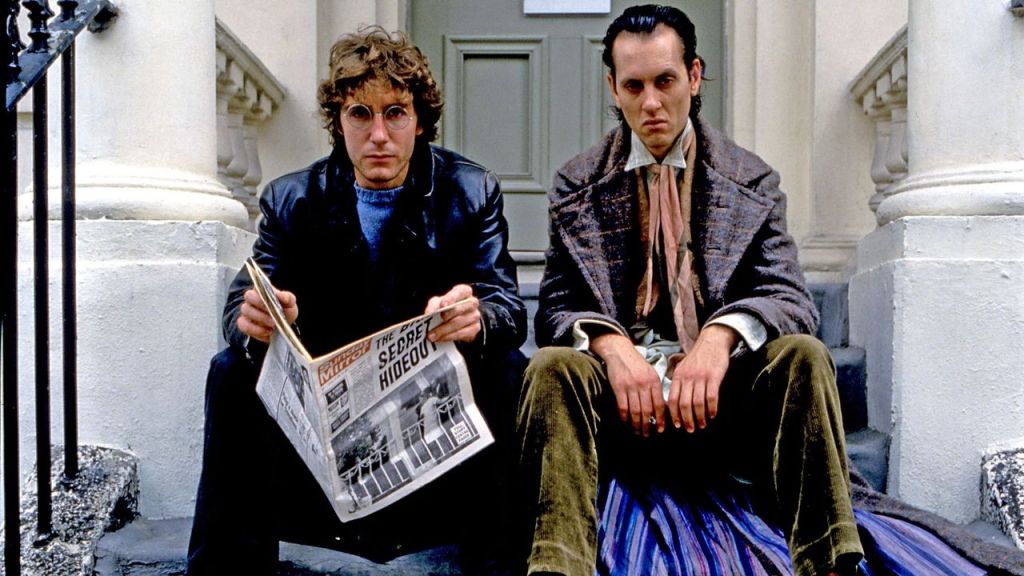
Bruce Robinson’s lightly autobiographical work about being a struggling actor in late 1960s London flopped on its initial release but found a devoted audience via home video. The “I” of this razor-sharp comedy, Marwood (Paul McGann), is an unemployed actor who shares a Camden Town flat with equally unemployed actor Withnail (Richard E. Grant), who is in a perpetual meltdown. “I’m a trained actor reduced to the status of a bum!” laments Withnail. “I feel like a pig shat in my head.” On the heels of a 60-hour bender of booze and drugs, the mates set out to revive themselves with a weekend in the country. Grant is a force of nature in his movie debut––fortunately for him, Daniel Day-Lewis had passed on the role––but it certainly helped that Robinson had written a hilariously acerbic and verbose script. For all their mutual dependence, the friendship is profoundly unequal. Marwood is beginning to imagine life beyond failure, while Withnail needs his companion to remain trapped (and pickled) beside him. The comedy’s aftertaste comes from recognizing that one man’s escape will be the other’s abandonment.
Honorable mention: The Banshees of Inisherin (2022, dir. Martin McDonagh), The Defiant Ones (1958, dir. Stanley Kramer), The In-Laws (1979, dir. Arthur Hiller), Lethal Weapon (1987, dir. Richard Donner), The Man Who Would Be King (1975, dir. John Huston), Midnight Cowboy (1969, dir. John Schlesinger), Mikey and Nicky (1976, dir. Elaine May), Planes, Trains and Automobiles (1987, dir. John Hughes), Scarecrow (1973, dir. Jerry Schatzberg), Superbad (2007, dir. Greg Mottola)


4 responses to “The 10 best male buddy films”
[…] Seth Rogen and Evan Goldberg drafted Superbad back when they were teenagers growing up in Canada. That may explain its authenticity in capturing how teen boys think and act. Jonah Hill is Seth (loud, abrasive, porn-obsessed) and Michael Cera is Evan (reserved, twee). Both are arguably at the peak of their comedic powers, but 17-year-old Christopher Mintz-Plasse, in his film debut, steals most of his scenes as their nerdy friend McLovin, or at least that’s what it says on his fake ID. The hero’s journey here is suitably adolescent: the boys are determined to lose their virginity before graduating from high school. “You know when you hear girls say, ‘Ah, man, I was so shitfaced last night. I shouldn’t have fucked that guy?’” Seth tells Evan in preparation for a big party. “We could be that mistake!” Superbad is gleefully vulgar; Seth’s childhood compulsion to doodle penises is worth the price of admission alone. And yet at the center of the potty-mouthed flick is a genuine, surprisingly sweet tale of friendship.(See more in The 10 best male buddy films.) […]
LikeLike
[…] I won’t spoil anything by referencing the final scene of Stand by Me, but it’s worth quoting a sentence from it: “I never had any friends later on like the ones I had when I was twelve. Jesus, does anyone?” Rob Reiner’s adaptation of a Stephen King novella homes in on that declaration. Set in a small Oregon town in 1959, the movie follows a somber summer adventure—to locate the body of a missing child—undertaken by four friends: Gordie (Wil Wheaton), Chris (River Phoenix), Teddy (Corey Feldman) and Vern (Jerry O’Connell). It is a testament to Reiner’s sure-handed direction and the four child performances that the characters rise above archetypes and carry emotional heft. The film touches on the boys’ difficult home lives, but balances these moments with the glory of being at an age when it’s perfectly logical to debate who would win in a fight between Mighty Mouse and Superman. As the story is framed as the recollections of Gordie as an adult, played by Richard Dreyfuss, Stand by Me revels in the mythology of summer. It is unabashedly honey-dipped nostalgia, but its sentimentality is entirely earned. (See more in The 10 best male buddy films.) […]
LikeLike
[…] Bob Hope set the discomforting tone of the 1970 Oscars in his opening monologue. “This will go down in history as the cinema season which proved that crime doesn’t pay but there’s a future in adultery, incest and homosexuality. That’s what we’re honoring tonight,” said the comedian. “This is not an Academy Awards. It’s a freakout, ladies and gentlemen.” John Wayne, who won the Best Actor award that year for True Grit, later dismissed Midnight Cowboy as “a story about two fags.” Still, the disdain of Old Hollywood couldn’t keep the movie about a male hustler from winning the Best Picture Oscar—not to mention John Schlesinger for Best Director and Waldo Salt for Best Adapted Screenplay. The story concerns Joe Buck (Jon Voight), a restaurant dishwasher in Texas who takes a Greyhound to New York City, where the naive, would-be stud dreams of making his fortune by servicing rich, sex-starved women. By the time he is fellated by a nervous young man (Bob Balaban) in a Times Square restroom stall, Joe realizes the gigolo life is not as he had imagined. He shares a dingy apartment with Ratso Rizzo (Dustin Hoffman), a tubercular crook with a bum leg who becomes Joe’s sole friend. Midnight Cowboy made Voight a star and made a radio hit of Harry Nilsson’s “Everybody’s Talkin’,” but it also forever changed the trajectory of American cinema. The first and only X-rated film to win Best Picture (a rating that reflected its frank treatment of sexuality rather than anything pornographic), it helped usher in the New Hollywood of the 1970s. (See more in The 10 best male buddy films.) […]
LikeLike
[…] The musical anachronism of B.J. Thomas’ pop hit in Butch Cassidy and the Sundance Kid, a Western set in the 1890s, caused some eye-rolling at the time. As it turns out, the picture helped pave the way for the sort of anachronistic soundtrack choices routinely used by filmmakers like Quentin Tarantino—and for good reason. The friendly shuffle of “Raindrops Keep Falling on My Head” proves an ideal accompaniment for Butch (Paul Newman) and Etta (Katharine Ross) to enjoy a bicycle ride. The tune earned a Best Original Song Oscar for writers Burt Bacharach and Hal David. (See more in The 10 best male buddy films.) […]
LikeLike