Movie dads, like everything and everyone else on the big screen, reflect their time. That’s why the all-knowing patriarchs of Life with Father (1947) and To Kill a Mockingbird (1962) in classic American cinema began to recede with the emergence of New Hollywood in the late 1960s and early ‘70s. Our relationships with movie fathers became more ambivalent and less stable. They could now be contradictory, selfish, even wrongheaded.
There are plenty of celebrated movie fathers you won’t find on the list below: Clark Griswold from National Lampoon’s Vacation (1983), Guido from Life Is Beautiful (1997), Gil Buckman from Parenthood (1989), etc. There are a lot of dads to choose from, and what makes a particularly resonant onscreen papa is likely influenced by the real-life baggage you bring with you into the theater.
Here are 10 especially memorable fathers from the movies.
10. Darth Vader (voiced by James Earl Jones) in The Empire Strikes Back (1980, dir. Irvin Kershner)
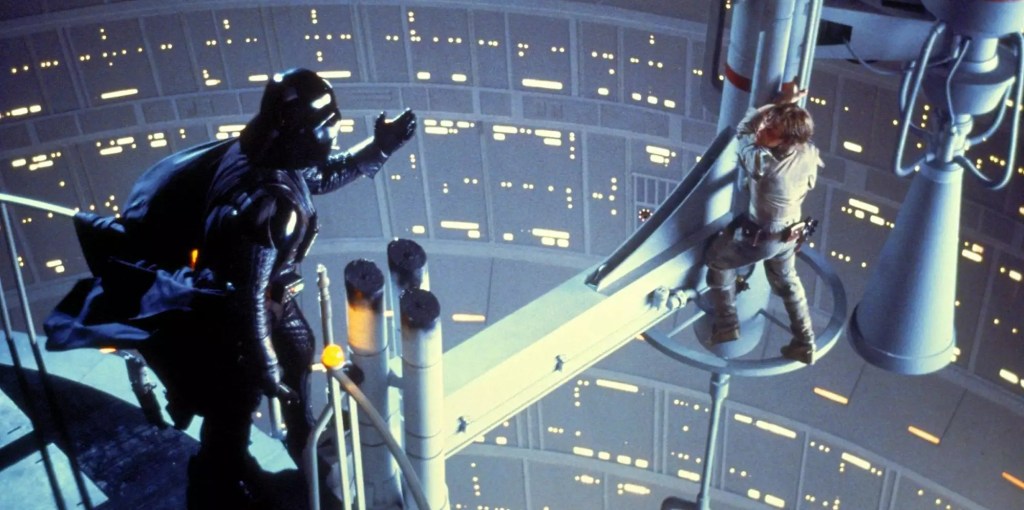
Remember Luke Skywalker’s arch-nemesis, Darth Vader (voiced by James Earl Jones)? Well, SPOILER ALERT––and good God, I hope you’re sitting down for this––he is also Luke’s dad (and Princess Leia’s, for that matter). And with those four words, “I am your father,” The Empire Strikes Back reframed the mythology of Star Wars and made Father’s Day really weird inside the Rebellion.
9. Lt. Col. Wilbur “Bull” Meechum (Robert Duvall) in The Great Santini (1979, dir. Lewis John Carlino)
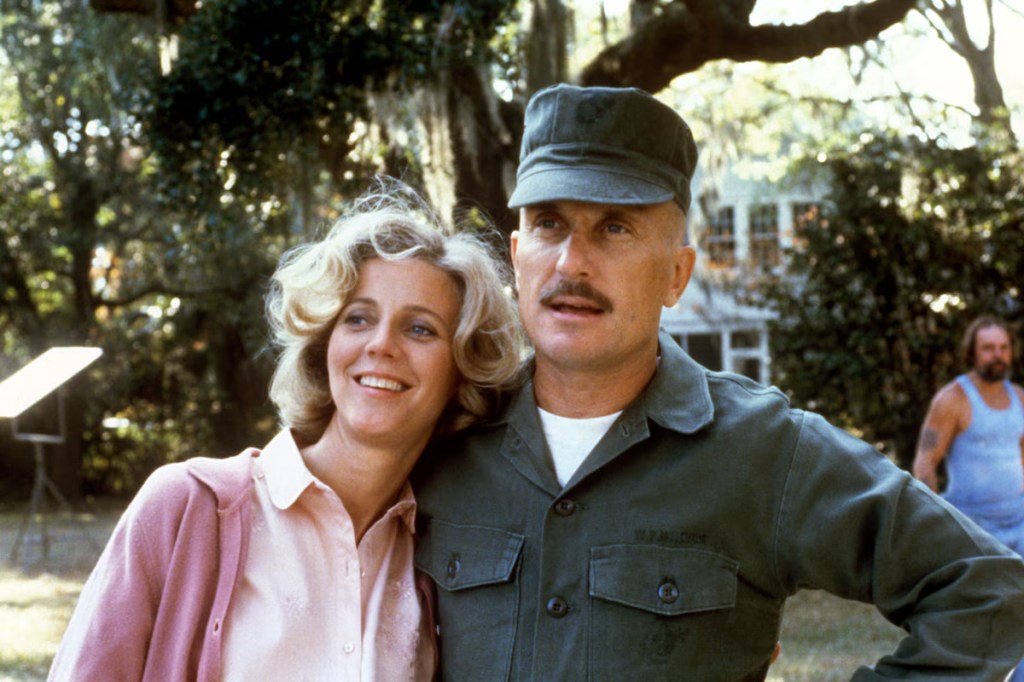
Robert Duvall is all blustery machismo in this dissection of toxic masculinity decades before that phrase entered public discourse. This adaptation of Pat Conroy’s autobiographical novel about “Bull” Meechum, a Marine Corps fighter pilot approaching retirement, tiptoes toward sentimentality, but director Lewis John Carlino deserves credit for an uncomfortably on-target depiction of a curdled father-son relationship. In the film’s most lacerating scene, Meechum bullies his teenage son (a very good Michael O’Keefe) for having the audacity to beat him at a game of backyard basketball. The Great Santini is not a great movie, but it does boast a great performance from Duvall. He anchors Bull Meechum’s periodically monstrous behavior in the familiarity of real life.
8. Bernard Berkman (Jeff Daniels) in The Squid and the Whale (2005, dir. Noah Baumbach)
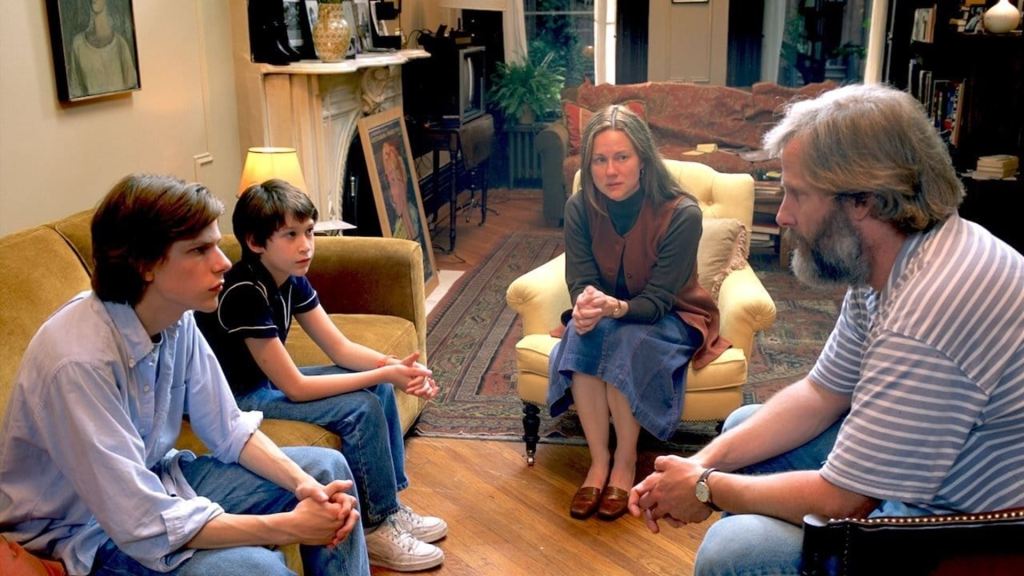
Divorce can weaponize children. Few films explore that phenomenon as mercilessly as Noah Baumbach’s semi-autobiographical The Squid and the Whale. Its bitterness is startling. Bernard Berkman (Jeff Daniels) is a deeply insecure, arrogant writer of fiction who namechecks Kafka as one of his “predecessors.” Caught between him and his estranged wife (Laura Linney) are oldest son Walt (Jesse Eisenberg), who idolizes his dad, and Frank (Owen Kline), who is beginning to exhibit some peculiar habits. While we cannot speak to the degree of intellectual snobbery of the late Jonathan Baumbach, his onscreen alter ego is a satiric study in unchecked solipsism (Berkman, by the way, was the maiden name of Jonathan Baumbach’s second wife).
7. Ryōta Nonomiya (Masaharu Fukuyama) in Like Father, Like Son (2013, dir. Hirokazu Kore-eda)
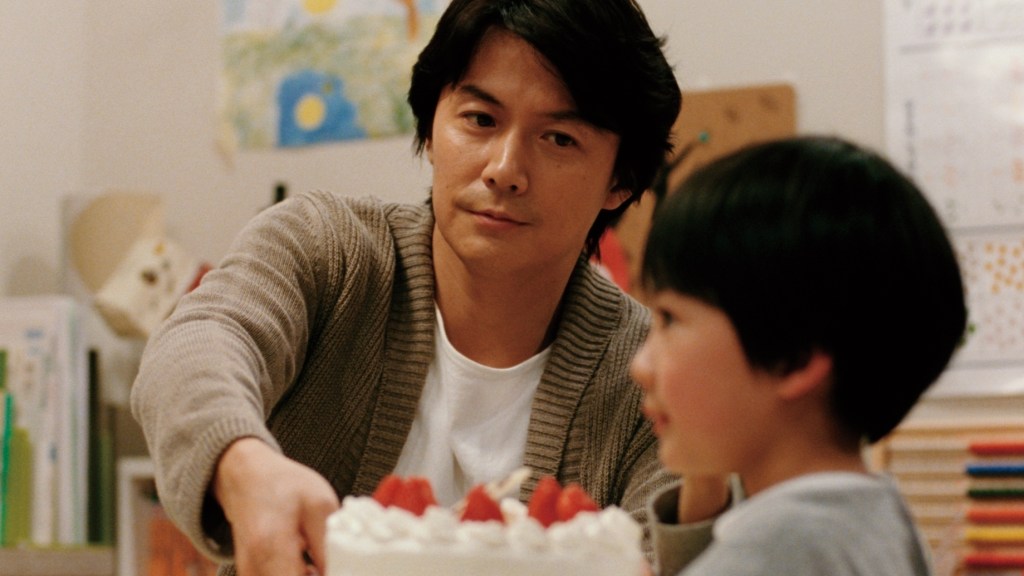
The nature vs. nurture debate receives a novel spin from Japan’s Hirokazu Kore-eda. Ryōta Nonomiya (Masaharu Fukuyama) and his wife (Machiko Ono) have a cushy home life in a Tokyo high-rise with their 6-year-old son Keita. Ryōta is a workaholic with little time for the boy, but he pays enough attention to make mental notes of Keita’s perceived failings. Then the couple discovers that the birth hospital had accidentally switched their biological child at birth. Keita’s actual parents are Yudai and Yukari Saiki (Lily Franky and Yoko Maki), who have raised the Nonomiyas’ biological child. Yudai is a father in all the ways Ryōta is not: warm, playful, dedicated. But the Saikis are poor, and Ryōta, who presumes his wealth alone makes him and his wife more suitable parents, bristles when Yudai offers parenting advice. Winner of the Jury Prize at the Cannes Film Festival, Like Father, Like Son is languidly paced but consistently absorbing and emotionally rich as it challenges the importance of bloodlines.
6. Marlin (voiced by Albert Brooks) in Finding Nemo (2003, dir. Andrew Stanton)
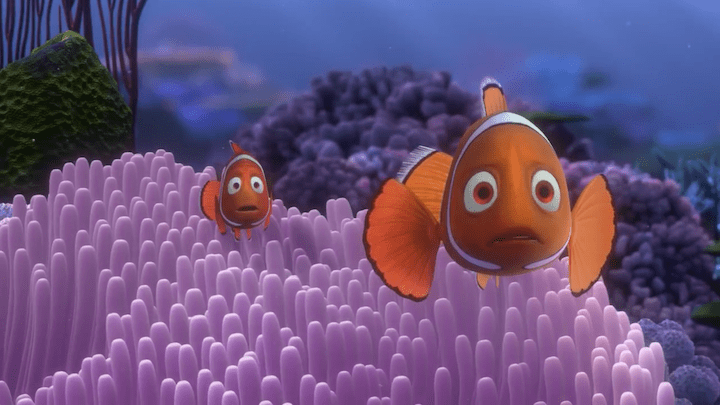
As anyone who saw Bambi or The Lion King knows, children’s movies often have no qualms traumatizing young moviegoers. Maybe that’s why this animated Pixar classic gets the psychological scarring out of the way early, when a barracuda devours a clownfish named Coral (voiced by Elizabeth Perkins) along with all but a single egg. Her demise leaves Coral’s nebbishy husband, Marlin (Albert Brooks), alone to care for the sole surviving small fry, whom Marlin names Nemo (Alexander Gould). Dad, a clownfish already prone to worrying, proves to be an overly protective single parent. When Nemo is caught by scuba divers, however, Marlin must stifle his own anxieties and venture into the big, bad ocean to find his son. Andrew Stanton and co-writers Bob Peterson and David Reynolds infuse the adventure of Finding Nemo with an understanding of a father who must learn to balance protectiveness with trust.
5. Chris Gardner (Will Smith) in The Pursuit of Happyness (2006, dir. Gabriele Muccino)
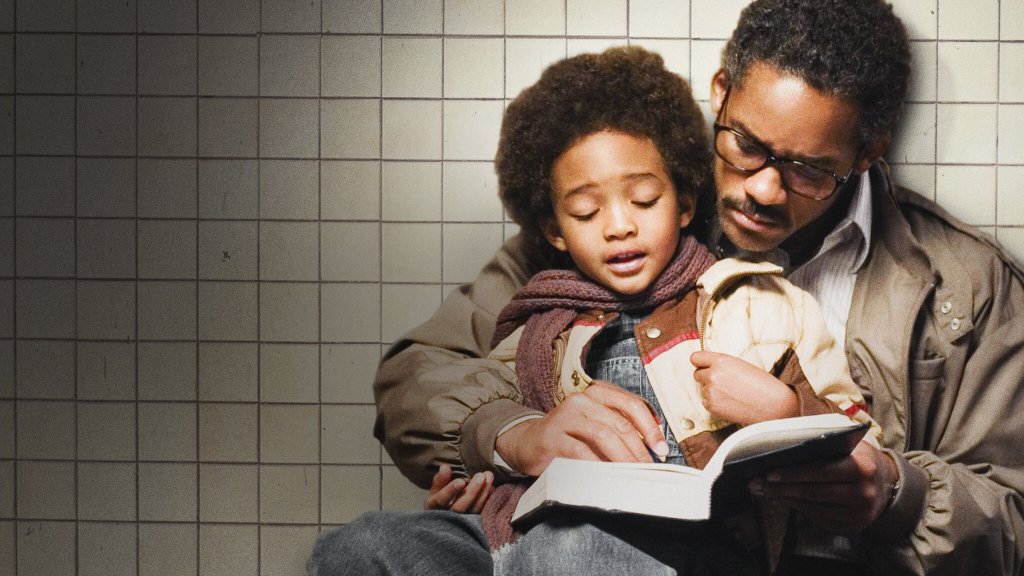
If this rags-to-riches tale weren’t true, you’d think it had to be the invention of a motivational speaker. Chris Gardner (Will Smith), penniless and homeless in the early 1980s, remains committed to caring for his young son while working toward a career as a stockbroker. Things go from bad to very bad for Chris. He and his boy (Smith’s offscreen son, Jaden Christopher Syre Smith) are evicted. Chris is hit by a car. He is forced to eat at San Francisco soup kitchens and stay at homeless shelters and even, in a particularly harrowing sequence, in the public restroom of a subway station. Movies are rife with tearjerkers in which good people are beaten down by life, but The Pursuit of Happyness features a likeable and self-assured protagonist (the real Chris has a cameo toward the end) who weathers dark periods while remaining relatively free of self-pity.
4. Ted Kramer (Dustin Hoffman) in Kramer vs. Kramer (1979, dir. Robert Benton)
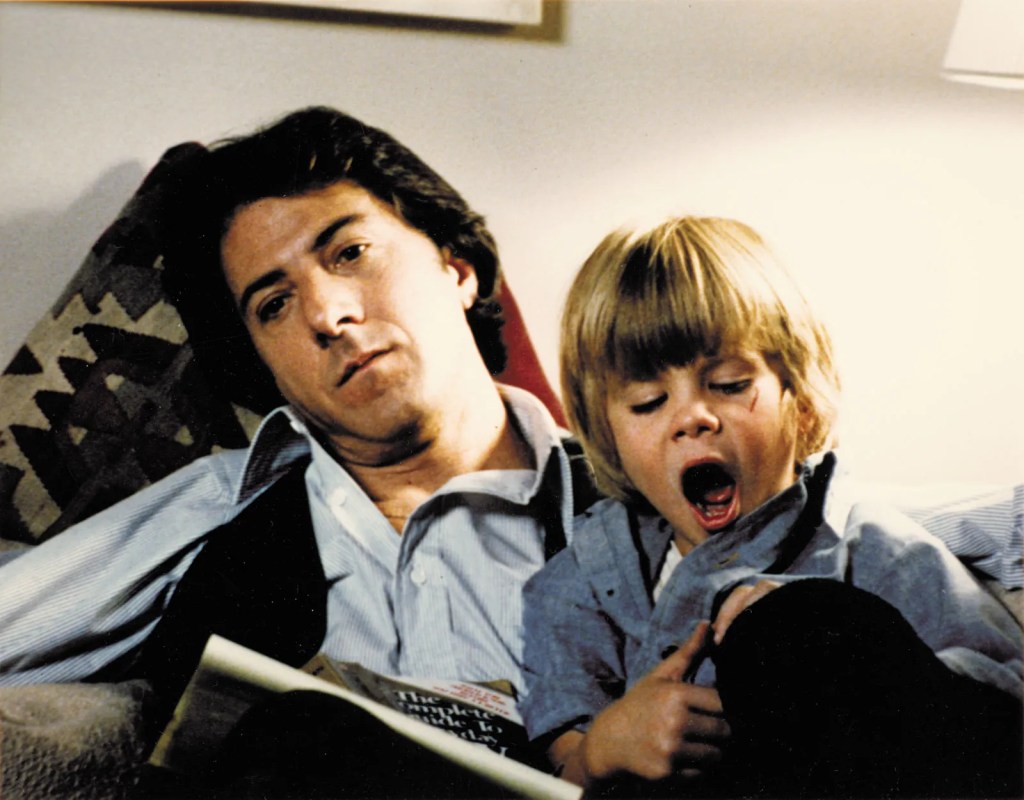
Joanna Kramer (Meryl Streep) moves out of a comfortable New York City apartment to go off and find herself (it’s the 1970s, ‘nuff said), leaving her workaholic husband Ted (Dustin Hoffman) to raise their 7-year-old son (Justin Henry). Surprisingly for a low-key domestic drama, Kramer vs. Kramer was a box-office hit. Hoffman gives a naturalistic, Oscar-winning performance as the advertising executive who learns what most working parents already know: balancing career and family is effing hard. Writer-director Robert Benton summons little sympathy for absent mom Joanna. In rewatching this Academy Award Best Picture winner, in fact, it’s striking to realize what a kick in the teeth Kramer vs. Kramer was to the women’s rights movement of that era. It is a measure of Streep’s skills that she wrings empathy for someone the movie treats with a fair amount of disdain.
3. Royal Tenenbaum (Gene Hackman) in The Royal Tenenbaums (2001, dir. Wes Anderson)
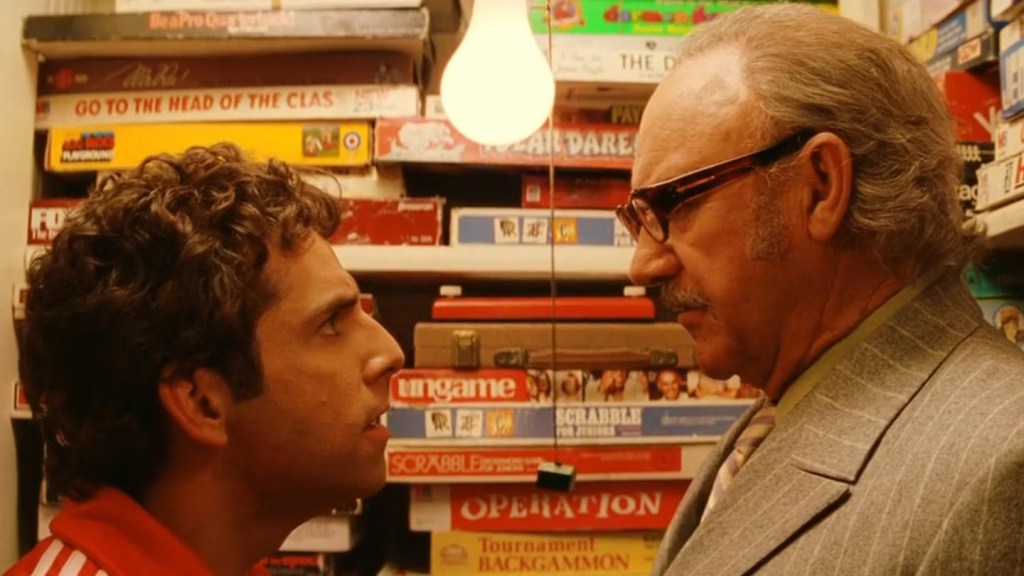
Royal Tenenbaum (Gene Hackman) is a scoundrel. A disbarred attorney and ex-convict, he is crooked, tactless, and can’t think beyond his own self-interest. As a parent, Royal is neglectful when not outright belittling to his brilliant adult children (Gwyneth Paltrow, Ben Stiller, and Luke Wilson). Despite having deserted his family long ago, he reevaluates things when he finds himself homeless. He returns to his estranged family’s New York City townhouse and schemes to scuttle the planned marriage of his ex-wife (Angelica Huston) to a kindly widower (Danny Glover). Hackman resented that Wes Anderson had specifically written the part for him, considering it presumptuous for the filmmaker to think he knew the actor’s range. Hackman was miserable during the making of The Royal Tenenbaums and made sure everyone else was, too, bullying Anderson throughout and grumbling that the movie would wreck his career. Perhaps his on-set irascibility worked to the film’s benefit. Hackman’s comic performance is magnificent; his Royal is a self-serving louse, but still open to redemption.
(See more in The 20 best needle drops in film)
2. Jason “Furious” Styles (Laurence Fishburne) in Boyz n the Hood (1991, dir. John Singleton)
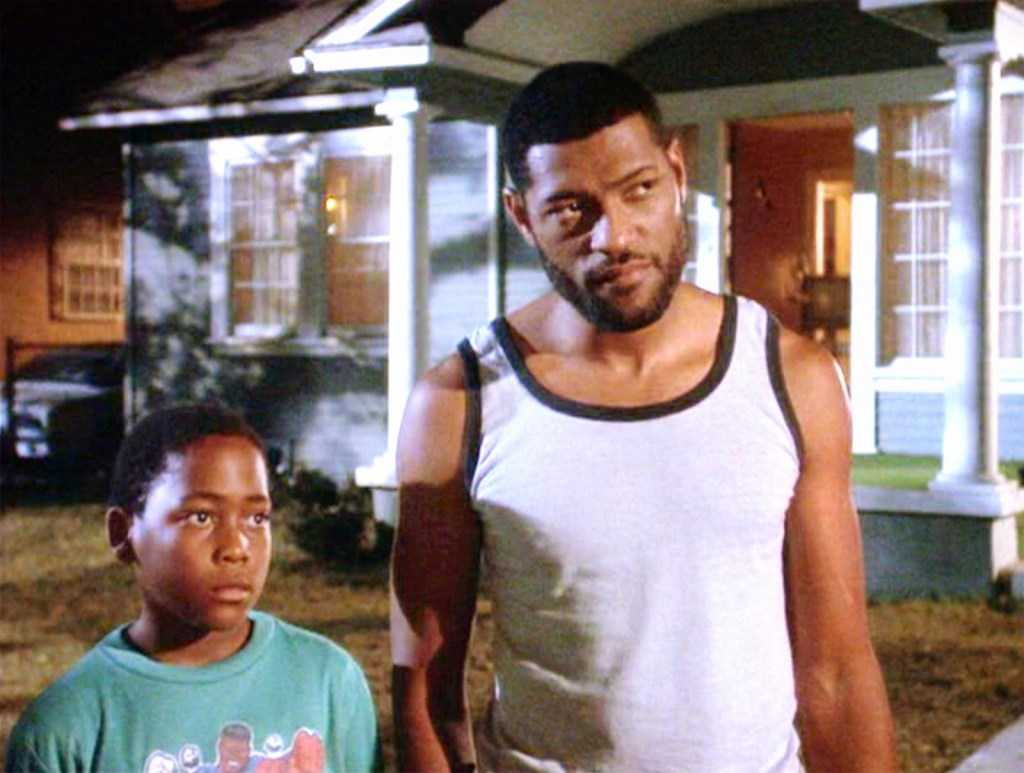
Laurence Fishburne was never better than as Jason “Furious” Styles, father to Tre (Cuba Gooding Jr.), the teenage boy at the center of Boyz n the Hood. When Tre is sent by his single mother (Angela Bassett) to live with dad in South Central Los Angeles in hopes the man will impart some wisdom to his son, Furious is more than up to the task. “Any fool with a dick can make a baby,” he tells Tre, “but only a real man can raise his children.” A mortgage broker by profession, Furious is tough, principled, disciplined, and caring––in short, a near-perfect patriarch for a young Black man navigating a dangerous world. John Singleton said he based the character on his own father, with whom he was sent to live when he was 12. In Boyz n the Hood, Furious tells Tre, “You may think I’m being hard on you right now, but I’m not. What I’m doing is I’m trying to teach you how to be responsible.” If Singleton’s dad told him something similar, it must have taken hold. At age 24 with his debut film, Singleton became the youngest director and first African American ever nominated for a Best Director Oscar. (See more in The 15 best coming-of-age movies.)
1. Atticus Finch (Gregory Peck) in To Kill a Mockingbird (1962, dir. Robert Mulligan)
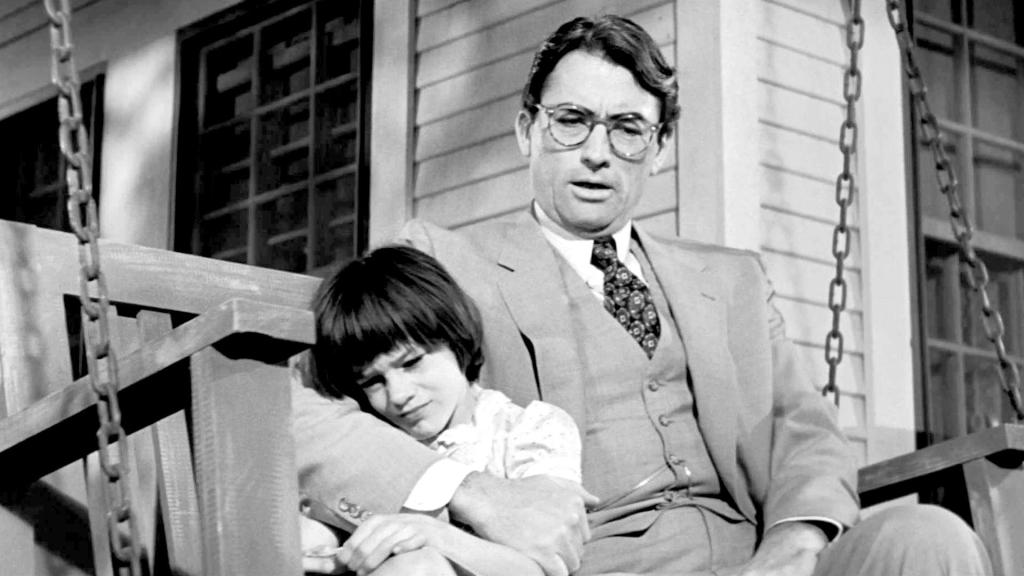
Atticus Finch (and what a name!), a creation of Harper Lee’s 1960 novel, set the standard for the movie archetype of the wise, patient father. Director Robert Mulligan’s unfussy direction and Horton Foote’s sensitive screenplay helped ensure the film version holds its own alongside Lee’s Pulitzer Prize-winning book, but there is no overstating the impact of Gregory Peck as the loving patriarch and gentlemanly Southern lawyer. The actor’s courtly manner and soothing baritone breathe life into a character who became iconic almost immediately. In To Kill a Mockingbird, the adult Scout Finch recounts her childhood––Mary Badham plays preteen Scout––and the time her father, Atticus, defended a Black sharecropper falsely accused of rape. “If you just learn a single trick, Scout, you’ll get along a lot better with all kinds of folks,” Atticus, a widower, advises his daughter. “You never really understand a person until you consider things from his point of view, until you climb inside of his skin and walk around in it.” How can any flesh-and-blood dad measure up after we’ve seen Peck, who won the Oscar for Best Actor, showing Scout what it means to be empathetic and courageous?
Honorable mention: Antonio Ricci in Bicycle Thieves (1948, dir. Vittorio De Sica), Henry Spencer in Eraserhead (1978, dir. David Lynch), Oscar Ekdahl in Fanny and Alexander (1982, dir. Ingmar Bergman), Anthony Miller in The Father (2020, dir. Florian Zeller), Stanley T. Banks in Father of the Bride (1950, dir. Vincente Minnelli), Vito Corleone in The Godfather (1972, dir. Francis Ford Coppola), Jake Shuttlesworth in He Got Game (1998, dir. Spike Lee), Will in Leave No Trace (2018, dir. Debra Granik), Woody Grant in Nebraska (2013, dir. Alexander Payne), Daniel Plainview in There Will Be Blood (2007, dir. Paul Thomas Anderson)


7 responses to “10 memorable movie fathers”
[…] Antonio Ricci (Lamberto Maggiorani) needs work badly, but the potential job he has, hanging posters around Rome, requires a bicycle. He and his wife Maria (Lianella Carell) pawn their best bedsheets to get Antonio’s bike out of hock. The couple watch as a clerk takes the sheets and climbs up a massive tower of shelves that are stuffed with similar bundles. Antonio and Maria’s plight is a common one in postwar Italy. They retrieve the bicycle, Antonio brightens, sensing that things are finally looking up. But then the bike is stolen during his first day on the job. Desperate, he and his young son (Enzo Staiola) search the bustling city for not just a bike, but his only means for survival. At an outdoor market, they come across rows of bicycle parts—another sign that Rome is teeming with similar ordeals. Director Vittorio De Sica rejected David O. Selznick’s offer to finance the picture if Cary Grant played the father. Instead, De Sica turned to nonprofessional actors. Maggiorani worked in a steel factory; Staiola was a newsboy whom the filmmaker happened to spot during an early shoot. De Sica and screenwriter Cesare Zavattini’s film, one of the greatest examples of Italian neorealism, won an honorary Oscar for Best Foreign-Language Picture. It captures the heart-wrenching reality of a family that is a single emergency away from utter devastation. (See more in 10 memorable movie fathers.) […]
LikeLike
[…] For his feature-length debut, writer-director John Singleton drew upon his own childhood experiences in South Central Los Angeles. The memories were still fresh for the filmmaker, only 23 at the time and newly graduated from the University of Southern California film school. Boyz n the Hood follows a tight-knit group of friends navigating life, but Singleton’s clear surrogate is Tre Styles (Cuba Gooding Jr.), a talented teenager sent by his single mom to live with his dad (Lawrence Fishburne) in Crenshaw. The story packs in a lot about friendship, fatherhood, race and poverty, but its themes are always in service to the movie’s vividly drawn characters. Gooding and Fishburne give standout performances, but Ice Cube and Morris Chestnut also do solid work. Boyz n the Hood made Singleton the youngest director ever nominated for a Best Director Oscar and the first African American to be up for the award. Tragically, Singleton’s canon is limited: he died in 2019 at age 51 after suffering a stroke.(See more in 10 memorable movie fathers.) […]
LikeLike
[…] Duh. A box-office smash, cultural phenomenon and winner of three Academy Awards, The Godfather redefined the gangster movie. Paramount Pictures took a considerable chance entrusting the film adaptation of Mario Puzo’s bestseller to Francis Ford Coppola. Nothing in the resume of the 32-year-old director indicated he was ready for a project that had the studio’s fortunes riding on it. Coppola’s vision was crucial to the film transcending its genre. In Mark Seal’s Leave the Gun, Take the Cannoli: The Epic Story of the Making of The Godfather, Coppola said he realized there was “the core of a profound story, one of a classic succession concerning a great king with three sons, each of whom had a single element of what made the king great.” Casting auditions seemingly included every actor with a SAG card; the studio wanted Ryan O’Neal or Robert Redford to play Michael Corleone. And once production was underway, a New York Mafia family boss named Joe Colombo founded a sketchy Italian-American civil rights organization that successfully pressured Paramount to quash any overt reference in the film to the Mafia or Cosa Nostra. Marlon Brando won (and subsequently refused) the Best Actor Oscar for the role of Vito Corleone, but every bit his equal are Al Pacino and James Caan as sons Michael and Sonny, with John Cazale quietly devastating as the weak-willed middle son, Fredo. If there’s a weakness in the film, I haven’t found it after countless viewings over the years. From Gordon Willis’ innovatively low-light, high-contrast camerawork (inexplicably snubbed by the Academy Awards) and Nino Rota’s haunting music score to a pitch-perfect cast, The Godfather deserves its reputation as not only one of the greatest gangster stories, but one of cinema’s best-ever films.(See more in The 10 best bathroom scenes in film and 10 memorable movie fathers.) […]
LikeLike
[…] In the wake of an assassination attempt on Mafia boss Vito Corleone (Marlon Brando), youngest son Michael (Al Pacino) resolves to kill Virgil Sollozzo (Al Lettieri), who is responsible for the failed hit, as well as the crooked police captain (Sterling Hayden) providing Sollozzo protection. The plan: Michael will meet the pair at a restaurant, excuse himself to the bathroom, retrieve a gun hidden beforehand, and kill them both. But first the firearm must be concealed. Corleone capo Tessio (Abe Vigoda) is pleased the meeting will take place at Louie’s in the Bronx. “They got an old fashioned toilet, you know, the box and the chain thing,” Tessio says. “We might be able to tape the gun behind it (the toilet tank).” They do. And in one of the key scenes in The Godfather––and, thus, pop culture––a nervous Michael Corleone goes to the bathroom. When he emerges, he is also crossing the Rubicon. Michael blasts away at Sollozzo and the captain—the trajectory of his life forever changed.(See more in The 10 best gangster pictures and 10 memorable movie fathers.) […]
LikeLike
[…] The Philadelphia chamber of commerce probably wasn’t thrilled that its city was the inspiration for Eraserhead. Before becoming a filmmaker, David Lynch spent five years studying art in the City of Brotherly Love, an experience that was far from loving. “I saw horrible things pretty much every day,” he later recalled, quipping that Eraserhead was “the real Philadelphia Story.” He shot his debut movie on and off over several years as financing ebbed and flowed. Eraserhead taps into our collective nightmares. It is nominally about Henry Spencer (Jack Nance), a factory printer with a perpetual glower and a ramrod-straight pompadour. At dinner with his girlfriend Mary (Charlotte Stewart) and her parents, Mary’s mother reveals that Henry is about to become a father. “Mom!” Mary sobs, mortified. ”They’re still not sure it is a baby!” It’s already been an uncomfortable meal, to be sure, what with roasted manmade chickens that undulate suggestively, a catatonic grandmother, and puppies nursing loudly in a corner. When we finally see Henry and Mary’s child, a wheezing cross between a lizard and E.T., we understand why there was some uncertainty about its species. A chipmunk-cheeked Lady in the Radiator (Laurel Near)—perhaps part of Henry’s dreamworld?—warbles a Fats Waller tune while stomping her heels on small, wriggling creatures that resemble spermatozoa. Lynch, who was a young father at the time of Eraserhead, might have been working through some parenting issues. What’s less debatable is that the film’s phantasmagoric visuals, dark humor, and industrial-noise sound design made it ideal for the midnight-movie circuit. Funnyman Mel Brooks saw this hallucinatory work and knew its maker was the right person to direct a movie he was producing called The Elephant Man.(See more in 10 memorable movie fathers.) […]
LikeLike
[…] The tragic specter of singer-songwriter Elliott Smith, who died by apparent suicide in 2003 at age 34, marks a retroactively jarring change in tone for Wes Anderson’s comedy about a supremely overachieving but dysfunctional family. Richie Tenenbaum (Luke Wilson), a professional tennis player despairing that the adopted sister he loves is getting married, calmly shaves, cuts off his hair, and slashes his wrists.(See more in 10 memorable movie fathers.) […]
LikeLike
[…] For more than 15 nearly silent minutes, There Will Be Blood opens in 1898 New Mexico with the bone-crunching work of silver prospector Daniel Plainview (Daniel Day-Lewis), a man possessed by an indomitable will to succeed. Paul Thomas Anderson had long aspired to make a film completely devoid of dialogue. “The closest I got,” the director told Entertainment Weekly, “was the beginning of There Will Be Blood.” Loosely based on Oil!, a 1927 novel by Upton Sinclair, the sequence offers a window into the merciless work of mining, particularly when Plainview falls down a mineshaft, breaks his leg, and somehow crawls his way out to register his claim. Four years later, he has moved on to oil, setting in motion an epic story of power and greed.(See more in 10 memorable movie fathers.) […]
LikeLike