
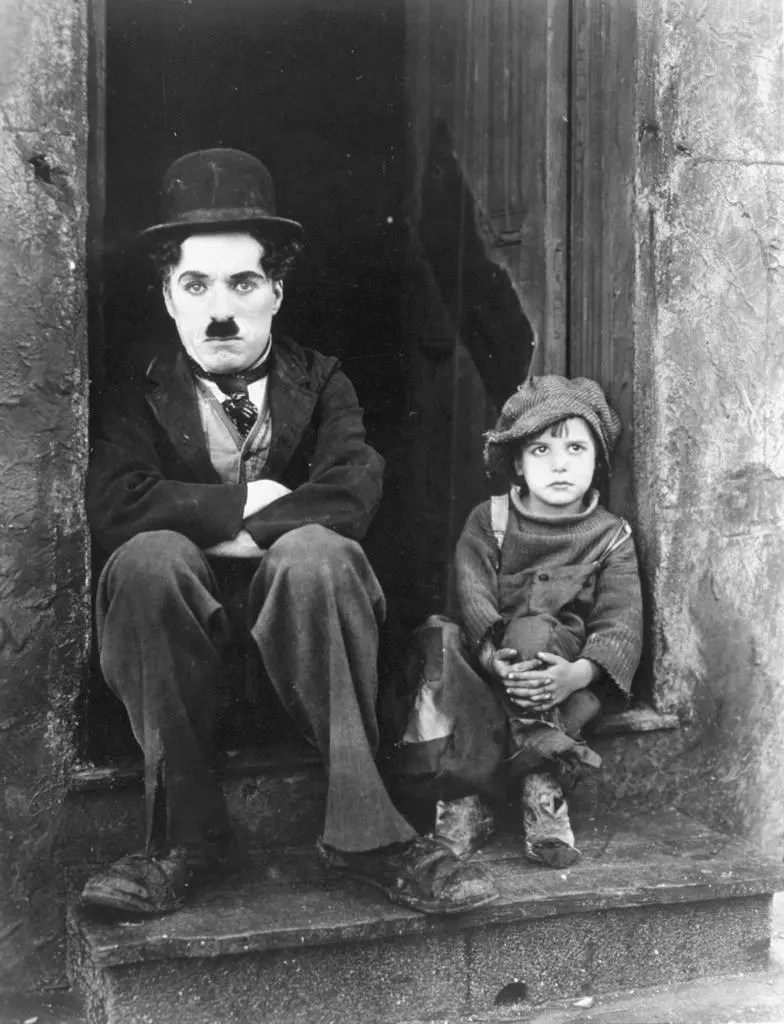
The silent-era comedies of Charlie Chaplin were not simply about an unlucky fellow with a funny waddle and mustache; his Little Tramp character highlighted the indignities heaped upon the poor. Cinema has a rich tradition of highlighting the divisions between haves and have-nots. During the Great Depression, screwball comedies goosed the upper-class to the delight of moviegoers struggling just to survive.
Post-World War II European films, especially Italian neorealism, approached the subject with a gravity that American pictures tended to resist. The demise of Hollywood’s Production Code in the 1960s allowed filmmakers to tear into class divisions with a gusto that hadn’t been possible in earlier decades. As the gulf between rich and poor continues to widen, films examine wealth disparity through lenses ranging from hardbitten realism to the fantastical. These are my picks for the 15 best films exploring class divides.
15. Infinity Pool (2023, dir. Brandon Cronenberg)

Leave it to David Cronenberg’s son to transform an almost laughably far-fetched premise into a study in sadism. In this nightmare of wealth without consequence, the ultra-rich vacationing on a fictional impoverished island discover that privilege can literally buy moral absolution. Writer-director Brandon Cronenberg imagines a country that has figured out how to clone people on the cheap. When a tourist played by Alexander Skarsgård accidentally kills a native islander in a hit-and-run, he learns that, for a hefty price, the authorities can create his perfect double to take the consequences for his actions. Skarsgård and Mia Goth deliver fearless (and fearlessly perverse) performances. A deeply disturbing fever dream, Infinity Pool smacks us across the face with the stark reality that money can trump morality.
14. Gattaca (1997, dir. Andrew Niccol)

Rarely has science fiction imagined class stratification with such philosophical rigor. In his feature debut, Andrew Niccol conjures a future where eugenics has created two classes of people: one of physical perfection, the other of second-tier schlubs with poor eyesight, crooked teeth and every other flaw we modern-day mortals grapple with. Ethan Hawke portrays one of the latter types who longs to be an astronaut but is limited by his imperfection. Consequently, he undergoes a grueling transformation to pass himself off as one of the top-shelf humans. Elegantly shot and bolstered by an excellent cast—Jude Law and Uma Thurman are particular standouts—Gattaca ponders the ethical limits of genetic engineering like only the most thoughtful sci-fi can.
13. Shoplifters (2018, dir. Hirokazu Kore-eda)

Shoplifters explores the complexities of relationships among Japan’s working poor with sensitivity but free of sentimentality. The picture, which won the Palme d’Or at the Cannes Film Festival, tells the story of a ragtag family of thieves who adopt (or do they abduct?) a neglected 5-year-old girl (Miyu Sasaki). Revelations emerge slowly, but are shattering when they do. In focusing on Japanese families living on the margins of society, Shoplifters offers a window not typically afforded to Western moviegoers. It helps that the cast is outstanding, particularly Sakura Andô and Lily Franky as the self-appointed mother and father of the clan. Writer-director Hirokazu Kore-eda taps into the rhythms of everyday life and reveals what often goes unnoticed.
12. Sorry to Bother You (2018, dir. Boots Riley)
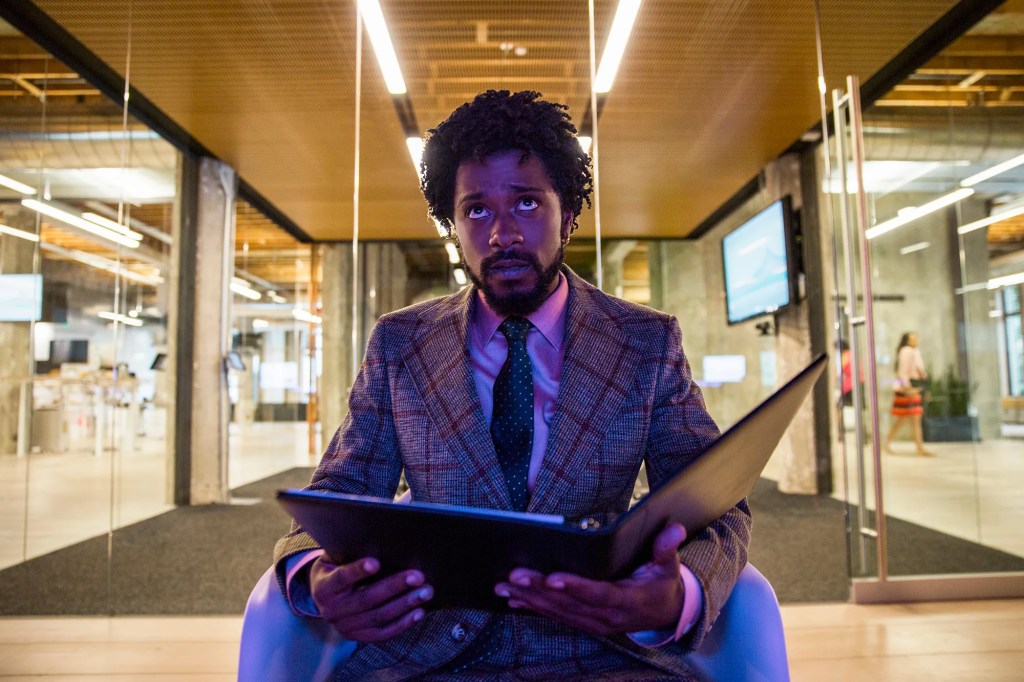
For his feature debut, rap artist-turned-filmmaker Boots Riley was seemingly determined to pack in every thought, observation and joke that had been collecting in his brain over the years. Sorry to Bother You is an explosion of ideas; it’s an urban comedy, a dystopian science fiction, a rebuke to capitalism (Riley is a self-described communist) and a stinging takedown of racism, labor practices, code switching, modern art—you name it. Lakeith Stanfield, as a hapless telemarketer in Oakland, California, who makes a Faustian bargain with a mysterious company called RegalView, grounds the surrealistic yarn with a protagonist in whom we are emotionally invested. For good measure, Armie Hammer makes a terrific villain as the personification of capitalism’s evils. Riley’s inventiveness occasionally threatens to spiral off the screen like a celluloid Tasmanian devil, but it never becomes unruly.
11. Black Girl (1966, dir. Ousmane Sembène)
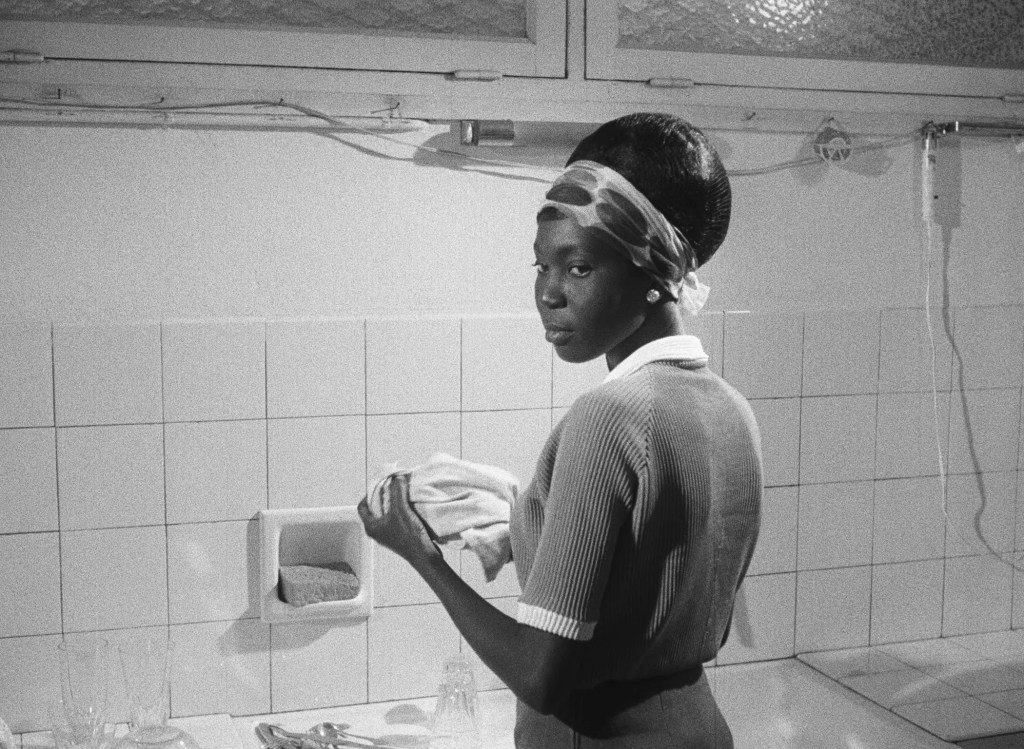
One of the first features by a sub-Saharan African director, Black Girl stars Mbissine Thérèse Diop as Diouana, a young woman who leaves her Senegalese village in West Africa to work as a nanny for a wealthy white French couple. She arrives in Antibes, France, with expectations of seeing life in the Western world, but soon learns that Madame and Monsieur (Anne-Marie Jelinek and Robert Fontaine) consider Diouana more of an indentured servant than an employee. Confined to the family’s apartment, she has virtually no interaction with the children. Most of her duties involve that of housekeeper and cook. For her employers and their ostensibly well-heeled friends, Diouana is a novelty. One dinner guest kisses her, exclaiming, “I’ve never kissed a Negress!” Written and directed by the great Senegalese filmmaker Ousmane Sembène, Black Girl is a stark examination of class distinction within the unjust realities of imperialism.
10. Metropolis (1927, dir. Fritz Lang)
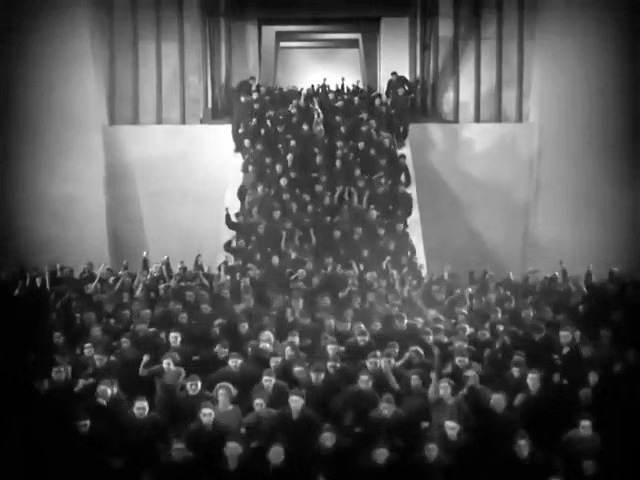
Germany’s science-fiction epic established the template for cinema’s stories of haves and have-nots. In the faraway year of 2000, the haves live in towering luxury high above the city, while scores of workers toil below ground in mechanized misery. The visual ambition of Fritz Lang’s work remains impressive a century later, even if some of the special effects—extraordinary for their time—now seem dated. The chasm between rich and poor, however, remains as relevant as ever.
(See more in The 10 best movie dystopias and The 10 best films about artificial intelligence.)
9. The Servant (1962, dir. Joseph Losey)
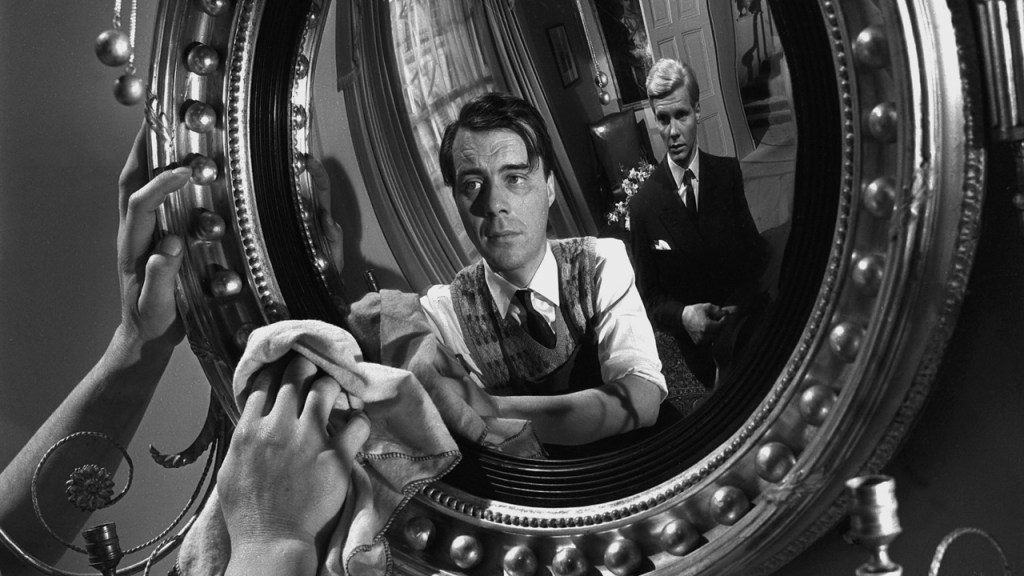
In their blistering adaptation of a 1948 novella, director Joseph Losey and screenwriter Harold Pinter give voice to the simmering resentments of the servant class. Wealthy layabout Tony (James Fox), needing assistance for his recently purchased London home, hires manservant Mr. Barrett (Dirk Bogarde) but the newly hired man’s fastidiousness eventually gives way to more depraved schemes. Tony’s girlfriend (Wendy Craig) tells him she doesn’t trust Barrett, but Tony maintains that the servant is indispensable. The picture takes a sharply demented turn with the arrival of Vera (Sarah Miles), a vivacious seductress whom Barrett introduces as his sister. She soon secures a job as the new maid, but her duties rarely involve housework, as Vera and Barrett transform Tony into a booze-addled, debauched wreck. When Tony flounders to reassert his social position, Barrett is not having it. “Who does the cooking? Who washes your pants?” sneers the servant. “I run the whole bloody place and what do I get out of it? Nothing!” Bogarde is spellbinding in a performance that suggests the upper class is poised for corruption.
8. A Place in the Sun (1951, dir. George Stevens)
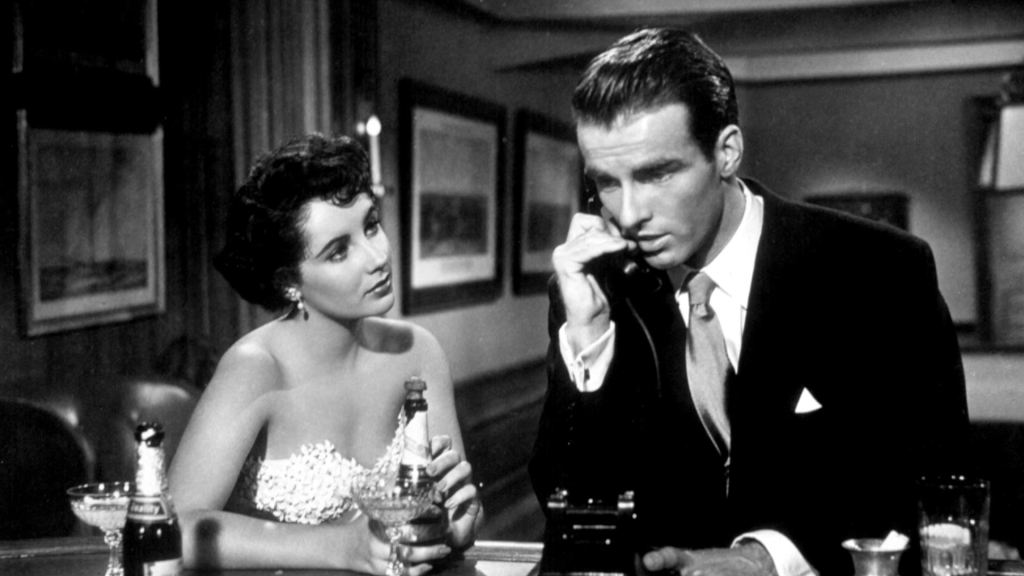
While George Stevens’ intensely romantic adaptation of the novel An American Tragedy smooths out much of Theodore Dreiser’s searing critique of capitalism, A Place in the Sun is not a total whitewash. In focusing on ill-fated lovers George Eastman (Montgomery Clift) and Angela Vickers (Elizabeth Taylor), the film doesn’t sidestep the fact that George is a social-climbing cad intent on crossing a rigid social boundary. The young man, who hails from the black-sheep side of the otherwise wealthy Eastman family, knocks up a dowdy Eastman factory worker (an always-excellent Shelley Winters) before tossing her aside for rich girl Angela and the life of leisure she represents. The class distinction between the world of the Eastmans and that of the lowly employees is clear and—as George learns—ultimately impenetrable.
7. Chop Shop (2007, dir. Ramin Bahrani)

Chop Shop takes audiences to a New York City rarely seen on screen—a hidden economy where class determines survival. Willets Point, a 20-block section of Queens in the shadow of Shea Stadium, is a ramshackle expanse of auto repair shops, scrap yards and people struggling to eke out a living. Alejandro (Alejandro Polanco) is a scrappy 12-year-old who spends his days scraping together a few bucks by selling candy, hawking DVDs, stealing hubcaps—whatever he can do. He is saving his earnings to buy a broken-down mobile kitchen that he and his 16-year-old sister (Isamar Gonzales) would use to sell food to the neighborhood workers. Such an endeavor, he hopes, would free his sister from having to prostitute herself. Writer-director Ramin Bahrani avoids sentimentality and easy moralizing. In one memorable scene, Alejandro watches a young, well-to-do mother futzing with her child in a baby stroller. Bahrani cuts from the boy’s point of view to his reaction at what he sees. Based on what we’ve seen thousands of times at the movies, we assume Alejandro will be moved by the motherly affection or he will have pangs of envy for the childhood he never had. Instead, he waits for the opportune time to snatch her purse. The scene speaks to Chop Shop’s brutal honesty.
6. Wendy and Lucy (2008, dir. Kelly Reichardt)

Woman loses dog. That is essentially the bare-bones plot of Wendy and Lucy. But the slender narrative provides enough space for a haunting tale of desperation, resilience and sacrifice. Michelle Williams is Wendy Carroll, a young woman driving from Indiana to Alaska in search of work. She is jobless, destitute and, with the exception of a beloved Labrador named Lucy, alone. Williams’ carefully internalized performance conveys everything we need to know about Wendy’s quiet strength. That capacity is tested when her car breaks down in a Portland, Oregon, suburb. Hoping to save what little cash she has but needing to feed Lucy, she shoplifts a can of dog food from a supermarket. A self-righteous clerk catches her. “The rules apply to everyone equally,” he proclaims. “Food is not the issue; it’s about setting an example.” And so Wendy is briefly jailed. When she gets out, Lucy, who had been leashed outside the store, is gone. The film probes the margins of society where people sleep in cars and are one circumstance away from disaster—yet it isn’t entirely bleak. Director Kelly Reichardt depicts a universe that isn’t cruel so much as it is indifferent.
5. The Grapes of Wrath (1940, dir. John Ford)
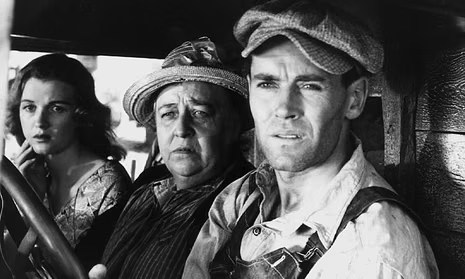
20th Century Fox’s adaptation of John Steinbeck’s novel presents the Joads, a family of Oklahoma sharecroppers, as they flee the 1930s Dust Bowl for what they hope will be the promised land of California. As anyone familiar with Steinbeck’s Pulitzer Prize-winning book knows, a combination of corrupt officials, con men and prejudices keeps things from getting better for them. The miserable plight of the Okies is reflected in the travails of Ma and Pa Joad (Jane Darwell and Russell Simpson), but it is Henry Fonda’s performance as son Tom that became iconic. His final monologue to Ma remains soul-stirring: “I’ll be everywhere, wherever you can look. Wherever there’s a fight so hungry people can eat, I’ll be there. Wherever there’s a cop beatin’ up a guy, I’ll be there. I’ll be in the way guys yell when they’re mad. I’ll be in the way kids laugh when they’re hungry and they know supper’s ready, and when the people are eatin’ the stuff they raise and livin’ in the houses they build—I’ll be there, too.” The Grapes of Wrath earned John Ford his second of four Best Director Oscars. Gregg Toland’s gorgeous cinematography did not score an Academy Award nomination, but he outdid himself the following year with his watershed work on Citizen Kane.
4. Roma (2018, dir. Alfonso Cuarón)
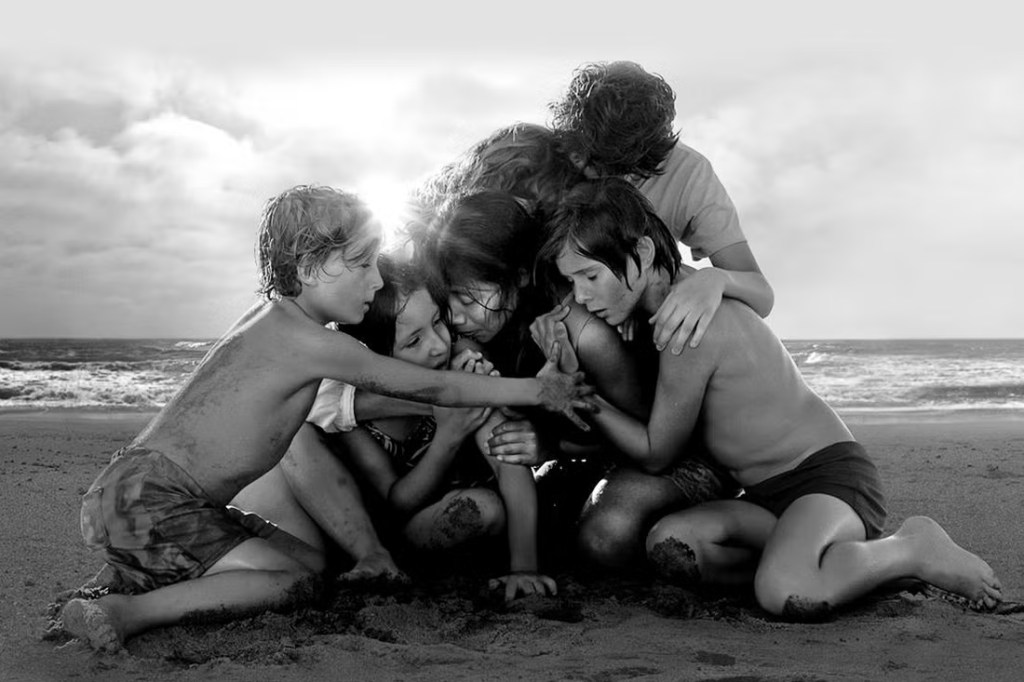
Alfonso Cuarón meticulously recreates the 1970s Mexico of his youth in this episodic drama that centers on Cleo (Yalitza Aparicio), a stoic, indigenous nanny and housekeeper navigating the invisible lines between servant and the family for whom she works. Reportedly based on a nanny instrumental in Cuarón’s own upbringing in the Roma section of Mexico City, the film toggles between two distinctly stratified Mexicos. Aparicio, who had never acted before, is outstanding. Lensed by Cuarón himself in stunning black and white, Roma delivers extraordinary set pieces: a violent protest as glimpsed through a department-store window, the surreal sight of a man singing while a forest fire rages behind him, and perilous moments along an ocean beach. “Cuarón uses one household on one street to open up a world, working on a panoramic scale often reserved for war stories, but with the sensibility of a personal diarist,” wrote critic Manohla Dargis in The New York Times. Cuarón—whose résumé includes Y tu mamá también (2001), Children of Men (2006) and Gravity (2016)—demonstrates again why he is one of cinema’s most virtuosic stylists.
3. The Rules of the Game (1939, dir. Jean Renoir)
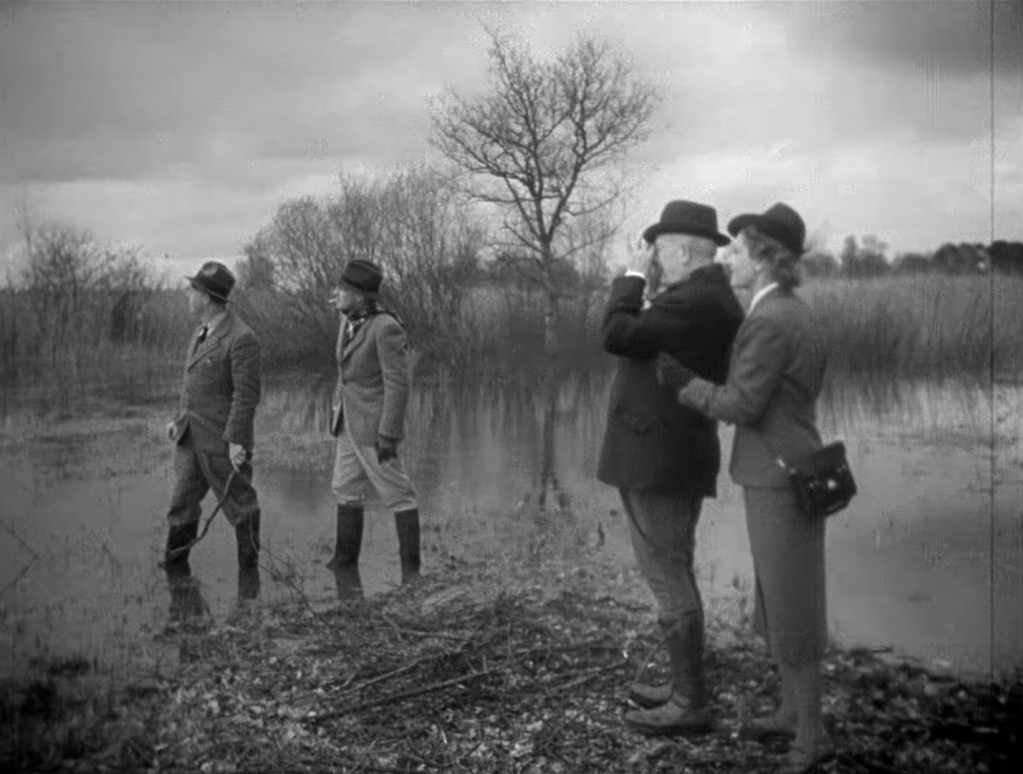
The Rules of the Game has appeared on Sight & Sound’s poll of the greatest films ever made since its inception in 1952, but Jean Renoir’s takedown of the bourgeoisie wasn’t always so celebrated. Many moviegoers stormed out of the film’s Paris premiere on July 7, 1939; Renoir later claimed one especially unhappy attendee tried to burn down the theater. France banned it as “depressing, morbid” and “having an undeniable influence” on younger audiences. Why the violently negative reaction? Renoir’s caustic but humane comedy of manners concerns members of the upper class, their illicit lovers and respective servants congregating at a country château for a weekend of rabbit hunting, a masked ball and attempts to follow propriety. “Renoir’s portrait of the French ruling class shows them as silly adulterous twits, with the working classes emulating them within their more limited means,” Roger Ebert writes in The Great Movies II. And yet The Rules of the Game is not without a measure of understanding for these characters—the fine ensemble cast is led by Nora Gregor, Marcel Dalio, Paulette Dubost and Renoir himself—and even some affection. Yes, masters and servants alike are frivolous, selfish, disloyal and, as made clear by the third act, breathtakingly callow. But, as Renoir’s character notes, “The awful thing about life is this: everyone has his reasons.” It is a truth that The Rules of the Game grudgingly accepts.
2. Bicycle Thieves (1948, dir. Vittorio De Sica)
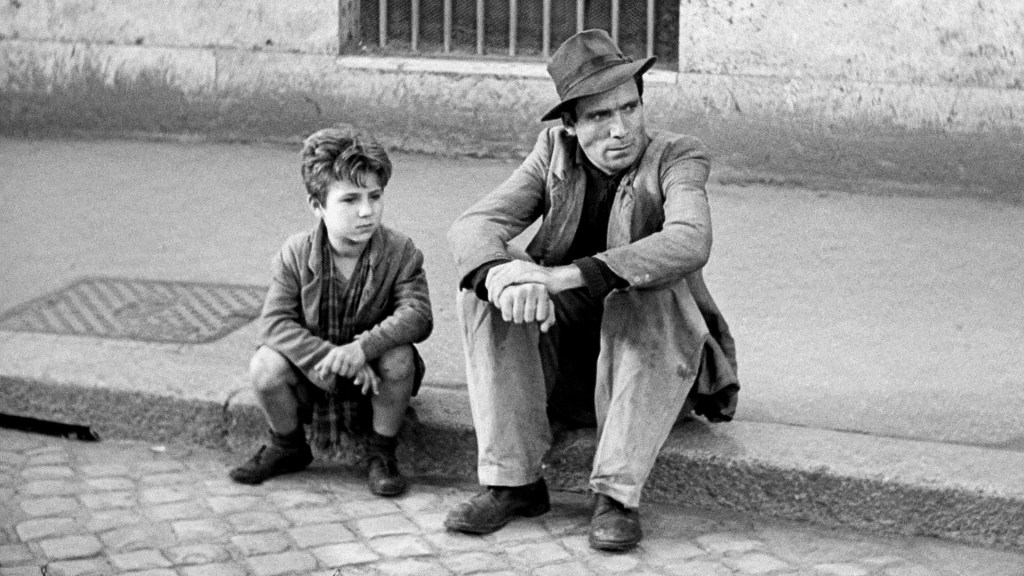
Antonio Ricci (Lamberto Maggiorani) needs work badly, but the potential job he has, hanging posters around Rome, requires a bicycle. He and his wife Maria (Lianella Carell) pawn their best bedsheets to get Antonio’s bike out of hock. The couple watch as a clerk takes the sheets and climbs up a massive tower of shelves stuffed with similar bundles. Antonio and Maria’s plight is a common one in postwar Italy. They retrieve the bicycle. Antonio brightens, sensing that things are finally looking up. But then the bike is stolen during his first day on the job. Desperate, he and his young son (Enzo Staiola) search the bustling city for not just a bike, but his only means for survival. At an outdoor market, they come across rows of bicycle parts—another sign that Rome is teeming with similar ordeals. Vittorio De Sica rejected David O. Selznick’s offer to finance the picture if Cary Grant played the father. Instead, the director turned to nonprofessional actors. Maggiorani worked in a steel factory; Staiola was a newsboy whom the filmmaker happened to spot during an early shoot. De Sica and screenwriter Cesare Zavattini’s film, one of the greatest works of Italian neorealism, won an honorary Oscar for Best Foreign-Language Picture. Bicycle Thieves captures the heart-wrenching reality of a family that is a single emergency away from utter devastation.
(See more in 10 memorable movie fathers.)
1. Parasite (2019, dir. Bong Joon Ho)

This South Korean sensation struck a global chord, becoming the first Korean film to win the Cannes Film Festival’s Palme d’Or and the first non-English-language movie to earn the Best Picture Oscar. We meet the impoverished Kim family—father Ki-taek (Song Kang-ho), mother Chung Sook (Jang Hye-jin), son Ki-woo (Choi Woo-sik) and daughter Gi-jeong (Park So-dam)—in their cramped basement apartment, feverishly trying to poach the Wi-Fi of neighboring businesses. Their parasitic instincts ratchet up when Ki-woo lands a job tutoring the teenage daughter of the wealthy Park family. One by one, the Kims cleverly exploit the gullibility of Mrs. Park (Cho Yeo-jeong) and replace the domestic help in the Parks’ dazzlingly modern house. Ki-taek cannot believe their good fortune. As a bonus, he notes that Mr. Park (Lee Sun-kyun) is nice even though he’s rich. Chung Sook corrects him: Mr. Park is nice because he’s rich. He has that luxury. The Kims scheme and deceive—often in uproariously comic fashion—but are the Parks any less predatory? Parasite resonated loudly in South Korea for its illustration of hell Joseon, or “Korean hell,” the increasing disparities between socioeconomic classes. Bong Joon Ho and co-writer Han Jin-won seem to suggest that class distinctions in their native country, and perhaps everywhere, are not easily crossed. Mr. Park can smell poor people; he says they have the scent of the subway. “I can’t stand people who cross the line,” he tells Ki-taek. Lines, the literal kind, are everywhere in Parasite. Bong and director of photography Hong Kyung-pyo favor angular compositions, and the Park house, an architectural marvel, certainly has lines to spare. Just don’t cross them. There is much more to the movie, which shifts from satire to horror to tragedy. In the end, Parasite eyes the class divide through the lens of two families, both of whom are, to varying degrees, predatory. The family that preys together, stays together.
Honorable mention: Ali: Fear Eats the Soul (1974, dir. Rainer Werner Fassbinder), À Nous la Liberté (1931, dir. René Clair), The Discreet Charm of the Bourgeoisie (1972, dir. Luis Buñuel), The Florida Project (2017, dir. Sean Baker), Gosford Park (2001, dir. Robert Altman), Harakiri (1962, dir. Masaki Kobayashi), La Cérémonie (1995, dir. Claude Chabrol), La Dolce Vita (1960, dir. Federico Fellini), La Haine (1995, dir. Mathieu Kassovitz), Salaam Bombay! (1988, dir. Mira Nair), Salt of the Earth (1954, dir. Herbert J. Biberman), Secrets & Lies (1996, dir. Mike Leigh), Sorry We Missed You (2019, dir. Ken Loach), Trading Places (1983, dir. John Landis), Triangle of Sadness (2022, dir. Ruben Östlund)


6 responses to “The 15 best films that explore class divides”
[…] This masterpiece from Masaki Kobayashi unspools an unforgettable revenge saga while systematically dismantling the hollow morality of the samurai code. Set in the 17th century, Harakiri presents Tsugumo Hanshirō (Tatsuya Nakadai), a down-on-his-luck rōnin who visits the house of the samurai Ii clan, requesting use of their courtyard to commit seppuku, or harakiri. But clan leader Kageyu Saitō (Rentarō Mikuni) is skeptical, believing that the rōnin who make such requests are just trying to elicit sympathy and some money before being sent on their way. In fact, Saitō tells Hanshirō of an earlier incident in which a young man (Akira Ishihama) came to the House of Ii asking to kill himself on their estate. But the clan leadership called his bluff and forced the rōnin to follow through by disemboweling himself with a meager sword made of bamboo. Saitō’s horrific story prompts Hanshirō to tell his own tale, and it’s a doozy. Kobayashi expertly builds the tension with a measured pace and control that mirrors Hanshirō’s calculated plan. Harakiri is gorgeous, Yoshio Miyajima’s stunning black-and-white cinematography marked by fluid camera movement. The spare elegance of the setting proves ironic. Hanshirō knows that the samurai assembled to hear him, men who presumably treasure honor and tradition, are repugnant hypocrites. This rōnin is determined to reveal their code to be as empty as the ancient suit of armor that the Ii clan display with reverence.(See more in the 15 best films that explore the class divide.) […]
LikeLike
[…] London optometrist Hortense Cumberbatch (Marianne Jean-Baptiste), grieving the recent death of her adopted mother, consults a social services worker for information about the birth mother she has never known. Hortense, who is Black, is shocked to find that her birth mum, factory worker Cynthia Purley (Brenda Blethyn), is white. Hortense reaches out. The emotional fallout is devastating. Secrets & Lies, which won the Palme d’Or at the Cannes Film Festival, examines the seismic impact of a secret revealed. Blethyn is spectacular, a creature of fear, fragility and self-pity. Already heartbroken that the 20-year-old daughter she lives with clearly despises her, Cynthia finds in Hortense a welcome opportunity to forge a healthy mother-daughter relationship––if only Cynthia can keep out of her own way. The scene where the two meet is an extraordinary feast of acting.(See more in The 15 best films that explore the class divide.) […]
LikeLike
[…] Sean Baker excels at telling the stories of forgotten people. The Florida Project, his follow-up to 2015’s Tangerine, uses a coming-of-age framework to explore life in the crumbling cinderblock motels shadowing Orlando’s Disney World. The filmmaker’s deceptively shambling style gives his cast, especially nonprofessional young actress Brooklynn Prince as a feisty 6-year-old, ample room to disappear into their roles. More than most pictures featuring kids, The Florida Project nails the stupid, terrifying, wickedly hilarious universe of childhood. There is a moral center in the person of Willem Dafoe, exuding quiet decency as the manager of the ironically named Magic Castle Motel. The title was the placeholder that Baker gave the film throughout pre-production, and the name stuck. It is fitting for a movie in which nothing happens and everything happens.(See more in The 15 best films that explore class divides.) […]
LikeLike
[…] The DNA of 1950s Hollywood melodramas, particularly Douglas Sirk’s All That Heaven Allows (1955), is evident in Ali: Fear Eats the Soul. Rainer Werner Fassbinder uses the love story of a 60-year-old cleaning woman and a much younger Arab man in postwar West Germany to explore the xenophobia endured by many immigrants. Brigitte Mira plays Emmi, a widow whose chance meeting in a bar with Ali (El Hedi ben Salem), a strapping Moroccan mechanic, leads to an unlikely romance. They marry, but the union is fraught with tension, and not merely because of the marked age difference between them. “Germans with Arabs, not good,” Ali tells Emmi. “Arabs not human in Germany.” Emmi is soon ostracized by her adult children, neighbors, and coworkers. Feebly, she tries to excuse the racism that surrounds her, but also succumbs to it. It is noteworthy that Emmi, a onetime member of the Nazi party, drags Ali to a restaurant that had been a favorite of Adolf Hitler’s. Shot in two weeks on a tight budget, Ali: Fear Eats the Soul underscores the complexities of humanity’s need for acceptance and penchant for tribalism. In a strange epilogue to the filming, Salem fled West Germany after stabbing three people two years after the picture’s release. He was arrested in France, but took his own life while in custody in 1977. Fassbinder dedicated his final movie to Salem, who had been an ex-lover.(See more in The 15 best films that explore class divides.) […]
LikeLike
[…] This classic begins with a potent image: a helicopter flies over Rome toward Vatican City as a large statue of Jesus, its arms outstretched, hangs by a rope below. A second chopper follows close behind with newspaper people, including our protagonist, tabloid reporter Marcello (Marcello Mastroianni), and his photographer, Paparazzo (Walter Santesso)—whose name would go on to define an entire species of celebrity shutterbug. Is God leaving the city to make way for more decadent pursuits? Marcello spies attractive, bikini-clad women sunbathing on a penthouse roof. They wave to him; he gestures that he would like their phone number. The roar of the rotors makes meaningful conversation impossible, an early sign that Marcello will be surrounded by people yet unable to make a genuine connection. In La Dolce Vita, translated from Italian as “the sweet life,” Federico Fellini tests the tension between the lofty and the base, substance and vacuity, virtue and sin—all established in that arresting opening.(See more in The 10 best uses of manmade landmarks in film and The 15 best films that explore class divides.) […]
LikeLike
[…] The empty “sweet life” of La Dolce Vita is at its most rapturous when Marcello Mastroianni and Anita Ekberg, as tabloid reporter Marcello and American movie star Sylvia, wander the streets of Rome as night creeps toward dawn. The pair end up at the Trevi Fountain. Sylvia wades in; the smitten Marcello follows her—two beautiful people who almost, but don’t, kiss. The image epitomizes the desire that pervades La Dolce Vita, but the filming itself was far from cozy. It took a week in March of 1959, with both actors spending hours standing in frigid water. Federico Fellini later claimed Ekberg scarcely noticed the cold, whereas Mastroianni wore a wetsuit beneath his clothes and fortified himself with vodka between takes. The days of moseying into the fountain are long gone. Rome now fines wading tourists up to €500 and has banned more than one Fellini enthusiast from the fountain for life(See more in The 20 best opening scenes in film and The 15 best films exploring class divides.) […]
LikeLike