From car radios to Social Security, some good things emerged from the Great Depression––the screwball comedy being one of them. After all, the genre was very much about humiliating the upper-class. Painting the nation’s wealthy as ridiculous, eccentric and stupid was more than welcome when millions of Americans were out of work or losing their homes.
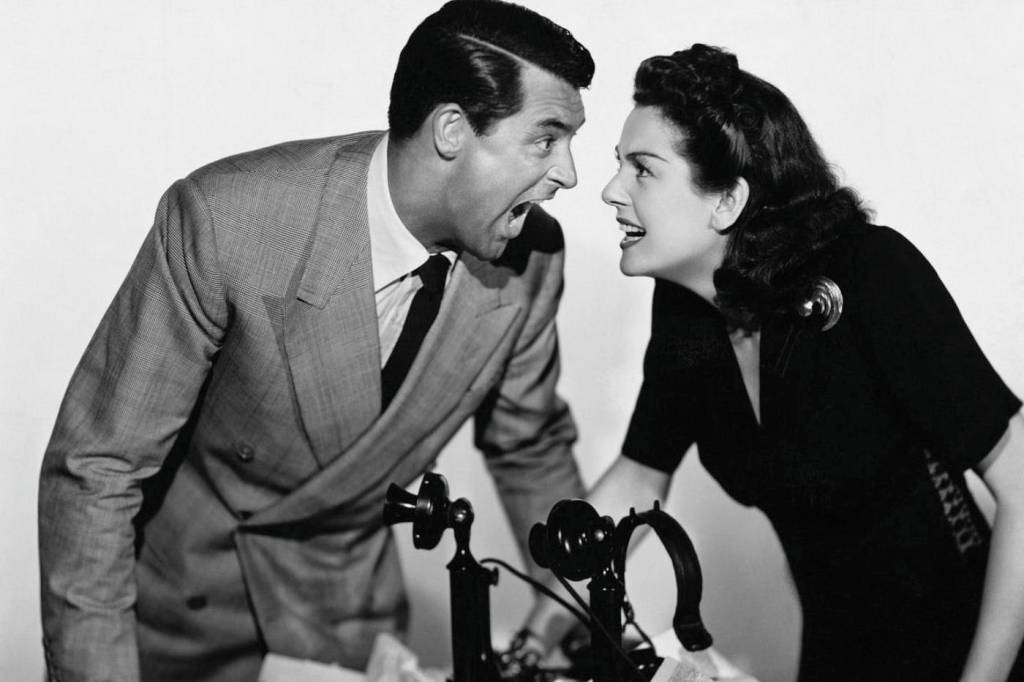
But screwball comedies were also about sexual politics. It Happened One Night isn’t one of my 10 favorites, but Frank Capra’s road-trip romance certainly helped popularize the genre and cement some of its characteristics. Screwball flicks showcase the battle of the sexes, are often about mistaken identities and typically involve increasingly absurd predicaments. Restrictions imposed by the Production Code also contributed to their formation. For filmmakers like Ernst Lubitsch, Howard Hawks and Preston Sturges, the challenge of passing muster with censors was an opportunity to flex creativity. Movies could still be racy; they just had to be more winking about it.
Oh, and the characters needed to talk faster. Much faster.
Here are the 10 best screwball comedies according to me.
10. Midnight (1939, dir. Mitchell Leisen)
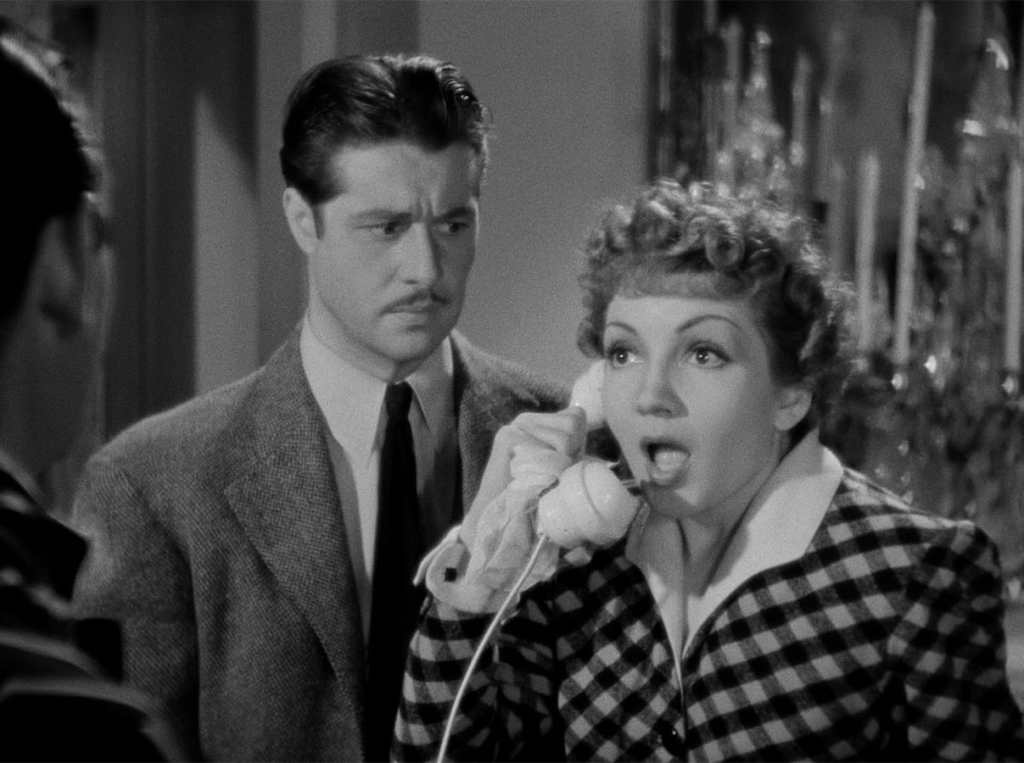
Claudette Colbert stars as Eve Peabody, a fetching American chorus girl newly arrived, albeit penniless, in Paris. A Hungarian taxi driver, Tibor Czerny (Don Ameche), takes a shine to her, but Eve gives him the slip when he comes on too strong. While Tibor rallies together his fellow cabbies to find Eve, she finagles her way into the city’s upper crust and gets ensnared in a love triangle involving a rich married couple (John Barrymore and Mary Astor) and a playboy (Francis Lederer). While director Mitchell Leisen keeps things fast and lively, he is fortunate to boast Colbert, Ameche and Barrymore all at the top of their game. Screenwriters Billy Wilder and Charles Brackett juggle ruse after ruse at an almost dizzying pace.
9. Twentieth Century (1934, dir. Howard Hawks)
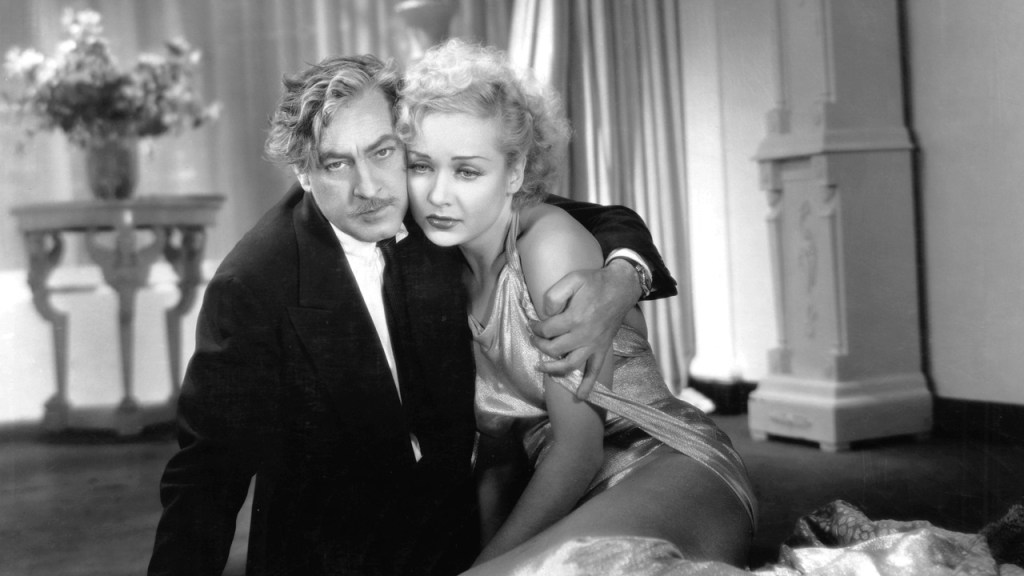
An alchemical collaboration between Howard Hawks and the writing team of Ben Hecht and Charles MacArthur (Hawks later adapted their play The Front Page, see #2), Twentieth Century gets its rhythm aboard the once-famed luxury train that ran from Chicago to New York. Hawks wisely lobbied Columbia Pictures to give his second cousin, Carole Lombard, a chance to try her hand at being funny. The gambit paid off and the movies had found their queen of screwball comedy. Lombard finds an appropriate foil in John Barrymore as a monumentally arrogant theater director who transforms her character from lingerie model to star of the stage, but can’t abide it when she leaves him for Hollywood.
8. The Awful Truth (1937, dir. Leo McCarey)
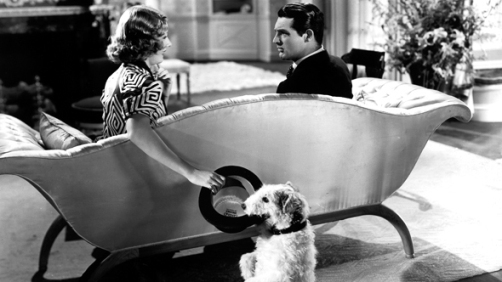
Cary Grant and Irene Dunne shine as Jerry and Lucy Wariner, a warring married couple who agree to divorce shortly after the film opens. The grounds seem straightforward. Lucy has been out all night with her singing instructor, while Jerry is scurrying to get a fake tan to go along with the fake alibi that he’s been vacationing in Florida. But the Wariners must wait 90 days to finalize the split. The delay gives them enough time for the requisite straying and second-guessing before they realize they’re still crazy about each other. That’s no spoiler. The Awful Truth’s ending is never in doubt. Although director Leo McCarey had strong source material in Arthur Richman’s Broadway play, he also encouraged his talented cast to improvise. Grant didn’t care for that process much and pleaded to be let out of his contract. But McCarey held firm and went on to win the Academy Award for Best Director.
7. Bringing Up Baby (1938, dir. Howard Hawks)
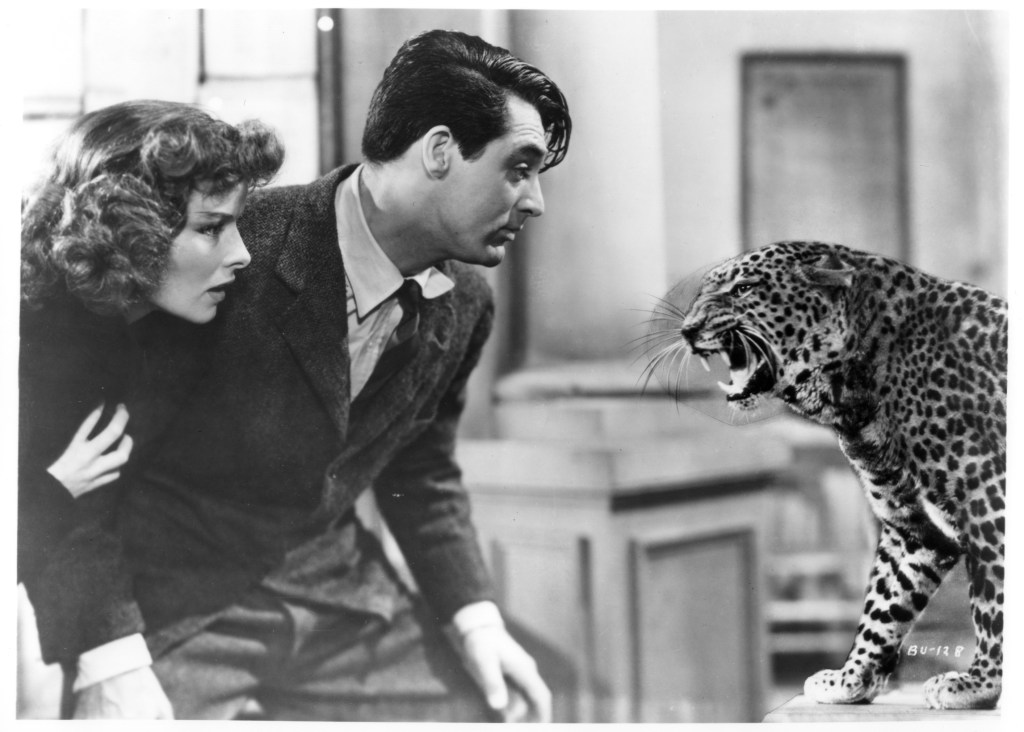
Movie buffs often cite Bringing Up Baby as the pinnacle of the genre. Howard Hawks didn’t invent the screwball comedy, but no one did it better (well, maybe Lubitsch). Katharine Hepburn is the impetuous, dizzy Susan Vance, whose every action somehow leads to catastrophe for David Huxley, an absent-minded paleontologist played by a very game Cary Grant, who proves delightfully pratfall-happy. Susan is an inadvertent terror for the tightly wound David, but, of course, she is also his salvation. Despite his having a fiancée, we never doubt that Susan and David are destined for each other. All this, and a leopard named Baby. Hepburn and Grant demonstrate terrific chemistry together. While the picture gets a bit too farcical for my taste, Hawks deftly accentuates the high energy with a rapid-fire pace and overlapping dialogue.
6. What’s Up, Doc? (1972, dir. Peter Bogdanovich)
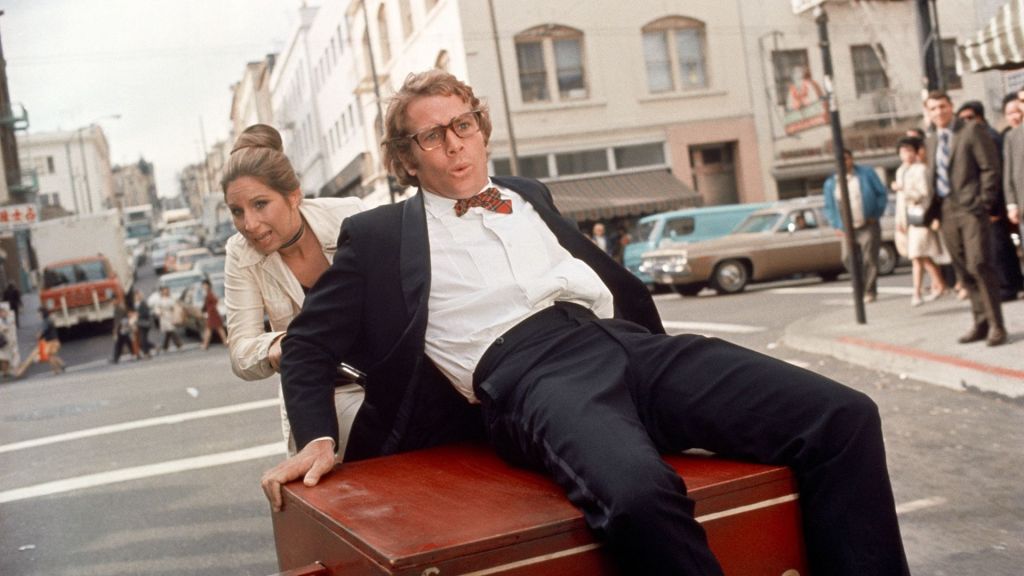
The screwball comedy is magically transplanted to the 1970s in Peter Bogdanovich’s love letter to the genre popularized by Howard Hawks, one of his directorial heroes. The narrative, in fact, isn’t far removed from Hawks’ Bringing Up Baby (see #7), only this time around, the kooky free spirit is Barbra Streisand as Judy Maxwell and the buttoned-up academic type she torments and wins over is Ryan O’Neal as Howard Bannister. The clever script by the powerhouse team of Buck Henry, Robert Benton and David Newman barely pauses for breath, and Bogdanovich choreographs the slapstick with military precision. It’s no small feat that both Streisand and O’Neal keep their somewhat prickly personas are kept in check, but the entire cast is in top form, particularly Madeline Kahn (in her movie debut) as Howard’s hapless fiancée and Kenneth Mars as Howard’s pompous rival in the world of musicology.
5. The Philadelphia Story (1940, dir. George Cukor)
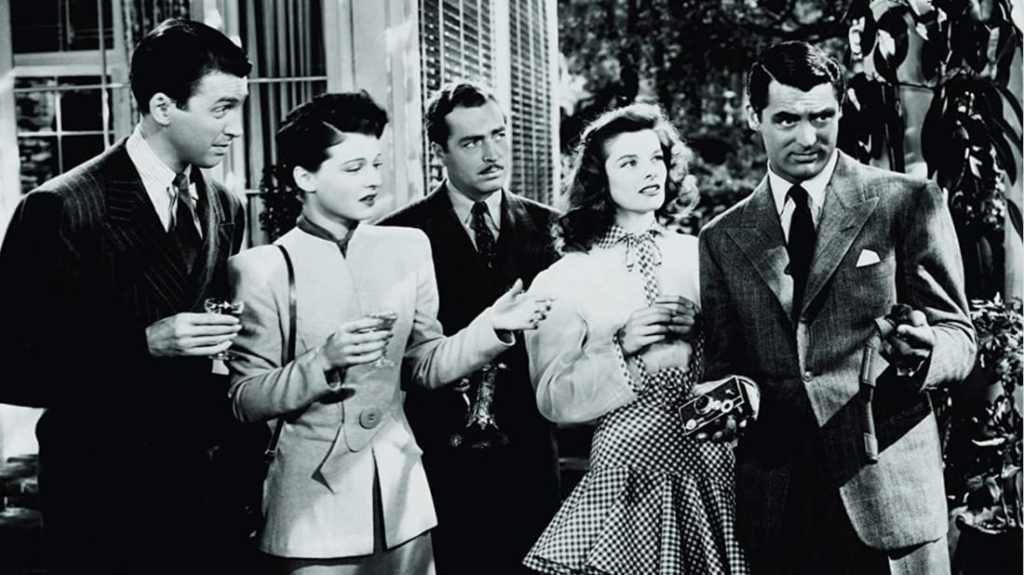
Katharine Hepburn put her Mid-Atlantic accent to glorious use as Tracy Lord, an ultra-refined Philadelphia heiress about to tie the knot for the second time. Before she can walk down the aisle to marry the wrong man, however, Tracy is drawn to James Stewart as a leftist magazine writer covering the high-society wedding. Also in the mix is Cary Grant as Tracy’s shrewd ex-husband, C.K. Dexter Haven. Fizzy, charming, and more sophisticated than many screwball comedies, The Philadelphia Story’s love triangle keeps us guessing until the end as to who will end up with Tracy. A year before the film’s release, Hepburn had revived her flailing career by playing Tracy Lord on the Broadway stage (playwright Philip Barry had tailored the part for her). Recognizing great dialogue when she read it, Hepburn cajoled her then-lover Howard Hughes into purchasing the movie rights for her. Stewart and screenwriter Donald Ogden Stewart took home Oscars for their work.
4. The Lady Eve (1941, dir. Preston Sturges)
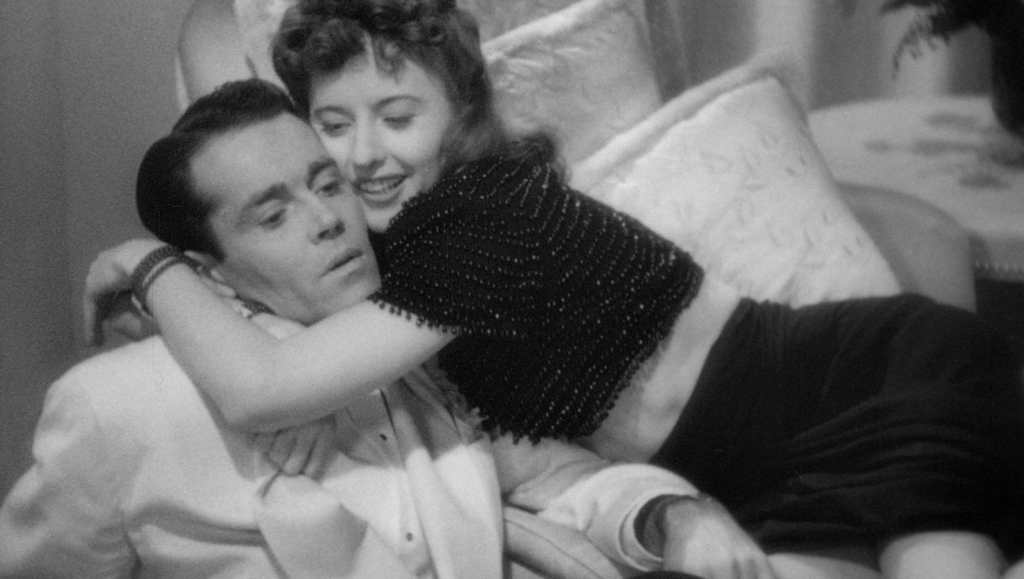
Preston Sturges injected screwball comedies with sophistication and wit without skimping on the slapstick. Nowhere is that more apparent than in the intoxicating, romantic, light on its feet and effortlessly charming The Lady Eve, Sturges’ third feature as writer-director. Barbara Stanwyck plays Jean Harrington, a con artist traveling first class aboard an ocean liner with her equally crooked father (a hilarious Charles Coburn). When she spots Charles “Hopsie” Pike (Henry Fonda), the hopelessly naive heir to a beer dynasty, Jean resolves to seduce and fleece him. Alas, love gets in the way. Stanwyck is vivacious and sexy; her seduction scene with Fonda in her stateroom is one for the ages. She also proves to be the perfect foil to the aw-shucks innocence of Fonda, who demonstrates some fine comic chops and a gift for falling down.
(See more in The 25 best love stories in film.)
3. My Man Godfrey (1936, dir. Gregory La Cava)
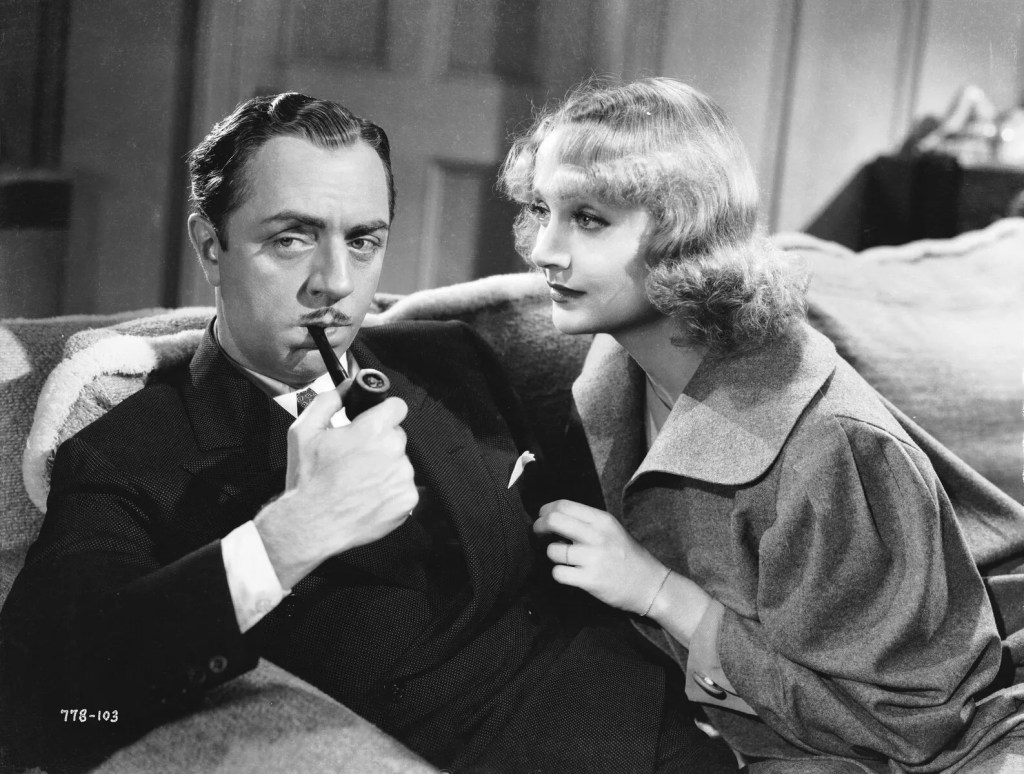
The Bullocks, a family of wealthy New York eccentrics, entertain themselves with a scavenger hunt in which one of the items is a “forgotten man” of the Depression. They find their aforementioned hobo, Godfrey Smith (William Powell), near the waterfront. Although Godfrey is secretly part of the privileged class, he allows himself to be claimed as a scavenger prize so the Bullocks’ youngest daughter, Irene (Carole Lombard, in a vivacious turn), can win. Godfrey becomes the family butler and Irene becomes enamored with the new servant. “We are dealing with one of the most amazing screwball comedies ever made,” writes film historian David Thomson, “in which the poor behave decently and quietly and the rich are demented monkeys.” For Depression-era moviegoers, watching the rich get schooled was anything but depressing. My Man Godfrey goes down like champagne.
2. His Girl Friday (1940, dir. Howard Hawks)
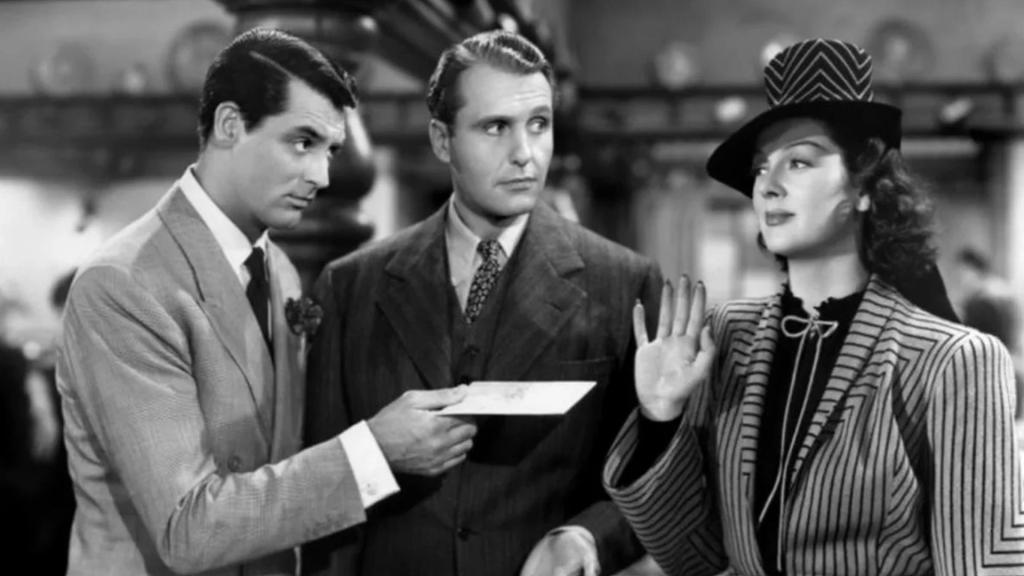
For Hollywood’s second adaptation of the hit Broadway play The Front Page, Howard Hawks expertly deploys overlapping dialogue to give the renamed His Girl Friday a machinegun pace. The director instructed his actors to start and end their lines with a few inconsequential words so that audiences would still be able to catch the meat of the snappy banter. And this is talk––cynical, misanthropic, occasionally tasteless––worth savoring, an apt reflection of the gallows humor of Chicago newspapermen back in the day. The bigger innovation, of course, was changing the character of Hildy Johnson, male star journalist, to Hildy Johnson, female star journalist. Rosalind Russell is Hildy and Cary Grant is her editor and ex-husband, the conniving Walter Burns. Suddenly what had been a comedy about hardboiled newspaper reporters became a romantic comedy about hardboiled newspaper reporters. Russell and Grant both sparkle, but they receive excellent support from Ralph Bellamy as Hildy’s clueless fiancé. (“He looks like that fellow in the movies––Ralph Bellamy.”)
(See more in The 10 best journalism movies.)
1. Some Like It Hot (1959, dir. Billy Wilder)
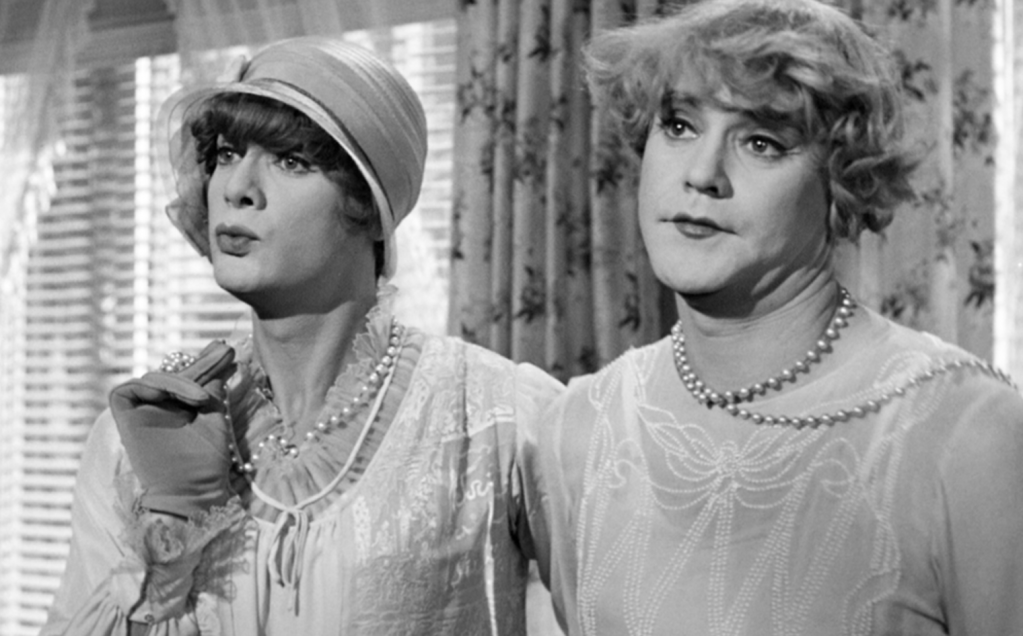
The American Film Institute has named Some Like It Hot as the funniest American movie of all time, and it’s hard to argue otherwise. This masterpiece by writer-director Billy Wilder and co-writer I.A.L. Diamond remains as fresh and daring as ever. Set in the anything-goes days of 1929, the story concerns a pair of male jazz musicians who must get out of Chicago quickly after accidentally witnessing the St. Valentine’s Day Massacre. The best way to hide from the mob? Masquerading as women to join an all-girl band, of course. Tony Curtis and Jack Lemmon are wonderful as the musicians in drag, but they must share the screen with Marilyn Monroe, who is part sex kitten and part innocent naif as the band’s unlucky-in-love singer, Sugar Kane Kowalczyk. Some Like It Hot is loaded with comic gems, however, from George Raft mocking his own off-screen association with gangsters to Joe E. Brown, who uses that elastic face of his to perfect effect as a lecherous millionaire with designs on Lemmon’s female alter ego.
Honorable mention: Ball of Fire (1941, dir. Howard Hawks), Easy Living (1937, dir. Mitchell Leisen), Flirting with Disaster (1996, dir. David O. Russell), Holiday (1938, dir. George Cukor), Intolerable Cruelty (2003, dir. Joel Coen), It Happened One Night (1934, dir. Frank Capra), The Miracle of Morgan’s Creek (1943, dir. Preston Sturges), The Palm Beach Story (1942, dir. Preston Sturges), Theodora Goes Wild (1936, dir. Richard Boleslawski), To Be or Not to Be (1942, dir. Ernst Lubitsch)
 Cutting to the Chase with Phil Bacharach
2 responses to “The 10 best screwball comedies”
[…] Ernst Lubitsch’s comedy transforms a bumbling troupe of actors in Nazi-occupied Poland into unlikely resistance fighters, using their theatrical skills—disguise, impersonation, timing—as weapons against the Third Reich. Jack Benny and Carole Lombard are sublime as Joseph and Maria Tura, the married couple who headline the troupe and tussle with Nazis while Joseph tries to scuttle Maria’s dalliances with a handsome Polish soldier (Robert Stack). Released just months after the United States entered World War II, and shortly after Lombard’s death in a plane crash while selling war bonds, the picture’s ballsy takedown of Adolf Hitler confounded movie audiences and critics of the time. “In another era, the film undoubtedly would have been more thoughtfully received and had a wider success,” film scholar Joseph McBride notes in How Did Lubitsch Do It? “But it is precisely because To Be or Not to Be came out when it did that it is so extraordinary and as valuable as a time capsule of a great artist’s highly idiosyncratic response to a world crisis.” Today, it stands as one of the sharpest and funniest examples of theater as both performance and survival.(See more in The 10 best screwball comedies.) […]
LikeLike
[…] One of the earliest screwball comedies, It Happened One Night became a massive hit for Columbia Pictures by tapping into the romance of life on the road and helping lay the groundwork for the modern road movie. It helped to have two beautiful stars, of course. Clark Gable is a down-on-his-luck newspaperman who realizes the spoiled heiress Ellie Andrews (Claudette Colbert) he meets on a Greyhound bus is on the run from her overbearing father. Naturally, they detest each other—until, just as naturally, they fall in love. Oscar voters swooned for the film’s playfully sexy hijinks; it won Academy Awards for Best Picture, Director, Actor, Actress and Screenplay, a feat not repeated until One Flew Over the Cuckoo’s Nest (1975) and The Silence of the Lambs (1991). Undershirt manufacturers were less enchanted. Sales plummeted after Gable took off his shirt in one scene to reveal his bare chest. (See more in The 10 best screwball comedies.) […]
LikeLike