When Shakespeare wrote, “All the world’s a stage, and all the men and women merely players,” that guy was really onto something. Not only is the artifice of the theater a nifty microcosm for life, but it lends itself to great drama: naked ambition, professional rivalries, the hunger for applause.
Pre-Code Hollywood understood the appeal of such stories in crowd-pleasers like 42nd Street, Footlight Parade and Gold Diggers of 1933. While the backstage musical has faded as a movie staple, filmmakers still know its worth and give us occasional gems like Topsy-Turvy or Birdman or (The Unexpected Virtue of Ignorance).
These are the 10 best films about the theater, says I.
10. Bullets Over Broadway (1994, dir. Woody Allen)
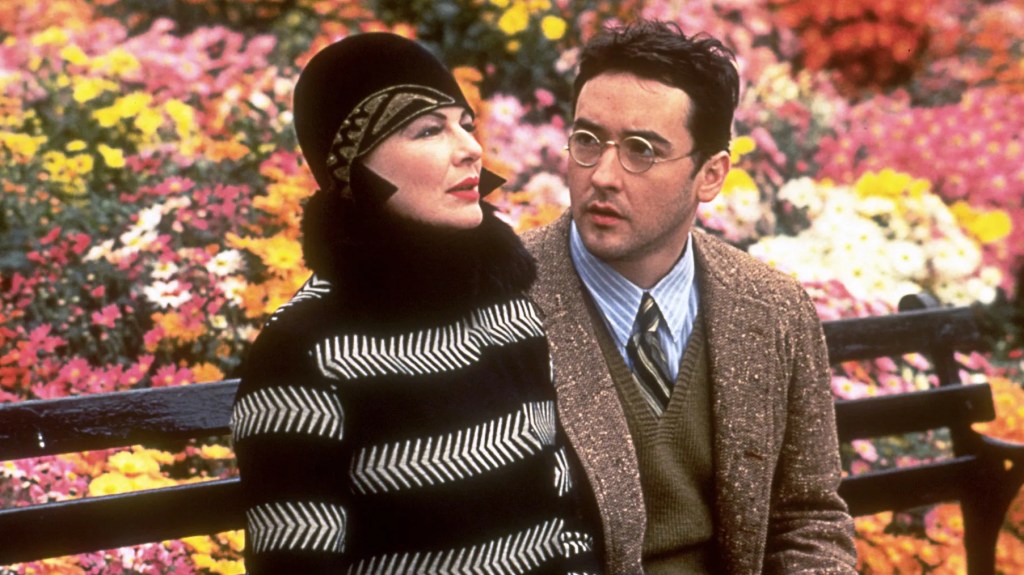
John Cusack is David Shayne, an earnest playwright forced to cast a gangster’s mistress (Jennifer Tilly) in his latest play, God of Our Fathers, as a condition for having it produced on Broadway. A big ensemble comedy, Bullets Over Broadway deploys Woody Allen’s frothy wit in the well-worn art vs. commerce battle. There is game work from Tilly, Chazz Palminteri and Tracey Ullman, among others, but Dianne Wiest, who won a Best Supporting Actress Oscar, is particularly splendid as a grande dame of the theater and—not coincidentally—a masterful manipulator. No one can goose pomposity more than Allen—except, of course, for the times he indulges his own pomposity.
9. All That Jazz (1979, dir. Bob Fosse)
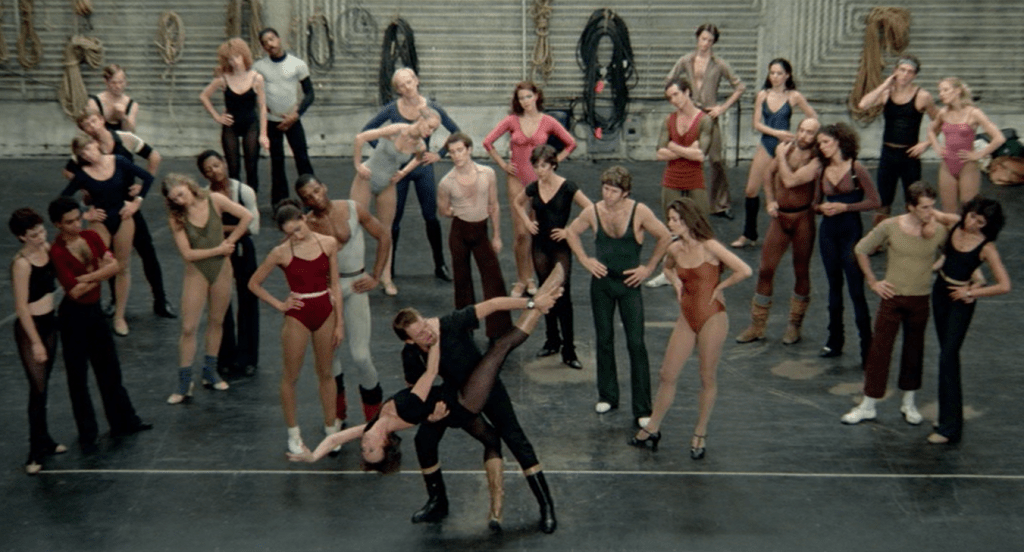
Writer-director Bob Fosse’s quasi-autobiographical All That Jazz turns the self-destruction of artistic obsession into a razzle-dazzle, albeit self-lacerating, fantasia. “It’s showtime, folks,” is the daily mantra of Roy Scheider’s Joe Gideon, a not-so-veiled Fosse surrogate, as he juggles a crush of rehearsals, editing rooms, ex-wives, girlfriends, and a pharmacy’s worth of pills. It is hardly surprising that Joe’s serial womanizing extends to his flirtation with Jessica Lange’s angel of death. That creepy courtship culminates in one of the most audacious and devastating finales in movie musical history. Call it 8½ with jazz hands.
8. Topsy-Turvy (1999, dir. Mike Leigh)
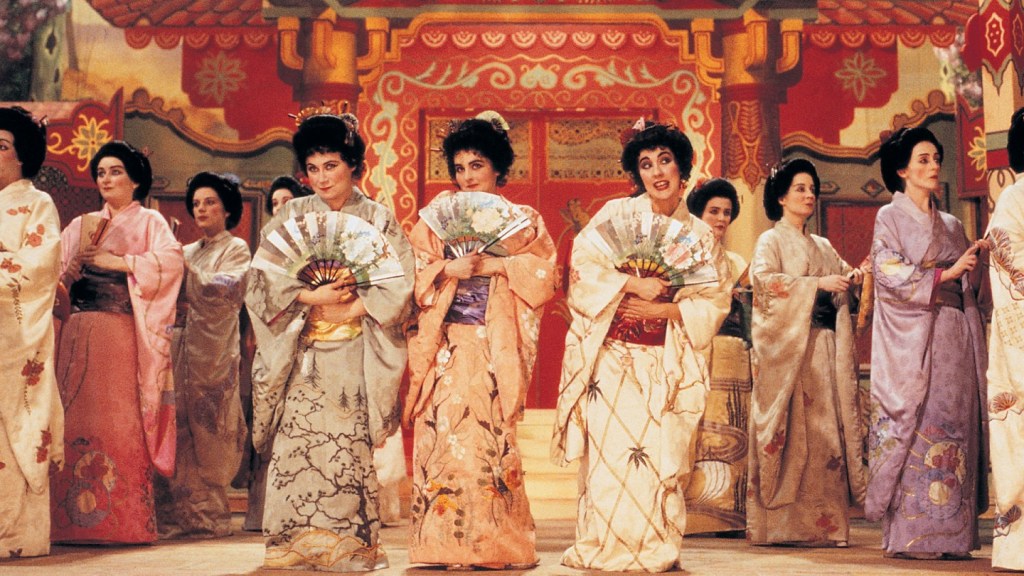
Mike Leigh’s deep dive into the creation of Gilbert and Sullivan’s 1885 comic opera The Mikado is less a biopic than a painstaking recreation of the theatrical process—the arguments, the fittings, the blocking, the endless refinements of a lyric or a gesture, the bruised egos. Leigh’s famously rigorous rehearsal methods, in which actors develop their characters through months of improvisation before a word of scripted dialogue is spoken, pay off handsomely here. Topsy-Turvy is not fair-weather viewing. It’s more than two and a half hours, but the picture is consistently engaging and gives the large cast room to let their characters breathe. Jim Broadbent and Allan Corduner are especially fine as the prickly collaborators—Broadbent is all blustery impatience as W.S. Gilbert, Corduner a study in disciplined creativity as Arthur Sullivan. Few films capture the sheer labor of the theatrical process with such tactile specificity, or such affection for it.
7. 42nd Street (1933, dir. Lloyd Bacon)
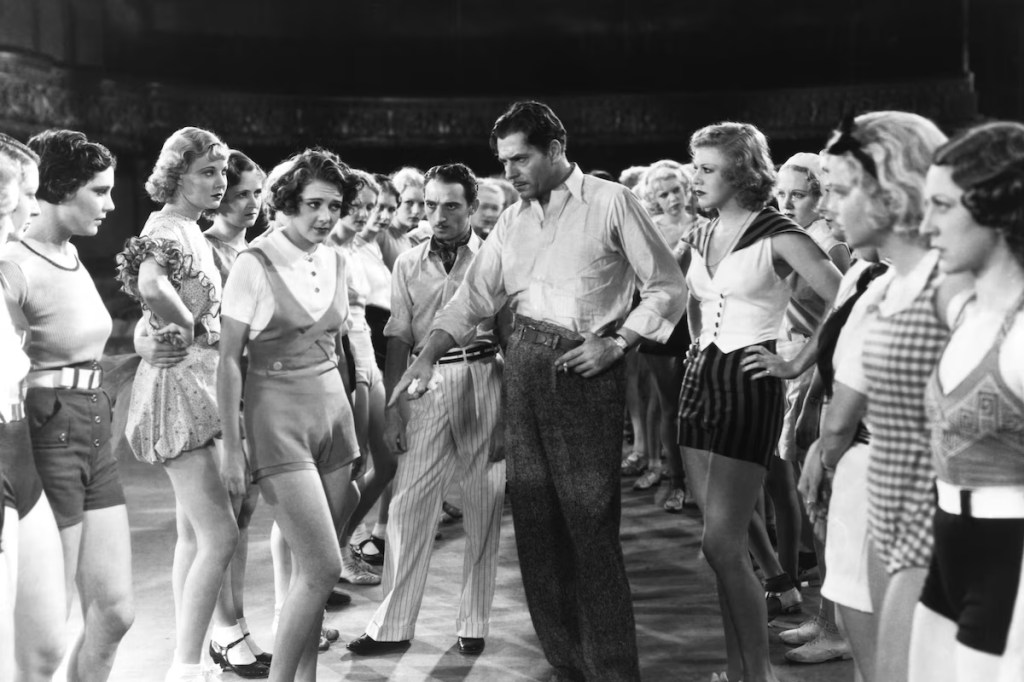
Long before they became the stuff of cliché, 42nd Street helped codify the tropes of the backstage musical. This agreeably ditsy gem follows the evolution of the fictional Broadway show, Pretty Lady, which might be a hit if it can withstand all the backstage intrigue. Salacious producer Abner Dillon (Guy Kibbee) is sugar daddy to actress Dorothy Brock (Bebe Daniels), for whom he has secured the lead. Abner doesn’t know Dorothy is two-timing him with her former vaudeville partner (George Brent). The show’s director, Julian Marsh (Warner Baxter), one flop away from a nervous breakdown, worries that Dorothy’s duplicity might threaten the financing. The grueling rehearsals are testing even Abner’s appetite for ogling chorus girls. “After three weeks of this, a leg ain’t nothing to me but something to stand on,” he says ruefully. Then there is that swell chorus girl (Ruby Keeler) who must step in to save the show. Will she nail her big break? Is there really any doubt? Featuring the singular, kaleidoscopic choreography of Busby Berkeley, 42nd Street is good-natured, goofy fun.
(See more in The 20 best Pre-Code movies.)
6. Birdman or (The Unexpected Virtue of Ignorance) (2014, dir. Alejandro G. Iñárritu)
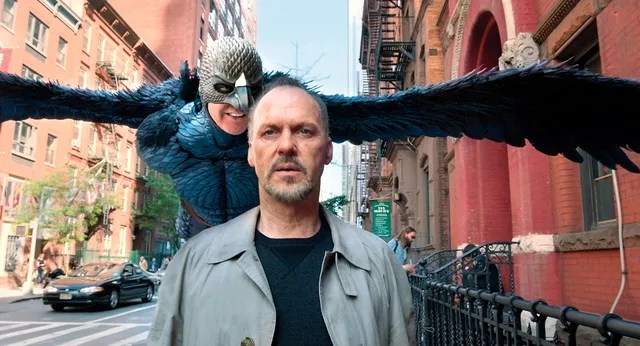
Pretentiousness is baked into this exhilarating, wonderfully weird tale of a Broadway production in meltdown. Michael Keaton is Riggan Thomson, a washed-up movie superhero who fled his Birdman franchise to risk what remains of his reputation on more serious fare. Capturing the jittery rhythms of a man on the verge of implosion, Riggan is plagued by problems ranging from a possibly pregnant lover (Andrea Riseborough) to a daughter recently out of drug rehab (Emma Stone). Moreover, he is tormented by the inner voice of the fictional Birdman and the outer voice of a disparaging theater critic (Lindsay Duncan). The film lampoons the preening self-regard of showbiz even while reveling in it, and while that approach can be vexing—Birdman wants to have its melodrama and peck at it, too—it is always engaging. Director Alejandro G. Iñárritu and cinematographer Emmanuel Lubezki stage the film to appear as a single shot. The camera is in near-constant motion, snaking along theater hallways and gliding through city streets, making for a movie that soars—sometimes literally.
5. The Producers (1967, dir. Mel Brooks)
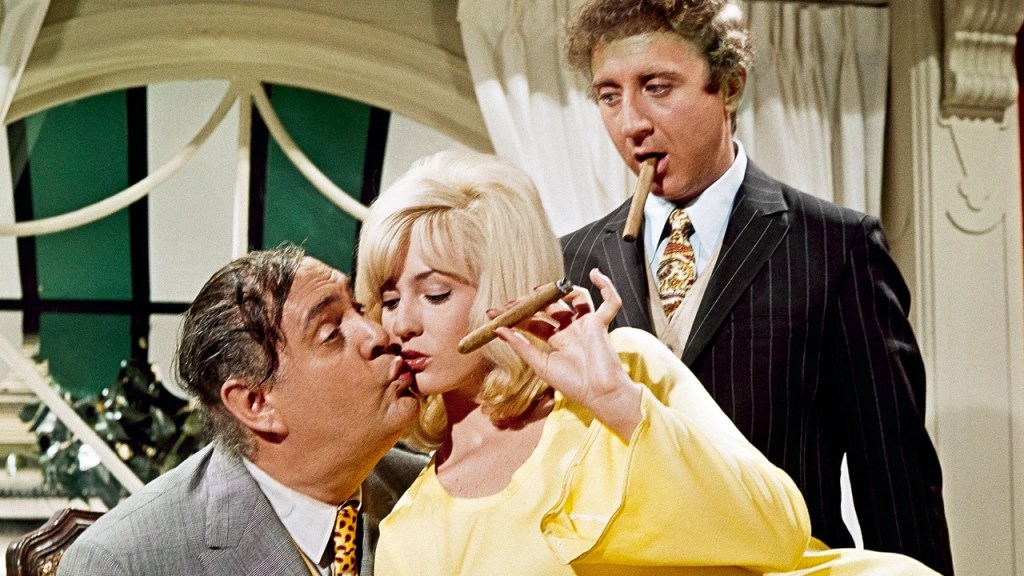
Mel Brooks leaped into moviemaking with this farce of two Broadway producers who scheme to make a fortune by raising money for a musical so irredeemably tasteless that it will close shortly after opening, thereby letting them pocket the money. Back when Brooks wrote and directed The Producers, he surely imagined nothing could be more reprehensible than a peppy musical about Nazi Germany titled Springtime for Hitler. That sentiment seems quaint in the 21st century, where some political quarters treat Hitler with reverence, but this remains one of the all-time great comedies. The performances of Zero Mostel, Gene Wilder and Kenneth Mars are big, broad and as indelicate as a heaping pastrami-on-rye at Katz’s Deli. Some of Brooks’ more dated, homophobic jokes land with a thud today, but Christopher Hewett and Andreas Voutsinas are damn hilarious as the show’s fey director and his assistant/implied paramour. Best of all is Dick Shawn as an LSD-fried, flower-child fuhrer.
4. Children of Paradise (1945, dir. Marcel Carné)
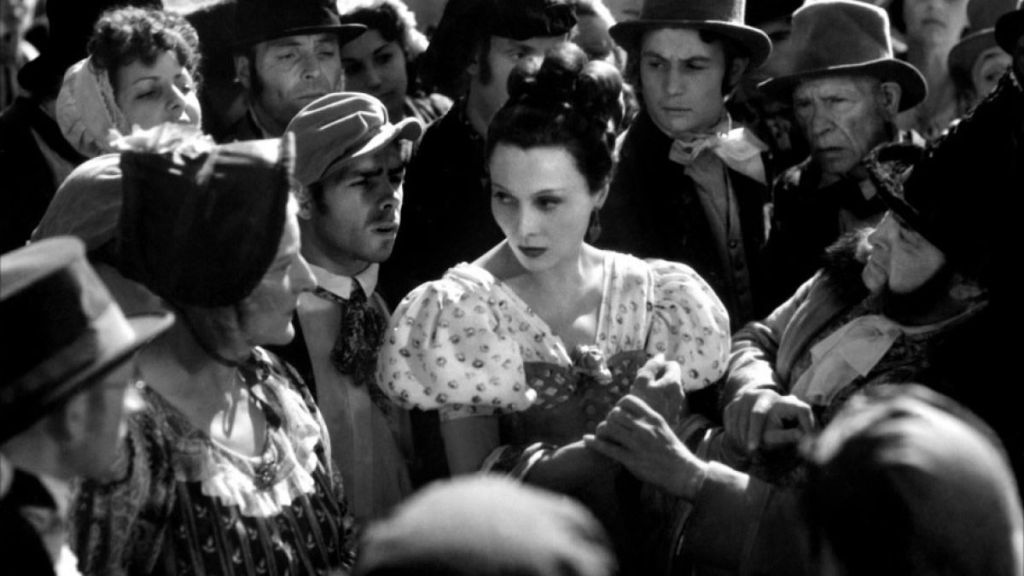
The film’s very existence is something of a marvel. Marcel Carné shot the massive production (it included some 1,500 extras) in Paris and Nice during the Nazi occupation of France. The Germans banned motion pictures longer than 90 minutes, an edict Carné circumvented by separating Children of Paradise into two parts (it was eventually combined into the single film it was always meant to be). Les Enfants du Paradis—if you want to be cosmopolitan about it—is a romantic epic set in the bustling theatrical world of 19th-century Paris. Arletty’s luminous courtesan Garance is pursued by four men—an actor, a mime, a criminal, and an aristocrat—each representing a different facet of performance and illusion. “It is at once a gay and utterly serious movie, impeccable in its development—wise and reserved, sometimes slyly so,” writes critic Richard Schickel in Keepers: The Greatest Films—and Personal Favorites—of a Moviegoing Lifetime. While Jacques Prévert’s dense screenplay tracks their entanglements, the film’s enduring magic lies in its immersive portrait of theater life.
3. To Be or Not to Be (1942, dir. Ernst Lubitsch)
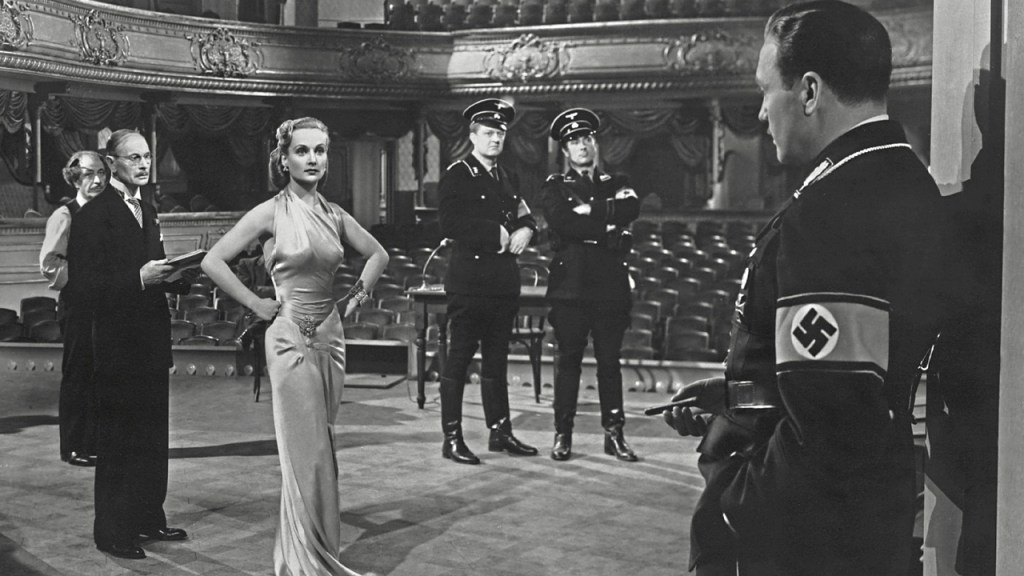
Ernst Lubitsch’s comedy transforms a bumbling troupe of actors in Nazi-occupied Poland into unlikely resistance fighters, using their theatrical skills—disguise, impersonation, timing—as weapons against the Third Reich. Jack Benny and Carole Lombard are sublime as Joseph and Maria Tura, the married couple who headline the troupe and tussle with Nazis while Joseph tries to scuttle Maria’s dalliances with a handsome Polish soldier (Robert Stack). Released just months after the United States entered World War II, and shortly after Lombard’s death in a plane crash while selling war bonds, the picture’s ballsy takedown of Adolf Hitler confounded movie audiences and critics of the time. “In another era, the film undoubtedly would have been more thoughtfully received and had a wider success,” film scholar Joseph McBride notes in How Did Lubitsch Do It? “But it is precisely because To Be or Not to Be came out when it did that it is so extraordinary and as valuable as a time capsule of a great artist’s highly idiosyncratic response to a world crisis.” Today, it stands as one of the sharpest and funniest examples of theater as both performance and survival.
(See more in The 10 best screwball comedies.)
2. The Red Shoes (1948, dir. Michael Powell and Emeric Pressburger)
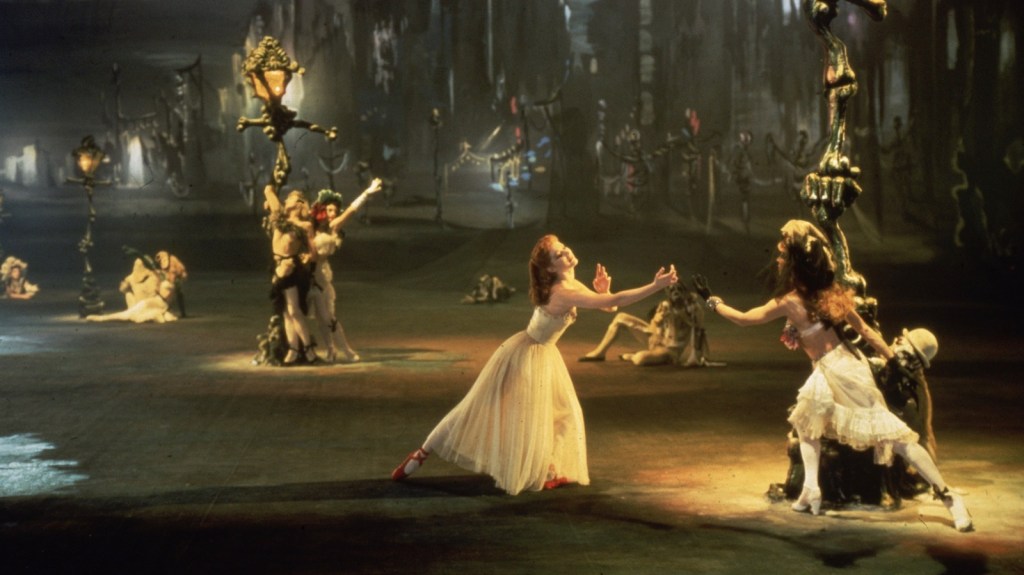
Loosely inspired by a Hans Christian Andersen fairy tale, this masterpiece from Michael Powell and Emeric Pressburger is a rhapsodic celebration of ballet, as embodied by captivating dancer-actress Moira Shearer as Victoria Page. She is taken under the wing of prestigious ballet impresario Boris Lermontov (Anton Walbrook), who selects her for the lead in Ballet Lermontov’s production of The Red Shoes, in which the titular shoes compel anyone who wears them to dance to the point of exhaustion and, eventually, death. For the music, Lermontov turns to aspiring young composer Julian Craster (Marius Goring). Complications arise when Victoria and Julian fall in love, a liaison that rankles Victoria’s demanding mentor. “No one can have two lives, and your life is dancing!” Lermontov barks at her. The Red Shoes’ other major star is its dazzling look. Production designer Hein Heckroth brings opulence to the mix, while ace cinematographer Jack Cardiff shoots in three-strip Technicolor for eye-popping color. The 15-minute centerpiece, “Ballet of the Red Shoes,” is a phenomenal marriage of dance and image. The Red Shoes is ravishing enough to make you understand why Victoria can’t stop dancing, even when she should.
1. All About Eve (1950, dir. Joseph L. Mankiewicz)
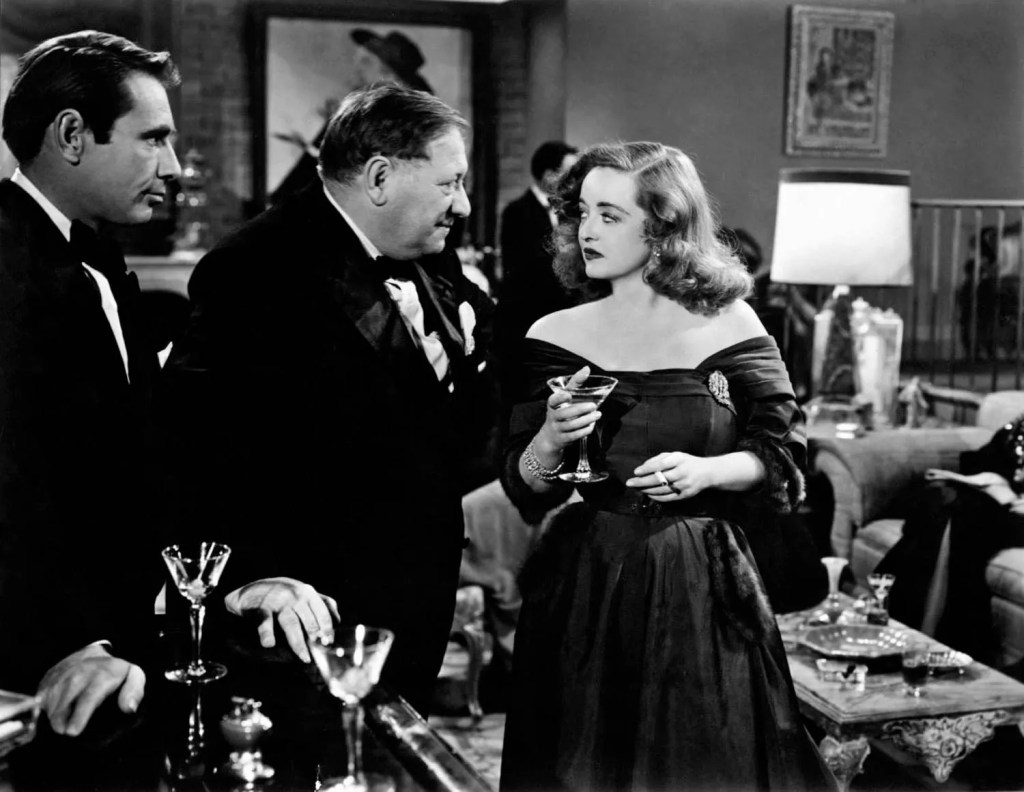
“Fasten your seatbelts. It’s going to be a bumpy night,” declares Bette Davis’ Margo Channing in one of the many quotable lines of this comedy-drama detailing narcissism, temper tantrums, and backstabbing in the theater. Davis is never better as Margo, Broadway’s reigning diva, who makes the mistake of befriending a weepy fan. Eve Harrington (Anne Baxter) isn’t the innocent waif she appears to be. Joseph L. Mankiewicz won the Oscar for Best Picture with this adaptation of a 1946 Cosmopolitan magazine story that was itself loosely based on a real-life situation involving stage actress Elisabeth Bergner. The making of All About Eve was nearly as eventful as the movie itself. Early on, it was clear to most that Gary Merrill, who plays Davis’ onscreen beau, had the hots for the actress; “I walked around with an erection for three days,” he recalled in his memoir. They married shortly after the production (alas, it didn’t last). George Sanders steals every scene he’s in as venomous theater critic Addison DeWitt (what a name!), while Thelma Ritter is at her sassy zenith as Margo’s assistant. The picture also marks one of the earliest appearances for a budding young actress named Marilyn Monroe. All About Eve understands that in the theater, as in life, the most dangerous person in the room is the one paying attention and taking notes.
Honorable mention: The Band Wagon (1953, dir. Vincente Minnelli), A Double Life (1947, dir. George Cukor), The Dresser (1983, dir. Peter Yates), Farewell My Concubine (1988, dir. Chen Kaige), Limelight (1952, dir. Charles Chaplin), Me and Orson Welles (2008, dir. Richard Linklater), Noises Off (1992, dir. Peter Bogdanovich), Opening Night (1977, dir. John Cassavetes), Shakespeare in Love (1998, dir. John Madden), Waiting for Guffman (1996, dir. Christopher Guest)
 Cutting to the Chase with Phil Bacharach
One response to “The 10 best films about the theater”
[…] No amount of therapy or pharmaceuticals can sufficiently prepare one for the directorial debut of meta screenwriter Charlie Kaufman (Being John Malkovich, Adaptation). His scripts are the literary equivalent of an M.C. Escher drawing, but his preoccupations transcend mind puzzles. Synecdoche, New York contemplates life and death and everything sandwiched between. Philip Seymour Hoffman is Caden Cotard, a neurotic, fledgling theater director whose personal life is in shambles. He has a flurry of ailments (real or imagined, we’re never sure) ranging from pustules to seizures. His wife (Catherine Keener), who paints portraits so small that they can only be viewed with jeweler’s glasses, flees the country with their daughter. But then Caden is awarded a MacArthur Foundation “genius” grant, and he uses the money for a stage production of epic proportions. He spends years in a vast Manhattan warehouse meticulously creating a full-scale replica of the world that surrounds him. The exercise is self-reflexive to the point of derangement. He makes himself a character in the play, casting a man named Sammy (Tom Noonan) who has stalked him for years. It then becomes necessary for another actor to play Sammy playing Caden. And so on. The passage of years forces a constant expansion of his production. Is Caden dreaming? Dead? Kaufman provides no concrete answers, but what he does offer is an avalanche of ideas, mysteries and paradoxes. At the film’s heart is the ever-widening gulf between Caden’s life and his desire to make sense of it. Sinking deeper into his artistic obsession, Caden is unable to distinguish fantasy from reality, unwilling to live in the moment. The movie is baffling and oblique, tedious and indulgent, strange and revelatory—and a true mindfuck.(See more in The 10 best films about the theater.) […]
LikeLike