The U.S. presidency has long been one of Hollywood’s favorite subjects for drama—and comedy, too, for that matter. Presidents both real and fictitious have inspired reverence and ridicule in cinema; and like politics itself, perceptions can be fluid. Take, for instance, 1933’s Gabriel Over the White House, in which Walter Huston plays a proudly fascist president whom the film presents, with disturbing sincerity, as exactly what the country needed.
What follows is my take on the 10 most memorable movie presidents, but with a caveat: this list does not include the curious case of Ronald Reagan, the nation’s 40th commander in chief whose acting career in Hollywood spanned more than 50 movies and titles ranging from Knute Rockne, All American to Bedtime for Bonzo..
10. George W. Bush (Josh Brolin) in W. (2008, dir. Oliver Stone)
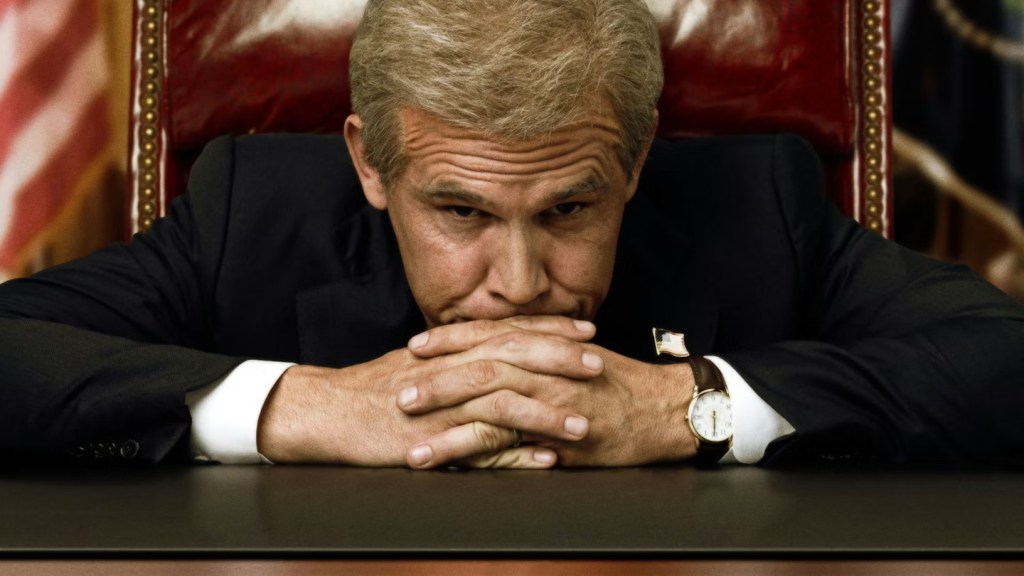
No one would accuse Oliver Stone of lacking a strong point of view. The filmmaker who prods the psyche of Richard Nixon (see #3) is even less charitable to the protagonist of W., his withering satire of George W. Bush’s presidency. Josh Brolin, who stepped in after Christian Bale bowed out, masters Dubya’s Lone Star swagger and malapropisms, but the portrayal is more than caricature. Dubya is a trust-fund baby and party boy, sure, but W. allows him vulnerabilities, namely his unyielding need for parental affirmation from Poppy Bush (James Cromwell). W. has the scope of a standard biopic, chronicling the nation’s 43rd president from his college days at Yale through the 2003 Iraq War, but this is no history lesson. Instead, Stone and writer Stanley Weiser are after agitprop masquerading as comedy that’s as big and broad as Bush’s beloved Texas.
9. Donald Trump (Sebastian Stan) in The Apprentice (2024, dir. Ali Abbasi)
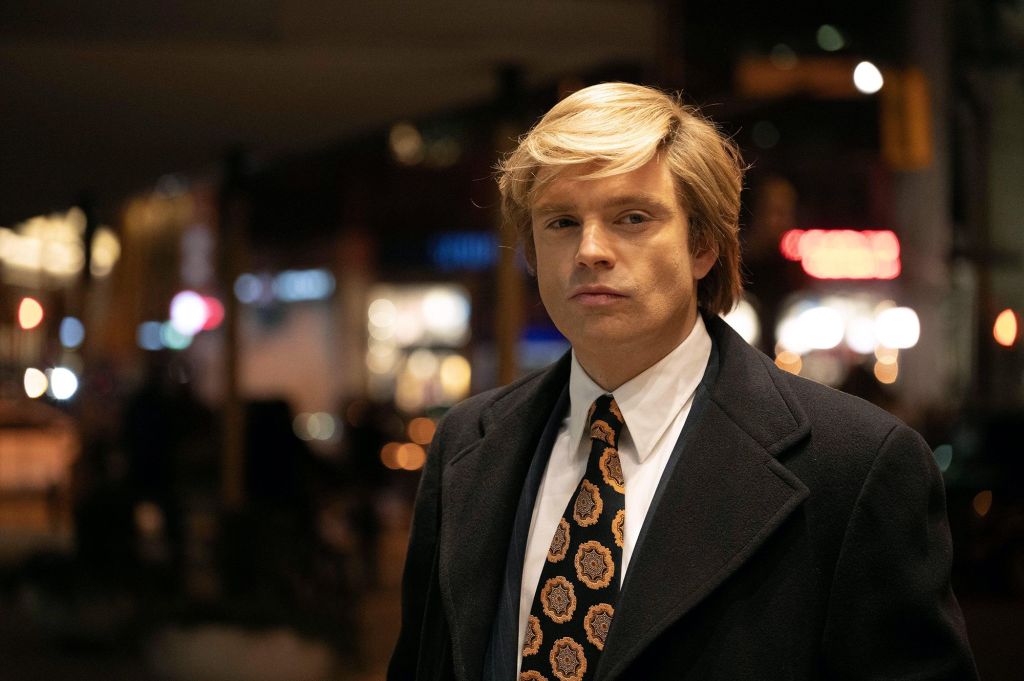
A fictionalized account of Donald Trump’s business ascent under the tutelage of notorious fixer Roy Cohn, The Apprentice made it to the big screen despite threatened litigation from its real-life subject. The yarn begins in the mid-1970s with the fabled introduction between Cohn (Jeremy Strong) and twentysomething Donald (Sebastian Stan), who is blazing a path in real estate after living in the formidable shadow of father Fred (Martin Donovan). There are hints that Cohn, who kept his homosexuality closeted, is attracted to Donald. For his part, Donald is drawn to Cohn’s bravado, finding a surrogate dad who, if not exactly nurturing, is eager to dispense Machiavellian wisdom. Cohn tells his protégé three rules for life—lessons that metastasized later on the considerably larger stage of the presidency: “Attack, attack, attack”; “admit nothing, deny everything”; and “never admit defeat.” Stan does a fine job inhabiting one of the most familiar people on the planet, giving Trump a faintly wounded demeanor. Even better is Strong, whose uncanny transformation manages to wring a smidge of pity for one of history’s least sympathetic figures.
8. Abraham Lincoln (Henry Fonda) in Young Mr. Lincoln (1939, dir. John Ford)
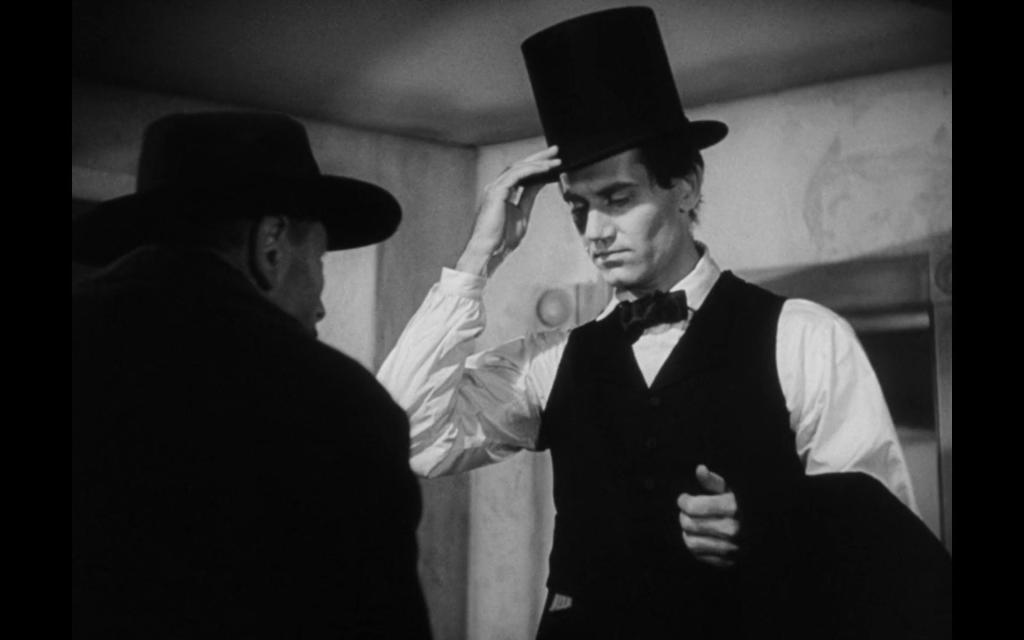
It’s a shame Henry Fonda never ran for president, given how convincingly he later played the commander in chief (see 1979’s Meteor and #4 below). In Young Mr. Lincoln, Fonda plays the future 16th president circa 1832, back when Abe was—in the parlance of the movie—just a jackleg country lawyer. Fonda initially resisted the part, telling 20th Century Fox execs it was too daunting a role. Thankfully, director John Ford proved persuasive. While the story’s centerpiece is a murder trial with Lincoln as a wily defense attorney, the court case is really window-dressing for a charming, if hagiographic, character study. Ford is more interested in exploring how Lincoln’s legend might have taken root. Fonda’s Lincoln is gawky and tentative, but also disarmingly self-effacing, fast with a quip, and blessed with an uncanny ability to read a room. Beautifully photographed by Bert Glennon, Young Mr. Lincoln feels as comfortably lived-in as a favorite sweatshirt.
7. John F. Kennedy (Bruce Greenwood) in Thirteen Days (2000, dir. Roger Donaldson)
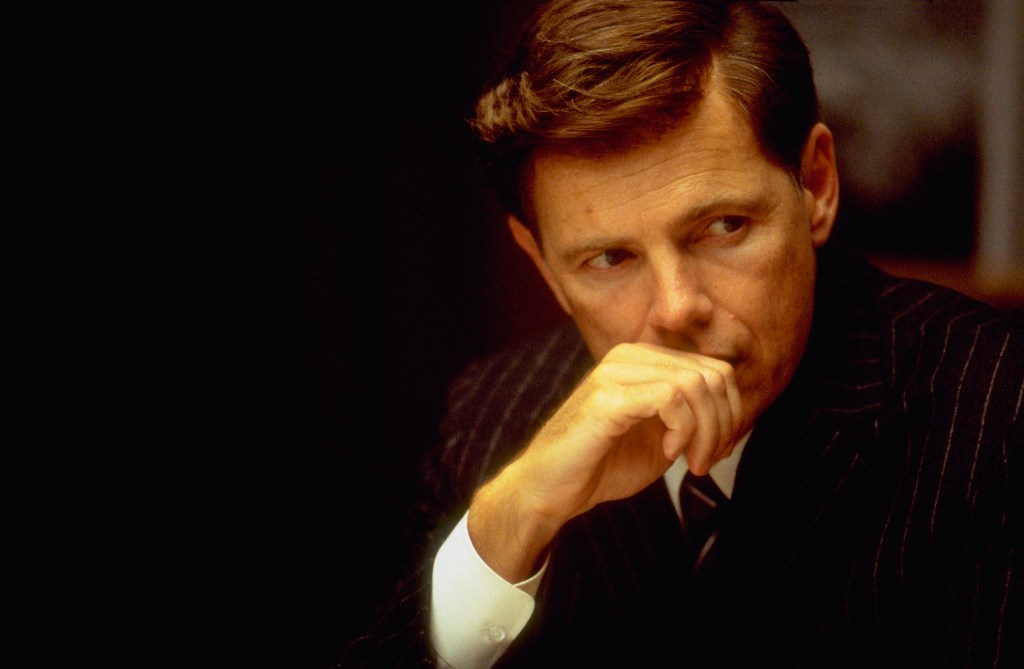
Detailing the October 1962 crisis when the Soviet Union placed some 40 ballistic missiles in Cuba, Thirteen Days is not a great film—but it’s a very good one. Roger Donaldson’s directing choices are rote, Trevor Jones’ music score tends to smother instead of enhance, and Kevin Costner, who plays a key advisor to President John F. Kennedy, affects a wretchedly fake Boston accent. But the Cuban Missile Crisis is too absorbing a topic to derail. As Kennedy, steering the U.S. back from the brink of nuclear war, Bruce Greenwood gives a subtle, nicely understated performance. The military establishment scoffs at the president as soft on Russian aggression, but time and again JFK weighs the most prudent course of action. “There’s something immoral about abandoning your own judgment,” he says. There is fine supporting work from Steven Culp as Robert Kennedy, Dylan Baker as Defense Secretary Robert McNamara, and Kevin Conway as Air Force Gen. Curtis LeMay. What ultimately emerges is a president who is neither hawk nor dove, but a levelheaded pragmatist determined to avoid World War III without capitulating to the Soviets.
6. Richard Nixon (Frank Langella) in Frost/Nixon (2008, dir. Ron Howard)
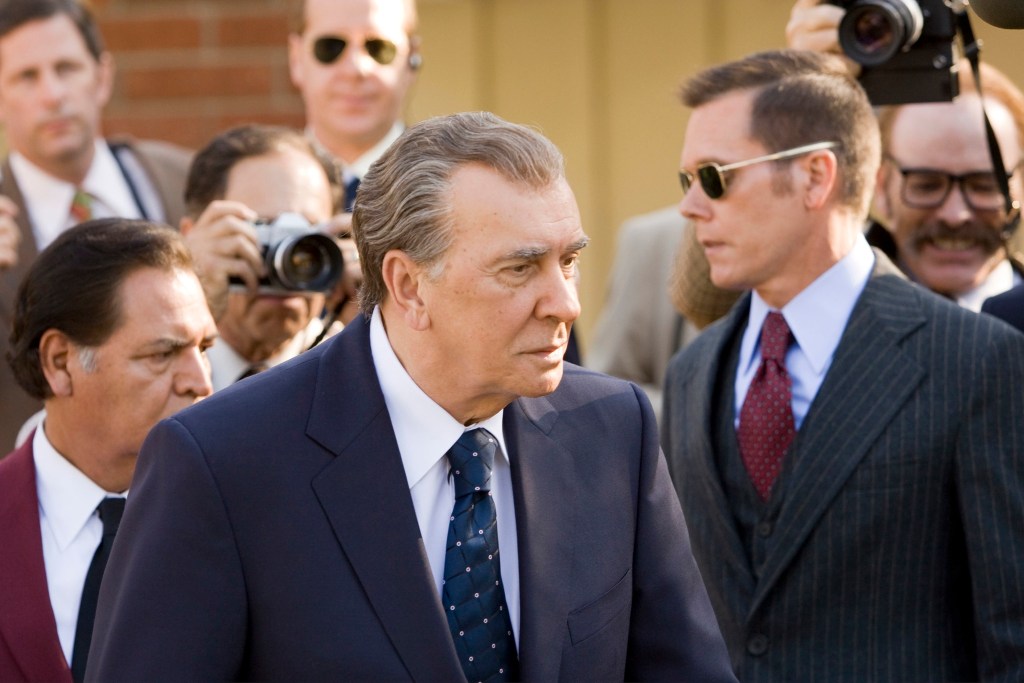
When Richard Nixon sought to repair his reputation with television interviews in 1977, his aides selected an interviewer they were certain would be a pushover. British TV host David Frost was more accustomed to interviewing the Bee Gees than world leaders. By all rights, it should not have been a fair fight, and yet it became a riveting one. Michael Sheen and Frank Langella (see also #5) are, respectively, the TV personality and the president. Nixon overwhelms Frost in the first three sessions with stonewalling and long-winded digressions. Their verbal battle comes down to the final Watergate interview. Can Frost coax Nixon into a confession on the scandal that destroyed his presidency? While history knows the answer, it is a testament to the artistry of director Ron Howard and screenwriter Peter Morgan that Frost/Nixon crackles with suspense. Langella captures Nixon’s mannerisms, but the performance is interpretation and not imitation, presenting a president who is at once cornered, combative, and unexpectedly human. He imbues Nixon with a sympathy that eluded the real man.
5. Dave Kovic (Kevin Kline) in Dave (1993, dir. Ivan Reitman)
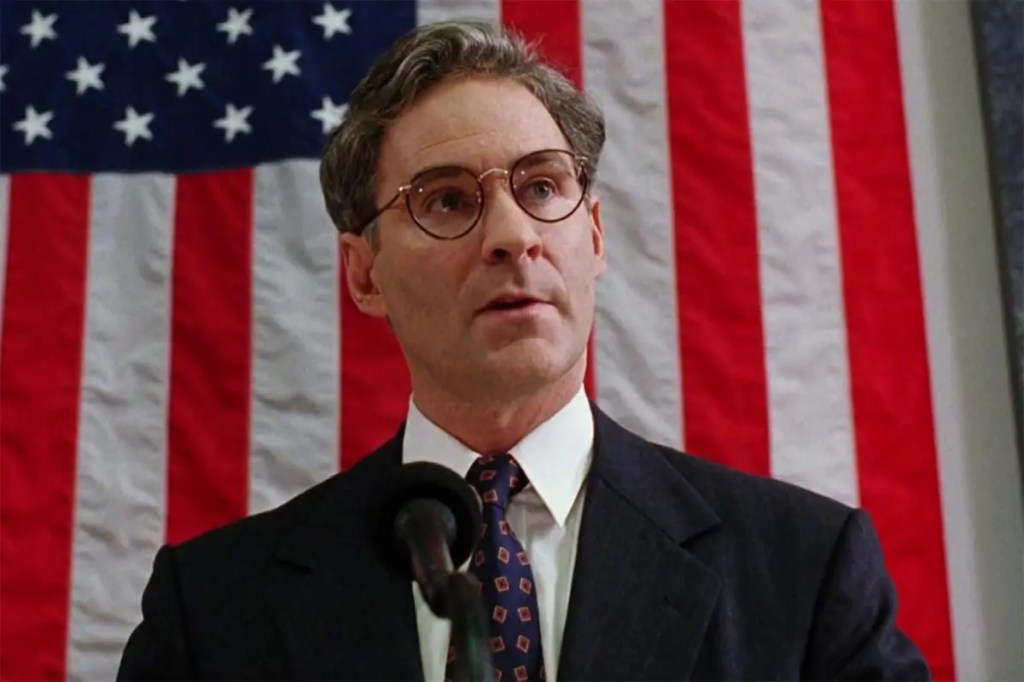
Ivan Reitman and screenwriter Gary Ross update the Frank Capra recipe for what could just as easily have been titled Mr. Dave Goes to Washington. Kevin Kline is the titular hero, an amiable, aw-shucks fellow who runs a small-town temp agency but moonlights impersonating U.S. President Bill Mitchell (also Kline). Demand for a presidential double suddenly spikes when Mitchell has a massive stroke while schtupping his secretary (Laura Linney) and slips into a coma. Diabolical White House chief of staff Bob Alexander (Frank Langella, see #6) snags Dave to play the incapacitated leader while keeping the country in the dark. Even the first lady (Sigourney Weaver), who detests her husband’s philandering and political gamesmanship, is won over by the president’s new-found niceness, but a commander in chief with an actual conscience isn’t what Alexander had in mind. Like Dave the lookalike, Dave the movie is breezily irresistible: a political fairytale that doesn’t always go where you’d expect.
4. The President (Henry Fonda) in Fail-Safe (1964, dir. Sidney Lumet)
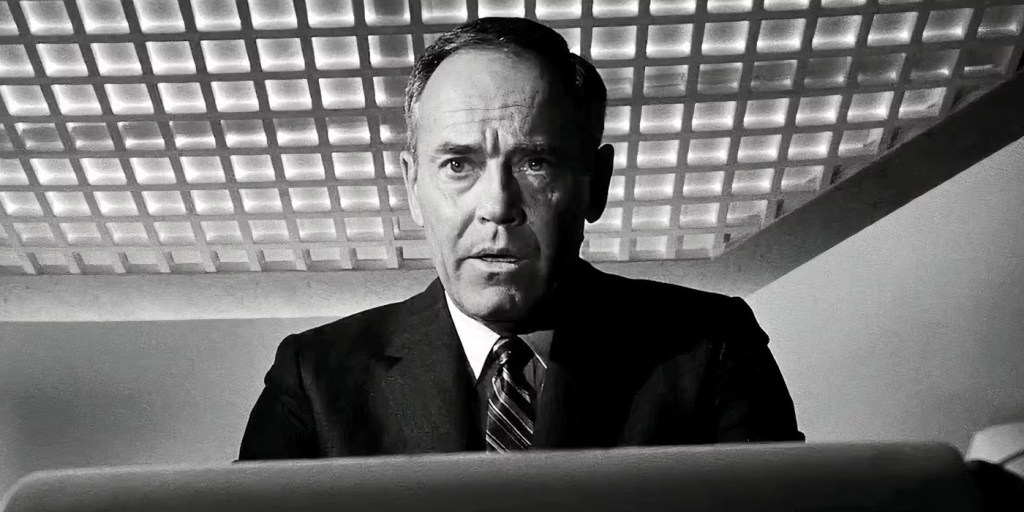
This Cold War nail-biter is as bleak as the nuclear holocaust it envisions. There is one bright light: Henry Fonda (see #8) once again gets to be the president of the United States. A lone U.S. bomber advances toward Russia for a nuclear attack—the result of a catastrophic computer glitch—and Fonda’s president must be candid with the Russian premier. Dr. Strangelove plays the same scene for laughs (see #2), but not Fail-Safe. In a windowless room, the president and an Army translator (Larry Hagman, a year before his television fame on I Dream of Jeannie) begin a fragile line of communication with the Soviet premier. The world leaders slowly inch toward mutual trust while the clock ticks. “If we don’t trust each other now, Mr. Chairman, there may not be another time,” says the president, who is soon faced with horrifying choices that underscore the jaw-dropping reality of the office. It’s a performance of such grave authority that you truly believe every unthinkable decision he must make.
3. Richard Nixon (Anthony Hopkins) in Nixon (1995, dir. Oliver Stone)
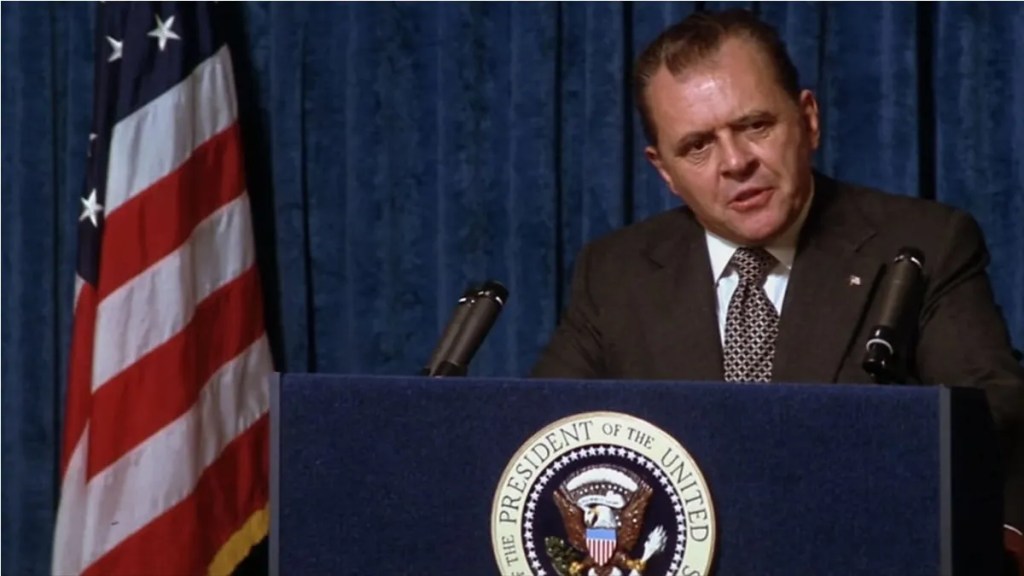
The Sturm und Drang of Richard Milhous Nixon’s political rise and fall is ripe for psychoanalysis. Oliver Stone (also see #10) certainly thought so. His biopic Nixon puts the nation’s embattled 37th president on the therapist’s couch for a full vetting of the man’s insecurities, fears, and abandonment issues. Whether Nixon is an accurate or even fair portrait is an open question. Anthony Hopkins plays Nixon as complicated and deeply flawed. He is at turns conniving, paranoid, resentful, and delusional, but one for whom Stone and his star have empathy. The supporting cast—including Joan Allen as Pat Nixon, Paul Sorvino as Henry Kissinger, James Woods as Nixon aide H.R. Haldeman, and David Hyde Pierce as White House counsel John Dean—is magnificently over-the-top. This arch melodrama is matched by Stone’s onslaught of flashbacks, montages, Dutch angles, and a mix of grainy black-and-white footage with washed-out color. The overall effect is occasionally shrill, but Stone’s showmanship is on full, glorious display.
2. Merkin Muffley (Peter Sellers) in Dr. Strangelove or How I Learned to Stop Worrying and Love the Bomb (1964, dir. Stanley Kubrick)
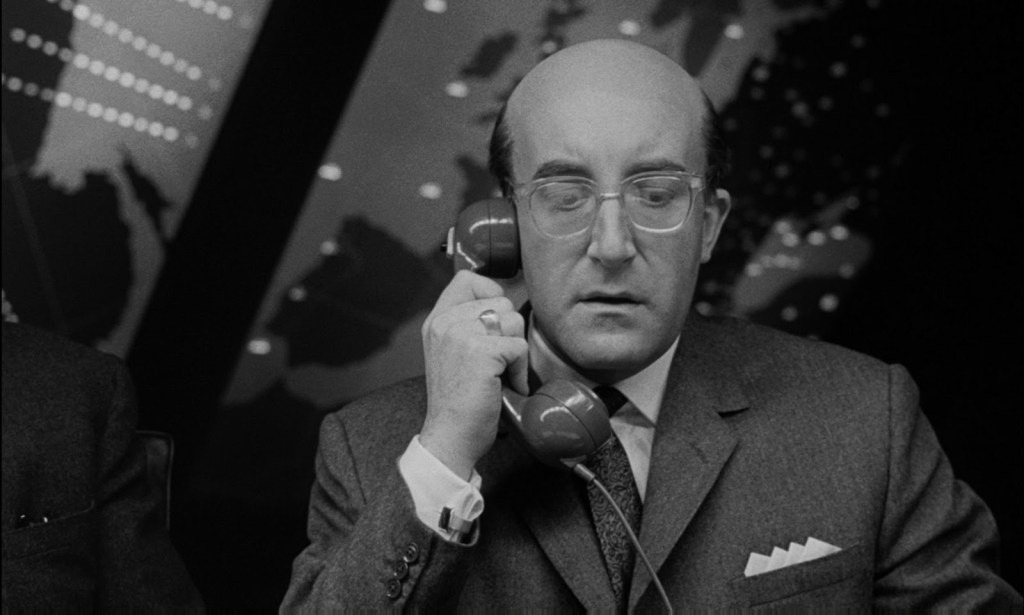
While Peter Sellers has three roles in this Cold War comedy classic, few scenes in movie history rival his brilliant turn here as the U.S. president. Drawing inspiration for the character’s look from failed presidential candidate Adlai Stevenson, Sellers largely improvised the pivotal phone call where the president explains to a drunk Soviet premier how a deranged Air Force captain has ordered a nuclear strike on Russia. First, however, the president must get the niceties out of the way. “I can hear you now, Dimitri, plain and clear and coming through fine,” he says cheerfully. “I’m coming through fine, too, eh? Good, well then, as you say, we’re both coming through fine.” The conversation is a masterclass in comedy, and in keeping with Dr. Strangelove’s persistent linkage of sex with annihilation. After all, writer-director Stanley Kubrick and co-writer Terry Southern named the beleaguered commander-in-chief Merkin Muffley, both references to female genitalia.
(See more in The 10 best black comedies.)
1. Abraham Lincoln (Daniel Day-Lewis) in Lincoln (2012, dir. Steven Spielberg)
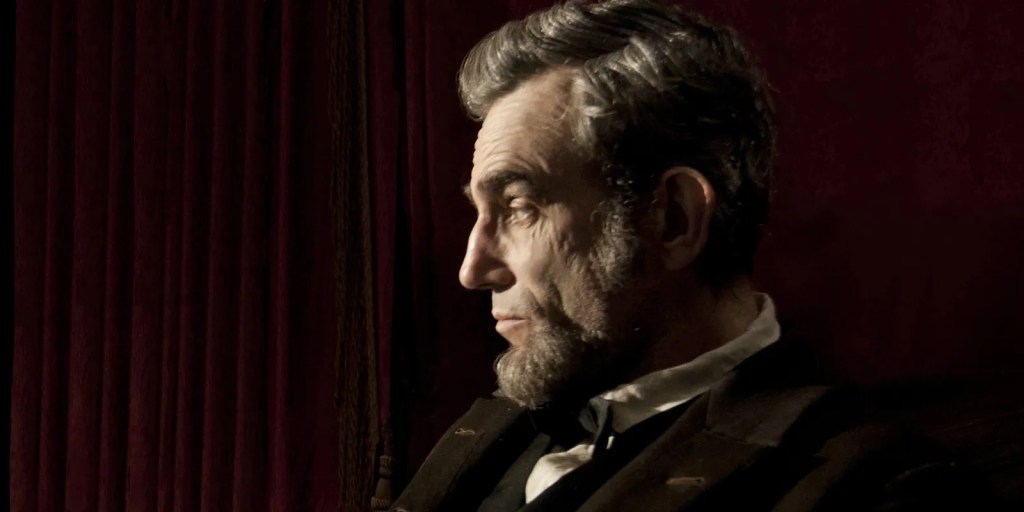
Lincoln comes with a towering pedigree: director Steven Spielberg, actor Daniel Day-Lewis, and a screenplay by Pulitzer Prize-winning playwright Tony Kushner. It follows the last few months of the president’s life, when he fought to pass the 13th Amendment outlawing slavery before the Civil War drew to a close. Lincoln is most compelling when it frames him as a cagey political strategist, maneuvering through competing factions of congressional Republicans—especially the radical abolitionists led by Congressman Thaddeus Stevens (Tommy Lee Jones)—and dealmaking with Democrats willing to sell their vote for a plum job. He deploys folksy humor or engages in horse-trading, depending on his audience. Day-Lewis, who spent a year preparing for the part, rightly won his third Oscar for the performance. The enormous cast—which includes Sally Field as Mary Todd Lincoln, Joseph Gordon-Levitt as their eldest son, and David Strathairn as Secretary of State William Seward—are uniformly excellent. But it is Day-Lewis who disappears so completely into the role. His reedy voice and distinctive gait help move Lincoln away from the realm of marble statues.
Honorable mention: James Marshall (Harrison Ford) in Air Force One (1997, dir. Wolfgang Petersen), Andrew Shepherd (Michael Douglas) in The American President (1995, dir. Rob Reiner), John Quincy Adams (Anthony Hopkins) in Amistad (1997, dir. Steven Spielberg), Judson Hammond (Walter Huston) in Gabriel Over the White House (1933, dir. Gregory La Cava), Dwayne Elizondo Mountain Dew Herbert Camacho (Terry Crews) in Idiocracy (2006, dir. Mike Judge), Dwight D. Eisenhower (Robin Williams) in Lee Daniels’ The Butler (2013, dir. Lee Daniels), Richard Nixon (Philip Baker Hall) in Secret Honor (1984, dir. Robert Altman), Jordan Lyman (Fredric March) in Seven Days in May (1964, dir. John Frankenheimer), Barack Obama (Parker Sawyers) in Southside With You (2016, dir. Richard Tanne), Franklin D. Roosevelt (Kenneth Branagh) in Warm Springs (2005, dir. Joseph Sargent)


3 responses to “The 10 most memorable U.S. presidents in film”
[…] A comedy about nuclear holocaust at the height of the Cold War? That’s chutzpah. Stanley Kubrick and co-writer Terry Southern based their film on the deadly serious Peter George novel Red Alert, but the pair eventually realized that satirizing global annihilation would be more believable than realism. From the boldly irreverent title to the movie’s preoccupation with sex––an Air Force general orders a strike on the Soviet Union because he blames communism for his impotence––Dr. Strangelove unsparingly skewers the military-industrial complex. It also boasts some of the greatest comic performances of the 1960s, with Sterling Hayden and George C. Scott as pathologically gung-ho military commanders and Peter Sellers is tremendous in a triple role that includes the titular character. The central conceit, that a nation’s leaders would compound a horrific act of aggression by digging themselves in deeper, proved prescient. (See more in The 10 most memorable U.S. presidents in film.) […]
LikeLike
[…] Political junkies love movies about politics, but the dirty little secret is that so do a lot of folks who claim to hate politics. The reason is simple. The best political films are about power, not policy. Elections determine power, and power shapes lives and cinema thrives on that tension. From the populist rise of Willie Stark in All the King’s Men to the flawed presidential candidate of Primary Colors, the movies have shown that politics is both theater and battleground—and that the line between hero and opportunist can be perilously thin. The titles below do not include films involving the presidency (which gets its own list). […]
LikeLike
[…] Idiocracy posits a future America overrun with stupidity, presumably because dummies breed more than smarties. Writer-director Mike Judge’s cult comedy is often hilarious but also a bit blind to its own issues with racism and sexism. Example: Luke Wilson and Maya Rudolph play modern-day test subjects selected by the military for their average intelligence; tellingly, average male Wilson is a passive Army clerk, while average female Rudolph is a sex worker. The pair are cryogenically frozen, then awaken 500 years later in a nation where people think Gatorade is water, slavishly watch a TV show called Ow! My Balls! and are governed by a former pro wrestler and porn star. Back in 2006, this all seemed far-fetched…(See more in The 10 most memorable U.S. presidents in film.) […]
LikeLike