While film noir didn’t know it was film noir, neo-noir knows exactly what it is—and that self-consciousness is both its power and its risk.
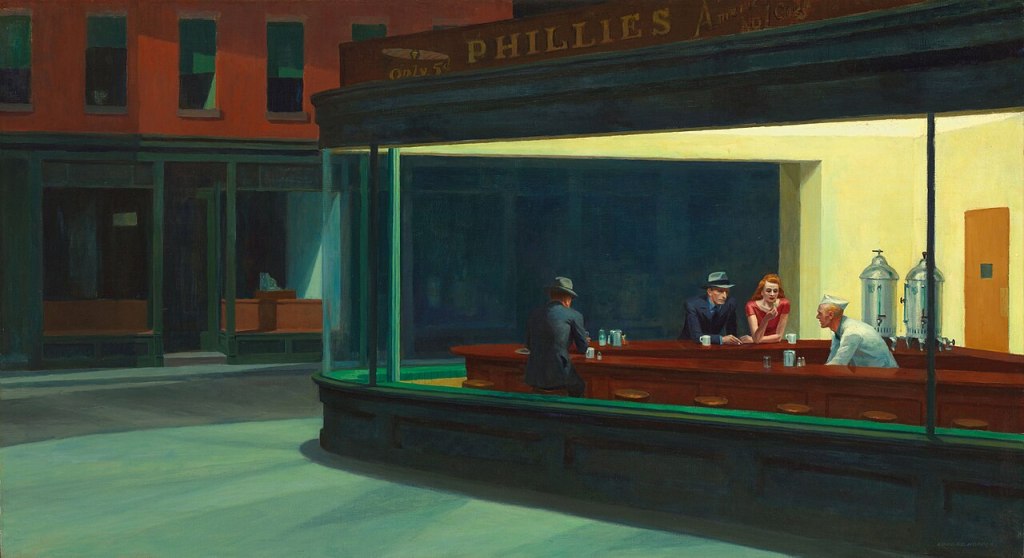
A self-aware descendant, it transplants noir’s dark soul to new eras, locales, and cultures, made by directors who grew up worshipping Bogart and Bacall and are now in on the joke. The pessimism of classic noir remains, but without the restrictions of the old Production Code, and often without the innocence, too.
15. Insomnia (1997, dir. Erik Skjoldbjærg)
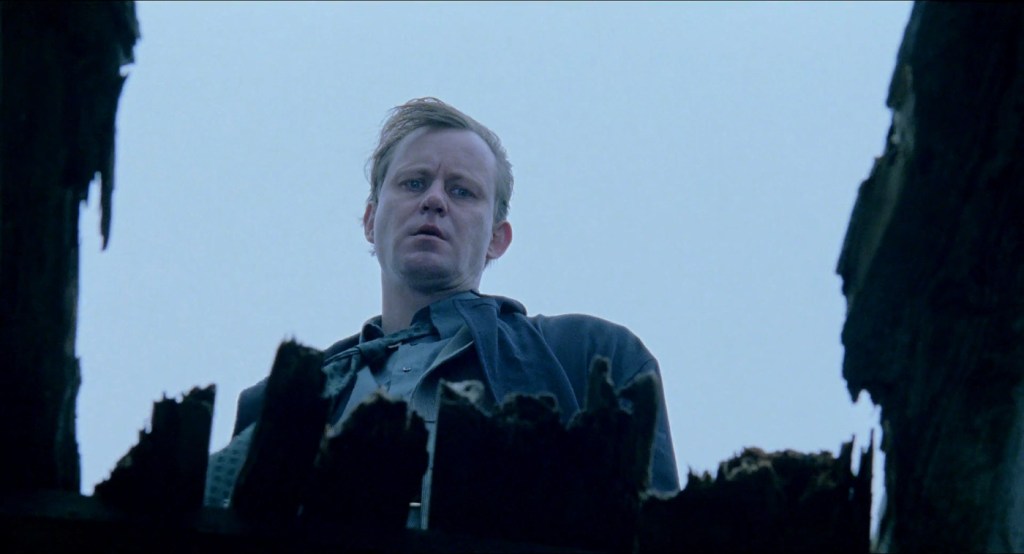
No disrespect to Christopher Nolan’s 2002 English-language version of this Norwegian thriller, but it’s the difference between a sledgehammer and a scalpel. This is the scalpel. Erik Skjoldbjærg’s debut feature is as frigid as its Arctic setting. Stellan Skarsgård and Sverre Anker Ousdal play Jonas Engström and Erik Vik, a pair of police detectives sent to a remote town north of the Arctic Circle to investigate the murder of a 17-year-old girl. In a sting gone awry, Engström fatally shoots his partner by accident and tries to cover it up, letting the local authorities believe the girl’s killer must have shot Vik. As the lawman tormented by guilt and the area’s relentless daylight, Skarsgård is an exposed nerve paradoxically numbed by pain. Insomnia is shrouded in light, but its worldview is unremittingly dark.
14. Charley Varrick (1973, dir. Don Siegel)
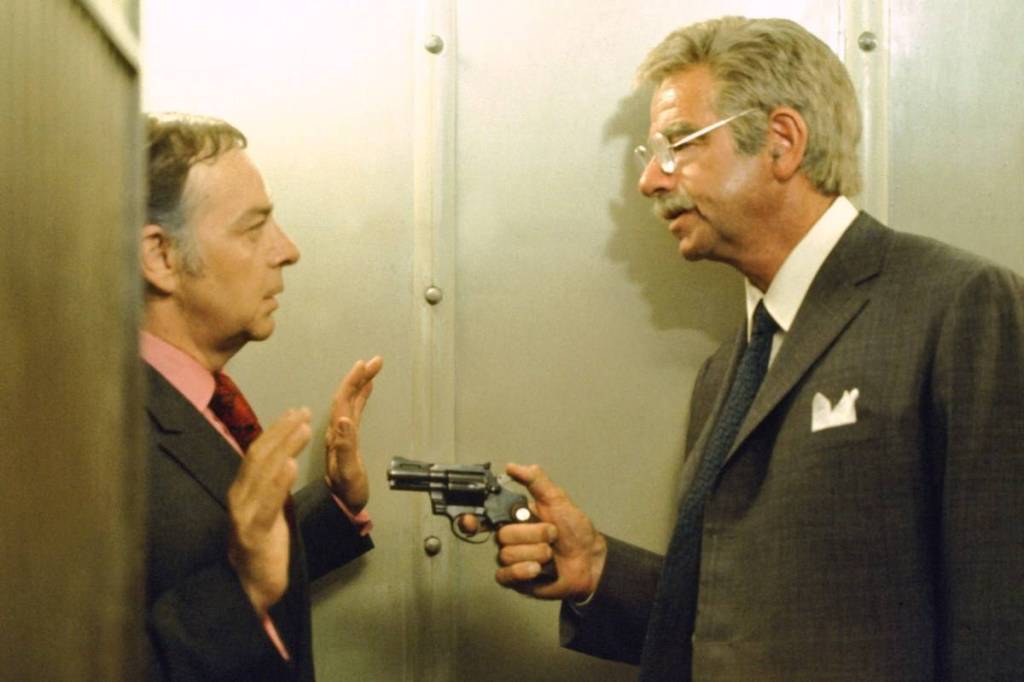
Walter Matthau stars as Charley Varrick, an even-keeled, smooth-talking criminal who has the misfortune of masterminding a New Mexico bank robbery that goes off the rails. A sheriff’s deputy disrupts the holdup, gunfire ensues, and Charley’s wife is killed in the melee before Charley and another gang member (Andrew Robinson, unforgettable as Scorpio in Dirty Harry) manage to get away. Their luck gets worse when they realize the $750,000 haul is mob money. Don Siegel’s direction is spare and gritty, a prime example of the unsentimental crime movie that thrived in the 1970s. Matthau, who won the BAFTA for Best Actor, effectively plays against type in a role seemingly more suited for a Steve McQueen or Gene Hackman, and there are nifty appearances from Joe Don Baker and John Vernon—two character actors who elevate every scene they enter. Charley Varrick resides in a cold, hard land of moral ambivalence where everyone has an angle, and no one can be trusted.
13. Le Samouraï (1967, dir. Jean-Pierre Melville)
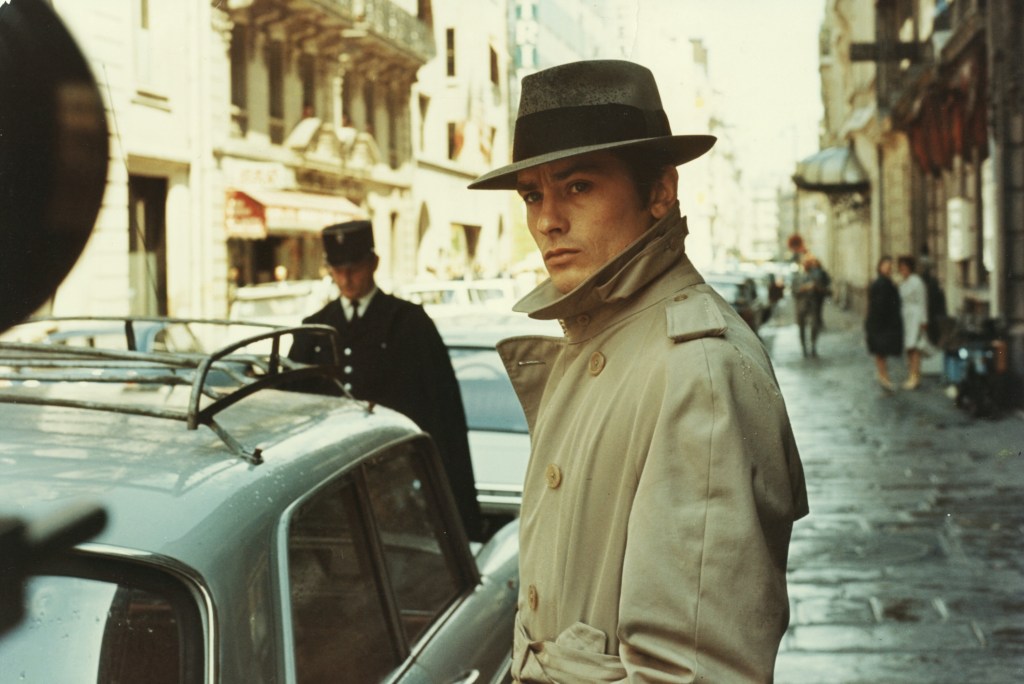
Alain Delon’s Jef Costello is so cool as to cause frostbite. In a trench coat and fedora, with a face as blank as night, he says little and his expression says even less. Le Samouraï follows this French contract killer in the aftermath of a not-so-smooth hit job, and the results are as thrilling as they are laconic. Jef is a man out of time who, despite being a professional killer, abides by a rigid code of conduct. The picture reflects Jean-Pierre Melville’s love for American crime cinema of the 1940s and ‘50s, filtered through the aesthetic of Japanese samurai films. From the gleaming Citroëns on Parisian streets to the sleek glass and metal nightclub where Jef executes his victim, this is a movie that could be dreamed by a character in another movie, a collage of artifice and atmosphere. Style is its content.
12. Body Heat (1981, dir. Lawrence Kasdan)
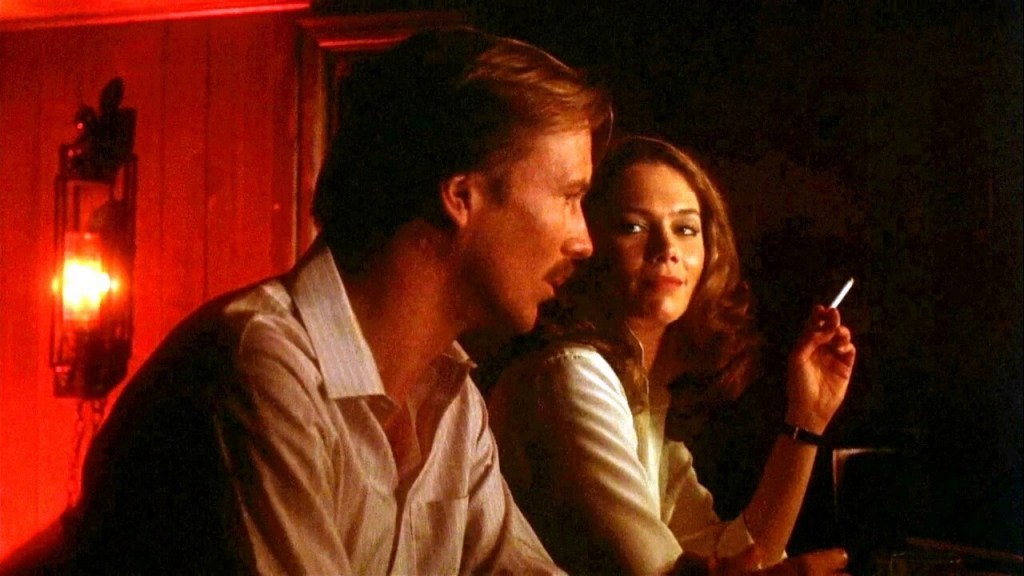
With its brew of sex, murder, and fate in a steamy Florida town, Lawrence Kasdan’s Body Heat was pivotal in spurring a noir revival in the 1980s. William Hurt is Ned Racine, a skirt-chasing criminal defense attorney who meets and is immediately captivated by Matty Walker (Kathleen Turner), a husky-voiced, unhappily married sexpot. “You’re not too smart, are you? I like that in a man,” says Matty, a femme fatale who quickly picks up that Ned is a guy figuratively—and, as demonstrated in a later scene, literally—led by his penis. It isn’t long before their pillow talk turns to getting rid of Matty’s wealthy asshole of a husband, played by Richard Crenna. Kasdan said he wanted Body Heat to resuscitate movie eroticism. “The challenge of Body Heat was to make that love affair seem fresh and hot. All of the writing had been aimed at that—to come in on the sex scenes either before or after or right in the middle of them in such a way as to jolt the audience.” If the sex is bold, the plot is familiar to anyone who knows Billy Wilder’s Double Indemnity (1944), but no matter. Like Ned, Body Heat thinks with something other than its brain.
11. To Live and Die in L.A. (1985, dir. William Friedkin)
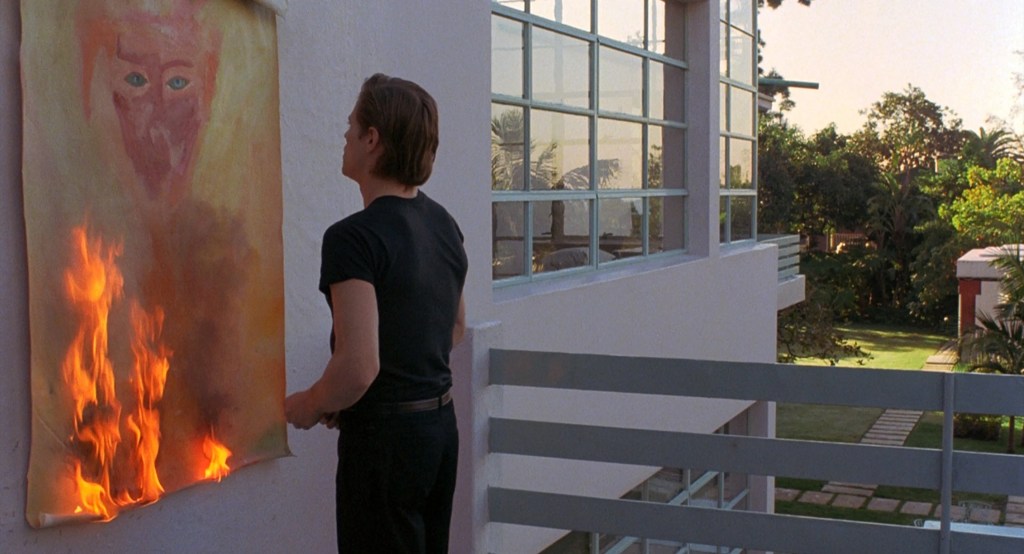
Mainly remembered for a heart-stopping chase scene, To Live and Die in L.A. is so saturated in the look and sound of the 1980s, it’s easy to overlook how transgressive a movie it is. Miami Vice was already becoming a television phenomenon when this neo-noir hit theaters, which might have dampened some of the film’s hyper-stylized allure. William Petersen is Richard Chance, a hotshot but reckless U.S. Secret Service agent determined to avenge the shooting death of his partner by counterfeit kingpin Rick Masters (Willem Dafoe). Chance will stop at nothing to collar his target, even if it means committing armed robbery. Songs by Wang Chung (see what I mean about the ‘80s?) propel this sun-drenched thriller in a land where everyone is sexy, cool, and apparently lives in a modernist beachfront house. Oh, and that chase. William Friedkin, who had already devised one of the all-time car chases in The French Connection, tasked stunt coordinator Buddy Joe Hooker with choreographing a chase he hadn’t seen before. The result: Chance and his partner (John Pankow) barreling into oncoming traffic on the Terminal Island Freeway. Shot over six consecutive weekends and involving some 75 vehicles, it is a showstopper in a movie that doesn’t even know what first gear is like.
(See more in The 10 best car chases in film.)
10. Heat (1995, dir. Michael Mann)
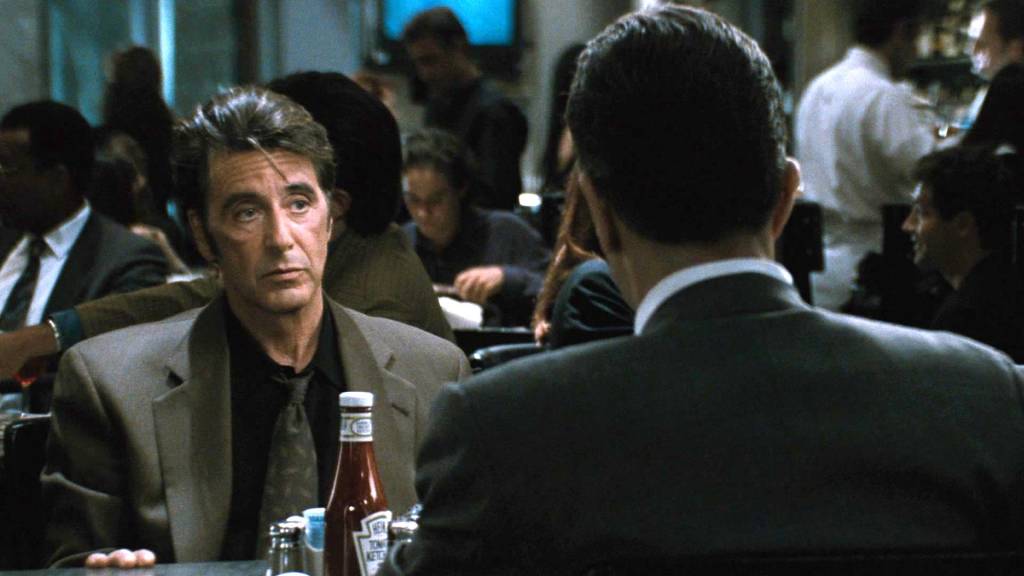
Heat earns its place in film history for having Al Pacino and Robert De Niro, two of American cinema’s greatest actors, finally share screen time together (both were in The Godfather Part II but never in the same scene). De Niro is criminal mastermind Neil McCauley; Pacino is fiery Los Angeles police detective Vincent Hanna, hot on McCauley’s trail. Michael Mann, whose attention to detail permeates every frame, had developed the idea for Heat from police detectives he knew in his native Chicago. Its two major robberies are case studies in how to stage, shoot, and edit action sequences. While the formidable cast includes Val Kilmer, Ashley Judd, Jon Voight, and a host of reliable supporting players, De Niro and Pacino are the main attraction, and they are mesmerizing. On opposite sides of the law, both are consummate professionals whose personal relationships are subsumed by their obsession with work. As McCauley relates advice given to him during a stint in prison, “You wanna be making moves on the street, have no attachments, allow nothing to be in your life that you cannot walk out on in 30 seconds flat if you spot the heat around the corner.” In Heat, men are what they do. Mann doesn’t condone McCauley’s lethal criminality, but he has a grudging respect for the man’s perfectionism.
9. Jackie Brown (1997, dir. Quentin Tarantino)
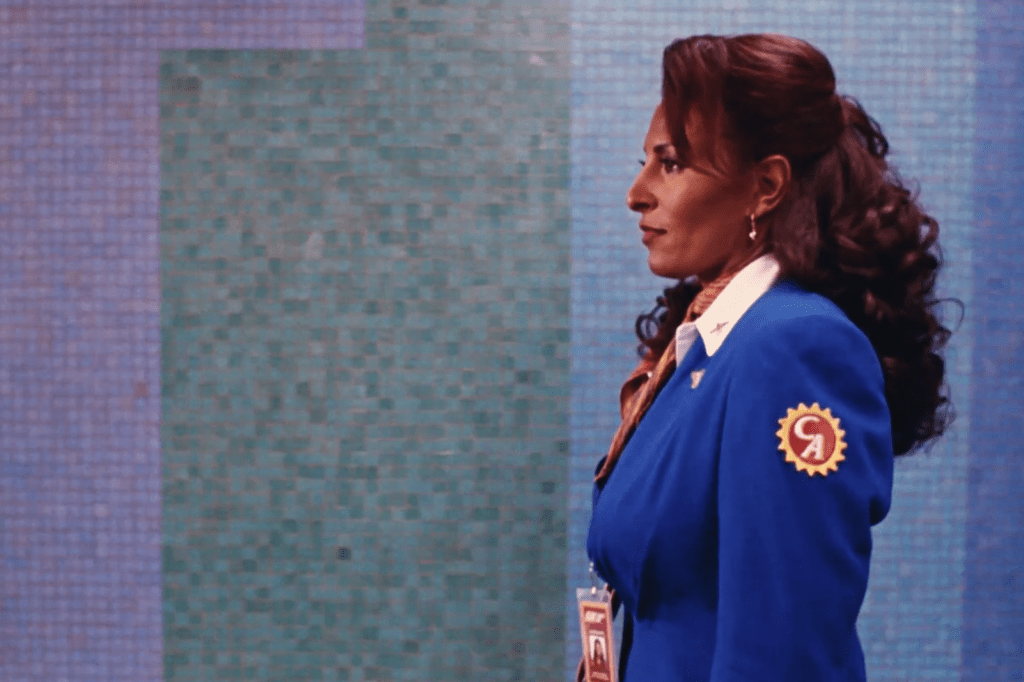
Released three years after his groundbreaking Pulp Fiction, Quentin Tarantino’s two-and-a-half-hour Jackie Brown struck some critics at the time as self-indulgent. Even Tarantino’s agent told a Miramax executive after the premiere, “There’s the ultimate case for not giving the director final cut.” But Jackie Brown is one of QT’s most emotionally dense works, as soulful as the R&B songs that punctuate the soundtrack. It overflows with gallows humor, film-geek references, showy set pieces, and the filmmaker’s idiosyncratic dialogue. Most rewarding is the casting of drive-in movie icons Pam Grier and Robert Forster. Based on Elmore Leonard’s Rum Punch, it kicks into gear when Los Angeles baddie Ordell Robbie (Samuel L. Jackson) whacks a would-be informant. A federal law enforcement sting and Ordell’s paranoia set in motion events that entangle the eponymous heroine (Grier), a struggling flight attendant and money smuggler for Ordell. While Forster very nearly steals the picture as an aging bail bondsman, it is Grier, smart and sexy in the title role, who fully owns the film and makes it a compelling story of survival.
(See more in The 20 best hangout movies.)
8. Blow Out (1981, dir. Brian De Palma)
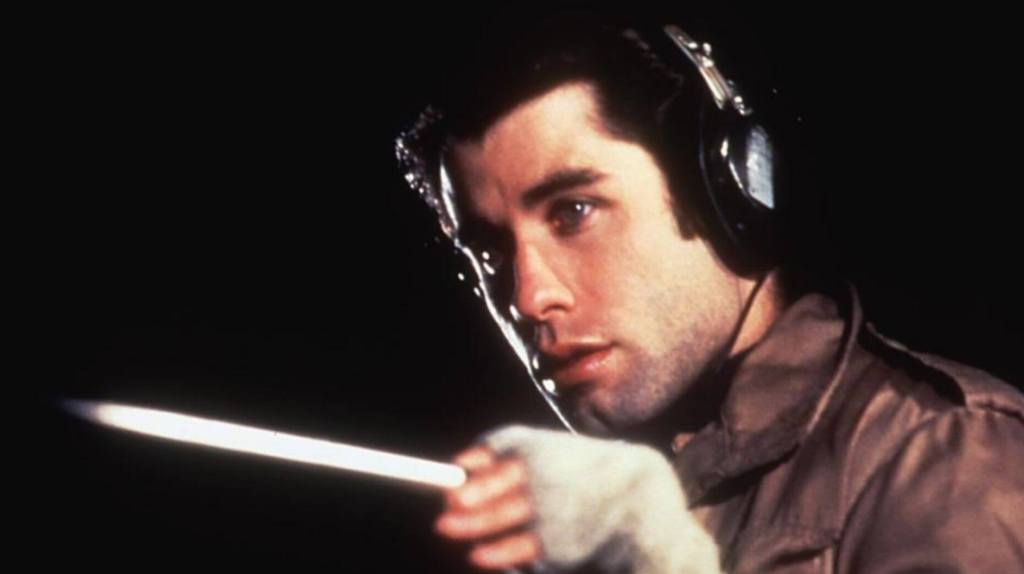
Brian De Palma engages all his favorite obsessions in Blow Out: voyeurism, suspense, dark humor, filmmaking, sex. No wonder, then, that it’s his greatest achievement (at least in my estimation). John Travolta plays movie sound-effects designer Jack Terry. He is recording ambient sound one night when he hears a tire blow out, followed by a car plunging off a bridge and into a river below. Jack rescues the passenger, a prostitute played with doe-eyed vulnerability by Nancy Allen (then Mrs. Brian De Palma), but he cannot save the driver, who turns out to be the governor and a rumored future presidential candidate. Was this a tragic accident or something more nefarious? As is often the case with De Palma, Blow Out is rife with the ghosts of other pictures—Michelangelo Antonioni’s Blow Up (1966), Francis Ford Coppola’s The Conversation, and anything you can name by Alfred Hitchcock—but such influences are distilled through his irresistibly sleazy, pop-culture aesthetic. What the picture finally delivers is far more devastating than its B-movie origins, leading to an emotionally searing ending.
(See more in The 10 best conspiracy films and The 10 best films about voyeurism.)
7. The Conversation (1974, dir. Francis Ford Coppola)
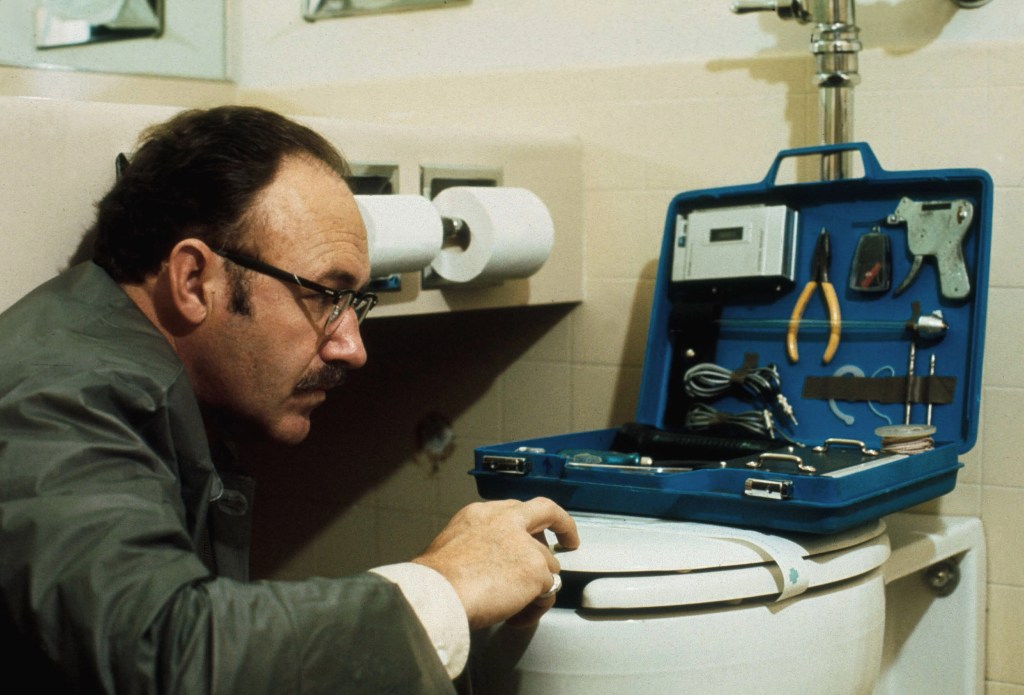
The taciturn, tightly coiled protagonist of The Conversation is Harry Caul (Gene Hackman), a surveillance expert who has cultivated single-minded dedication to his work and deliberate emotional detachment. The walls he has built start to fray, however, when he is hired to surreptitiously record a conversation between a young couple (Cindy Williams and Frederick Forrest) strolling in San Francisco’s Union Square. Harry is struck by how scared they sound. What is his client planning? Francis Ford Coppola told Hackman that Harry should look like a “nudnik”—Yiddish for a dull, bothersome person—and the actor took it to heart. Hackman is customarily excellent, as are supporting actors John Cazale, Teri Garr, Allen Garfield, Harrison Ford, and an uncredited Robert Duvall. Handsomely crafted, with an appropriately intricate sound design by Walter Murch, The Conversation examines the illusory power of surveillance and voyeurism.
(See more in The 10 best conspiracy films and The 10 best films about voyeurism.)
6. L.A. Confidential (1997, dir. Curtis Hanson)
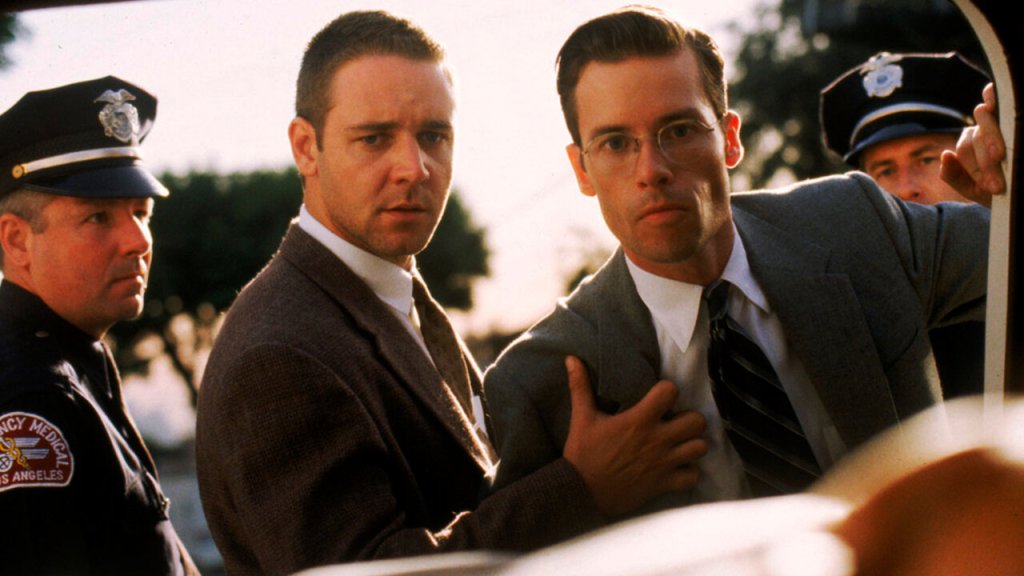
Curtis Hanson and co-writer Brian Helgeland spent two years paring down James Ellroy’s sprawling crime novel into a complex but compact, Oscar-winning screenplay. “Welcome to Los Angeles,” purrs tabloid writer Sid Hudgens (Danny DeVito) in an opening voiceover that drops us into the seedy playground of 1950s L.A., where the good guys and bad guys are all but indistinguishable. The central characters here are three flawed cops—Bud White (Russell Crowe), a bruiser; Ed Exley (Guy Pearce), ambitious and cocky; and Jack Vincennes (Kevin Spacey), corrupted by his minor celebrity as an advisor on a Dragnet-style television show. In the aftermath of a massacre at a downtown diner, the trio are thrust into an underworld odyssey that encompasses Hudgens’ Hush-Hush magazine, a ring of prostitutes surgically cut to resemble movie starlets, and a gangland war. The acting is consistently strong, particularly DeVito and James Cromwell, while Kim Basinger’s performance as a Veronica Lake-lookalike call girl won an Oscar for Best Supporting Actress.
(See more in The 10 best conspiracy films.)
5. No Country for Old Men (2007, dir. Joel Coen and Ethan Coen)
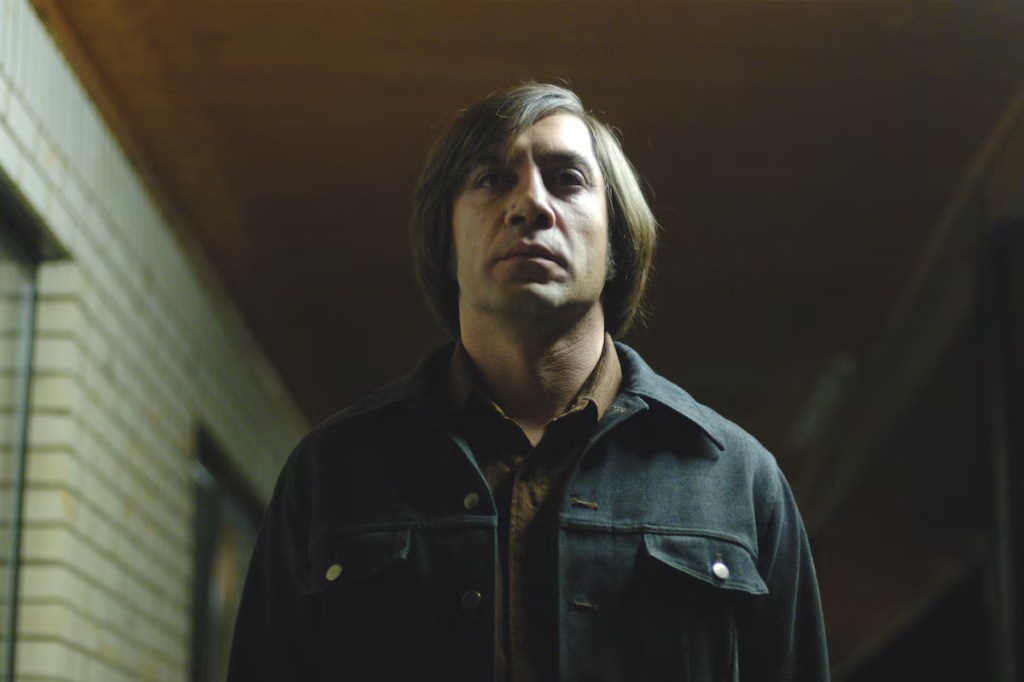
Joel and Ethan Coen’s adaptation of Cormac McCarthy’s 2005 novel is a slab of mesquite-grilled nihilism with a dash of humor as dry as a West Texas dust storm. Josh Brolin is Llewelyn Moss, a tight-lipped welder who finds $2 million in an abandoned briefcase from a drug deal gone bad. Out to recover the loot, and kill a lot of people in the process, is Javier Bardem as Anton Chigurh, a psychopath with a God-awful haircut and a terrifying way of deciding a coin toss. Tommy Lee Jones portrays a world-weary sheriff struggling to make sense of the trail of bodies left in Chigurh’s wake. The three principals are tremendous, but there are also fine supporting turns by Woody Harrelson and Kelly Macdonald. No Country for Old Men netted the Coens Academy Awards for Best Picture, Best Director, and Best Adapted Screenplay. On that final recognition, the brothers perform a deft balancing act between fidelity to McCarthy’s prose and injecting their own unique worldview, including a powerful conclusion that is faithful to the book, until it isn’t. In The Coen Brothers: This Book Really Ties the Films Together, Adam Nayman notes “the film is a study in how reverence does not preclude self-expression.” Moral ambiguity is the Coens’ native language.
(See more in The 20 best opening scenes in film.)
4. Blue Velvet (1987, dir. David Lynch)
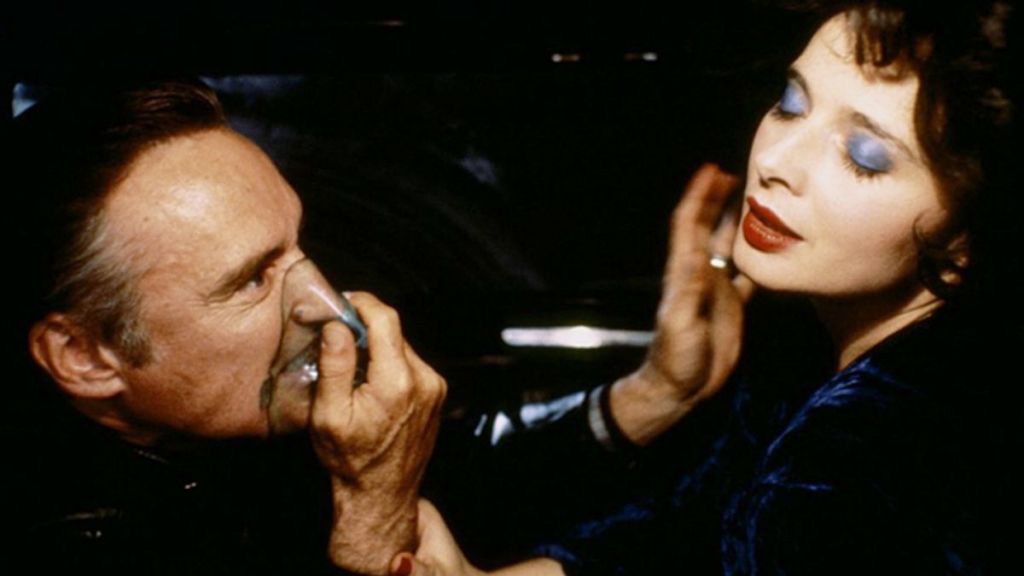
A suburban dad has a heart attack while watering his lawn. He topples to the ground and the camera burrows into the subterranean layers of earth until we land in a frenzied insect world, chaotic and cacophonous. That dichotomy between placidly respectable suburbia and monstrosity simmering beneath the surface is the key metaphor of David Lynch’s masterpiece. Blue Velvet then shifts to the stricken man’s son, guileless Jeffrey Beaumont (Kyle MacLachlan), who is home from college to care for his father. On a walk through the neighborhood, Jeffrey comes across a human ear, and the mystery it promises is something that he and his equally sweet-as-pie neighbor (Laura Dern) are compelled to investigate. If you have seen Blue Velvet, you know the sinister rabbit hole that follows, from Isabella Rossellini as a sultry torch singer to Dennis Hopper as the evilest sumbitch to ever wear an oxygen mask. Lynch loves the dance between innocence and evil. Blue Velvet might just be the cinematic apex of that thematic obsession, as vivid as a severed ear in a nice neighborhood.
(See more in The 10 best films about voyeurism, The 20 best opening scenes in film, and The 20 best needle drops in film.)
3. The Long Goodbye (1973, dir. Robert Altman)
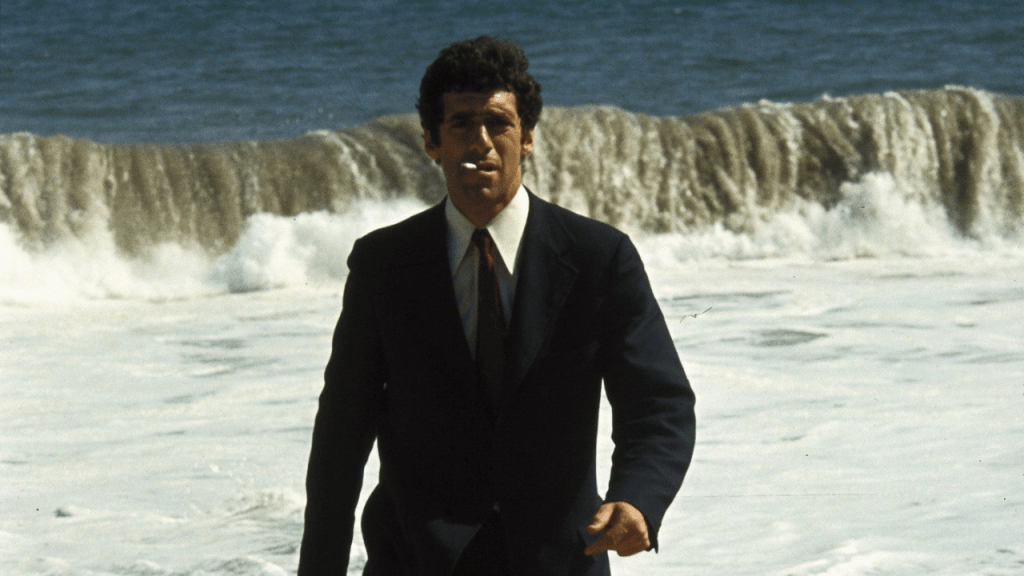
Robert Altman had the intriguing idea of transplanting Philip Marlowe, the hardboiled private detective created by Raymond Chandler, from the rain-swept streets of 1940s Los Angeles to the sun-flecked weirdness of 1970s La La Land. As the updated Marlowe, Elliott Gould finds himself reluctantly ensnared in a homicide case after giving a pal a lift to Mexico, only to learn afterward that his friend, Terry Lennox (former major-league pitcher Jim Bouton), is suspected of murdering his wife. Marlowe, convinced of Terry’s innocence, starts digging. From Gould’s idiosyncratic Marlowe—affable, rumpled, devoted to his demanding cat—to the playful variations of the theme music by John Williams and Johnny Mercer, The Long Goodbye is more about mood than a conventional whodunit. Altman populates this peculiar world with California eccentrics; some are threatening (filmmaker Mark Rydell as a vicious but devout Jewish gangster), some welcoming (half-naked, perpetually stoned yoga enthusiasts who live next door to Marlowe). Marlowe shrugs at it all with an “it’s OK with me.” But is it, really?
(See more in The 20 best hangout films and The 10 best performances by film directors not typically known for acting.)
2. Taxi Driver (1976, dir. Martin Scorsese)
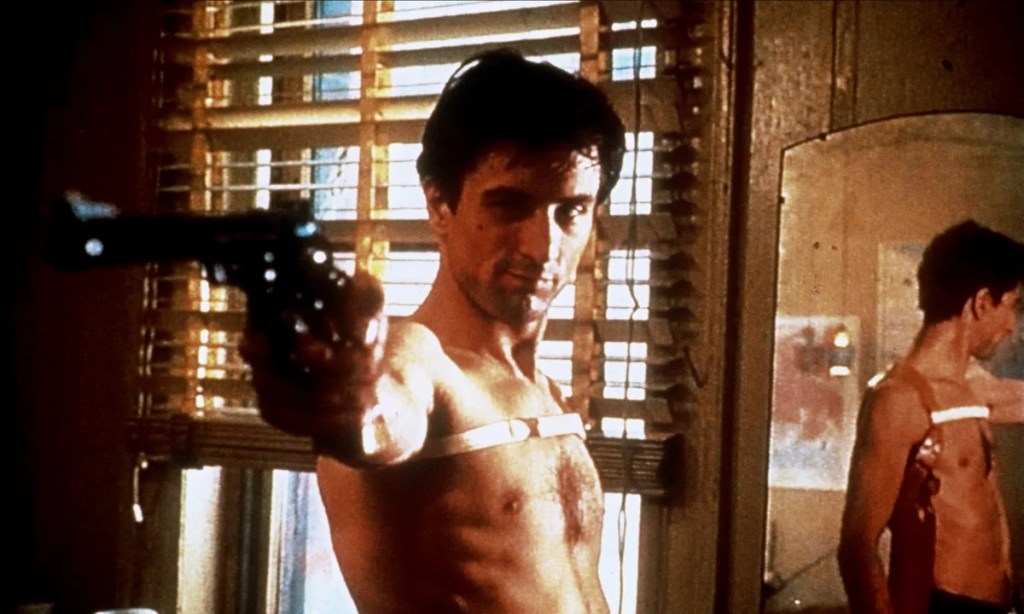
“All the animals come out at night,” Robert De Niro’s Travis Bickle tells us in voiceover. “Whores, skunk pussies, buggers, queens, fairies, dopers, junkies. Sick, venal. Someday, a real rain will come and wash all this scum off the streets.” Martin Scorsese and screenwriter Paul Schrader detail Travis’ descent into a personal purgatory without explaining its genesis. The titular taxi driver is a Vietnam veteran and a racist. He is isolated, an insomniac, and, as he confides to another cabbie, harboring “some bad ideas” he cannot shake. Whatever propels him toward an inevitable explosion of violence cannot be stopped. “Travis emerges as the enigmatic product of the various incoherences in the world around him,” John Belton writes in American Cinema American Culture. Travis tries to pull himself out through desperate attachments: first to Cybill Shepherd as a campaign worker he imagines is goodness incarnate, then to Jodie Foster as a 14-year-old prostitute he resolves to save. There is much to admire in Taxi Driver, from Scorsese’s arresting visuals to Bernard Herrmann’s incomparable score (his last), but the film belongs to De Niro. Rarely has a movie plunged so deeply into an individual’s capacity for madness.
(See more in The 10 best performances by film directors not typically known for acting.)
1. Chinatown (1974, dir. Roman Polanski)
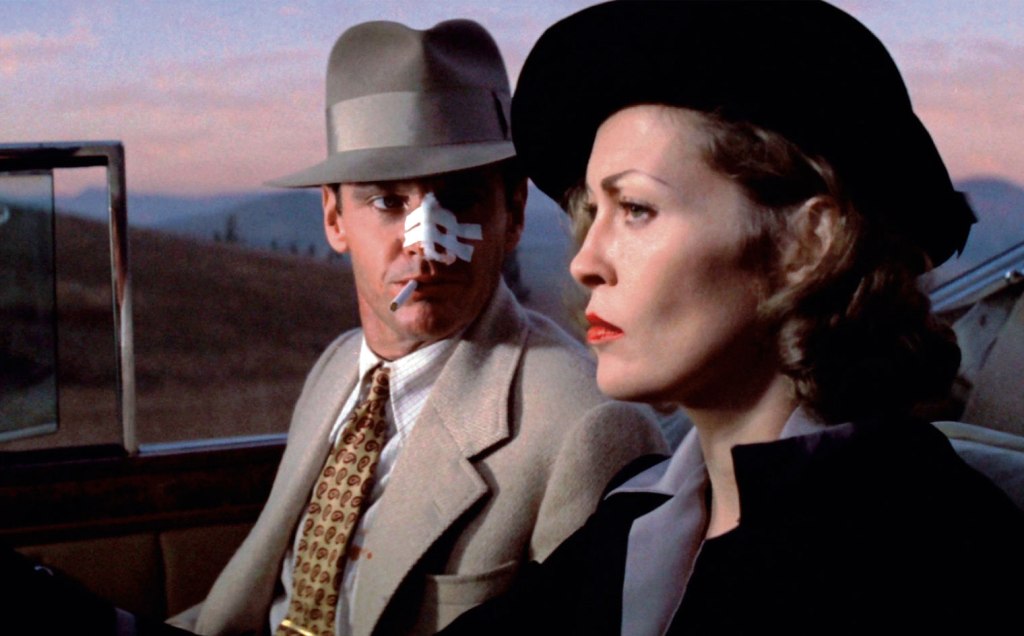
This stone-cold masterpiece set in 1930s Los Angeles marks the intersection where brilliant writing meets inspired direction. Robert Towne’s screenplay, long considered one of cinema’s finest, weaves together threads of corruption, perversion, and murder. Every stitch of Towne’s narrative has purpose and payoff—no fat on these bones. After being duped in what was supposed to be a ho-hum assignment of tailing a philandering husband, gumshoe Jake Gittes (Jack Nicholson) is caught in a labyrinthine conspiracy that involves a mysterious femme fatale (Faye Dunaway), her sinister millionaire father (John Huston), and a lot of unaccounted-for water in the middle of a drought. Director Roman Polanski builds suspense with surgical precision by forcing viewers tightly into Gittes’ point of view. The director, who has a memorable cameo as a knife-wielding thug, also had a major hand in the script; he excised a planned Gittes voiceover narration and crafted a downbeat ending that reflected the nation’s collective mood in 1974. The result is an unforgettable movie—even if its final line urges you to do otherwise.
(See more in The 10 best conspiracy films and The 10 best performances by film directors not typically known for acting.)
Honorable mention: The American Friend (1977, dir. Wim Wenders), Atlantic City (1980, dir. Louis Malle), Blade Runner (1982, dir. Ridley Scott), Blood Simple (1984, dir. Joel Coen and Ethan Coen), Burning (2018, dir. Lee Chang-dong), Cutter’s Way (1981, dir. Ivan Passer), Decision to Leave (2022, dir. Park Chan-wook), Drive (2011, dir. Nicolas Winding Refn), Fallen Angels (1995, dir. Wong Kar-Wai), Fargo (1996, dir. Joel Coen and Ethan Coen), The Friends of Eddie Coyle (1973, dir. Peter Yates), Get Carter (1971, dir. Mike Hodges), Le Cercle Rouge (1970, dir. Jean-Pierre Melville), The Last Seduction (1994, dir. John Dahl), Love Lies Bleeding (2024, dir. Rose Glass), Memento (2000, dir. Christopher Nolan), Memories of Murder (2003, dir. Bong Joon Ho), Mulholland Drive (2001, dir. David Lynch), Nightcrawler (2014, dir. Dan Gilroy), Point Blank (1967, dir. John Boorman), One False Move (1992, dir. Carl Franklin), Pulp Fiction (1994, dir. Quentin Tarantino), Se7en (1995, dir. David Fincher), Thief (1981, dir. Michael Mann), Zodiac (2007, dir. David Fincher)
 Cutting to the Chase with Phil Bacharach
12 responses to “The 15 best neo-noir films”
[…] Blue Velvet’s Jeffrey Beaumont (Kyle MacLachlan) just wants to solve the mystery surrounding a severed human ear he found. Surely, it’s not his fault that unraveling the mystery entails hiding in the apartment of lounge singer Dorothy Vallens (Isabella Rossellini) to spy on her. Watching through the slats of a closet door, he eventually sees Dorothy raped and beaten by the supremely scary Frank Booth (Dennis Hopper). But the encounter and Dorothy’s incomprehensible relationship with Frank pulls Jeffrey further into the dark underbelly of life in small-town Lumberton. “I don’t know if you’re a detective or a pervert?” Jeffrey is told by his friend, Sandy (Laura Dern). His act of watching is ultimately not about learning Dorothy’s secrets, but about exposing his own. In Blue Velvet, David Lynch suggests that the whole “detective or pervert” question is a distinction without a difference.(See more in The 15 best neo-noir films.) […]
LikeLike
[…] The plot of this flawless neo-noir stems from a true-life conspiracy that was pivotal to the growth of Los Angeles. In the city’s early days, the lack of a dependable water supply prompted a scheme to get water from the Owens Valley, 200 miles northeast of the city. To fund an aqueduct that would eventually turn the Owens Valley into desert, the city’s elite lured the hoi polloi into passing a bond issue by secretly dumping water from L.A. reservoirs into the sewer, creating a false drought. Very rich conspirators who had purchased cheap land in the San Fernando Valley made a cool profit selling their property to accommodate the aqueduct. Robert Towne transformed such chicanery into what would become an Oscar-winning screenplay. Set in 1937, Chinatown’s mystery begins when a society woman named Evelyn Mulwray hires private detective J.J. Gittes (Jack Nicholson) to tail her husband, the head of Los Angeles’ water department, whom she suspects of infidelity. The gumshoe obliges, photographs the man cavorting with a young blonde, and leaks the story to the press. There’s one problem; Gittes learns from the real Evelyn Mulwray (Faye Dunaway) that his client was a fraud. What unspools is a byzantine conspiracy encompassing city leaders, crooked cops and a richer-than-sin millionaire named Noah Cross (John Huston). Released in the summer of 1974, Chinatown hit theaters while a nation was glued to watching the Watergate hearings and near-daily revelations of a coverup. A movie set in the 1930s suddenly seemed urgent.(See more in The 15 best Neo-noir films.) […]
LikeLike
[…] As Walker, Lee Marvin is introduced in the midst of being double-crossed. He and his partner Mal Reese (John Vernon, in his movie debut) intercept a money drop at the shuttered Alcatraz prison. Mal shoots Walker and leaves him for dead in a prison cell before fleeing with Walker’s wife (Sharon Acker). But Walker manages to survive—maybe?—and begins a twisted journey through Los Angeles in search of Mal and the $93,000 he’s owed. Marvin used his considerable clout with MGM to ensure British-born director John Boorman, in only his second feature and first American film, had full creative control. As a result, Boorman turns what might have been a conventional revenge thriller into something truly daring: a fractured, hallucinatory and viscerally exciting neo-noir punctuated by jagged editing, surreal flashbacks and eerie modernist architecture. Point Blank is strange enough to invite interpretation. How did Walker, having been shot, get off Alcatraz Island? Did he survive? (See more in The 15 best neo-noir films.) […]
LikeLike
[…] The Long Goodbye is a detective yarn where the plot is the least interesting component. The core idea: Uproot Philip Marlowe, the hardboiled private eye created by writer Raymond Chandler, from the 1940s and drop him in modern-day Los Angeles. Marlowe had been portrayed by the likes of Humphrey Bogart and Robert Montgomery, but director Robert Altman wanted Elliott Gould, the epitome of New Hollywood’s idea of a leading man, mumbling, a little zonked out and as unkempt as his hair. “There were people who were enraged that we would break the mold, that we would go against the grain, and for it not to be the traditional Philip Marlowe,” Gould told author Mitchell Zuckoff in Robert Altman: The Oral Biography. “But people came around.” Altman’s ever-moving camera, overlapping dialogue and improvisational spirit contribute to a mood in which The Long Goodbye seems to unfold in real time before our eyes. (See more in The 15 best neo-noir films.) […]
LikeLike
[…] It is 1986, and a rural province in South Korea is in the throes of what many believed to be the country’s first known serial killer case. The body of the latest victim, a young woman, is discovered in a drainage ditch in the middle of nowhere. Two local police investigators appear to be woefully inept. Park Doo-man (Song Kang-ho) claims he can determine a suspect’s culpability by looking into their eyes, while his partner Cho Yong-koo (Kim Roi-ha) prefers beating suspects until they confess or pass out. CSI: South Korea, it ain’t. Park and Cho look for the low-hanging fruit of suspects, including a mentally challenged man (Park Noh-shik) who followed around one of the victims. They are soon joined by a hotshot detective from Seoul, Seo Tae-yoon (Kim Sang-kyung), who is rightly disgusted by the locals’ methods. Equal parts police procedural and black comedy, Memories of Murder is a masterpiece of ever-shifting tone. Bong Joon Ho continually subverts expectations in this fictionalized account of law enforcement’s efforts in the late 1980s to track down a serial killer responsible for 10 rapes and murders around the town of Hwaseong south of Seoul. Bong’s international breakthrough film renewed interest in the case, which remained unsolved until DNA evidence identified Lee Choon-jae in 2019.(See more in The 15 best neo-noir films.) […]
LikeLike
[…] In a movie that does not lack for iconic scenes, Quentin Tarantino’s masterpiece Pulp Fiction also marked a welcome return to big-screen dancing for John Travolta, whose starmaking performance in 1977’s Saturday Night Fever helped turn disco into a worldwide phenomenon. Here he plays hitman Vincent Vega, tasked with showing his boss’ flirty wife, Mia Wallace (Uma Thurman), a good time while her husband is away on business. At retro diner Jack Rabbit Slim’s, Mia demands that Vincent be her partner for a twist dance contest. Then they wait a few awkward seconds for the music, Chuck Berry’s percolating “You Never Can Tell,” before launching into a dance-off as sexy as it is delightful.(See more in The 10 best bathroom scenes in film and The 15 best neo-noir films.) […]
LikeLike
[…] In the far-off year of 2019, “blade runners” are tasked with tracking down and terminating renegade “replicants,” the pejorative term for androids, who are no longer serving humans. Harrison Ford is Deckard, a craggy, noir-friendly blade runner who is on the trail of outlaw replicants led by Roy Batty (Rutger Hauer). Blade Runner’s four-month shoot was a nightmare. Ford groused that director Ridley Scott seemed more engaged with the picture’s elaborate visual design than working with his star. Ford and co-star Sean Young clashed; their onscreen romance is conspicuously heat-free. Relations between the British director and his American crew were no better. Scott lamented to a reporter that they paled in comparison to UK crews, adding that British technicians quickly took directives with a cheery “Yes, guv!” After the interview ran, crew members printed T-shirts reading “YES, GUV—MY ASS!” The result was stunning science-fiction. Based on Philip K. Dick’s Do Androids Dream of Electric Sheep?, the film lays bare the pain of being almost human. “All those moments will be lost in time,” says Roy Batty about his mortality. “Like tears in rain. Time to die.” Hauer largely improvised the monologue the day of filming. Blade Runner asks if replicants, programmed with ersatz memories yet certain of their autonomy, are truly less human than someone like Deckard. And speaking of him, is the blade runner human? All of the movie’s various cuts are ambiguous on that count. (See more in The 10 best films about memory, The 10 best film dystopias and The 15 best neo-noir films.) […]
LikeLike
[…] it. It took me a very long time to write the script, but in that moment it was done.”(See more in The 15 best neo-noir films and The 15 best revenge […]
LikeLike
[…] David Lynch again. Mulholland Drive bridges seemingly desultory dreams in its Hollywood-centric fable of obsession, desire, and mystery. A lot of mystery. Is the unfolding narrative a deathbed nightmare? A looking-glass version of Tinseltown? Being from the mind of Lynch, the neo-noir encourages audiences to welcome the bewilderment. In a breakthrough performance, Naomi Watts is Betty Elms, an ingénue fresh off the plane from Canada and ready, by golly, to make it as an actress. Shortly after settling in, Betty meets Rita (Laura Harring), a mysterious, raven-haired beauty who has survived a car wreck from the night before but now has amnesia. Who is Rita? Betty takes up the quest like a wannabe Nancy Drew, but still taking time out for a preternaturally sexy performance at a movie audition—a scene of such an incongruently erotic charge from Betty, it’s the audience’s first clue that there’s more to the apple-cheeked innocent she appears to be. Additional storylines, ostensibly unrelated, are stitched into the narrative. A movie director (Justin Theroux) is forced by some sinister mob types to cast a specific woman in his movie; a very sloppy hitman (Mark Pellegrino) accidentally kills multiple people; two men at a diner check to see what might be lurking behind the restaurant. Originally conceived as a television series for ABC, much of Mulholland Drive had been shot when the network nixed the project. Lynch retooled it as a standalone film, rethinking what he already had in the can and injecting it with new ideas, a process he likened to “the surrealists throwing words in the air and letting random acts dictate something.” Whatever that means. Sometimes the most slapdash decisions can make for the most haunting art. (See more in The 10 best neo-noir films.) […]
LikeLike
[…] victims, although Mageau survived the attack.(See more in The 10 best serial-killer films, The 15 best neo-noir films and The 10 best journalism […]
LikeLike
[…] of scenes, but his character’s barely contained brutality looms over the picture.(See more in The 15 best neo-noir films and The 20 best hangout […]
LikeLike
[…] Joel and Ethan Coen open Fargo with the claim that it is based on a true story. That specious pronouncement is the first cheeky joke in this bleak but very funny tale of duplicity, greed, and murder. Set largely in snowy Minnesota (you are correct in thinking Fargo is in North Dakota), it stars William H. Macy in a breakthrough performance as Jerry Lundegaard, a struggling car salesman who arranges to have his wife kidnapped in order to extract a $1 million ransom from his rich but tight-fisted father-in-law (Harve Presnell). Things don’t go as planned. The kidnappers (Steve Buscemi and Peter Stormare) fatally shoot a state trooper and a pair of witnesses. The triple-homicide brings in Sheriff Marge Gunderson (Frances McDormand)—33 minutes into the film—whose thick Minnesotan accent and persistent morning sickness (she is seven months pregnant) belie a sharp investigative mind. McDormand’s performance lends Fargo a much-welcome respite of kindness and hope, and it earned her the first of three Best Actress Oscars. From its opening wintry image of a Paul Bunyan statue to a climactic, if unique, use of a wood chipper, Fargo is a masterwork of misanthropy.(See more in The 10 most memorable movie marriages and The 15 best neo-noir films.) […]
LikeLike