
It’s no surprise that the 1970s were the salad days of the conspiracy movie. In the wake of political assassinations, the Vietnam War, the Watergate scandal and sundry revelations of CIA shenanigans, Americans were poised to believe the very worst about their government. Conspiracy-minded movies, like conspiracy theories themselves, continue to thrive because they offer rationale for circumstances that often seem irrational. There is a neatness to a conspiracy, even when the ostensible plot is unwieldy and amorphous. Here are my selections for the 10 best conspiracy flicks.
10. The Parallax View (1975, dir. Alan J. Pakula)
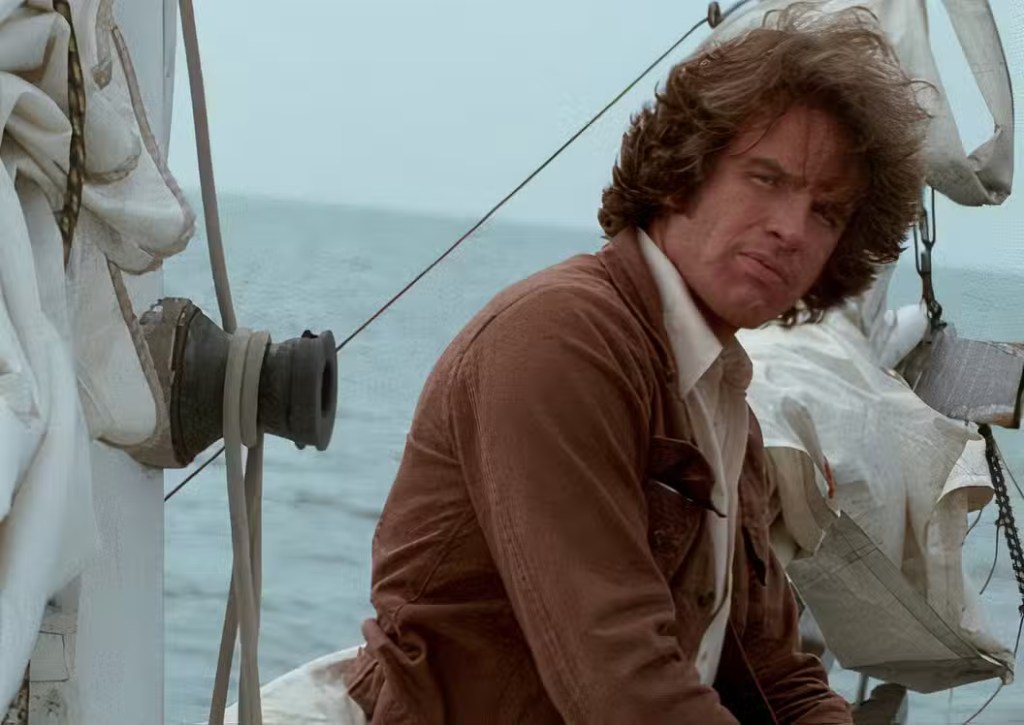
By the time The Parallax View hit theaters, everything from President Kennedy’s assassination to Watergate had primed a nation to believe conspiracy lurked around every corner. Alan J. Pakula’s thriller, the second in his so-called “paranoia trilogy” of the 1970s, mined the tantalizing possibilities that emerged from national trauma. Investigative reporter Joe Frady (Warren Beatty) begins to dig around after an ex-girlfriend (Paula Prentiss) dies under mysterious circumstances shortly after she tells him that her life is in danger. As she and other eyewitnesses to an earlier political assassination begin turning up dead, Joe’s somewhat scattershot probe stumbles onto a shadowy firm, the Parallax Corporation, that may be cultivating assassins. The Parallax View has some hefty plot holes if you poke at them much, so best not to look too closely. Come for the star power, but stay for the brainwashing short movie screened for all prospective Parallax employees. The montage likely won’t turn you into an assassin, but it is riveting filmmaking.
9. Three Days of the Condor (1975, dir. Sydney Pollack)
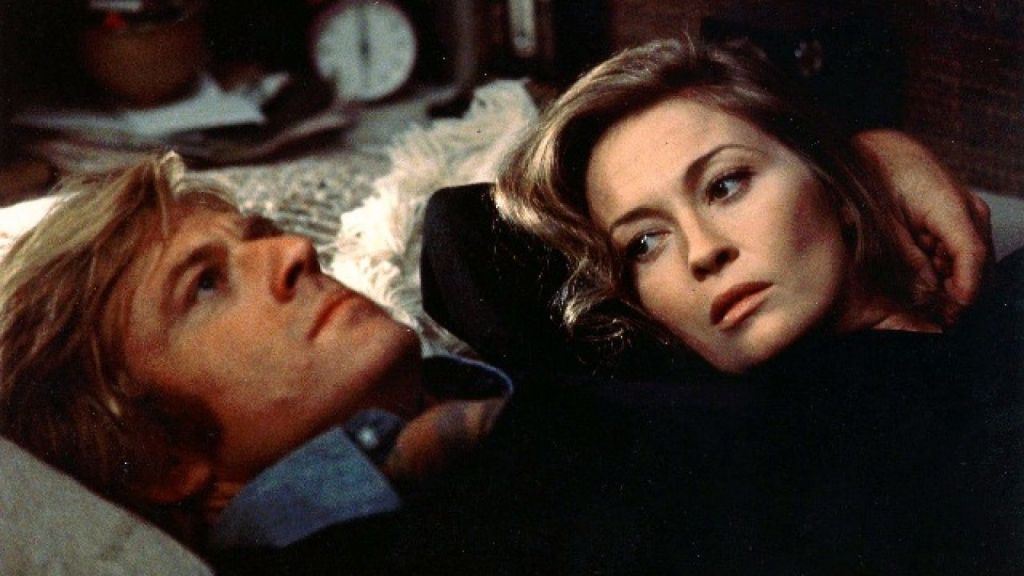
Like The Parallax View, Three Days of the Condor tapped into the zeitgeist of a nation beaten and bruised by an avalanche of unsavory revelations. “We tried to make it a little bit more about where we thought things were going at that time with the CIA,” director Sydney Pollack recalled later. Loosely based on James Grady’s thriller Six Days of the Condor, the film stars Robert Redford (see #8) as Joe Turner, a bookish CIA analyst whose colleagues are wiped out in a lunchtime massacre at their clandestine office. Rightly fearing for his safety, Joe goes on the run, but doesn’t know whom he can trust, least of all the agency he serves. Thankfully, Joe, code-named “Condor,” proves to be a smart operative who can sniff out a geopolitical conspiracy and still find time to kidnap––and seduce––Faye Dunaway as a civilian who gradually trusts him. Even for a kidnapper, it pays to look like Robert Redford.
8. All the President’s Men (1976, dir. Alan J. Pakula)
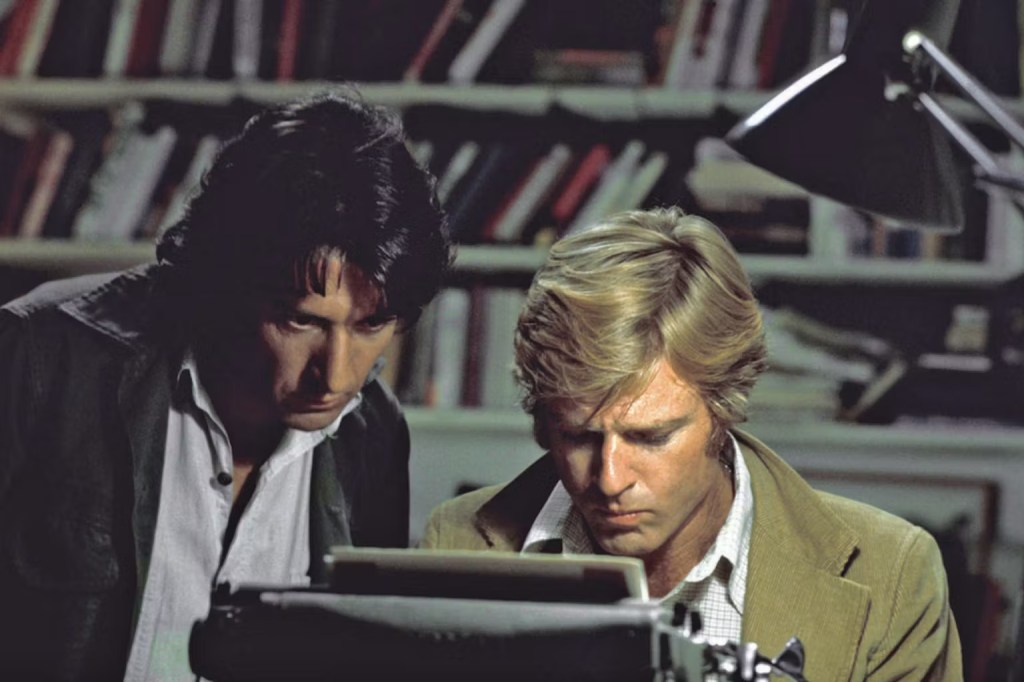
Watching All the President’s Men today, whether for the first time or the 30th, it is worth remembering that the Watergate break-in was only four years old at the time of the movie’s release. The greatest of journalism procedurals focuses on the conspiracy in which the Nixon White House tried covering up its involvement in the burglary of the Democratic National Committee. It is a matter of tugging on a metaphorical thread; in this case, it’s Washington Post reporter Bob Woodward (Robert Redford) at the burglars’ arraignment when he catches that one of the defendants worked for the CIA. Each bit of information uncovered by Woodward and Carl Bernstein (Dustin Hoffman) leads to another morsel. “In a conspiracy like this, you build from the outer edges and go step by step,” Woodward is told by “Deep Throat” (Hal Holbrook), his high-level anonymous source. “If you shoot too high and miss, everybody feels more secure.” For a nation whipsawed by assassinations and an unpopular war, Watergate seemed to solidify the belief that our government is corrupt. It outraged the country, but in hindsight, it also desensitized Americans to scores of scandals to follow.
(See more in The 10 best journalism movies.)
7. They Live (1988, dir. John Carpenter)
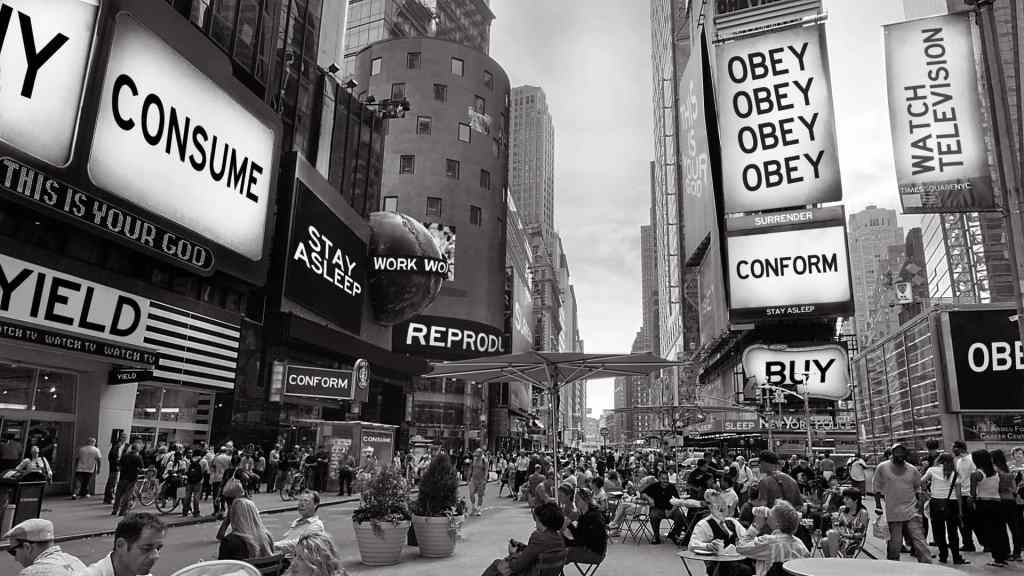
The tongue-in-cheek science-fiction satire of They Live confirms what you might have long suspected: space aliens are in control. At least that was the conclusion of John Carpenter as he surveyed the United States in the Ronald Reagan years. They Live stars pro wrestler Rodney Piper as Nada, an unemployed drifter whose discovery of a unique pair of sunglasses leads to a stunning revelation. When he’s wearing them, Nada can see that bug-eyed, quasi-skeletal space creatures walk among us, disguised as yuppies and other well-heeled imposters. If that weren’t alarming enough, the world is also littered with subliminal messages emblazoned on everything from skyscrapers to billboards. CONSUME. OBEY. STAY ASLEEP. You get the idea. Subtlety isn’t Carpenter’s strong suit, but he is far too canny an entertainer to make a political polemic. Instead, They Live is a darkly comic wedding of sci-fi, horror and action, the last of which boasts one of cinema’s most grueling movie fights, in which our hero and a fellow working stiff, played by Keith David, beat the hell out of each other. At its core, They Live posits the tidiest of explanations for what Carpenter saw as America’s slavish acquiescence to capitalism, consumerism and authority: we are but pawns in an interplanetary conspiracy.
6. Eyes Wide Shut (1999, dir. Stanley Kubrick)
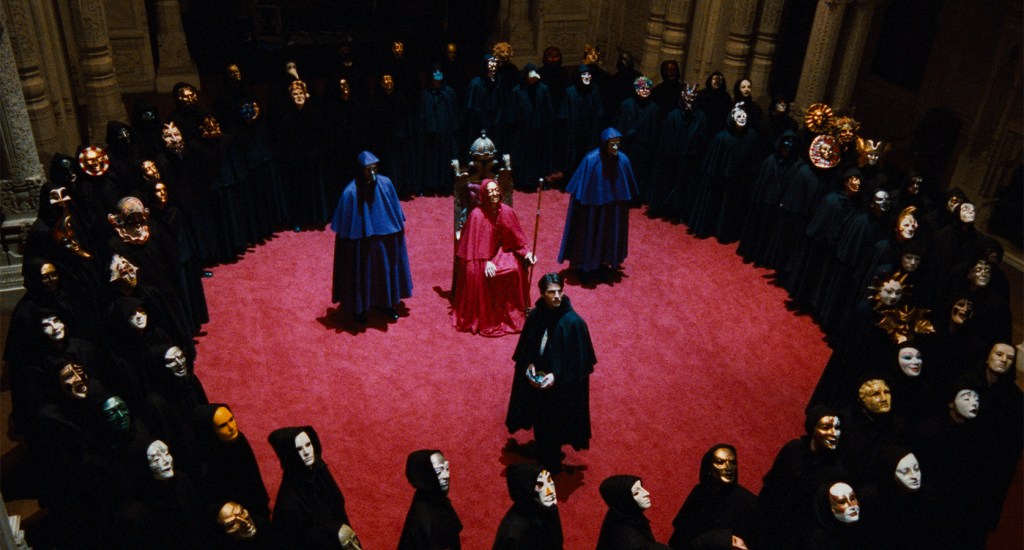
While Stanley Kubrick’s cinematic swan song was met with a mixed reception at its 1999 release, many now consider it not only a masterpiece, but one of his best. Warner Bros. did Eyes Wide Shut no favors by marketing it as edgy eroticism. There was no onscreen sex, and its climactic orgy has less heat than a Rotary luncheon. But come without libidinous expectations, and the movie’s dreamlike artifice and conspiratorial menace are part of the allure. Tom Cruise and Nicole Kidman play Dr. Bill and Alice Harford, whose marriage is threatened after Alice confesses to a sexual fantasy involving another man. A shaken Bill wanders an intentionally faux Manhattan hoping to experience his own sexual escapades. Things turn ominous when he infiltrates a floating orgy for masked elites. He is found out, forced to strip, and perhaps headed toward an ignominious demise. Years before the sex trafficking case of financier Jeffrey Epstein shocked the nation, Eyes Wide Shut imagined a debauched secret society that reached the highest levels of power. “Those were not just some ordinary people,” Bill is told by his friend, Victor (Sydney Pollack). “If I told you their names––no, I’m not going to tell you their names––but if I did, I don’t think you’d sleep so well at night.” Eyes Wide Shut itself has inspired all manner of conspiracy mongering, including a theory that Kubrick––who died of natural causes shortly before its release––was killed because he had exposed a real-life pedophile ring.
5. Z (1969, dir. Costa-Gavras)
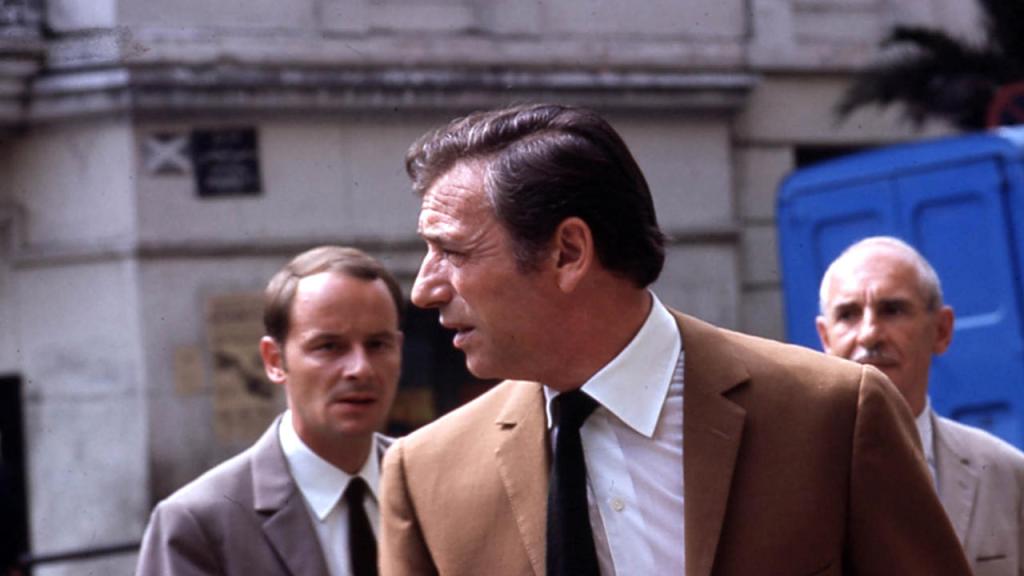
There’s no way to exclude Z, which the estimable New Yorker critic Pauline Kael hailed as “one of the fastest, most exciting melodramas ever made,” in a roundup of the all-time greatest conspiracy-minded films. Costa-Gavras’ masterpiece is a thinly veiled account of the 1963 assassination of Grigoris Lambrakis, a leader of Greece’s pacifist movement, by right-wing extremists. A subsequent investigation shed light on a labyrinthine cover-up that ensnared the highest echelons of government. The scandal even briefly empowered the opposition party, but the victory was short-lived; a military junta took over four years later. Jean-Louis Trintignant plays the intrepid prosecutor who discovers a far-reaching plot to downplay the killing and protect the perpetrators. The political realities of Greece meant Z had to be a French-Algerian production. Even its music score by Mikis Theodorakis had to be smuggled to the filmmakers while he was in Greek custody. (See more in The 10 best political films.)
4. The Manchurian Candidate (1962, dir. John Frankenheimer)
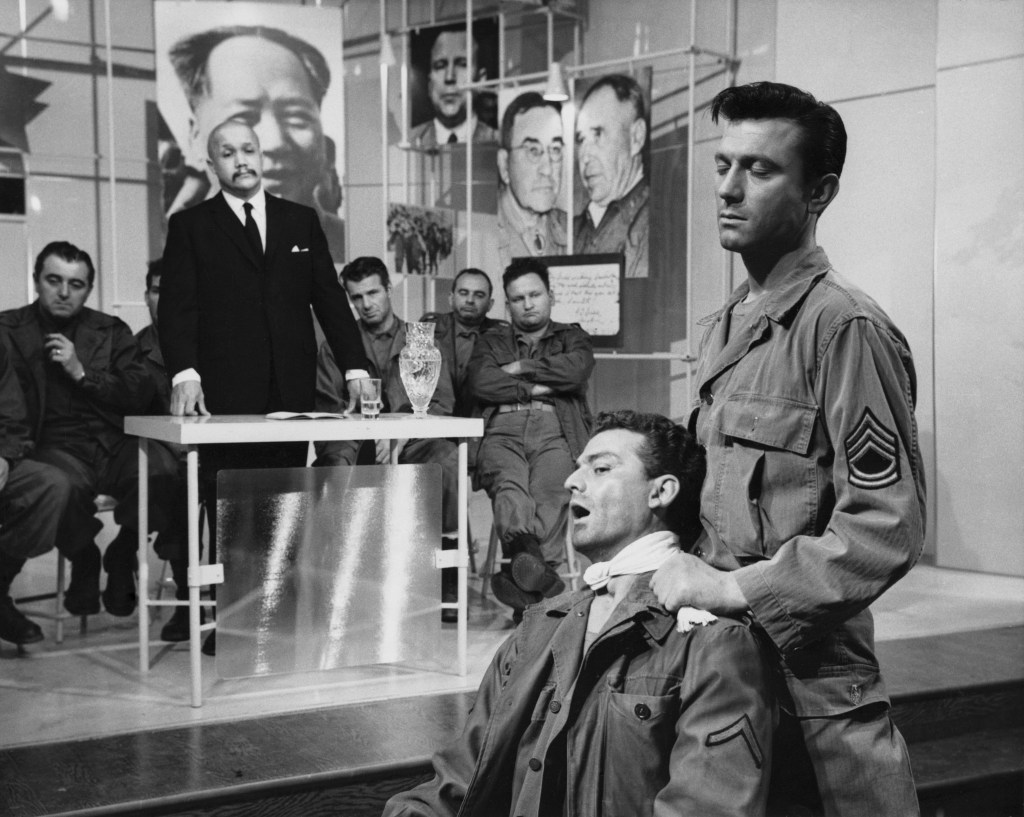
Ask any Korean War vet who served with Raymond Shaw and he will tell you without hesitation that Sgt. Shaw is “the kindest, bravest, warmest, most wonderful human being I’ve ever known.” The only thing is, Shaw is nothing of the sort. To be honest, the former platoon leader is kind of a prick. But The Manchurian Candidate, based on the novel by Richard Condon, reveals that the entire platoon, including Shaw, had been brainwashed in the war by Chinese communists in Manchuria. The collective delusion is part of a furtive plot aimed at installing a U.S. president who will soften up the nation for a communist takeover. The scheme even involves Shaw’s conniving mother (Angela Lansbury) and imbecilic stepfather (James Gregory), a commie-baiting U.S. senator à la Joe McCarthy. Poor Raymond Shaw is a sleeper assassin and doesn’t even know it. The idea of an American president duped into doing the bidding of a foreign superpower? Pure fantasy. Obviously. (See more in 10 memorable movie mothers.)
3. Rosemary’s Baby (1968, dir. Roman Polanski)
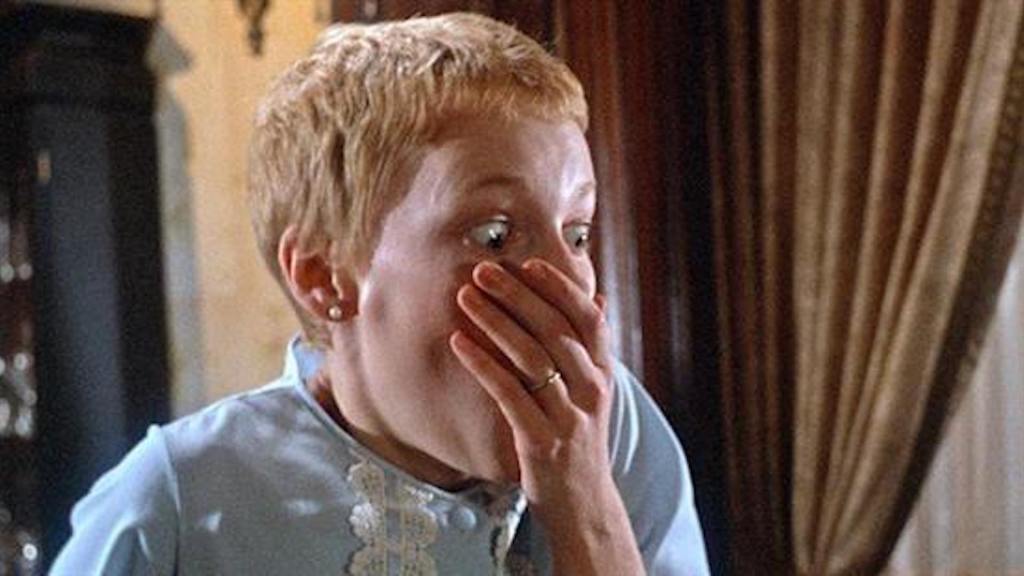
Rosemary’s Baby lulls you in with its sweet, almost cherubic vibe: Krzysztof Komeda’s lullabyish theme music with Mia Farrow’s little-girl voice singing along as we are introduced to the fictional Branford, a storied Manhattan apartment building with a colorful past. A young married couple, Rosemary and Guy Woodhouse (Farrow and John Cassavetes), move in and soon become friendly with the eccentric older couple next door, a relationship Guy, a struggling actor, embraces more readily than does his wife. Then Rosemary becomes pregnant, and she is disturbed by the degree to which those oldsters, Roman and Minnie Castavet (Sidney Blackmer and Ruth Gordon), meddle into her business. Roman Polanski’s faithful adaptation of Ira Levin’s bestseller taps into the paranoia of modern urban life and intergenerational distrust. As he does in the equally conspiratorial-minded Chinatown (see #1), the filmmaker forces us into his protagonist’s point of view. Rosemary is wary of the motives of the Castavets, their weird old friends and the seasoned obstetrician (Ralph Bellamy) they foist upon her. While Guy’s career suddenly takes off, the isolation of Rosemary’s pregnancy heightens her suspicion that something is very wrong with the widespread interest in her unborn child. The truth, we (and Rosemary) eventually learn, is unfathomable. Could it be Satan?
2. JFK (1991, dir. Oliver Stone)
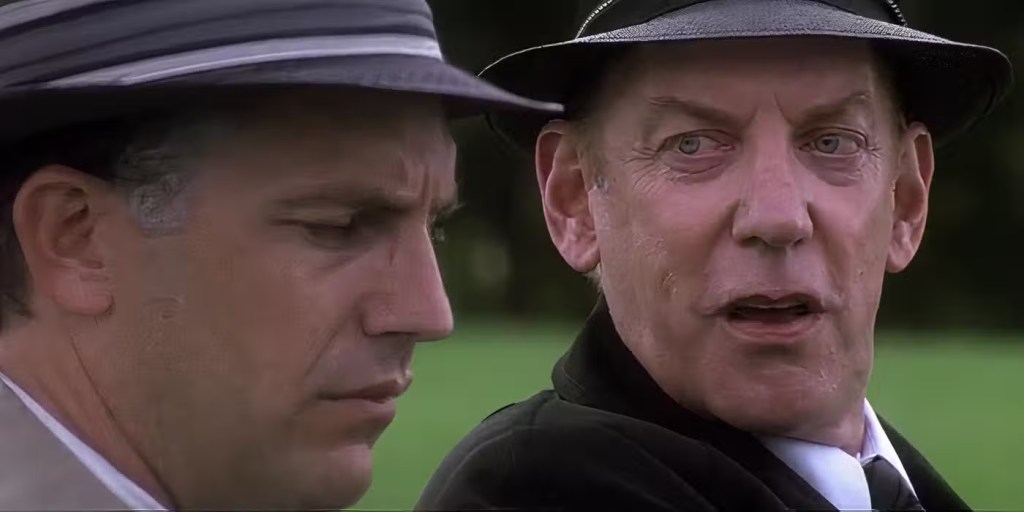
Director Oliver Stone brought his kinetic moviemaking know-how to explore the 1963 assassination of President Kennedy and a wide-ranging conspiracy theory alleged in the late ‘60s by New Orleans district attorney Jim Garrison. Starring Kevin Costner as a fearlessly truth-seeking Garrison, JFK purports that Lee Harvey Oswald was a patsy in a vast web that included the CIA, the FBI, the military, Lyndon Johnson, the Mafia and a bunch of New Orleans oddballs. Stone luxuriates in the paranoia of a generation already leery of American institutions. As a shadowy government operative who goes by “X,” Donald Sutherland pops up to make ominous pronouncements about how deep the conspiracy went. “The how and the who is just scenery for the public,” X says. “Oswald, Ruby, Cuba, the Mafia––keeps ‘em guessing like some kind of parlor game, prevents ‘em from asking the most important question: why? Why was Kennedy killed? Who benefited? Who has the power to cover it up?” Who was behind the assassination? Stone seems to say it was damn near everyone.
(See more in The 10 best movies about fake history.)
1. Chinatown (1974, dir. Roman Polanski)
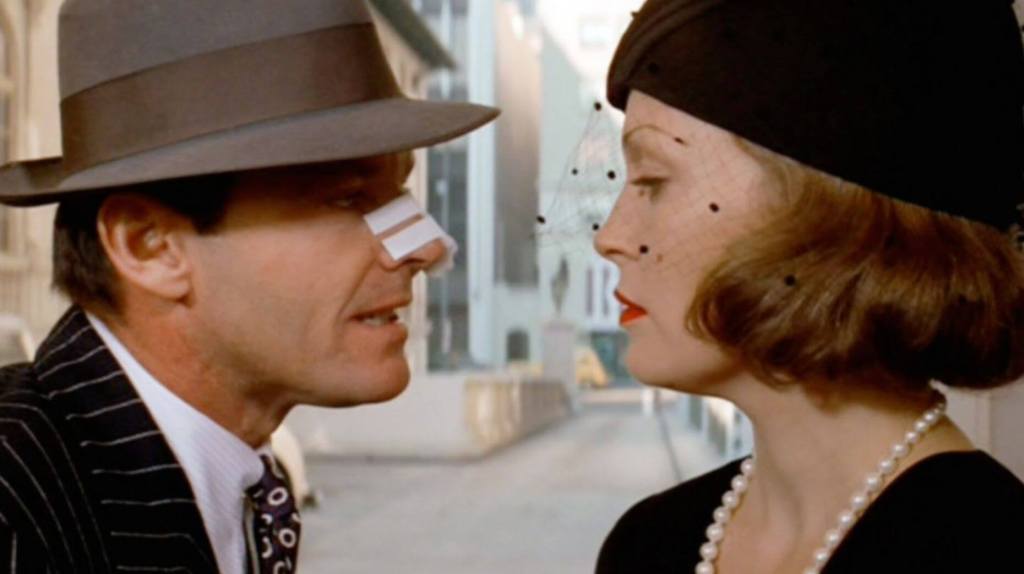
The plot of this flawless neo-noir stems from a true-life conspiracy that was pivotal to the growth of Los Angeles. In the city’s early days, the lack of a dependable water supply prompted a scheme to get water from the Owens Valley, 200 miles northeast of the city. To fund an aqueduct that would eventually turn the Owens Valley into desert, the city’s elite lured the hoi polloi into passing a bond issue by secretly dumping water from L.A. reservoirs into the sewer, creating a false drought. Very rich conspirators who had purchased cheap land in the San Fernando Valley made a cool profit selling their property to accommodate the aqueduct. Robert Towne transformed such chicanery into what would become an Oscar-winning screenplay. Set in 1937, Chinatown’s mystery begins when a society woman named Evelyn Mulwray hires private detective J.J. Gittes (Jack Nicholson) to tail her husband, the head of Los Angeles’ water department, whom she suspects of infidelity. The gumshoe obliges, photographs the man cavorting with a young blonde, and leaks the story to the press. There’s one problem; Gittes learns from the real Evelyn Mulwray (Faye Dunaway) that his client was a fraud. What unspools is a byzantine conspiracy encompassing city leaders, crooked cops and a richer-than-sin millionaire named Noah Cross (John Huston). Released in the summer of 1974, Chinatown hit theaters while a nation was glued to watching the Watergate hearings and near-daily revelations of a coverup. A movie set in the 1930s suddenly seemed urgent.
(See more in The 15 best Neo-noir films.)
Honorable mention: Blow Out (1981, dir. Brian De Palma), The Constant Gardener (2005, dir. Fernando Meirelles), The Conversation (1974, dir. Francis Ford Coppola), The Insider (1999, dir. Michael Mann), Invasion of the Body Snatchers (1978, dir. Philip Kaufman), Killers of the Flower Moon (2023, dir. Martin Scorsese), Kiss Me, Deadly (1955, dir. Robert Aldrich), L.A. Confidential (1997, dir. Curtis Hanson), Michael Clayton (2007, dir. Tony Gilroy), Winter Kills (1979, dir. William Richert)
 Cutting to the Chase with Phil Bacharach
7 responses to “The 10 best conspiracy films”
[…] As cravenly ambitious Eleanor Shaw Iselin, Angela Lansbury makes for one of cinema’s most irresistibly wicked moms. What kind of mother would be part of a vast conspiracy that has transformed her son, Raymond Shaw (Laurence Harvey) into a mindless assassin? John Frankenheimer was emphatic that Lansbury play Eleanor. “I’ve always had a problem playing just downright rotten women. Anything like that, I just can’t touch it,” the actress recalled in 2004’s documentary, Queen of Diamonds. But she couldn’t say no. To put it mildly, mother and son have a complicated relationship. She kisses him full on the mouth after apologizing to him, while he is in a fugue state, for how he has been used. “On the one hand, she (Eleanor) was going to use him and did in a disgraceful, dreadful way,” Lansbury said. “But when it came down to what had happened to him, she was devastated.” (See more in The 10 best conspiracy films.) […]
LikeLike
[…] Set in 1930s Los Angeles, this stone-cold masterpiece marks the intersection where brilliant writing meets inspired direction. Robert Towne’s screenplay, long considered one of the all-time finest, snakes through a labyrinthine web of corruption and murder. Every stitch of Towne’s narrative has purpose and payoff—no wasted motion. Our guide through the neo-noir, much of it based loosely on one of L.A.’s earliest scandals, is gumshoe Jake Gittes (Jack Nicholson, perfect). After being duped in what appears to be a ho-hum assignment of tailing a philandering husband, Gittes finds himself ensnared in a conspiracy involving a mysterious femme fatale (Faye Dunaway), her rich and sinister father (John Huston) and a lot of water in the middle of a drought. Director Roman Polanski, who has a memorable cameo as a knife-wielding nasty, builds suspense with surgical precision, forcing us to identify closely with Gittes. The director also had a major hand in the script, excising Gittes’ voice-over narration and crafting an ending that reflected a national zeitgeist beaten down by war and scandal. The result is an unforgettable movie—even if its final line urges you to do otherwise. (See more in The 10 best conspiracy films.) […]
LikeLike
[…] This unapologetically mean-spirited adaptation of Mickey Spillane’s pulp paperback bestseller is a fistful of nasty. The opening credits alone underscore that this is not a typical crime picture. They roll backward over an over-the-shoulder oner of private eye Mike Hammer (Ralph Meeker) and a distraught hitchhiker (Cloris Leachman) racing along the highway in Hammer’s convertible Jaguar. They are forced off the road shortly after arriving in Los Angeles. The woman is kidnapped, tortured and murdered, and Hammer is caught in a web of Cold War intrigue. Meeker snarls, smirks and slugs his way in a performance that shows why Spillane’s private dick is, to be blunt, a prick. Robert Aldrich’s direction mirrors the brutishness of his antihero. Kiss Me, Deadly ain’t pretty. It’s fast, punchy and occasionally disorienting, Its legion of admirers included French critic and future filmmaker François Truffaut. “Watching a film like this is such an intense experience that we want it to last for hours,” he wrote at the time of its theatrical release. “It is easy to picture its author as a man overflowing with vitality, as much at ease behind a camera as Henry Miller facing a blank page.” The mysteriously glowing box at the center of the film—a MacGuffin later commemorated in Repo Man (1984) and Pulp Fiction (1994)—is a sharp, if unsubtle, manifestation of 1950s nuclear anxiety. It’s a fitting image for a movie so explosive. (See more in The 10 best conspiracy films.) […]
LikeLike
[…] This incendiary masterpiece doesn’t mess around. “Any similarities to real persons and events is not coincidental. It is intentional,” announces an opening title card. Z is a barely disguised account of the assassination of Grigoris Lambrakis, a leftist leader in Greece whom right-wing protesters assassinated in 1963. A subsequent criminal investigation exposed a cover-up ensnaring the highest echelons of government. The scandal rocked the country and contributed to a political upheaval that briefly empowered the opposition party. That victory was short-lived; a military junta took over four years later. Since any acknowledgement of the Lambrakis incident had been long banned in Greece, Z became a French-Algerian production. The film captures the murder and its aftermath, but this political thriller is not a dry history lesson. Yves Montand is the Lambrakis stand-in, Jean-Louis Trintignant the crusading prosecutor whose scruples frustrate the powers that be. “As if it’s not enough that our country has been invaded by long-haired thugs, atheists and junkies of unclear sex,” the prosecutor is lectured by the attorney general, “now you want to disparage our armed forces and courts, the only elements not corrupted by parliamentarianism.” Sweeping in scope and crackling with excitement, Z is always moving, as befitting Costa-Gavras’ energetic camerawork.(See more in The 10 best conspiracy films.) […]
LikeLike
[…] security guard who discovered the burglary of Democratic National Committee offices.(See more in The 10 best conspiracy films and The 10 best political […]
LikeLike
[…] There is no shortage of skeptics when it comes to the Warren Commission’s conclusion that Lee Harvey Oswald alone was responsible for the 1963 assassination of President John F. Kennedy. Count among them Oliver Stone, whose JFK presents as fact a wide-ranging conspiracy theory posed in the late 1960s by New Orleans prosecutor Jim Garrison. Stone and co-writer Zachary Sklar contend that the president’s killing was plotted by a host of interesting bedfellows including the CIA, the FBI, the Pentagon, then-Vice President Lyndon Johnson, the Mafia and sundry eccentrics in the New Orleans community. For good measure, JFK even offers Donald Sutherland as the mysterious “X,” loosely based on a real-life Air Force colonel, who tells Garrison that the plotters wanted Kennedy dead because he wouldn’t have escalated U.S. involvement in Vietnam. Kevin Costner plays Garrison as a courageous maverick seeking the truth. JFK ignited a firestorm of controversy upon its release. Critics assailed Stone for presenting speculation as fact. Yet the film’s impact extended beyond the multiplex. Its release directly contributed to the passage of the President John F. Kennedy Assassination Records Collection Act of 1992, which mandated the declassification of thousands of previously secret government documents related to the case. In 1969, Garrison prosecuted Louisiana businessman Clay Shaw (Tommy Lee Jones in the movie) for the assassination. A jury acquitted him in less than an hour.(See more in The 10 best conspiracy films.) […]
LikeLike
[…] “Of course I’m respectable. I’m old!” booms John Huston as millionaire Noah Cross when Chinatown’s gumshoe J.J. Gittes calls him respectable. “Politicians, ugly buildings and whores all get respectable if they last long enough.” It’s a commanding performance for the celebrated director (The Maltese Falcon, The African Queen) as a Los Angeles business tycoon whose cravenness knows no bounds. Few figures in American cinema better projected authority, confidence, and intelligence—qualities that make Cross’ depravity all the more unsettling. On the set, though, his ability to deliver was often uncertain. Huston was sloppy drunk much of the time. “He was divorcing his last wife, and he was irascible, and it showed,” his daughter, Anjelica Huston (in a relationship with Nicholson during production) recalled years later.(See more in The 15 best neo-noir films and The 10 best conspiracy films.) […]
LikeLike