With all due respect to the other three seasons, there’s a reason summer has been so often commemorated in cinema, literature, and music. The long days, blazing heat, and languorous pace have become part of our collective mythology.
Summer is a time for vacations and road trips, first loves and teary goodbyes, sleepaway camps and childhood adventures. Oh, and movies. Here are 10…
10. National Lampoon’s Vacation (1983, dir. Harold Ramis)
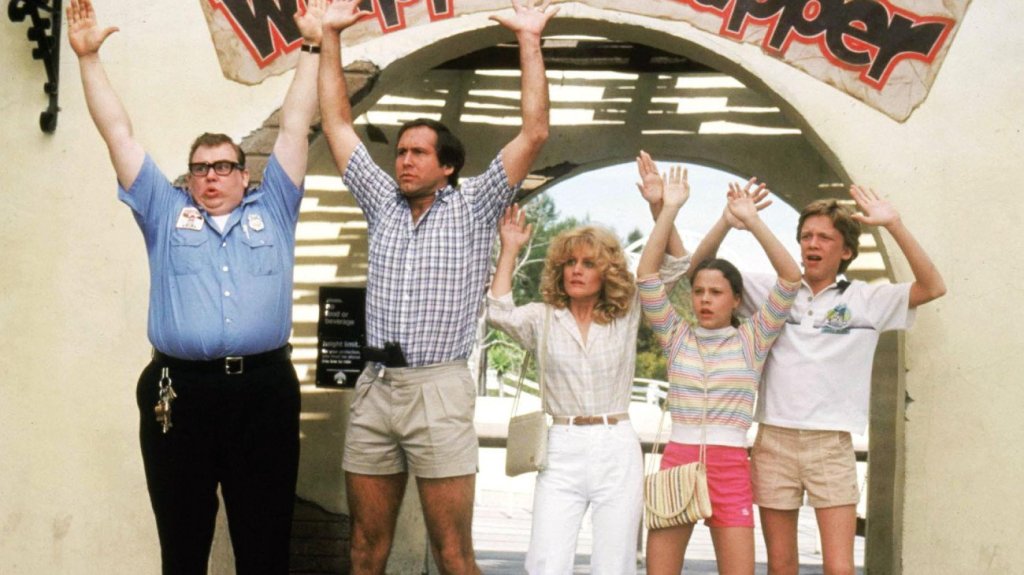
“Family vacation”—just the phrase conjures up memories. And who knows—a few might even be pleasant. National Lampoon’s Vacation revels in how a summer road trip can go very, very wrong. The vacationing Griswold family—Chevy Chase and Beverly D’Angelo as parents Clark and Ellen, Anthony Michael Hall and Dana Barron as their teenage children—is subjected to a host of indignities in their cross-country journey to visit the fictional Wally World amusement park. National Lampoon’s Vacation was a massive hit, eventually spawning five sequels, but the original shows its age with at least one scene that turns on flagrantly racist stereotypes. But with director Harold Ramis and screenwriter John Hughes letting their inner 12-year-olds run wild, this is no vacation that anyone books expecting good taste. Best of all, however, is Chase. The notoriously unpleasant actor was reportedly difficult on set, but his prowess for physical comedy was never better.
9. Summer of ‘42 (1971, dir. Robert Mulligan)
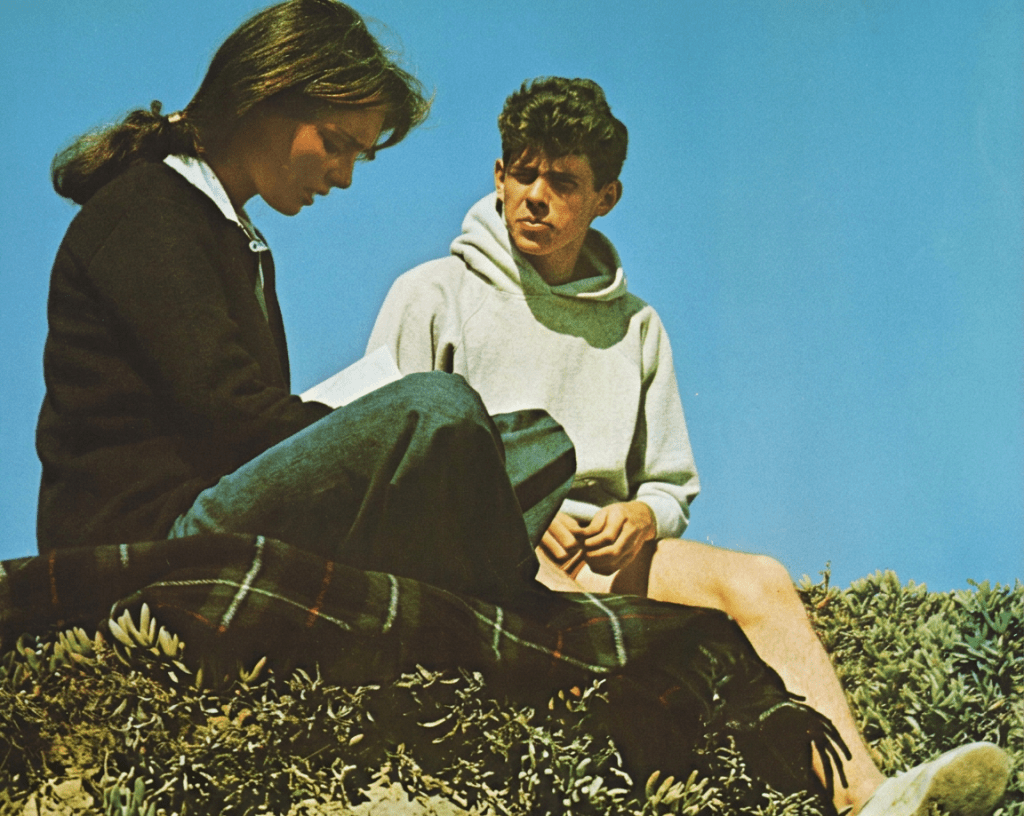
Nostalgia at its most melancholy, Summer of ‘42 is based on the memories of screenwriter Herman Raucher and his affair with an older married woman when he was 15. During an eventful summer on Nantucket, teenager Hermie (Gary Grimes) and two buddies (Jerry Houser and Oliver Conant) obsess over sex. Hermie is smitten with an attractive young bride (Jennifer O’Neill) living alone at a nearby cottage while her man is off at war. The premise of a 15-year-old boy entering into a sexual relationship with an adult has not aged particularly well, but the 1970s were a different time, as they say, and the picture inspired a sequel two years later. Regardless, Summer of ‘42 still resonates with poignant moments, thanks to Robert Surtees’ atmospheric cinematography and Michel Legrand’s elegant, Oscar-winning score.
8. Adventureland (2009, dir. Greg Mottola)
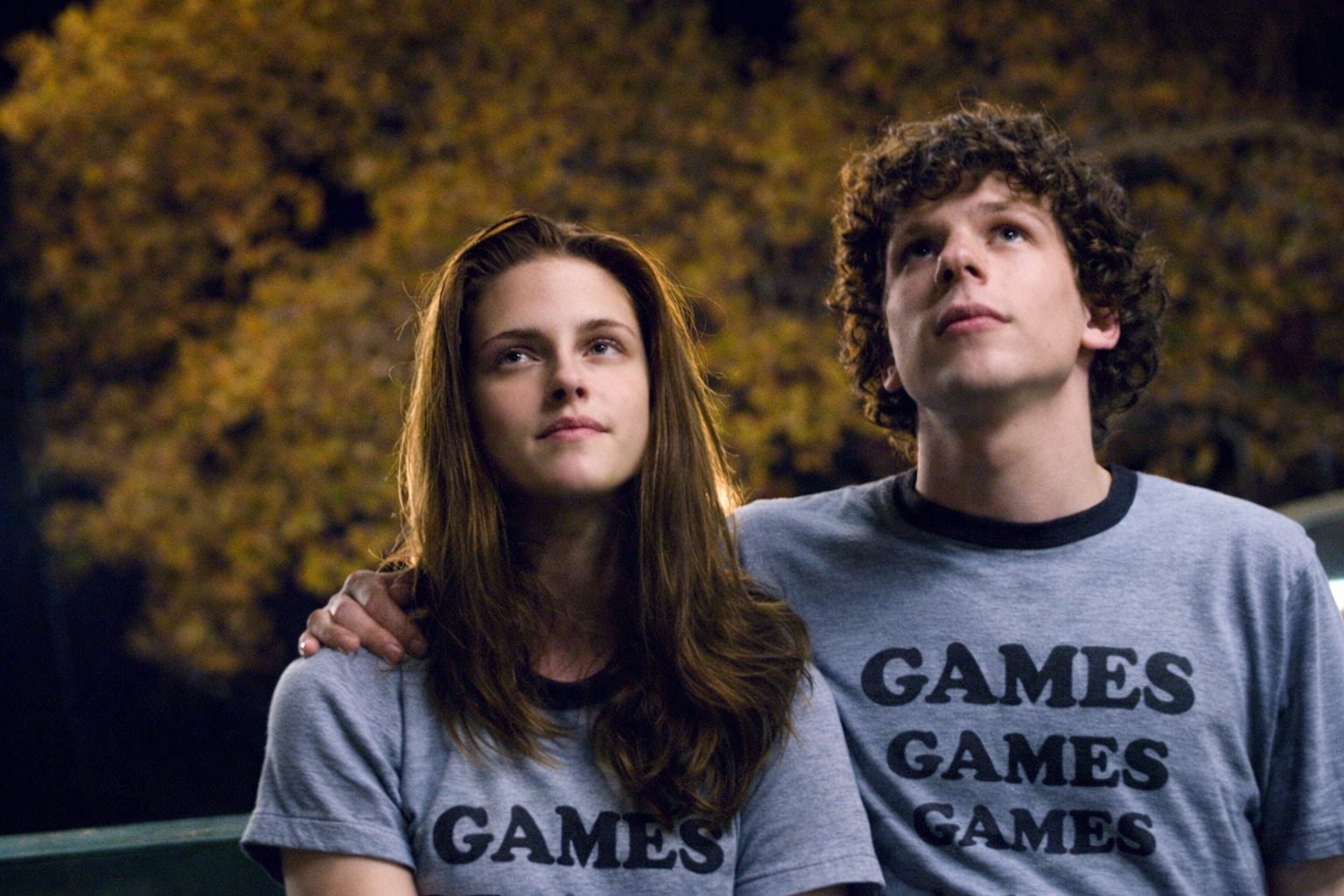
Like several of the best summertime movies here, Adventureland preserves in amber the distinct flavor of youth in a particular time and place, in this case the late 1980s—or at least how Gen X wishes to remember it. Jesse Eisenberg is James Brennan, a recent Oberlin graduate who takes a summer job at a rundown Pittsburgh amusement park hoping to save enough money for graduate school. Kristen Stewart is the co-worker he pines for and Ryan Reynolds the married handyman with whom she’s having an affair. Melodrama unfolds without feeling forced. Greg Mottola leans into period needle drops and an elegiac score by indie rock veterans Yo La Tengo for a relaxed slacker vibe. Even better are Eisenberg and Stewart. Their rapport imbues Adventureland with a summer romance that feels effortless and organic.
7. Summertime (1955, dir. David Lean)
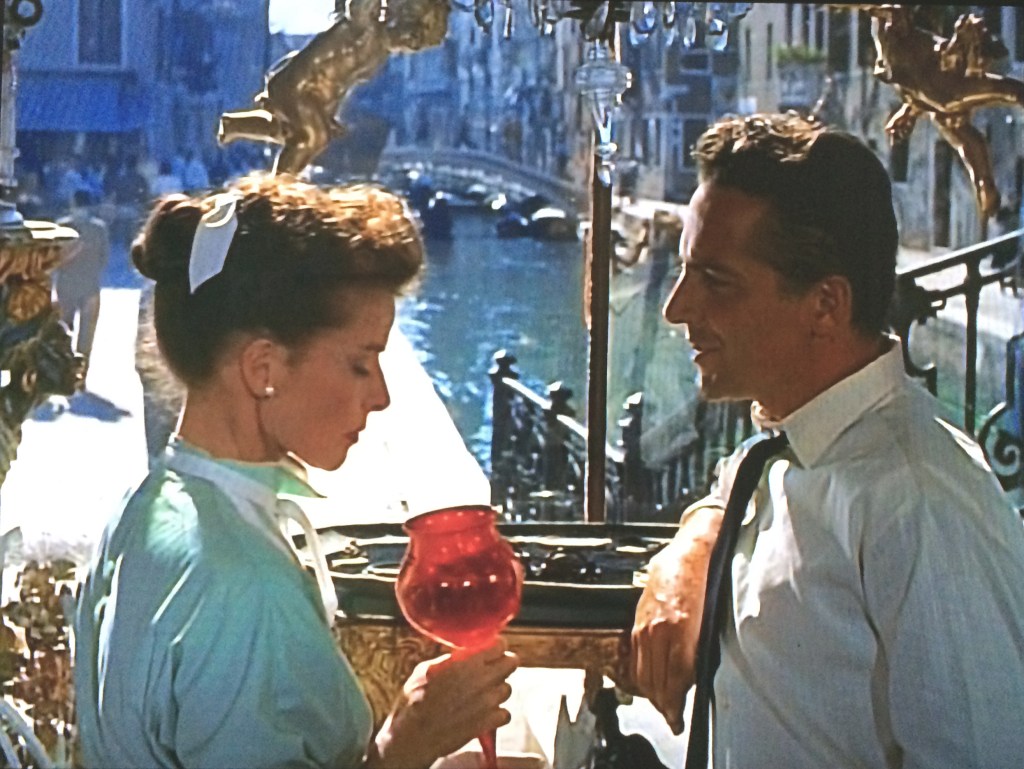
Not all of us are able to spend a summer in Venice, but at least we have this beautifully photographed romance from David Lean. Adapted from Arthur Laurents’ play The Time of the Cuckoo, Summertime has Katharine Hepburn as Jane Hudson, a self-described “fancy secretary” from Akron, Ohio, who has “saved up such a long time” for a bucket-list vacation in the City of Canals. Like its protagonist, Summertime basks in the splendor of the city, captured in lush Technicolor by cinematographer Jack Hildyard. Jane’s complicated fling with a married (but separated) Italian antiques dealer (Rossano Brazzi) carries with it a whiff of dated spinster pity, but Hepburn earned an Oscar nomination for her affecting portrait of a woman caught between societal expectations and her deep loneliness. “The love affair itself may be formulaic, but Hepburn falling in love is a miracle,” wrote film critic David Denby in an essay for the Criterion Collection. “Her opening up to passion… is the main reason she remained a star despite all her upper-class mannerisms and by-golly declarativeness.”
6. Dazed and Confused (1993, dir. Richard Linklater)
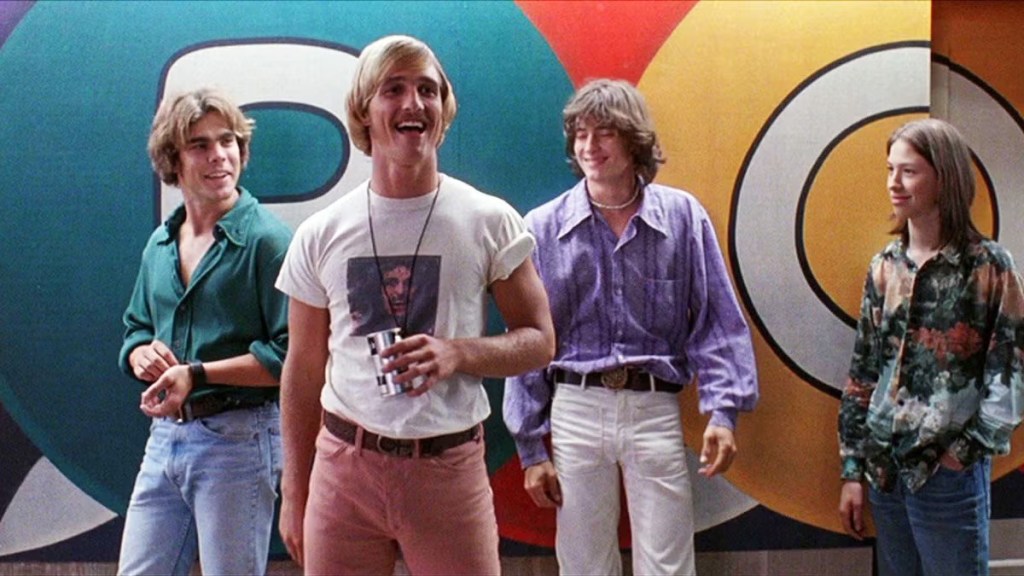
Richard Linklater’s scruffy comedy about Texas teens at the start of the summer of 1976 does for children of the ‘70s what American Graffiti did for boomers. Linklater reveals an eye for young talent, having assembled a cast then on the cusp of stardom, including Ben Affleck, Parker Posey, Adam Goldberg, and a scene-stealing Matthew McConaughey (a University of Texas student at the time) whose performance is “all right, all right, all right!” The keg parties and potheads, the jocks and the hazing, and a classic-rock soundtrack—the film’s recreation of the decade is, as essayist Chuck Klosterman observed, less about how things were and more about how things are remembered. And that’s ultimately what summer is about—a period we romanticize even while we’re in the midst of living it. Dazed and Confused closes with a carload of kids driving to Houston to try scoring tickets to an Aerosmith concert while Foghat’s “Slow Ride” booms over the soundtrack. The scene is freedom and aimlessness and weed: the trinity of summer.
(See more in The 20 best hangout films.)
5. Call Me by Your Name (2017, dir. Luca Guadagnino)
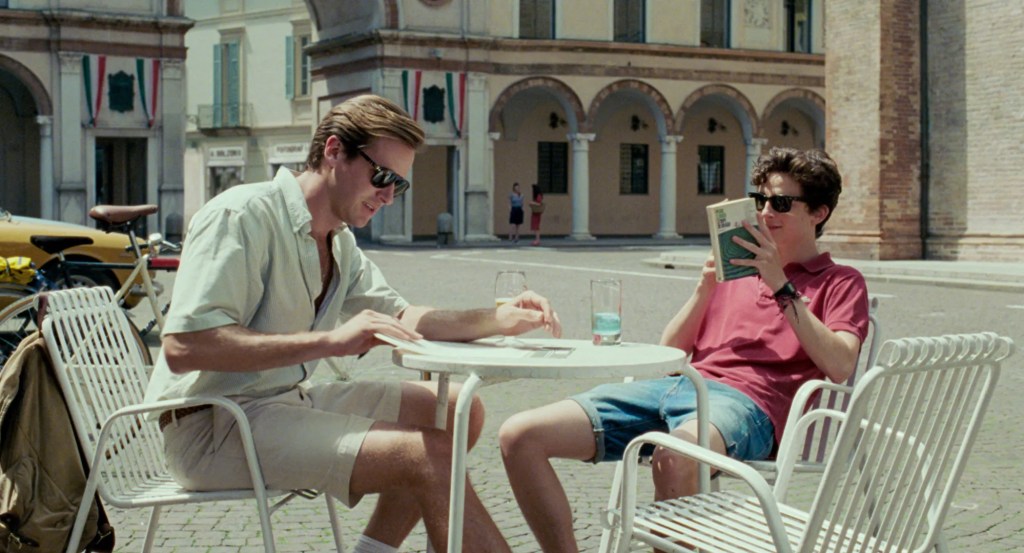
This coming-of-age tale all but shimmers in seasonal bliss. Based on a 2007 book by André Aciman, Call Me by Your Name introduces 17-year-old Elio Perlman (Timothée Chalamet) and his growing infatuation with Oliver (Armie Hammer), a handsome and charismatic 24-year-old college student who has come to live with the boy’s family in Northern Italy during the summer of 1983. Like Summer of ‘42, director Luca Guadagnino and screenwriter James Ivory largely set aside the lovers’ age imbalance, their narrative filtered through the haze of lovelorn memory. Ravishing images and sound—not to mention the elegiac music of Sufjan Stevens—capture the pleasant wooziness of warm, endless days. The mood is lazy and languorous, quietly seductive but thrumming with the allure of sex and the low drone of cicadas. First loves are unforgettable, especially when they happen in an Italian summer paradise.
(See more in The 10 most memorable masturbation scenes in film.)
4. Stand by Me (1986, dir. Rob Reiner)
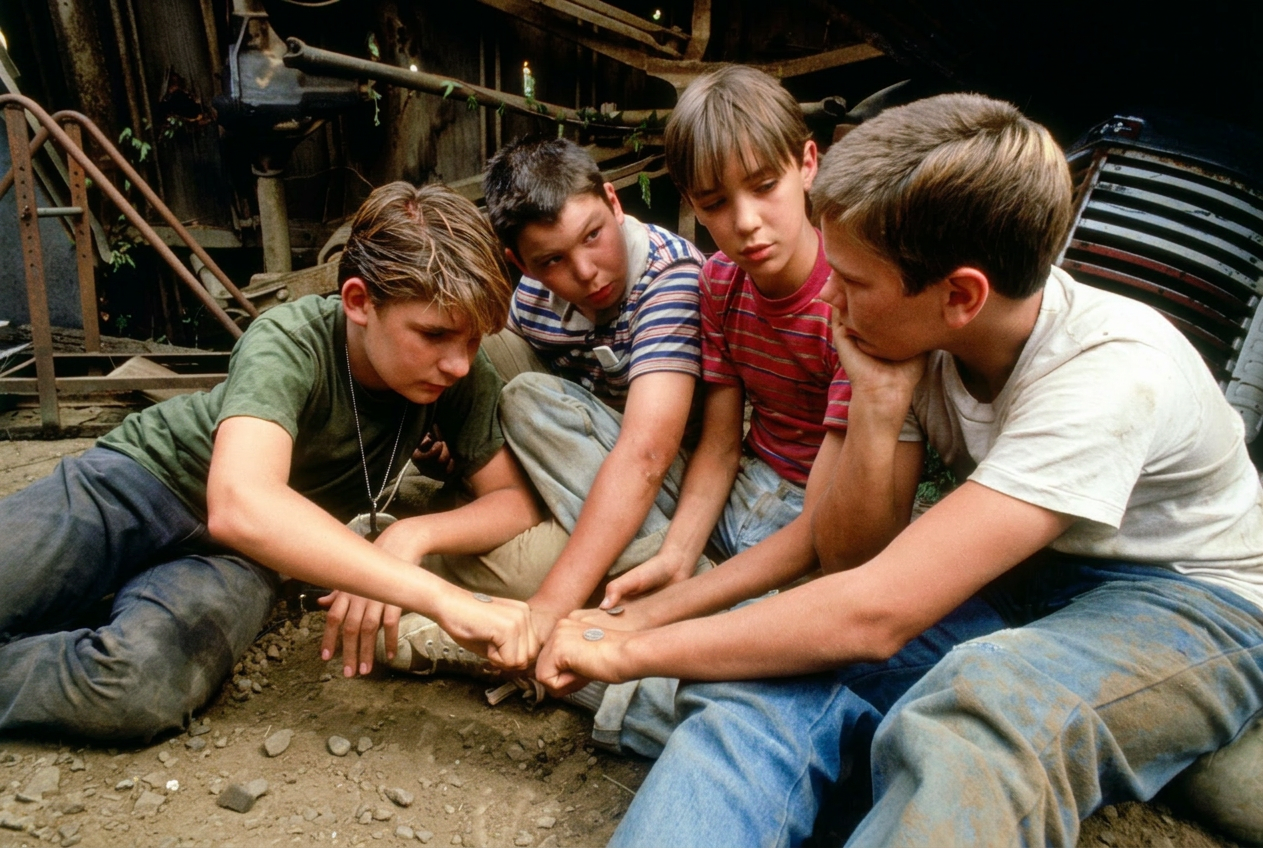
I’m not spoiling anything by referencing the final scene of Stand by Me, but it’s worth quoting from it: “I never had any friends later on like the ones I had when I was twelve. Jesus, does anyone?” Rob Reiner’s adaptation of a Stephen King novella homes in on that declaration. Set in 1959 rural Oregon, the movie follows friends Gordie (Wil Wheaton), Chris (River Phoenix), Teddy (Corey Feldman), and Vern (Jerry O’Connell) as they undertake the somber summer adventure to locate the body of a missing kid. It is a testament to Reiner’s sure-handed direction and the quartet of child performances that the characters rise above mere archetypes to carry emotional heft. The boys have difficult, even agonizing, home lives; their friendship is a shared salvation, and it helps to be at the glorious age when it’s perfectly reasonable to argue over who would win in a fight between Mighty Mouse and Superman. Stand by Me is framed by the recollections of Gordie as an adult, played by Richard Dreyfuss, meaning that the summer mythologizing is baked right in. This is unabashedly honey-dipped nostalgia, but the sentimentality is earned.
(See more in The 10 best male buddy films.)
3. American Graffiti (1973, dir. George Lucas)
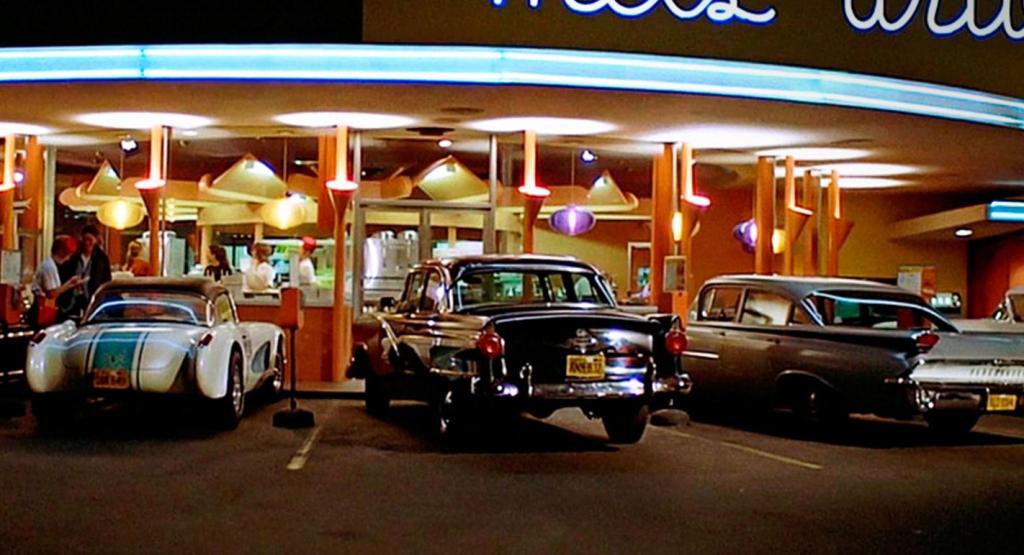
In George Lucas’ second feature after his futuristic, commercially disappointing THX 1138, the filmmaker returned to his youth in Modesto, California, circa 1962. American Graffiti concerns a handful of teenagers toward summer’s end. High school sweethearts Steve (Ron Howard) and Laurie (Cindy Williams) face how their relationship will be tested with Steve away at college. Laurie’s brother Curt (Richard Dreyfuss) is eager to track down a beautiful girl in a white Thunderbird who smiled at him. Toad (Charles Martin Smith) gets to use Steve’s “superfine machine” of a car, while local James Dean-wannabe John (Paul Le Mat) faces a drag-race challenger (Harrison Ford, in an early role). Hardly huge stakes, but they matter for these likable young people. “I decided it was time to make a movie where people felt better coming out of the theater than when they went in,” Lucas told Peter Biskind in Easy Riders, Raging Bulls. “I wanted to preserve what a certain generation of Americans thought being a teenager was really about—from about 1945 to 1962.” As Richard Linklater would do in Dazed and Confused, this film’s spiritual child, American Graffiti documents a specific moment in American teenage life, albeit through a prism of remembrance.
(See more in The 20 best hangout movies and The 15 best coming-of-age movies.)
2. Do the Right Thing (1989, dir. Spike Lee)
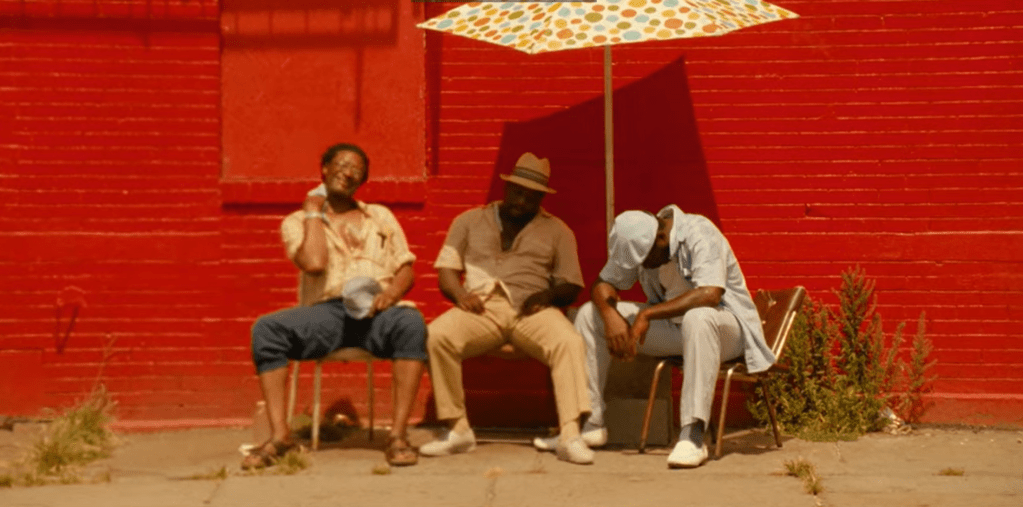
Among film’s greatest works about race relations in the United States, Spike Lee’s Do the Right Thing is also one helluva summer picture. It is set on the hottest day of the year in Brooklyn’s Bedford-Stuyvesant section, and it transforms the heat itself into a character. “Today’s temperature’s gonna rise up over 100 degrees,” announces radio DJ, Mister Señor Love Daddy (Samuel L. Jackson), “so there’s a Jheri curl alert! If you have a Jheri curl, stay in the house or you’ll end up with a permanent black helmet on your head forever!” Ernest Dickerson’s cinematography, with its vibrant colors and tight close-ups, might just induce sweating from viewers. The rising temperature fans racial tensions in a neighborhood ready to figuratively erupt. No wonder the original title was Heatwave. Along with Dickerson’s camerawork, a lush score by Bill Lee (Spike’s father) and a stunning ensemble cast—including John Turturro, Samuel L. Jackson, Danny Aiello, and Bill Nunn—make Do the Right Thing one of cinema’s most evocative depictions of summer.
(See more in The 10 best films about Black and white America.)
1. Jaws (1975, dir. Steven Spielberg)
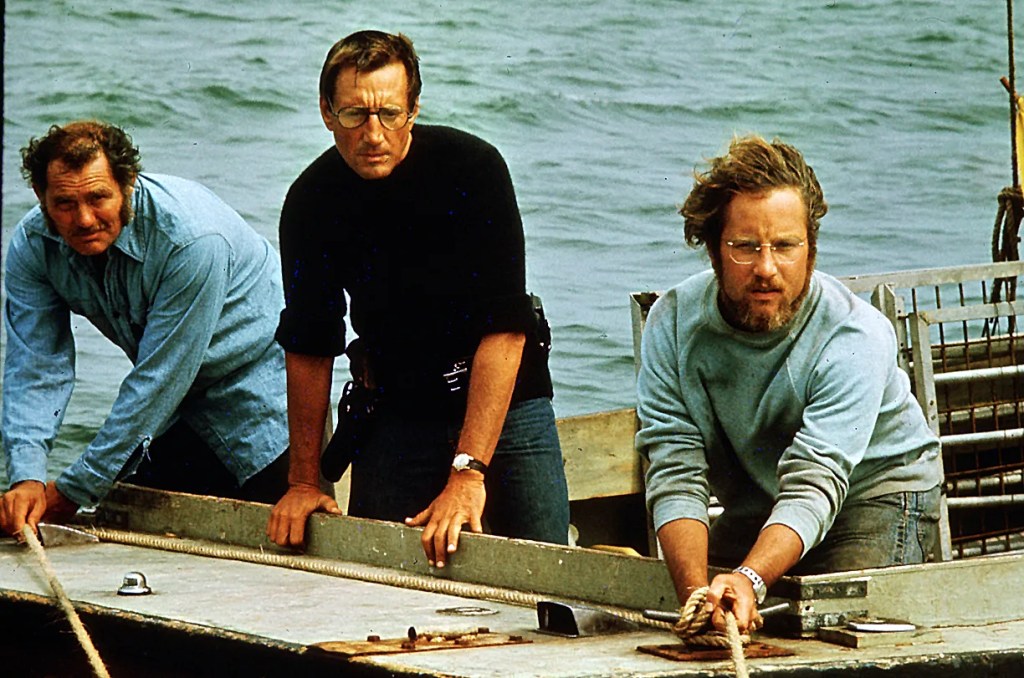
It opened in theaters on June 20, 1975, a date that would forever change the movie business by kickstarting the age of the summer blockbuster and helping establish the strategy of nationwide wide releases. Jaws was a runaway smash, but I’m betting you knew that already. The film recouped its budget within a few weeks and went on to become the biggest box-office success up to that time. Universal Pictures, the studio that had given the world Dracula and Frankenstein, now had the biggest monster hit of all, only this time the monster was a great white shark. For Jaws’ young director, Steven Spielberg, the terror came during the making of the movie itself. The five-and-a-half-month shoot in Martha’s Vineyard dragged on and on, chiefly because the mechanical sharks—which Spielberg collectively named “Bruce” in honor of his lawyer—broke down repeatedly. Insiders began dubbing the movie “Flaws.” But necessity proved the mother of invention, and so the 27-year-old director had to be strategic about using the shark. That restraint ratchets up the film’s white-knuckled tension, with a valuable assist by John Williams’ iconic theme music. You know the plot. Fictional Amity Island is accustomed to making an economic killing each summer with the arrival of beach-loving tourists, so its mayor (Murray Hamilton) is reluctant to close the beaches when there are signs of a massive shark in the area. The killing becomes literal during a hellish Fourth of July in a sequence that Spielberg makes a masterclass in suspense. Amity’s police chief (Roy Scheider) teams up with a smarty-pants oceanographer (Richard Dreyfuss) and a grizzled shark killer (Robert Shaw) to track down the man-eater. They prove an ideal trio—even if Dreyfuss and Shaw famously clashed offscreen. Shaw’s monologue, about the real-life sinking of the USS Indianapolis during World War II and the sharks that attacked the stranded sailors, is as chilling as anything in Jaws.
Honorable mention: Dirty Dancing (1987, dir. Emile Ardolino), The Green Ray (1986, dir. Éric Rohmer), La Cienaga (2001, dir. Lucrecia Martel), Mamma Mia! (2008, dir. Phyllida Lloyd), Meatballs (1979, dir. Ivan Reitman), Moonrise Kingdom (2012, dir. Wes Anderson), Picnic (1955, dir. Joshua Logan), Summer with Monika (1953, dir. Ingmar Bergman), The Swimmer (1968, dir. Frank Perry), Y Tu Mamá También (2001, dir. Alfonso Cuarón)


4 responses to “The 10 best summer films”
[…] The movie heralded Spike Lee as a major force in American cinema, and rightly so. Set in Brooklyn’s Bedford-Stuyvesant neighborhood, Do the Right Thing chronicles more than a dozen characters over the course of a scorching summer day of racially charged conflicts that build toward a seemingly inevitable explosion of violence. Prior to its theatrical release, some pearl-clutchers in the media opined whether the film itself would lead to real-life riots (they were wrong). A flashpoint occurs when a bespectacled youth, Buggin Out (Giancarlo Esposito), demands that an Italian pizzeria in a predominantly Black neighborhood put “some Black faces” up on the eatery’s Wall of Fame, which only has photos of Italian-Americans. The restaurant owner, Sal (Danny Aiello), refuses. Vowing to launch a boycott of the joint, Buggin Out finds an ally in Radio Raheem (Bill Nunn), whose huge boombox has already incurred Sal’s wrath. Its social commentary alone makes Do the Right Thing required viewing, but Lee, who also co-stars, elevates it through virtuosic filmmaking. The movie’s rage is palpable, but Do the Right Thing is resolute in its ambivalence. No one is let off the hook, but no one warrants full excoriation, either. That ambiguity is encapsulated by Smiley (Roger Gwenveur Smith), a developmentally disabled Bed-Stuy resident, hawking photos on the street of Martin Luther King Jr. and Malcolm X. Smiley’s pictures illustrate opposing approaches to civil rights, just as Do the Right Thing suggests the necessity of both nonviolence and extreme measures. (See more in The 10 best films about summer.) […]
LikeLike
[…] You’ll find more rolling papers than plotlines in Richard Linklater’s ode to Texas high school students on the last day of school in 1976. But inhale deeply—Dazed and Confused is a good high. Like its spiritual parent American Graffiti (see 3), its sprawling cast includes several actors—Ben Affleck, Matthew McConaughey and Parker Posey, among others—who went on to bigger roles. There is no single protagonist here. Linklater is as interested in “Pink” Floyd (Jason London), the weed-loving football quarterback being pressured by his coach to sign a no-drugs pledge, as he is in freshman Mitch Kramer’s (Wiley Wiggins) frantic attempt to dodge the ritualistic hazing from lunkhead senior boys. The episodic structure mimics the shuffling pace of what it is to be a teenager at the beginning of a long, hot summer. Linklater, a Texas native, had wanted to make a movie that would illustrate how the 1970s “really sucked.” Thankfully, he failed at that and instead crafted a valentine to the decade. (See more in The 10 best films about summer.) […]
LikeLike
[…] Luca Guadagnino’s tale of sexual awakening is lyrical, sensuous, and—in at least one transgressively memorable scene—peachy keen. During a momentous summer in Northern Italy, teenager Elio Perlman (Timothée Chalamet) falls for Oliver (Armie Hammer), an American graduate student staying with the Perlman family. The attraction unfolds with longing and torrid curiosity. Such sensuality inevitably leads to Elio’s intimacy with a peach, creating one of the most infamous moments in modern arthouse cinema.(See more in The 10 best films about summer.) […]
LikeLike
[…] Boy meets girl at a party on the beach. The girl, Chrissie (Susan Backlinie), teasingly rushes to the water while the boy, Tom (Jonathan Filley), stumbles to keep pace before collapsing on the sand. Chrissie swims further out. Cue John Williams’ ominous two-note music motif as we see Chrissie’s legs kicking underwater from the vantage point of an unseen predator. Persistent problems with Jaws’ mechanical sharks forced young director Steven Spielberg to rethink how this film, based on Peter Benchley’s bestseller, would strike terror in the hearts of movie audiences. “The shark not working was a godsend,” Spielberg said later. As a result, the ocean itself becomes a thing of evil. Backlinie’s legs were attached to a harness with cables. Spielberg then instructed the crew to yank the cables from all sides without letting the actress know from what direction the jostling would be coming so as to elicit a realistic response. The result is horrific, the illusion of an unseen force pulling Chrissie under. She screams, struggles, and disappears, swallowed up by a sea that suddenly turns tranquil. The three-day shoot produced a scene of primal terror and heralded the arrival of a cinematic phenomenon.(See more in The 10 best summer films.) […]
LikeLike