Is there life on other planets? Judging by most films over the years, one would think humans are terrified by that possibility. Cinema’s default on space aliens has been hostile. For science-fiction of the 1950s, preoccupations with the Cold War and atomic nightmares tended to envision little green men as being bent on world domination.

The more interesting tradition, however, imagines alien encounters as something stranger and more profound than invasion. Steven Spielberg almost single-handedly shifted the tone of alien movies with Close Encounters of the Third Kind and E.T., but he is far from the only filmmaker to dream up a more benevolent view of “the other.” Here are my selections for the 10 best that explore alien encounters of the benign kind.
Now take me to your leader.
10. The Shape of Water (2017, dir. Guillermo del Toro)
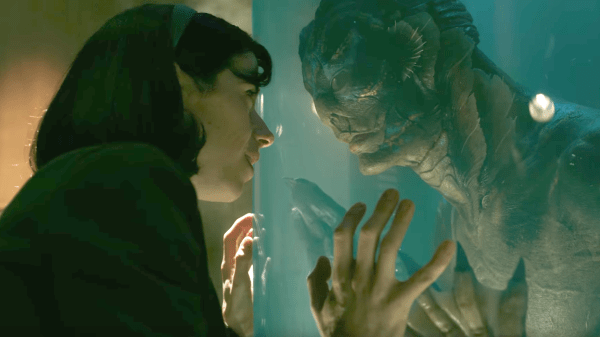
Bathed in rich colors and sumptuous imagery, Oscar Best Picture-winner The Shape of Water is a valentine to lonely hearts in the Cold War era. Sally Hawkins is wonderful as a mute cleaning woman who falls head over gills for an amphibious creature (Doug Jones) housed in the government lab where she works. Yes, this inter-species courtship is consummated. The cast boasts the reliably superb Richard Jenkins, Michael Shannon and Octavia Spencer, but the star is Guillermo del Toro, whose direction earned the Academy Award and proves as ravishing as the romance itself. The filmmaker who grew up watching monster movies fell in love with the Creature from the Black Lagoon not as a villain but as a misunderstood romantic. Del Toro had been waiting for years to make this movie, and it shows in every glorious frame.
9. Contact (1997, dir. Robert Zemeckis)
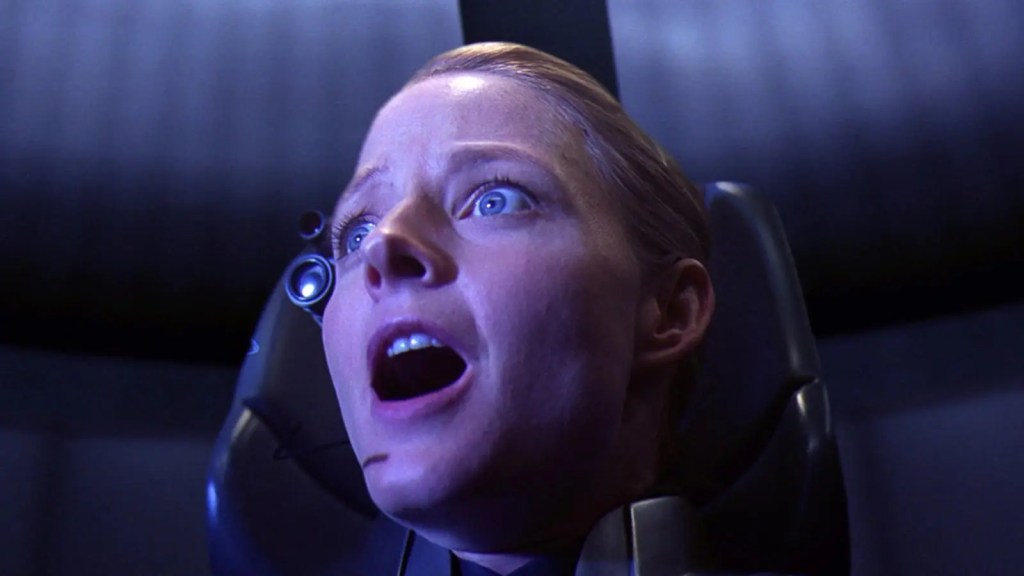
To follow his Oscar-winning Forrest Gump, Robert Zemeckis brought sentimentality to outer space. Contact’s take on extraterrestrial life has the comfort of warm soup on a cold day. Dr. Ellie Arroway (Jodie Foster) has inherited from her late dad (David Morse) a fascination with the cosmos, becoming a leading researcher in the search for extraterrestrial intelligence. Her team intercepts a message from space that contains instructions on how to build a spaceship that will transport humans back to the intergalactic messengers. Contact can be a bumpy flight. John Hurt is uncharacteristically hammy as an eccentric billionaire whose character might as well be called Deus Ex Machina; and Matthew McConaughey as a spiritual advisor for the President is, to put it charitably, a bold casting choice. But Contact is too kindhearted to spurn. As Ellie is counseled by a space traveler, “In all our searching, the only thing we found that makes the emptiness bearable is each other.”
8. The Iron Giant (1999, dir. Brad Bird)
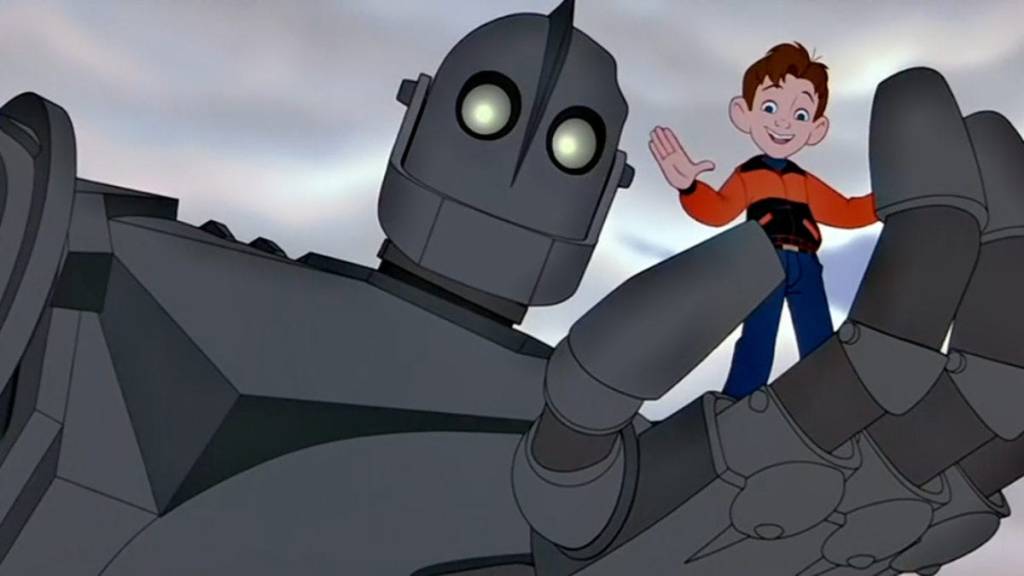
If E.T. featured a ginormous robot instead of a bug-eyed space alien and 1950s small-town America replaced California suburbia, you’d have The Iron Giant. Based on a 1968 children’s book by British poet laureate Ted Hughes, this animated charmer from director Brad Bird and screenwriter Tim McCanlies concerns Hogarth Hughes (voiced by Eli Marienthal), a lonely 9-year-old boy who befriends a gentle outer-space robot (Vin Diesel) that has crash-landed in Rockwell, Maine. Cold War paranoia intrudes on their friendship, forcing Hogarth to hide the giant from a zealous government agent (Christopher McDonald) who suspects the metal man is a communist plot. The film inexplicably disappointed at the box office, earning back less than half of its reported $55 million budget, but a second life on home video led audiences to discover The Iron Giant and its disarming sweetness.
7. The Day the Earth Stood Still (1951, dir. Robert Wise)
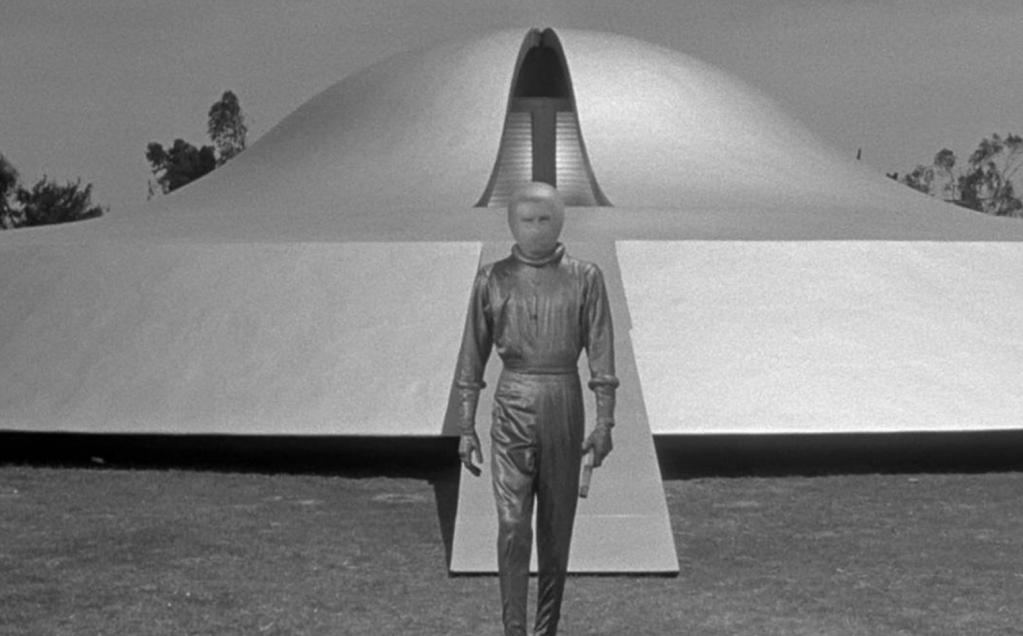
Most science-fiction movies of the 1950s imagined space aliens wanting to make Earth their personal playground. Not The Day the Earth Stood Still. Robert Wise and screenwriter Edmund H. North were more galvanized by fears of nuclear warfare. Michael Rennie is Klaatu, a human-looking alien—and a pretty dapper one, at that—whose flying saucer touches down in Washington, D.C. He arrives with a warning. Klaatu’s planet knows that we earthlings are experimenting with using atomic power on spaceships, a development that imperils the universe. “That … we cannot tolerate,” says the visiting extra-terrestrial. “I came here to warn you that by threatening danger, your planet faces danger—very grave danger.” While his muscle, an imposing robot named Gort, stands guard over the spaceship, the alien who has been sent here to save the world swipes a business suit, takes on the name of Mr. Carpenter (subtle, no?) and goes off to live among the people for a while to get the lay of the land. It isn’t long before he winds up in a boarding house where he befriends a single mom and her son (Patricia Neal and Billy Gray), which throws a wrench in his interplanetary mission. Once Klaatu is killed and resurrected, the biblical connotations are hard to miss.
6. Galaxy Quest (1999, dir. Dean Parisot)
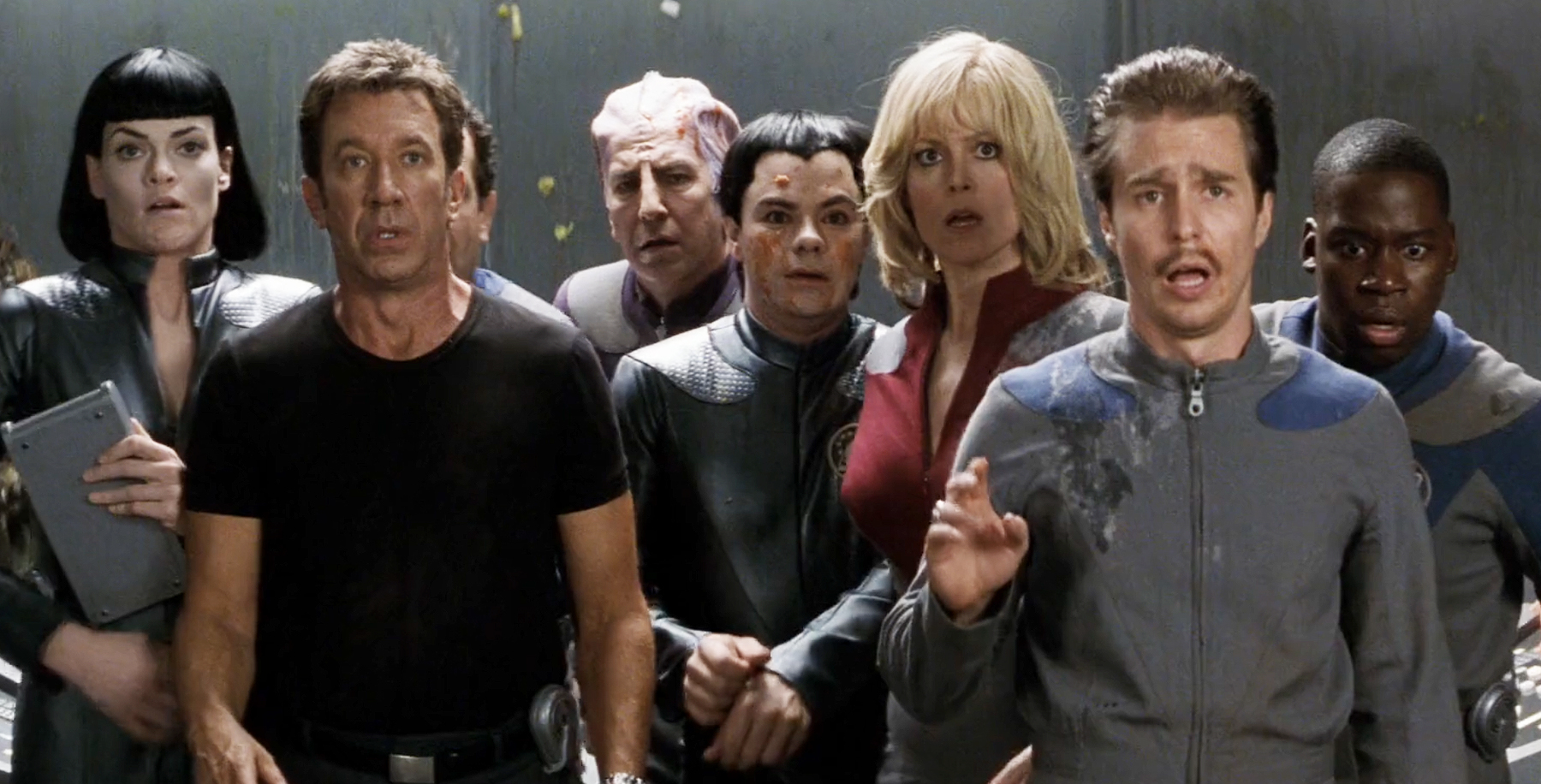
David Howard and Robert Gordon’s screenplay takes off from a seemingly obvious but delightfully clever premise: What if the cast of television’s original Star Trek were thrust into a real intergalactic battle? Instead of Star Trek and the U.S.S. Enterprise, we have Galaxy Quest, a 1980s TV series with a devoted fan base who have pored over every nook and cranny of the NSEA Protector. The cast of the old series—including Tim Allen as the vainglorious starship commander, Sigourney Weaver as a busty lieutenant and Alan Rickman as the Mr. Spock stand-in—is milking the fan-convention circuit when they are approached by a group of unusually pasty fans who call themselves Thermians. As it turns out, these peaceful aliens desperately need help against a reptilian warlord named Sarris. Since the Thermians have modeled their society on transmissions of “historical documents” otherwise known as Galaxy Quest reruns, they seek the brave crew of the Protector. Dean Parisot wisely lets the script and performances do the heavy lifting for this fish-out-of-water tale transported to the far reaches of space.
5. District 9 (2009, dir. Neil Blomkamp)
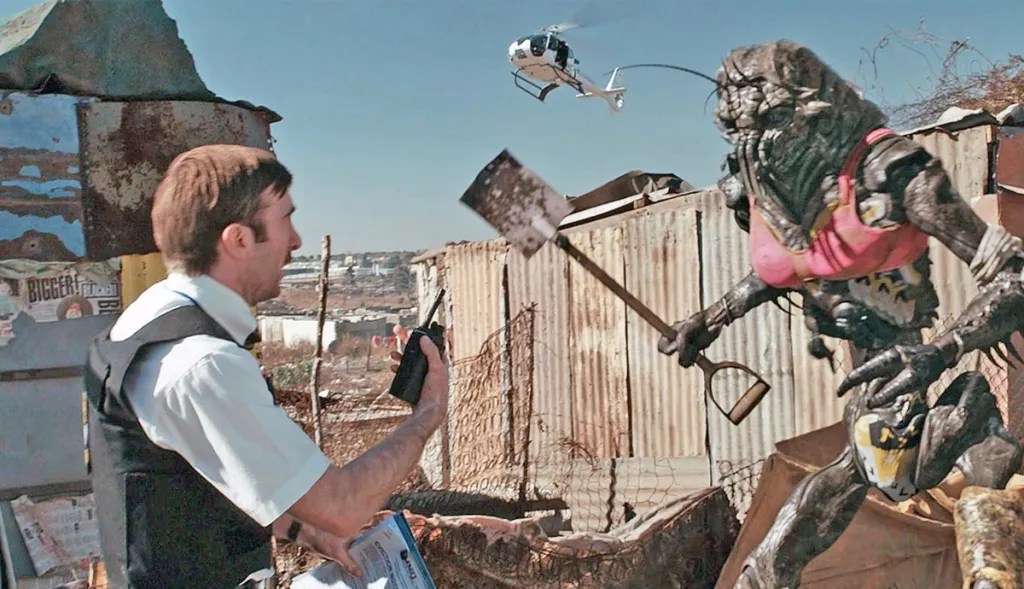
A long-dormant spaceship hovers over the skies of Johannesburg, South Africa, like a giant umbrella, its occupants—insectoid beings roughly the size of humans—malnourished and disoriented. Earthlings have herded the aliens to the city below and forced them into a shantytown of razor wire and trash. Derisively called “prawns,” the aliens are treated shabbily and are now being moved to an even more restrictive encampment. In placing this scenario in the former land of apartheid, District 9 is not coy about its allegorical ambitions. A military contractor, Multi-National United, supervises the prawns’ relocation from District 9. Heading the operation is Wikus van der Merwe (Sharlto Copley), an ingratiating bureaucrat who is accidentally doused by a mystery contaminant. Within hours, he is hacking up black ooze and watching in horror as his left arm sports an alien claw. Neil Blomkamp, here making his directorial debut, and cinematographer Trent Opaloch employ a flurry of faux documentary techniques—TV news footage, grainy surveillance video, MNU corporate film—for gritty immediacy. Every zoom and swish pan reinforces the illusion that the filmmakers are barely able to keep up with the escalating menace onscreen.
4. Solaris (1972, dir. Andrei Tarkovsky)
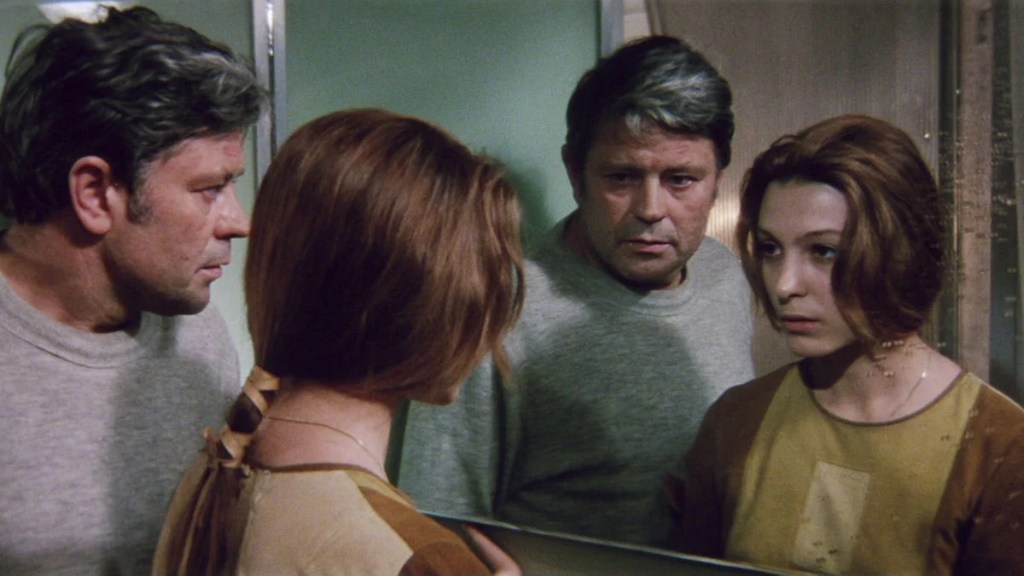
Andrei Tarkovsky’s excursion into science-fiction was considered at the time as the Soviet response to 2001: A Space Odyssey (1968). Tarkovsky, who detested the Stanley Kubrick work, bristled at the characterization. The acclaimed Soviet filmmaker was more interested in searching inward than in humanity’s relationship to technology. Based on Polish author Stanislaw Lem’s 1961 novel of the same name, the film concerns psychologist Kris Kelvin (Donatas Banionis), sent by Russian authorities to investigate “disturbances” impacting the small crew of a spacecraft orbiting the oceanic planet of Solaris. Kris soon understands why one of the scientists aboard has taken his own life and the remaining two are in mental distress. Kris is visited by the resurrection of his deceased wife Hari (Natalya Bondarchuk), who committed suicide 10 years earlier. The planet is raiding the cosmonauts’ memories to create visitors for them, but Solaris’ motive in doing so is unclear. Lem, for his part, disliked both Tarkovsky’s adaptation and Steven Soderbergh’s 2002 remake. This cerebral, contemplative, and brilliant journey won the Grand Jury Prize at the Cannes Film Festival.
3. E. T. the Extra-Terrestrial (1982, dir. Steven Spielberg)
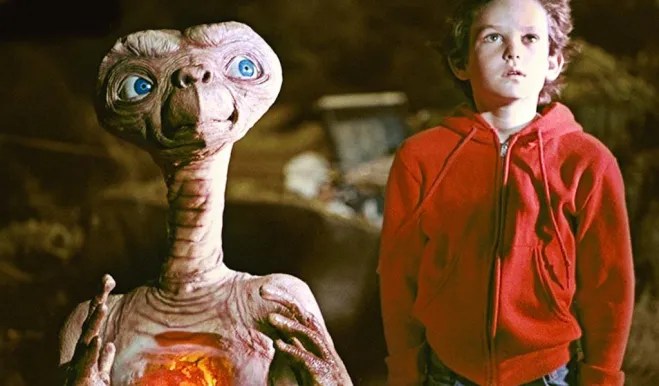
“E.T. phone home.” Kids on flying bicycles.”I’ll be right … here.” If you are of a certain age, you know all this. E.T. the Extra-Terrestrial has been mocked, parodied, and imitated ad nauseam, yet nothing has taken the sheen off Steven Spielberg’s enchanting, family-friendly fantasy. A googly-eyed, long-necked alien we come to know as E.T. is accidentally abandoned by his fellow space travelers when he is discovered by 10-year-old Elliott (Henry Thomas), who lives with his single mother (Dee Wallace) and two siblings (Robert MacNaughton and 6-year-old, scene-stealing Drew Barrymore) in a cookie-cutter California suburb. The story was a passion project for Spielberg. The product of divorced parents, he had created an imaginary friend as a child to counter feeling lonely and ostracized by schoolmates. Spielberg understood the powerful wish-fulfillment at the heart of the screenplay he developed with Melissa Mathison. Special effect wizard Carlos Rambaldi gave life to the lovable E.T.. The movie even won over a critic as ostensibly unsentimental as The New Yorker’s Pauline Kael. “Like Close Encounters, E.T. is bathed in warmth, and it seems to clear all the bad thoughts out of your head,” she wrote. “It reminds you of the goofiest dreams you had as a kid, and rehabilitates them.”
2. Arrival (2016, dir. Denis Villeneuve)
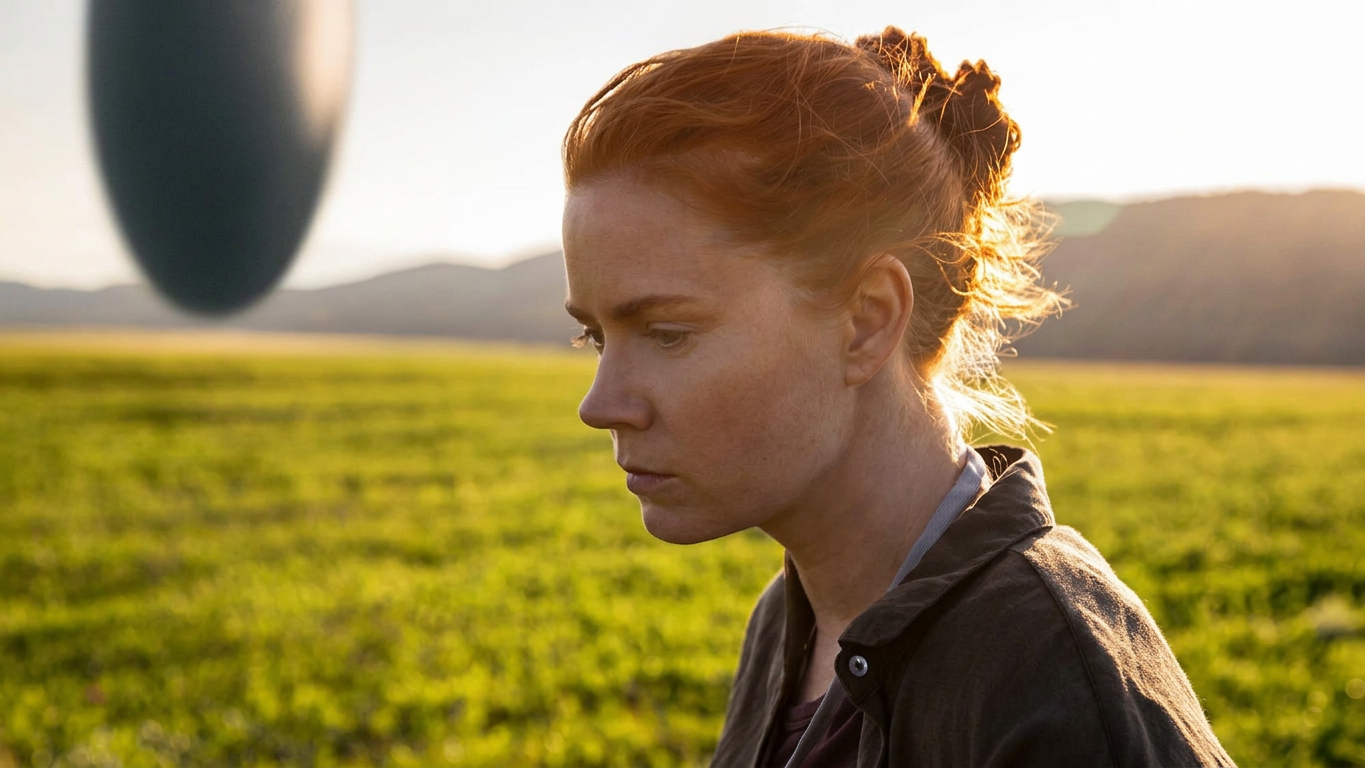
This adaptation of a Ted Chiang short story is nominally about extra-terrestrials, but weightier considerations about language, time, and predestination fuel its brainy science-fiction. Amy Adams is Louise Banks, a renowned linguist (as linguists go) enlisted by the U.S. government to augment first contact with aliens who have landed in spherical pods across the globe, including Montana. It’s a daunting challenge. The visitors resemble seven-foot squid and “talk” through inky drawings that linger in the air like cigarette smoke. Adams delivers a remarkable, soulful performance, with a fine supporting cast that includes Jeremy Renner, Forrest Whitaker and Michael Stuhlbarg. Denis Villeneuve, a master of creating mood, conveys the awe and dread of what is at stake while maintaining a sense of intimacy. Arrival is also about a mother’s loss of a child, and about time, and about whether foreknowledge changes the choices we make. These layers accumulate quietly until the film’s final moments, when everything snaps into focus. Earning Oscar nominations for Best Picture, Director, Adapted Screenplay, and Cinematography, Arrival is a rarity: a melancholy spectacle.
1. Close Encounters of the Third Kind (1977, dir. Steven Spielberg)
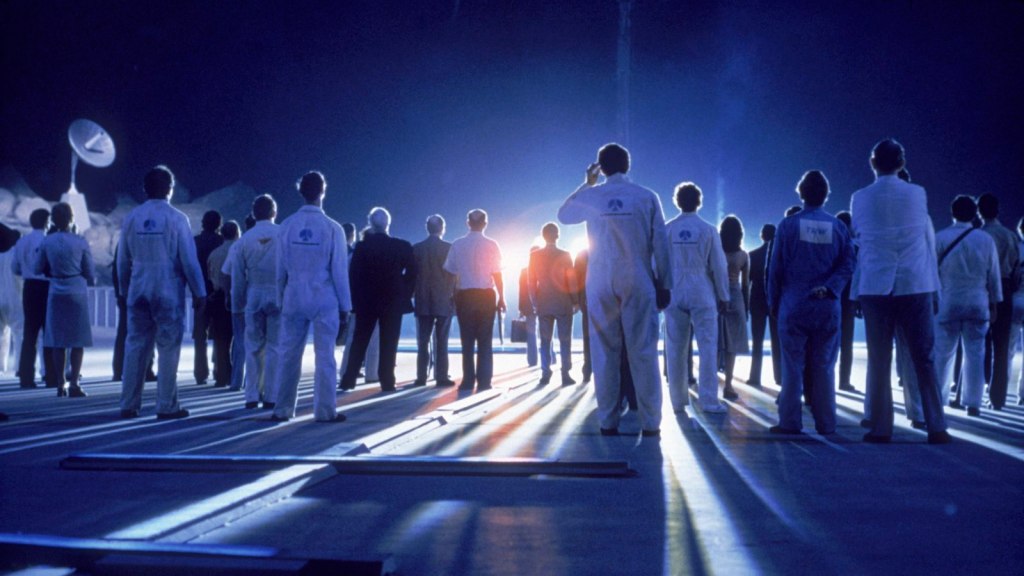
After the mega-success of Jaws, Steven Spielberg used his newfound clout to make a movie inspired by a childhood memory. As Spielberg later recalled, he was 5-years-old when his father drove the family late one night into the New Jersey countryside to watch a meteor shower. He replicated that cherished memory in Close Encounters of the Third Kind, his rapturous story of space aliens making contact with humanity. Spielberg envisions the creatures as diminutive and benign, something out of a fairy tale. There are complications with the encounters. Humans who have been in close proximity to the aliens become fixated on visions of Devil’s Tower in Wyoming. Such obsessions compel Roy Neary (Richard Dreyfuss) to leave his wife and kids and head to it, where he expects to find … something. Buoyed by one of John Williams’ finest scores, Close Encounters is terrifically ambitious, featuring a sprawling cast and multiple, exotic locales around the globe. The film weaves the big cinematic moments with wrenching scenes of domestic strife in the Neary household. In that environment, it feels inevitable that Roy, if given the chance, will join the aliens on their mothership. Years later, Spielberg conceded that if he had been a father back in 1977, the picture would have had a different ending.
Honorable mention: The Brother from Another Planet (1984, dir. John Sayles), Enemy Mine (1985, dir. Wolfgang Petersen), It Came from Outer Space (1953, dir. Jack Arnold), Lilo & Stitch (2002, dir. Chris Sanders and Dean DeBlois), The Man Who Fell to Earth (1976, dir, Nicolas Roeg), Midnight Special (2016, dir. Jeff Nichols), Paul (2011, dir. Greg Mottola), Project Hail Mary (2026, dir. Phil Lord and Christopher Miller), Starman (1984, dir. John Carpenter), Under the Skin (2013, dir. Jonathan Glazer)


One response to “The 10 best alien encounter films (that aren’t about invasion)”
[…] To play UFO expert Claude Lacombe, the man leading a global effort to communicate with space aliens, Steven Spielberg screwed up the courage to ask a personal hero of his, François Truffaut. The French New Wave pioneer (The 400 Blows, Jules and Jim) was reluctant at first, joking that he only knew how to play himself (he essentially did just that in his Day for Night), but Truffaut eventually accepted. Because he did not speak English, Spielberg built into the screenplay the character of an interpreter, played by Bob Balaban. Truffaut’s performance exudes quiet warmth and earned positive reviews. Close Encounters of the Third Kind is the only film in which Truffaut acted for another director.(See more in The 10 best alien encounter films that aren’t about invasion.) […]
LikeLike