
Scores of great actors have transitioned to equally successful careers directing—Clint Eastwood, John Cassavetes, Orson Welles, Ron Howard, Rob Reiner, Greta Gerwig, and Jordan Peele, to name just a few—but the jump from behind the camera to in front of it is much less common. When it does happen, the result can be revelatory. Hence, the following list…
10. Roman Polanski as Trelkovsky, The Tenant (1976, dir. Roman Polanski)
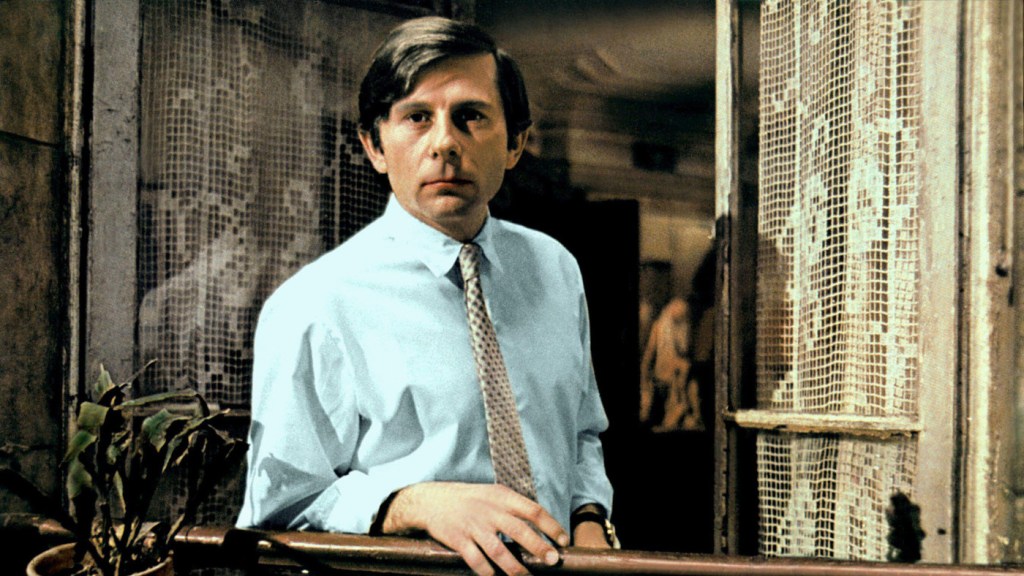
For The Tenant, his Kafkaesque tale of alienation and madness, Roman Polanski (Chinatown, Rosemary’s Baby) cast himself as the increasingly unhinged Trelkovsky. The role came naturally enough. Like Trelkovsky, Polanski was a Polish émigré living in Paris. Reviews were mixed upon its release (“‘The Tenant’s’ not merely bad—it’s an embarrassment,” wrote Roger Ebert in The Chicago Sun-Times), but history has been kinder to this resolutely weird psychological thriller. Polanski himself, however, has not benefited from a similar rehabilitation. After pleading guilty the following year to “unlawful sexual intercourse” with a 13-year-old girl, he fled the United States before sentencing and has remained a fugitive from American justice ever since.
(See more in The 10 best films about identity crises.)
9. Garry Marshall, Lost in America (1985, dir. Albert Brooks)

In a movie stuffed with funny scenes, Garry Marshall (Pretty Woman, Beaches) has the distinction of being in arguably the funniest. Albert Brooks’ Lost in America follows well-to-do yuppie couple David and Linda Howard (Brooks and Julie Hagerty), who set out to live like Easy Rider—in a way—by purchasing an RV and traveling the country on their savings. Plans go awry when they stay overnight at Las Vegas’ Desert Inn, as Linda discovers a long-dormant gambling addiction and plows through their nest egg. Marshall plays the incredulous casino manager whom David gamely tries to persuade to return the money. The casino manager is unmoved. “You’re a nice guy, you make me laugh,” he says, “but our policy is: we can’t give your money back.”
8. François Truffaut as Claude Lacombe, Close Encounters of the Third Kind (1977, dir. Steven Spielberg)
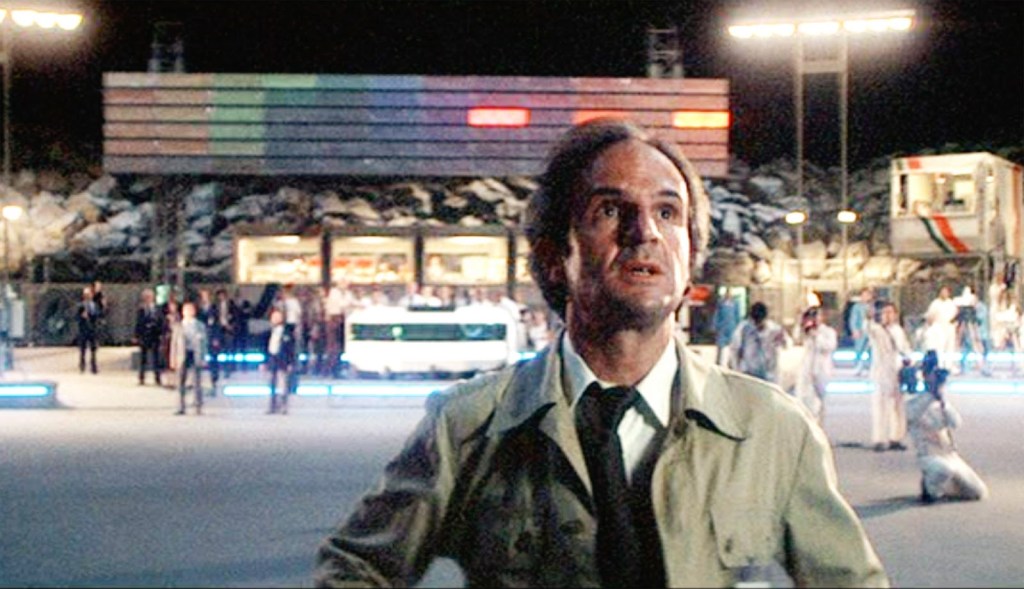
Steven Spielberg screwed up the courage to ask a personal hero of his, François Truffaut, to play UFO expert Claude Lacombe, the man leading a global effort to communicate with space aliens. The French New Wave pioneer (The 400 Blows, Jules and Jim) was reluctant at first, joking that he only knew how to play himself (he essentially did just that in his Day for Night), but Truffaut eventually accepted. Because Truffaut did not speak English, Spielberg built into the screenplay the character of an interpreter, played by Bob Balaban. Truffaut’s performance exudes quiet warmth and earned positive reviews. Close Encounters of the Third Kind is the only film in which Truffaut acted for another director.
(See more in The 10 best alien encounter films that aren’t about invasion.)
7. Otto Preminger as Oberst von Scherbach, Stalag 17 (1953, dir. Billy Wilder)
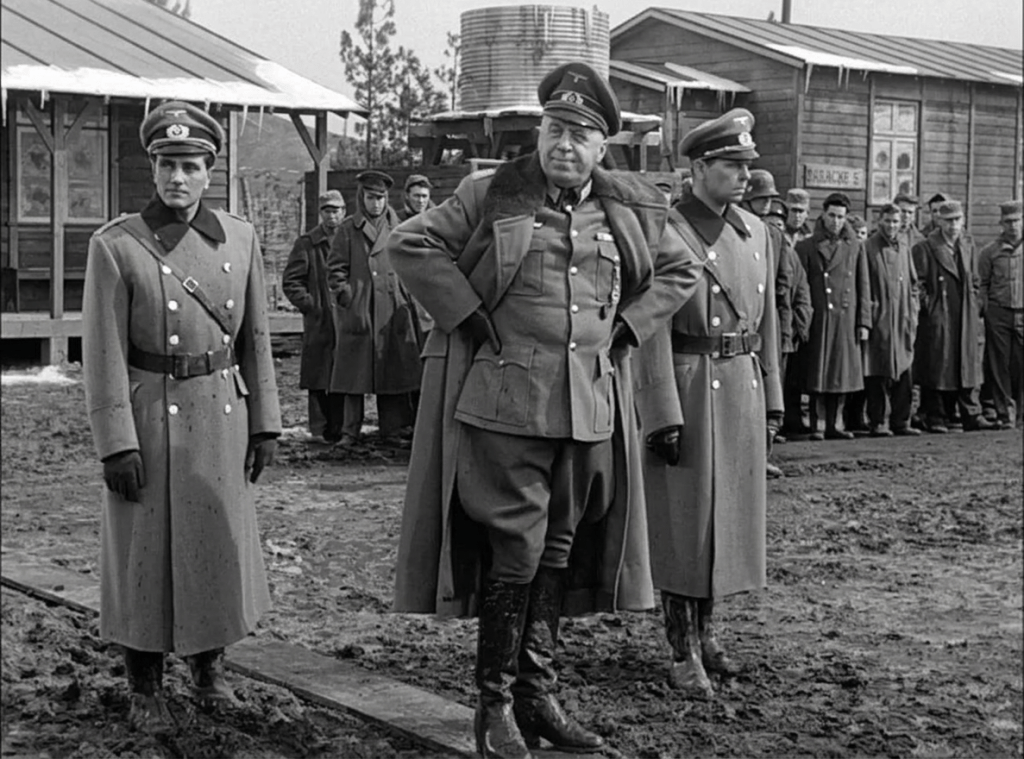
As the commandant of a German prisoner-of-war camp in World War II, Otto Preminger is arrogant and dictatorial—traits for which the director (Anatomy of a Murder, Laura) was well-known. Back in 1942, Warner Bros. had considered casting him as Luftwaffe Maj. Strasser in Michael Curtiz’s Casablanca (a role that eventually went to Conrad Veidt), but Billy Wilder was more successful persuading his fellow Jewish émigré to play Stalag 17’s Oberst von Scherbach. Before filming began, Preminger reportedly assured Wilder he would buy him a jar of caviar if he ever forgot his lines. Wilder recalled that he ended up with plenty of caviar. Preminger apparently developed a taste for villainy. Thirteen years later, he was appearing on the 1960s television series Batman as Mr. Freeze.
6. Mark Rydell as Marty Augustine, The Long Goodbye (1973, dir. Robert Altman)
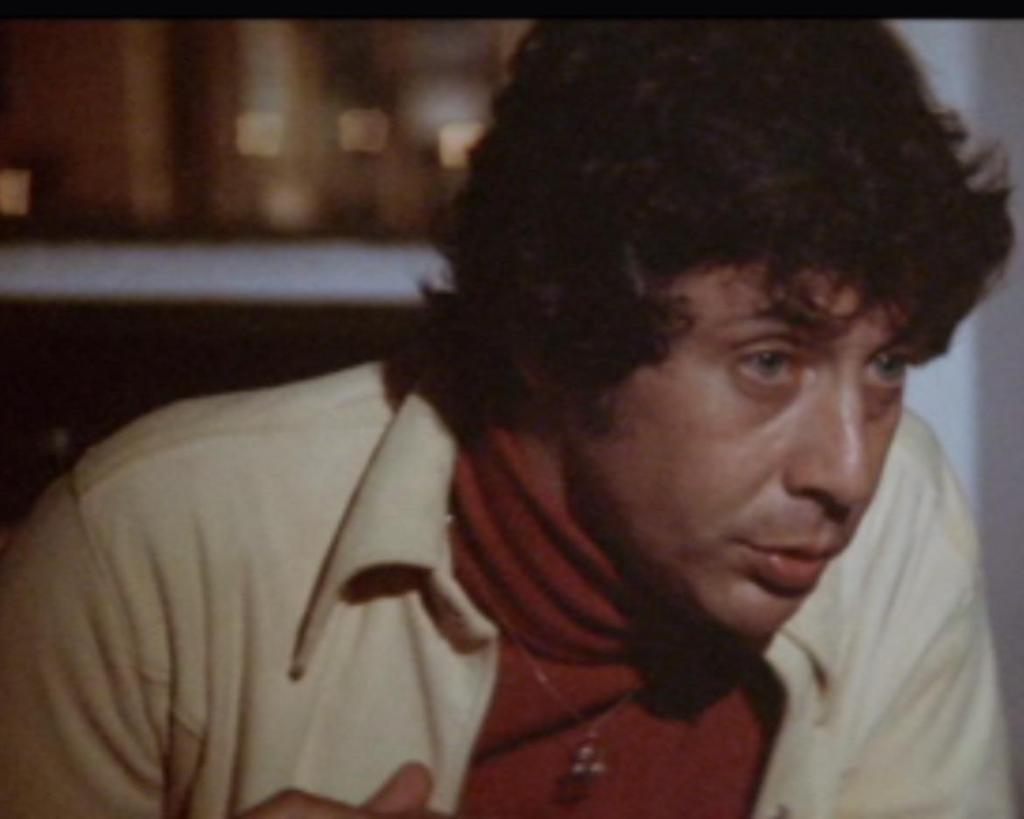
Mark Rydell had directed television for years and a handful of movies when Robert Altman cast his friend in The Long Goodbye. The future director of The Rose and On Golden Pond channels chilling menace as Marty Augustine, a Shabbat-observant, seemingly genteel crime boss with a hair-trigger temper. Rydell provides the film’s most shocking moment, as Augustine coos over his girlfriend’s beauty one moment and smashes a Coke bottle across her face the next—simply to make it clear to detective Philip Marlowe (Elliott Gould) who he’s dealing with. Rydell is in only a handful of scenes, but his character’s barely contained brutality looms over the picture.
(See more in The 15 best neo-noir films and The 20 best hangout films.)
5. David Lynch as John Ford, The Fabelmans (2022, dir. Steven Spielberg)
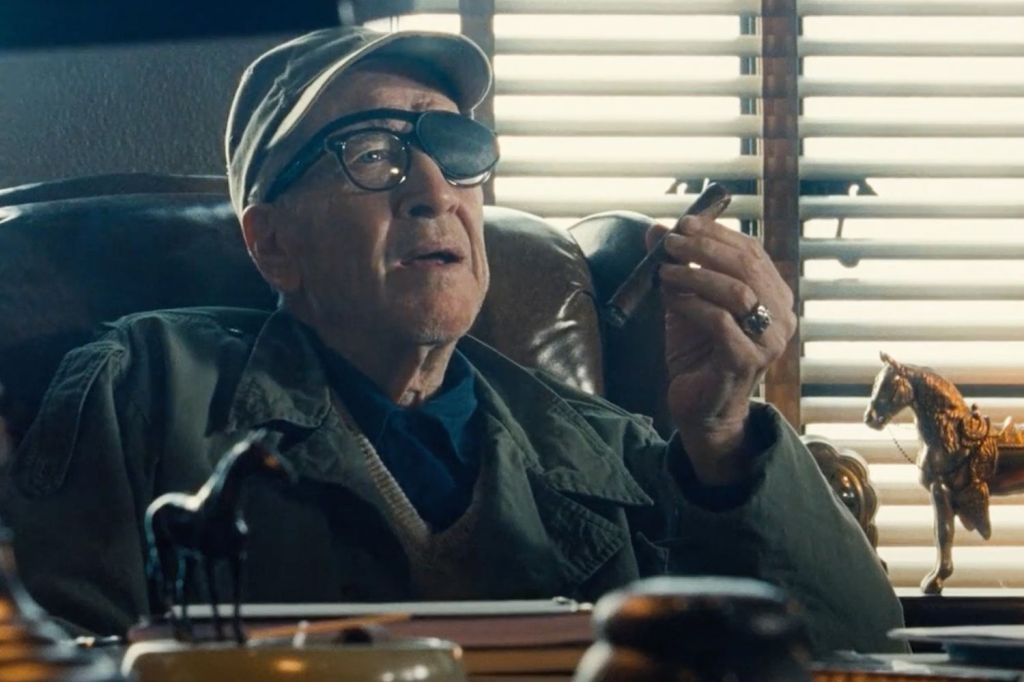
Steven Spielberg’s quasi-autobiography The Fabelmans includes a version of an actual meeting that the director, as a youth, had with John Ford. Spielberg cast the decidedly non-classical David Lynch (Blue Velvet, Mulholland Drive) to play one of classical Hollywood’s towering figures. It proved difficult to convince Lynch, but Spielberg finagled the help of a mutual friend, Laura Dern. Lynch’s only non-negotiable was that he be able to wear the Ford costume for the two weeks before filming. The gamble paid off. Lynch is bursting with irascible bluster as the cigar-chomping, eyepatched Ford who tells Sammy Fabelman (Gabriel LaBelle) that any camera shot with the horizon in the middle is “boring as shit.” Sound advice, incidentally—the real Ford gave Spielberg the same lesson.
4. Martin Scorsese as Passenger Watching Silhouette, Taxi Driver (1976, dir. Martin Scorsese)
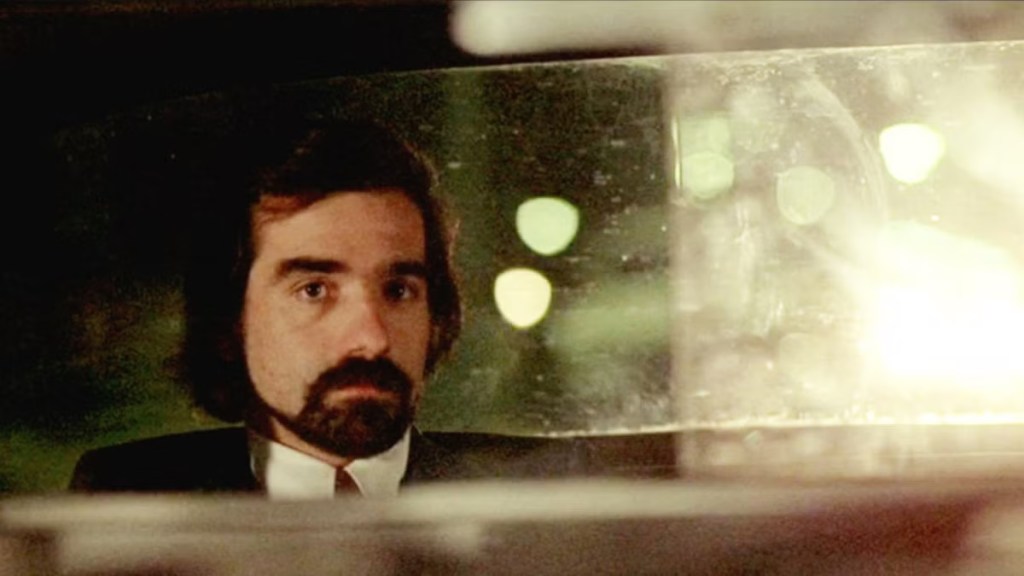
Martin Scorsese has had a number of acting turns since Taxi Driver, including a role in Akira Kurosawa’s Dreams, but the acclaimed director is particularly memorable as Travis Bickle’s creepiest passenger. Scorsese’s character tells Bickle to leave the meter running while he spies on his wife silhouetted in the window of another man’s apartment. The presumably cuckolded husband uses a racist epithet to describe the other man before announcing that he will kill both wife and her lover with a .44 Magnum. Scorsese was reluctant to do the scene, but had little choice after the original actor became unavailable. In Richard Schickel’s Conversations with Scorsese, the director said the scene was a mix of written dialogue and improvisation. “The improv came from bouncing off Bob (De Niro),” he said. “It was the back of his head that did it all.”
(See more in The 15 best neo-noir films.)
3. Sydney Pollack as George Fields, Tootsie (1982, dir. Sydney Pollack)
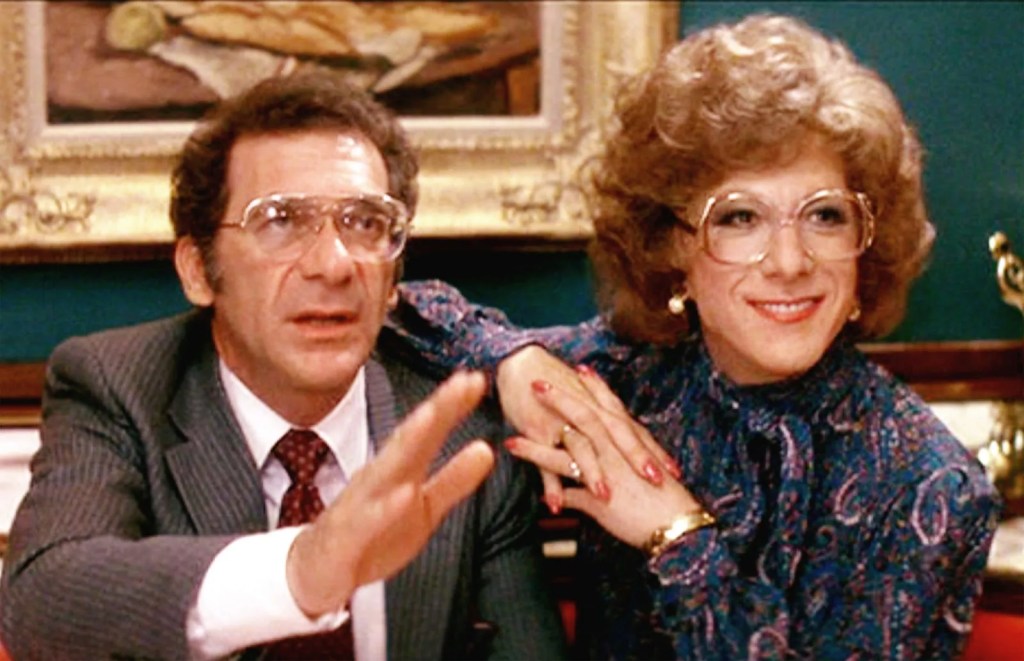
Sydney Pollack (Out of Africa, Three Days of the Condor) had appeared in small acting roles earlier in his career, but the director had largely abandoned performing until he took on the role of Michael Dorsey’s put-upon agent in Tootsie. Star Dustin Hoffman lobbied hard for Pollack, arguing that the originally cast Dabney Coleman wasn’t intimidating enough. Pollack initially resisted, but Hoffman was relentless. The result is comic perfection. Pollack’s perpetually harried straight man is the ideal foil to Hoffman’s escalating absurdity. Moviegoers and critics responded favorably, and it unexpectedly launched Pollack’s second career as one of Hollywood’s more sought-after supporting players, both in his own films—including The Firm (1993)—and in those of other directors, including Husbands and Wives (1992) and Eyes Wide Shut (1999).
2. John Huston as Noah Cross, Chinatown (1974, dir. Roman Polanski)
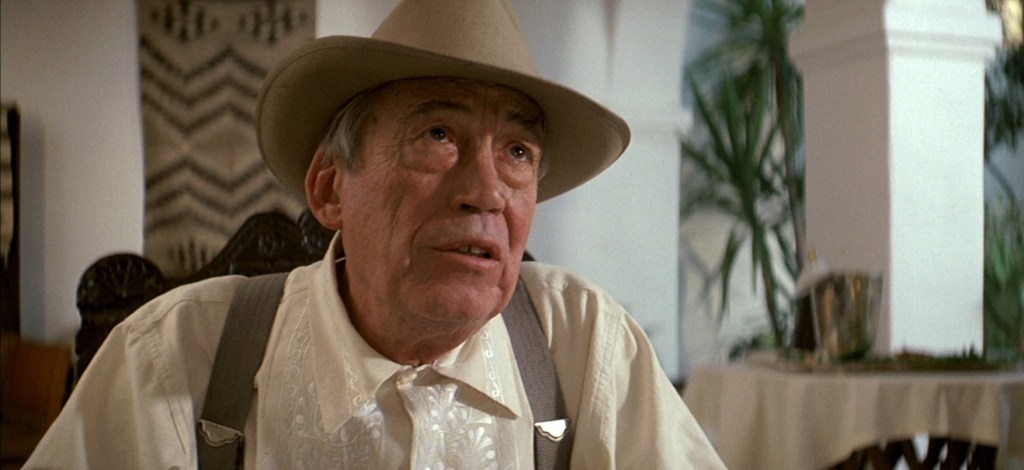
“Of course I’m respectable. I’m old!” booms John Huston as millionaire Noah Cross when Chinatown’s gumshoe J.J. Gittes calls him respectable. “Politicians, ugly buildings and whores all get respectable if they last long enough.” It’s a commanding performance for the celebrated director (The Maltese Falcon, The African Queen) as a Los Angeles business tycoon whose cravenness knows no bounds. Few figures in American cinema better projected authority, confidence, and intelligence—qualities that make Cross’ depravity all the more unsettling. On the set, though, his ability to deliver was often uncertain. Huston was sloppy drunk much of the time. “He was divorcing his last wife, and he was irascible, and it showed,” his daughter, Anjelica Huston (in a relationship with Nicholson during production) recalled years later.
(See more in The 15 best neo-noir films and The 10 best conspiracy films.)
1. Erich von Stroheim as Max von Meyerling, Sunset Boulevard (1950, dir. Billy Wilder)
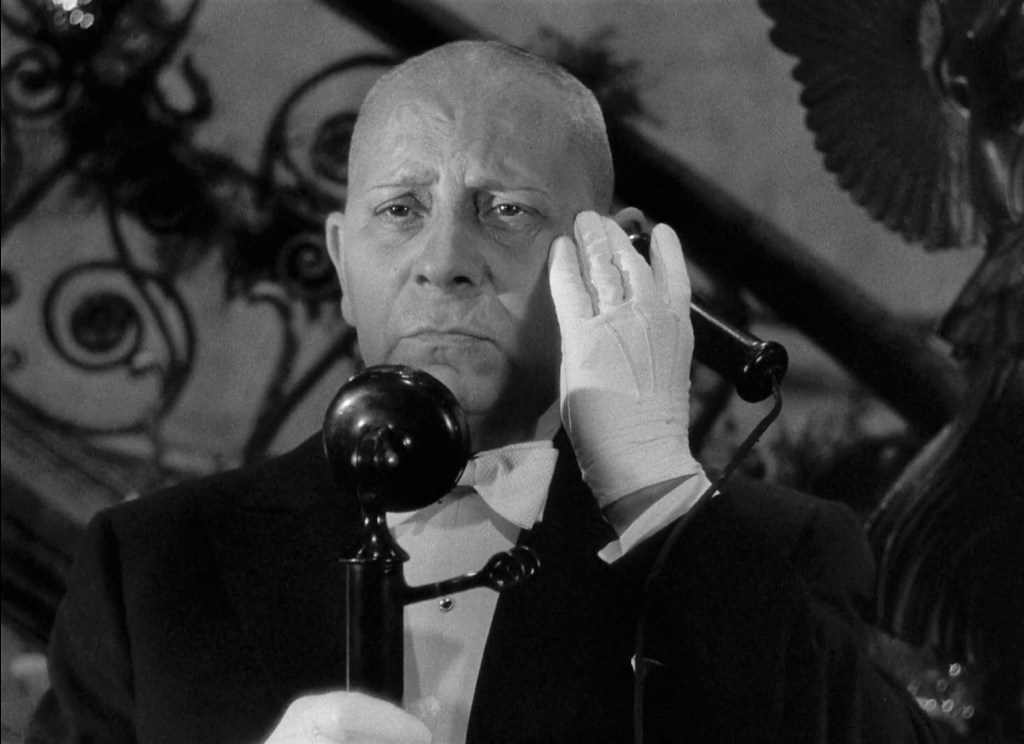
It wasn’t a leap for one of the leading directors of the silent screen to play a leading director of the silent screen, but Erich von Stroheim is better than superb as Sunset Boulevard’s Max von Meyerling. He plays the current butler/ex-husband/ex-director of faded silents star Norma Desmond, portrayed by Gloria Swanson. Billy Wilder had already directed Stroheim once before—as Field Marshal Rommel in Five Graves to Cairo (1943)—but this inspired meta-casting resonates on multiple levels. Like Norma, Stroheim (Greed, Foolish Wives) was a casualty of Tinseltown’s transition away from silent cinema, his career derailed by battles with studios over artistic control and elephantine budgets. That shared history lends Stroheim’s every glance toward Swanson the melancholy of lived experience. Wilder also layers in additional irony. Stroheim had directed Swanson in the unfinished Queen Kelly (1929), footage from which appears here as one of Norma’s old films that she screens for her young gigolo (William Holden). Swanson ultimately fired Stroheim on that project. He held a grudge against her for years, but Sunset Boulevard transformed that unhappy history into one of Hollywood’s most ingenious casting choices.
(See more in The 15 best film noir and The 10 best films about filmmaking.)
Honorable mention: Paul Bartel as Paul Bland in Eating Raoul (1982, dir. Paul Bartel), David Cronenberg as Dr. Philip K. Decker in Nightbreed (1990, dir. Clive Barker), Cecil B. DeMille as himself in Sunset Boulevard (1950, dir. Billy Wilder), Abel Ferrara as Ezra Mishkin in Marty Supreme (2025, dir. Josh Safdie), Fritz Lang as himself in Contempt (1963, dir. Jean-Luc Godard), Spike Lee as Mookie in Do the Right Thing (1989, dir. Spike Lee), Martin Scorsese as Vincent Van Gogh in Dreams (1990, dir. Akira Kurosawa), Quentin Tarantino as Jimmie in Pulp Fiction (1994, dir. Quentin Tarantino), François Truffaut as Ferrand in Day for Night (1973, dir. François Truffaut), Erich von Stroheim as Capt. von Rauffenstein in Grand Illusion (1937, dir. Jean Renoir)


4 responses to “The 10 best performances by film directors (not typically known for acting)”
[…] At an early test screening of Sunset Boulevard, a corpse in the city morgue sat up and began telling his fellow deceased the story of how he wound up in this condition. It was a bold move, but test audiences hooted. It wasn’t the reaction Billy Wilder wanted, though the writer-director, ever the cynic, remained determined to have the dead man serve as narrator. The scene that eventually made the final cut is still a knockout. Police cars respond to a homicide at a mansion in the 10,000 block of Sunset Boulevard. As Joe Gillis, the ill-fated screenwriter who became a gigolo to an aging silent-film queen, William Holden narrates in voiceover even as he floats face-down in a swimming pool with three bullet holes in him. To achieve the underwater perspective, cinematographer John F. Seitz photographed the scene’s reflection in a mirror placed at the bottom of the pool. “The poor dope. He always wanted a pool,” Gillis says. “Well, in the end, he got himself a pool, only the price turned out to be a little high.” Few openings announce a film’s fatalism more elegantly.(See more in The 15 best film noir, The 10 best films about filmmaking and The 10 best performances by film directors.) […]
LikeLike
[…] When Billy Wilder and writing partner Charles Brackett first drafted what became Sunset Boulevard, among the first images they wanted was that of a dead body floating in a pool: death in paradise. But they took the concept further, making that corpse the narrator as well as the audience’s point of entry. The story of Hollywood narcissism and cruelty features former silent-screen star Gloria Swanson as—in a feat of meta casting—an aging silent-film queen. The similarities between the actress and her character ended there, although Swanson, whose performance earned an Oscar nomination, lamented afterward that audiences confused the two. As Norma Desmond, Swanson is a wild-eyed, nostril-flaring force of nature; her reclusive star is lost in a reverie of past glories that are kept alive by her faithful butler and ex-husband, Max von Mayerling (Erich von Stroheim). That hermetically sealed universe is upended when down-on-his-luck screenwriter Joe Gillis (William Holden) stumbles onto Norma’s decaying mansion while outrunning creditors. Wilder, Brackett, and co-writer D.M. Marshman Jr. give the movie business itself the most withering of close-ups in this darkly comic tale. Hollywood is Sunset Boulevard’s ultimate femme fatale. (See more in The 10 best films about filmmaking, The 20 best opening scenes in film, and The 10 best performances by film directors not typically known for acting.) […]
LikeLike
[…] Robert Altman had the intriguing idea of transplanting Philip Marlowe, the hardboiled private detective created by Raymond Chandler, from the rain-swept streets of 1940s Los Angeles to the sun-flecked weirdness of 1970s La La Land. As the updated Marlowe, Elliott Gould finds himself reluctantly ensnared in a homicide case after giving a pal a lift to Mexico, only to learn afterward that his friend, Terry Lennox (former major-league pitcher Jim Bouton), is suspected of murdering his wife. Marlowe, convinced of Terry’s innocence, starts digging. From Gould’s idiosyncratic Marlowe—affable, rumpled, devoted to his demanding cat—to the playful variations of the theme music by John Williams and Johnny Mercer, The Long Goodbye is more about mood than a conventional whodunit. Altman populates this peculiar world with California eccentrics; some are threatening (filmmaker Mark Rydell as a vicious but devout Jewish gangster), some welcoming (half-naked, perpetually stoned yoga enthusiasts who live next door to Marlowe). Marlowe shrugs at it all with an “it’s OK with me.” But is it, really?(See more in The 20 best hangout films and The 10 best performances by film directors not typically known for acting.) […]
LikeLike
[…] you can do with a cheap piece of meat if you know how to treat it,” says Paul.(See more in “The 10 best performances by film directors not typically known for acting” […]
LikeLike