Everyone gets old, at least the most fortunate of us do, but Hollywood doesn’t have a robust track record for movies about aging. That’s not particularly surprising for a medium that likes things young and beautiful, but it is disappointing. The forays into aging tend to be cutesy or depressing. There’s not much middle ground.

Thankfully, filmmakers in Japan, Italy, and other giants of world cinema have been more grown up about the subject. The best movies about aging are seldom only about growing old. They are about people taking stock of themselves and their legacy. There is no expiration date on wisdom.
10. Thelma (2024, dir. Josh Margolin)
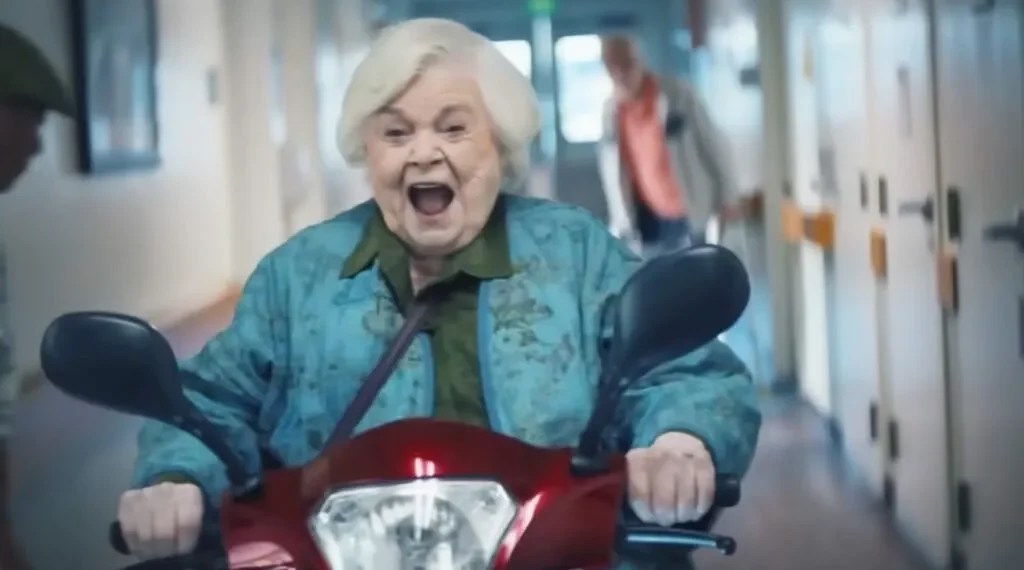
Josh Margolin made Thelma to honor his grandmother, and the love is evident—as is the writer-director’s insight on aging. Thankfully, there is precious little caricature in the portrayal of the nonagenarian titular character. As portrayed by 94-year-old June Squibb, Thelma is generous and feisty, but also impetuous and occasionally foolish. After being scammed out of $10,000, she resolves to get her money back, fueling the movie’s gentle riffing on the Mission: Impossible franchise. Squibb is wonderful, as is the entire cast, particularly Fred Hechinger as her devoted grandson, Parker Posey as a frazzled daughter, and John Shaft himself, Richard Roundtree, in his final film appearance as Thelma’s reluctant co-conspirator. The actor, who was battling cancer during the production, died before the movie’s release.
9. Harry and Tonto (1974, dir. Paul Mazursky)
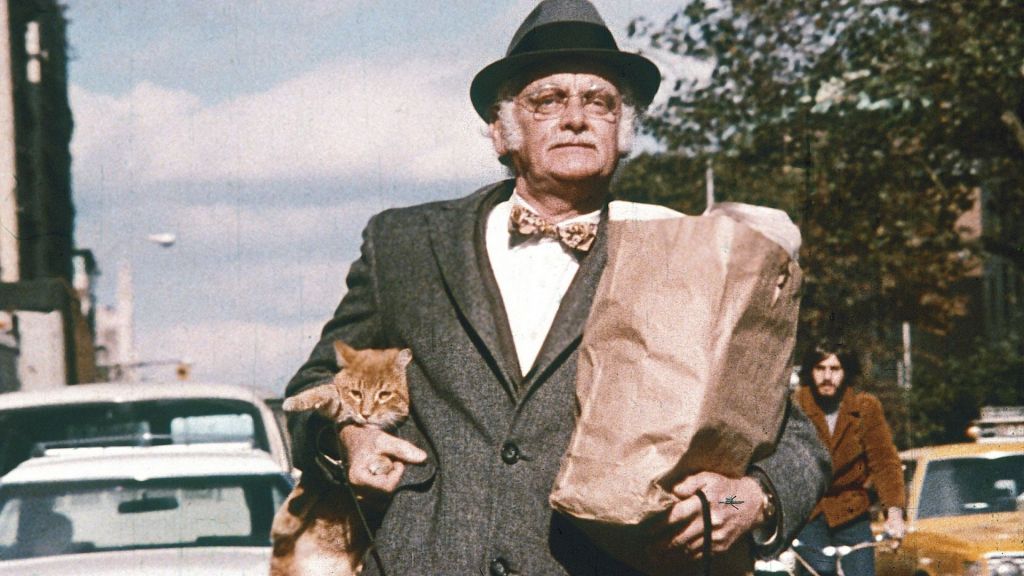
Art Carney was initially reluctant to play septuagenarian Harry Coombes. He was only 56, after all, but the performance was impressive enough to net him the Academy Award for Best Actor against heavy hitters like Al Pacino (The Godfather Part II), Dustin Hoffman (Lenny), Jack Nicholson (Chinatown), and Albert Finney (Murder on the Orient Express). This humane, gently loping comedy-drama concerns a New York City widower who finds himself suddenly adrift after being evicted from his longtime apartment. Harry, a kind and curious soul, embarks on a cross-country road trip where he comes across a host of colorful strangers. Ellen Burstyn, Larry Hagman, and Phil Bruns have small but memorable roles as Harry’s adult children. Most of Harry’s conversations, however, are running monologues to his beloved cat, Tonto. Paul Mazursky and co-writer Josh Greenfeld flirt with mawkishness on a few occasions, but their benign, openhearted take on old age is a welcome respite from cinema’s often despairing outlook.
8. Going in Style (1979, dir. Martin Brest)
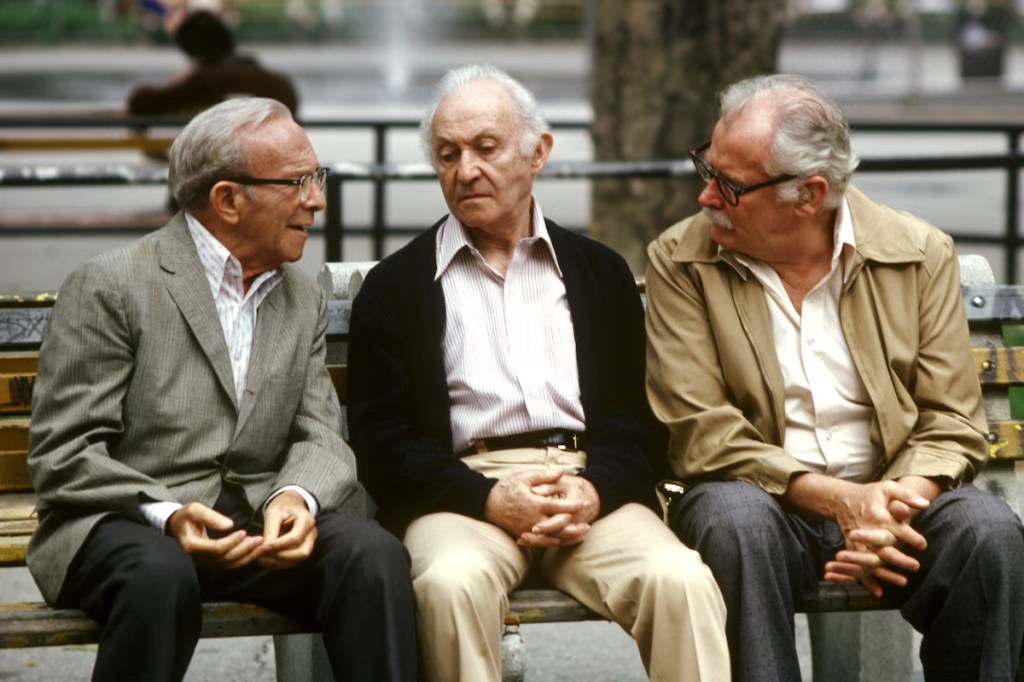
The sophomore work from Martin Brest concerns three elderly friends in New York City who have fallen into the routine of sitting on a park bench feeding pigeons and repeating the same stories. Joe (George Burns) has a novel idea to break them out of their rut. Why not rob a bank? Either they get away with a lot of money, or they wind up in prison for a couple of years, where they’ll be fed, sheltered, and get some exercise. “Either we get the money or we get caught. We’re winners either way,” Joe tells his friends Al (Art Carney) and Willie (Lee Strasberg). What begins as broad comedy shifts into an easygoing, compassionate story of friendship and sacrifice. In an impressive sleight of hand, Going in Style tackles the loneliness of old age and looming mortality while remaining light on its feet. Burns, Carney, and—in a rare film appearance for the legendary acting coach—Strasberg are excellent as the three codgers. A needless 2017 remake cannot dim the charm of this caper.
7. Amour (2012, dir. Michael Haneke)

Amour observes an elderly Parisian couple coming to terms with illness and looming death with almost brutal clarity. Michael Haneke flatly rejects sentimentality in this story of genial Georges and Anne Laurent, played by Jean-Louis Trintignant and Emmanuelle Riva. Anne, a former piano teacher, suffers a mild stroke. That is followed by another episode, then an unsuccessful surgery and, eventually, rapid physical and mental decline. Anchored by fearless, brilliant performances, Amour offers an unflinchingly honest portrait of a marriage not often captured on screen: the kind that survives youth to endure the most painful of trials. Riva’s performance earned her a Best Actress nomination at 85, still the oldest nominee in that category in Oscar history—proof of how rarely a film trusts someone of an advanced age to carry its full emotional weight. “This is a film that will make you weep not only because life ends but also because it blooms,” wrote Manohla Dargis in The New York Times. While it won the Palme d’Or at the Cannes Film Festival and the Oscar for Best Foreign-Language Film, Amour is a tough watch, almost unbearably so at times. But it is also a powerful meditation on love and commitment.
(See more in The 10 most memorable movie marriages.)
6. About Schmidt (2002, dir. Alexander Payne)
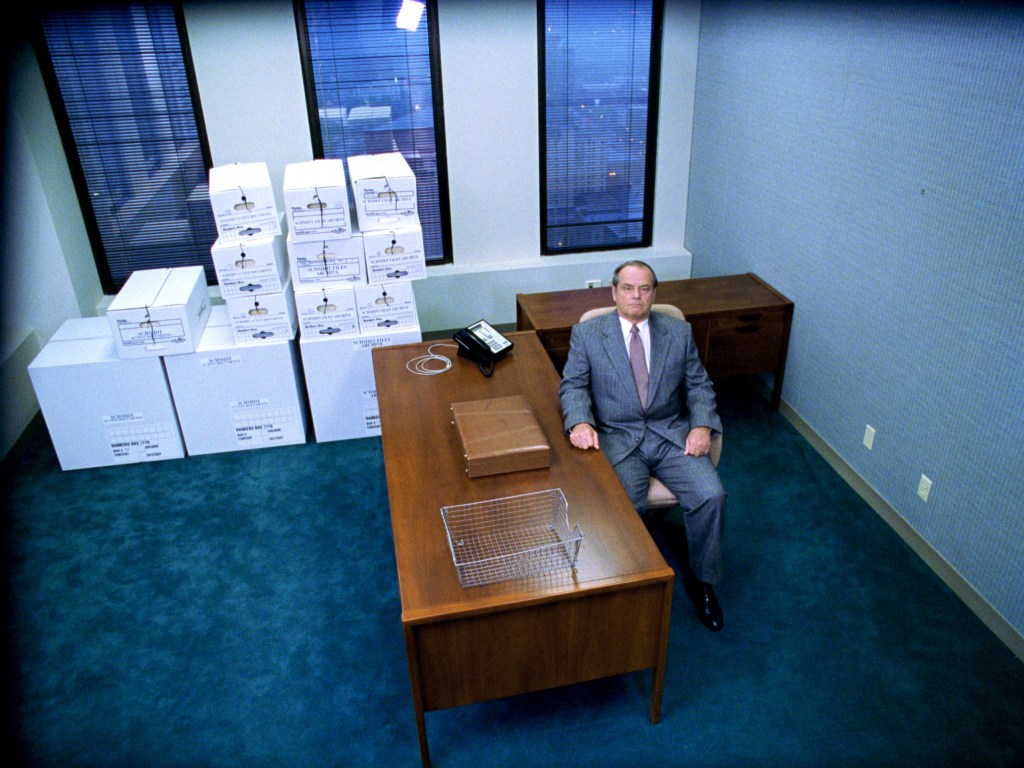
Alexander Payne has particular affection for characters in the throes of depression (Sideways, The Descendants, and The Holdovers come to mind), but he and Jack Nicholson get it especially right in About Schmidt. The film loosely adapts Louis Begley’s 1996 novel, but relocates Schmidt from New York to Omaha (Payne’s hometown) and reworks him from a lawyer into an insurance actuary. Nicholson is 66-year-old Warren Schmidt. Retirement barely begins before he absorbs two devastating blows. Schmidt’s wife (June Squibb) dies unexpectedly from a blood clot; shortly thereafter, Schmidt discovers she and his best friend (Len Cariou) had a love affair many years earlier. His professional life over and his marriage not what he thought it was, the despondent Schmidt sets out in the RV he and his wife had bought to travel the country. But the man cannot get away from himself. Nicholson dials down his natural showmanship; the restraint earned him an Oscar nomination and proved he didn’t need to chew scenery to command a film. About Schmidt finds the poignancy and humor in a man’s belated evaluation of his life and search for purpose in his so-called golden years. Potential meaning arrives in the form of a child’s crayon drawing, delivered in an emotionally devastating scene.
5. Umberto D (1952, dir. Vittorio De Sica)

The last of the great works of Italian neorealism, Umberto D is the story of an elderly retiree whose pension isn’t enough to live on. His landlady (Lina Gennari) cannot wait to evict Umberto Domenico Ferrari over back rent he owes; already she is renting out his room for illicit trysts when the old man is out with his beloved dog Flike. Umberto flails trying to get the money. “To pay my debts, I’d have to go without food for a month,” he tells Maria (Maria-Pia Casilio), his landlady’s maid. He badgers everyone he comes across to buy his watch or give him a loan; he even feigns illness to get a few nights’ sleep at the hospital. But catastrophe looms over the man like the shadow of a late-afternoon sun. Vittorio De Sica and screenwriter Cesare Zavattini don’t go easy on Umberto—or on their audience, whose sympathy for the protagonist is tempered by his pride and prickliness. Umberto D is after realism: De Sica preferred nonprofessional actors whenever possible to heighten the naturalism, and he discovered Carlo Battisti, a 70-year-old college professor with no acting experience, walking down a street. Its heartbreaking climax is less about poverty than dignity. De Sica argues that what the elderly most fear isn’t death but becoming invisible once society has deemed them no longer useful.
4. Make Way for Tomorrow (1937, dir. Leo McCarey)
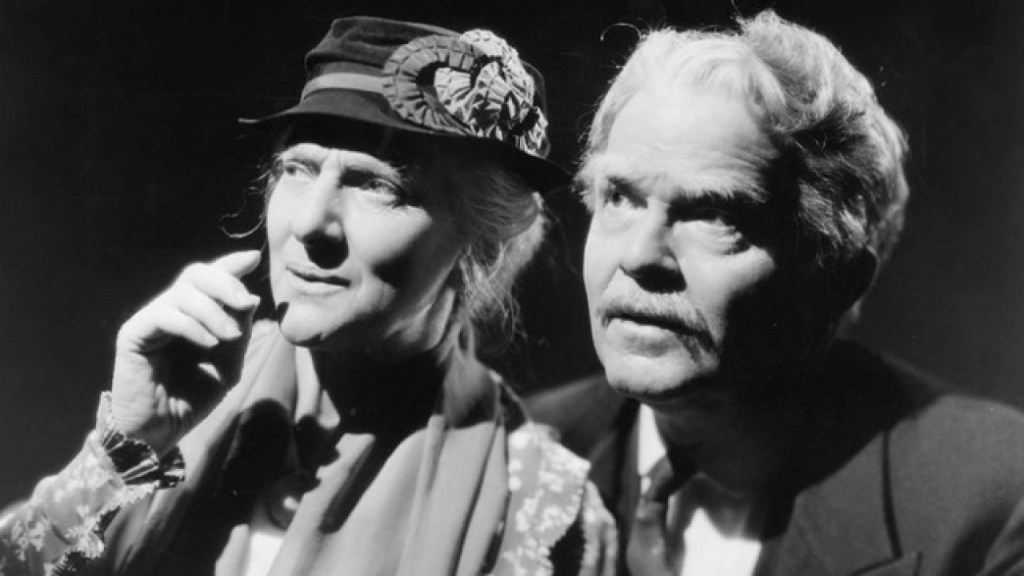
When Leo McCarey won the 1937 Best Director Oscar for the screwball comedy The Awful Truth, he told the audience that it was the right honor, but for the wrong film. McCarey specialized in comedy, but that year he was more proud of this bleak drama about an older couple forced to separate when the bank forecloses on their home. As they discover, their adult children (Elisabeth Risdon, Minna Gombell, Thomas Mitchell, and Ray Mayer) are just too self-involved to house both mom and dad together. Beulah Bondi was only 49 and Victor Moore was 61 when they played the aging—and deeply in love—Lucy and Barkley Cooper, but they are remarkably effective at putting moviegoers’ tear ducts through their paces. The film is sad (as is Yasujirō Ozu’s Tokyo Story, which it inspired), but it resonates because the circumstances it presents are discomfitingly recognizable. McCarey and screenwriter Viña Delmar (who also wrote The Awful Truth) don’t shy away from the fact that the mother is something of an intrusion and the father can be embarrassingly cantankerous. Make Way for Tomorrow dares to say, however, that being out of step doesn’t warrant being out of mind. Come to think of it, maybe The Awful Truth would have been a better title for this movie.
3. Wild Strawberries (1957, dir. Ingmar Bergman)
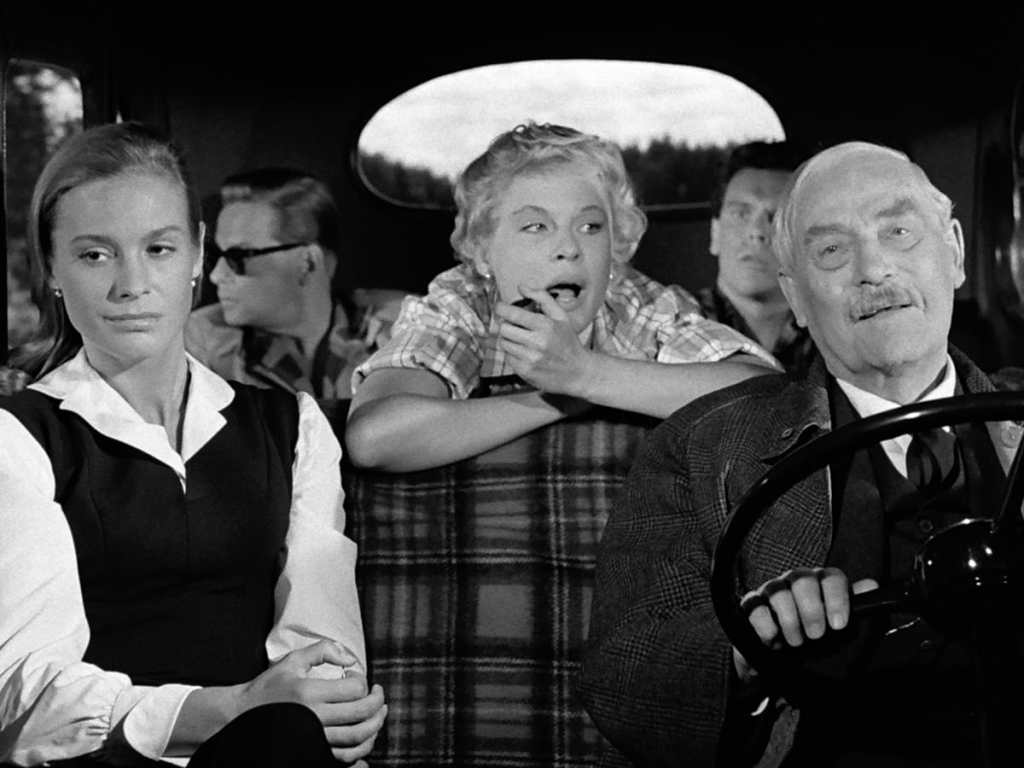
The template of this Ingmar Bergman masterpiece has been copied so many times, it can be tempting to overlook how deceptively novel Wild Strawberries is. Victor Sjöström is indelible as Isak Borg, a retired Swedish physician and professor who embarks on a road trip to receive an honor. The journey is both literal and metaphorical, of course (this is Bergman, after all), as Isak ponders recent dreams and old memories in a self-evaluation of his life. Along the way, he and his daughter-in-law Marianne (Ingrid Thulin) encounter several fellow travelers whose situations deepen Isak’s own personal reckoning. The results are often riveting and relatable. Bergman, who based Isak on his own father, presents a character who is essentially a decent man, albeit exacting and emotionally distant, and unaware of how his aloofness has impacted loved ones. “Beneath your benevolent exterior, you’re as hard as nails,” Marianne tells her father-in-law. Bergman regulars Thulin, Bibi Andersson, and Gunnar Björnstrand are strong in supporting roles, but ultimately the film rests on Sjöström’s capable shoulders. In Wild Strawberries, Bergman contends that self-knowledge can arrive late in life. Old age is not a period of resignation for Isak, but rather a final opportunity for grace and forgiveness.
(See more in The 10 best films about memory and The 10 best films about dreams.)
2. Ikiru (1952, dir. Akira Kurosawa)

When Ikiru introduces us to Kanji Watanabe, portrayed by Takashi Shimura, a voiceover narrator explains that “this man has been dead for more than 20 years now.” A city government official, Watanabe has long followed the bureaucratic edict of shuffling a lot of paper but accomplishing little. His personal life, like his job, is devoid of pleasure. A widower, he shares his house with his standoffish son and daughter-in-law. Watanabe then learns he has terminal stomach cancer, and the revelation forces him to consider the path he has chosen. “I don’t know what I’ve been doing all these years with my life,” he bemoans. This doleful masterwork from Akira Kurosawa and co-writers Shinobu Hashimoto and Hideo Oguni follows Watanabe as he copes with his sudden existential crisis by latching on to others—first on a drunken bender through Tokyo with a writer he encounters (Yunosuke Ito), and later with a bubbly female coworker (Miki Odagiri) whose zest for life attracts him. But the movie, while rueful, is not hopeless. Change is possible. Watanabe appears to have that epiphany when, late in the film, he sits on a swing in the playground he had long obstructed as a bureaucrat but was finally instrumental in creating. As snow falls, the old man sings softly to himself. The title Ikiru roughly translates as “to live” in Japanese, and we realize—as Watanabe does—that his death is imminent but perhaps his legacy will live, if modestly, when children are at play.
1. Tokyo Story (1953, dir. Yasujirō Ozu)

This profoundly melancholic tale concerns an older couple, Shūkichi and Tomi Hirayama (Chishū Ryū and Chieko Higashiyama, respectively) who travel to Tokyo to see the two eldest of their adult children. The visit does not come at a convenient time for the children, both of whom are professionals with families of their own; Kōichi (Sō Yamamura) is a doctor who runs a small clinic, and Shige (Haruko Sugimura) owns a hair salon. The siblings love their parents but do little to conceal their view that the visit is a bit of a nuisance. Shūkichi and Tomi receive a warmer reception from their widowed daughter-in-law, Noriko (Setsuko Hara), whose husband died in World War II. As the trip goes on, there are tiny cracks to the veneer of familial cordiality. While the parents are foisted off from child to child as if superfluous, Shūkichi reflects on how his kids have turned out. “We can’t expect too much from our children,” he tells a friend during a night of sake-drinking. “Times have changed. We have to face it.” Kogo Noda’s screenplay is loosely based on Make Way for Tomorrow, but he and director Yasujirō Ozu, one of cinema’s greatest chroniclers of relationships, allow understanding and grace for all the characters. The drift between parent and child is regrettable, but inevitable, as Noriko tells the Hirayamas’ youngest daughter, Kyōko (Kyōko Kagawa). “Isn’t life disappointing?” the daughter asks. “Yes, it is,” answers Noriko. For Ozu, the revelation isn’t cause for sorrow, but gentle acceptance.
Honorable mention: An Autumn Afternoon (1962, dir. Yasujirō Ozu), The Father (2020, dir. Florian Zeller), 45 Years (2015, dir. Andrew Haigh), Nebraska (2013, dir. Alexander Payne), On Golden Pond (1981, dir. Mark Rydell), Poetry (2010, dir. Lee Chang-dong), The Savages (2007, dir. Tamara Jenkins), Still Walking (2008, dir. Hirokazu Kore-eda), The Straight Story (1999, dir. David Lynch), The Trip to Bountiful (1985, dir. Peter Masterson)

