Cinema excels at depicting dysfunctional marriages, but much less so at portraying the other kind. Make of that what you will. Of course, the warts-and-all approach might be preferable to the days back when the Production Code governed onscreen social norms. According to the Hollywood of yesteryear, happily married couples slept in separate twin beds and woke up each morning with perfectly coiffed hair and breath that smelled of lavender and lilacs. Perhaps filmdom’s most captivating examination of marriage comes in Pixar’s Up (2009). The 10-minute opening montage of that animated gem illustrates the entirety of a marriage, from falling in love to the successive joys and sorrows, and finally to the inevitable death of a spouse.
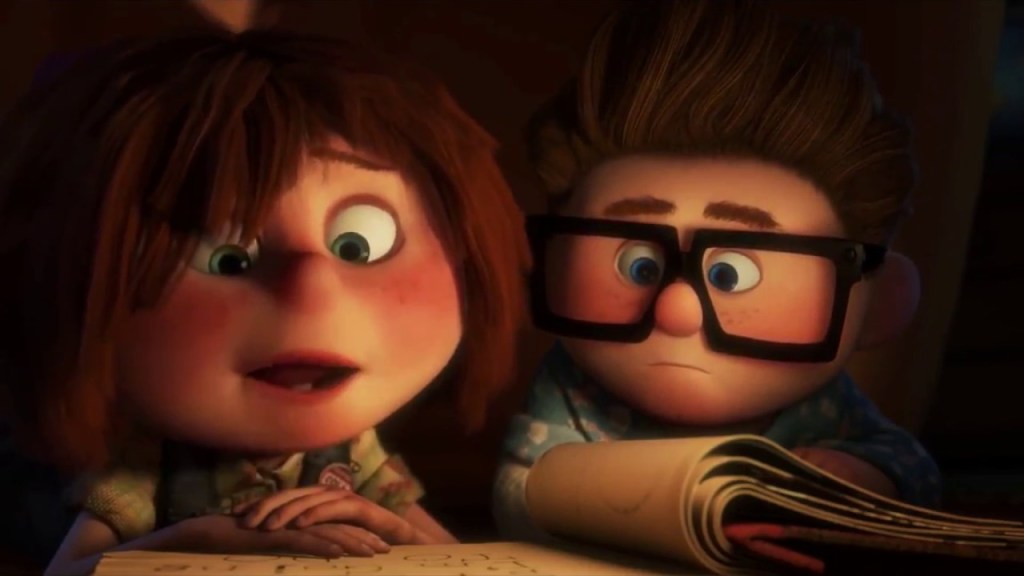
The sequence is exquisite, and one helluva gutsy swing for a family-friendly picture, but it sets a bar that the rest of the movie, impressive as it is, could not hope to match.
10. Private Life (2018, dir. Tamara Jenkins)
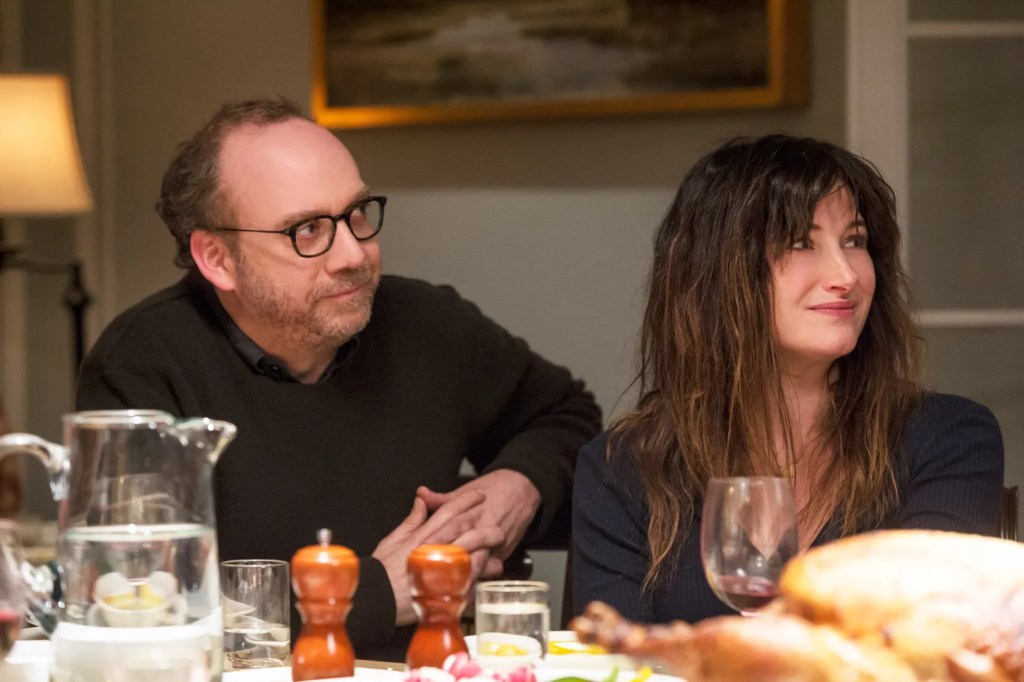
Having children forever changes a marriage, but so, too, can the long journey to pregnancy. Private Life focuses on how that quest can become all-consuming. Paul Giamatti and Kathryn Hahn are Richard and Rachel, a middle-aged New York husband and wife who have seemingly exhausted the IVF routes available to them when they approach Richard’s step-niece Sadie (Kayli Carter) over breakfast about her eggs. “Scrambled is good, but however you guys do them is fine with me,” she answers before they clarify it’s her eggs that interest them. The film is exceptionally clear-eyed in its depiction of how infertility can become a third presence in a marriage, quietly reframing every conversation, decision, and hope for the future. Writer-director Tamara Jenkins brings a spiky but sympathetic perspective. Private Life is unflinchingly honest even as it finds biting humor in the couple’s ordeal.
9. Dodsworth (1936, dir. William Wyler)
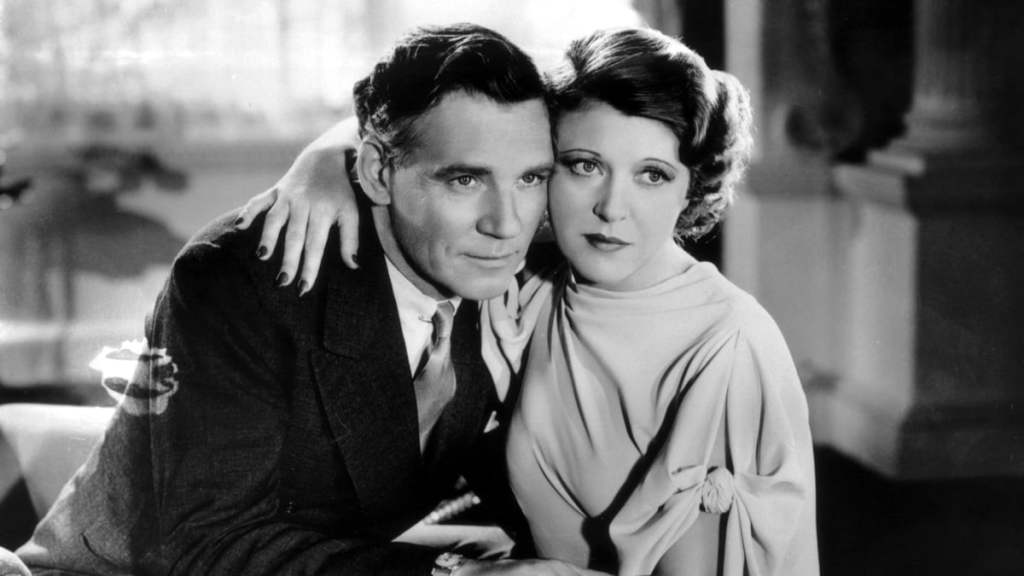
William Wyler’s adaptation of Sinclair Lewis’ celebrated novel is a surprisingly mature and—dare I say?—contemporary take on the often-rocky road of marriage. Walter Huston is industrialist Sam Dodsworth, eager to spend his retirement traveling abroad and learning about the world, but an extended stay in Europe with his younger wife Fran (Ruth Chatterton) only heightens a growing gulf between them. She embarks upon a series of affairs in a desperate attempt to cling on to her youth. Huston, reprising the role he originated on Broadway, brings a weary decency to Sam that makes his third-act awakening to what he actually deserves feel entirely earned. Some marriages, he finally concedes, cannot be saved. Mary Astor is terrific as his would-be perfect companion. Made only a few years after Hollywood began strict enforcement of the Production Code, Dodsworth manages to address thorny issues with a rare level of sophistication.
8. The Thin Man (1934, dir. W.S. Van Dyke)
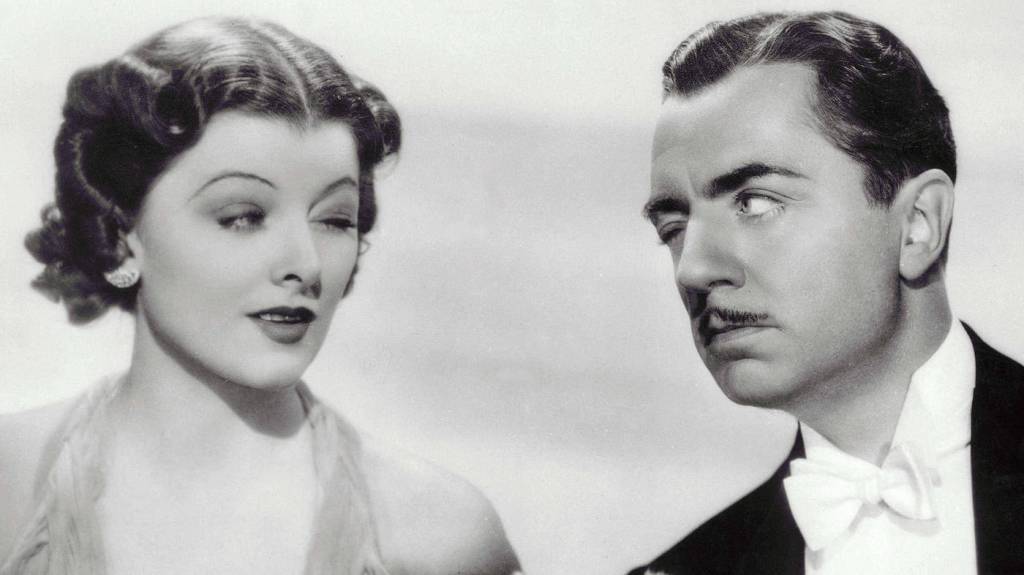
William Powell and Myrna Loy had only a handful of scenes together in 1934’s Manhattan Melodrama, but their rapport was strong enough for MGM to cast the pair in The Thin Man, a delightfully fizzy adaptation of Dashiell Hammett’s 1931 detective novel. Nick is the sleuth, Nora the product of privilege. Together, they comprise a fun-loving and well-adjusted––if gloriously soused––married couple who know how to throw back a cocktail and deliver a good quip in equal measure. When Nora finds Nick at a bar and he admits to being on his sixth martini, she directs the waiter to line up five martinis for her to catch up. Nick, reluctant to investigate the case of a missing scientist (the missing person is the so-called “thin man,” by the way), explains to his wife, “I’m much too busy seeing that you don’t lose any of the money I married you for.” Nick and Nora remain one of cinema’s gold standards for married chemistry—equal parts flirtation, mutual admiration, and perfectly synchronized comic timing. The movie’s massive success spawned five sequels, though none matched the original.
7. Another Year (2010, dir. Mike Leigh)
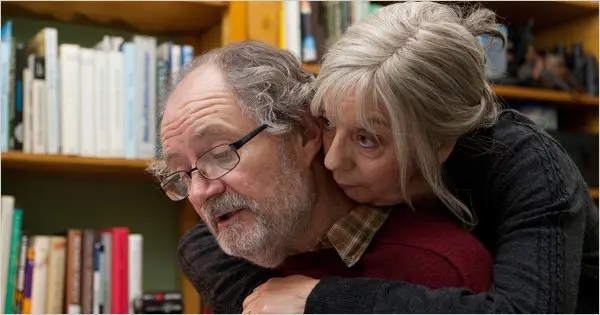
Mike Leigh approaches human interaction with the eye of an anthropologist and the heart of a poet. Companionship and the yearning for it drift through Another Year. At the center of its orbit is the sort of happily married couple you don’t often see on the big screen. Tom and Gerri (yes, they’ve heard all the jokes), played by Jim Broadbent and Ruth Sheen, are a well-adjusted pair of 60-something London professionals who have settled into a cozy flow of cooking, gardening, and occasional visits from their 30-year-old son (Oliver Maltman). Loosely structured around the seasons, Another Year is anchored by lovingly lived-in performances from an ensemble cast of Leigh regulars, with particularly fine work from Lesley Manville as the couple’s lonely but self-sabotaging friend Mary. The director’s famously exhaustive rehearsal process, in which actors develop backstories the audience never explicitly sees, gives Tom and Gerri’s relationship the specificity of people who have long since stopped performing for each other. Leigh’s characters are strikingly ordinary, but his films belie an extraordinary understanding of what makes humanity endlessly fascinating.
6. Two for the Road (1967, dir. Stanley Donen)
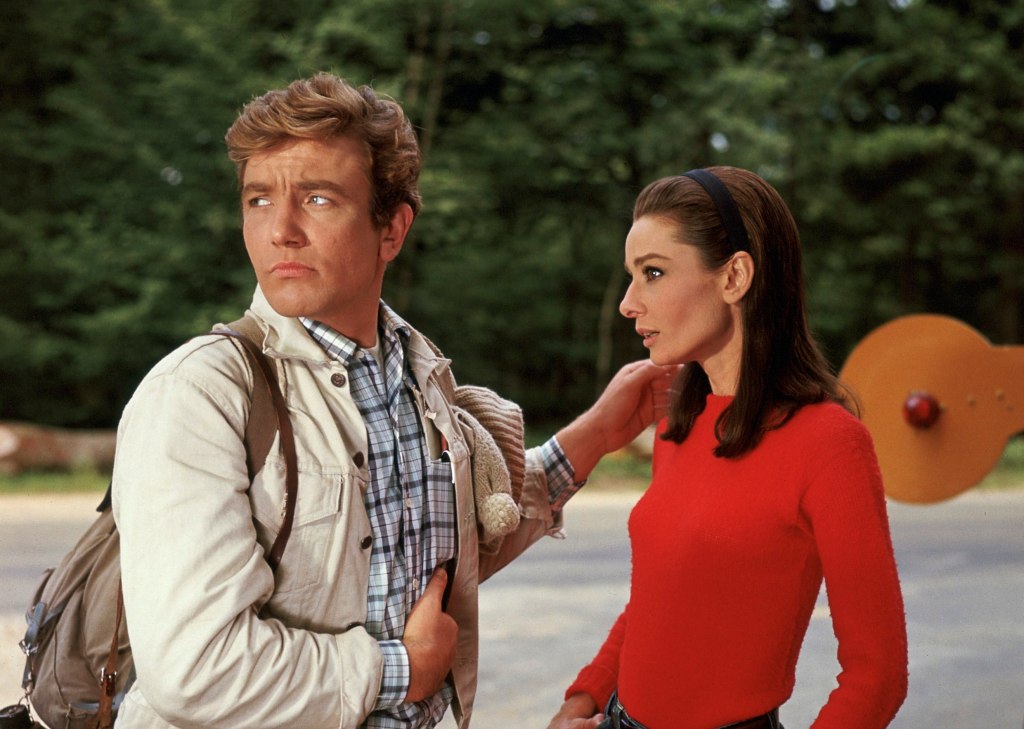
Joanna and Mark Wallace (Audrey Hepburn and Albert Finney) are smart, fashionable, attractive––and finding matrimony to be increasingly precarious. On a road trip (both literally and figuratively) through Europe, the pair reflect on how they have arrived at this crossroads. At one point, Joanna spies a young couple and notes sadly that they don’t look too happy. “Why should they?” says Mark. “They just got married.” The tart, clever screenplay by Frederic Raphael hopscotches between past and present, cutting between five separate periods in the Wallaces’ relationship. The nonlinear structure was commercially risky for a mainstream romance in 1967, but its fractured chronology nicely mirrors the experience of a couple sifting through their memories. Hepburn and Finney make a marvelous pair; the sexual chemistry evidently carried offscreen, too, as the stars reportedly knocked boots throughout production. Eleanor Bron and William Daniels steal their scenes as an especially obnoxious couple who travel with the Wallaces. Buoyed by a very ‘60s Henry Mancini score, Two for the Road is a time capsule and terrific cinematic confection.
5. A Woman Under the Influence (1974, dir. John Cassavetes)
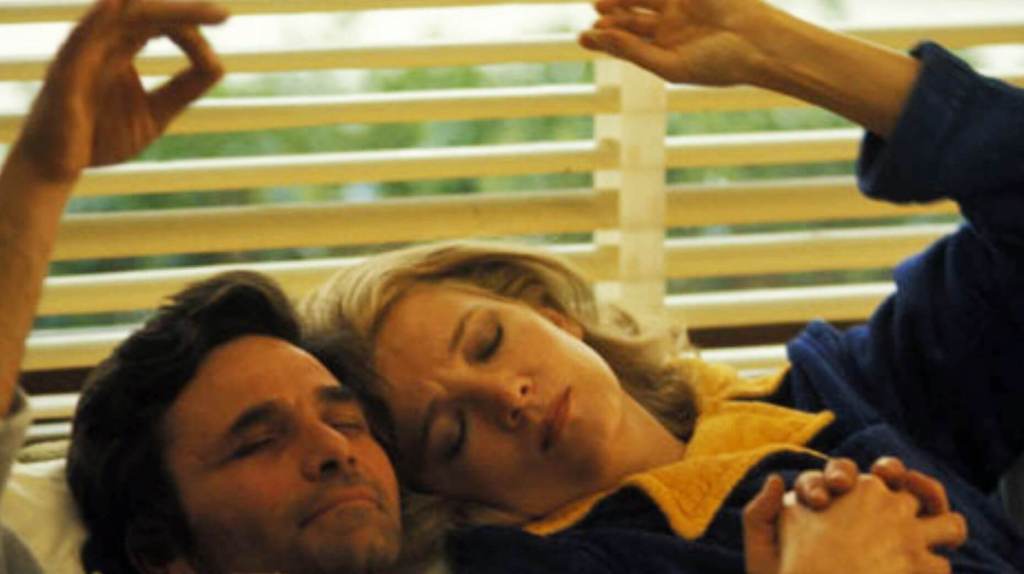
Gena Rowlands is heartbreaking as Mabel Longhetti, a housewife and mother whose struggle with mental illness places enormous strain on her family despite her devotion to them. Peter Falk is nearly as good as her blue-collar husband; he loves his wife but is incapable of knowing how to interact with her. The picture refuses the suggestion of heroes and villains, portraying two people who love each other but lack the emotional tools to bridge a widening chasm between them. John Cassavetes mortgaged his own house, where much of the movie is shot, and called in favors from actor friends for financing after every studio passed. Falk reportedly deferred his salary and used the earnings of his Columbo television series to keep the production afloat. Cassavetes’ films, with their baggy structure and heavy improvisation, are not for all tastes, and A Woman Under the Influence is no exception. Meet it on its own terms, however, and viewers will be richly rewarded, if emotionally exhausted. Rowlands rightly earned an Academy Award nomination for her performance. Cassavetes, her offscreen husband, wrote the part for her.
4. Scenes from a Marriage (1974, dir. Ingmar Bergman)
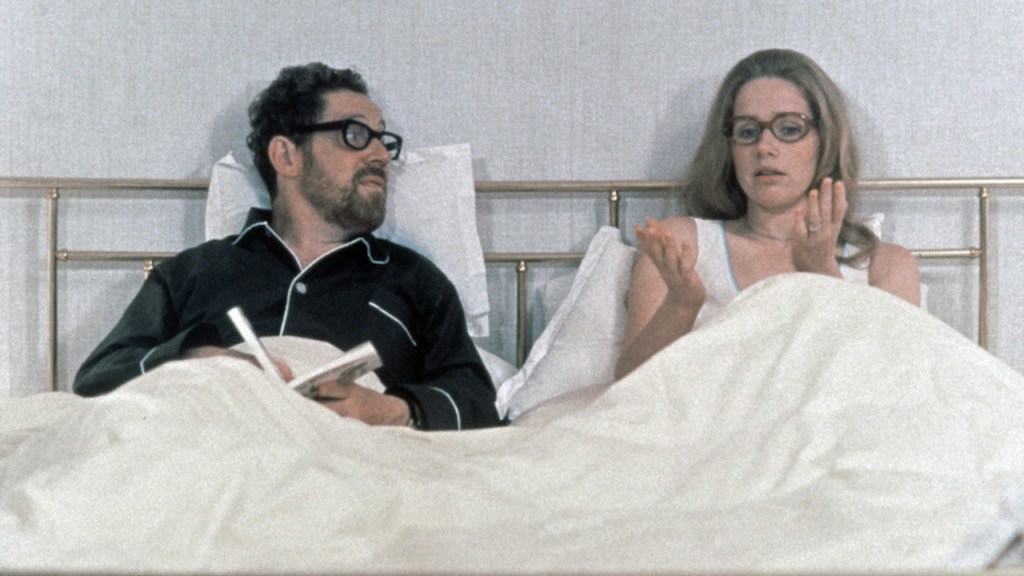
Ingmar Bergman’s dense, blistering examination of a marriage between two well-appointed professionals first appeared as a Swedish television miniseries. By outward appearances, Johan and Marianne (Erland Josephson and Liv Ullmann) have the sort of relationship so idyllic as to be annoying. As Johan is told by a friend, his perfect marriage “makes one itch to puncture that beautiful balloon of yours.” But their facade doesn’t last long. Johan leaves Marianne and their two young daughters for a mistress nearly 20 years his junior. Scenes from a Marriage is emotionally brutal, chiefly for Ullmann’s performance as an attorney whose sense of self was long ago subordinated to her dual roles of wife and mother. Bergman’s screenplay, which he began drafting as his own fourth marriage crumbled, is disarmingly provocative but precise in its dissection of a curdled relationship. Many of the film’s most devastating moments, however, unfold in near-silence, with cinematographer Sven Nykvist’s close-ups doing as much dramatic work as the dialogue.
3. 51 Birch Street (2005, dir. Doug Block)
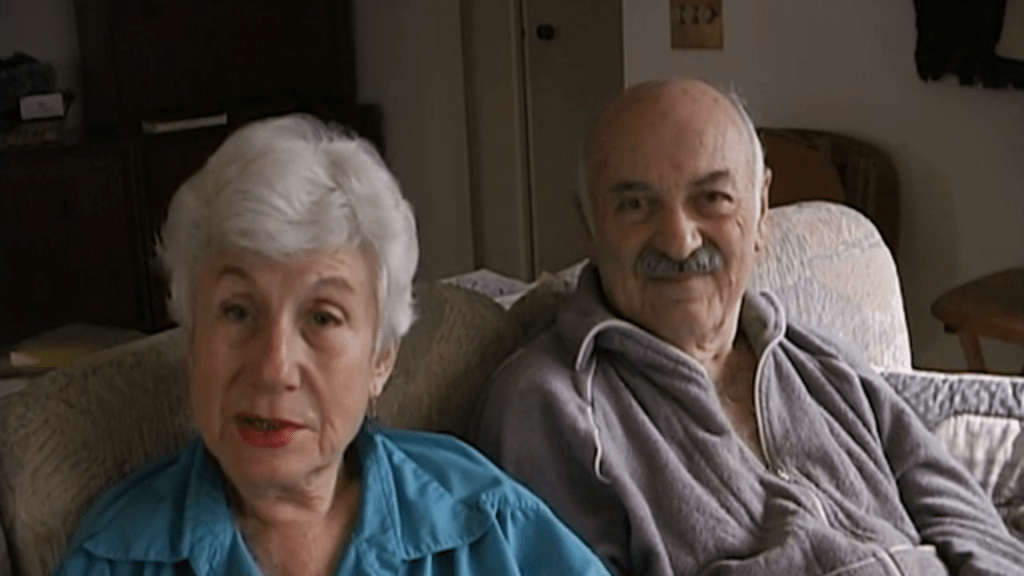
Do you really know your parents? And how much about them would you really want to know? Such questions fuel this haunting documentary. Doug Block delves into his parents’ 54-year marriage to explore the convoluted relationships of parent and child and that inevitable revelation when you realize your folks are just as deeply flawed as the rest of us. Block’s parents seem typical of many unions of the Greatest Generation, but their grown children are thrown into disarray when the mother dies of pneumonia. Only three months later, the Blocks’ 83-year-old patriarch announces he is marrying his secretary from four decades earlier and selling the family house. Had dad been unfaithful? Was their marriage a happy one? Block’s use of home movies and audio recordings that his parents left behind lends the documentary an archival intimacy. The discovery of his mother’s decades-old diaries mid-film transforms his quest from a study of his father’s choices into a far more complicated reckoning with the inner lives of both parents. 51 Birch Street is told with loving simplicity, but its questions are complex and largely unanswerable. It discovers how unknowable even the people closest to us can remain after many years together.
2. The Flavor of Green Tea Over Rice (1952, dir. Yasujirō Ozu)
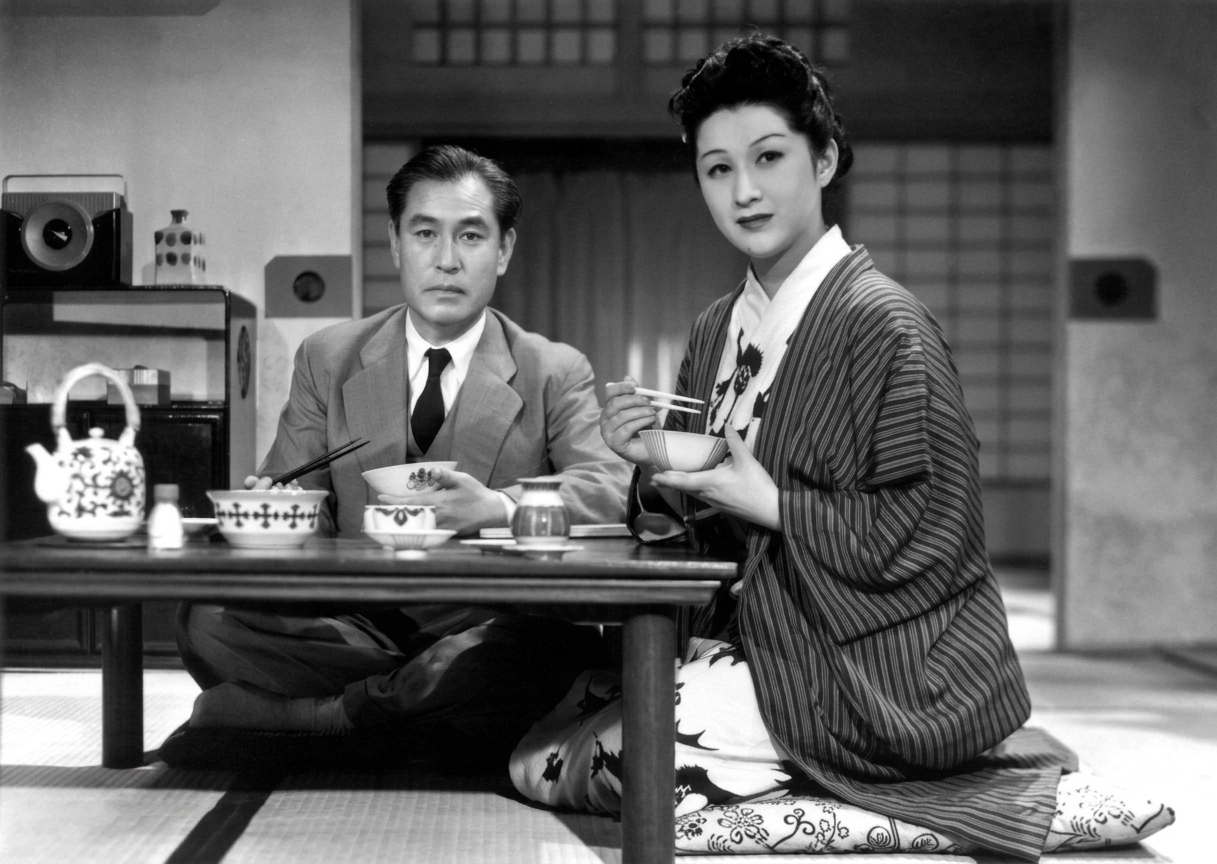
As with many Yasujirō Ozu works, the relaxed pace and quiet revelations of character in this film cast a subtle spell. Made just before the director’s landmark Tokyo Story, The Flavor of Green Tea Over Rice follows a marriage in which husband and wife have drifted into two distinctly different lives. Mokichi (Shin Saburi) is an unassuming business executive who treasures what he calls “blissful solitude” when he is not working. Taeko (Michiyo Kogure) concocts elaborate lies so she can have spa getaways with her niece and friends. Ozu filmed with his characteristic low camera placement, positioning the viewer at the eye level of someone seated on a tatami mat, which lends even the couple’s most ordinary domestic scenes a sort of hushed reverence. The Japanese title, Ochazuke no aji, refers to a humble comfort dish, an apt metaphor for the unglamorous devotion Ozu and co-writer Kōgo Noda ultimately locates in Mokichi and Taeko’s union. Ozu’s quiet optimism makes the eventual reconciliation feel earned rather than sentimental, one of the filmmaker’s gentlest affirmations that intimacy can be rekindled through everyday rituals and acts of consideration.
1. Who’s Afraid of Virginia Woolf? (1966, dir. Mike Nichols)
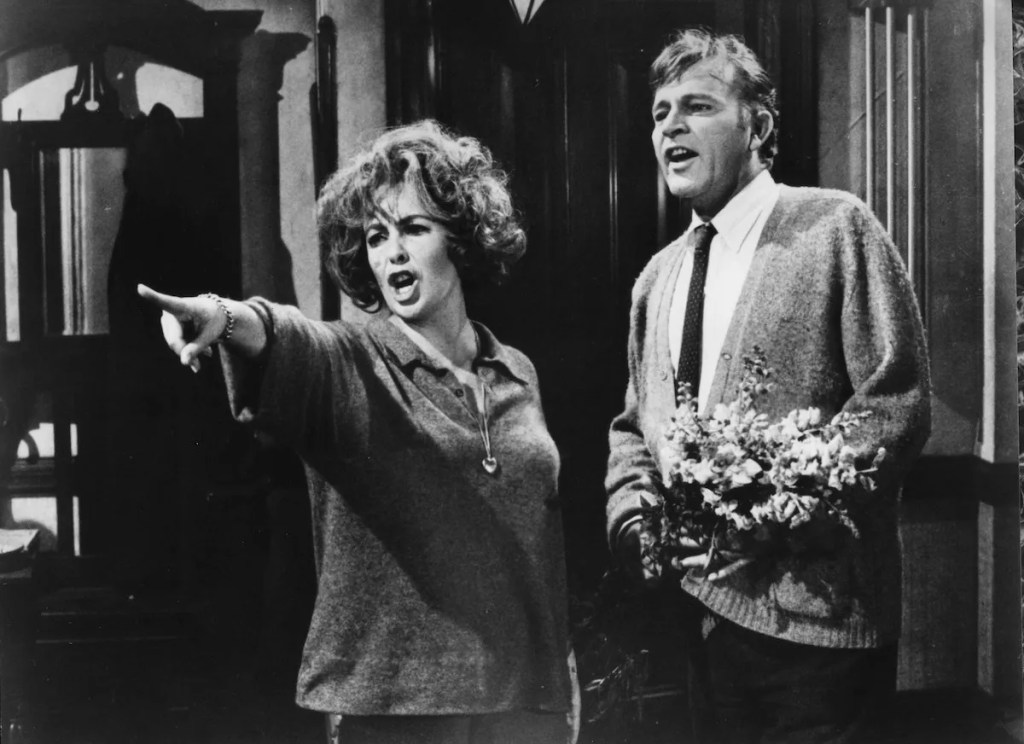
For his feature-film debut, director Mike Nichols did not lack ambition in taking on Edward Albee’s controversial 1962 play about a volatile marriage unraveling over the course of a drunken night. Its rough language and frankness about sex and infidelity had been condemned by the National Catholic Office for Motion Pictures (previously known as the Legion of Decency) before shooting even began. As it turned out, the commercial and critical success of Who’s Afraid of Virginia Woolf? would help ensure the demise of the Production Code. In an inspired bit of stunt casting, Richard Burton and Elizabeth Taylor––whose own tumultuous marriage was gossip-column fodder at the time––are enthralling as George and Martha. George teaches at an unnamed university where Martha’s father is the longtime president. Following a work function, the couple play host to a handsome new professor and his mousy wife, played by George Segal and Sandy Dennis, and the night rolls on from darkly funny barbs to flat-out psychological warfare. “Who’s Afraid of Virginia Woolf? is my standard against which all movies about marriage are measured, but obviously not because George and Martha’s marriage is ideal,” Philip Gefter writes in Cocktails with George and Martha: Movies, Marriage, and the Making of Who’s Afraid of Virginia Woolf? “On the contrary, though their love is genuine, their marriage is imperfect and, in that sense, typical of all marriages.” Nichols had cinematographer Haskell Wexler shoot the film in black and white against studio wishes, a choice that strips away any glamour and traps George and Martha in a starkly lit domestic arena. The principals are electrifying. For Taylor, the picture demonstrated acting chops that movie audiences didn’t know she had. Taylor and Dennis rightly earned Oscars.
Honorable mention: Amour (2012, dir. Michael Haneke), The Best Years of Our Lives (1946, dir. William Wyler), Black Bag (2025, dir. Steven Soderbergh), Blue Valentine (2010, dir. Derek Cianfrance), Bob & Carol & Ted & Alice (1969, dir. Paul Mazursky), Fargo (1996, dir. Joel Coen and Ethan Coen), 45 Years (2015, dir. Andrew Haigh), Husbands and Wives (1992, dir. Woody Allen), The Incredibles (2004, dir. Brad Bird), The Marriage of Maria Braun (1979, dir. Rainer Werner Fassbinder)


3 responses to “The 10 most memorable movie marriages”
[…] Honesty and freedom. Are they all they’re cracked up to be? The 1960s called for a reappraisal of all the institutions Americans thought they knew, including marriage, and so it is in this comedy-drama by writer-director Paul Mazursky (in his directorial debut) and co-writer Larry Tucker. Bob and Carol Sanders (Robert Culp and Natalie Wood) are a well-off, with-it married couple who commit themselves to complete openness after spending a weekend at a New Age retreat. That includes being frank about their infidelities. Best friends Ted and Alice Henderson (Elliott Gould and Dyan Cannon) get caught up in the Sanderses’ resolve to let it all hang out. Paul Mazursky’s satire is sharp but kind to its characters. The film builds toward a would-be orgy that collapses under the weight of its own awkwardness, suggesting that sexual liberation sounds more appealing in theory than in practice. Like Jackie DeShannon’s “What the World Needs Now,” the Burt Bacharach song that closes Bob & Carol & Ted & Alice, the four are well-intentioned, if awfully dopey. (See more in The 10 most memorable movie marriages.) […]
LikeLike
[…] Filmmaking brothers Joel and Ethan Coen caution the viewer at the beginning of Fargo that it is based on a true story. Don’t believe it. That specious claim is just the first cheeky joke in this flawless tale of duplicity, greed and murder. Set in snowy Minnesota (you are correct in thinking Fargo is in North Dakota), the movie stars William H. Macy in a breakthrough performance as Jerry Lundagaard, a struggling car salesman who arranges to have his wife kidnapped in order to extract $1 million in ransom from his rich but tight-fisted father-in-law (Harve Presnell). Things don’t go as planned. The kidnappers (Steve Buscemi and Peter Stormare) fatally shoot a state trooper and a pair of witnesses. The triple-homicide brings in Sheriff Marge Gunderson, in an Oscar-winning performance by Frances McDormand, whose thick Minnesoter accent and occasional morning sickness belies a sharp investigative mind. From the film’s opening wintry image of a Paul Bunyan statute to climactic use of a wood chipper, Fargo is a masterpiece of misanthropy.(See more in The 10 most memorable movie marriages.) […]
LikeLike
[…] Amour observes an elderly Parisian couple coming to terms with illness and looming death with almost brutal clarity. Michael Haneke flatly rejects sentimentality in this story of genial Georges and Anne Laurent, played by Jean-Louis Trintignant and Emmanuelle Riva. Anne, a former piano teacher, suffers a mild stroke. That is followed by another episode, then an unsuccessful surgery and, eventually, rapid physical and mental decline. Anchored by fearless, brilliant performances, Amour offers an unflinchingly honest portrait of a marriage not often captured on screen: the kind that survives youth to endure the most painful of trials. Riva’s performance earned her a Best Actress nomination at 85, still the oldest nominee in that category in Oscar history—proof of how rarely a film trusts someone of an advanced age to carry its full emotional weight. “This is a film that will make you weep not only because life ends but also because it blooms,” wrote Manohla Dargis in The New York Times. While it won the Palme d’Or at the Cannes Film Festival and the Oscar for Best Foreign-Language Film, Amour is a tough watch, almost unbearably so at times. But it is also a powerful meditation on love and commitment.(See more in The 10 most memorable movie marriages.) […]
LikeLike