“The hand that rocks the cradle is the hand that rules the world,” wrote William Ross Wallace in a poem extolling the greatness of moms. Like most things involving mothers, that sentiment feels a bit loaded. Our relationship with mothers is … complicated.
We love them, but fear them, too––particularly when they use your full name in that tone of voice, you know the one. Because cinema is a reflection of us, the movies have long been conflicted on the subject. Mothers are saints and monsters, martyrs and narcissists, tyrants and protectors. They’re doling out sage advice one minute and coming at you with a meat cleaver the next. The one thing movie moms rarely get to be is ordinary.
10. Inez de la Paz (Teyana Taylor) in A Thousand and One (2023, dir. A.V. Rockwell)

Writer-director A.V. Rockwell’s debut benefits mightily from Teyana Taylor’s ferocious, captivating performance as Inez. A troubled mother recently released from prison, she kidnaps her young son, Terry (played at different stages of growth by Aaron Kingsley Adetola, Josiah Cross, and Aven Courtney), from foster care, changes his name, and begins life anew. Set in the New York of the mid-1990s, A Thousand and One is tough-minded and unsparingly honest. Rockwell keeps shifting the ground beneath us in unexpected ways. The film asks whether love can redeem terrible choices without ever pretending those choices weren’t terrible in the first place.
9. Mrs. Lift (Anne Ramsey) in Throw Momma from the Train (1987, dir. Danny DeVito)
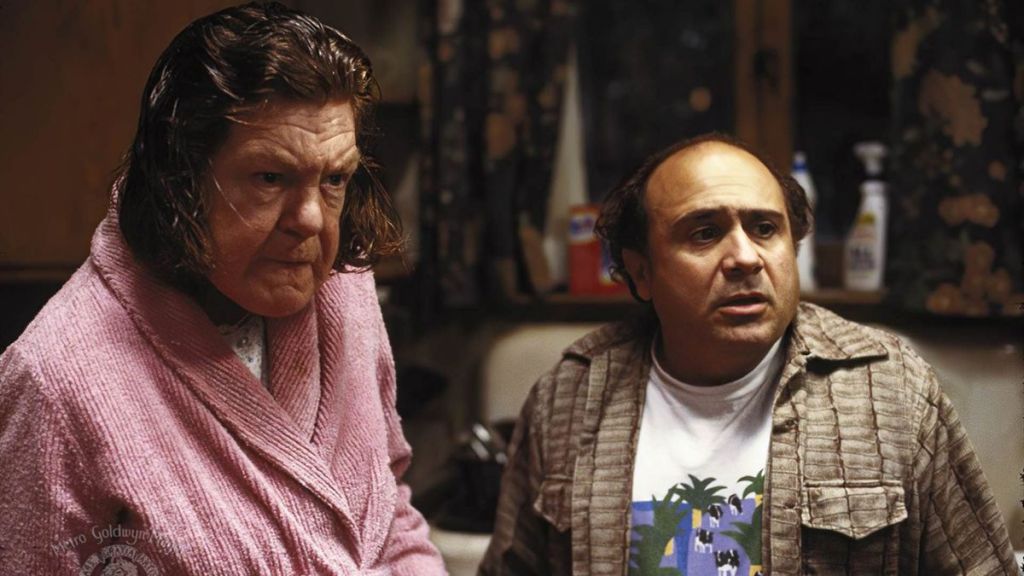
This comic reworking of Alfred Hitchcock’s Strangers on a Train offers a momma so cranky, belittling, and exceedingly unpleasant, it’s no wonder that her son wants her offed. In Throw Momma from the Train, Danny DeVito (who also directs) plays Owen, who gets it in his head that he and his creative writing instructor, Larry Donner (Billy Crystal), can swap murders: Owen’s merciless mother in exchange for the writing teacher’s hateful ex-wife. DeVito hit the motherlode when he cast Anne Ramsey as Mrs. Lift. Her Momma, equal parts cartoon and balled-up fist, is less maternal than a bowling ball. Larry tells Owen’s mother that her son doesn’t have friends because he’s shy. “No, he’s not!” she barks. “He’s fat and he’s stupid!” Ramsey earned an Oscar nomination for Best Supporting Actress. She died of cancer less than a year later at age 59.
8. Mother (Kim Hye-Ja) in Mother (2009, dir. Bong Joon Ho)
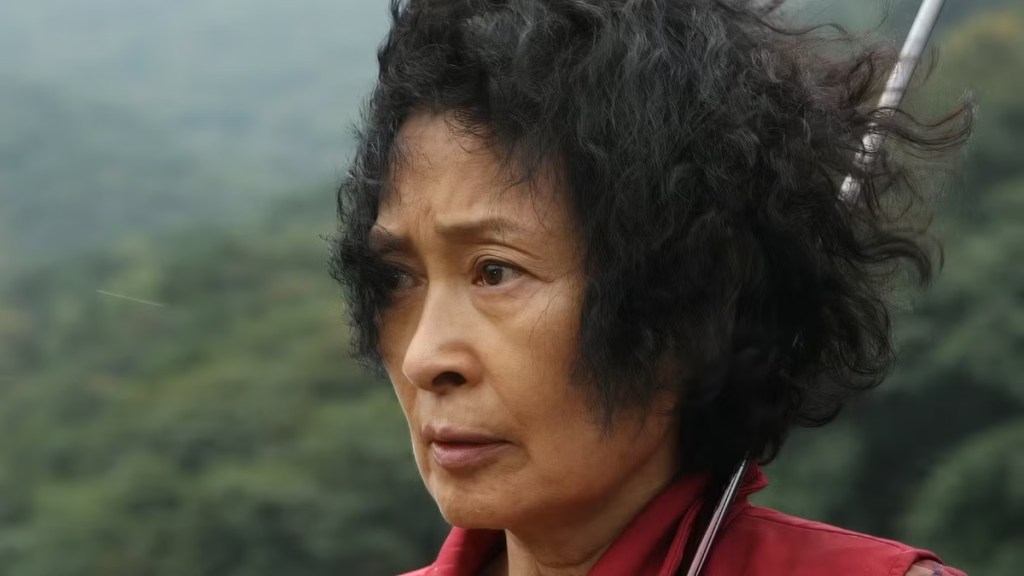
No matter how much the titular character (Kim Hye-Ja) in Bong Joon Ho’s Mother dotes on her developmentally disabled adult son, Yoon Do-Joon (Won Bin), he is unable to stay out of trouble. Do-Joon drinks too much with his friend Jin-Tae (Jin Goo), has a disturbing habit of stalking girls in short skirts, and loses his temper when taunted. Then Do-Joon is charged with fatally bludgeoning a teenaged girl (Moon Hee-ra) and leaving her body draped over a balcony for all the townsfolk to see. Confident her boy couldn’t do such a thing, this badass mama bear, played by Kim Hye-Ja, sets out to identify the real killer. If that means delving into the seamy underbelly of her village—or, say, bashing some brains in—so be it. A mother’s love knows no bounds, especially when she has a lead pipe in hand.
7. Marta “Mama” Hanson (Irene Dunne) in I Remember Mama (1948, dir. George Stevens)
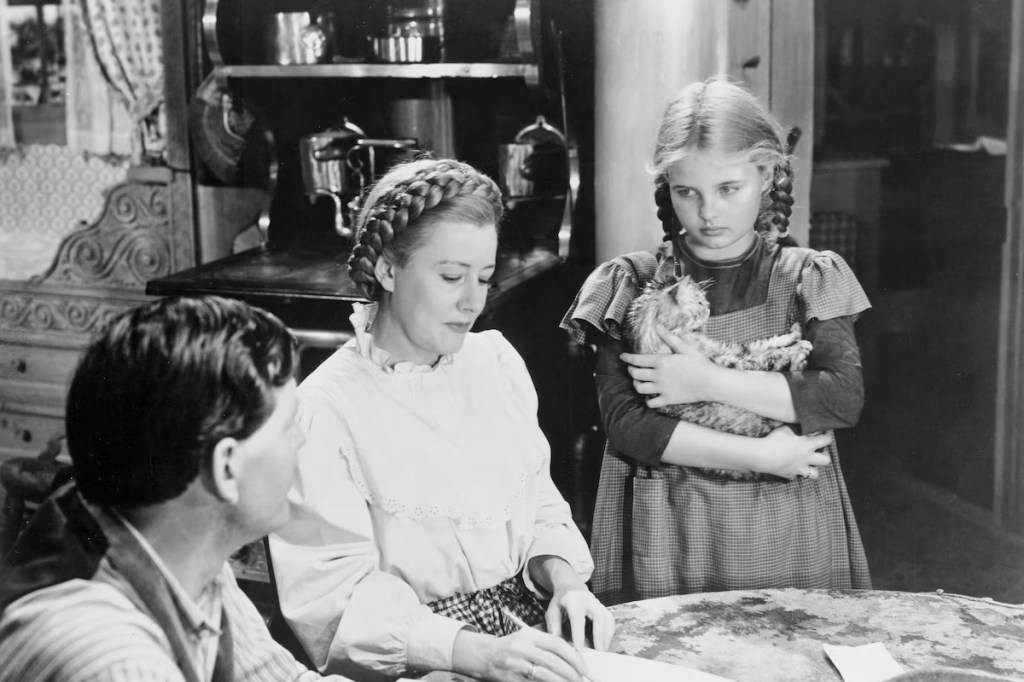
Irene Dunne is the perfect mother in this sentimental but affecting adaptation of John Van Druten’s Broadway play that itself was based on a Kathryn Forbes memoir. Framed by the recollections of eldest daughter Katrin (Barbara Bel Geddes), I Remember Mama introduces us to a hardworking family of Norwegian immigrants in early-20th century San Francisco. Producer-director George Stevens initially wanted Greta Garbo for the role, but thankfully she passed. It’s difficult to imagine the famously aloof Garbo as a matriarch so sweet-natured and brimming with homespun wisdom. Mama may be idealized, but Dunne, whose Norwegian accent isn’t half-bad, exudes a warmth and emotional generosity that keeps her from becoming merely sentimental. In later years, Hollywood would rarely attempt this brand of steady resilience without irony. Dunne earned an Oscar nomination for the role, which she said was the favorite of her career.
6. Margaret White (Piper Laurie) in Carrie (1976, dir. Brian De Palma)
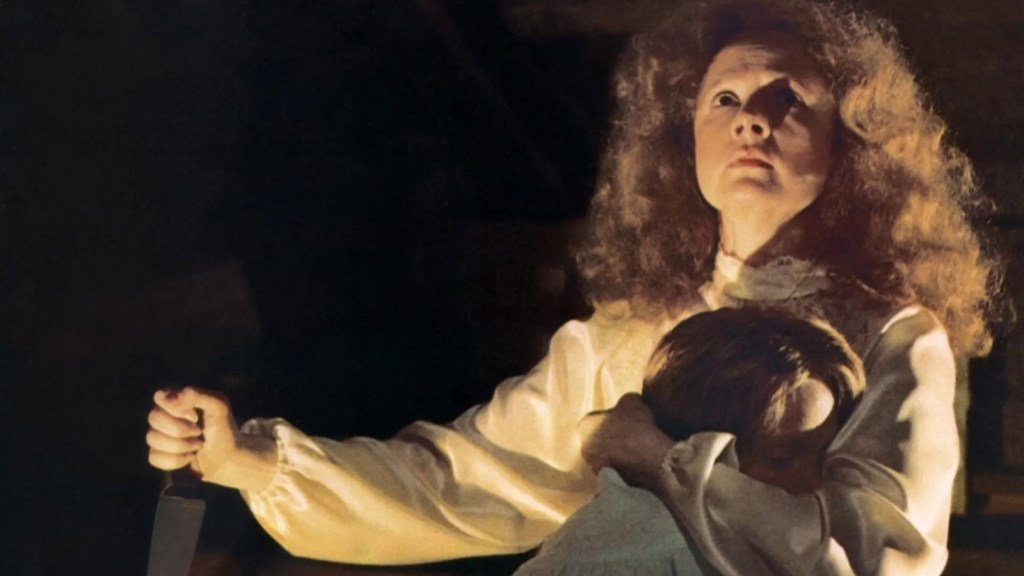
Piper Laurie earned an Oscar nomination as the religious zealot of a mother to beleaguered high schooler Carrie White (Sissy Spacek). Laurie had been retired from acting for close to 20 years when Brian De Palma approached her for the role. The script didn’t impress her until her husband, then-Newsweek film critic Joe Morgenstern, told her that De Palma typically wove humor into his thrillers. That clicked for Laurie, who is deliciously over the top as Margaret White. You can’t take your eyes off her, particularly in one of moviedom’s great death scenes. After Margaret tries killing her daughter for the sin of attending prom, Carrie uses her powers of telekinesis to send kitchen knives flying into her mom. Laurie plays the scene as if Margaret is ecstatic about rejoining the Lord. Her moans sound downright orgasmic.
(See more in The 15 best school-centric films.)
5. Cynthia Purley (Brenda Blethyn) in Secrets & Lies (1996, dir. Mike Leigh)
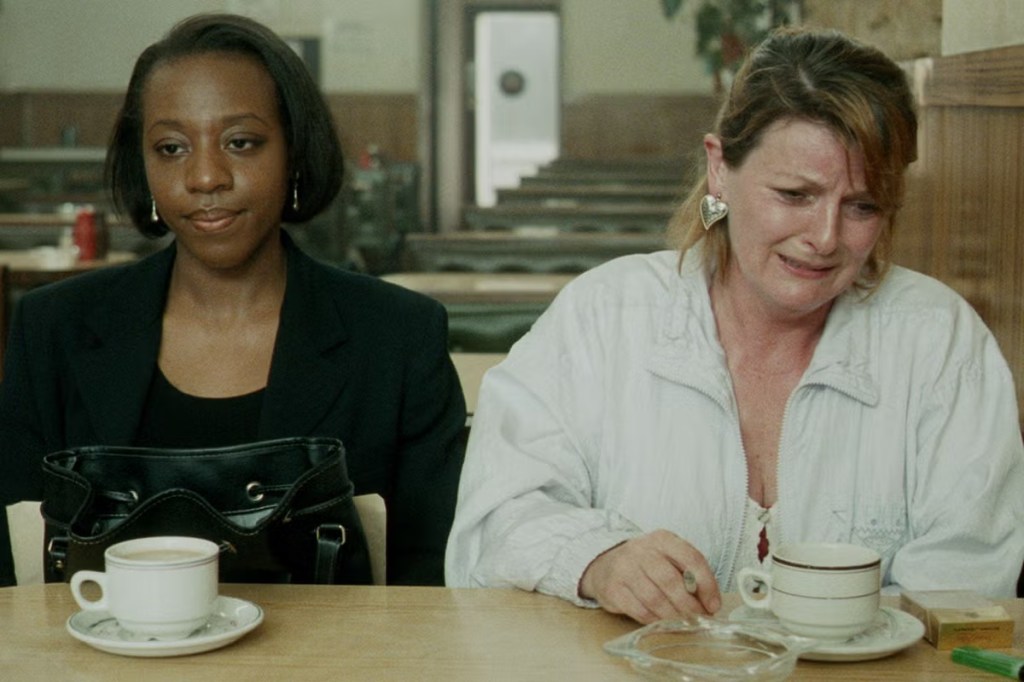
After the death of her adopted mother, London optometrist Hortense Cumberbatch (Marianne Jean-Baptiste) reaches out to the birth mum she has never known, but is shocked when she finally meets her, a factory worker named Cynthia Purley (Brenda Blethyn). Hortense is black, educated, and upper middle-class. Cynthia is white, uneducated, and part of a family seemingly in constant turmoil. Winner of the Palme d’Or at the Cannes Film Festival, Mike Leigh’s Secrets & Lies examines the seismic impact of secrets once revealed. Despised by the 20-year-old daughter with whom she lives, Cynthia sees Hortense as a chance to forge a healthy parent-child relationship––if only Cynthia can keep out of her own way. Blethyn is spectacular, playing a woman of fear, fragility, and self-pity. The scene where Cynthia and Hortense meet should be studied in acting classes.
(See more in The 15 best films that explore class divides.)
4. Eleanor Shaw Iselin (Angela Lansbury) in The Manchurian Candidate (1962, dir. John Frankenheimer)
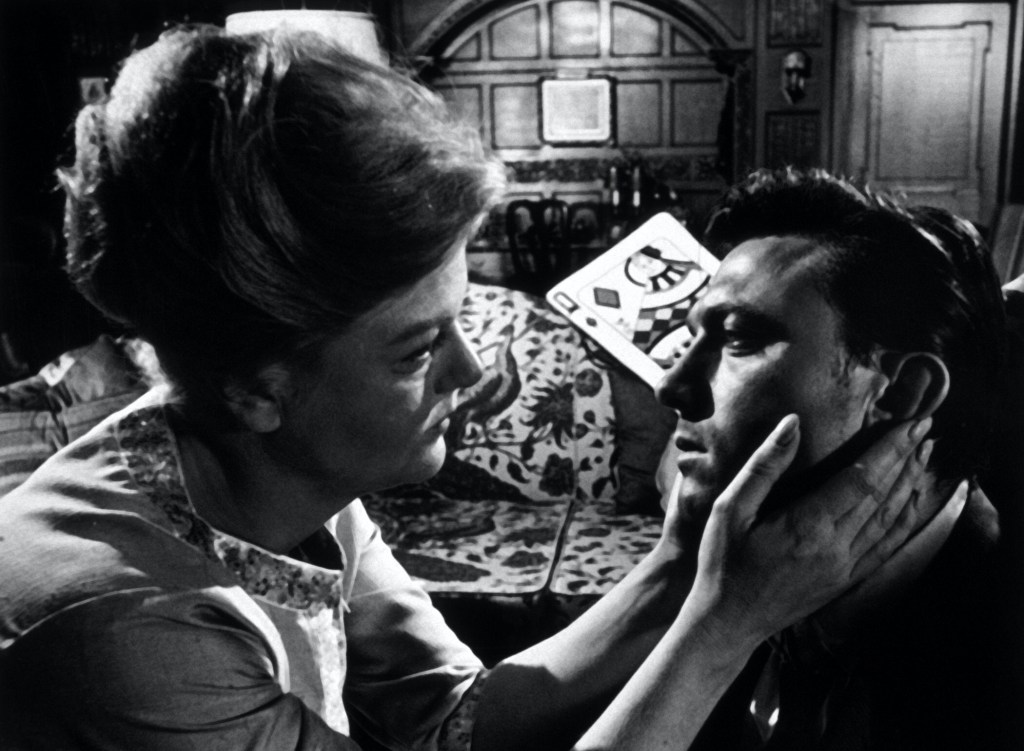
What kind of mother would allow her only son to be transformed into a mindless assassin? The Manchurian Candidate answers the question. Angela Lansbury plays Eleanor Shaw Iselin, a cravenly ambitious U.S. senator’s wife whose son Raymond (Laurence Harvey) is the unwitting cog of a vast communist conspiracy. The film’s star, Frank Sinatra, wanted Lucille Ball for the part, but John Frankenheimer was emphatic that Lansbury take the role. “I’ve always had a problem playing just downright rotten women,” Lansbury recalled in a 2004 documentary, Queen of Diamonds. But she could not resist. To put it mildly, Eleanor and Raymond have a complicated mother-son relationship. While Raymond is in a fugue state, mom apologizes for what she and her conspirators have done to him. She then kisses Raymond full on the mouth.
(See more in The 10 best conspiracy films.)
3. Manuela Echevarria (Cecilia Roth) in All About My Mother (1999, dir. Pedro Almodóvar)
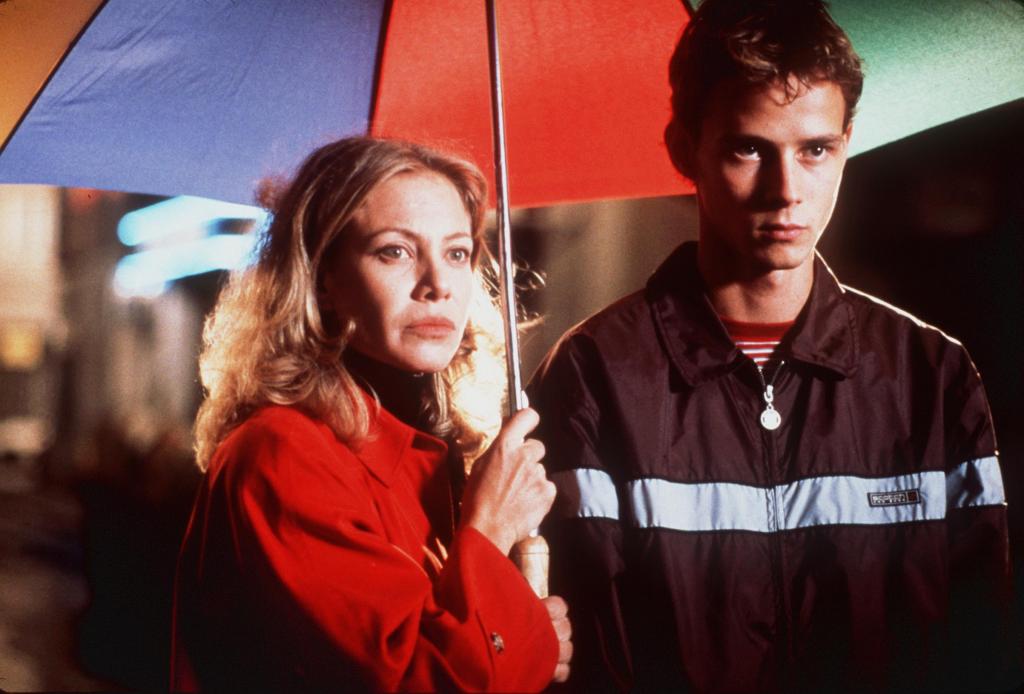
All About My Mother’s Manuela (Cecilia Roth) is an organ-donation coordinator in Madrid whose own life is hit by tragedy when her 17-year-old son Esteban (Eloy Azorín) is struck and killed in a hit-and-run. Learning that the boy died wanting to know about his absent father, a grieving Manuela travels to Barcelona to track down Esteban’s father, now a transgender woman named Lola (Toni Cantó). Over the next six months, Manuela becomes a surrogate mother of sorts to a young nun with HIV (Penélope Cruz) pregnant with Lola’s child. Roth is excellent as a mother who faces despair by opening her heart to others. Pedro Almodóvar’s magnificently raw melodrama is in the tradition of Joseph L. Mankiewicz’s All About Eve (1950) and Tennessee Williams’s play A Streetcar Named Desire, both of which receive prominent play here.
2. Aurora Greenway (Shirley MacLaine) in Terms of Endearment (1983, dir. James L. Brooks) Greenway in Terms of Endearment (1983, dir. James L. Brooks)
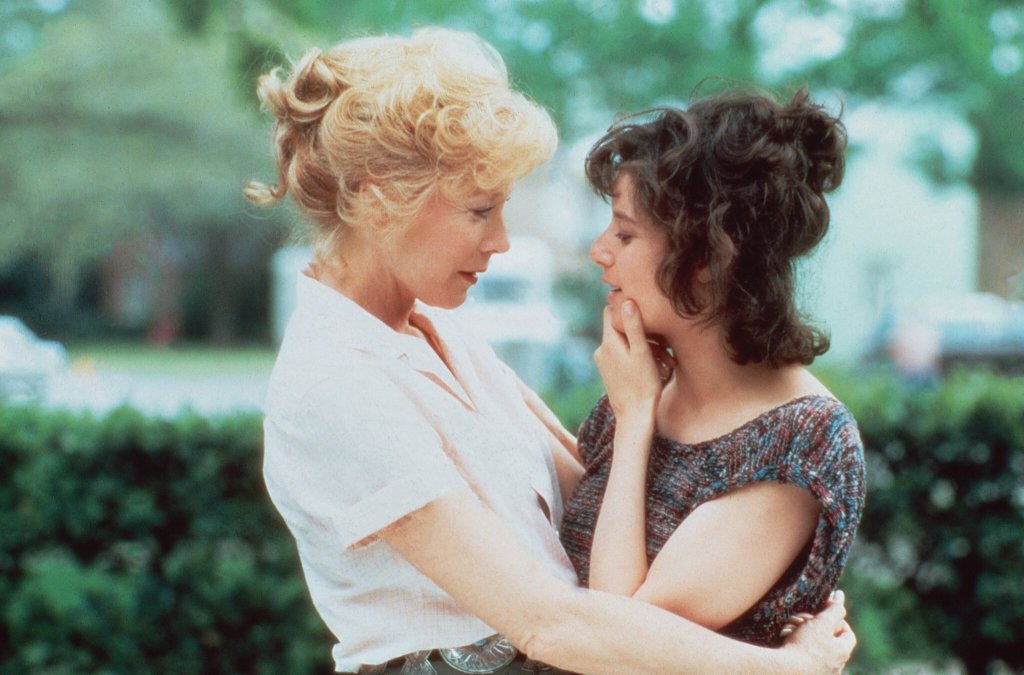
After conquering television with The Mary Tyler Moore Show, writer-director James L. Brooks gave movies a shot with this adaptation of a Larry McMurtry novel. It helped to have the likes of Shirley MacLaine, Debra Winger, and Jack Nicholson in lead roles. While MacLaine’s Aurora Greenway is maddeningly overprotective of her adult daughter Emma (Debra Winger), such maternal love does little to assuage her less flattering traits: supreme self-centeredness, overly righteous indignation, and merciless perfectionism. In other words, Aurora is complicated, and MacLaine tears into the character with gusto. She rightly won the Academy Award for Best Actress, beating out Terms of Endearment co-star Winger and Silkwood’s Meryl Streep. The film swept five Oscars total, including Best Picture and Best Director, making Brooks only the third person in Academy history to win as writer, director, and producer of the same film in one night. Seven years later, MacLaine played another ambivalent mom, this time with Streep as her daughter, in Mike Nichols’ Postcards from the Edge.
1. Mildred Pierce (Joan Crawford) in Mildred Pierce (1945, dir. Michael Curtiz)
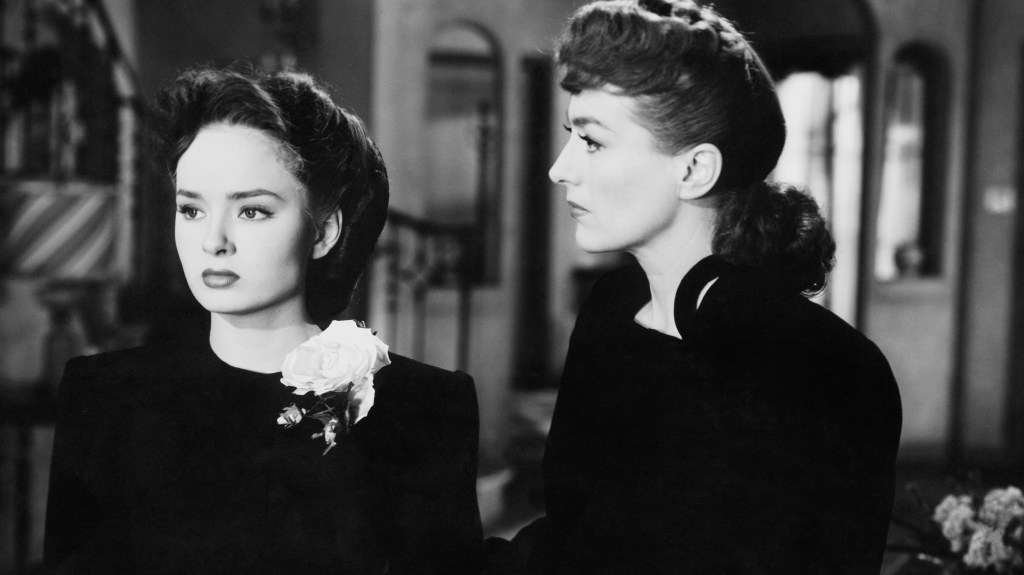
If Christina Crawford’s explosive memoir, Mommie Dearest, forever tainted the reputation of her movie-star mom, at least Joan Crawford’s legacy will always include Mildred Pierce. Adapted from a James M. Cain novel, Michael Curtiz’s noir resurrected Crawford’s career after leaving MGM for Warner Bros.—and as the cherry on top, her performance earned the Best Actress Oscar. The eponymous heroine is a tough-as-nails single mother whose business savvy is undercut by her slavish devotion to no-good, nasty daughter Veda (Ann Blyth). Cain loved Crawford’s portrayal, sending the actress a leather-bound copy of the book inscribed with praise for bringing his creation to life. The New York Times was less impressed. Its reviewer found it implausible that someone as smart as Mildred “could be so completely dominated by a selfish and grasping daughter who spells trouble in capital letters.” Hmm. The unnamed critic must have had limited interaction with motherhood. Mildred is a heartbreaking paradox: powerful enough to build a business empire but powerless to stop loving the daughter hellbent on destroying her.
(See more in The 15 best film noir.)
Honorable mention: Ripley (Sigourney Weaver) in Aliens (1986, dir. James Cameron), Charlotte Andergast (Ingrid Bergman) in Autumn Sonata (1978, dir. Ingmar Bergman), Nola Carveth (Samantha Eggar) in The Brood (1979, dir. David Cronenberg), Dolores Claiborne (Kathy Bates) in Dolores Claiborne (1995, dir. Taylor Hackford), Annie Johnson (Juanita Moore) in Imitation of Life (1959, dir. Douglas Sirk), Mrs. Bates (Anthony Perkins) in Psycho (1960, dir. Alfred Hitchcock), Sophie Zawistowska (Meryl Streep) in Sophie’s Choice (1982, dir. Alan J. Pakula), Stella Dallas (Barbara Stanwyck) in Stella Dallas (1937, dir. King Vidor), Eva Khatchadourian (Tilda Swinton) in We Need to Talk About Kevin (2011, dir. Lynne Ramsay), Ma Jarrett (Margaret Wycherly) in White Heat (1949, dir. Raoul Walsh)
 Cutting to the Chase with Phil Bacharach
5 responses to “10 memorable movie mothers”
[…] Ask any Korean War vet who served with Raymond Shaw and he will tell you without hesitation that Sgt. Shaw is “the kindest, bravest, warmest, most wonderful human being I’ve ever known.” The only thing is, Shaw is nothing of the sort. To be honest, the former platoon leader is kind of a prick. But The Manchurian Candidate, based on the novel by Richard Condon, reveals that the entire platoon, including Shaw, had been brainwashed in the war by Chinese communists in Manchuria. The collective delusion is part of a furtive plot aimed at installing a U.S. president who will soften up the nation for a communist takeover. The scheme even involves Shaw’s conniving mother (Angela Lansbury) and imbecilic stepfather (James Gregory), a commie-baiting U.S. senator à la Joe McCarthy. Poor Raymond Shaw is a sleeper assassin and doesn’t even know it. The idea of an American president duped into doing the bidding of a foreign superpower? Pure fantasy. Obviously. (See more in 10 memorable movie mothers.) […]
LikeLike
[…] Stephen King understood high school can be a real horror show. Part of what makes Brian De Palma’s adaptation of King’s first novel such an enduring chiller is that it taps into the angst of that institution. Carrie White (Sissy Spacek) is the outcast writ large, a girl so sheltered by her religious zealot of a mother that she thinks she is dying with the arrival of her first period. Her female classmates taunt the panicked girl by pelting her with tampons. Carrie’s high school is ruled by mean girls. “There are girls behind the scenes, pulling invisible wires, rigging elections, using their boyfriends as stalking horses,” King wrote in his treatise on horror, Danse Macabre. “Against such a backdrop, Carrie becomes doubly pitiful, because she is unable to do any of these things––she can only wait to be saved or damned by the actions of others.” (See more in 10 memorable movie mothers.) […]
LikeLike
[…] Arguably the most famous bathroom scene in movie history, Norman Bates’ (Anthony Perkins) knife attack on Marion Crane (Janet Leigh) in a motel shower took Alfred Hitchcock more than a week to shoot and consisted of 78 shots. The result is 45 seconds of terror that absolutely freaked out movie audiences. It is a masterclass of cinematic sleight-of-hand, of course. Despite what moviegoers think they saw, the knife never makes contact with Marion, nor do we see any nudity. The director was customarily painstaking in determining the right sound for a knife penetrating flesh. In Alfred Hitchcock and the Making of Psycho, Stephen Rebello notes how the director listened intently with closed eyes as a propman stabbed various types of melons. “When the demonstration table was littered with shredded fruit, Hitchcock opened his eyes, and intoned simply: ‘Casaba,’” writes Rebello. Chocolate syrup serves as Marion’s blood winding down the drain. Curiously, the sudden violence wasn’t the only thing that troubled censors, who were none too thrilled that Marion flushes a toilet to dispose of some incriminating papers. The Production Code frowned on showing toilets. (See more in 10 memorable movie mothers.) […]
LikeLike
[…] The mother of American slashers, Psycho forever changed the horror genre when Alfred Hitchcock unleashed it in the summer of 1960. Budgeted at less than $1 million and made with his television crew from Alfred Hitchcock Presents, the movie showcases a level of violence, particularly a certain shower scene, new to mainstream Hollywood. Hitch also deploys a fiendish trick of killing off its star, Janet Leigh, after spending 45 minutes making us care about her character, Marion Crane. But the misdirection doesn’t end there. In a sharp departure from the Robert Bloch novel on which the film is based, Anthony Perkins’ Norman Bates is the sweetest of psychopaths, a kindhearted bird enthusiast who loves his mother but just can’t help himself when a pretty blonde checks into his family’s secluded motel. With the exception of a labored, dated coda that spells out the movie’s pop psychology, Psycho is still a banger after all these years—and with only two on-screen murders, no less.(See more in The 10 best bathroom scenes in film and 10 memorable movie mothers.) […]
LikeLike
[…] Gangster movies are rife with bad guys who have a soft spot for mother, but White Heat’s Cody Jarrett is in a class by himself. As portrayed by James Cagney, Cody is to mama’s boys what Picasso was to cubism. He loves Ma Jarrett (Margaret Wycherly) with near-Oedipal fervor. She is the brains of his criminal gang, sure, but Cody treats Ma like royalty while he barks orders at his hot-but-trashy wife (Virginia Mayo) as if she were an indentured servant. White Heat is a whirling dervish of a film. Raoul Walsh, who Cagney had previously worked with on The Roaring Twenties (see #8) keeps the pace brisk and the vibe brutal, but most of the energy derives from the star; billed as his comeback, Cagney is fury incarnate. The man contorts his face into a fist. While the movie’s climax is rightly ingrained in pop culture (“Top o’ the world, Ma!”), few moments can rival the prison mess-hall scene when Cody learns of his mother’s death. He erupts in guttural howls that reportedly shocked the room crowded with extras posing as inmates.(See more in The 15 best film noir and 10 memorable movie mothers.) […]
LikeLike