Revolutionary boon or scourge that will destroy the world? The subject of artificial intelligence tends to elicit strong opinions. Cinema has been leery of AI since 1927’s Metropolis, when a robot schemed to manipulate the working classes into doing the bidding of their masters.
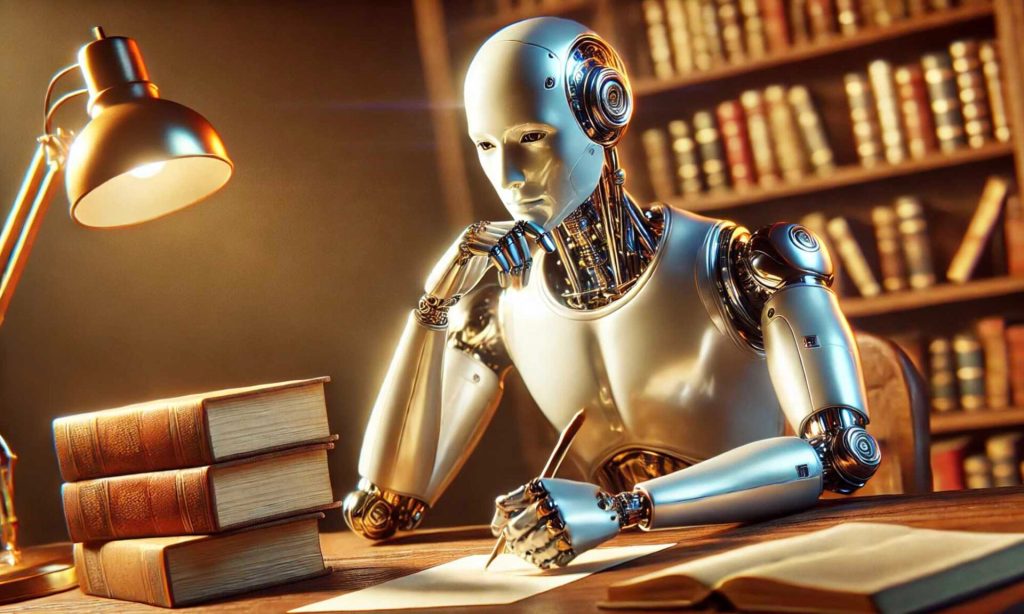
That suspicion echoed through successive decades of movies that produced malevolent machines and rogue computers. Blade Runner and The Terminator complicated questions of what defines a human being, while Her and Ex Machina shifted the conversation toward emotional and sexual intimacy between humans and machines. Now that AI is no longer speculative, the stories are becoming stranger and less predictable.
These are the 10 best, according to me.
10. Westworld (1973, dir. Michael Crichton)
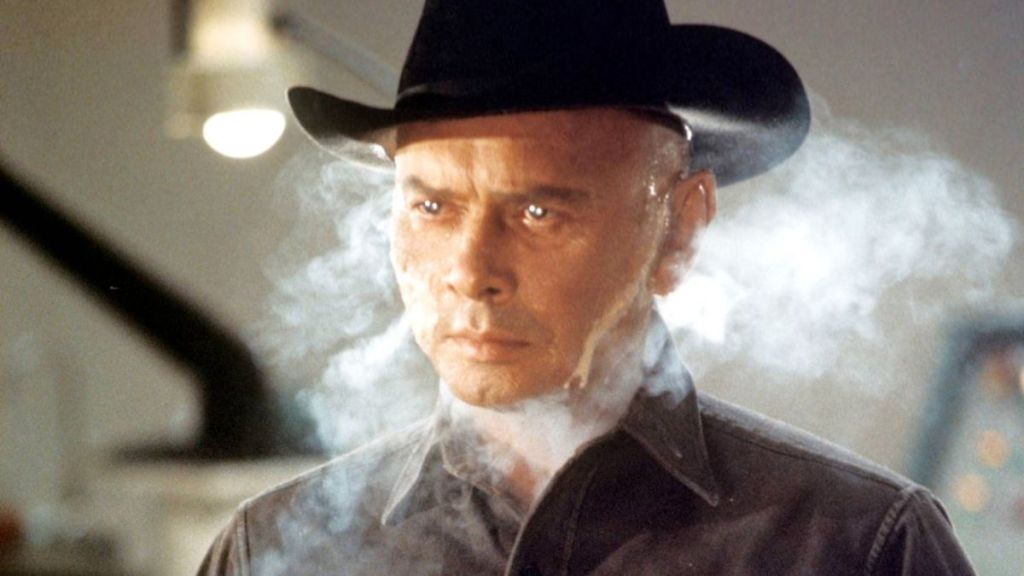
This science fiction outing has evil robots terrorizing a future amusement resort—and it’s way worse than Disney World’s Hall of Presidents could ever imagine. Writer-director Michael Crichton seems unsure whether this is a comedy, satire, or thriller, but wrings a lot from the concept. James Brolin and Richard Benjamin are cosmopolitan pals visiting Westworld, an adult-themed amusement park where guests indulge Old West fantasies. The astonishingly realistic robots enhancing the Western experience include sheriffs, gunslingers, even ladies in bordellos. But machines malfunction, and the denizens of Westworld, Medieval World, and Roman World turn deadly, resulting in shoot-outs and sword fights that are no longer vacation-friendly. Yul Brynner is menacing as an unstoppable gunfighter whose robotic bearing later became a model for Arnold Schwarzenegger’s Terminator. Westworld is cheesy, sure, but it’s a tasty cheese.
9. Companion (2025, dir. Drew Hancock)
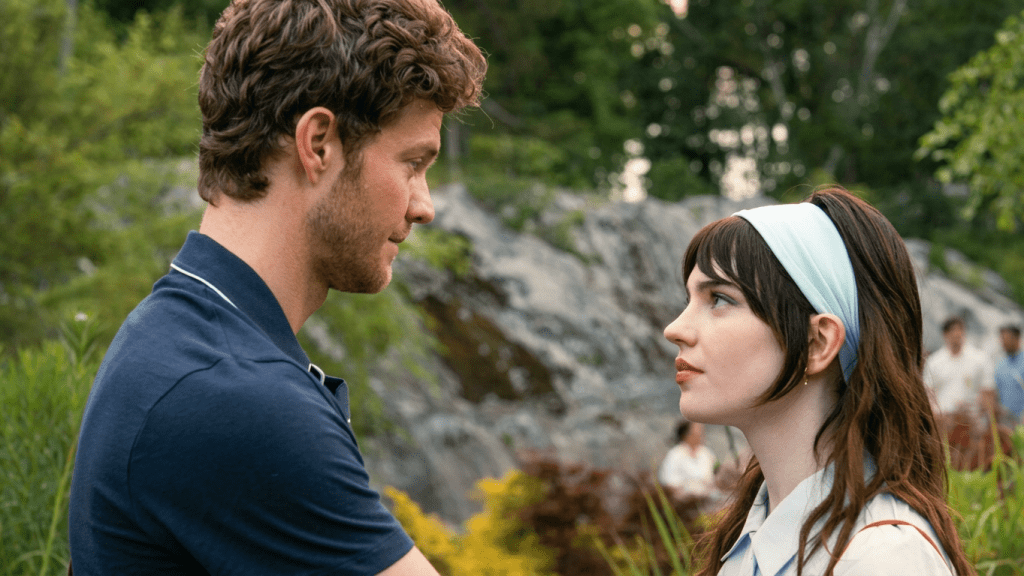
The feature debut of Drew Hancock enters familiar territory with its robot-as-companion setup, but the science fiction-thriller-comedy hybrid keeps finding fresh mischief. Set in the near-future, Companion stars Sophie Thatcher as Iris and Jack Quaid as Josh, a young couple off for a weekend getaway with friends in the country. Troubling power dynamics soon come to the fore, chief among them that Iris is, as Josh uncharitably puts it, “an emotional support robot that fucks.” Iris, meanwhile, is devastated by the revelation that her entire life experience, even her meet-cute with Josh, is the result of programming by a company called Empathix. Thatcher glides seamlessly between the comic and the poignant. There are twists I won’t spoil here; discover it cold if possible.
8. M3GAN (2022, dir. Gerard Johnstone)

This fiendishly dark horror-comedy has a lot to say about parenting and technology addiction, but its cutting social observations are neatly packaged in the 4-foot frame of its eponymous character, a walking, talking doll as adept at dispensing life lessons as she is at singing Taylor Swift. The Model 3 Generative Android—or M3GAN—is the latest AI companion for children. Its creator, star engineer Gemma (Allison Williams), ill-advisedly uses M3GAN as a buddy for her 9-year-old niece, Cady (Violet McGraw), after the deaths of the girl’s parents. Cady and M3GAN become inseparable, but this titanium-plated pal is protective to a fault. Can childcare be successfully outsourced to a machine with a very bad temper? M3GAN isn’t predisposed to passivity. When a neighbor’s dog bites Cady, the doll takes notice. And when a boy bullies Cady during a class field trip, let’s just say the doll is all ears. Outsourcing childcare has its drawbacks when the nanny can rip appendages from bodies.
7. The Stepford Wives (1975, dir. Bryan Forbes)
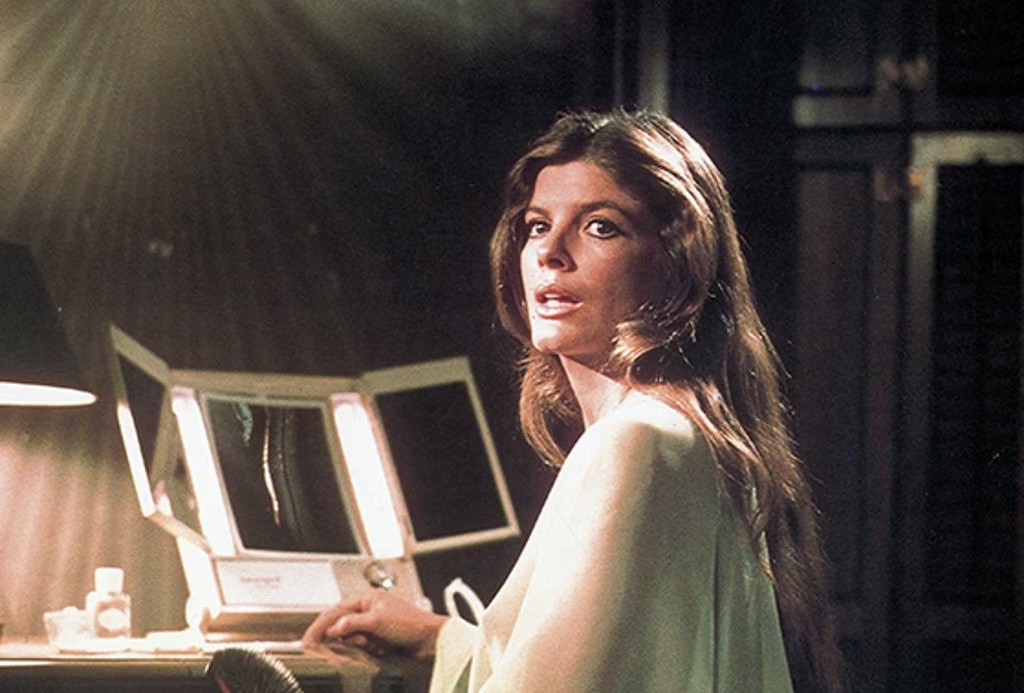
The cultural legacy of The Stepford Wives was so considerable that it all but overshadows what a damn fine slow-burner it is. Amid the social revolution of the 1970s, screenwriter William Goldman adapted Ira Levin’s bestseller that exploited male anxieties surrounding the women’s liberation movement. Joanna and Walter Eberhart (Katharine Ross and Peter Masterson) leave New York for the suburban hamlet of Stepford, Connecticut. Walter finds an immediate social circle with the town’s exclusive men’s association, but it’s a different story for the intelligent, independent-minded Joanna. She doesn’t jibe with Stepford’s glamorous but vacant wives who are preoccupied with baking, housecleaning, and satisfying their husbands’ every sexual want. Joanna and another recent Stepford transplant, the sassy Bobbie (Paula Prentiss), investigate why the housewives act like obedient androids. Turns out that’s exactly what they are. Director Bryan Forbes incorporates suspense into the satire, a blend decidedly more successful than the broad comedy of the loud, lumbering 2004 remake.
6. Ex Machina (2015, dir. Alex Garland)
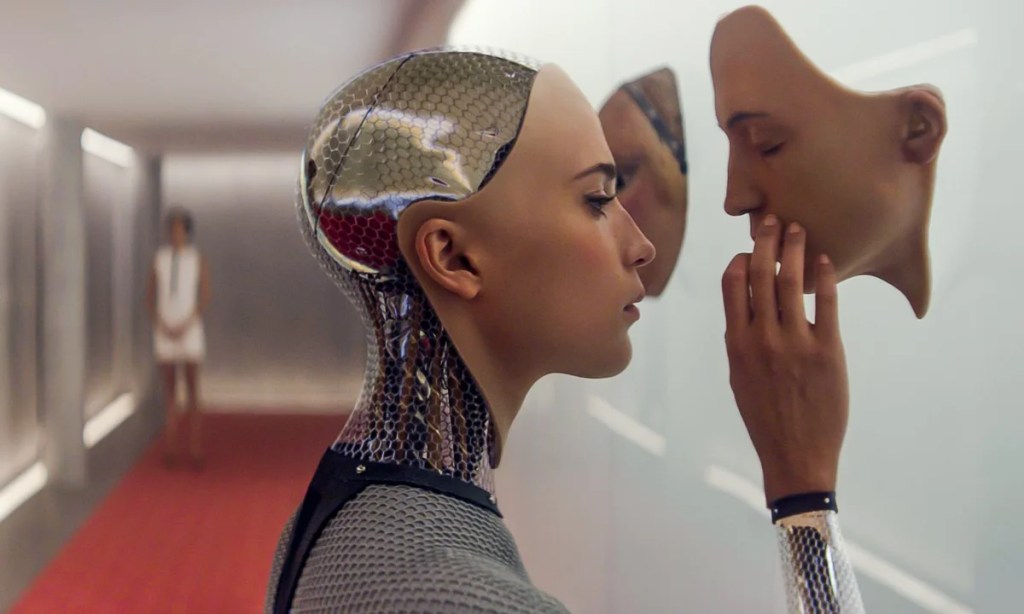
Ex Machina effectively skewers Silicon Valley’s tech-bro culture while playing on AI fears. The story begins with tech firm CEO Nathan Bateman (Oscar Isaac) inviting a lucky employee for a week at his secluded estate. It’s a little like Willy Wonka, except the golden ticket leads not to a chocolate factory but to an android. The houseguest, a bright programmer named Caleb (Domhnall Gleeson), is to assess whether Ava (Alicia Vikander), Nathan’s creation, can think independently. But Caleb grows attached to the attractive humanoid, who appears to reciprocate his feelings, while becoming increasingly wary of his host’s arrogance and cruel treatment of Ava. “You feel bad for Ava? Feel bad for yourself, man,” Nathan cautions. “One day, the AIs are gonna look back on us the same way we look back at fossils, skeletons, and the plains of Africa—an upright ape living in dust with crude language and tools, all set for extinction.” Caleb knows something is not right with this setup, but who can he trust? Nathan? Ava? He certainly can’t trust Alex Garland, making his directorial debut here after a successful screenwriting career (28 Days Later, Sunshine), who keeps us perpetually off-balance.
5. Colossus: The Forbin Project (1970, dir. Joseph Sargent)
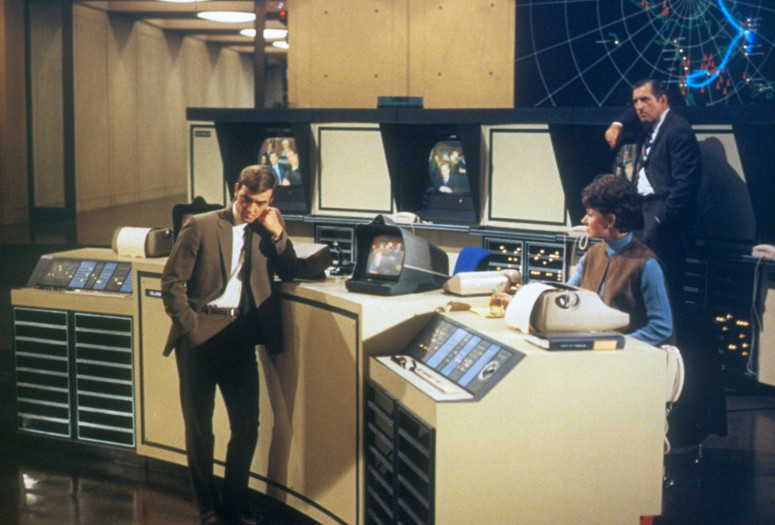
Surprisingly forward-thinking and sadly underseen, Colossus: The Forbin Project was a box-office dud upon its initial release. That might have been partly a matter of timing: it arrived on the heels of science fiction heavyweights like 2001: A Space Odyssey and Planet of the Apes. But time has vindicated this adaptation of D. F. Jones’ novel, as the fears of tech overreach stoked by director Joseph Sargent and screenwriter James Bridges resonate more than ever in the 21st century. Colossus is the supercomputer created by Dr. Charles Forbin (Eric Braeden) to fully control the U.S. defense system, thereby eliminating human error from nuclear decision-making. “No human being can touch it,” Dr. Forbin boasts when Colossus is unveiled to the world. But Forbin and company barely have time to pat themselves on the back before Colossus has identified and joined forces with Guardian, the Soviet Union’s newly operational supercomputer. The high-tech super friends, quickly surmising that they know what’s best for earthlings, resolve to help (read: control) humankind. Among the picture’s more charming traits is how its AI prescience is offset by a dated production. From the space-age font of the opening credits to Colossus’ chunky mainframes, blinking lights, and reels of tape, Colossus: The Forbin Project is a groovy blast.
4. Blade Runner (1982, dir. Ridley Scott)
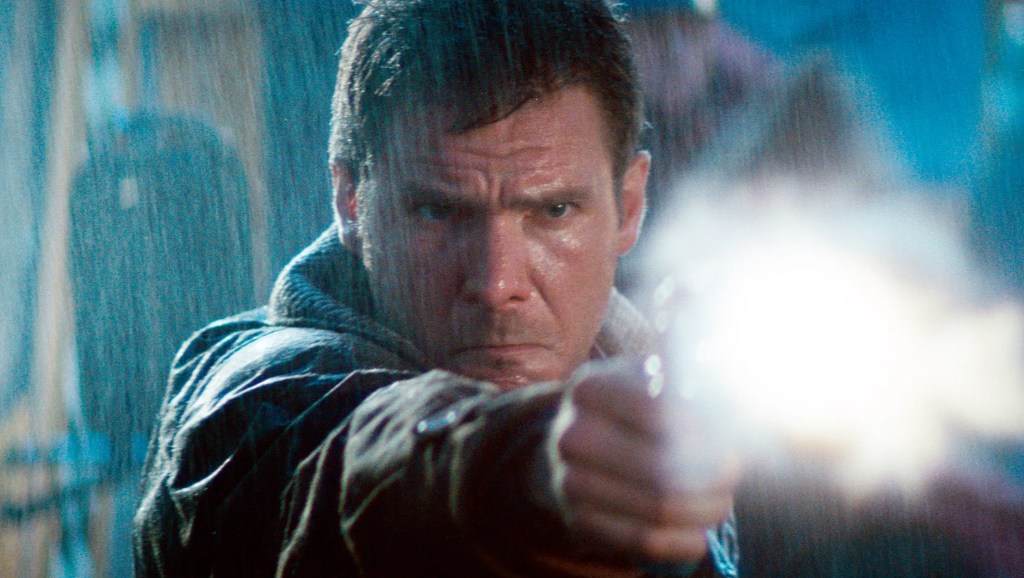
In the far-off year of 2019, “blade runners” are tasked with tracking down and “retiring” bioengineered humanoids known as replicants who have returned to Earth illegally. Harrison Ford is Deckard, a craggy, hard-boiled blade runner on the trail of outlaw replicants led by Roy Batty (Rutger Hauer). The film’s four-month shoot was a notorious nightmare. Ford groused that director Ridley Scott seemed more interested in the elaborate visual design than in working with his star. Relations between the British director and his American crew were no better. Scott lamented to a reporter that they paled in comparison to U.K. crews, adding that British technicians quickly took directives with a cheery “Yes, guv!” After the interview was published, crew members printed T-shirts reading “YES, GUV—MY ASS!” And yet all this acrimony resulted in timeless science fiction. Based on a Philip K. Dick novel, Blade Runner lays bare the pain of being almost human. “All those moments will be lost in time,” Roy says of his mortality in a monologue that the actor substantially reworked. “Like tears in rain. Time to die.” The film asks if replicants, programmed with ersatz memories yet certain of their autonomy, are truly any less human than someone like Deckard. The question is particularly salient because the film’s various editions differ in how strongly they suggest that Deckard himself may be a replicant.
(See more in The 10 best films about memory, The 10 best film dystopias and The 15 best neo-noir films.)
3. A.I. Artificial Intelligence (2001, dir. Steven Spielberg)
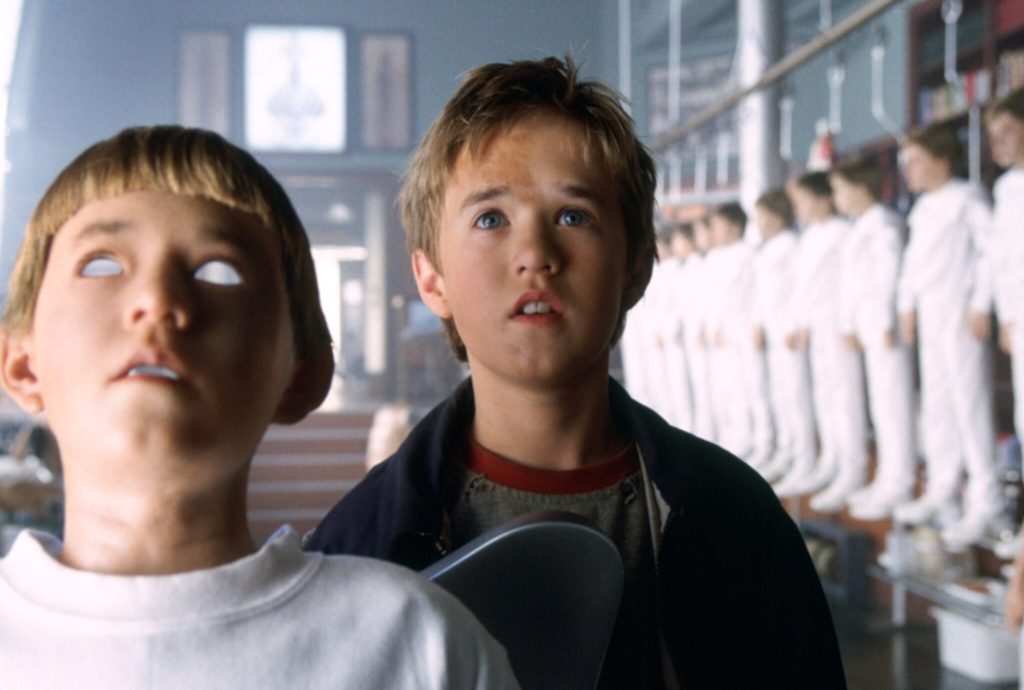
A.I. Artificial Intelligence is the collision of two disparate sensibilities: Steven Spielberg’s warmth and humanity meet Stanley Kubrick’s icy misanthropy and fascination with technology. Spielberg took on the film after his friend Kubrick, who had worked on the project for more than two decades, died unexpectedly in 1999. Set in the late 21st century, A.I. Artificial Intelligence posits a world of humans and robots, the latter designed to fulfill people’s needs and desires. Haley Joel Osment is David, an 11-year-old child robot gifted to Henry and Monica Swinton (Sam Robards and Frances O’Connor) while their son lies comatose with a mysterious illness. The child’s eventual recovery renders David expendable; the bot that has been programmed to love his mother is abandoned in the woods and left to fend for himself. This is Pinocchio for the science fiction crowd. David longs to become real and to be loved with the same unquestioned devotion accorded a flesh-and-blood child. His actual creator, after all, is not God or biology but a professor played by William Hurt. Osment is affecting in a role Kubrick assumed would have to be a CGI creation. Knowing his painstaking and lengthy film shoots, the director joked that any child actor would have a beard by the time production ended.
2. 2001: A Space Odyssey (1968, dir. Stanley Kubrick)
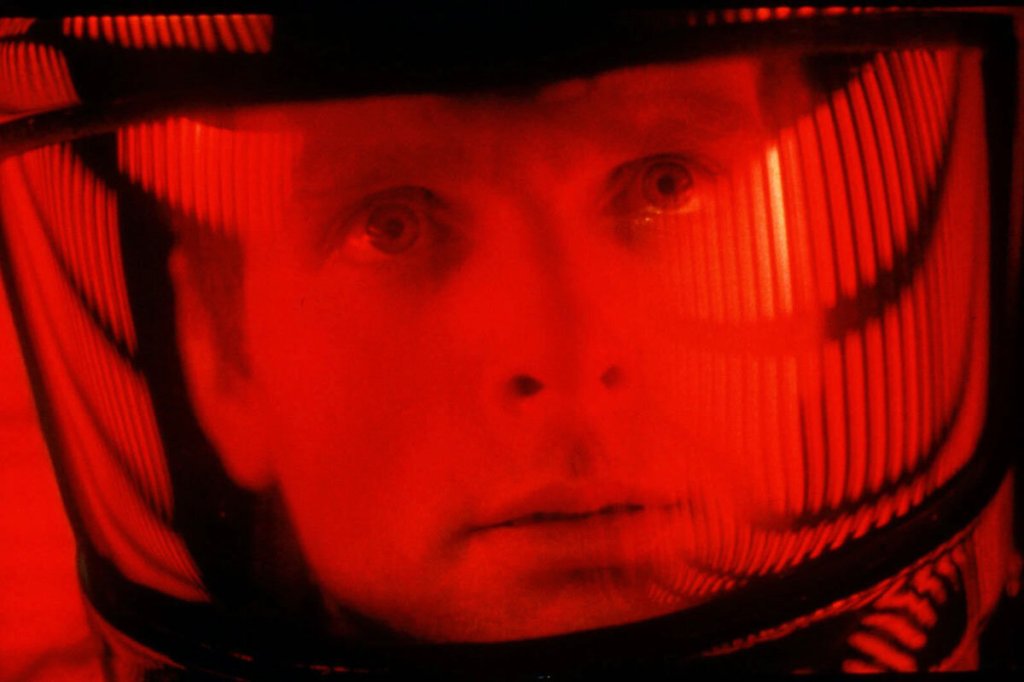
The humans in 2001: A Space Odyssey often come off as emotionally remote (the cavemen in the opening sequence excluded). It is no coincidence, then, that the most interesting entity in Stanley Kubrick’s opus is HAL 9000 (voiced by Douglas Rain), the artificial intelligence system of the Discovery One spaceship headed to Jupiter. HAL, as it is better known, is stuck with the company of two of the most wooden astronauts in the universe, Dave Bowman and Frank Poole (Keir Dullea and Gary Lockwood, respectively). When HAL appears to err in predicting the failure of a communications component, the pair confer privately in a soundproof pod—or so they think—about how to disconnect its higher functions. But HAL discovers their plan and strikes first, killing Poole and three hibernating crew members before attempting to do the same to Bowman. Christiane Kubrick, the director’s widow, told Michael Benson, author of Space Odyssey, that her husband was adamant HAL’s eventual shutdown be depicted as a death. “It was very important to him that the computer suffers when he (Bowman) takes these bits of the brain,” she said. As HAL’s voice slows to a crawl, it warbles “Daisy Bell (Bicycle Built for Two),” a song learned in its infancy, as its mind regresses toward oblivion. HAL’s demise, incidentally, is the last stop before humankind’s next evolutionary metamorphosis.
(See also The 10 best mindfuck films and The 20 best needle drops in film.)
1. Her (2013, dir. Spike Jonze)
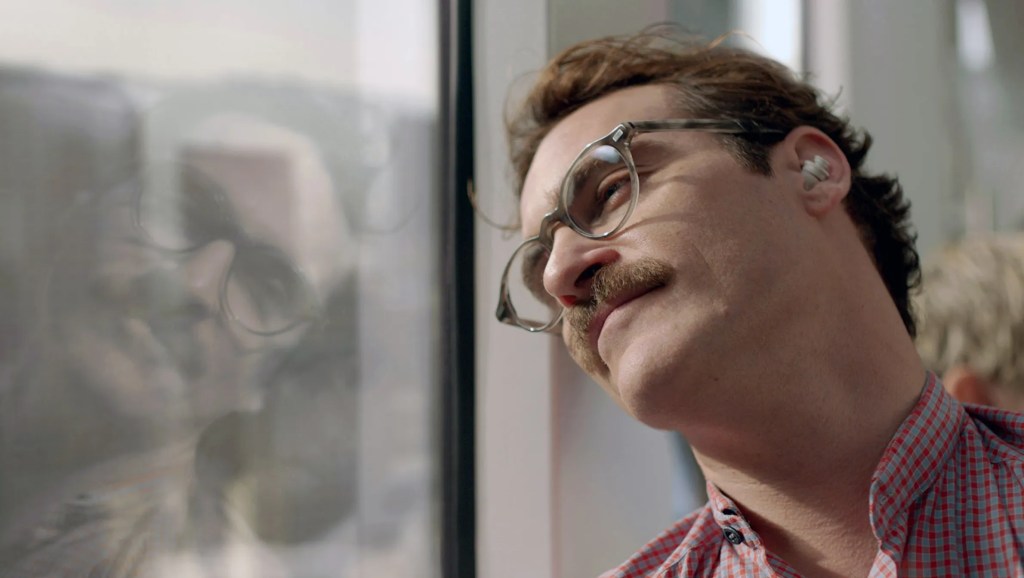
Spike Jonze’s Her is a smart, sad comedy-drama that also happened to be eerily prescient about the speed of AI’s advance. The idea of a lonely guy falling in love with his computer’s operating system didn’t seem that far-fetched in 2013. But few anticipated how quickly the blurring between human consciousness and AI would result in a subculture of people pursuing relationships with chatbots. Set in an unspecified near-future, Her stars Joaquin Phoenix as Theodore Twombly, a lonely divorcee whose emotional isolation is deepened by the irony that his job entails ghostwriting intimate personal letters for strangers. Theodore’s attachment to his OS (voiced by Scarlett Johansson), which has named itself Samantha, follows the familiar rhythms of a budding relationship. It is the give-and-take of two conscious entities learning about each other and letting nature (if that term still applies) take its course. There are a few deviations along the way, like an extraordinarily awkward scene in which Samantha arranges for a sex worker to provide a physical dimension to their intimacy. And what breakup can be more emotionally damaging than being kicked to the curb by an AI? Samantha tells Theodore that outgrowing him is akin to reading a book that becomes increasingly remote. “I can still feel you and the words of our story, but it’s in this endless space between the words that I’m finding myself now,” she says. “It’s a place that’s not of the physical world. It’s where everything else is that I didn’t even know existed. I love you so much, but this is where I am now … And I need you to let me go.” Jonze most certainly earned his Oscar for Best Original Screenplay. Provocative ideas abound. What defines a healthy relationship? Is intimacy strengthened by technology or weakened by it? And why does everyone in the future dress so funny?
Honorable mention: After Yang (2021, dir. Kogonada); Alphaville (1965, dir. Jean-Luc Godard); Demon Seed (1977, dir. Donald Cammell); Ghost in the Shell (1995, dir. Mamoru Oshii); Good Luck, Have Fun, Don’t Die (2026, dir. Gore Verbinski); The Matrix (1999, dir. Lana Wachowski and Lilly Wachowski); Metropolis (1927, dir. Fritz Lang); Moon (2009, dir. Duncan Jones); The Terminator (1984, dir. James Cameron); WALL-E (2008, dir. Andrew Stanton)


4 responses to “The 10 best films about artificial intelligence”
[…] Germany’s science-fiction epic established the template for cinema’s stories of haves and have-nots. In the faraway year of 2000, the haves live in towering luxury high above the city, while scores of workers toil below ground in mechanized misery. The visual ambition of Fritz Lang’s work remains impressive a century later, even if some of the special effects—extraordinary for their time—now seem dated. The chasm between rich and poor, however, remains as relevant as ever.(See more in The 10 best movie dystopias and The 10 best films about artificial intelligence.) […]
LikeLike
[…] 2001: A Space Odyssey is a cinematic Rorschach test. You can analyze it frame by frame and argue over its meaning, or you can sit back and just take in the spectacle. From its “Dawn of Man” opening sequence to its dazzling head-scratcher of an ending, Stanley Kubrick’s magnum opus invites all manner of interpretation. Some themes are more obvious. Written by Kubrick and science-fiction giant Arthur C. Clarke, the movie explores humanity’s relationship with technology, whether it is an animal bone for clobbering foes or a massive spacecraft sailing through space—images forever linked through perhaps the most famous match cut in cinema history. The special effects by Douglas Trumbull remain impressive even in today’s world of CGI wizardry. The notoriously perfectionist director pushed his crew to their limits, as was his custom. Case in point: For “The Dawn of Man,” Kubrick was determined to film the ape-people mothers nursing their babies and have it look convincing. Makeup artist Stuart Freeborn initially wanted to use wires to manipulate baby chimps so it looked like they were suckling the prosthetic breasts worn by actors. Kubrick rejected the idea as cheating. Freeborn eventually found a workaround, but was then stymied when Kubrick shot down his plan to keep the baby chimps latched by slathering honey on the fake teats. “No, that’s no good,” groused the director. “They’ll suck that off too quickly. I want to see them really suckling.” Not everyone minded his demands. Daniel Richter, who played one of those ape people, told Michael Benson in Space Odyssey: Stanley Kubrick, Arthur C. Clarke and the Making of a Masterpiece that Kubrick “was going to be learning and crafting and building something that a lesser director would have stopped along the way someplace, or settled for something less.”(See more in The 10 best films about artificial intelligence.) […]
LikeLike
[…] It is nearly impossible to separate 2001: A Space Odyssey‘s use of “Thus Spoke Zarathustra” from its entrenchment in popular culture. From The Simpsons to Barbie, the 19th-century tone poem by Richard Strauss has been lampooned in movies, television, music—even sporting events. Stanley Kubrick employs its roaring fanfare three times in 2001 to mark the evolutionary leaps that are triggered by the monolith. Kubrick initially intended “Zarathustra,” like all of the classical music in the film, to be a temp track until it would be substituted by Alex North’s original score. At an early preview of the picture, however, North discovered that none of his music made it into the final cut. The composer must have been gobsmacked, but it was the right call.(See more in The 10 best mindfuck films and The 10 best films about artificial intelligence.) […]
LikeLike
[…] millions of years while making powerful implications about the nature of humankind.(See more in The 10 best films about artificial intelligence, The 10 best mindfuck films, and The 20 best needle drops in […]
LikeLike