“Talking about dreams is like talking about movies, since the cinema uses the language of dreams,” mused the great Italian filmmaker Federico Fellini. “Years can pass in a second and you can hop from one place to another. It’s a language made of image.” It only makes sense, then, that a medium with such similarities to dreaming would have an affinity for exploring the subconscious. Here are 10 of the best films to explore dreams.
10. Last Night in Soho (2021, dir. Edgar Wright)

Ellie Turner (Thomasin McKenzie) is a young woman who moves from the English countryside to London, her head swimming with fantasies of the Swinging ’60s. Even her sleep in the big city becomes vivid. In Ellie’s dreams, she slips through a mirror and into the life of Sandy (Anya Taylor-Joy), a sophisticated singer determined to make her mark in Soho. Alas, the fantasy curdles when Sandy is pulled into the neighborhood’s seamy underbelly, and Ellie’s visions start leaking into her waking life. Despite a wobbly third act, Last Night in Soho soars whenever director Edgar Wright surrenders to the film’s doppelgänger concept and its glamorous, neon-lit dream of London’s past.
9. Waking Life (2001, dir. Richard Linklater)
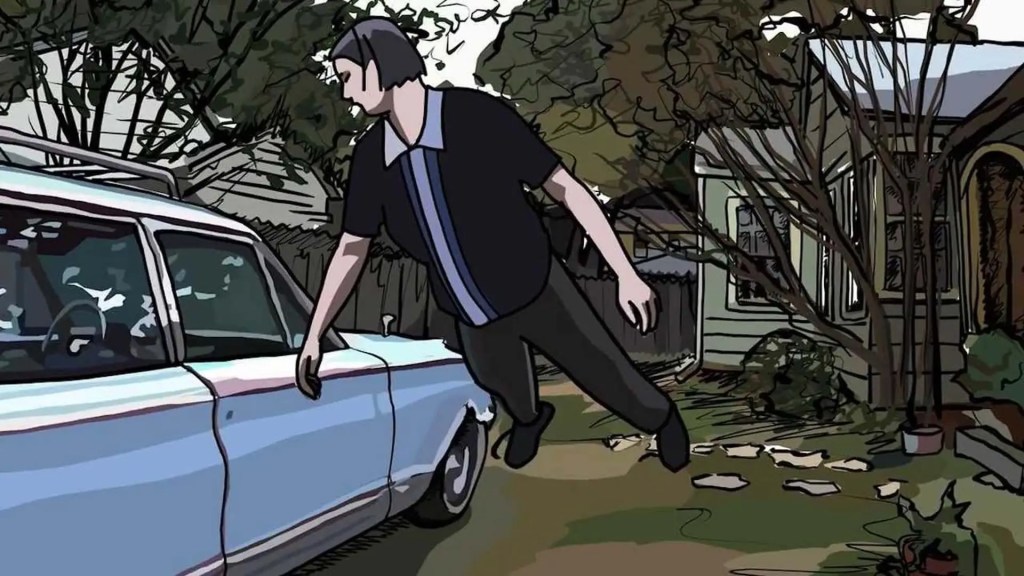
Richard Linklater sought to replicate the feeling of dreaming in Waking Life. In doing so, he turned to rotoscoping, in which animators trace over live-action footage. It is a largely impressionistic work in which a nameless young man (Wiley Wiggins) experiences lucid dreaming as he drifts through philosophical conversations. Rotoscoping is a mixed bag here. It allows flights of magical realism, but the squigglyness can induce motion sickness. Linklater loves smart talk, and there’s a lot of it. “We feel cleansed of boredom, indifference, futility and the deadening tyranny of the mundane,” Roger Ebert wrote of the film’s conversations. Characters discuss topics ranging from the nature of dreams to the limitations of language and anything else you might overhear in a college dorm after a few edibles. Pretentious or thought-provoking—like those edibles, your mileage for Waking Life will vary.
8. Paprika (2006, dir. Satoshi Kon)

Based on a novel by Yasutaka Tsutsui, this anime from Japan’s Satoshi Kon is a literal head trip. Densely plotted and visually arresting, the mind-bender centers on a clever idea: a machine that allows psychotherapists to enter the dreamscapes of patients. When a prototype for the device, called the DC Mini, is stolen, the body count begins to mount while dreams and physical reality bleed into one another. Dr. Atsuko Chiba (voiced by Megumi Hayashibara), a therapist with the dreamworld alter ego Paprika, sets out to track down the thief. It was the last movie from Kon; he died of pancreatic cancer in 2010 at age 46. Christopher Nolan’s Inception (see #1) may well owe something to this more hallucinogenic and cerebral predecessor.
7. Spellbound (1945, dir. Alfred Hitchcock)
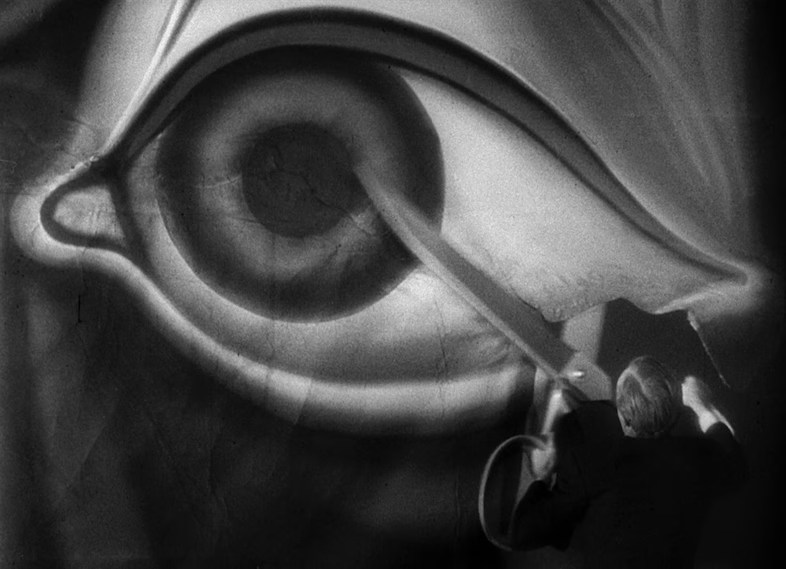
Spellbound is a relatively standard Alfred Hitchcock psychological thriller—until Salvador Dalí turns up. Gregory Peck plays an amnesiac who may or may not have murdered a doctor he is now pretending to be; Ingrid Bergman plays an all-business psychiatrist who falls for him and wants to unlock his trauma. Hitch knew what he was doing when he hired Dalí to design a dream sequence recounted in hypnosis. The great surrealist didn’t disappoint: giant eyes become curtains that in turn are shredded by oversized scissors; faceless beings play blackjack with enormous cards. Some ideas, such as 15 grand pianos suspended in midair and a statue of Ingrid Bergman transforming into swarms of ants, were too costly to shoot. Producer David O. Selznick ordered the sequence trimmed for budgetary reasons. While Spellbound’s sexism and pop psychology haven’t aged well, its dream remains … well, dreamy.
6. A Nightmare on Elm Street (1984, dir. Wes Craven)
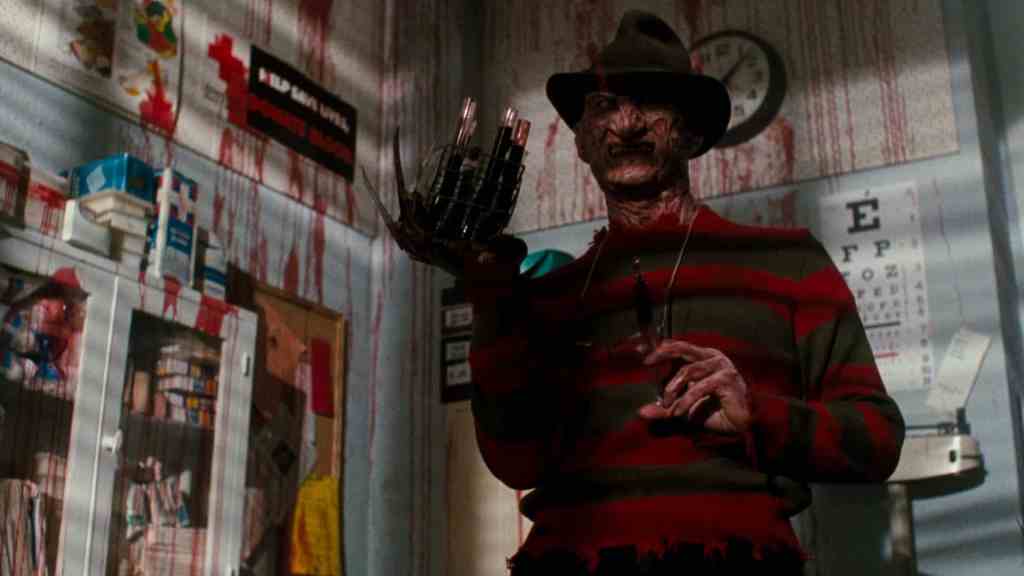
How could this horror classic not be here? As deceased serial killer Freddy Krueger, Robert Englund surely fueled nightmares for millions of moviegoers. In A Nightmare on Elm Street, he racks up corpses by invading teenagers’ dreams, reflecting Wes Craven’s understanding of how vulnerable the subconscious is and all the nasty little secrets, fears and traumas it has squirreled away. Freddy’s horribly burned face and a glove of razor claws were scary enough, but Englund imbued the character with a hint of perversion. “If someone gets into your subconscious, it’s like they’re in your underwear drawer,” he told The Guardian in 2019. “Teenagers always think about sex, so Freddy was a natural extension of that.” That doesn’t mean Freddy Krueger was anyone’s idea of a wet dream, except possibly for the studio execs who got rich from the franchise it spawned.
(See more in The 15 best slasher movies.)
5. The Wizard of Oz (1939, dir. Victor Fleming)
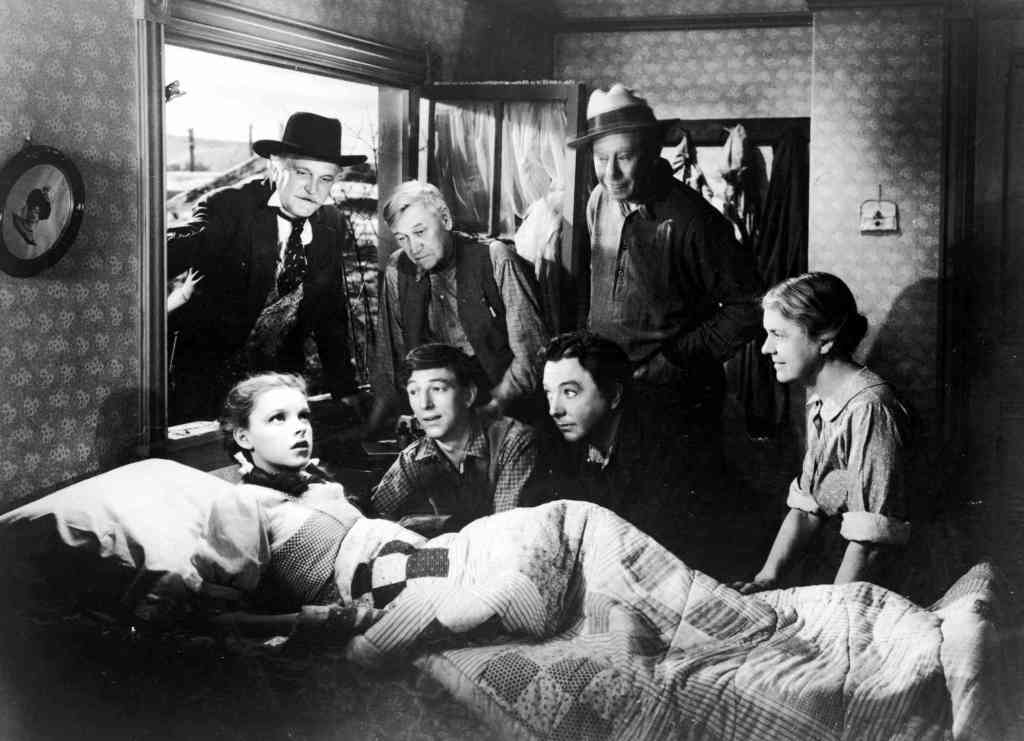
Was Oz simply Dorothy’s dream? The Wizard of Oz practically dares us to read Oz, the Emerald City and the rest of it as pure wish-fulfillment: Auntie Em (Clara Blandick) turns up in Oz, as does that odd duck Professor Marvel (Frank Morgan), and so do the farmhands—Hickory, Hunk, and Zeke (Jack Haley, Ray Bolger and Bert Lahr)—reincarnated as Dorothy’s companions on the yellow brick road. While L. Frank Baum’s book depicts Oz as real, MGM executives insisted on framing Dorothy’s adventure as a dream. Evidently no one was concerned about the optics of 16-year-old Judy Garland waking from a deep sleep and telling the three strapping men at her bedside how she had just dreamed about them.
4. Dream Scenario (2023, dir. Kristoffer Borgli)
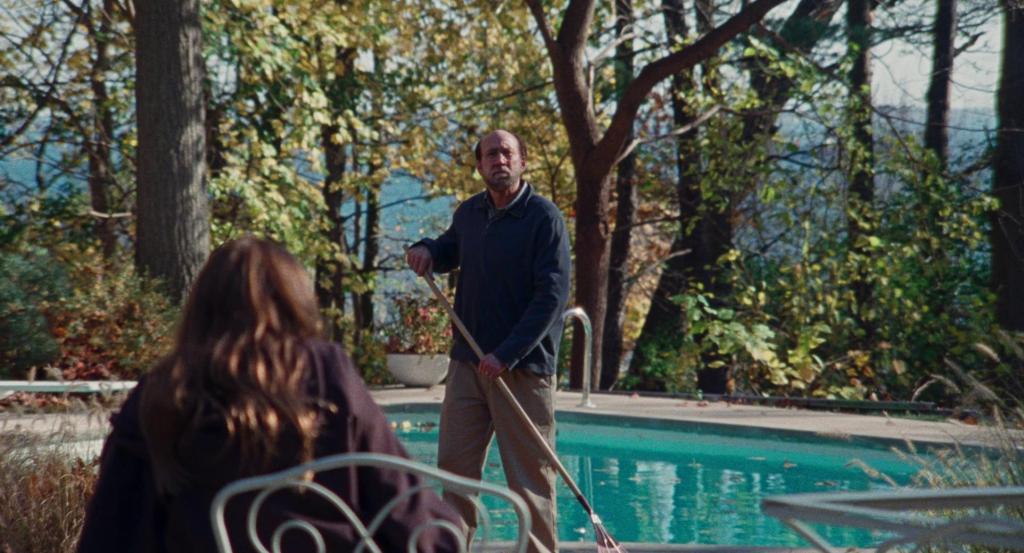
Even by Nicolas Cage standards, this surreal Cage vehicle is stranger than most. In Dream Scenario, he is Paul Matthews, a meek, balding college professor dismayed to discover that he has started showing up in the dreams of everyone around him, even people he doesn’t know. He’s a little disappointed to learn he’s not exactly a man of their dreams—Paul’s appearances are largely mundane affairs. The phenomenon still makes him an unlikely celebrity. Things take a darker turn when dream Paul morphs into something dangerously violent. Nightmare Paul understandably filters into how the prof is perceived during people’s waking hours. Students refuse to attend his classes. His wife loses her job. Kristoffer Borgli’s mischievous black comedy probes uncomfortable questions of perception, responsibility and how little control we have over either.
3. Mirror (1975, dir. Andrei Tarkovsky)

Andrei Tarkovsky’s quasi-autobiographical film will both entrance and frustrate moviegoers. It brings us into the mind of a man named Aleksei, who is dying and reflecting on the shards of his life. “Words can’t really express everything a person feels,” he says in voice-over during a phone conversation with his mother. This Soviet masterpiece embraces the mystery of feeling and thought. Resolutely nonlinear, Mirror is a collage of memories, dreams and disparate thoughts that span the years preceding World War II through the early 1970s. Tarkovsky embraces the fluidity of dream logic. Remembrances shift into dreams and vice versa. Time expands and contracts. Throughout, the film offers indelible imagery in both color and black-and-white: gusts of wind sweeping through tall grass, a woman levitating over a bed, a burning barn, sheets of water crashing through a ceiling to demolish a room, a flickering lamp. There is grainy newsreel footage. Hands, presumably Aleksei’s, flip through the pages of an art book. The filmmaker’s mother plays Aleksei’s mother in old age, while his father, poet Arseny Tarkovsky, recites his poetry in occasional voice-over. Margarita Terekhova portrays both Aleksei’s mother and his ex-wife. Many movies explore the dream state, but Mirror immerses the viewer in its seductive, demanding universe.
(See more in The 10 best films about memory.)
2. Dreams (1990, dir. Akira Kurosawa)
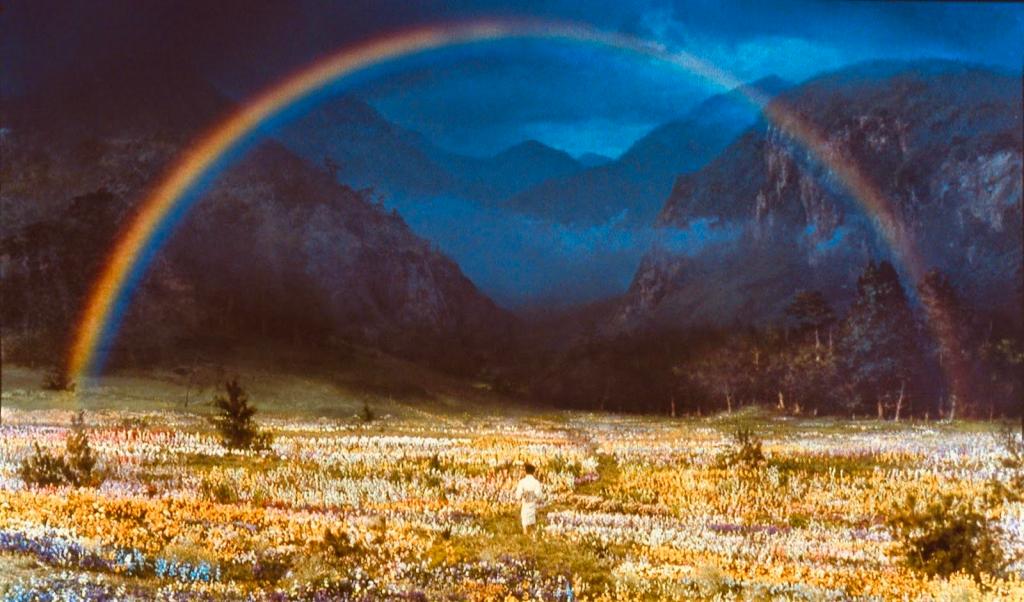
Akira Kurosawa’s inventiveness didn’t even take a break for sleep. In Dreams, the master filmmaker who kept meticulous dream journals throughout his life committed eight such dreams as filmed vignettes. No anxiety dreams of taking final exams in your underwear for Kurosawa—no sir. A wedding procession of foxes moves furtively through a forest. Dolls come to life amid the blossoming of a peach orchard. A man wanders into the art of Vincent van Gogh. A war veteran faces the ghostly faces of a fallen platoon. Much of Dreams is about humanity’s desecration of earth, reflecting his wariness of modern technology—particularly nuclear energy—all approached with lyricism and punctuated by surrealistic flourishes. If it occasionally feels heavy-handed, consider how the state of the planet has deteriorated since the movie’s 1990 release, and one might argue Kurosawa wasn’t emphatic enough. The film’s final dream, set in a serene village where a waterwheel turns beside a clear stream and an elderly funeral procession becomes a celebration, offers Kurosawa’s vision of how humanity might yet live—quietly, gratefully and in harmony with the natural world.
1. Inception (2010, dir. Christopher Nolan)
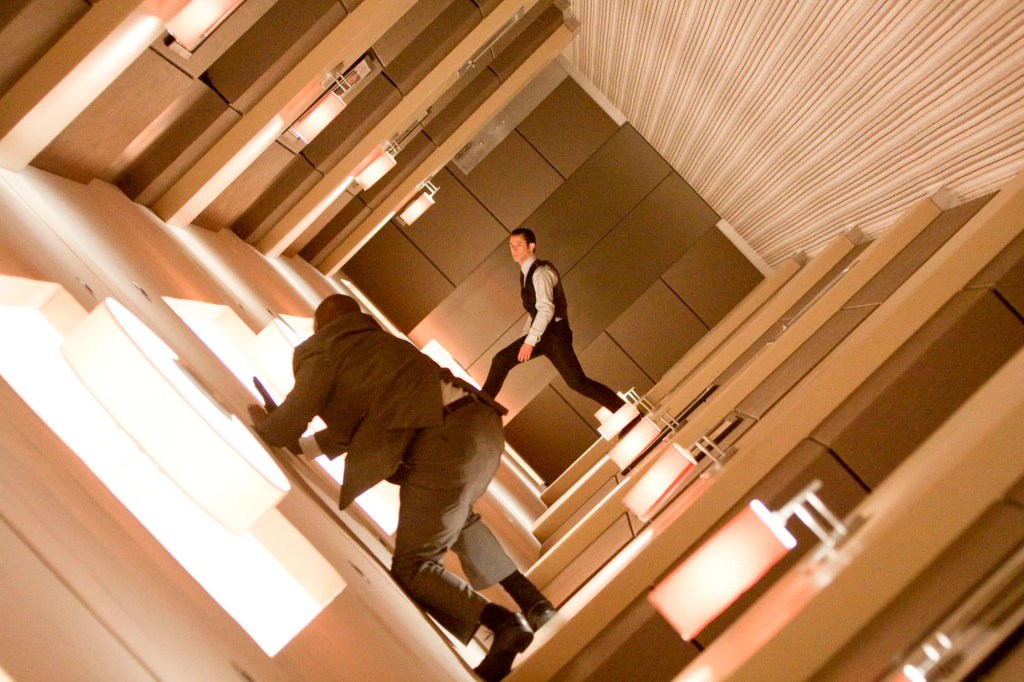
Writer-director Christopher Nolan had been developing the concept for Inception since he was 16—more than two decades of gestation—but only after the success of The Dark Knight did he have the clout to tackle it. In Inception’s not-so-distant future, corporate thieves called “extractors” can uncover an individual’s secrets by stealing them from their dreams. It takes a more sophisticated skill set, however, to pull off an “inception,” whereby an idea is implanted in a person’s subconscious. Leonardo DiCaprio plays Dom Cobb, an extractor tasked with performing an inception, for which he assembles a crew that includes Joseph Gordon-Levitt, Elliot Page and Tom Hardy. The heist angle stemmed largely from necessity, according to Tom Shone’s The Nolan Variations: The Movies, Mysteries, and Marvels of Christopher Nolan, “partly for the sheer amounts of exposition the film was going to have to have. In a heist movie, the exposition pretty much is the plot.” Inception is a mind-bender of a heist picture, but Nolan satisfies the genre’s more conventional tropes via enthralling action scenes amid an ever-shifting dreamscape. The justly famous gravity-defying hallway fight, achieved practically on a rotating set in which Gordon-Levitt trained for months, is among the most technically extraordinary sequences in cinema. But Nolan saves his most audacious move for last, ending on a spinning top whose wobble or steadiness will determine whether everything we’ve watched was real or dreamed, a question the filmmaker has no intention of answering.
Honorable mention: Alice in Wonderland (1951, dir. Clyde Geronimi and Wilfred Jackson), Belle du Jour (1967, dir. Luis Buñuel), The Cell (2000, dir. Tarsem Singh), The Discreet Charm of the Bourgeoisie (1972, dir. Luis Buñuel), 8½ (1963, dir. Federico Fellini), Mulholland Drive (2001, dir. David Lynch), Open Your Eyes (1997, dir. Alejandro Amenábar), Resurrection (2025, dir. Bi Gan), The Science of Sleep (2006, dir. Michel Gondry), Wild Strawberries (1957, dir. Ingmar Bergman)


4 responses to “The 10 best films about dreams”
[…] Freddy Krueger is one of the most iconic of mad slashers. His disfigured face and signature outfit—a striped red-and-green knit sweater and brown fedora—make a lasting impression. And then there’s that glove fitted with razor blades. A Nightmare on Elm Street finds the teenagers of Elm Street plagued by nightmares featuring Freddy (Robert Englund), a child murderer who was burned alive by a vigilante mob 20 years earlier. Dreams give Freddy a new lease on life—and murder. Wes Craven strikes a deft tonal balance. A solid cast includes Heather Langenkamp, John Saxon and, in his film debut, a 21-year-old Johnny Depp. Freddy is a wonderfully frightening slasher, all right, but he also has a wicked sense of humor and knows his way with a catchphrase. “One, two, Freddy’s coming for you!” This murderer has panache.(See more in The 10 best movies about dreams.) […]
LikeLike
[…] Belle de Jour begins with a jolt. A beautiful housewife named Séverine Serizy (Catherine Deneuve) is in a horse-drawn carriage on a country road when the coachman accosts her, dragging her into nearby woods. She is gagged and bound with heavy rope. “Don’t scream or I’ll kill you!” the coachman barks, lashing Séverine with a riding crop before ravishing her. She then awakens from what has been a daydream, where she is again married to Dr. Pierre Serizy (Jean Sorel), a devoted husband who believes his wife to be sexually frigid. The interplay between fantasy and reality pervades Luis Buñuel’s adaptation of Joseph Kessel’s 1928 novel in which a bourgeois Parisian wife satisfies her extreme sexual fantasies by working as a daytime prostitute in a high-end brothel. The director instructed the 22-year-old Deneuve not to act; her preternatural stillness enhances the movie’s dreamlike quality. Film critic Richard Schickel calls Belle de Jour “one of the most beautiful and mysterious movies ever made—elegant, handsome, enigmatic, in some sense inexplicable.” (See more in The 10 best movies about dreams.) […]
LikeLike
[…] More about the mind of the artist than the artistic process per se, 8½ invites viewers into the playfully surreal headspace of its creator, Federico Fellini. Although he insisted the film was in no way autobiographical, its title alone suggests otherwise. By the time he made this masterpiece, Fellini had directed six features, co-directed one, and made two shorts—eight and a half works, for those keeping score. Marcello Mastroianni, Fellini’s spiritual doppelgänger, stars as Italian director Guido Anselmi. He is in the throes of a creative block while working on a picture he does not yet understand. Guido’s uncertainty is hardly alleviated by the producer, actors, crew, and various personalities who surround him at all hours. His bubbly mistress Carla (Sandra Milo) only frustrates him, as does his estranged wife Luisa (Anouk Aimée) and even his ideal woman (Claudia Cardinale) who flits in and out of his fertile fantasy life. Guido is a charmer—how could Mastroianni be otherwise?—but self-absorbed, sexist, and addicted to the chaos he cultivates. He is also unreasonably ambitious, trying to make a film that is about childhood, memory, religion, sex and fantasy—in short, everything. Fellini later explained that Guido lives simultaneously in three planes: the past, the present and the fantastical. “The blending of time and mental states continues throughout the film,” Hollis Alpert notes in Fellini: A Life. “The past intrudes into the present, the present into the past, imaginings into one or the other.” That approach imbues 8½ with something of a frenetic, carnival-like atmosphere, but not one that feels overstuffed. Fellini is an adept juggler; from Gianni Di Venanzo’s gorgeous black-and-white cinematography to Nino Rota’s intoxicating score, the production is impeccable. “It is not only a film about the cinema,” wrote French critic Christian Metz, “it is a film about a film that is presumably itself about the cinema.”(See more in The 10 best films about memory and The 10 best films about dreams.) […]
LikeLike
[…] The template of this Ingmar Bergman masterpiece has been copied so many times, it can be tempting to overlook how deceptively novel Wild Strawberries is. Victor Sjöström is indelible as Isak Borg, a retired Swedish physician and professor who embarks on a road trip to receive an honor. The journey is both literal and metaphorical, of course (this is Bergman, after all), as Isak ponders recent dreams and old memories in a self-evaluation of his life. Along the way, he and his daughter-in-law Marianne (Ingrid Thulin) encounter several fellow travelers whose situations deepen Isak’s own personal reckoning. The results are often riveting and relatable. Bergman, who based Isak on his own father, presents a character who is essentially a decent man, albeit exacting and emotionally distant, and unaware of how his aloofness has impacted loved ones. “Beneath your benevolent exterior, you’re as hard as nails,” Marianne tells her father-in-law. Bergman regulars Thulin, Bibi Andersson, and Gunnar Björnstrand are strong in supporting roles, but ultimately the film rests on Sjöström’s capable shoulders. In Wild Strawberries, Bergman contends that self-knowledge can arrive late in life. Old age is not a period of resignation for Isak, but rather a final opportunity for grace and forgiveness.(See more in The 10 best films about memory and The 10 best films about dreams.) […]
LikeLike