Sometimes you just want to be with a film. Quentin Tarantino is often credited with popularizing the term “hangout movie” back in a New Yorker profile where he referenced the 1959 western Rio Bravo (see #6 below).
What’s a hangout movie, you ask?
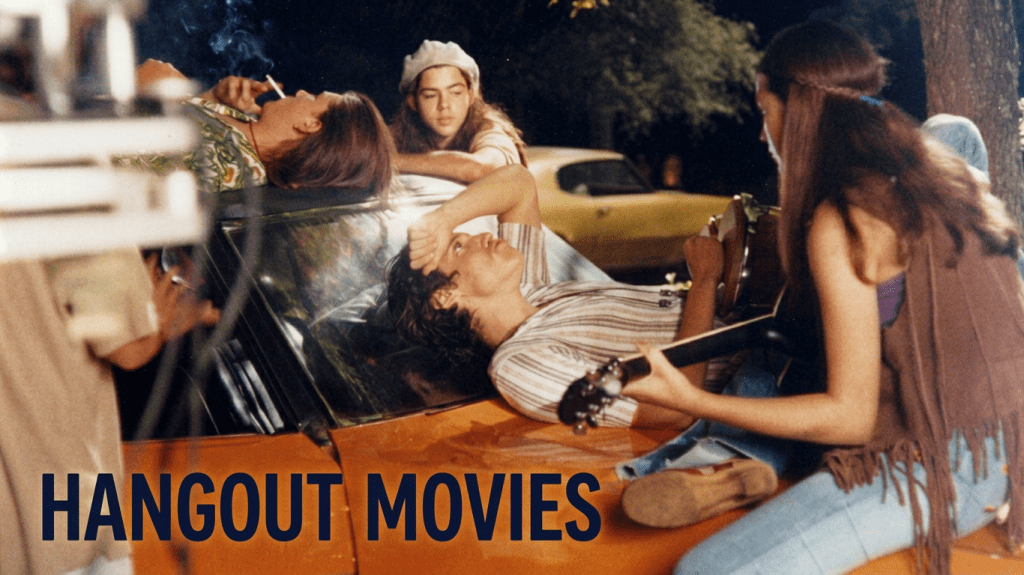
A movie you can chill with and return to. A movie whose world you can slip into even when not much happens—maybe especially when not much happens. The characters are lived-in, have a camaraderie and are welcoming. In an ideal hangout flick, vibe and atmosphere supersede plot and reward repeat viewings. Some filmmakers tend to excel at these kinds of pictures—Robert Altman, Richard Linklater and Paul Thomas Anderson come to mind—but hangout films can hail from any genre.
Here are 20 of the best cinema hangs.
20. Slacker (1990, dir. Richard Linklater)
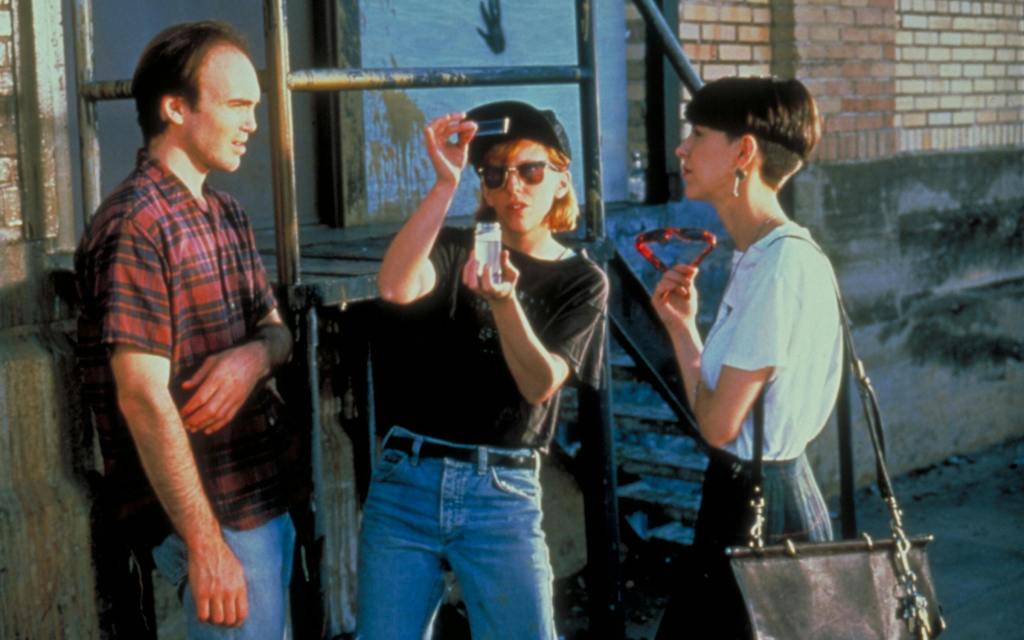
In 1990, Austin, Texas, native Richard Linklater scraped together $23,000, purchased a 16mm camera along with 50 rolls of film, and put out a casting call “if you want to be in an interesting movie.” Slacker drifts through Austin on a tour of the assorted eccentrics, weirdos and cranks who then populated Texas’ idiosyncratic capital city. It’s a celebration of talk, not plot, and the ensuing conversations—the nostalgia of anarchy, the Smurfs as Krishna propaganda, a discussion of Madonna’s pap smears—are provocative, poignant and funny. Along with Kevin Smith’s 1994 debut Clerks (a damn fine hangout flick in its own right), Linklater’s microbudget do-it-yourself project inspired a generation of indie moviemakers to pick up a camera. Ironically, the director’s self-actualization produced a film where the title encapsulated the aimlessness of a particular strain of Gen X and provided an easy label for overeducated layabouts with an aversion to work and an affinity for flannel.
19. The Florida Project (2017, dir. Sean Baker)
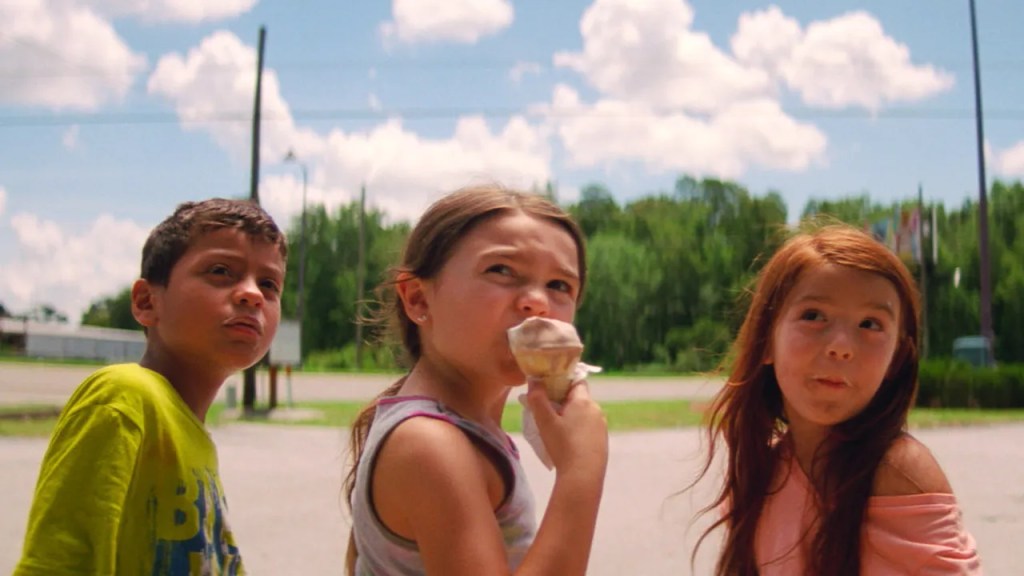
Sean Baker excels at telling the stories of forgotten people. The Florida Project, his follow-up to 2015’s Tangerine, uses a coming-of-age framework to explore life in the crumbling motels shadowing Orlando’s Disney World. The filmmaker’s deceptively shambling style gives his cast, especially nonprofessional young actress Brooklynn Prince as a feisty 6-year-old, ample room to disappear into their roles. More than most pictures featuring kids, The Florida Project nails the stupid, terrifying, wickedly hilarious universe of childhood. There is a moral center in the person of Willem Dafoe, exuding quiet decency as the manager of the ironically named Magic Castle Motel. The title was the placeholder that Baker gave the film throughout pre-production, and the name stuck. It is fitting for a movie in which nothing happens and everything happens.
(See more in The 15 best films that explore class divides.)
18. Girlhood (2014, dir. Céline Sciamma)

Céline Sciamma spotted Karidja Touré at an amusement park and sensed the young woman would be ideal as the lead for this coming-of-age tale. The filmmaker was right. As Marieme, a 16-year-old growing up in a housing project outside Paris, Touré admirably carries Girlhood on her slumped shoulders. Shy and struggling academically, Marieme falls in with a clique of rebellious teen girls (Assa Silya, Marietou Touré and Lindsay Karamoh). The friendships help instill her with confidence, but at a cost, as she wanders into a lifestyle of brawling, theft and drug-trafficking. But the character is never made a pawn to illustrate an overarching statement about society. “I was struck by the lack of representation of women—of Black women—and I thought, ‘OK, I wanna film these girls,’” Sciamma told VICE magazine. “So I decided to go all the way for it.” An air of sadness pervades the movie; it’s a hardscrabble existence for Marieme. But then there comes a moment of cinematic alchemy, such as when she and her friends—decked out in party dresses they did not buy and in a hotel room they likely cannot afford—dance and lip-synch to Rihanna’s “Diamonds,” and Girlhood transcends its earthbound restraints.
(See more in The 10 best female buddy films.)
17. Local Hero (1983, dir. Bill Forsyth)
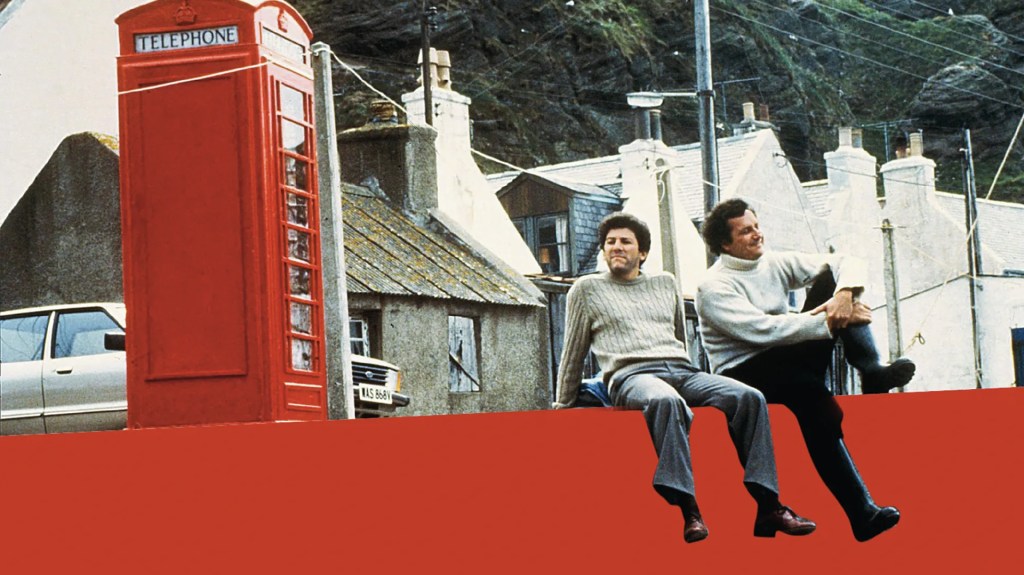
Precious or charming: you decide. This languorously paced comedy packs enough gentle oddballs to make the residents of Lake Wobegon blush. Houston’s Knox Oil & Gas is determined to build a refinery in the Scottish highlands. The only problem is that the project would essentially replace the existing village of Ferness. Knox’s eccentric, astronomy-obsessed boss (Burt Lancaster) dispatches Knox representatives “Mac” MacIntyre (Peter Riegert) and Danny Oldsen (Peter Capaldi, in an early role) to strike a deal with the townspeople of Ferness. Danny falls for a web-toed marine biologist who might just be a mermaid, while Mac increasingly yields to the island’s singular charms. From Mark Knopfler’s lovely score to writer-director Bill Forsyth’s quirky script, the movie works a quiet spell. If you’re the type of person whose blood runs cold at the mere suggestion of “whimsy,” keep walking. All others are sure to be delighted.
16. Licorice Pizza (2021, dir. Paul Thomas Anderson)
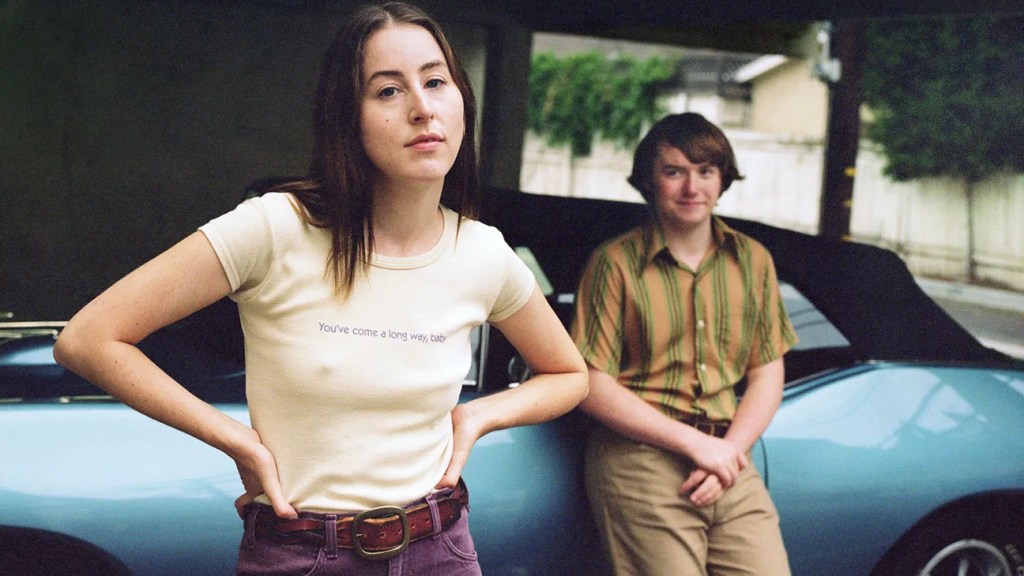
Fifteen-year-old Gary Valentine (Cooper Hoffman, son of the late Philip Seymour Hoffman) is a hustler with charm to spare. Alana King (Alana Haim) is a mercurial 25-year-old struggling to find her place in the world. They don’t seem like a natural fit, but it’s the 1970s in the San Fernando Valley, where anything can and does happen—at least in this magical version as conceived by Paul Thomas Anderson. His affection for his characters is palpable. Like any solid hangout movie, plot is secondary to mood. Gary and Alana become friends, although he pines for more. Together and apart, they stumble through career possibilities and side excursions toward something approaching self-discovery. The loose narrative enables Anderson to craft several wonderful, if tangential, set pieces. Sean Penn amuses as a William Holden stand-in, and Bradley Cooper nearly walks off with the film as Barbra Streisand’s cocaine-addled boyfriend, Jon Peters. Licorice Pizza overflows with ideas. Like the words in the title—named for a defunct Southern California record-store chain—the ideas sometimes don’t seem to mesh, but I’m not one to fault PTA’s generosity.
15. Beat the Devil (1954, dir. John Huston)
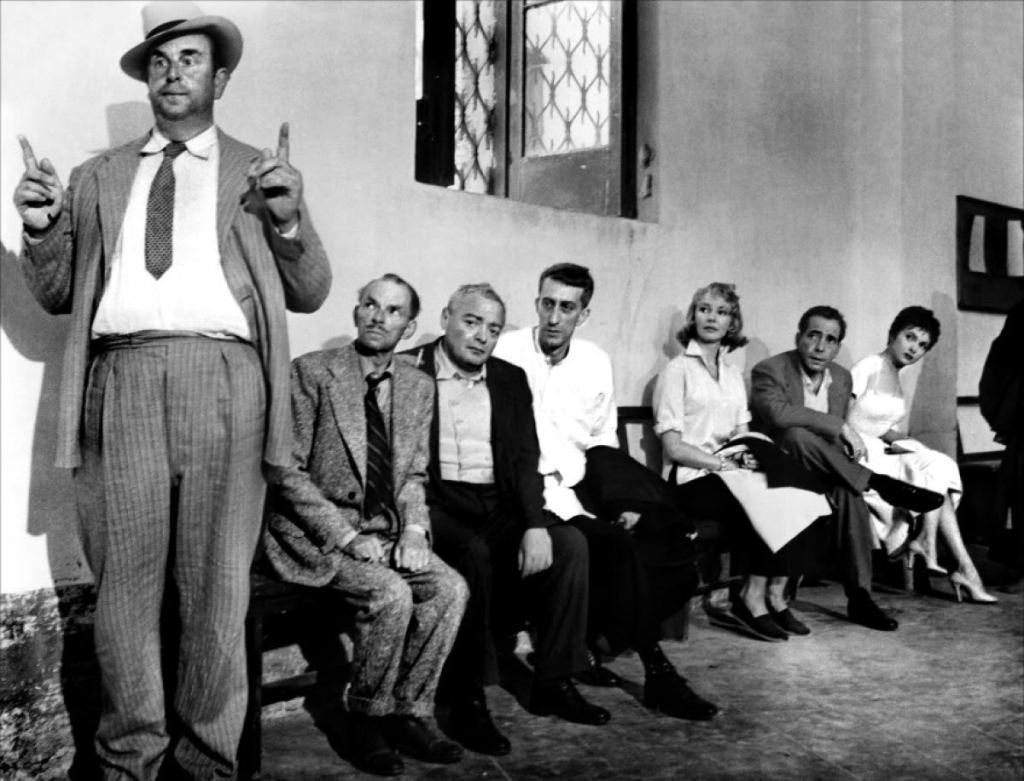
It shouldn’t have worked. Drinking buddies John Huston and Humphrey Bogart were looking for a joint film project when they came upon Beat the Devil, a British novel about fraudsters trying to acquire uranium in North Africa. The location shoot on Italy’s Amalfi Coast was essentially a party where Huston and Bogart boozed it up and occasionally sent for a prostitute from Rome. The director hired 29-year-old Truman Capote to punch up the script; the pair turned out pages day by day when they weren’t too hungover. What emerged was less a crime story and more a satire of the genre. “Anyway, it has a good smell to it,” Huston told a reporter at the time, “and everybody connected with the picture seems to feel that we have something.” Moviegoers at the time disagreed and stayed away, but Beat the Devil has a well-deserved cult following. Bogart has fun tweaking his persona as Billy Dannreuther, seesawing between his beautiful wife Maria (Gina Lollobrigida) and Jennifer Jones as Gwendolen Chelm, the ditsy wife of a British diplomat. Robert Morley, Peter Lorre and Ivor Barnard are the desperate villains. We know they’re “desperate” because, as Gwendolen observes, “Not one looked at my legs.”
14. Inherent Vice (2014, dir. Paul Thomas Anderson)
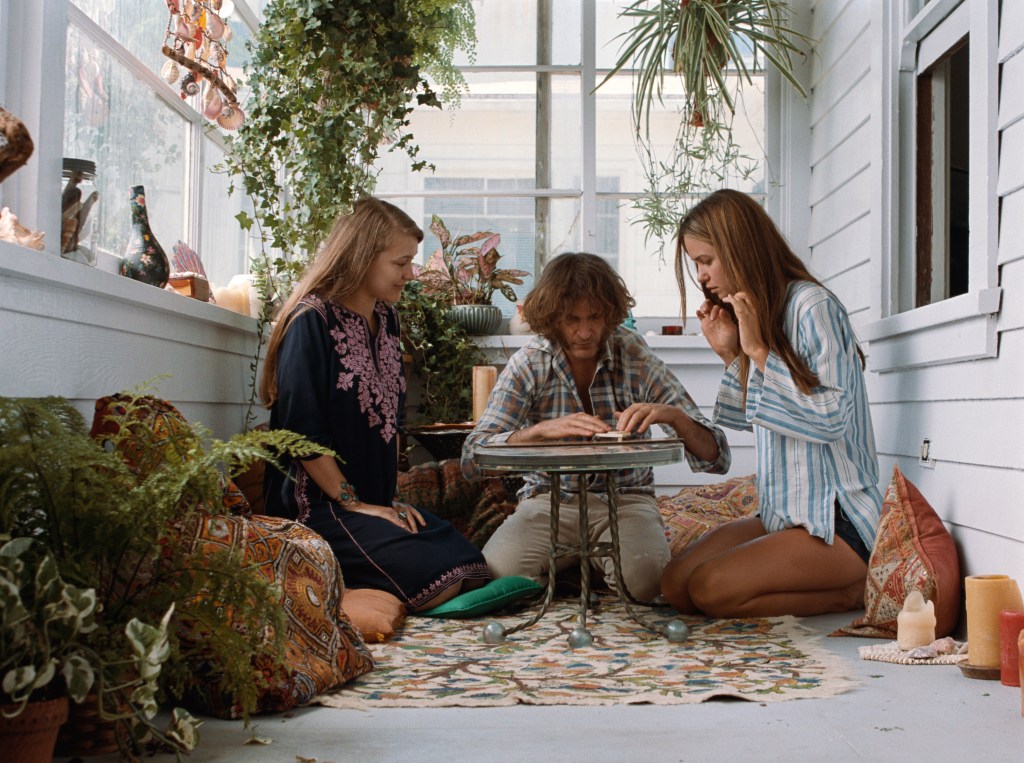
Inherent Vice bears all the trappings of neo-noir: a disheveled gumshoe with a seemingly outdated moral code, a femme fatale, and a hard-as-nails cop to hassle our protagonist. The conventions allow writer-director Paul Thomas Anderson, adapting Thomas Pynchon’s 2009 novel of the same name, to venture into more interesting fare and deliver a trippy vibe. It’s Los Angeles circa 1970 and the threat of violence is simmering just below the sun-bleached surface. Joaquin Phoenix is “Doc” Sportello, a perpetually stoned private detective caught in a missing-persons case that involves everything from shady real estate deals and a heroin-smuggling ring to Richard Nixon. The real star is L.A. itself—or at least the hallucinogenic one imagined by Anderson and cinematographer Robert Elswit. Inherent Vice’s sly visual magnificence is typified by a brief flashback in which Doc and a girlfriend, Shasta (Katherine Waterston), comb beachfront streets for dope as Neil Young plays over the soundtrack. The scene is a throwaway, but it encapsulates the picture’s dreamlike vibe.
13. Slap Shot (1977, dir. George Roy Hill)
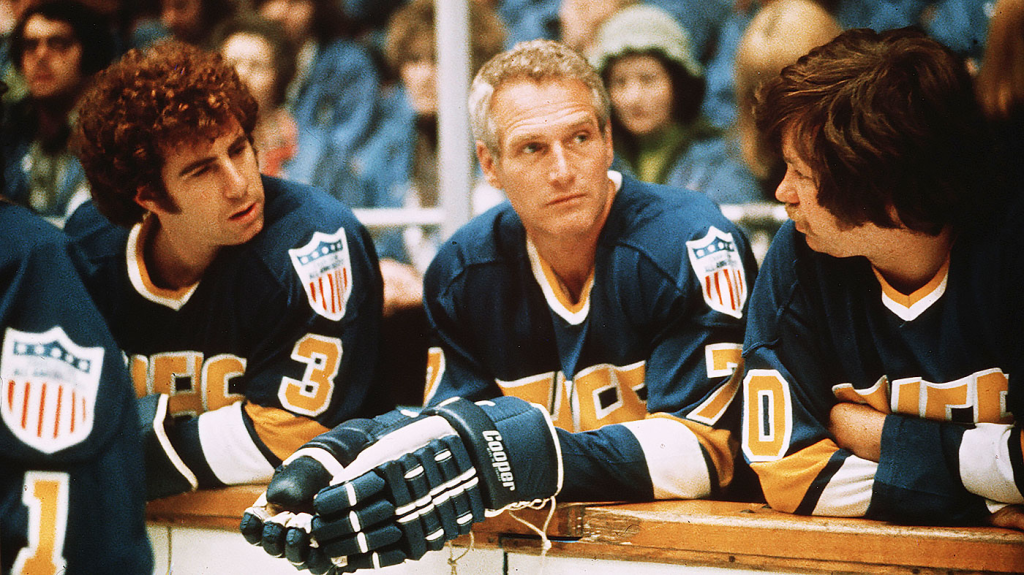
Scrappy and cheerfully profane, Slap Shot is the definitive hockey movie, not to mention one of the great sports flicks. But this isn’t your typical sports movie. For one, director George Roy Hill and screenwriter Nancy Dowd conspicuously eschew a venerable trope of the genre. They don’t seek to inspire. Paul Newman is roguish Reggie Dunlop, player-coach for the broken-down Charlestown (Pennsylvania) Chiefs. With the owner angling to unload the team, Reggie is saddled with the Hanson Brothers (real-life hockey players David Hanson, Steve Carlson and Jeff Carlson), bespectacled goons who play with toy cars before games when they aren’t causing routine bloodshed on the ice. While Slap Shot nails the bravado of male athletes, its primary female characters—played by Lindsay Crouse, Jennifer Warren and Melinda Dillon—all have meaty, complex roles. The homophobic jokes and sundry cracks about people with disabilities haven’t traveled well, but the picture has no illusions about its characters. These are not enlightened folks, but they’re pretty good company for a couple of beers.
12. I Vitelloni (1953, dir. Federico Fellini)
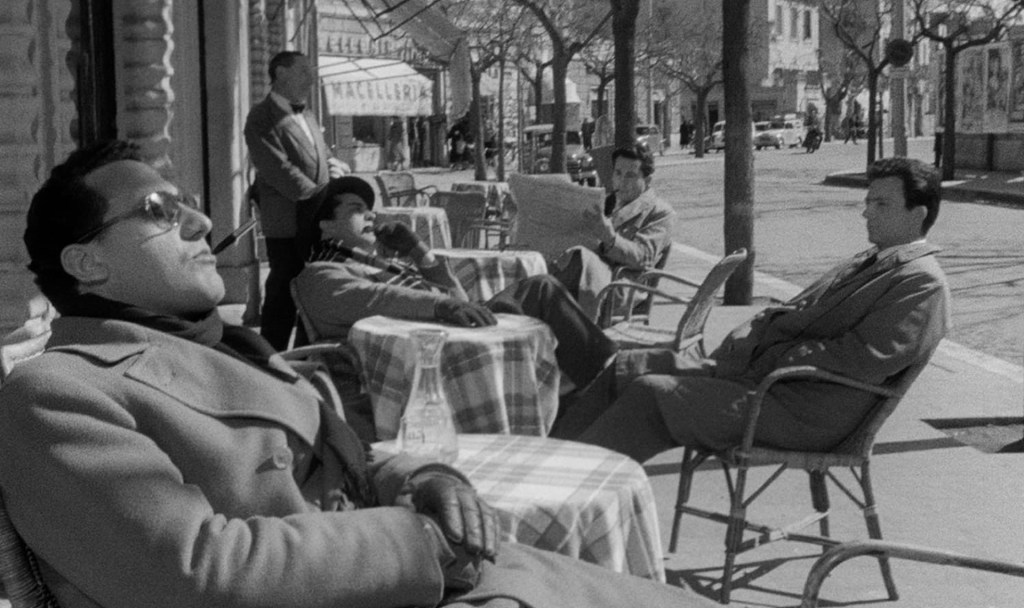
Federico Fellini’s breakthrough film, loosely based on his youth in northern Italy, presents a group of friends reluctantly edging toward adulthood and responsibility. Franco Interlenghi is Moraldo, the youngest of the chums and the Fellini surrogate. Moraldo’s beautiful sister Sandra (Leonora Ruffo) is knocked up by Fausto (Franco Fabrizi), the ladies’ man of the group. Alberto Sordi is Alberto, jobless and living at home with his mother and sister. Leopoldo (Leopoldo Trieste), the resident intellectual, aspires to be a great playwright. “They are the unemployed of the middle class, mothers’ pets,” Fellini later wrote of the characters. “They shine during the holiday season, and waiting for it takes up the rest of the year.” The movie captures the vicissitudes of small-town Italian life, albeit with the director’s grace notes—a man dances with a giant papier mache head as his partner, a sudden rainstorm batters a beauty pageant. Imbued with Fellini’s magic that cannot be replicated, I Vitelloni is funny and sexy, beautiful and bittersweet, all at once.
11. Mystery Train (1989, dir. Jim Jarmusch)
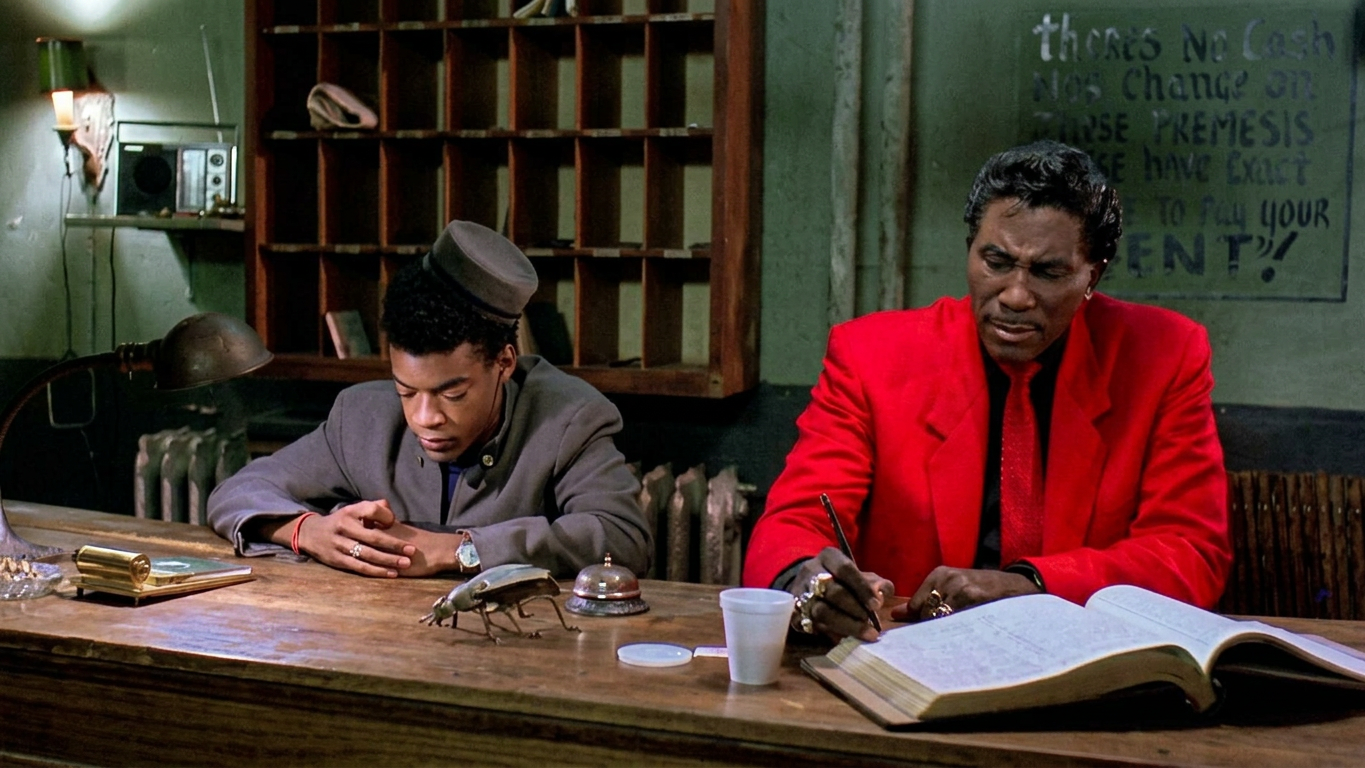
A young Japanese couple makes a pilgrimage to Memphis to see the land of Elvis Presley, Carl Perkins and Sun Records. In their fleabag hotel, Mitsuko (Youki Kudoh) asks her pompadoured boyfriend Jun (Masatoshi Nagase) why he takes so many photos of their dingy room. “Those other things are in my memory,” Jun says. “The hotels and the airports are the things I’ll forget.” Like Jun, Jim Jarmusch’s Mystery Train lingers on the peripheral stuff. The hotel links a trio of drolly charming vignettes. The first, “Far from Yokohama,” spotlights the aforementioned couple. In “A Ghost,” an Italian widow (Nicoletta Braschi) returning to Rome must make an unplanned stop in Memphis. “Lost in Space” has Joe Strummer (of the band The Clash), Rick Aviles and Steve Buscemi on the lam after a liquor-store holdup. And then there’s the hotel staff of Screamin’ Jay Hawkins—an early rock ‘n’ roll legend whose “I Put a Spell on You” was a critical part of Jarmusch’s Stranger Than Paradise—and Cinqué Lee. Like the foreign travelers in Mystery Train, Jarmusch hadn’t been to Memphis before making the picture, but he wanted to pay tribute to its storied musical tradition. He and cinematographer Robby Müller capture the town’s deteriorating shotgun shacks, urban blight and empty, trash-strewn streets. It does Memphis no favors, but the bleakness is its own kind of beauty.
10. Repo Man (1984, dir. Alex Cox)
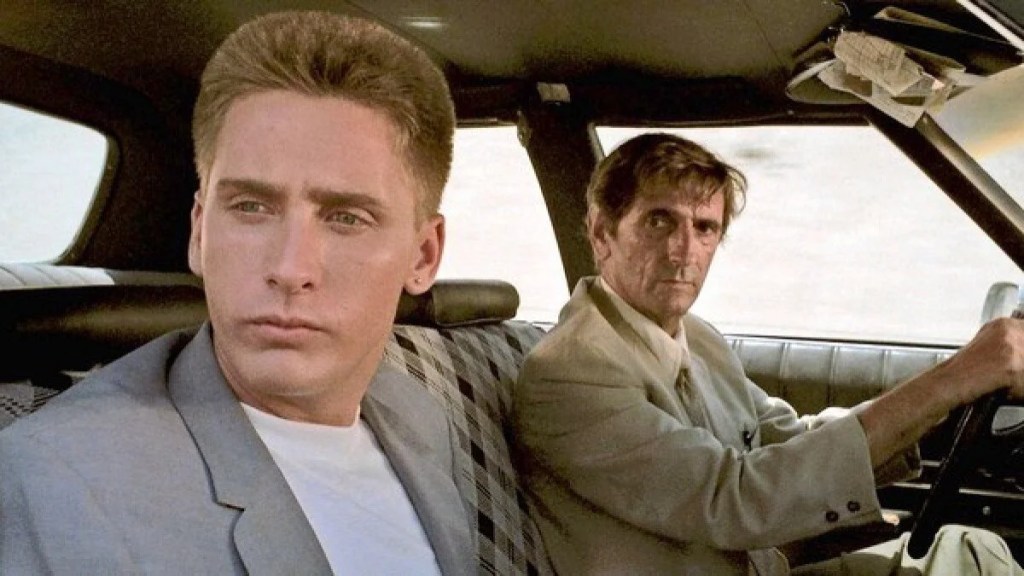
“Let’s go get sushi … and not pay!” says Duke, a mohawk-sporting punker, after he and his crew hold up a convenience store. It doesn’t get more punk than that. Repo Man is a comedy with the anarchic spirit of a mosh pit, which makes sense for a movie with a blistering punk and hardcore soundtrack. Emilio Estevez is Otto Maddux, a prickly punk rocker who drifts into the car-repossessing business after being recruited by veteran repo man Bud (Harry Dean Stanton). The actor leans hard into his outlaw aura as Bud, but Alex Cox is equally generous to his entire cast. Particular standouts are Sy Richardson and Tracy Walter, the latter of whom is hilarious as a burnout with definite ideas about the “cosmic unconsciousness” and its connection to a plate of shrimp. For his directorial debut, Cox smushes in a kitchen sink’s worth of subjects—Scientology, televangelists, generic-brand groceries and UFO enthusiasts, to name a few—ripe for satire. And in homage to 1955 film noir classic Kiss Me, Deadly, Repo Man involves a sought-after Chevy Malibu with a glowing trunk that vaporizes everyone who looks inside. Sounds like a challenging car to repossess, but as Bud puts it, the “life of a repo man is always intense.”
9. Dazed and Confused (1993, dir. Richard Linklater)
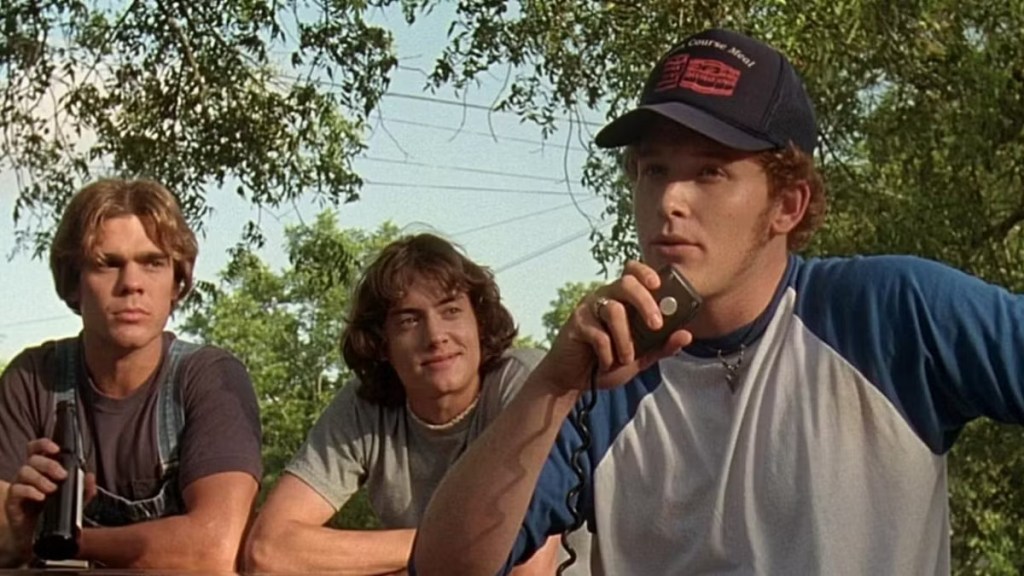
You’ll find more rolling papers than plotlines in Richard Linklater’s ode to Texas high school students on the last day of school in 1976. But inhale deeply—Dazed and Confused is a good high. Like its spiritual parent American Graffiti (see #3), the film’s sprawling cast includes several actors—Ben Affleck, Matthew McConaughey and Parker Posey, among others—who went on to bigger roles. There is no single protagonist here. Linklater is as interested in “Pink” Floyd (Jason London), the weed-loving football quarterback being pressured by his coach to sign a no-drugs pledge, as he is in freshman Mitch Kramer’s (Wiley Wiggins) frantic attempt to dodge the ritualistic hazing from lunkhead senior boys. The episodic structure mimics the shuffling pace of what it is to be a teenager at the beginning of a long, hot summer. Linklater, a Texas native, had wanted to make a movie that would illustrate how the 1970s “really sucked.” Thankfully, he failed at that and instead crafted a valentine to the decade.
(See more in The 10 best films about summer.)
8. Metropolitan (1990, dir. Whit Stillman)
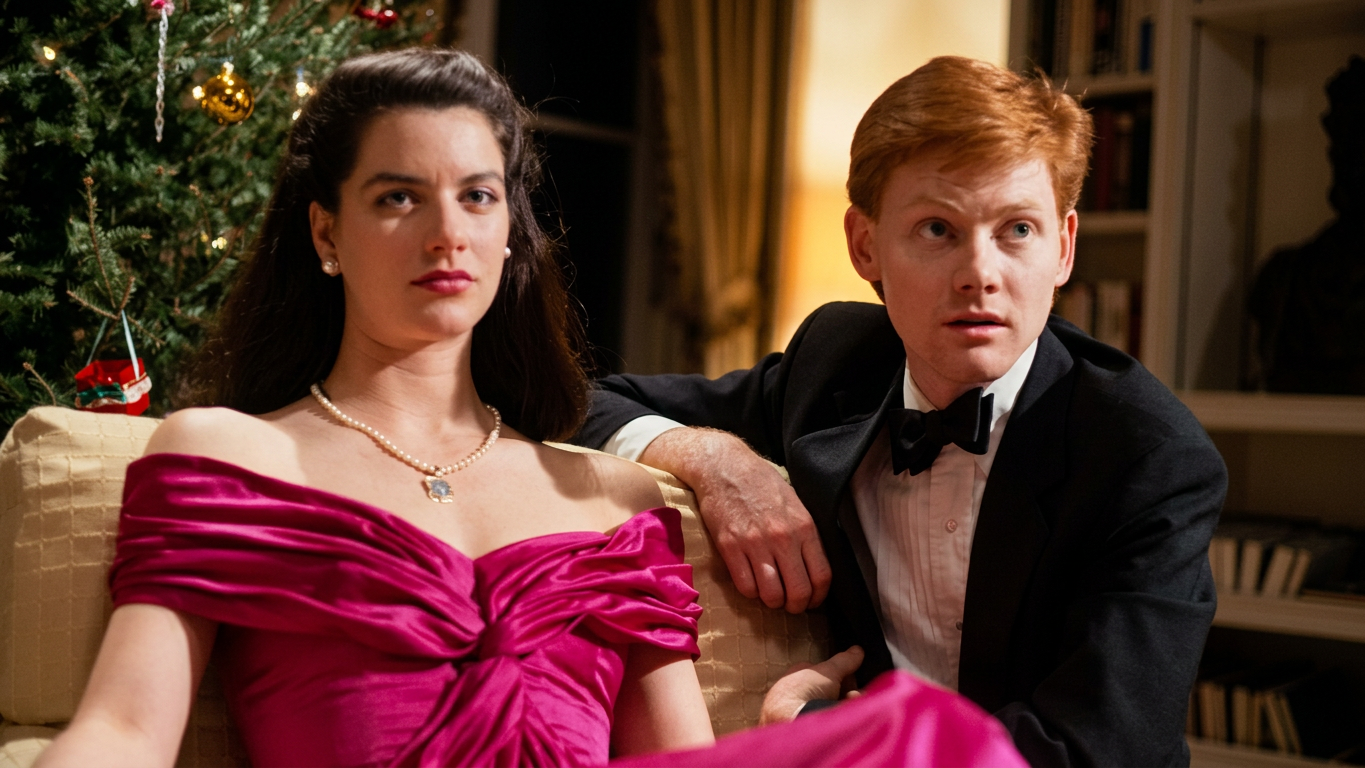
Whit Stillman’s directorial debut about young, affluent intelligentsia during debutante season in New York is sparkling, what with its F. Scott Fitzgerald-meets-J.D. Salinger feel. In lesser hands, this champagne-fizzy comedy could have been insufferable, overwritten pap. Stillman has genuine affection for his solipsistic blowhards and their hermetically sealed environs, however, and his assembled cast—especially Carolyn Farina, Christopher Eigerman, Taylor Nichols and Edward Clements—are immensely appealing. Metropolitan is a proudly quirky celebration of specious sophisticates, kind-hearted dandies and literary-minded populists (although one such poseur freely admits he restricts his reading to The New York Review of Books). Shot on a shoestring budget, it occupies a Manhattan that appears to be floating out of time. The witty but ornate dialogue would seem ostentatious if it were in a Jane Austen novel, let alone from the mouths of East Coast college types whose favorite pastime is gossip. Yet it works somehow. Metropolitan breaks a seemingly cardinal rule by making the spoiled rich ne’er-do-wells look like they’re having a mighty swell time.
7. The Long Goodbye (1973, dir. Robert Altman)
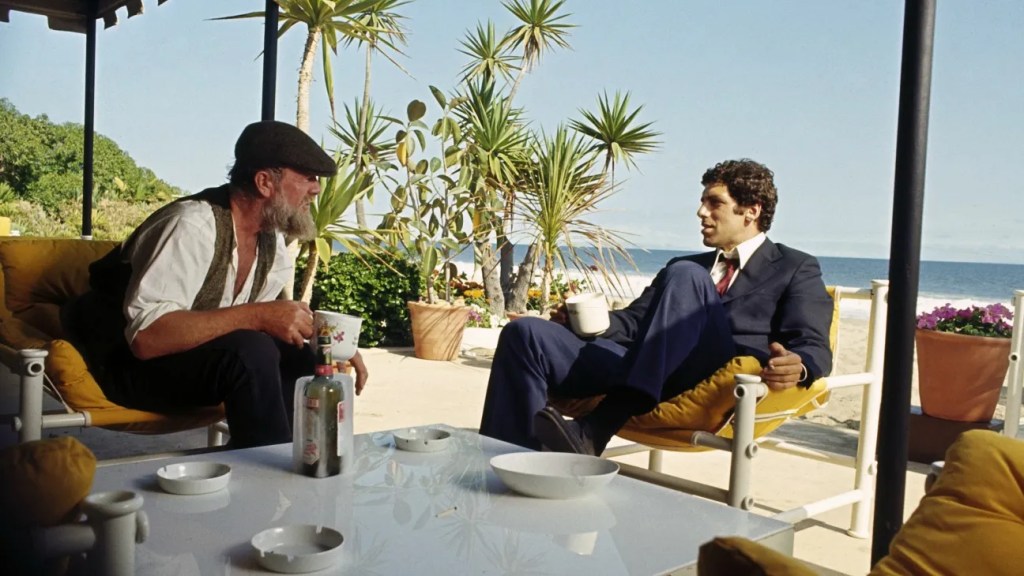
The Long Goodbye is a detective story where the plot is the least interesting component. The core idea: Uproot Philip Marlowe, the hardboiled private eye created by writer Raymond Chandler, from the 1940s and drop him in modern-day Los Angeles. Marlowe had been portrayed by the likes of Humphrey Bogart and Robert Montgomery, but director Robert Altman wanted Elliott Gould, the epitome of New Hollywood’s idea of a leading man: mumbling, a little zonked out and as unkempt as his hair. “There were people who were enraged that we would break the mold, that we would go against the grain, and for it not to be the traditional Philip Marlowe,” Gould told author Mitchell Zuckoff in Robert Altman: The Oral Biography. “But people came around.” Altman’s ever-moving camera, overlapping dialogue and improvisational spirit contribute to a mood in which The Long Goodbye seems to unfold in real time before our eyes.
(See more in The 15 best neo-noir films.)
6. Rio Bravo (1959, dir. Howard Hawks)
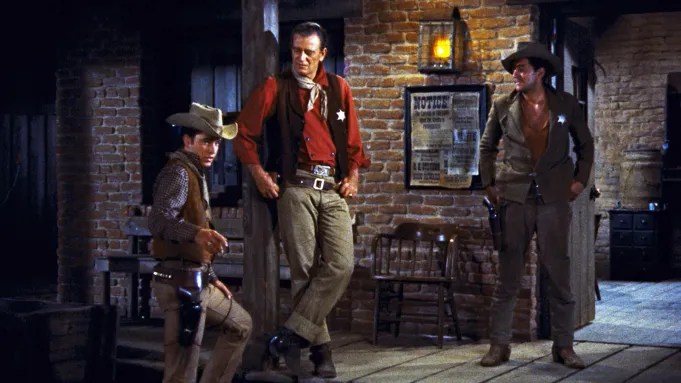
Howard Hawks’ thematic obsessions—male bonding, professionalism, responsibility—take center stage in this yarn about a sheriff and his team under siege in a Texas border town. Rio Bravo is exciting, heartwarming, funny and romantic—and yet relaxed. While the western includes the requisite shoot-’em-up action, the tone is unhurried, almost luxuriant. John Wayne is Sheriff John T. Chance, who is stuck with an alcoholic deputy (Dean Martin), a cantankerous codger (Walter Brennan) and a young hotshot gunslinger (pop idol Ricky Nelson) against a small army of villains. Amid the standoff, Chance strikes up a romance with Angie Dickinson as a beauty he initially mistakes for a card cheat. The idea for Rio Bravo famously stemmed from Hawks’ distaste for High Noon. In that 1952 classic, Gary Cooper is a sheriff unable to get the backing of townspeople as he faces an imminent showdown with bad guys. That premise stuck in Hawks’ craw. “I didn’t think a good sheriff was going to go running around town like a chicken with his head cut off asking for help,” he explained years later. “That isn’t my idea of a good western sheriff.”
5. My Neighbor Totoro (1988, dir. Hayao Miyazaki)
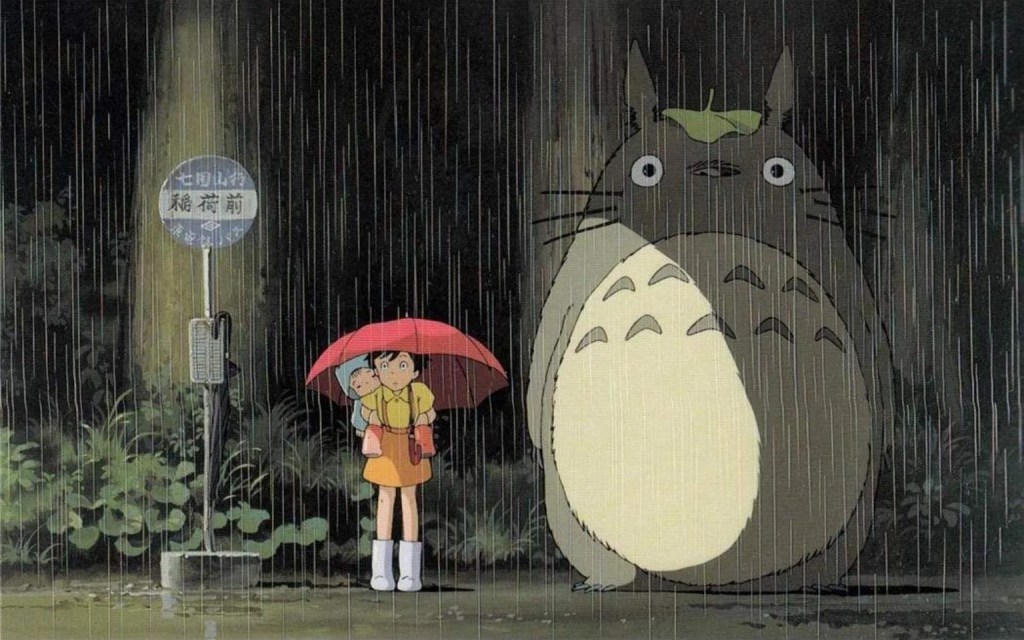
Even by the lofty standards of Japan’s Studio Ghibli, Hayao Miyazaki’s My Neighbor Totoro stands as a towering achievement. Set in the 1950s, it is fantastical but accessible, poignant but treacle-free, serene but enthralling. Most of all, it depicts the mindset of children as few others have. A college professor (voiced by Shigesato Itoi) and his two young daughters move to the country to be closer to their ailing wife and mother (Sumi Shimamoto), who is recovering in a nearby hospital. The girls, named Satsuki and Mei (Noriko Hidaka and Chika Sakamoto), discover the area is inhabited by various forest spirits only they can see. Distinguished by its pastoral palette and intricate detail, the animation is gorgeous and sure to enchant, particularly the memorable scene in which big, furry Totoro waits in the rain for a giant cat bus. In a remarkable gambit, Ghibli initially released Totoro as part of a double bill with Isao Takahata’s Grave of the Fireflies—surely one of the bleakest movies ever made—a one-two punch that demonstrated how cinema can devastate and uplift in equal measure.
4. The Big Lebowski (1998, dir. Joel Coen)
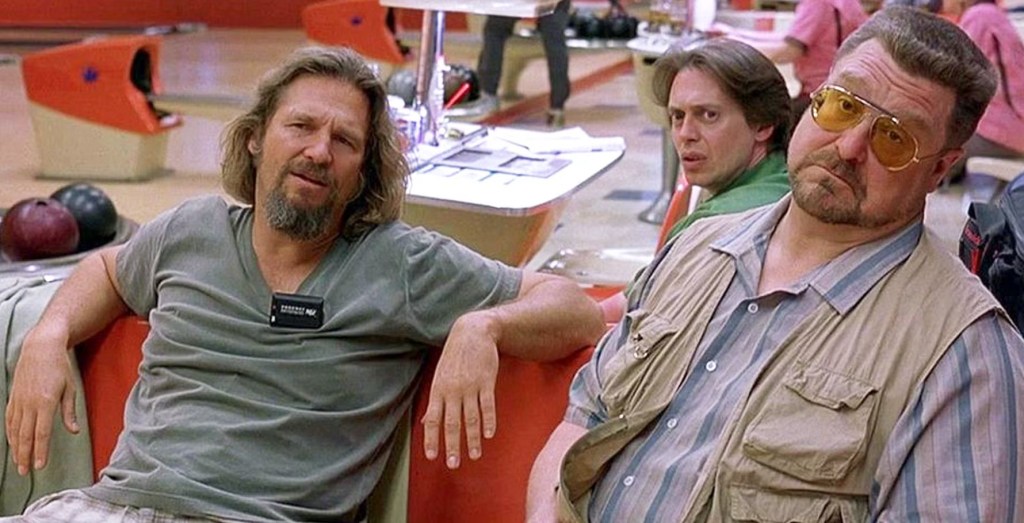
Joel and Ethan Coen loved their own idea: take an aging counterculture radical they knew, a fellow named Jeff Dowd, and drop him in the center of a conspiracy he is left to sort out. And so Dowd inspired their creation of “The Dude” (Jeff Bridges), otherwise known as Jeff Lebowski, whose misfortune is having the same name as an irascible millionaire (David Huddleston) whose oversexed trophy wife (Tara Reid) is kidnapped. The Big Lebowski leaps from league bowling to a gang of violent nihilists and back again, but the picture’s crazy-quilt plot takes a back seat to its extravagant comic performances, flights of stoner fancy and memorably quirky dialogue. Bridges’ bathrobe-clad burnout is iconic, of course, but this ensemble belongs just as much to John Goodman, Julianne Moore, Steve Buscemi, John Turturro and Philip Seymour Hoffman. The Coens’ comedy received mixed reviews at the time—critics considered it a letdown after 1996’s Fargo—but it quickly earned a cult following that blossomed in 2002 when the Lebowski faithful converged on Louisville, Kentucky, for the First Annual Lebowski Fest. It’s been going ever since. Because, as you might know, the Dude abides.
(See more in The 10 most memorable dances in non-musicals and The 10 best R-rated comedies.)
3. American Graffiti (1973, dir. George Lucas)
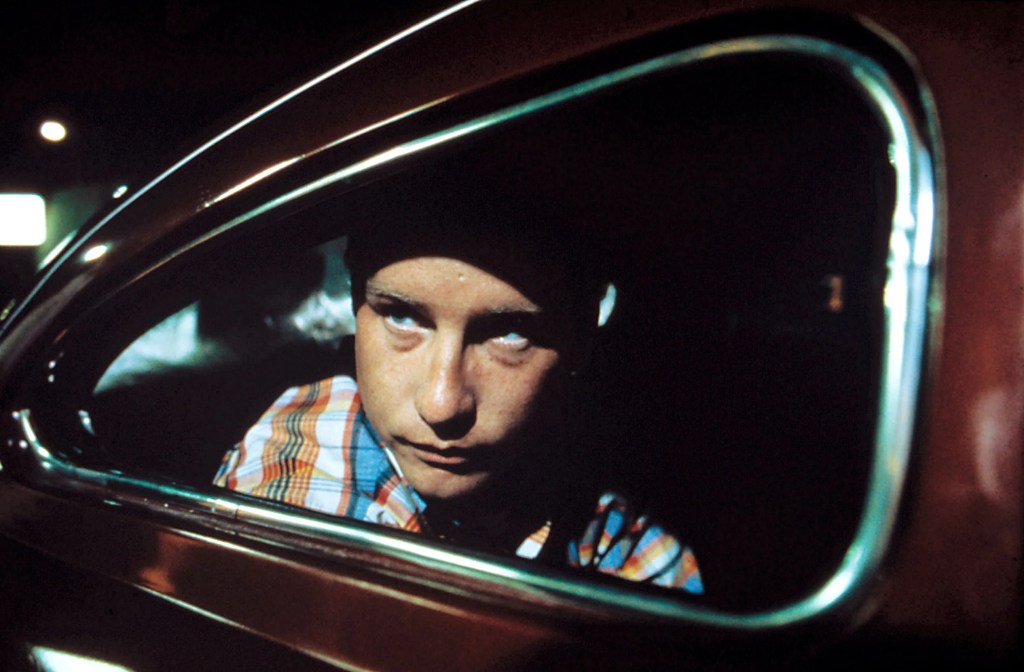
Four years before his Star Wars changed movies forever, George Lucas sought inspiration from Federico Fellini’s I Vitelloni (see #12) to plunder his childhood for movie material. The resulting picture is a lightly biographical confection about growing up in small-town California in 1962 before a slew of events—the Beatles, the Kennedy assassination, Vietnam—would upend damn near everything. Taking place on the last night of summer break for a handful of high schoolers, the largely plotless narrative provides room for an extraordinary ensemble that includes Richard Dreyfuss, Ron Howard, Paul Le Mat, Charles Martin Smith, Candy Clark, Cindy Williams, Harrison Ford, Mackenzie Phillips and a blink-and-you’ll-miss-her Suzanne Somers. American Graffiti revels in texture and atmosphere—gleaming muscle cars, a constant soundtrack of period rock ‘n’ roll, and the seductive yearning for an era that maybe only ever existed in the romanticized memory of boomers. And about those autos—they were integral for the director who had been a car nut as a teen. Howard recalls in his memoir, The Boys, that Lucas considered the selection of vintage cars as important as casting, “Or, rather, they were actors to him,” he writes, “playing characters just as his droids and starships would in the Star Wars movies.”
(See more in The 10 best films about summer and The 15 best coming-of-age movies.)
2. Once Upon a Time … in Hollywood (2019, dir. Quentin Tarantino)
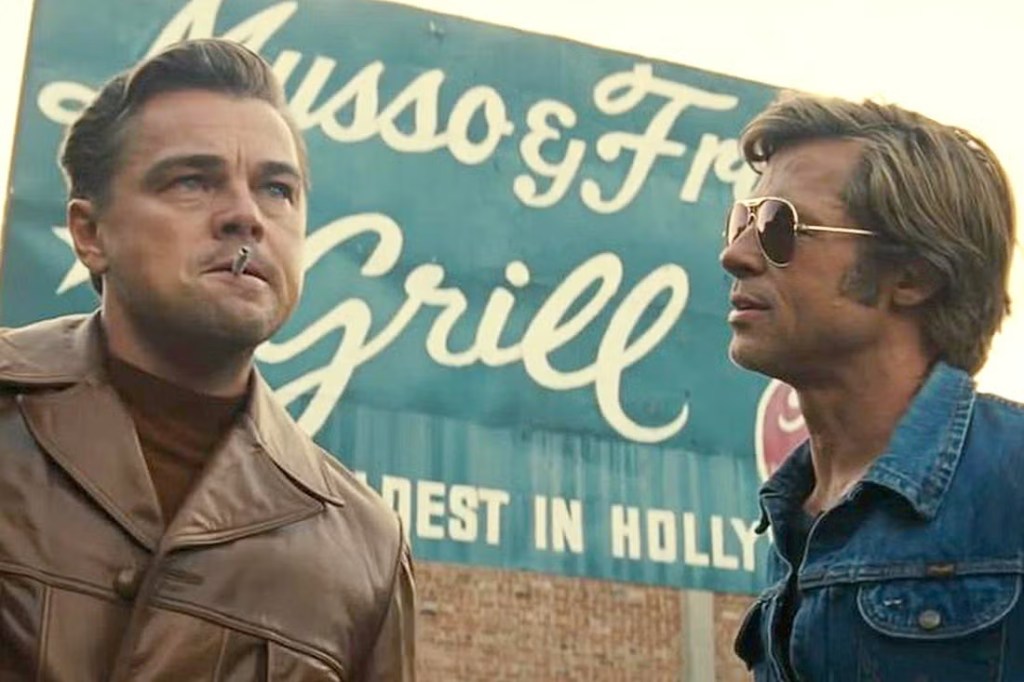
Revisionist history has never been so enthralling as this nostalgia-infused revenge-o-matic. It is Los Angeles in 1969, and we get to spend a few days with fading TV action hero Rick Dalton (Leonardo DiCaprio), his (possibly) wife-killing stunt double Cliff Booth (Brad Pitt), rising movie star Sharon Tate (Margot Robbie) and… the Manson Family. The imagination of writer-director Quentin Tarantino is unfettered by the historical record. This unabashed love letter to 1960s Hollywood is loaded with stellar set pieces, exquisite period detail, and propulsive ‘60s rock ‘n’ roll needle-drops. Once Upon a Time … in Hollywood is a movie for cinephiles to luxuriate in. There’s so much to love here—Rick’s ego-bruising meeting with Al Pacino’s tactless producer, Rick’s every scene with Julia Butters as a precocious child actor, Cliff’s desert adventure with a Manson hippie chick (Margaret Qualley), Sharon watching herself on screen in a Westwood movie theater, and—of course—a deliriously cathartic climax. The only misfire is a single scene mocking Bruce Lee (Mike Moh), but that’s a pretty terrific batting average for a 160-minute flick. If I could pull a Purple Rose of Cairo hat trick and climb into any movie, it would be Once Upon a Time … in Hollywood.
(See more in The 10 best movies about fake history.)
1. Nashville (1975, dir. Robert Altman)
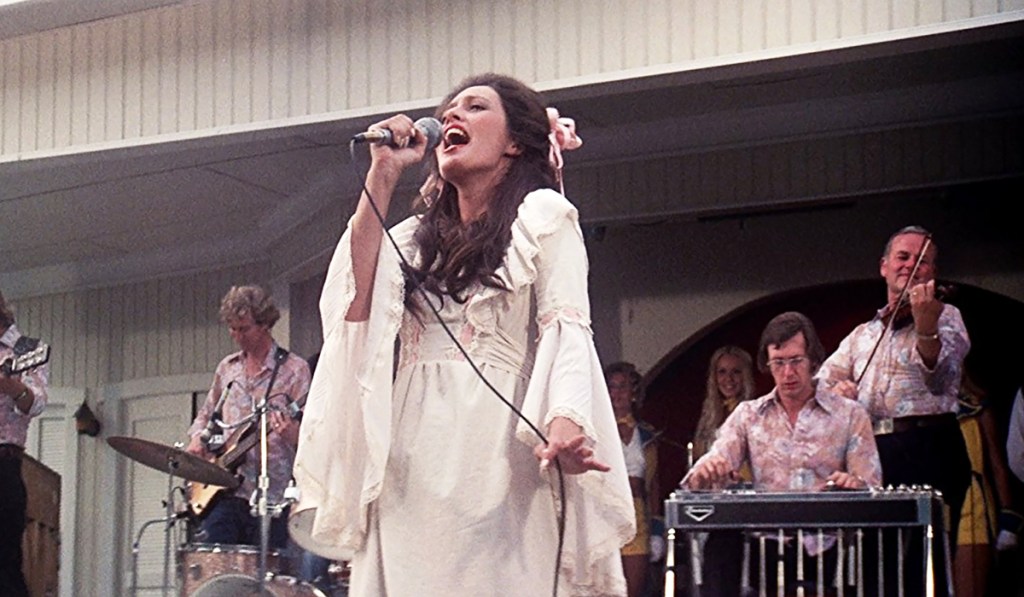
Part of what makes Robert Altman’s films so pliable as hangout watches is their structure, or lack thereof. Shaggy and episodic, Altman is more interested in mosaics than plot. Nashville, arguably his masterpiece, tosses 24 distinct characters into Music City for a chaotic weekend and observes the results. Altman and screenwriter Joan Tewkesbury wove the cast—Henry Gibson, Lily Tomlin, Ronee Blakley, Keith Carradine, Allan Garfield, Karen Black, Ned Beatty and Gwen Welles, among others—through a handful of big set pieces ranging from a monster auto pileup to a political rally at Nashville’s Parthenon. Surveying the traffic wreckage is a BBC reporter (Geraldine Chaplin). “I need something like this for my documentary,” she says. “It’s America. Those cars smashing into each other, and all those mangled corpses.” The line is a joke, but the sentiment is not. Clocking in at north of two and a half hours, Nashville is Altman’s metaphor for America. The film is noisy and sublime, ridiculous and heroic, hilarious and heartbreaking. “You bring your baggage when you walk into Altman’s motel,” writes Jan Stuart in The Nashville Chronicles, “and you check out with baggage that may or may not be your own.”
Honorable mention: Amarcord (1973, dir. Federico Fellini), California Split (1974, dir. Robert Altman), Chungking Express (1994, dir. Wong Kar-Wai), Claire’s Knee (1970, dir. Éric Rohmer), Closely Watched Trains (1966, dir. Jiří Menzel), Cooley High (1975, dir. Michael Schultz), Days of Being Wild (1990, dir. Wong Kar-Wai), Desperately Seeking Susan (1985, dir. Susan Seidelman), Diner (1982, dir. Barry Levinson), Eephus (2024, dir. Carson Lund), Fast Times at Ridgemont High (1982, dir. Amy Heckerling), The Fireman’s Ball (1967, dir. Miloš Forman), Friday (1995, dir. F. Gary Gray), Good Morning (1959, dir. Yasujirō Ozu), Il Sorpasso (1962, dir. Dino Risi), Jackie Brown (1997, dir. Quentin Tarantino), Kicking and Screaming (1995, dir. Noah Baumbach), The Last Detail (1973, dir. Hal Ashby), Lost in Translation (2003, dir. Sofia Coppola), Only Lovers Left Alive (2013, dir. Jim Jarmusch), Over the Edge (1979, dir. Jonathan Kaplan), Quadrophenia (1979, dir. Franc Roddam), The Station Agent (2003, dir. Tom McCarthy), The Wanderers (1979, dir. Philip Kaufman), Yi Yi (2000, dir. Edward Yang)


16 responses to “The 20 best hangout films”
[…] Richard Linklater’s scruffy comedy about Texas teens at the start of summer vacation 1976 does for Generation X what American Graffiti (see #3) did for boomers. Like that earlier picture, Dazed and Confused features young actors then on the cusp of stardom, including Ben Affleck, Parker Posey, Adam Goldberg, Milla Jovovich and a scene-stealing Matthew McConaughey (a University of Texas student at the time) whose performance is “all right, all right, all right!” The keg parties and potheads, the jocks and the hazing, and a classic-rock soundtrack—the film’s recreation of the 1970s is, as essayist Chuck Klosterman observed, less about how things were and more about how things are remembered. And that’s ultimately what summer is about—a period we romanticize and mythologize even while we are living it. In the film’s final image, four kids drive to Houston to get Aerosmith concert tickets while Foghat’s “Slow Ride” booms over the soundtrack. The scene is freedom, aimlessness and weed: the trinity of summer. (See more in The 20 best hangout movies.) […]
LikeLike
[…] Released three years after his groundbreaking Pulp Fiction, Quentin Tarantino’s two-and-a-half-hour follow-up struck some critics as self-indulgent and sluggish. Even Tarantino’s agent told a Miramax exec after the premiere, “There’s the ultimate case for not giving the director final cut.” But Jackie Brown is one of QT’s most emotionally dense works, as soulful as the R&B songs that punctuate the soundtrack, brimming with gallows humor, film-geek references, showy set pieces and the filmmaker’s idiosyncratic dialogue. Most rewarding is the casting of B-picture icons Pam Grier and Robert Forster. Based on Elmore Leonard’s Rum Punch, the plot kicks into gear when Los Angeles baddie Ordell Robbie (Samuel L. Jackson) whacks a would-be informant. A federal law enforcement sting and Ordell’s paranoia set in motion events that entangle Jackie Brown (Grier), a struggling flight attendant and money smuggler for Ordell. While Forster very nearly steals the picture as an aging bail bondsman, it is Grier, smart and sexy in the title role, who fully owns the film and makes it a compelling story of survivalism.(See more in The 20 best hangout movies.) […]
LikeLike
[…] In 1978, 22-year-old music journalist Cameron Crowe returned to high school, undercover style, for a series of stories in Playboy that went on to form the basis of his book Fast Times at Ridgemont High. Crowe’s eventual screenplay jibed with the sensibility of first-time director Amy Heckerling. The resulting alchemy transcended the routine teen exploitation flick that the studio expected. For every bit of stoner hilarity provided by Sean Penn as surfer Jeff Spicoli or misstep involving the courtship of Mark and Stacy (Brian Backer and Jennifer Jason Leigh), there is decidedly more serious fare. A scene in which Stacy loses her virginity to a 26-year-old stereo salesman in a dingy baseball dugout is as heartbreaking as it is awkwardly funny. The appealing cast boasted several standouts––including Phoebe Cates, Judge Reinhold and Forest Whitaker, to name a few––whose careers blossomed soon afterward. (See more in The 10 best R-rated comedies and The 20 best hangout movies.) […]
LikeLike
[…] a bowling lane, under the skirts of chorus line dancers donning 10-pin headdresses.(See more in The 20 best hangout movies and The 10 best R-rated […]
LikeLike
[…] The Last Detail is emblematic of 1970s New Hollywood: leisurely paced, shaggily plotted, and resolutely anti-authority. Beneath its scruffy exterior beats the heart of a sentimentalist. Directed by Hal Ashby, the story is half road trip, half coming of age. Signalman Billy “Badass” Buddusky (Jack Nicholson) and petty officer Richard “Mule” Mulhall (Otis Young) must deliver young Larry Meadows (Randy Quaid) to the naval prison for stealing a paltry $40 from a donation box. Along the way, the escorts develop an affection for the 18-year-old prisoner and resolve to show him a good time before his looming incarceration. They prod the gentle Larry into being more assertive. “Don’t you ever get mad at nobody?” Buddusky asks with genuine bewilderment. Buddusky’s own temperament tends to run from angry to furious. When a bartender refuses to serve the three and threatens to call the shore patrol if they don’t leave, Buddusky loses it. “I am the motherfucking shore patrol, motherfucker!” he erupts, slamming his gun on the bar top. The moment is vintage Nicholson, who gets to say “motherfucker” a lot here, thanks to screenwriter Robert Towne.(See more in The 20 best hangout movies.) […]
LikeLike
[…] For his directorial debut, Levinson mined his own past of growing up in Baltimore of the 1950s. While I can’t vouch whether his experiences were this fun and brimming with male camaraderie, Diner makes for a wonderful hangout flick. More episodic than plot-driven, it offers a tight-knit group of young friends––played by Steve Guttenberg, Mickey Rourke, Kevin Bacon, Daniel Stern, Paul Reiser and Tim Daly––uniting for a pal’s wedding (the Guttenberg character) on New Year’s Eve 1959. These are clear archetypes: Guttenberg is the rabid Baltimore Colts fan whose fiancée must pass a football test before the altar. Bacon the troubled genius, Rourke the smooth operator, Stern the young married and obsessed discophile whose wife (Ellen Barkin) pays the price for it, Reiser the talker, and Daly—well, he brings the number of friends to six. The actors have real chemistry, and they bat around Levinson’s sparkling dialogue as if they have done so for years. (See more in The 20 best hangout movies.) […]
LikeLike
[…] First-time filmmaker Carson Lund summons the spirit of Robert Altman in this wry ode to male bonding and baseball. The title references a rare variation of the curveball; the eephus is a pitch so slow, it lulls batters into forgetting to swing until it’s too late. That can also be a nifty metaphor for life, and Eephus is about life — midlife, to be exact — in all its ragged, oh-my-aching-back glory. In smalltown Massachusetts in the 1990s, two recreation-league ballclubs square off on a diamond soon to be demolished for commercial development. These men — some physically fit, some not, some young, some old — drink cheap beer, trash talk and wax rhapsodically about herniated discs and whatever else is on their minds. “Is there anything more beautiful,” one character opines as the game creeps into evening, “than the sun setting on a fat man stealing second base?” Short answer: no, there is not. The screenplay by Lund, Michael Basta and Nate Fisher is endlessly quotable. (See more in The 20 best hangout movies.) […]
LikeLike
[…] This May-December romance (see #12 for another) is one of moviedom’s greatest chaste love affairs. Stuck in a mammoth Tokyo hotel, Scarlett Johansson plays Charlotte, a bored, unhappily married young woman who meets an aging, unhappily married movie star, Bob Harris (Bill Murray), who is in town to shoot a whiskey commercial. These kindred spirits explore the city, karaoke and muse about life. Writing in The Ringer, Adam Layman opined that “what cuts like a double-edged sword is the feeling that Bob and Charlotte are meeting at exactly the wrong time as potential lovers and exactly the right time as soulmates.” Writer-director Sofia Coppola, in only her second work, creates a woozy, jet-lagged vibe that gives the film an enchanting, dreamlike quality. Like most dreams, Lost in Translation can be intriguingly opaque, as evidenced by its justly famous ending (spoiler alert!) where Bob whispers something to Charlotte that we cannot hear.(See more in The 20 best hangout movies.) […]
LikeLike
[…] “Many people I know in Los Angeles believe that the Sixties ended abruptly on August 9, 1969,” Joan Didion wrote in her celebrated essay collection, The White Album. On that night, five followers of cult leader Charles Manson broke into a house at 10050 Cielo Drive in Benedict Canyon, California—the home of filmmaker Roman Polanski and his wife, actress Sharon Tate—and shook a nation to its foundation. The murders of Tate, who was eight months pregnant, and four others are arguably the most infamous American crime of the 20th century. But what if it didn’t happen? In Once Upon a Time … in Hollywood, writer-director Quentin Tarantino imagines a scenario in which the Manson family members get their bloody comeuppance by mistakenly breaking into a neighbor’s house. In this alternative history, B-movie star Rick Dalton (Leonardo DiCaprio) conveniently has access to a flamethrower, stuntman Cliff Booth (Brad Pitt) is on an LSD trip and Cliff’s pet Pit Bull is hungry for hippie meat. Call it vigilante justice by way of cinematic alchemy—Tarantino’s rescue of Tate and her fellow victims is fantastical catharsis.(See more in The 20 best hangout movies.) […]
LikeLike
[…] rewound the scene.(See more in The 15 best school-centric films, The 10 best R-rated comedies, The 20 best hangout movies, and The 10 best bathroom scenes in […]
LikeLike
[…] Peter Sellers is a marvel of dry understatement here as a mentally childlike gardener whose limitations are mistaken for profundity. Set in Washington, D.C., Being There opens with Sellers’ Chance the gardener––who inadvertently reinvents himself as Chauncey Gardiner––forced to leave his lifelong home following the death of his employer and benefactor. Through circumstances befitting a screwball comedy, Chauncey is taken in by an uber-wealthy industrialist, played by Melvyn Douglas (who also appears in #6’s The Candidate) in an Academy Award-winning performance, and drifts into politics. Sellers inexplicably lost the Best Actor Oscar, but the film also has strong work from Shirley MacLaine, Richard Dysart and Jack Warden. Adapted by Jerzy Kosinski from his novel and directed with elegant restraint by Hal Ashby, Being There is satire with enough bite to sever arteries. Although Chauncey’s understanding of the world is confined to what he sees on TV––”I like to watch,” he routinely lets people know––the tube proves to be enough of a primer for Chauncey’s every utterance to be interpreted as brilliant. Insert your own modern-day comparison here.(See more in The 10 most memorable masturbation scenes in film.) […]
LikeLike
[…] This landmark of gross-out comedy begins with hapless high schooler Ted Stroehmann (Ben Stiller) thwarted from getting to senior prom with his dream date, Mary Jensen (Cameron Diaz), after his pecker gets caught in his zipper. Thirteen years later, Ted is still carrying a torch for Mary––one of many who are. Matt Dillon is a slimy private eye who tries to ingratiate himself to Mary, whose brother has an intellectual disability, by declaring, “I love retards.” Another admirer named Tucker (Lee Evans) feigns a British accent and a disability in order to get close to her. One person’s masturbation misfire becomes another’s hair gel. Filmmaking brothers Peter and Bobby Farrelly cranked out a slew of reliably lowbrow comedies in the late 1990s and early 2000s, but There’s Something About Mary transcends their oeuvre of tastelessness by combining raunch with charm and heart. How can you be offended by a flick that ends with outtakes of its cast lip-synching the Foundations’ bubblegum hit “Build Me Up Buttercup”?(See more in The 10 best bathroom scenes in film and The 10 most memorable masturbation scenes in film.) […]
LikeLike
[…] The Farrelly brothers have a special fondness for bathroom humiliations. Their lowbrow comic magnum opus, There’s Something About Mary, begins on a howlingly hysterical note. We are introduced to Teddy Stroehmann (Ben Stiller) at age 16, his mouth full of braces, as he arrives at the home of his mad crush, Mary Jensen (Cameron Diaz), to escort her to prom. After some teasing from Mary’s parents, Teddy excuses himself to the guest bathroom. He urinates, zips up—and promptly gets his scrotum caught in the zipper. Mary’s stepfather (Keith David) tries to diagnose the severity of the situation, asking, “Is it the frank or the beans?” The boy meekly says it’s a little of both. Police and fire arrive. A police officer tells Teddy to steel himself before yanking down on the errant zipper. Cut to a paramedic: “We got a bleeder!” And scene.(See more in The 10 best R-rated comedies and The 10 most memorable masturbation scenes in film.) […]
LikeLike
[…] Amarcord is a trip down memory lane with Federico Fellini as a delightfully unreliable tour guide. It is not so much a story as a series of vignettes in which the esteemed moviemaker revisits the coastal Italian town of Rimini, Fellini’s birthplace. In the Italian dialect of Romagna, the region that includes Rimini, Amarcord translates as “We remember.” Looking back through the clouded lens of adulthood, memories of youth take on mythical proportions. That canvas of innocence and immaturity is what interests Fellini—and what makes Amarcord so poignant. Set in the mid-1930s, Amarcord introduces us to Rimini’s inhabitants, particularly sex-obsessed teenager Titta (Bruno Zanin), his temperamental parents (Armando Brancia and Pupella Maggio) and voluptuous beautician Gradisca (Magali Noël). Amarcord abounds in dirty jokes and scatological humor elevated to high art. Boys at a Mussolini fascist rally conduct exercises with rifles while the girls perform with big hoops. Titta, in confession, reveals his sexual fantasies to a priest who is busy sniffing his own fingers. Even more outlandish: Titta’s mega-awkward encounter with a heavyset tobacconist whose boobs deserve their own zip code. There are sublime moments, too, springing from Fellini’s imagination. In one scene, Rimini’s townspeople wait in small boats on the Adriatic at night to glimpse an ocean liner. When it finally appears, a hulking apparition rising from blue fog, the image is as majestic as it is fake. Fellini demanded that the scene be re-shot because the ship looked too real. Amarcord celebrates memory in all its unapologetic embellishment.(See more in The 20 best hangout films.) […]
LikeLike
[…] Music is a big part of Chungking Express’ fizzy charm, but it’s the Mamas & the Papas’ “California Dreamin’” that makes the most indelible impression. Hong Kong filmmaker Wong Kar-wai makes the 1965 hit single the theme song for Faye (Faye Wong), the eccentric waif who works at the Midnight Express food stand, where she blares the tune constantly while bopping around to it. “You like noisy music?” asks Cop 663 (Tony Leung), the police officer who soon becomes the subject of Faye’s obsession. “Yes!” she shouts. “The louder, the better—stops me from thinking!”(See more in The 20 best hangout films.) […]
LikeLike
[…] Mark Rydell had directed television for years and a handful of movies when Robert Altman cast his friend in The Long Goodbye. The future director of The Rose and On Golden Pond channels chilling menace as Marty Augustine, a Shabbat-observant, seemingly genteel crime boss with a hair-trigger temper. Rydell provides the film’s most shocking moment, as Augustine coos over his girlfriend’s beauty one moment and smashes a Coke bottle across her face the next—simply to make it clear to detective Philip Marlowe (Elliott Gould) who he’s dealing with. Rydell is in only a handful of scenes, but his character’s barely contained brutality looms over the picture.(See more in The 15 best neo-noir films and The 20 best hangout films.) […]
LikeLike