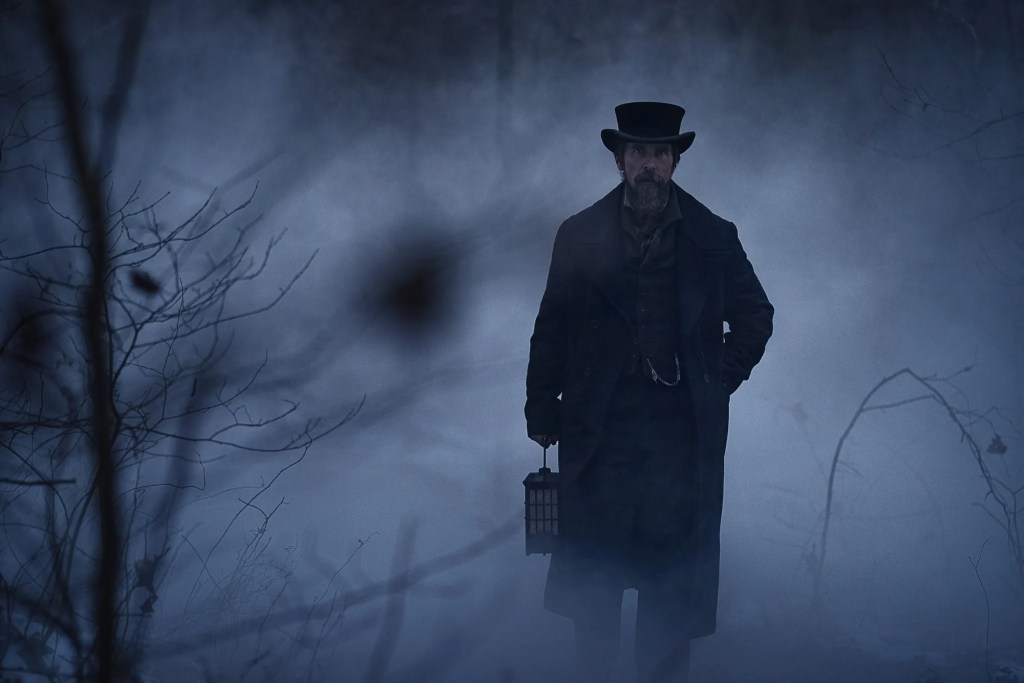
Serial killers fascinate and terrify us. Ted Bundy, Jeffrey Dahmer, and the BTK killer are disturbingly recognizable—monsters who are human in every outward respect. Early serial-killer films like Alfred Hitchcock’s The Lodger: A Story of the London Fog (1927) and Fritz Lang’s M (1931) created a blueprint for a genre that exploded in popularity alongside the true-crime boom. These are my selections for the 10 best.
10. The Girl with the Needle (2024, dir. Magnus von Horn)
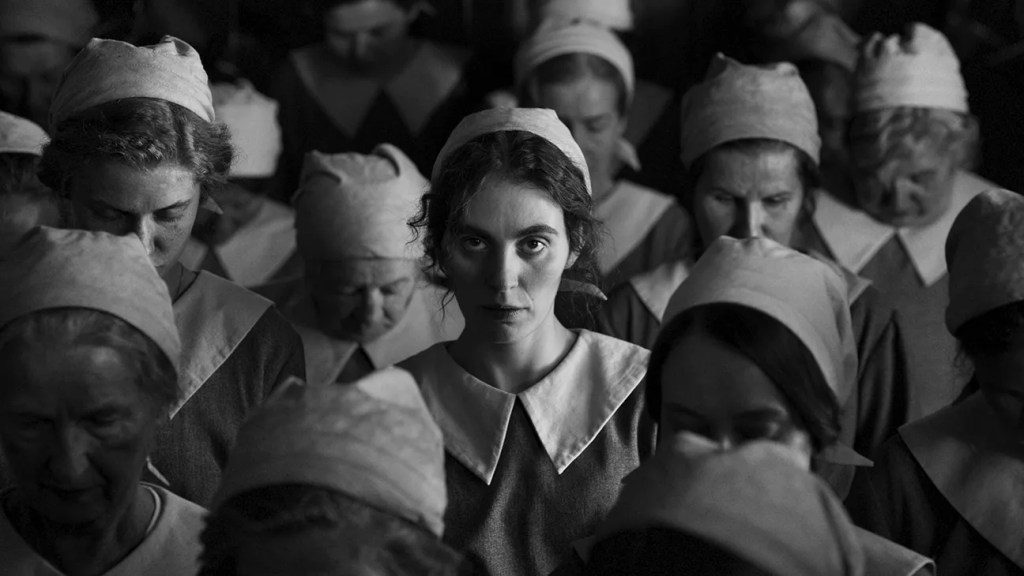
This Danish-language thriller is based on the grotesque real-life exploits of Dagmar Overbye, who is believed to have murdered as many as 25 children she was a caregiver for between 1913 and 1920. The protagonist, Karoline (Vic Carmen Sonne), is a destitute factory worker recently evicted by her landlord and discarded by the boss whose baby she carries. Despondent, Karoline is about to attempt aborting her child with a needle (hence the film title) when she meets Dagmar (Trine Dyrholm) and learns of the woman’s unusual side service of finding homes for unwanted children. Karoline delivers the baby and hands it over to Dagmar. In the process, the two women form a tenuous, troubling friendship, though Karoline remains unaware of what happens to the infants entrusted to Dagmar’s care. Stomach-turning revelations follow. Filmed in gorgeous black and white by Michael Dymek and featuring standout performances by Sonne and Dyrholm, Magnus von Horn’s The Girl with the Needle is handsomely crafted and utterly harrowing. You’ve been warned.
9. Henry: Portrait of a Serial Killer (1986, dir. John McNaughton)
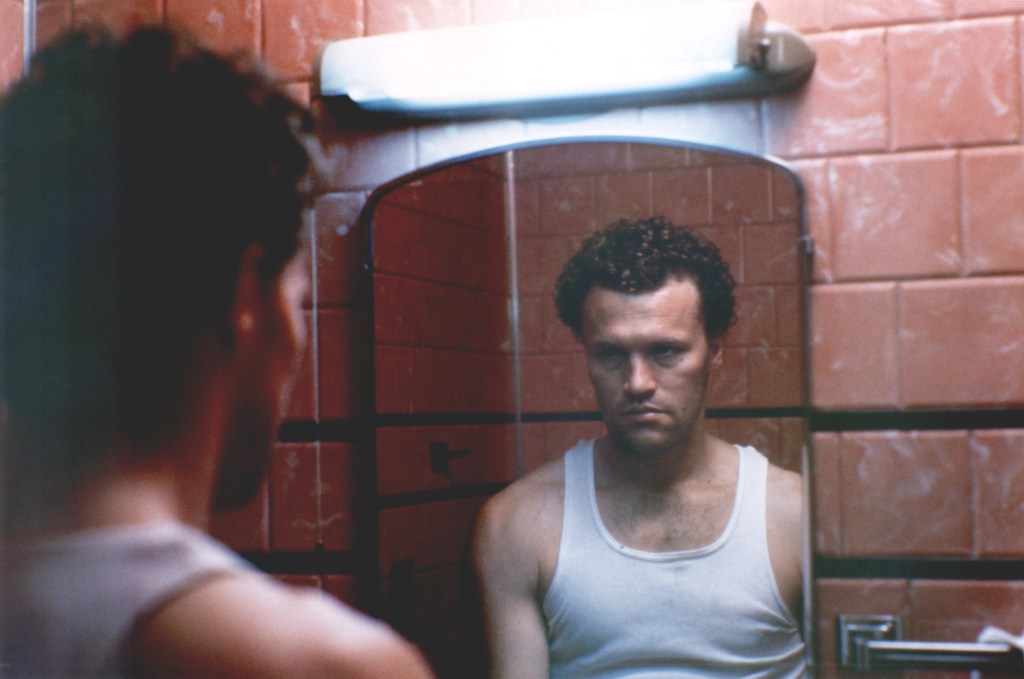
Don’t be deceived by the title. This is less “portrait” than an invitation to hang out with a homicidal maniac. The defiantly scuzzy Henry: Portrait of a Serial Killer has no interest in delving into why Henry must murder. Instead, as critic Roger Ebert wrote, it is concerned with “the pathology of a man for whom killing is not a crime but simply a way of passing time and relieving boredom.” The script by John McNaughton and co-writer Richard Fire is based loosely on Henry Lee Lucas, a convicted killer who later claimed, falsely, responsibility for hundreds of murders. As the eponymous drifter, Michael Rooker is captivating in his film debut. After bouncing around the country, Henry settles in Chicago with his friend Otis (Tom Towles) and Otis’ sister, Becky (Tracy Arnold). A tense roommate dynamic evolves, as Henry turns Otis on to senseless killing and Becky is turned on by Henry. Shot in 16mm on a shoestring budget, the film was completed by 1986, but a lengthy battle over its initial X rating delayed its theatrical release until 1990. The banality of evil has become cliché, but few stories of serial killers have approached their subject with so little sensationalism or psychological underpinnings.
8. Vengeance Is Mine (1979, dir. Shōhei Imamura)
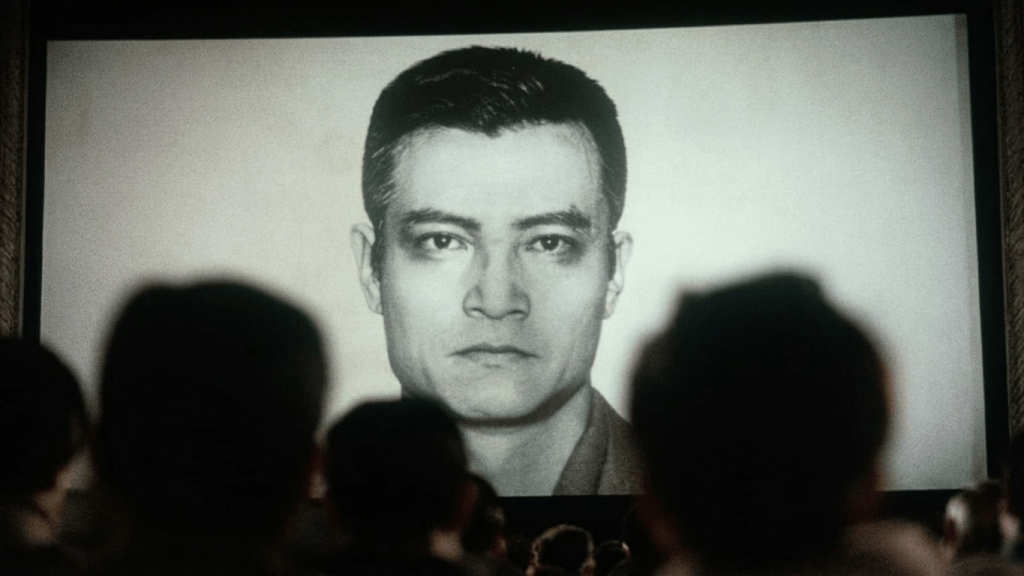
Whose vengeance? The murder victims here are innocents whose only mistake is being in the wrong place at the wrong time. Vengeance Is Mine is based on Ryūzō Saki’s nonfiction book detailing Akira Nishiguchi, a Japanese serial killer who murdered five people in 1963 and 1964 until his eventual capture, conviction, and execution. The Nishiguchi stand-in is Iwao Enokizu (Ken Ogata), a friendly but unremarkable salesman whose killing spree prompts a 78-day nationwide manhunt. Beyond an opening scene of Iwao as a child witnessing a public humiliation of his father, filmmaker Shōhei Imamura stays at arm’s length from what drives the man to kill. Iwao can be charming; his affability appears genuine and not an act to lull victims. He simply has an impulse to destroy. Vengeance Is Mine introduces a swath of interesting characters as Iwao travels across Japan posing as a Tokyo college professor. He takes on several lovers, most notably the lonely owner of a modest inn (Mayumi Ogawa), while the wife he abandoned, Kazuko (Mitsuko Baisho), falls in love with her father-in-law (Rentarō Mikuni). The forays into melodrama and black comedy make the movie difficult to pin down, much like its enigmatic killer.
7. 10 Rillington Place (1971, dir. Richard Fleischer)
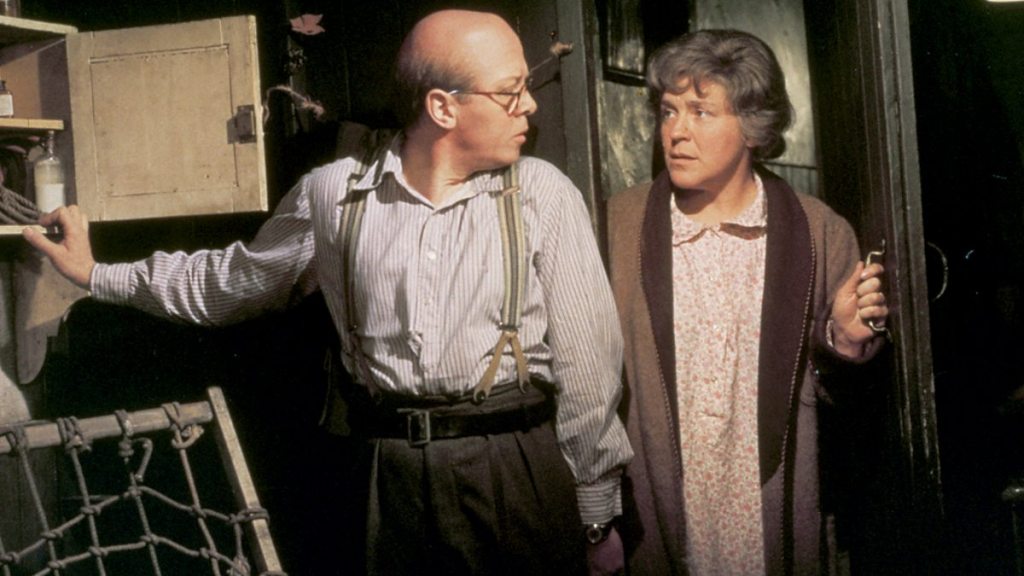
This downbeat, meticulously researched thriller tells the true story of John Reginald Christie (Richard Attenborough), who murdered at least eight people in England before his execution in 1953. The case was not only tabloid fodder; it underscored the fallibility of capital punishment and factored into Great Britain’s elimination of the death penalty. Tim Evans (John Hurt), a neighbor of Christie’s, had been convicted and hanged for the slaying of his 20-year-old wife and their infant daughter. Police later learned that Christie was the actual killer, having lured Beryl Evans (Judy Geeson) into his confidence by telling the pregnant woman that he could perform an abortion. Attenborough makes for a frighteningly unassuming monster—a timid, bespectacled fellow always ready with a spot of tea when he isn’t gassing and raping his female victims. Hurt is nearly as memorable in one of his earliest roles as the simple-minded, painfully gullible Tim. Director Richard Fleischer, who had made another serial-killer picture three years earlier with The Boston Strangler, envelops 10 Rillington Place in the moodiness of a perpetually overcast postwar London.
6. Memories of Murder (2003, dir. Bong Joon Ho)
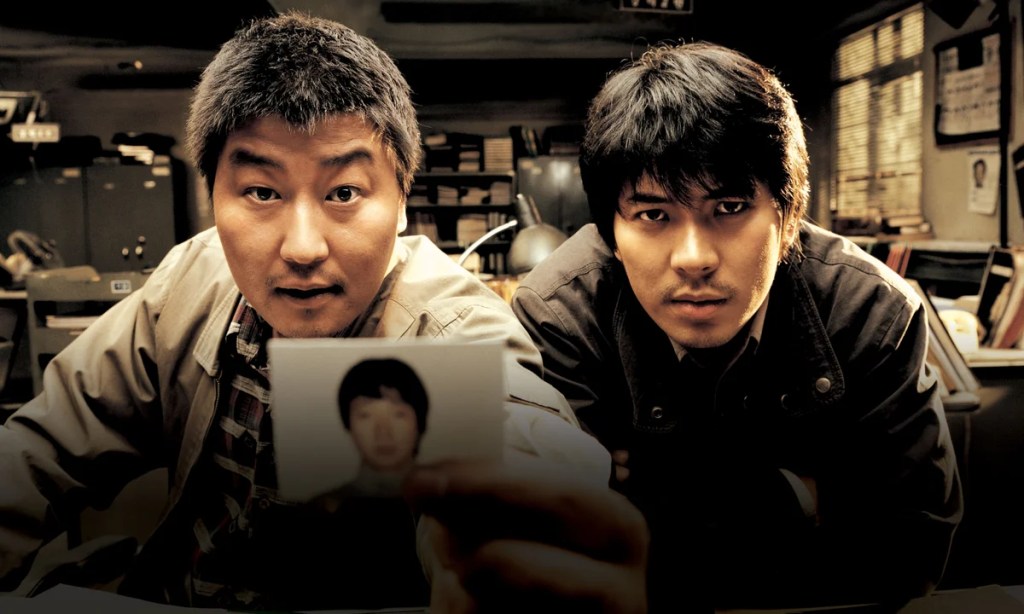
It is 1986, and a rural province in South Korea is in the throes of what many believed to be the country’s first known serial killer. The body of the latest victim, a young woman, is discovered in a drainage ditch in the middle of nowhere. The two local police investigators seem woefully inept. Park Doo-man (Song Kang-ho) claims he can determine a person’s culpability by looking into their eyes, while his partner Cho Yong-koo (Kim Roi-ha) prefers beating suspects until they confess or pass out. CSI: South Korea, it ain’t. Park and Cho look for the low-hanging fruit of suspects, namely a mentally challenged man (Park Noh-shik) who had followed around one of the victims. They are soon joined by a hotshot detective from Seoul, Seo Tae-yoon (Kim Sang-kyung), who is rightly disgusted by the local’s methods. Equal parts police procedural and pitch-black comedy, Memories of Murder is a marvel of ever-shifting tone. Bong Joon Ho continually subverts expectations in this fictionalized account of law enforcement’s efforts in the late 1980s to track down a serial killer responsible for 10 rapes and murders around the town of Hwaseong south of Seoul. Bong’s international breakthrough, the film renewed interest in the case, which remained unsolved until DNA evidence identified Lee Choon-jae in 2019.
(See more in The 15 best neo-noir films.)
5. M (1931, dir. Fritz Lang)
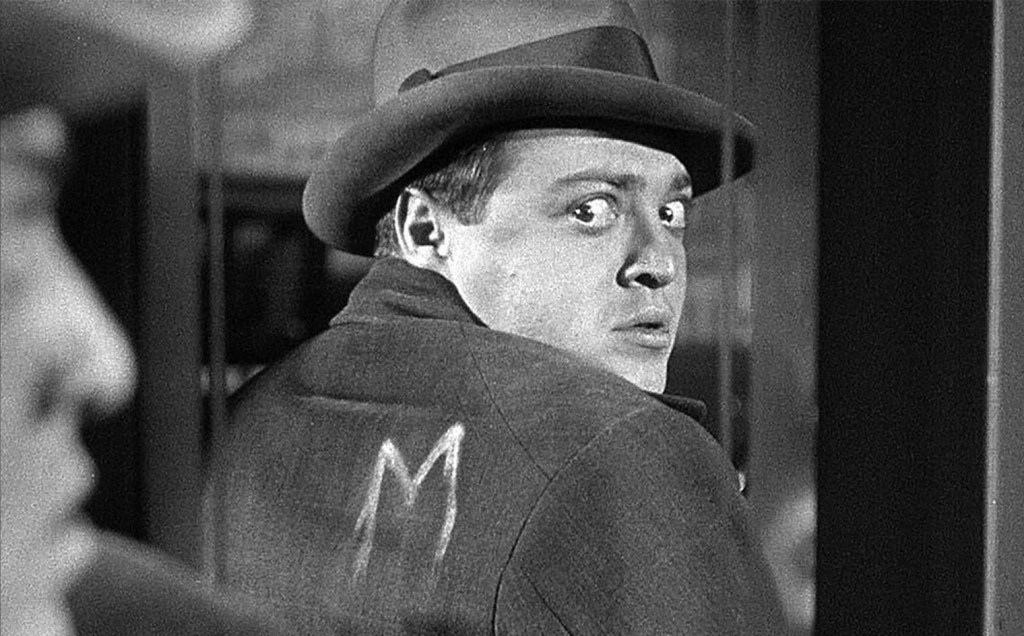
One cannot overestimate the influence of Fritz Lang’s first sound masterpiece. Its nocturnal atmospherics are evident in film noir, police procedurals, and, of course, serial-killer movies. M made a worldwide star of Peter Lorre as Hans Beckert, a murderer of children in an unnamed German city. His reign of terror has thrown the community into chaos. Police, under pressure to find the killer, are cracking down on the criminal underworld. In turn, crime bosses are motivated to mete out justice themselves in hopes of resuming their normal thievery. Beckert is identified—given away by his penchant for whistling Edvard Grieg’s “In the Hall of the Mountain King”—and hauled before a kangaroo court where the thieves and assorted crooks reject his plea to be handed over to the authorities. “So you can plead insanity and spend the rest of your life being cared for by the state?” says “the Safecracker” (Gustaf Gründgens) who presides over the sham court. “You must be taken out of action! You must go!” Lang and co-writer Thea von Harbou (Lang’s wife at the time) were partly inspired by the then-recent case in Düsseldorf of Peter Kürten, whose murder convictions came only a month before M’s release. Lorre’s madman is very much a singular creation, a short, chubby fellow with bulging eyes and a nervous manner that gives the impression of someone who is terrified of himself.
4. American Psycho (2000, dir. Mary Harron)
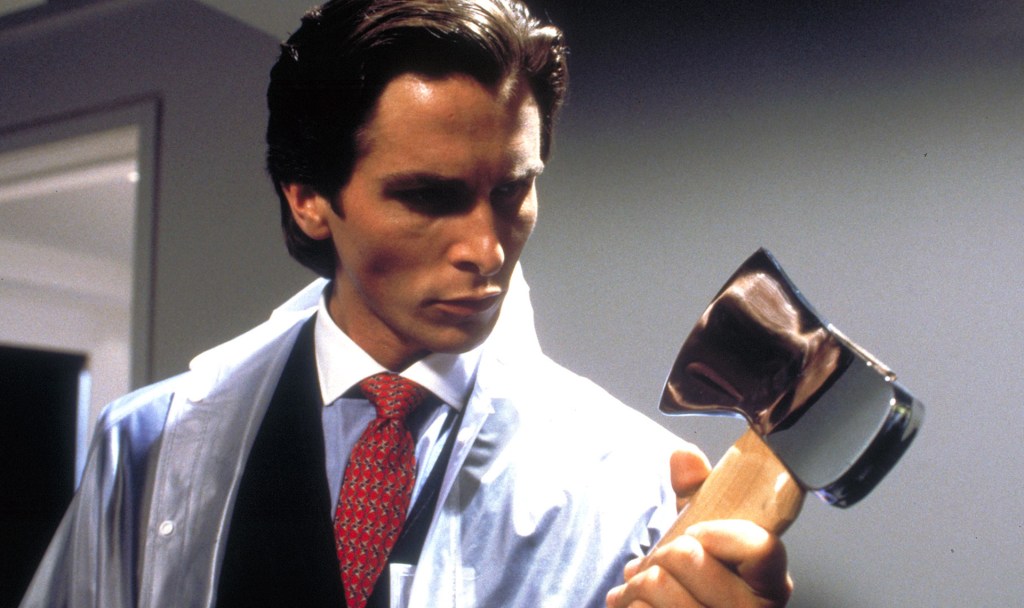
American Psycho is the blackest of black comedies while losing none of its horror. Adapted from Bret Easton Ellis’ 1991 novel, it stars Christian Bale as New York investment banker/serial killer Patrick Bateman, a role the actor took after Leonardo DiCaprio dropped out (reportedly at the urging of Gloria Steinem). No knock on DiCaprio or others who had been considered (including Ewan McGregor and Billy Crudup), but it’s difficult to imagine anyone but Bale as the status-obsessed, narcissistic psychopath whose interests range from Valentino suits to the watermark of a business card. The cast includes strong work from Reese Witherspoon, Chloë Sevigny, and Willem Dafoe, among others, but this is squarely Bale’s movie. Speaking of “squarely,” Bateman’s hatcheting of a business rival (Jared Leto) while delivering an unsolicited dissertation on Huey Lewis and the News’ song “It’s Hip to Be Square” is a particular highlight. Many had deemed the book unfilmable, but writer-director Mary Harron and co-writer Guinevere Turner didn’t want to make torture porn. Instead, they mined the comic possibilities of a homicidal psycho on 1980s Wall Street. A cutthroat mindset turns literal. Like the source material, their film preserves Ellis’ ambiguity about how much of Bateman’s violence exists outside his twisted imagination.
(See more in The 10 best black comedies.)
4. Shadow of a Doubt (1943, dir. Alfred Hitchcock)
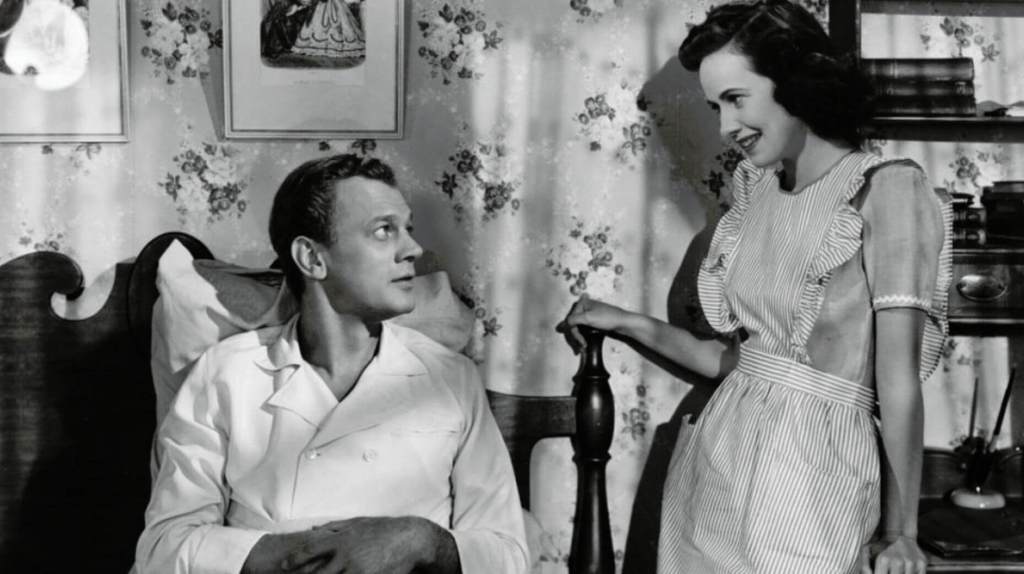
Of all Alfred Hitchcock’s forays into the macabre world of the serial killer, this is his most quietly searing. With all due respect to the landmark Psycho (1960) and the underrated Frenzy (1972), Shadow of a Doubt is nearly flawless. Joseph Cotten is Charlie Oakley, visiting his sister and her family in idyllic Santa Rosa, California. Charlie is dapper, worldly, and adored by his teenaged niece and namesake, Charlie Newton (Teresa Wright). The two Charlies are no accident, as Hitch and screenwriters Thornton Wilder (he of Our Town fame), Sally Benson, and Alma Reville (Mrs. Hitchcock) make duality a central theme. Despite the pair’s close bond, young Charlie begins to suspect her beloved uncle has a darker, scary side—and might just be the “Merry Widow” killer who specializes in murdering wealthy, middle-aged widows. Rants like this from Uncle Charlie start to crack her adoration: “Do you know the world is a foul sty? Do you know, if you rip off the fronts of houses, you’d find swine? The world’s a hell. What does it matter what happens in it?” Yet Hitchcock also urges audiences to identify with Uncle Charlie. “What it boils down to is that villains are not all black and heroes are not all white; there are grays everywhere,” Hitch told fellow director François Truffaut. “Uncle Charlie loved his niece, but not as much as she loved him.” Hitchcock counted the film as among his favorites from his catalog, and it’s easy to understand why.
2. The Silence of the Lambs (1991, dir. Jonathan Demme)
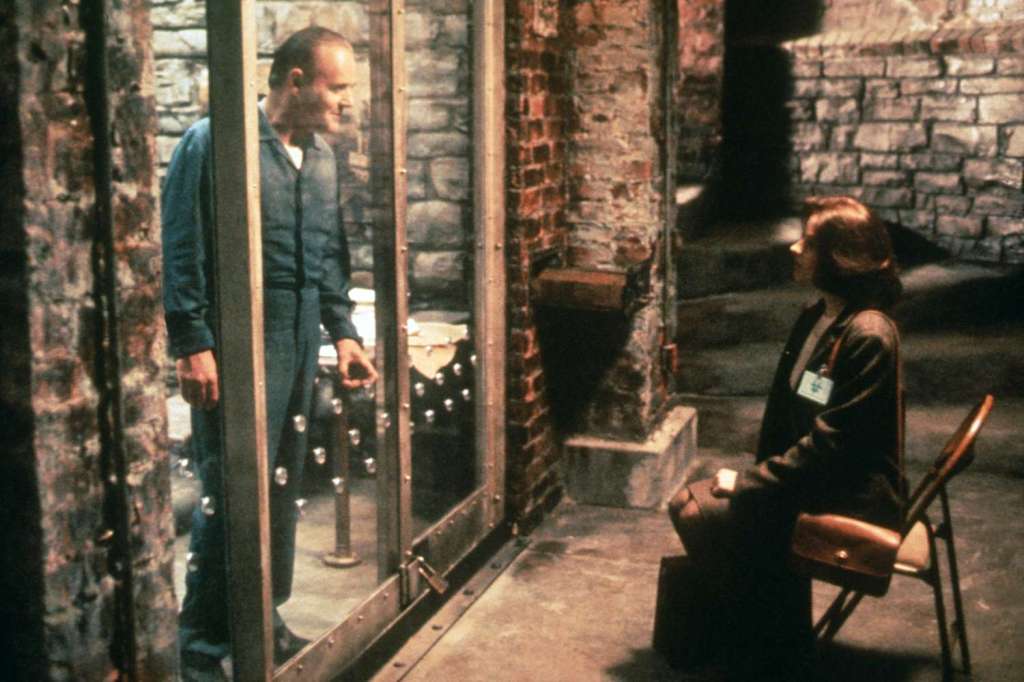
It’s unusual for a genre picture to receive recognition from the Academy Awards, much less one that sweeps the big five honors of Picture, Actor, Actress, Director, and Adapted Screenplay—but The Silence of the Lambs is that rarity. Jonathan Demme’s adaptation of Thomas Harris’ 1988 novel is suspenseful, unsettling, and impeccably crafted. It earns its bona fides as a serial-killer masterpiece while transcending the genre. Scripted by Ted Tally, it concerns the FBI trying to track down a murderer who calls himself Buffalo Bill (Ted Levine) and is harvesting the skin of women to make himself a suit. A rookie agent, Clarice Starling (Jodie Foster), is given the unenviable job of trying to elicit insights from an incarcerated serial killer. That inmate, Dr. Hannibal Lecter (Anthony Hopkins)—brilliant, conniving, cannibalistic—is soon locked in a psychological duel with Starling. Clarice needs information, which Lecter is willing to provide for the price of probing the agent’s psyche. The energy between Foster and Hopkins is electric, but the movie boasts solid acting throughout, and Levine’s Buffalo Bill is truly the stuff of nightmares. The Silence of the Lambs’ impact on popular culture remains seismic—Lecter is a pop-culture milestone all by himself—but shouldn’t be allowed to overshadow the elegant filmmaking that made it a critical and commercial blockbuster.
(See more in The 20 best needle drops in film.)
1. Zodiac (2007, dir. David Fincher)
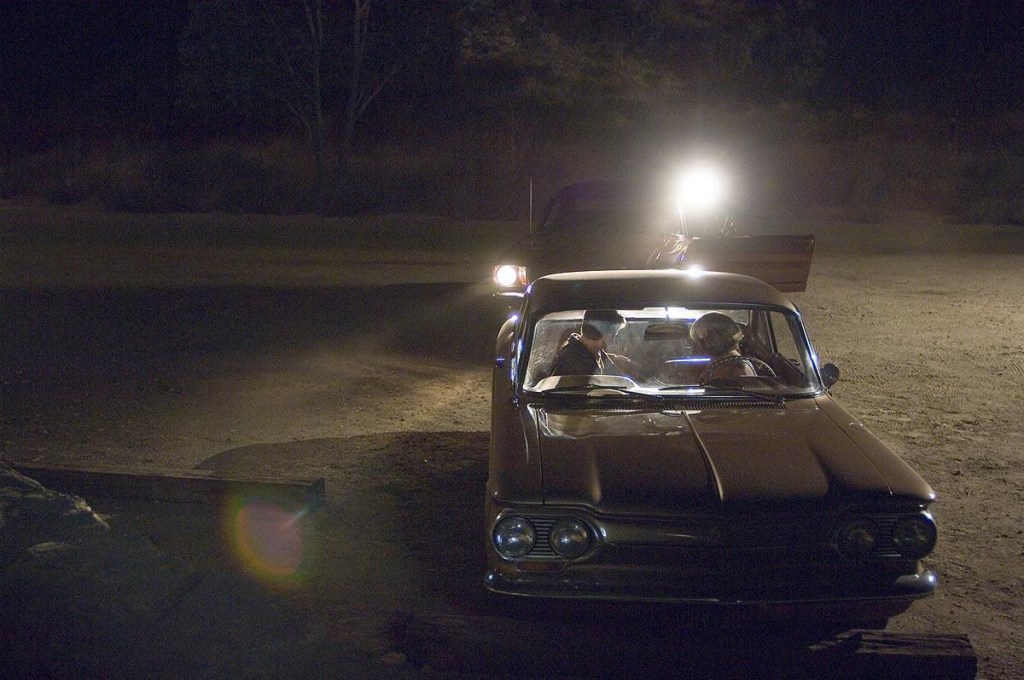
In the late 1960s and early ‘70s, a killer who called himself the Zodiac terrorized the San Francisco Bay Area, murdering at least five people and frequently taunting authorities with cryptic letters to news outlets. At the time, David Fincher was growing up in Marin County, where news of the Zodiac routinely splashed across television broadcasts and newspaper headlines. Law enforcement never identified the murderer, whose correspondence ended by 1974, but the imprint of that traumatic period remained with Fincher into adulthood. He revisits that saga in Zodiac from the vantage point of three men close to the case. James Vanderbilt’s script is based on two books authored by Robert Graysmith, played here by Jake Gyllenhaal, a San Francisco Chronicle political cartoonist whose fascination with the case eventually dominates his life. He is joined in his efforts by Chronicle crime reporter Paul Avery (Robert Downey Jr.) and San Francisco police detective Dave Toschi (Mark Ruffalo). Fincher’s attention to detail is evident in every frame of the movie, which suggests the most likely Zodiac suspect was a one-time teacher and mechanic named Arthur Leigh Allen (John Carroll Lynch), although nothing was proven conclusively. The Zodiac killer appears in only a handful of scenes, but each one is memorably disturbing. The film opens in July 1969, when Zodiac attacks Mike Mageau and Darlene Ferrin (Lee Norris and Ciara Moriarty) at a lovers’ lane, accompanied by the flower-child psychedelia of Donovan’s “Hurdy Gurdy Man.” Fincher was no stranger to the serial-killer genre; his Se7en in 1995 is one of the best. This time, however, the director’s focus is on the investigative process and its slide into obsession. In a way, the investigators become victims of the Zodiac, too—only they live to tell the tale.
(See more in The 20 best needle drops in film, The 15 best neo-noir films and The 10 best journalism films.)
Honorable mention: The Boston Strangler (1968, dir. Richard Fleischer), Cure (1997, dir. Kiyoshi Kurosawa), Frenzy (1972, dir. Alfred Hitchcock), I Saw the Devil (2010, dir. Kim Jee-woon), Manhunter (1986, dir. Michael Mann), Monster (2003, dir. Patty Jenkins), The Night of the Hunter (1955, dir. Charles Laughton), Peeping Tom (1960, dir. Michael Powell), Psycho (1960, dir. Alfred Hitchcock), Se7en (1995, dir. David Fincher)
 Cutting to the Chase with Phil Bacharach
3 responses to “The 10 best serial-killer films”
[…] British reviewers and moviegoers assailed Peeping Tom upon its release as grotesque trash, and it essentially ended the career of its director, Michael Powell. Critics couldn’t understand how such perverse rubbish could have come from Powell, whose collaboration with Emeric Pressburger yielded some of the UK’s greatest pictures, including The Red Shoes, Black Narcissus and The Life and Death of Colonel Blimp. As with so many great movies, Peeping Tom was simply ahead of its time. Its portrait of a psychologically damaged serial killer is disturbing stuff, but hardly scandalous. “It is a film in which you cannot tell disgust from exhilaration,” writes film scholar David Thomson, “because it is gripped by the real sadism of a serial killer.” Karlheinz Böhm is effectively creepy as Mark Lewis, a photographer with a compulsion to film women at the moment of their impalement on the sharpened leg of his tripod. Mark’s solicitous demeanor and awkwardness around women echoes that of Psycho’s Norman Bates (see #3), who was also scaring audiences that same year.(See more in The 10 best films about voyeurism and The 10 best serial-killer movies.) […]
LikeLike
[…] what we value and why we fear what we do. Excluding serial killers—a subgenre fertile enough to warrant its own list—below are my picks for the 10 best movies based on real-life […]
LikeLike
[…] the couple will become two of Zodiac’s victims, although Mageau survived the attack.(See more in The 10 best serial-killer films, The 15 best neo-noir films and The 10 best journalism […]
LikeLike