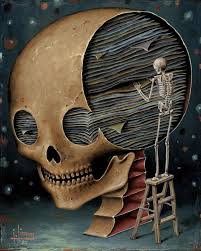
Spanish philosopher George Santayana famously cautioned that those who don’t remember the past are condemned to repeat it, but cinema is much more ambivalent about memory. In the movies, memories can be imprisoning or freeing—or simply untrustworthy. While memory always factors into storytelling, the film titles below have tackled the subject in particularly interesting ways.
10. The Tale (2018, dir. Jennifer Fox)
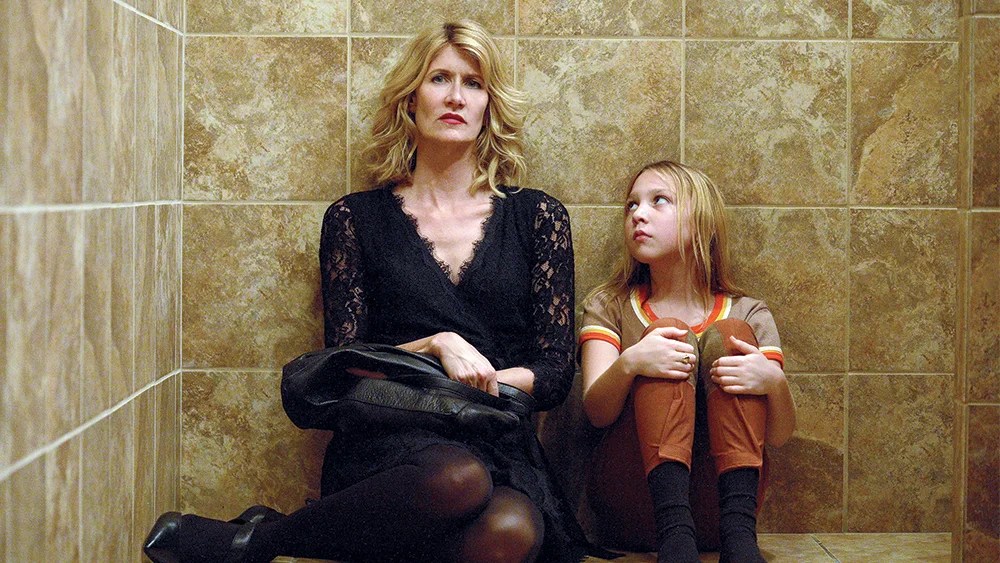
As a documentary filmmaker, Jennifer Fox is in the business of recording truth. Unearthing honesty within herself, however, can be a different beast altogether, as she chronicles in The Tale, a dramatization of her efforts to peel away misleading memories of what she had long believed was a youthful fling. Laura Dern plays Jennifer, who at age 48 is forced to confront a repressed childhood trauma after her mother (Ellen Burstyn) comes across a school paper that Jennifer wrote as a girl. The discovery prompts Jennifer to revisit when she was 13 and enamored with a horseback-riding instructor (Elizabeth Debicki) and the woman’s lover, a seemingly nurturing running coach named Bill (Jason Ritter). The Tale can be emotionally pummeling, but it is a grim reminder that memories, especially for survivors of childhood sexual abuse, can lie.
9. Coco (2017, dir. Lee Unkrich and Adrian Molina)
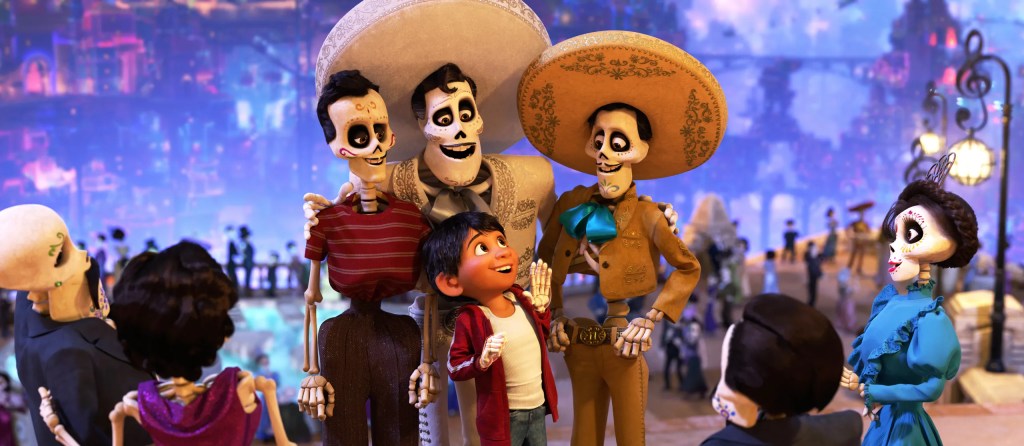
This animated gem from Pixar is nominally about Mexico’s Day of the Dead, but its true subject is immortality—or, to be precise, the role of remembrance in keeping departed loved ones alive, of a sort. Twelve-year-old Miguel Rivera (voiced by Anthony Gonzalez) aspires to be a musician but has the misfortune of being in a family that has long banned music. His great-great-grandfather evidently abandoned his wife and child to pursue a career as a guitar player. Through magical circumstances, Miguel winds up in the Land of the Dead, where he learns some revelations about his family tree. Among the movie’s more interesting notions is how people’s existence in the afterlife is dependent on the memory of the living whom they have left behind. Once someone is no longer remembered by a living soul, the deceased vanishes into nothing. If that sounds a bit heavy for a kid-friendly flick, fear not. Coco is so inventive and engaging, you might just forget that it’s about dead people.
(See more in The 10 best films that contemplate an afterlife.)
8. Total Recall (1990, dir. Paul Verhoeven)
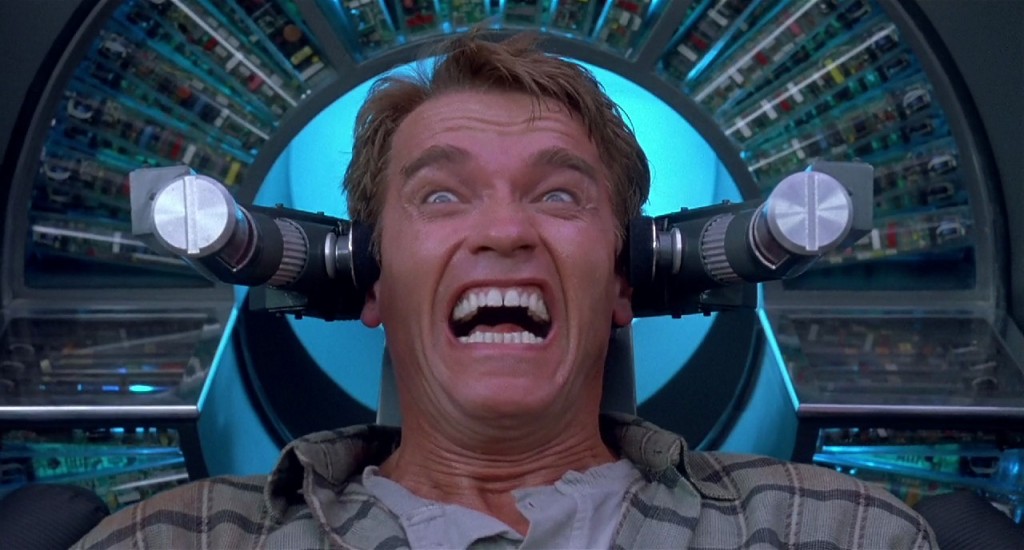
Total Recall is a puzzlebox disguised as an Arnold Schwarzenegger science-fiction actioner. Although Paul Verhoeven outfits this adaptation of a Philip K. Dick short story in the filmmaker’s trademark glossiness, its central conundrum is the trustworthiness of memory—a theme Dick explored in other sci-fi, including his 1968 novel that inspired Blade Runner (1982). In a futuristic world, Schwarzenegger plays Doug Quaid, a regular Joe—albeit more muscle-bound than most Joes—who discovers that the memories defining his life are a sham. A happily married construction worker, he pines to visit the colonized world on Mars, a place he has never been. Or has he? In visiting Recall Inc., a company that implants false memories of exotic vacations, Doug learns that he was a secret agent on Mars whose memories were erased and replaced. But Total Recall continually leaves the audience guessing as to which memories are the fakes. The premise is brainy, but the execution is all brawn, as Schwarzenegger battles his way through a sinister conspiracy that includes a memorable, early appearance from Sharon Stone. Verhoeven sandwiched Total Recall between RoboCop (1987) and Basic Instinct (1992), an impressive run that highlighted his penchant for arresting visuals, social satire, and a dollop of sleaze.
7. Sans Soleil (1983, dir. Chris Marker)

This avant-garde work turns on the conceit that it is the travelogue of a fictional cameraman about his experiences in Japan, Guinea-Bissau, Iceland, Paris, the Cape Verde islands, and elsewhere. Sans Soleil, which translates in French as “sunless,” purports to be a documentary, but this remarkable picture from writer-director Chris Marker (also its cinematographer, editor, and music composer) is more of a tone poem. Over disparate, 16mm footage that Marker gathered over decades, a female narrator (Alexandra Stewart in the English-language version) muses in voiceover on the nature of memory, time, spirituality, television, phalluses, and just about anything else that strikes Marker’s fancy. “I will have spent my life trying to understand the function of remembering, which is not the opposite of forgetting, but rather its lining,” says the narrator. “We do not remember. We rewrite memory much as history is rewritten.” Sans Soleil is sometimes baffling, occasionally frustrating, often lyrical, but mostly fascinating.
6. Hiroshima Mon Amour (1959, dir. Alain Resnais)
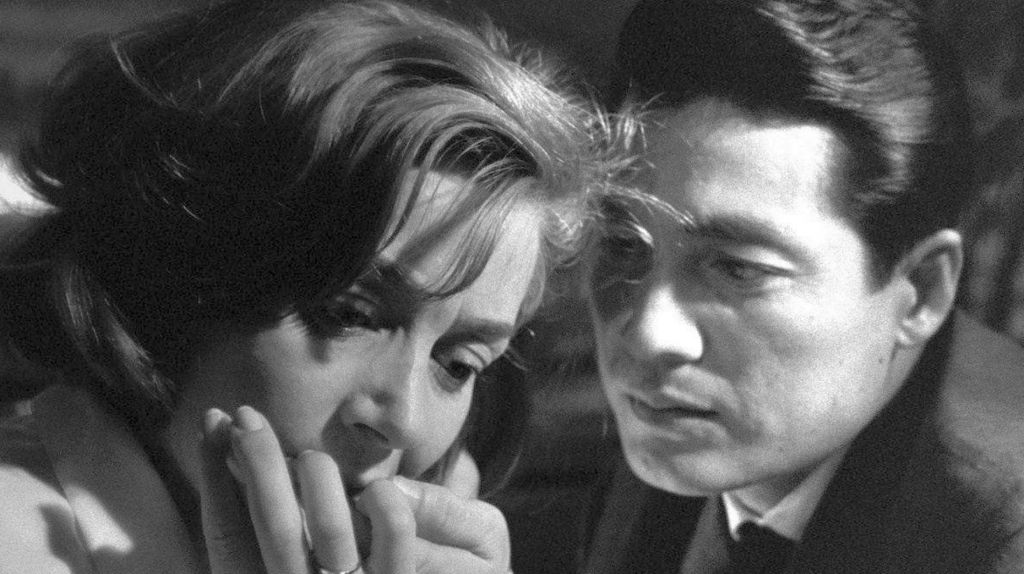
Emmanuelle Riva is captivating as a French actress on location in Hiroshima for a film shoot when she hooks up with a Japanese architect, played by Eiji Okada, whom she meets in a bar. Both are married, but they connect through the experience of tragedies entwined with World War II. In Alain Resnais’ extraordinary feature debut, he and screenwriter Marguerite Duras weigh the memory of collective traumas against that of personal trauma. The architect is haunted by the horrors that the atomic bomb unleashed on his home city. The actress is tormented by the memory of her love affair with a German soldier during that country’s occupation of France—a relationship that resulted in her social ostracization and public humiliation. Resnais further explored the mysteries of memory two years later in Last Year at Marienbad. As Matthew Strohl succinctly writes in Hard to Watch: How to Fall in Love with Difficult Movies, Hiroshima Mon Amour is about “the impossibility of forgetting traumatic experience and Marienbad is about the impossibility of remembering it.”
5. Citizen Kane (1941, dir. Orson Welles)
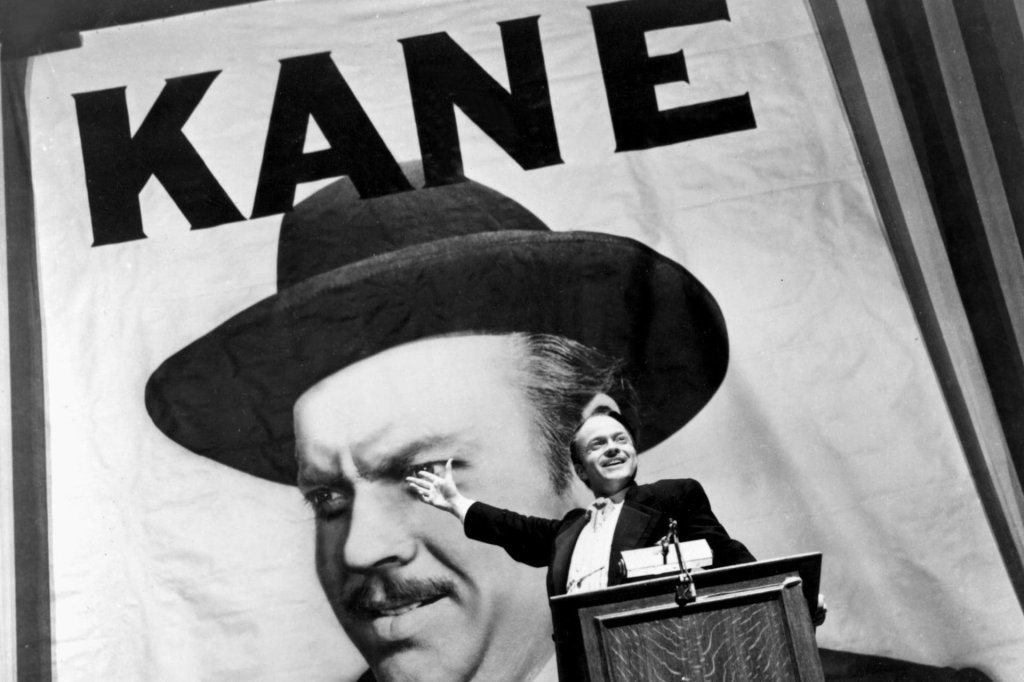
As Rashōmon (see #4) would also illustrate nine years later, Orson Welles’ extraordinary debut plays on the understanding that memory is inexorably influenced by what one wants to believe. Jerry Thompson (William Alland), the reporter assigned to investigate the titular Charles Foster Kane (Welles), finds the memories of the deceased man’s friends, associates, and former lover to be remarkably slippery. Taken together, they paint Kane, a newspaper mogul based on the real-life William Randolph Hearst, as a bundle of contradictions. Did memory influence how they saw Kane, or were their memories sculpted by how they perceived him to be? For me, the film’s most poignant observation about memory comes from Kane’s loyal associate, Mr. Bernstein (Everett Sloane). When interviewed by Thompson, he reflects on the ineffability of recollection, telling the reporter how many decades earlier he saw a girl in a white dress and carrying a white parasol. “I only saw her for one second. She didn’t see me at all, but I’ll bet a month hasn’t gone by since that I haven’t thought of that girl,” he says. Welles said the scene, which he credited to Herman J. Mankiewicz, was his favorite in the picture.
(See more in The 10 best political films and The 10 best journalism films.)
4. Rashōmon (1950, dir. Akira Kurosawa)
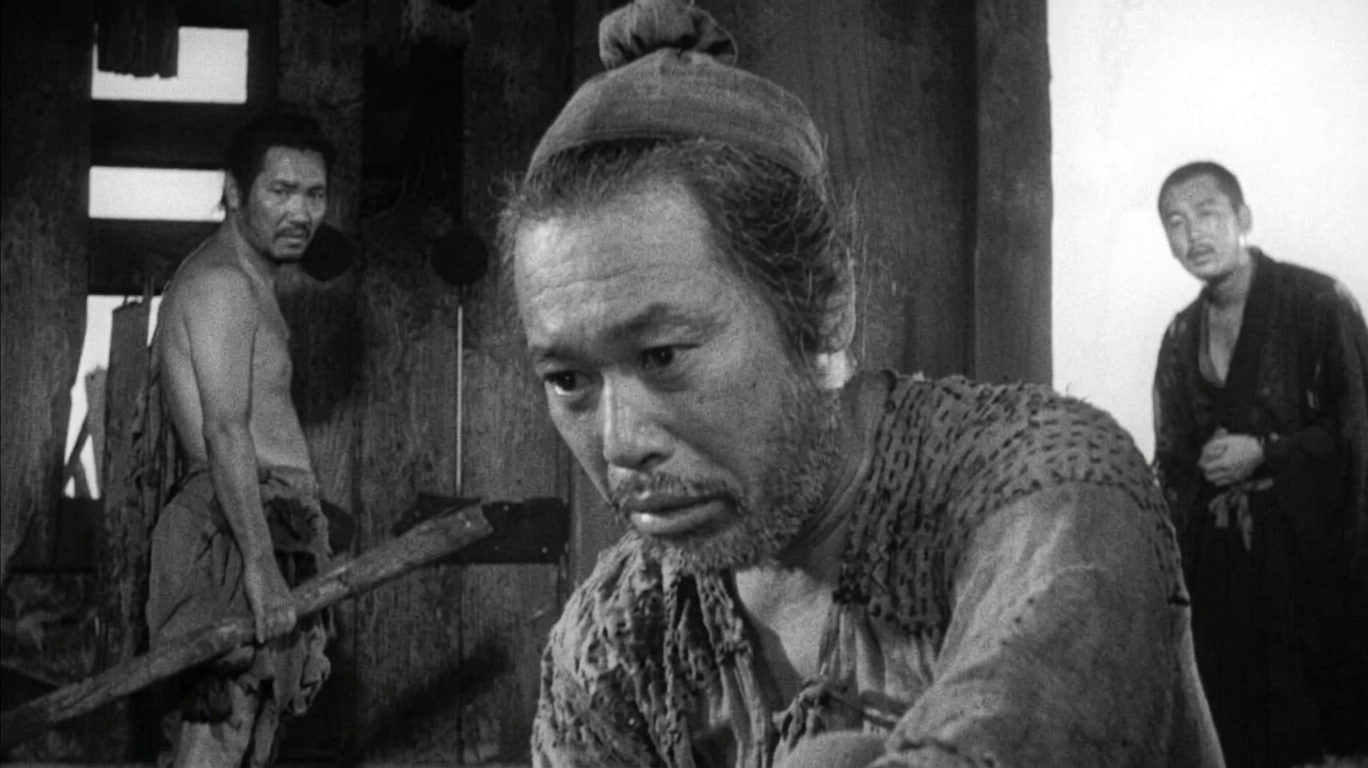
Set in the 12th century, Rashōmon is framed by three men at the Rashōmon gate as they wrestle with the facts of a recent incident while taking shelter from a torrential rainstorm. Three days earlier, a samurai (Masayuki Mori) was killed and his wife (Machiko Kyō) raped after they were ambushed in the woods by a notorious bandit named Tajōmaru. The events are horrific, but almost as troubling for the three men is how a trial failed to identify the samurai’s murderer. All the witness testimony—including that of Tajōmaru, the wife, and the dead samurai himself, who testifies through a medium—offers incompatible accounts of what actually occurred. Akira Kurosawa’s masterpiece became Japan’s first international hit after World War II, winning the Golden Lion at the Venice International Film Festival and an Academy Honorary Award as Best Foreign-Language Film. While the facts surrounding Rashōmon’s success are beyond dispute, the movie posits that the innate unreliability of memory prevents absolute truth from ever being known. “It’s human to lie,” says the commoner (Kichijirō Ueda), one of the men at the gate. “Most of the time we can’t even be honest with ourselves.”
3. Memento (2000, dir. Christopher Nolan)
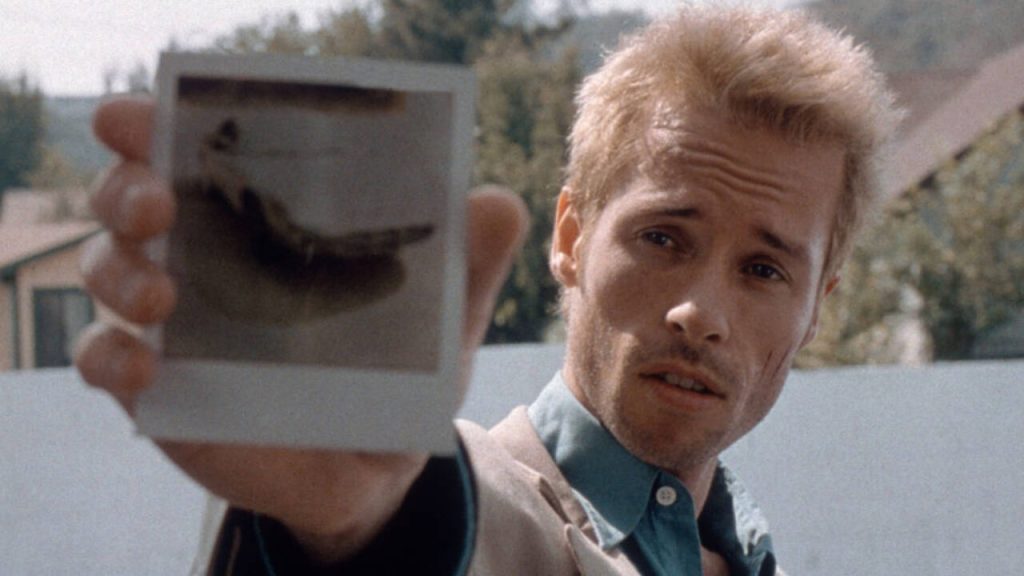
One person’s comedy is another’s tragedy. Tom Hanks drew laughs with a recurring Saturday Night Live bit about a character with no short-term memory. Christopher Nolan uses the same concept in his second feature to create an ingenious thriller. Guy Pearce is Leonard Shelby, a former insurance investigator determined to track down and kill the man who murdered his wife. Whoever that is. Leonard’s uniquely faulty memory—he loses it every 10 minutes or so—means he must record significant clues as tattoos or on the bottoms of the Polaroids he takes constantly. Leonard is not terribly bothered by his dependence on such notes. “Memory’s unreliable,” he says. “Memory can change the shape of a room. It can change the color of a car. Memories can be distorted. They’re an interpretation, not a record.” Nolan enhances the mystery of Memento by structuring the film backwards. Although he had scripted it linearly, a new structure came to him one morning over coffee. “If you have it run backward, you withhold the information from the audience the same way it is withheld from the character,” Nolan said later. “It was one of those moments when you had it. It took me a very long time to write the script, but in that moment it was done.”
(See more in The 15 best neo-noir films and The 15 best revenge films.)
2. Amarcord (1975, dir. Federico Fellini)
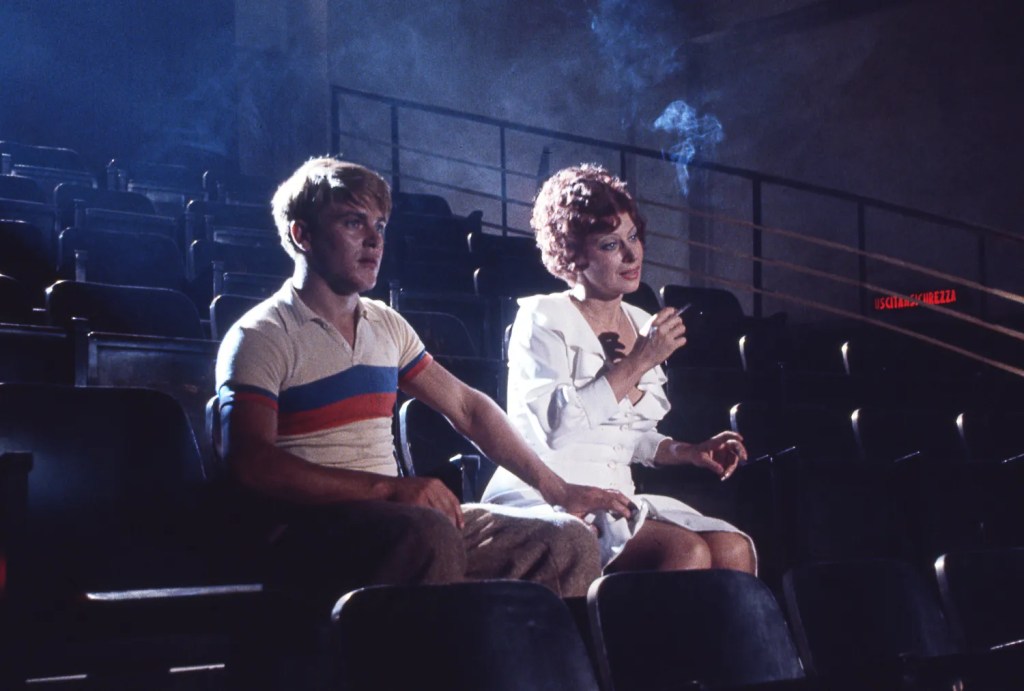
Amarcord is a trip down memory lane with Federico Fellini as a delightfully unreliable tour guide. It is not so much a story as a series of vignettes in which the esteemed moviemaker revisits his birthplace, the coastal Italian town of Rimini. In the Italian dialect of Romagna, the region that includes Rimini, Amarcord translates as “We remember.” Looking back through the clouded lens of adulthood, memories of youth take on mythical proportions. That canvas of innocence and immaturity is what interests Fellini—and what makes Amarcord so poignant. Set in the mid-1930s, Amarcord introduces us to Rimini’s inhabitants, particularly sex-obsessed teenager Titta (Bruno Zanin), his temperamental parents (Armando Brancia and Pupella Maggio) and voluptuous beautician Gradisca (Magali Noël). Amarcord abounds in dirty jokes and scatological humor elevated to high art. Boys at a Mussolini fascist rally conduct exercises with rifles while the girls perform with big hoops. Titta, in confession, reveals his sexual fantasies to a priest who is busy sniffing his own fingers. Even more outlandish: Titta’s awkward encounter with a heavyset tobacconist whose monumental boobs deserve their own zip code. There are sublime moments, too, springing from Fellini’s imagination. In one scene, Rimini’s townspeople wait in small boats on the Adriatic at night to glimpse an ocean liner. When it finally appears, a hulking apparition rising from blue fog, the image is as majestic as it is fake. Fellini demanded that the scene be re-shot because the ship looked too real. Amarcord celebrates memory in all its unapologetic embellishment.
(See more in The 20 best hangout films.)
1. Eternal Sunshine of the Spotless Mind (2004, dir. Michel Gondry)

If you could literally erase a painful memory, would you? And if you did, would it matter? The premise of Charlie Kaufman’s brilliant screenplay is simple: eliminate an ill-fated romantic relationship from memory. Eternal Sunshine of the Spotless Mind muses on the nature of memory and free will while Michel Gondry directs it with the conviction that this is the most realistic storyline imaginable. Jim Carrey is aging slacker Joel Barish, who is notified that ex-girlfriend Clementine, played by Kate Winslet with manic pixie dream-girl fervor, has undergone a radical memory-erasing procedure to eradicate any trace of Joel from her memory. Despondent, Joel resolves to do the same. But first he asks the doctor (Tom Wilkinson) administering the treatment whether brain damage is a risk. “Well, technically speaking, the operation is brain damage,” the doctor answers. The already highwire concept escalates to nosebleed territory when Joel reconsiders his decision mid-operation; he and his memory version of Clementine try squirreling her away in unrelated remembrances. A subplot involving Wilkinson, Kirsten Dunst, and Elijah Wood adds another level of complexity to the theme. Jaw-droppingly inventive and blessed with Jon Brion’s bittersweet music score; the film adds grist to the adage that those who cannot remember the past are condemned to repeat it.
(See more in The 25 best love stories in film.)
Honorable mention: After Life (1998, dir. Hirokazu Kore-eda), Blade Runner (1982, dir. Ridley Scott), 8½ (1963, dir. Federico Fellini), The Father (2020, dir. Florian Zeller), Je T’Aime, Je T’Aime (1968, dir. Alain Resnais), Last Year at Marienbad (1961, dir. Alain Resnais), Mirror (1975, dir. Andrei Tarkovsky), The Tree of Life (2011, dir. Terrence Malick), Waltz with Bashir (2008, dir. Ari Folman), Wild Strawberries (1957, dir. Ingmar Bergman)


7 responses to “The 10 best films about memory”
[…] blade runner human? All of the movie’s various cuts are ambiguous on that count. (See more in The 10 best films about memory, The 10 best film dystopias and The 15 best neo-noir […]
LikeLike
[…] Metz, “it is a film about a film that is presumably itself about the cinema.”(See more in The 10 best films about memory and The 10 best films about […]
LikeLike
[…] Andrei Tarkovsky’s quasi-autobiographical film will both entrance and frustrate moviegoers. It brings us into the mind of a man named Aleksei, who is dying and reflecting on the shards of his life. “Words can’t really express everything a person feels,” he says in voice-over during a phone conversation with his mother. This Soviet masterpiece embraces the mystery of feeling and thought. Resolutely nonlinear, Mirror is a collage of memories, dreams and disparate thoughts that span the years preceding World War II through the early 1970s. Tarkovsky embraces the fluidity of dream logic. Remembrances shift into dreams and vice versa. Time expands and contracts. Throughout, the film offers indelible imagery in both color and black-and-white: gusts of wind sweeping through tall grass, a woman levitating over a bed, a burning barn, sheets of water crashing through a ceiling to demolish a room, a flickering lamp. There is grainy newsreel footage. Hands, presumably Aleksei’s, flip through the pages of an art book. The filmmaker’s mother plays Aleksei’s mother in old age, while his father, poet Arseny Tarkovsky, recites his poetry in occasional voice-over. Margarita Terekhova portrays both Aleksei’s mother and his ex-wife. Many movies explore the dream state, but Mirror immerses the viewer in its seductive, demanding universe.(See more in The 10 best films about memory.) […]
LikeLike
[…] Alain Resnais was amused by his reputation for inscrutable films. One French joke he liked went like this: an accused killer tells police that he was at the cinema when the murder occurred. “What did you see?” asks a detective. “Last Year at Marienbad,” answers the accused. “Oh. What was it about?” he is asked. But the suspect cannot explain the movie—at all—and so he is condemned and sent to prison. Trying to decipher Last Year at Marienbad is a fool’s errand, but it hasn’t stopped cinephiles from trying to do so. In a labyrinthine resort hotel, a man (Giorgio Albertazzi) tries to convince a woman (Delphine Seyrig) that they met there the year before, had a sexual relationship, and that she promised to run away with him. But the woman says she recalls nothing of the sort. Is she being gaslighted? Are they all ghosts? Is this a convoluted metaphor for the Algerian war? Theories abound in a movie that verges on self-parody of the prototypical French art film. It is beautifully photographed by Sacha Vierny, its hypnotic feel enhanced by Resnais and screenwriter Alain Robbe-Grillet’s aversion to anything smacking of a linear narrative. Entrancing tracking shots allow viewers to soak in the baroque environs and ponder the overriding obliqueness. Characters stand frozen in time. Scenes and dialogue are repeated with slight variances in sound and image. Flashbacks contradict previous flashbacks. This is not passive viewing.(See more in The 10 best films about memory.) […]
LikeLike
[…] A nondescript, somewhat shabby building serves as a stopover for the newly deceased en route to eternity. In Hirokazu Kore-eda’s After Life, the recently dead have three days to select a single memory from their life to experience for eternity. Guiding them along in making that decision are caseworkers—Kore-eda focuses on two in particular—who then recreate that memory through short films made with modest resources. A sex worker recalls a client who treated her with special kindness; a girl who died far too young muses on how much she loved Splash Mountain at Disney World (evidently a favorite among teen girls who die young); in a particularly nettlesome case, an elderly man cannot recall a single memory of his life he would want to keep. Hollywood would have milked the concept for maximum feels, but Kore-eda, one of Japanese cinema’s great humanists, has the sensibility here of a documentarian. In fact, After Life originated as a would-be documentary, where interviewees offered what their selected memory would be; many of those interviews are interspersed here with those of professional actors. The film’s elegant humanity creeps up on you. (See also The 10 best films about memory.) […]
LikeLike
[…] of resignation for Isak, but rather a final opportunity for grace and forgiveness.(See more in The 10 best films about memory and The 10 best films about […]
LikeLike
[…] and its thematic tension between Kane’s populist ideals and his hunger for power.(See more in The 10 best films about memory and The 10 best journalism […]
LikeLike